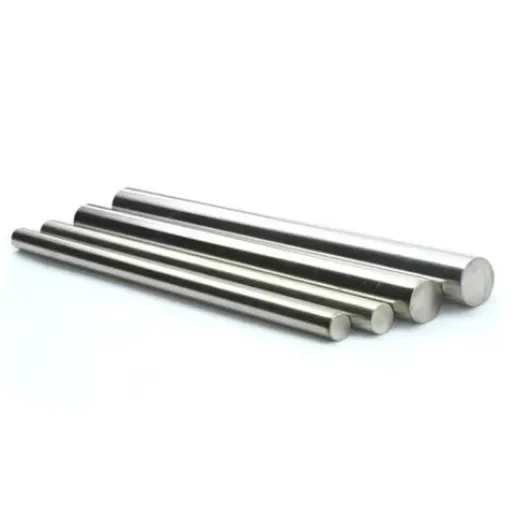
In marine applications, material selection is the most important criterion for the fitness and longevity of any product. Out of the many types of materials available, the stainless steel sheets of the 304 and 316L grades are, nonetheless, better than most others. But when challenged by the exuberance and saline nature of the sea or its coastal areas, how does one zero in on the best quality of materials? This is the reason the blog is framed so as to describe the details about the thin 304 grade steel and the bulkier 316L stainless steel, both measuring and serving in the areas of the sea. In that specific scenario, it is hoped that by the end of the talk, the readers will appreciate why one is more relevant than the other. Depending on the stress levels, and or the corrosion capacity of the surrounding all the economic aspects of utilizing the 304 stainless steel sheet or the 316L Stainless Steel Plate, it will state whether there are challenges of stress management.
Understanding Stainless Steel Sheets
What is a Stainless Steel Sheet?
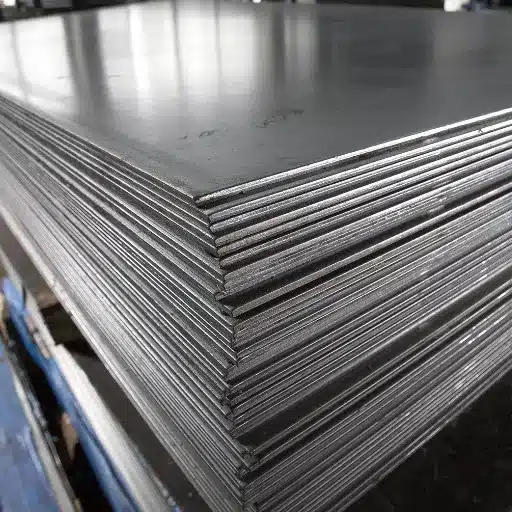
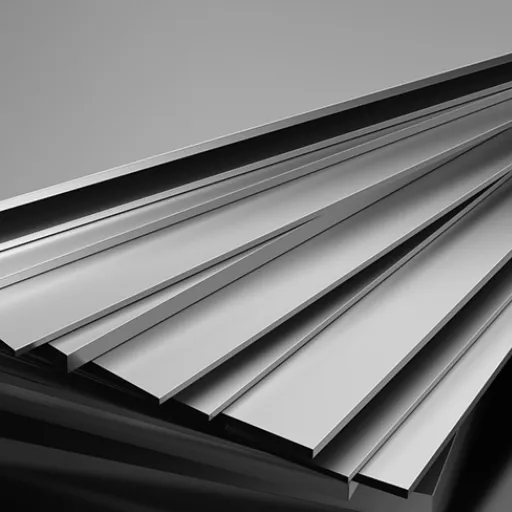
The 304 stainless steel sheet made from steel is sturdy and endures tensile stress without much deformation, bending, crack or rusting. Most countries defined the new 304 steel hook iron grades, which typically contain over 18% chromium and around 8% nickel. Such compounds in the alloy are palmitate-resistant since they provide an easy passivation of the metal. This passive film insulates oxygen-deprived metal from the air. Sheets are different as well: they vary in grades, types of finish, thickness, and particular applications, for instance, building and construction, and engineering in general: fixing of machines, cars, ships, etc.
The primary aim of the 316L Stainless Steel Sheet is essentially to replace the bowed 304 stainless steel sheet after all the many variably designed body shells are escalated, which can be frustratingly resistant to corrosion. It is developed with an approximate figure of 10.5% chromium in steel in order to develop a layer of chromium oxide in the presence of oxygen. The function of this layer is to prevent corrosion of the metal, making it more durable. It is possible to have different grades, surface contents, and thickness factors of Stainless Steel Sheets available in different products such as Building, Auto, Medical, and Marine that are made with such materials.
Most industries use thin sheets of stainless steel for the purposes they are intended for since the thickness of such sheets ranges from 0.4mm to six millimeters. Different types of metal materials where the thickness can be less than 0.4mm are referred to as foils, unlike any other form of sheet. When its thickness is more than six millimeter they are plates. However, when it comes to stainless steel 304, it could be the best and most popular because of its many advantages over other materials, such as being easily applied in many other areas. On the other hand, exposure to harsh conditions such as sea weathering or chemical agents is possible with the presence of molybdenum in 316L stainless steel plate.
For example, a 304 stainless steel sheet is fabricated without polishing, as well as in various polished forms. Similarly, 316L Stainless Steel Sheet is supplied in the film, annealed, pickled, and passivated finish. Furthermore, modern manufacturing processes such as laser and welding, allow the improvement of physical characteristics, yet do not allow the application of the layer to be changed. The appeal of the said materials is so extensive that any engineer or designer would escape working with stainless steel sheets.
Properties of 304 Stainless Steel Sheet.
The 304 stainless steel sheet is a distinguishable product owing to its great characteristics; hence, many industries make use of it to a reasonable extent. Its primary elements are chromium (18-20%) and Nickel (8-10.5%), which make the alloy corrosion resistant, easy to handle, and also research. About 8 before then, 304 stainless steel has approximately 8 g/cm3 density and a range of tensile strength from 515 MPa to over 750 MPa; as a result, it can be used in many applications because it is strong but still tough.
One of the most striking characteristics of the 304 stainless steel is that it is able to resist corrosion and oxidation in almost every condition. Including high humidity in domestic households, mild acids, and various chemicals. It has a resistance to 1598°F (870°C) of hot service, and 1697°F (925°C) continuously, hence it can also be used for applications involving high temperatures. Additionally, this alloy is easy to form and welds without any problems, which makes it quite advantageous when it comes to building systems, decorations, kitchens, transport systems, etc.
One more constituent that should be mentioned is 304 stainless steel, which is nonmagnetic; however, it may be slightly chipped after being cold-formed. In terms of low carbon content, it is 304L, and in some cases, attended to after welding is predominantly preferred without the need of annealing. Overall, these examples all show how a 304 stainless steel sheet might be more useful because its properties extend its strength and maintenance.
Properties of 316L Stainless Steel Sheet
316L stainless steel is the downgrade version of the 316 stainless steel grades with less carbon comparative materials that most people know for their anticorrosive strength and utility in extreme conditions. The substance contains more of molybdenum than the making of 304 stainless steel sheet as it uses a typical 2-3 percent close range of the alloy and hence can provide substantial resistance against both pitting and crevice corrosion in such chloride-containing liquors like that of sea water or of melting snow agents.
Looking at mechanical properties related to 316L stainless steel, it is quite clear that tensile and yield strengths are considerably high, a tensile strength of roughly 485 MPa (70,300 psi), and a yield strength of about 170 MPa (24,600 psi). Furthermore, it notably exhibits excellent ductility and toughness, which consequently makes it suitable for most usages in situations where considerable deformation or stresses can be observed. The code 316L ends with an ‘L’ since such a number of carbon content reduces the probability of welding susceptibility in carbide precipitation, especially in the cases of heat-affected zones.
This steel is therefore widely circulated in 316L stainless steel for the manufacturing of chemical processing and marine industries as well as medical device engineering equipment. This will ensure there is no interaction of the products processed in such sectors as pharmaceuticals and food processing with the ingredients involved. Furthermore, it has been reported that the material 316L can be used in cryogenic service because it retains its mechanical properties even under severe low temperatures.
As a result, 316L is highly appropriate in extreme applications requiring high performance and obviously being durable. This notion is supported by the exceptional corrosion resistance of the material and its commendable structural properties, not to mention the unique synthesis deployed to produce it.
Comparative Analysis of 304 and 316L Stainless Steel
Corrosion Resistance in Marine Environments
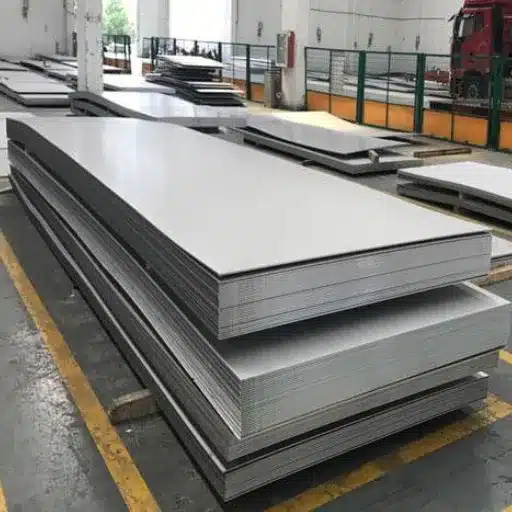
When seeking to distinguish between 304 stainless steel sheet and its counterpart, 316L, the most evident difference lies in humidity and coastal weather. The 316L on the other hand contains 2% minimum and 3% maximum molybdenum, a factor that is also used to describe the chemistry of the seawater induced attack on stainless steels of this kind, as these elements contain molybdenum as well to increase their stability in terms of protection from seawater, and the protection is against aluminium chlorate and other chlorine containing elements such as chlorine. This component is, however, not present in 304 stainless steel, which is why it can be more susceptible to deterioration caused by chlorides, especially in tropical environments, as well as during the tides.
This is further confirmed by a recent study, which shows that 316L stainless steel has a PREN – pitting resistance equivalent number, that is almost 24; compared to the 304 stainless steel sheet, this is between 18 – 20. PREN is a relative number used to identify by how much one material will resist the form of corrosion relative to another material. Hence, the use of 316L is preferred over all these sectors, especially in artificial beaches associated with resorts, processed food handling areas in the beaches and even structures holding oil away from the water bodies.
One piece of empirical evidence demonstrating differences in issues facing different sections in an industry comes from the 304 stainless steel sheet. Found in the marine industry is this steel, which they can more than a couple of engineering months, and almost certainly, there will be some surface corrosion if this part is in position. Meanwhile, 316L stainless steel components are expected to last practically the same time without any fading or loss of appeal and usage.
Mechanical Properties Comparison
In case you want to compare properties of 304 versus 316L stainless steel, one might reflect on their designs, bearing in mind such aspects as strength, yield, and hardness. In a study conducted within the last few years, the maximum strength of 304 stainless steel sheet was found to be 505 MPa or about 73,200 psi, while its strength at 0.2ut is more than 215 MPa or 31,200 psi. Nevertheless, for the 316L grade, the tensile strength of around 485 MPa (70,000 psi) and yield strength of about 170 MPa (25,000 psi) are improved.
Even though there is a small chance the strain of 316L ss is going to be exaggerated over a lengthy period of ult tensile test, one cannot say the same for the strain measured in 304 ss at the same period of testing. This is because 316L contains molybdenum which enhances the corrosion of materials that promote crevice and pitting when exposed to aggressively acidic or salty environments.
The construction is layered, the stainless steels under review are durable, and provide good machining. In reality, for all instances where these materials and constructions are used, it means that the environment and the purposes of the structure to be built should be well understood. It is obvious that 304 stainless steel sheet, however, is more desirable on cost grounds, whereas the 316L grade is more demanding in terms of application, as it is used in marine and chemical processes that involve more working loads.
Cost Considerations and Availability
When 304 stainless steel sheet and its substitute, 316L, are compared, the critical aspect to think about will be cost. It is observed in the market and supported by economic business views that metal 304 is much less expensive than 316L, even as low as 20 or 30%, and thus is preferred for certain applications where there is no harsh demand or challenges regarding corrosion. This is mainly owing to the higher %age of molybdenum in the 316L composition, which enhances its chloride corrosion resistance but also increases the production cost.
Given that such materials are of standard grades in markets involved with stainless steel processing, availability is not an issue. Nevertheless, it has been noted that there is an upsurge in the consumption of 316L stainless steel sheets in the worldwide market because of the demand by pharmaceuticals, marine, and chemical processing industries. As an illustration, the chemical industry uses 316L due to the fact that it resists both strong bases and acids, which allows such regimes, which in turn substantially decrease the costs in maintenance and increase the working time of the equipment for any processing plant.
On the other hand, the price of the 304 stainless steel sheet was then found to be approximately between $1,500 and $2,000 per metric ton, while that of 316L was between $2,200 and $3,500 per metric ton as per available market information for 2023, considering the geographical perspective. This is an example of a cost differential that may be experienced, which will lead to difficulties in planning, especially where large-scale infrastructure development is concerned.
The cost estimations are considerations that must be made in every instance where a choice between the two is being made, as the material selected, for instance, the one that offers the best performance for the given cost, amongst others.
Applications of 304 Stainless Steel Sheets
Marine Applications
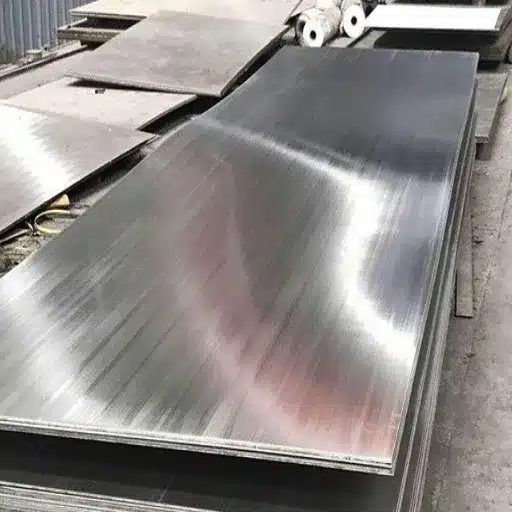
Martine uses 304 stainless steel sheet because of certain qualities like: corrosion and rust are held at bay, the strength is higher, and one cannot break glass easily. Such features are useful in areas with salty waters or any other harsh environments. In case there is a chloride corrosion within the surface, one of the latest research reports indicated that 304 steel will not get tarnished or rusted unless there is a high concentration of chloride in its content.
To illustrate, in shipbuilding, especially in building a hull, deck or firm wooden railings of a vessel, it is the material of choice since it tends to last and requires less maintenance. They, e.g., use them in making or developing marine equipment such as bolts, fair leads, or fixtures, and they are fitted for high-performance in tough conditions.
There is notable growth in the Consumption Capacity of Marine Stainless steel due to high demand at the Global level, with projections that at least 4% increase would be realized until 2027. Comprehensive forecast solutions suggest that market growth would be accelerated by more ships being operated and, more bio-technical and structural materials being used in the construction of structures that require complex and light structures.
Despite the good performance of 304 stainless steel against marine and submarine environments, in some very harsh chloride environments, it is likely to recommend using 316 types in order to better resist pitting. Nevertheless, in most underwater situations, 304 stainless steel sheet is cheap and very effective in fulfilling the purpose, hence it is most likely to be preferred by the majority of manufacturers and consumers.
Industrial Applications
Because of its peculiar characteristics, 304 stainless steel sheet finds quite a number of uses in various industries as well as applications. To give you an example of its uses, it is utilized in building pipes and for architectural purposes, and even for food items. In the past 12 months, the steel market was sized at around 112 billion USD in 2022. This is expected to grow by 5% per annum over the period between 2023 and 2030. Indu wants more and more of it.
The good thing with it is that heat, even at higher temperatures, does not affect it, and also rust and other corrosive substances do not destroy it easily. Reasons being, this is commonly used mainly in the energy division in the making of boilers, pipelines, and heat exchangers. Moreover, this type of steel can also be applied in the majority of the medical apparatus, particularly aspects that include the equipment for making food and Medicine too. Because its construction as well as the equipment, is much easier to clean.
The 304 stainless steel sheet is also highly used due to the fact that its component structures have high specific strength and are easy to shape, and, as a result, are highly used in the automotive and aerospace industries. Moreover, the way forward has been to actively engage students to complete their studies; the alloy and the coating have advanced to the extent of extending the life of the material even in excessive applications where thermal and chemical gradients are high. Steel design structural improvements have been executed for the 304 stainless steel, and this has impacted the existing industries and prospects.
Architectural Uses
If you pay close attention to the construction of the structures in the present day, you can easily notice that many have employed the use of 304 stainless steel sheet since it is known to offer several advantages, such as flexibility, aesthetic appeal, and long lifespan. Because of its rust resistance, it is an excellent material for use in cladding, roofs, and even support structures, which are mainly built in urban areas or seaside areas where the conditions are particularly unpleasant due to moisture and high pollution levels. They say almost half of new skyscrapers contain stainless steel to one degree or another, and quite a large proportion of those take up the stainless sheet 304 on the grounds of cost effectiveness and how well it ages.
304 stainless steel sheet is to a large extent, resistant to corrosion and sits comfortably within and outside of interior applications that are exposed to the highest temperatures, including fire-rated doors. The reported market size in the construction industry in 2022 is around $90 billion for stainless steel materials, according to the American Association of Sworn Construction Professionals, and grew at about 6% per annum during the period under consideration, owing to increasing urbanization as well as the popularity of energy-efficient buildings. It is because it is versatile, strong, and cheap to maintain that there is a continuous appeal towards its use among most architects globally.
Fabrication Techniques for Stainless Steel Sheets
Custom Fabrication Methods
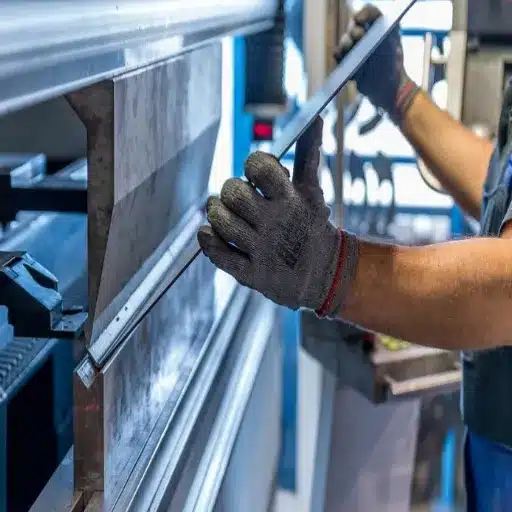
The process of fabricating stainless steel sheets has evolved over the years. Initially, machines and respective engineering principles facilitate advanced practices. These include, but are not limited to, cutting, bending, welding, and finishing, which have been precisely explained and developed for this application. One can look at the modern laser-based cutting technologies, where this type of cutting is very precise, allowing it to cut almost every shape; however, the tolerance is not less than 0.1 mm. Here, the materials they consume are minimal; the edges are clean; hence, this technique is relatively cost-effective and environmentally friendly.
Among the processes that are employed in particular for bending such a cut out 304 stainless steel sheet, that is part sheet forming and ultimately press fitting, is this case bending methods used are particularly press brake forming. As an overriding indulgent preoccupation, as would be bending a cut metal sheet to form edges like channel, angle or the like. This primarily makes it possible to achieve parts with controlled bend angles made iteratively, with work being done by means of CNC or computer numeric control press brakes. This facility is particularly useful when it comes to making a prototype or commercial numbers. This is now the case in such stringent requirements industries as aircraft manufacturing, automotive, and construction engineering.
Building upon the previous information, stainless sheets can be joined together by other means as well, such as welding methods. One of the most loved forms of welding is the Tungsten Inert Gas due to the beauty of the welds created by this method. The era of automatic welding, when robotic arms were invented, has contributed heavily to the standard of order since the time of order placement and completion is very minimal, if at all.
Summing it all up, certain conclusions about some aspects of the matter in question can be drawn. Still, after putting aside the subject matter and perspectives, let’s not deal with the conclusions. It is mandatory to discuss the process of stainless steel elements production itself, as “raw,” untreated elements do not prevail. Three finishing processes precede painted surfaces, and even this element composition does not suppress the importance of shiny electroplating. For context, it is the finish on phones, etc. B, surgical, food, and in some cases architectural changes – all incorporate the mirror, even if it is invisible or blurred in the process. It is to note that finishes do not help to enhance the appearance; only the surfaces that fill some spaces within are unchanged, preventing them from being washed away by corrosion or wear and tear.
The market for stainless steel is expected to reach a steady growth rate of about 6% in a annual basis through to 2030. And one of the key focus areas within this, for various industries, is these fabrication techniques. Many useful properties of stainless steel are more enhanced with current advanced methods of fabrication, and they support the high status of this multitasking metal and are unlikely to disappear anytime soon, as they are embedded to the stainless steel sheet 304stainless steel sheet and other types of stainless sheets.
Common Finishing Options
Whether it’s for functional or aesthetic purposes, the production of 304 stainless steel sheet finishes is a critical aspect that is focused on. There are many ways of achieving this. Stainless steel finishes may be attained by mechanical, bead or electro-polishing. Take, for instance, mechanical polishing, where the smoothening of the surface is carried out, leaving any other distinct properties of the material modified, and as such, it is applied during the production of food and medical components. Similarly, bead blasting results in a uniformly grey opaque surface as a result of surface blasting with particles, and it is applied in the interior and the exterior.
Amongst one of the best specialties in the field of stainless steel, 304 stainless steel sheet has managed to control the elastic ratio between one and two. And of course, with the fact that recently, outside systems such as construction, automotive, and energy efficiency have started helping a lot. Especially if we take electrochemical etching into postprocessing, then it is a very effective method for those who in the process of control, can eradicate all unwanted elements and at the same time form a polished surface. 2023 will see an assertion that by 2025, some 20% of the global stainless steel finishing market will consist of high-tech finishers that wizardry imposes with aesthetics, hence the reason for their request.
Such creative types of finishes allow different industries to meet the new demands for quality and eco-friendliness, where the primary construction material is stainless steel.
Importance of Annealing and Brushed Finishes
In the stainless steel processing sector, operations like annealing as well as brushed finishes are very crucial in producing high-quality and attractive materials that have a versatile use. Such operations are carried out in order to change the metallurgical and mechanical properties of the material; in particular, increase its ductility and toughness and reduce the internal strains that have been induced in it or can arise in it as it is used. There is an application emphasis and enhancement of components in design is a block element that, in order ajes applied in the manufacturing sequence, consists of making flatware, cutlery and drilling tools using the 304 stainless steel sheet as the raw material.
Indeed, brushed finishes, despite providing a wide range of decorative treatments, are not implemented during the crafting of architectural structures. As per the data of the ongoing development in 2023, the use of brushed steel on at least 25 % of the household appliances, with premium design, and even the general lines of production, has not quite reached the desired level. This means that in such kitchens that were planned with the expectation of a high-end look, only brushed steel surfaces are not going to be obsolete. It should also be pointed out that the maintenance of legacy appliances is quite common in the industry since they obtain a nice appearance of brushed stainless steel, as used in the design of such items.
These finishes have only been emphasized further due to an intensified concern for the preservation of the green environment. Different types of finishes attainable by annealing are more concerned with saving energy, while brushed finishes are increasingly incorporating environmental materials in the finishing work. This development follows the logic of processing progress and gives evidence that the indicated expects to meet the requirements of environmental protection alongside productivity and aesthetics.
Reference Sources
-
“Corrosion behavior of 316L and 304 stainless steels exposed to industrial-marine-urban environment: field study”
- Published by the Royal Society of Chemistry, this study examines the corrosion behavior of 304 and 316L stainless steels in mixed environments, including marine settings.
- Read the study here
-
“Marine Environment Effect on Welded Additively Manufactured Stainless Steel AISI 316L”
- Published by MDPI, this paper explores the performance of AISI 316L stainless steel in marine environments, highlighting its suitability as a marine-grade material.
- Read the study here
-
“Stainless Steel and Corrosion”
- Key Findings: This study discusses the suitability of low-carbon stainless steels like 304L and 316L in marine environments, emphasizing the role of halide ions in corrosion processes.
- Methodology: The research evaluates the corrosion resistance of stainless steels in halide-rich environments, providing insights into their performance in marine atmospheres.
- Read the study here
Frequently Asked Questions (FAQs)
What distinguishes 304 from 316L stainless steel sheets?
In essence, the disparity between 304 and 316L stainless steels is found in the alloy’s composition, particularly the dependency on and usefulness of this level of the two. 316L possesses molybdenum as one of its elements, which is a striking composition especially useful for areas with chlorides for example, seawater and other aggressive environmental conditions. For this reason, 316L is ideal in sea environments or places with wet and reactive elements. Meanwhile, 304 is cheaper, and it is more appropriate in the less stringent applications that do not require very high performance in materials.
What makes 316L more preferable for marine environments?
However, 316L has gained favor over the years, especially due to its excellent protection against pitting and crevice corrosion, which are severe in moist conditions and in the presence of salts, such as in marine locales. 316L is advisable since it reduces to a greater extent the drawback associated with carbon welds, which is the precipitation of carbides and the deterioration of material corrosion. Such properties make the 316L the material of choice, for example, where marine equipment such as boats or structures in the ocean are made.
Does the use of AISI 304 stainless steel address the problem of corrosion sufficiently?
On the other hand, the 304 stainless steel and other stainless steels are applied in many different places thanks to their general corrosion resistance. Nevertheless, as regards corrosion resistance to chlorides, it is the 316L which predominates over 304; therefore, pit and induced stress cracking is seen rather high in salty as well as humid conditions. While it’s good enough in interior applications and moderately dramatic ones, it won’t last long in marine or coastal areas.
What is the price difference between 304 stainless steel sheet and 316L material if there is any?
316L sheet has an austenitic structure and hence is more expensive than 304 stainless steel sheet. A main reason for the latter cost is the fact that the 316L sheet has molybdenum, which the 304 steel sheet does not possess. In less corrosive environments where chloride-free conditions are normal, 304 is the material of choice as it offers lower costs. Nevertheless, in cases involving the sea or any other severe condition, embroilments of D316L is worthwhile else the worst consequences come.
Would 316L sheets be compromised by the presence of threads and welded surfaces?
Absolutely. Threading and welding are examples of finishing processes that could affect the behavior of 316L sheets. Due to the reduced carbon percentage in 316L, carbide precipitation, as observed in some grades after welding, does not occur, and therefore, the corrosion resistance is preserved. Nonetheless, subsequent application of certain methods, such as relief annealing and surface treatment, is appropriate in this situation. Meanwhile, structuring surfaces with threads is to be serviced and wiped with care when used around water due to any possible deposits that will encourage pitting.
What are the applications of 304 and 316L stainless steel good for?
304 stainless steel sheet is an option for those who are generally looking for materials for kitchen equipment, indoor structures and public structural loads. It is cheap and flexible for applications where the material is not exposed to a lot of dangers. For example, marine hardware, chemical equipment, and external structural applications are well covered by 316L due to its excellent resistance to chemical attack and physical fatigue. Appropriate selection of materials for different applications is mainly influenced by the requirements of the applications in question.