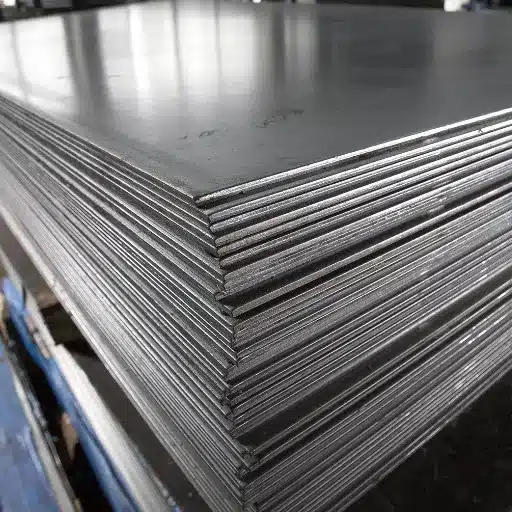
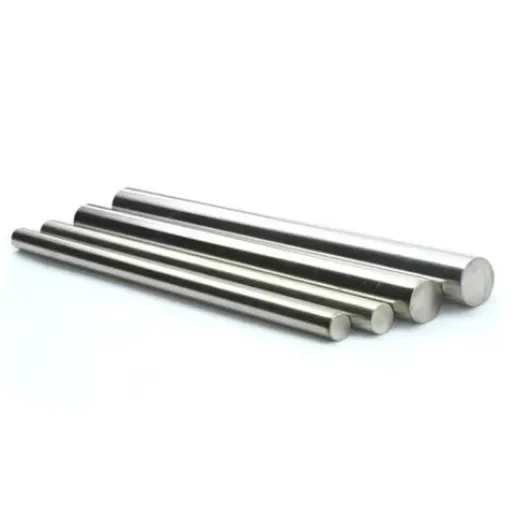
Material selection is one of the most crucial factors in ensuring industrial applications’ durability, performance, and cost efficiency. Pretentious among the numerous options, 304L stainless steel coil is recognized for its exceptional versatility and reliability. This alloy is known for its resistance to corrosion and ease of fabrication, which makes it a preferred material in various industries, from construction to chemical processing. In this paper, we will investigate the peculiarities of 304L stainless steel coil, its benefits, and its applications, thus providing you with a clear reason why it continues to be a preferred material for manufacturers and suppliers all over the world.
Overview of 304L Stainless Steel Coils
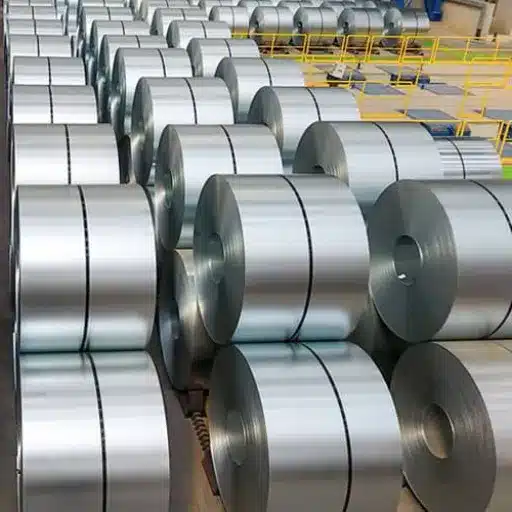
Properties of 304L Stainless Steel Coils
304L stainless steel is a type of steel that is very much like 304 stalemates but with less carbon in the mixture; hence it has good strength, scepters-to-corrosion and very good ductility. The alloy consists of 18-20% of chromium and 8-12% of nickel which explains its oxidation and corrosion resistance so high. The “L” in 304L stands for low carbon which is up to 0.03% max carbon. The low level of carbon here serves to control the precipitation of carbide at high temperatures during the welding process so that the material is still resistant to corrosion even in areas where stress is induced.
One of the properties of 304L stainless steel that is really remarkable is its tensile strength. It is generally about 485 MPa (70,000 psi) around and one can also say that the yield strength is about 170 MPa (25,000 psi) simultaneously. The break elongation is approximately 40%, which means its ductility is very good indeed, and therefore, it is applicable in forming and fabricating applications. The same alloy is endowed with very modern toughness and it is applicable even at cryogenic temperatures, thus not losing the structural integrity and the resistance to brittleness at very low temperatures.
Reasons for Using 304L Stainless Steel Coils
One of the primary factors for the preference of 304L stainless steel coils in various industrial and commercial sectors is their long list of advantages. The most important one is the fact that the latter have a much longer life due to the fact that they are less susceptible to corrosion than other stainless steel grades. The presence of less carbon in the steel means that there will be less carbide in the weld area and thus the welding joints will not be corroded. This means that the material will last a long time and it will be reliable even in places where there is moisture, chemicals, or humidity.
The coils are characterized by the alloy’s main attribute which is strength and durability. The tensile strength of the stainless steel coil can equal that of the weight plus being able to withstand tough conditions and still being strong enough to carry itself is what the coils inherit from the alloy’s property of strength and durability. Besides, with durability comes less maintenance because, in the case of the material, if it is not dirty, it does not get proper treatment and thus it remains in good condition even if it is or if it has been for a long time unused.
Their processing characteristics are such that the manufacturers are able to produce the most intricate, delicate, and detailed images for products—this is possible cutting and welding of the coils with so much facility and accuracy and it is main reason. This is particularly true in the case of industries that require custom-made equipment designs, like pharmaceuticals, food processing, and oil & gas sectors.
The Manufacturing Process of Stainless Steel Coils
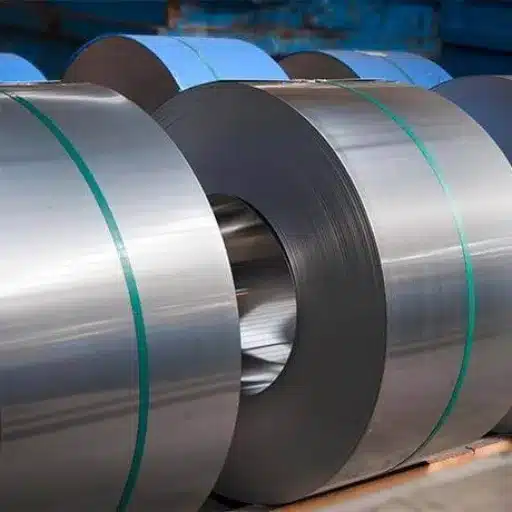
Production Techniques: Cold Rolled vs. Hot Rolled
Cold Rolled Stainless Steel Coils undergo metal processing at or very near ambient temperature. The method imparts the metal with so-called very thin layers, a superb surface, and more precise measuring capability. Cold rolled steel is firm and light, hence, it finds its way into high-precision industries like the manufacturing of medical instruments and high-end automotive parts among others. It has been reported by the industry that the cold rolled stainless steel surface has about Ra 0.4µm roughness which makes it the premier choice for such applications.
Hot Rolled Stainless Steel Coils go through a processing step where the metal is heated above its recrystallization point, usually over 1,700F (927C). In this way, the steel thins out fast and becomes more ductile. Hot rolled steels are less expensive and at the same time less demanding in terms of applications such as non-precision parts or not very shining, thus being a good fit for pipes, and supporting the buildings’ architectural designs and mining equipment. Industry reports say that hot rolled stainless steel production has already surpassed 60% of the total output due to the price benefits and large-scale application being its characteristics.
Technological Advancements in Manufacturing
The manufacturing industry has seen technological advancement at such a rapid pace, and this change in the process of production of different materials, including, stainless steel coils has also been associated with it. Innovations like Artificial Intelligence (AI), robotics, and data mining have always been considered the main drivers behind the optimization of manufacturing processes.
Incorporation of computer-controlled machinery and the deployment of robots are the most significant technological advancements that have come along in the steel coil manufacturing process. They provide the production with the necessary dimensional accuracy and uniformity. Moreover, AI-based maintenance systems that predict the occurrence of future breakdowns and thus prevent downtimes are being used in factories cutting maintenance costs by up to 30%.
Implementation of the Industry 4.0 concepts, the IoT for instance, has provided the supply chain with real-time data tracking, and improved inventory control among other benefits, thus greatly optimizing the supply chain. For example, IoT devices that are located in the manufacturing factories can monitor the temperature and humidity during the processing of stainless steel which makes it certain that quality standards are not only being set but also met every time.
Key Factors in Choosing a Stainless Steel Coil Supplier
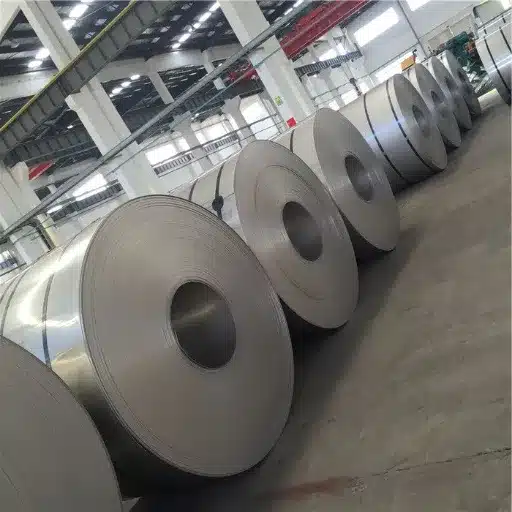
Evaluating Certifications and Standards
Certifications and compliance with industry standards are the primary indicators of quality and trust when it comes to choosing a supplier of stainless steel coils. Suppliers holding professional and widely recognized certifications, like ISO 9001, demonstrate their engagement with the continuous quality management systems. Besides, the certifications like ISO 14001 for environmental management and ISO 45001 for occupational health and safety not only reveal the supplier’s dedication to producing with environmentally friendly practices but also to protecting the health and safety of the workers during production.
Moreover, ASTM (American Society for Testing and Materials) compliance is another notable certification that should be sought after. ASTM specs mean that the coils are made under the strictest control with regards to material and mechanical properties, thereby assuring the users that the coils will last and perform as per expectation. Additionally, compliance with EN 10088 and JIS G4305 standards ensures that the coils are accepted in both regional and global markets, which is essential for manufacturers operating in multiple areas.
Reputation and Customer Reviews
The reputation of the supplier and customer reviews are two of the factors that the buyer can rely on when deciding to source materials. Quality, reliability, and trustworthiness are the main characteristics that suppliers with good reputation represent. Customer reviews convey first-hand information of other businesses’ experiences with the supplier, thus offering a realistic idea of their friendliness, timeliness in delivery, and overall service satisfaction.
Recent Search statistics suggest that 93% of buyers consider online reviews to be a decisive factor in their purchasing decisions. As a result, firms tend to pick suppliers with a higher average rating and more extensive review feedback. For example, suppliers with an average rating of 4.5 stars or higher are three times more likely to get repeat customers than those with lower ratings. Besides, companies that are very much engaged with customer feedback, such as responding to reviews, indicate that they are dedicated to service improvement, which, in turn, increases buyer’s trust.
Market Trends in 304L Stainless Steel
Current Market Demands for Stainless Steel Coils
The demand for the market of stainless steel coils, particularly of 304L stainless steel, remains steady and even strong due to the various advantages and features offered by the metal and its applications in several industrial sectors. Corrosion resistance and durability are the main criteria for all the sectors (building and construction, auto and power) that are the main drivers of the trend. Driven by the advanced technology of the market, the international stainless steel market is estimated to have a value of about $111 billion in 2022 and the figure is likely to increase with a CAGR of 5.7% throughout 2023-2030.
In a way, the 304L stainless steel coils are being more and more less than any other because of their superior properties for welding, high resistance to carbide precipitation thus low carbon content. Collectively these properties provide a range of industrial applications including the manufacturing of chemical processing equipment, food-grade machinery, and architectural projects. Moreover, the movement towards using eco-friendly materials has led the stainless steel coils to be one of the top choices due to their extended lifespan and recycle ability.
Future Predictions and Industry Insights
The strong demand for high-end manufacturing materials all over the world will be a big issue and this might go on for several years. With the wide-ranging rise in the application of even more intelligent manufacturing tools and technologies across all sectors, such a situation will take place. It is predicted by the most recent studies conducted in the field that the market will be valued at about $270 billion by the end of 2030, which means a compound annual growth rate (CAGR) of 7.5% from 2023 to 2030. The main reason for this is that the adoption of smart manufacturing technologies, such as 3D printing and automation, which are heavily reliant on high-performance materials, is only going to increase.
Sustainability is going to play an important role in the future material’s development, as the majority of manufacturers and even the government will gradually become emission and waste conscious. The use of eco-friendly materials such as recycled composites, and bio-based polymers have a bright future especially in Europe where environmental regulations are very strict. Another thing is the EV (electric vehicle) market will require high-performance lightweight materials which is the main source of the automotive industry’s efforts to improve energy efficiency and battery performance.
Environmental Impact of 304L Stainless Steel Manufacturing

Sustainability Practices in Production
Over the years, 304L stainless steel production has become more environmentally friendly due to the gradually decreasing impact of the industry on the environment as it uses, so to speak, fewer resources and emits less. One of the major practices leading this trend is increasing recycled materials usage. production of stainless steel is done on an average with about 60% recycled content and the leading manufacturers even to a higher extent in order to reduce the need for the virgin raw materials production.
Modern technologies that are energy-saving are just as important as they are the modern electric arc furnaces (EAFs) which are still the main technology in stainless steel production and consume very little energy compared to the traditional way while also emitting very low carbon. For instance, EAFs can reduce CO2 emissions by up to 75% when compared with the blast furnace process.
Water conservation is another area where the sustainable production potential has been expanded. A good number of manufacturers today have set up water closed-loop systems which are the most effective way of water conservation and it allows water to be reused and recycled. The industry has reports that these systems could reduce up to 90% of the water used in steel production.
Innovations in Reducing the Environmental Footprint
The environmental footprint of 304L stainless steel has been significantly reduced due to technological advancements and manufacturing process improvements. New recycling systems allow for over 90% of stainless steel to be reclaimed and resourced, with minimal waste and the working of nature resources. This recyclability rate is so high that it is said that it will be reused without any loss in quality, thereby creating a circular economy.
Furthermore, energy-efficient technologies are being introduced in modern production units while the carbon emissions issue is being tackled. Applying electric arc furnaces (EAFs) in stainless steel production is one of the factors that has led to energy use reduction in the range of 30% as compared with the old-fashioned methods. Apart from recycling a large amount of scrap metals, the EAFs also result in less virgin raw materials extraction and hence the further environmental impact that accompanies it.
Reference Sources
-
Comparison of Fatigue Performance between Additively Manufactured and Traditional 304L Stainless Steel
This research compares the properties of 304L stainless steel produced through different manufacturing methods, including hot rolling and annealing.
Source: Scholars’ Mine, Missouri S&T -
Specialty Stainless Sheet & Strip Stainless Price Book
This document provides insights into the quality expectations and production standards for stainless steel coil shipments, including 304L grades.
Source: Stanford University
Frequently Asked Questions (FAQs)
What is the 304L Stainless Steel Coil Grade and how is it different from 304?
304L grade is a lower carbon version of the 304 stainless steel coil that is produced to minimize carbide precipitation during the welding and the heat treatment. The austenitic steel (UNS S30403, 1.4307) offers superb resistance to corrosion and along with the good mechanical properties that are similar to those of 304, but with the great post-anneal and weld operations performance, thus being fit for the areas requiring resistance to corrosion after welding.
What are the components in the chemical composition and the alloy elements of 304 304L stainless steel?
304/304L stainless steel is an austenitic alloy predominantly made of iron, with chromium (Cr) about 18–20% and nickel (Ni) about 8–10.5% in the composition. 304L contains less carbon and thus, poses less risk of sensitization. The standard composition is compatible with ASTM A240 specifications and is designated under UNS S30403 / 1.4307 standards for uniformity in performance across stainless steel coil stock and stainless steel sheet products.
Could you tell us about the mechanical properties and hardness of 304L stainless steel coil?
Mechanical characteristics of 304L include decent tensile power, ductility, and yield strength high enough for most tubular and parts; hardness is commonly moderate and can be elevated through cold processing; After anneal (softening heat treatment) the alloy possesses superb mechanical traits and is easy to work with. For applications that need higher hardness or strength, cold-rolled and work-hardened conditions are provided.
What are the implications of welding and heat treatment on the performance of 304L hot rolled coils?
304L is the material of choice for welded assemblies because its low carbon content drastically reduces carbide precipitation during the welding process, thereby retaining the corrosion resistance without the need for a hefty post-weld heat treatment. The standard anneal cycles restore ductility and reduce residual stresses, while proper heat treatment and controlled cooling ensure the final fabricated product’s reliability, especially when it comes to medical devices or chemical industry parts.
Which surface finishes (2B, BA, 8K, No. 4) are accessible for stainless steel coil and sheet?
Stainless steel coil and sheet are made in different finishes: 2B, a commonly used cold-rolled finish, has a satin look; BA (bright-annealed) offers a shiny finish; 8K is mirror-polished for maximum aesthetic demands; No. 4 is brushed and has widespread use in architecture and restaurants. The decision is made on the basis of the application—often the mill inventory for stainless steel includes these finishes for slit coil and sheet cut-to-size orders.