casting materials due to their superior tensile strength, durability, and ability to resist high-temperature applications. As a result, manufacturing nickel alloy components requires a skilled workforce and advanced technology to create components to the required high levels of accuracy. This article will focus on the importance of the precision machining process in the manufacturing of nickel alloy components for Aerospace, and provide a detailed explanation of the precision machining process as well as the challenges that arise when machining nickel alloys for Aerospace Applications, and the innovative developments in the Precision Machining Industry that will continue to drive its growth and evolution.
Introduction to Nickel-Based Alloys in Precision Manufacturing
Significance of Nickel Alloys in Aerospace
The aerospace industry highly utilizes nickel-based alloys because they offer the best mechanical performance along with their ability to survive during the operation temperature range. In addition to their ability to operate at this maximum temperature, such as nearly 1,200ºF (650ºC), these alloys provide exceptional resistance to cracking, oxidation and corrosion, as well as outstanding durability. Therefore, many of the jet engines, combustors and turbine blades are manufactured using nickel alloys. For example, nickel alloy “Inconel 718” contains a tensile strength up to 1,300ºF (704ºC).
According to established industry records, in excess of 50% of the materials used in manufacturing jet engines consist of nickel-based superalloy materials. Aerospace components used in extreme temperature, stress and pressure must utilize materials with the ability to maintain their structural/functional integrity. Furthermore, additive manufacturing processes combined with extremely accurate machining processes have greatly increased the ability to manufacture complex-shaped components from nickel-based alloys with a minimum of material waste normally experienced during traditional manufacturing techniques.
Nickel-Based Alloys Are Key to Precision Casting
Due to their outstanding capability to withstand extremely hot temperatures and their ability to maintain excellent corrosion protection and mechanical properties at extremely high stress levels, nickel alloys play an essential role in the precision casting industry. As such, nickel-based superalloys are the preferred choice for individual component manufacturing in industrial sectors that include aerospace, power generation and medical technologies.
For example, components of precision cast turbine blades made from nickel-based superalloys have been engineered to operate in the aerospace industry. These turbine blades can operate at temperatures greater than 1,000ºC and still maintain their geometrical properties. Novelties created with nickel alloy types such as Rene 125 and IN718 have been shown to improve the performance of jet engines by up to 15%. Through nickel-based alloys applied in gas turbine engines, jet engine manufacturers are able to reduce operational costs associated with maximizing engine performance and reduce down time during repair adjustments.
The combination of additive manufacturing techniques incorporated with precision casting has developed new ways to manufacture geometrical complex components with minimal post-processing requirement. This development method has reduced the amount of waste generated in the manufacturing of geometrical complex parts by up to 30% compared to traditional manufacturing techniques, while achieving extremely close tolerances (±0.05 millimeter).
Key Properties of Nickel Alloys
Mechanical Properties of Nickel-Based Alloys
High Tensile Strength
The tensile strength of nickel alloys varies based upon the alloy composition and processing conditions. The nickel alloys exhibit tensile strength ranges from 600 MPa to over 1200 MPa (MPa = megapascals) The nickel alloys are ideal for any application where the component must bear heavy loads. Examples are turbine blades and pressure vessels.
Superior Creep Resistance
The superior creep resistance characteristic is one of the key advantages of Nickel-based alloys. They can easily withstand the deformation caused by long periods of stress and at high temperature. For example, nickel-based alloys, such as INCONEL® 718, maintain their exceptional strength up to 700 degrees Celsius. This feature allows these alloys to be used in jet engines and gas turbines.
Thermal Stability
Nickel alloys have high melting points in excess of 1300 degrees Celsius. They retain their mechanical properties when exposed to high temperatures. Therefore, nickel alloys offer reliable performance when the component is exposed to thermal expansion and phase instability, which can occur with less durable materials.
Excellent Fatigue Resistance
Nickel alloys withstand cyclic loading well, making them ideal for applications such as aircraft engines and turbine generators, where components run continuously for long periods. The fatigue limit of nickel alloys can be found from 400 MPa (megapascals) to 700 MPa (megapascals).
Corrosion and Oxidation Resistance
In addition to fatigue resistance and strength, nickel alloys also have a reputation for their ability to withstand extremely corrosive environments. These environments can be extremely corrosive, such as seawater and strong acids and may include oxidizing agents at high temperature. As a result, when using nickel-based alloys, component wear is reduced, thereby increasing component life.
Corrosion Resistance In Extreme Environments
One of the most valuable and important features of nickel-based alloys is their exceptional corrosion resistance in very harsh and extreme environments. Nickel alloys will not corrode when subjected to extreme chemical conditions (such as highly acidic or alkaline solutions) or to high-temperature oxidation. Hastelloy is one example of a nickel-based alloy with outstanding resistance to hydrochloric acid, sulfuric acid, and other highly reactive agents found in industrial processes.
Nickel-based alloys are also commonly used in the marine industry where all materials are regularly exposed to saltwater and moisture. Laboratory testing has demonstrated that Monel 400 is capable of withstanding extreme service conditions in seawater, such as pitting and crevice corrosion, common to many chloride-bearing environments. Monel 400 has an in-service corrosion rate of approximately 0.5 mm/year in seawater under typical service conditions and is therefore widely used in marine construction, pipelines, and shipbuilding.
Nickel-based alloys are extremely valuable in the oil and gas industries due to their ability to resist hydrogen sulfide stress cracking and general corrosion at extreme pressures and temperatures. Recent laboratory tests demonstrated that nickel-based alloys, such as Inconel 625, have a corrosion rate of less than 0.1 mm/year in sour gas environments and are therefore extremely reliable in extremely harsh environments.
Advantages of Using Nickel Alloys in Machining
Benefits of CNC Machining Nickel Alloys
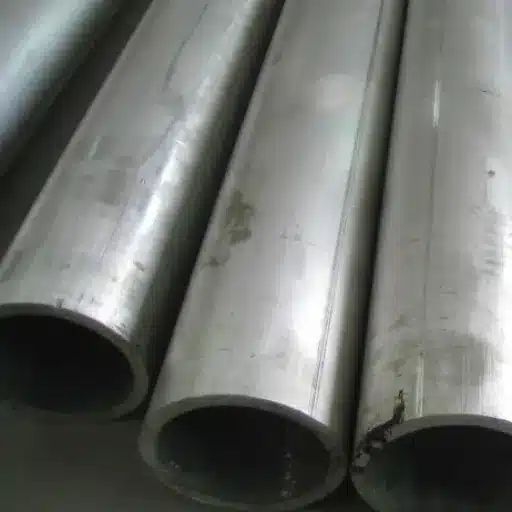
The use of CNC (Computer Numerical Control) machining is an excellent choice for machining Nickel Alloys because CNC machining provides unmatched accuracy and productivity for manufacturing complex, high-performance components in a wide range of industries. In addition, CNC machines can create components from nickel alloys that are very tough and can withstand extremely high temperatures, so they are able to produce parts that meet the performance specifications of many applications. Nickel alloys have several performance characteristics such as their heat resistance and mechanical properties, both of which are important for the performance of a part, but these factors also make nickel alloys very challenging to machine using traditional equipment.
With CNC technology, CNC processes are automated and optimized, which greatly increases the lifespan of cutting tools and reduces tool wear through faster cycle times, greater accuracy, and the ability to produce consistent results. The latest CNC machining technologies allow for more precise and consistent machining of parts made from nickel alloys; however, CNC machines operate with specially designed cutting tools, along with advanced coolant systems to help eliminate heat damage when machining nickel alloys. Recent studies have demonstrated that the use of specific CNC machining parameters such as cutting speeds in the range of 30-50 m/min and a feed rate of 0.2 mm/rev, for machining nickel alloys such as Inconel 718, will increase the life of the cutting tool by approximately 40 percent.
Precision and Accuracy in Aerospace Applications
The aerospace industry requires its parts to be of extreme precision and accuracy, as small deviations may have large ramifications on both performance and safety. Therefore, high-performance nickel-based superalloy materials (e.g., Inconel 718 and 625) are becoming essential materials within the industry because of their ability to perform under extreme environments, while still maintaining structural integrity. High-precision CNC Machining has enabled the possibility of achieving tolerances as tight as ±0.005mm (according to a technical review published in 2023).
Precision machining has become increasingly important for the production of turbine engine components. Turbine components are subjected to operating temperatures exceeding 1,000°C and must possess sufficient strength and the ability to resist deformation. Recent statistics published by world-class manufacturers of turbine engines reveal that CNC machined turbine blades made from nickel-based superalloys exhibit excellent dimensional stability in accordance with these extreme conditions and are less than 20% likely to fail when compared to turbine blades manufactured using conventional methods.
Challenges in Machining Nickel Alloys
Common Machining Difficulties with Nickel Alloys
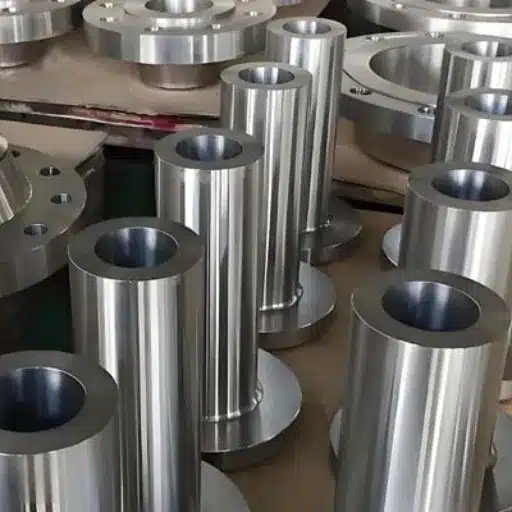
Nickel-based alloys are extremely difficult to machine due to several of their distinctive mechanical and metallurgical characteristics that are problematic during machining operations. The most significant factor contributing to the difficulty of machining nickel-based alloys is their high levels of sheet toughness and strength which can result in premature wear and reduced lifecycle of the cutting tool being used for the operation. The hardness levels of nickel-based superalloys, such as Inconel 718 can range from approximately 33 HRC to 47 HRC, creating problems with the efficient cutting and sculpting of these metals; as well, the low thermal conductivity of nickel-based alloys means that the heat generated at the cutting edge will buildup and ultimately cause thermal degradation of the cutting tool.
One of the most common machining problems associated with nickel alloys is the phenomenon of “work hardening”; as nickel-based superalloys are typically subject to a rapid increase in hardness while being machined, work hardening causes increased cutting resistance, and results in greater difficulties performing subsequent cuts on the material. Therefore, work hardening creates productivity bottlenecks and often necessitates more specialized cut practices (e.g., slower cutting speed and higher feed rate) in order to achieve an acceptable production result.
There have been several recent advances in machining and many of these advances include statistical information that provide insight to the challenges associated with machining nickel-based superalloys. For example, statistical data indicate that tool wear rates for tools used to manufacture nickel-based superalloys may be as much as 20% greater than the tool wear rates observed for steel-based tooling; therefore, the increased cost of tool wear has a significant impact on the overall cost of operation. To meet the above-mentioned challenges, many of today’s machining methodologies incorporate the use of engineered cartridge or ceramic cutting tools, utilizing high-pressure coolant systems for improved heat management and increased tool performance.
Tool Wear and Material Removal Rates
Nickel alloy machining generates a lot of tool wear and has great effects on a company’s productivity, product quality, and the cost of production. Machining of nickel alloys that require high-strength and thermal-resistant cutting tools can produce extreme amounts of cutting tool wear if not monitored properly. Carbide and ceramic tools are the most common types of cutting tools used to combat these problems; however, carbide and ceramic tools also risk having high wear rates under poor cutting conditions.
It has been shown that applying the right cutting operations is the most effective way to increase material removal rates (MRR) and to minimize tool wear. Studies show optimum cutting speeds ranging from 30–60 m/min with a lower feed rate will provide maximum tool life without decreasing efficiency. Using cutting fluids that have a high-temperature characteristic can also greatly reduce tool wear because they reduce friction between the cutting tool and the workpiece.
Recent Technological Advancements in Nickel Alloy Casting
Investment Casting Techniques for Nickel Alloys
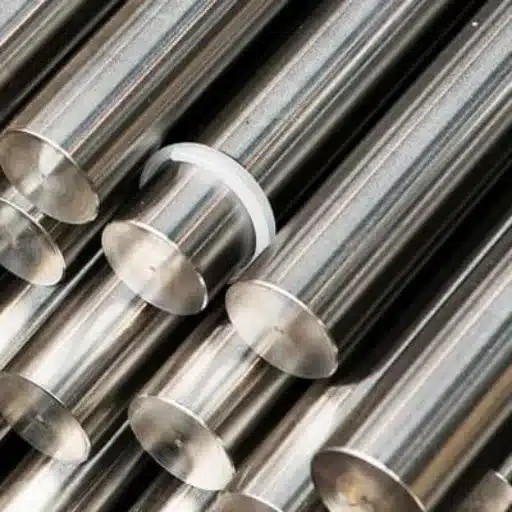
Investment Casting (lost wax casting) is a relatively low-cost method of producing highly complex and high-performance nickel alloy components. Investment Casting is particularly advantageous for manufacturers that require very complex geometry, very thin wall thicknesses, and high tolerance fits for aerospace, energy, and medical industries.
The manufacturer creates a wax model or pattern for each part, followed by creating a ceramic shell over the wax model, which becomes the mold. The ceramic mold is then filled with molten nickel alloy once the wax model is melted away, yielding an exact replica once cooled and solidified after removal of the ceramic shell. Nickel alloys are a great choice for this method because of their exceptional heat resistant properties, and provide an additional benefit with superior oxidation and corrosion resistance, which makes them ideal for extreme temperature environments.
Recently, there have been many advances in Investment Casting technology, such as 3D Printing Wax Patterns that can significantly shorten the time it will take to produce a part model due to the increased design flexibility available. Additionally, there are some new advanced materials that can withstand higher temperatures that will improve the finish quality and dimensional accuracy of cast nickel alloy parts.
Innovations in Precision Casting Processes
Recent technological improvements in the manufacturing industry; through Precision Casting Processes; have seen a dramatic increase in manufacturing-with-increasing accuracy and efficiency. A prime example of this improvement is the capacity to create ceramic moulds using 3D Printing Technology, which now allows manufacturers much greater flexibility in their design process while shortening lead times for producing parts with a complex design profile.
To further optimise the manufacturing process for castings, manufacturers have developed advanced simulation software that allows them to predict and minimise potential defect issues; such as Porosity and Shrinkage. The use of this software has allowed manufacturers to create higher quality products. An example of how advanced software can help create better quality products is that it is now possible for manufacturers to simulate multiple Thermal Gradients and Solidification Patterns via advanced simulation software, thus allowing manufacturers to have improved total control over the final properties of the material.
Reference Sources
-
“Nickel, Cobalt, and Titanium–Based Alloys–From Aircraft Vehicles to Medical Applications”
- Key Findings: This paper discusses the use of nickel-based alloys in precision-engineered components, particularly in gas-turbine aircraft engines. It highlights their heat resistance and minimal material wastage during machining, making them ideal for high-performance applications.
- Methodology: The study reviews existing applications and manufacturing techniques, focusing on material properties and their implications for precision engineering.
- Read the study here
-
“Modeling and Prediction of Water-Jet-Guided Laser Cutting Depth for Inconel 718 Material Using Response Surface Methodology”
- Key Findings: This research explores precision machining of Inconel 718, a nickel-based superalloy, using water-jet-guided laser cutting. It provides predictive models for cutting depth, enhancing precision and efficiency in manufacturing.
- Methodology: The study employs response surface methodology to model and predict cutting parameters, validated through experimental trials.
- Read the study here
-
“3D Printing Techniques: Transforming Manufacturing with Precision and Sustainability”
- Key Findings: This paper examines the role of additive manufacturing in producing nickel-based superalloys. It emphasizes the impact of laser power and scan speed on surface quality, showcasing advancements in precision and sustainability.
- Methodology: The research analyzes additive manufacturing processes, focusing on parameter optimization for improved surface quality.
- Read the study here
Frequently Asked Questions (FAQs)
Why choose Inconel for high-temperature environments?
Inconel is a nickel-chromium-based alloy designed to withstand high-temperature extreme-high-strength conditions throughout a broad temperature range. The alloy typically contains chromium and molybdenum, which results in exceptional performance characteristics in high-temperature environments. These factors combined make Inconel the preferred alloy for aerospace component manufacturing, power generation and other extreme applications where it is necessary for alloys to maintain their mechanical strength while resisting oxidation and scaling.
How does Monel compare to other nickel alloys when exposed to corrosive conditions?
Monel, especially Monel 400 contains nickel and copper in its alloy and has a reputation for providing outstanding corrosion resistance in both marine and chemical processing conditions. Monel has a much greater resistance to seawater and many acidic environments versus other nickel-based superalloys, such as Inconel, thus Monel is the best option for these applications where extreme conditions and stress corrosion cracking occur.
Is Monel 400 appropriate for making precision parts for chemical/Marine processing applications?
Yes, Monel 400 is suitable for producing precision parts used in marine and chemical processing applications due to the fact it provides outstanding corrosion resistance, exceptional ductility and the ability to survive in highly corrosive environments. The precision machining of Monel requires special attention in terms of tool selection, since tooling that has been stressed will cause galling, however the excellent strength and corrosion-resistant properties of Monel combined with its extreme resistance to wear and mechanical forces makes Monel 400 a suitable option for producing complex components manufactured from nickel-based alloys and precision manufactured components without compromising the performance of these components.
What makes nickel alloys exceptional material choices in extreme and high-stress environments, such as aerospace and energy?
Nickel alloys have the unique ability to maintain their strength in high-temperature/high-stress environments typically found in the aerospace and energy industries due to their unique combination of strength and oxidation and corrosion resistance properties. Nickel alloys are ideal for use in turbine blades, combustion chambers and other precision components used in demanding extreme applications because of their exceptional strength, ability to withstand extreme environmental conditions and because they retain their primary mechanical strength during large thermal transition cycles.
How do the additions of chromium and molybdenum affect the absolute corrosion resistance of an alloy?
Chromium contributes to the oxidation and corrosion resistance of an alloy, due to its ability to form a stable protective oxide network, and Molybdenum further contributes to the extreme corrosion resistance of an alloy due to its ability to resist both pitting and crevice corrosion due to Chloride exposure. The effects of Chromium and Molybdenum on nickel-based alloys are extremely important to ensure that x components meet the expectations for operation in high-temperature and corrosive environments.