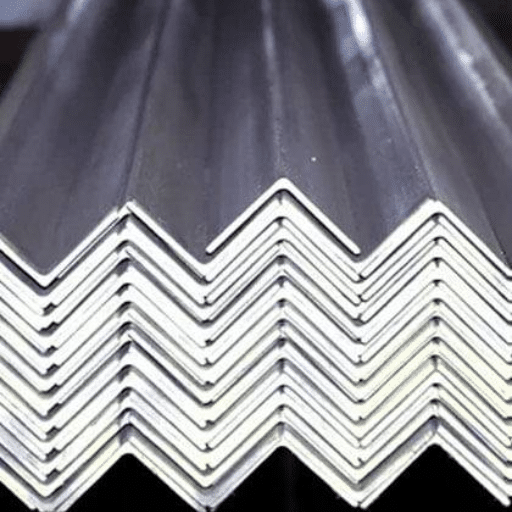
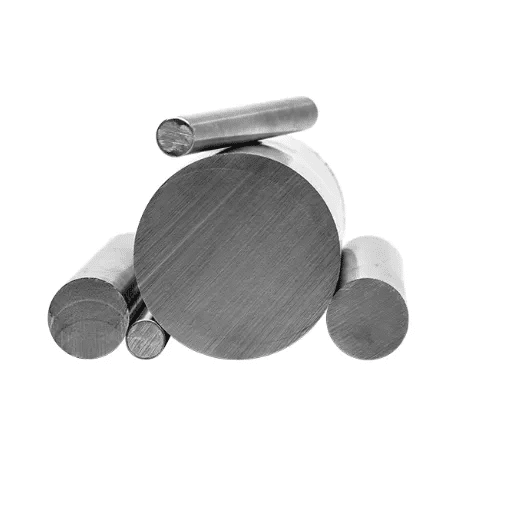
The choice of metal is the most significant factor when it comes to the selection of the right accessory. Customers frequently get stuck in the decision-making process between stainless steel and sterling silver, which are two metal varieties that have become common for jewelry collections. The two materials have their own distinct characteristics that attract users, but at the same time, they contain essential differences that can be a reason for considering the factors such as longevity, look, and care. You will see such distinctions in our article, where we compare today’s stainless steel vs. sterling silver, therefore, let us guide you to speak with confidence about your preferences and find the perfect item to express your personality and meet your requirements. Get ready as we disclose the good and bad sides of these two amazing metals!
Introduction to Stainless Steel and Sterling Silver
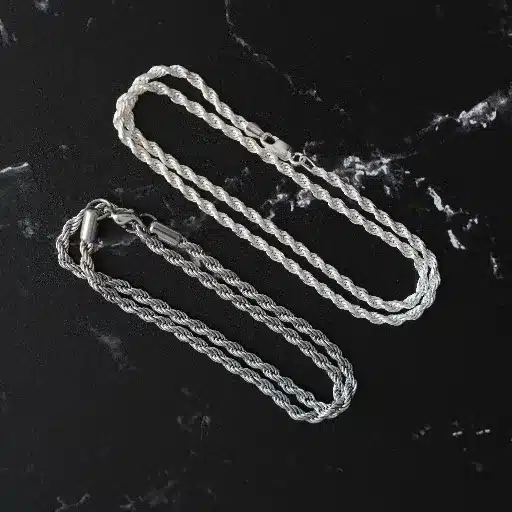
The Importance of Choosing the Right Material
The choice of the right material, which may be either stainless steel or sterling silver, has a mighty impact on the lifetime, performance, and the looks of your jewelry or accessories. Stainless steel is in its combination of iron, chromium (about 10.5% or more), and other elements like nickel or molybdenum. Chromium forms a layer over the stainless steel that protects it and gives it long-lasting resilience and strength.
Sterling silver, meanwhile, which is made of 92.5% pure silver and 7.5% other metals, most often copper, is loved for its shiny and sophisticated appearance. Although it is the contrary to stainless steel in terms of hardness and tarnish resistance and therefore needs to be regularly maintained for its beauty to last. Sterling silver is often picked for detailed art because it can be shaped easily but may not be appropriate for rough usage.
Stainless steel vs. sterling silver – a summary
Stainless Steel:
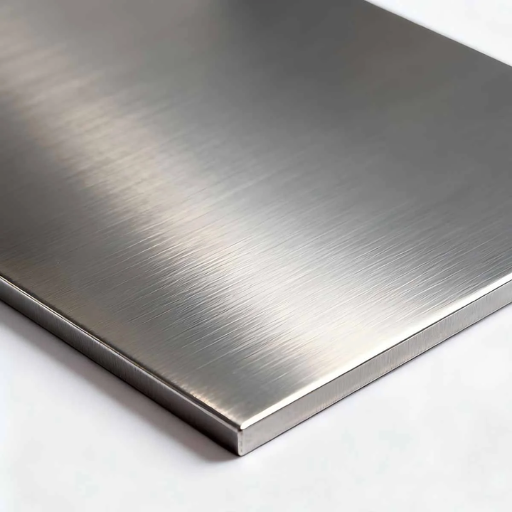
Stainless steel is a very tedious and super useful alloy consisting of iron, carbon, and chromium where the last one is a reason for the alloy’s property of not rusting. Usually, the present-day stainless steel has an amount of chromium that is no less than 10.5% of the total weight, and this is the reason for forming a very thin layer of oxide on the surface which does not allow the substrate to rust or tarnish. The mechanistic property of the material has a tensile strength of about 505 MPa, which is significantly greater than that of silver, thus making its use much wider in the case of cooking utensils, industrial equipment as well as in the manufacturing of accessories such as watches and bracelets that need to be made of durable materials.
Sterling Silver:
Sterling silver is the melting of silver that is a mixture of two metals consisting of 92.5% pure silver and the other metal in alloy form, which is mainly copper. The glossy surface of sterling silver owes much to its characteristic of being one of the metals with a worldwide recognition of not losing to tarnishing. On the other hand, its tensile strength is lower, hence, sterling silver has an average of only about 170 MPa as compared to that of stainless steel which makes it less resistant to scratching, and bending, and denting than stainless steel. Regular cleaning becomes necessary to keep sterling silver in its shiny and bright state since it gets tarnished quickly and is the result of being reactive with the sulfur and oxygen present in the air.
Durability: Stainless Steel vs Sterling Silver
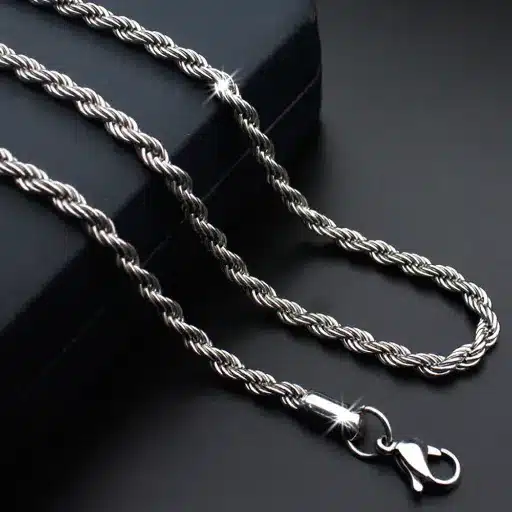
Strength and Longevity of Stainless Steel
Among all metals, stainless steel is a material that stands out more than any other one for its strength and durability, which are the main reasons for its widespread use not only in industries but also in homes. The combination of Iron, chromium, and nickel, which are the basic elements of the steel, gives the material the very high ability of not corroding, rusting, or staining even under the wet and harsh atmospheric conditions. Research has indicated that high-grade stainless steel like 304 and 316 can last for over 50 years in use and thus require the least amount of maintenance.
Besides the other qualities, one of the leading reasons that stainless steel has won such a great acceptance is its toughness and resistance against the wear and tear. Its tensile Strength, which usually ranges from 72,000 to 90,000 psi (pounds per square inch), is not only impressive but also a reason why stainless steel can be used for making skyscrapers, kitchenware, and surgical instruments. Additionally, if the application demands, the metal can resist even the extreme conditions of heat and cold, thus its usage in the most challenging applications.
Stainless Steel vs. Sterling Silver
Sterling silver, an alloy composed of 92.5% silver and 7.5% of other metals (mostly copper), is a metal that has an appealing aesthetic and hence, the applications range from jewelry to cutlery; however, the durability of sterling silver is lesser compared to stainless steel except for a couple of cases. It is a soft metal that gets easily scratched, dented, and tarnished with the passage of time although it is silver and has its purity compromised due to the addition of copper to the alloy. On the Mohs scale of mineral hardness, silver is rated between 2.5 and 3 which means it can be considered quite soft as compared to stainless steel which usually obtains hardness by scoring around 6.3.
To maintain its attractiveness and practicality, sterling silver should be polished regularly and handled with great care as it tarnishes very easily due to air exposure, humid conditions, and contact with certain chemicals. Nevertheless, sterling silver’s disadvantages are easily outweighed by its beauty and working properties allowing for the creation of intricate patterns especially in jewelry and ornamental items. New techniques such as anti-tarnish coatings application not only aim to enhance the durability of sterling silver but also its acceptance as an everyday material.
Cost Considerations: Stainless Steel vs Sterling Silver
Price Points of Stainless Steel Jewelry
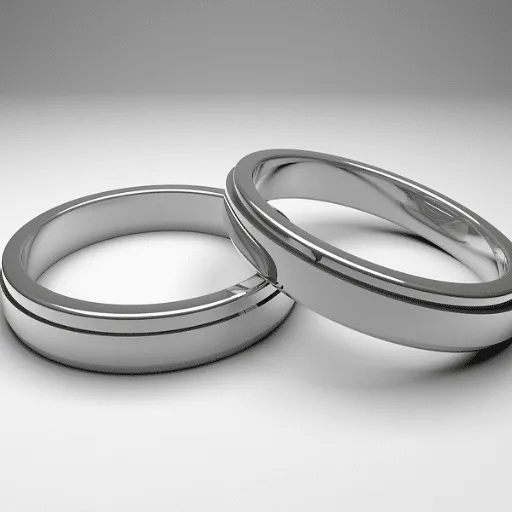
Stainless steel jewelry has always been mainly recognized by its low pricing, easy access, and thus, it is a frequent option of many consumers. The price of stainless steel jewelry normally ranges between $5 to $50 for basic designs, while intricate and branded pieces can go up to $150. Discounted metals such as sterling silver or gold do not come very cheap; hence, stainless steel is the metal that most of the budget-conscious fashionistas are attracted to, as they are looking for accessories that are beautiful and not pricey.
In addition to that, one of the factors that contribute to the cost-effectiveness of stainless steel is its strength and corrosion resistance, meaning that there will be no need for periodic purchases or maintenance. Following through J. K consumer tales, the worldwide market of stainless steel jewelry has been gradually increasing which reflects its popularity. As a case in point, the latest research has revealed that the global market of stainless steel jewelry was valued at around $2.3 billion in 2022 and that this figure will not only be maintained but also there will be a significant increase due to the demand for low-priced yet stylish accessories.
Gaining Insights into the Sterling Silver Jewelry
Sterling silver jewelry is a timeless option for the consumers that are celebrating, because of its shine, flexibility, and low price. It consists of 92.5% pure silver and 7.5% other metals, mostly copper; this alloy makes silver more powerful and durable, so it can be made into complex and gentle designs.
The jewelry market for the silver metal is evidently going up because of the growing consumer desire for the high-quality but affordable precious metal jewelry. The market for sterling silver jewelry is pegged at USD $3.3 billion in 2022, and it is likely to flourish significantly in the coming years owing to the rise in disposable income and the increase in the demand for the eco-friendly, versatile jewelry options.
Silver is not only appreciated for its aesthetic appeal but also its hypoallergenic features, which are the reason for its popularity among people with sensitive skin. In addition to this, the metal’s ability to take on gemstones and other decorations gives it a new life as a medium for artists to create unique, custom pieces. The investment potential of the metal is one of the factors keeping its value up since silver prices are guided by market trends, and thus the customers who want beauty and the financial worth of their jewelry are drawn towards the edge offered by such situations in terms of the beautiful allure of the metal.
Maintenance: Caring for Your Jewelry
Cleaning and Upkeep of Stainless Steel Jewelry
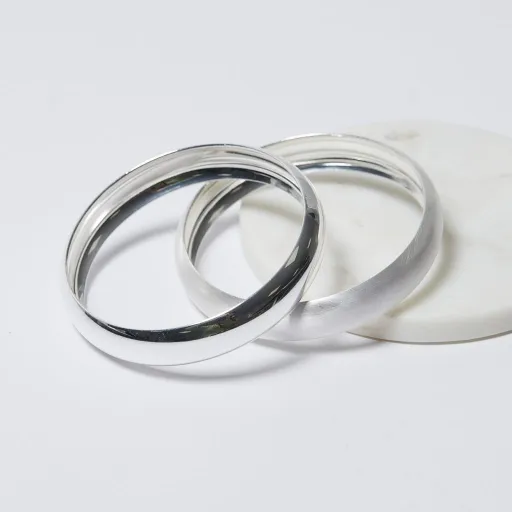
Stainless steel jewelry has always been the choice for long-lasting, non-tarnishing but sparkling ornaments; however, it has to be properly maintained. The most effective method for cleaning stainless steel jewelry is the soap-dish and water mixture. Soak the jewelry in the mixture for a short period of time and then take a soft-bristled toothbrush to gently scrub it and remove dirt and oil that have stuck to the piece.
In case of very persistent stains or fingerprints, it is a good idea to use a water-dampened lint-free microfiber cloth. Other than this, stainless steel jewelry will also benefit from occasional polishing with a stainless steel cleaner which helps to restore the original shine. It would be advisable not to use powerful cleaning chemicals that might make the metal lose its shine or even discolor it in the long run.
Stainless steel jewelry, should be stored, in a dry and cool place, ideally in individual bags or separate compartments, so that no scratches will occur due to the contact with other pieces. Recent studies reveal that stainless steel is one of the least demanding metals in the jewelry world concerning maintenance with its resistance to corrosion and hypoallergenic properties making it suitable for everyday wear. If you are careful enough with your stainless steel jewelry, it may still look fashionably sleek and serve as an everyday necessity even after years of use.
Maintaining the Luster of Sterling Silver
Sterling silver, a material of classic and elegant, but it requires constant care in order to reveal its true brightness. The chemical reactions taking place between air, moisture, and silver can cause the silver metal to transform from its original state to dull and blackened, in time. To this effect, it is advisable to store sterling silver in an airtight container or in an anti-tarnished bag and to avoid letting the silver come in contact with household chemicals, perfumes, and lotions directly.
According to recent studies, humidity and sulfur content in the environment are the factors that contribute the most to the fast tarnishing of sterling silver. The best tool for cleaning light tarnished silver is the soft microfiber cloth as it will not scratch the surface at the same time. A mixture of warm water and baking soda or mild dish soap can also be used for cleaning heavily tarnished silver. Gently rubbing the silver with the mixture may help in restoring its shine as professionals in jewelry care confirm.
Aesthetic Appeal: Visual Differences
Design Versatility of Stainless Steel Jewelry
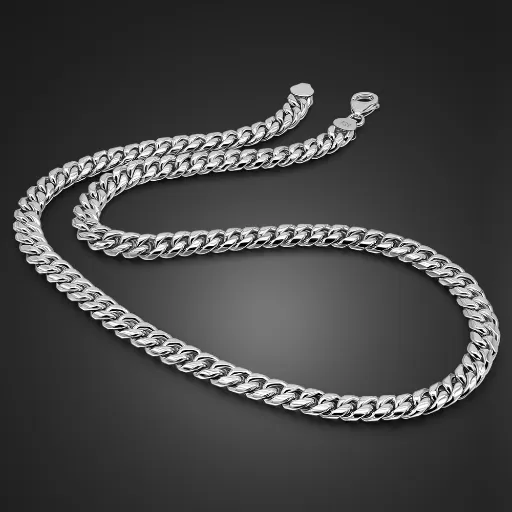
Among other qualities, the remarkable versatility and modern aesthetics of stainless steel jewelry have been the leading reason for its selection worldwide. Besides the fact that it can be molded into diverse shapes,like gold and silver, the materials’ overall attractiveness makes to be the choice of stainless steel. Stainless steel finds itself in various forms such as the less is more daily wear and storing it in a big way, thus, it is surely able to meet everyone’s preferences and styles.
According to the market analysis conducted in 2023, the stainless steel jewelry sales are on a steady rise, with the next five years expected to see an annual growth rate of 5.5%. The pattern of this trend is such that it points to the increasing number of people looking for stylish and, at the same time, inexpensive options. Besides, the bold and chic designers are incorporating stainless steel into their lines thus, confirming its place as the material of choice for modern jewelry.
The Classic Goodness of Sterling Silver
Sterling silver has been constantly the most popular and favored metal due to its beauty that never sleeps and the ease of using it in making jewelry that lasted through centuries. Sterling silver is 92.5% silver and 7.5% copper or any other metal, so it is both durable and beautiful at the same time. Since silver is inherently not more than half less strong than the metal, it can be used only for some artistic works, while the beauty remains the same.
The cost of sterling silver is one of its main advantages; it is much cheaper than other precious metals like gold and platinum, thus good quality and beautiful jewelry can be offered to a wide range of consumers. Also, different colored stones go well with silver, thus, besides the already existing shades of silvers the brightening of different colors can be a good reason for the range of designs from minimalist to big striking ones.
It can be said that gold and silver jewelry still hold a high position in global demand. As per a market report of 2023, the silver jewelry market is likely to experience a CAGR of 6.5% from 2021 to 2028, mainly because of the growing trend of consumers opting for the luxury goods that are sustainable and affordable. Eco-friendliness is another quality of sterling silver that is a strong buying factor; thus, its dominance in the jewelry world is further assured.
Reference Sources
-
Study on the Microstructure, Mechanical Properties, Tarnish, and Corrosion Resistance of Sterling Silver Alloyed with Manganese
- Key Findings: This research investigates the effects of manganese alloying in sterling silver. It highlights improvements in mechanical properties, tarnish resistance, and corrosion resistance, making it more suitable for jewelry applications.
- Methodology: The study used as-cast sterling silver alloys and analyzed their microstructure, mechanical properties, and resistance to tarnish and corrosion through controlled experiments.
Source: ScienceDirect
-
Investigating the Structure, Microstructure, and Texture in Selective Laser-Melted Sterling Silver 925
- Key Findings: This study explores the use of selective laser melting (SLM) for sterling silver, comparing its properties to traditional manufacturing methods. It found that SLM enhances the microstructure and mechanical properties of sterling silver.
- Methodology: The research involved powder fusion on a stainless steel plate and optimization of process parameters to achieve desired results.
Source: Springer
Frequently Asked Questions (FAQs)
Is it recommended to use stainless steel or sterling silver if the skin is sensitive?
Stainless steel is frequently preferred for such skin types due to the fact that a lot of stainless steel jewelry is non-allergic and does not trigger allergic reactions, so it is recommended to use surgical-grade stainless steel (316L) for sensitive skin. In the case of sterling silver, some might find it irritating as it is an alloy (most of the time it is 92.5% silver and 7.5% other) and hence its “silver” and “7.5 metals” can cause allergies. If you are already having difficulty with metals, buy nickel-free stainless steel or make sure the sterling is nickel-free; both metals have options, but stainless steel is usually more skin-friendly and daily men’s jewelry.
How does the difference in the durability of metals like stainless steel and sterling silver affect the choice made for the jewelry?
Stainless steel is tough as it has the ability to withstand scratches, corrosion, and everyday wear. Sterling silver is suffering in comparison as it is softer and therefore more easily damaged by dents and scratches; moreover, it is prone to tarnishing and needs regular cleaning and proper storage to maintain its appearance. The toughness of stainless steel can make it the only choice for everyday pieces, while sterling silver can be a classic shiny option if properly cared for.
Is sterling silver still regarded as a precious metal and does that affect its price?
Yes, sterling silver (the one with 925 or 92.5 marking) is regarded as a precious metal due to its high percentage of pure silver content (92.5% pure silver and 7.5% other metals). This inherent worth gives sterling silver a higher price than that of stainless steel. Stainless steel, being non-precious metal, almost always has a lower resale value, but it can still be more user-friendly and require less maintenance over time for jewelry and home decor.
Which is more difficult to care for: stainless steel or sterling silver?
Stainless steel does not require much attention and thus appeals to the wearers who have a busy lifestyle; the majority of stainless steel jewelry can be washed with soap and water and will continue to be gleaming and resistant to corrosion even without frequent polishing. Sterling silver, on the other hand, needs silver polish or periodic cleaning to combat tarnish and may require polishing more often—lifting the surface dirt with soap and water is useful, but silver polish gradually restores the shine over time.
Are there any good and bad sides to stainless steel used for bracelets and other jewelry?
Stainless steel has a lot of advantages: it is a durable plus resistant to scratches and corrosion, low maintenance, and it is perfectly suited for bracelets and other daily wear items. The downsides of stainless steel are that it lacks high intrinsic value and that it does not allow for as intricate designs as sterling silver due to its lower malleability. For daily use, especially in men’s jewelry, stainless steel will retain its look very well, but if you want the feel and value of a precious metal, sterling silver may be the better choice.