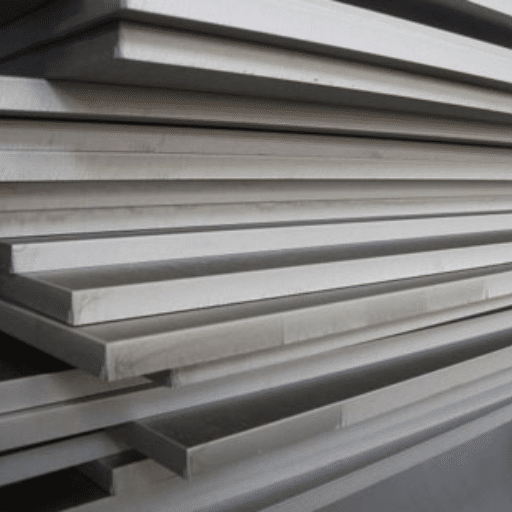
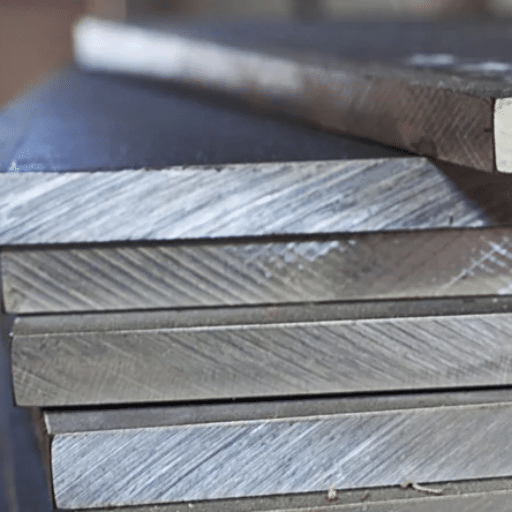
A restaurant equipment buyer in Texas recently sourced 304 stainless steel sheet for a commercial kitchen counter fabrication. The supplier’s quote was 15% below market, and the Mill Test Certificate looked legitimate. Within 10 months, rust spots appeared at the weld seams and along the sheared edges. An independent XRF scan revealed the truth: the material was 201J5, with only 1.2% nickel and 10.7% manganese. The buyer had paid for 304 and received a grade worth 40% less.
Sheet buyers need to make their decision between 304 stainless steel and 201 stainless steel for their purchase because price is not their only consideration. The situation requires testing because it presents two different verification problems. The two material grades exhibit one particular characteristic that enables their identification, but they develop two distinct magnetic properties after undergoing cold working. The operational environment determines which grade to select because nickel content forms the primary distinction between the two materials.
The guide presents information about composition differences, and it provides quantitative data about corrosion resistance and current Chinese mill pricing for 2025-2026, which includes J1 and J5 variants, and it compares mechanical properties while offering a practical framework to detect grade substitution fraud. You will gain confidence to specify and verify the correct grade when you attend our session, which focuses on material requirements for food equipment, elevator panels, and decorative trim.
If you already know your requirements, submit your material list today. Our metallurgical team will respond within 24 hours with a grade recommendation, pricing, and delivery schedule.
What Is the Difference Between 304 and 201 Stainless Steel?

Both 304 and 201 are austenitic stainless steels. In the annealed condition, they are non-magnetic, offer reasonable formability, and can be welded with standard processes. To the untrained eye, they are nearly indistinguishable in standard mill finish.
The critical difference is between economics and chemistry. 304 stainless steel (UNS S30400) is the classic 18/8 alloy: 18–20% chromium and 8–10.5% nickel. 201 stainless steel (UNS S20100) was developed in the 1950s during periods of nickel scarcity. It replaces roughly half of 304’s expensive nickel with 5.5–7.5% manganese and up to 0.25% nitrogen, reducing raw material cost while maintaining an austenitic structure.
The cost of 201 becomes 35 to 45 percent cheaper than 304 through the common market replacement. Material 201 shows decreased protection against corrosion, which occurs in humid environments that contain chloride and acidic substances. The 304 alloy maintains its protective chromium oxide layer because of its high nickel content, whereas 201 loses this protection because its manganese-rich structure deteriorates after contact with water and salt.
The grades appear identical, so you must check your delivery through testing. The handheld XRF analyzer provides fast results by measuring both nickel and manganese levels. You receive 201 material at 304 pricing when a supplier delivers 304, but the spectral report indicates nickel content below 7 percent and manganese content above 5 percent.
For background on the 201 grade development and properties, see our guide on what is 201 stainless steel.
Chemical Composition: Why Nickel (and Manganese) Matter
ASTM A240 / A240M defines the composition limits for both grades. The following table shows the core 304 vs 201 stainless steel chemical differences, and why manganese cannot substitute for nickel in corrosive environments.
| Element | 304 (UNS S30400) | 201 (UNS S20100) | Why It Matters |
|---|---|---|---|
| Chromium (Cr) | 18.0 – 20.0% | 16.0 – 18.0% | Forms the passive oxide film that prevents rust |
| Nickel (Ni) | 8.0 – 10.5% | 3.5 – 5.5% | Stabilizes austenite and the passive film; improves toughness and corrosion resistance |
| Manganese (Mn) | ≤ 2.00% | 5.50 – 7.50% | Replaces nickel to cut cost; does not protect against chlorides or acids |
| Carbon (C) | ≤ 0.08% | ≤ 0.15% | Higher carbon in 201 reduces weldability and increases work-hardening |
| Nitrogen (N) | Trace | ≤ 0.25% | Helps maintain austenitic structure but does not improve corrosion resistance |
| Iron (Fe) | Balance | Balance | Base metal |
Nickel serves a dual function because it both maintains the austenitic crystal structure and creates a denser self-repairing chromium oxide layer. Manganese, by contrast, offers no protection against chloride attack or acidic environments. The passive film becomes thinner and less stable when scratched or chemically attacked because the 201 material contains 16-18% chromium and a much lower nickel content.
The J-Series Complication
In China, “201” is not a single grade. Mills produce sub-grades J1, J2, J3, J4, and J5 under enterprise standards (such as Q/TTIG003-2019) to balance raw-material costs against performance. These grades typically contain far less nickel and chromium than international AISI 201, and far more manganese.
| Element | 201J1 (Typical) | 201J5 (Typical) | Implication |
|---|---|---|---|
| Chromium (Cr) | ~13.9% | ~13.3% | Lower Cr = worse rust resistance |
| Nickel (Ni) | ~1.2% | ~1.45% | Very low Ni = poor passive film stability |
| Manganese (Mn) | ~10.0% | ~10.7% | High Mn = cost savings, no corrosion benefit |
| Copper (Cu) | ~0.8% | ~0.07% | Copper improves formability; J5 has almost none |
| Carbon (C) | ~0.10% | ~0.14% | Higher C = harder, more brittle, worse weldability |
The J1 “export standard” represents the most widely used export standard for household products because it enables sufficient product formability. The J5 budget solution provides maximum cost reduction but delivers extremely hard and brittle materials, which will break during processing and develop pitting damage when exposed to moist environments. When a Chinese supplier quotes “201,” you must specify the exact J-grade on your purchase order and verify the chemistry on the Mill Test Certificate.
The 12Cr17Mn6Ni5N (S35350) grade serves as the direct equivalent of GB/T 4237 and GB/T 3280-2015 standards for buyers who obtain materials from China. The material certified under ASTM A240 standards meets the requirements of GB/T 3280-2015 standards, and the reverse holds when the material composition stays within the shared composition boundaries. The J-series grades, which operate according to mill enterprise standards, will exceed those boundaries, so the precise composition between 304 and 201 becomes vital for regulatory compliance.
Corrosion Resistance: The Real-World Gap

In dry, indoor, climate-controlled environments, 304 vs 201 stainless steel can perform similarly for years. Both resist normal atmospheric oxidation and mild organic exposure. The divergence begins when moisture, salt, acids, or chlorides enter the picture.
Quantitative Corrosion Data
| Test / Metric | 201 | 304 | Interpretation |
|---|---|---|---|
| ASTM B117 Salt Spray | 24 – 120 hours | 120 – 500+ hours | Time to initial rust in salt fog |
| Relative Pitting Resistance | Baseline (1×) | ~4.6× better | Comparative index from alloy studies |
| 2B Board Salt Spray Index | 1 | ~40 | Accelerated test ratio for flat sheet |
In practical terms, 201 sheet and fabricated components typically show surface rust or pitting within 6–12 months in humid environments, dishwasher cycles, or coastal air. Under the same conditions, 304 commonly lasts 3+ years without significant degradation, and often much longer if properly passivated. These salt spray results align with guidance from the British Stainless Steel Association on interpreting accelerated corrosion tests for austenitic grades.
Real-World Failure Modes
Field observations from fabricators and equipment buyers paint a clear picture:
- Dishwasher and high-moisture use: 201 is particularly vulnerable to the combination of heat, alkaline detergent, and prolonged moisture. Reddit manufacturing communities consistently report rust spots on 201 cookware and flatware within a year of regular dishwasher use.
- Weld seams and sheared edges: 201’s passive film is weaker and more easily disrupted by fabrication. Rust often appears first at welds, scratches, and cold-worked edges where the oxide layer has been mechanically damaged.
- Acidic food contact: Nickel-release testing shows 201 releases 0.05–0.1 mg/L in 4% acetic acid solution, versus <0.02 mg/L for 304. This correlates with discoloration and metallic tastes in budget cookware.
The ongoing belief that 201 possesses “food grade” status exists as a falsehood. The substance 201 fails to meet food-grade standards because it can only be used for specific temporary dry food contact situations according to certain regional regulations. The global standard for commercial kitchens and regulated food processing and long-term food storage requires 304 stainless steel.
304 vs 201 Stainless Steel Price Difference (2025–2026)
Stainless steel sheet pricing is driven primarily by nickel content. In any 304 vs 201 stainless steel price comparison, the lower nickel content of 201, combined with manganese substitution (a much cheaper element), makes its price consistently lower and less volatile.
Current Price Ranges (China FOB, April 2026)
| Grade | Form | Price per kg (USD) | Notes |
|---|---|---|---|
| 304 | Cold-rolled 2B sheet | 2.11–2.11–2.18 | Standard mill finish, bulk orders |
| 201J1 | Cold-rolled 2B sheet | 1.15–1.15–1.40 | Most common export grade |
| 201J5 | Cold-rolled 2B sheet | 1.05–1.05–1.25 | Extreme budget option, lowest formability |
As of April 2026, 201J1 cold-rolled sheet costs approximately 35–45% less than 304 sheet from Chinese mills. The J5 variant trades another 0.10–0.10–0.15/kg below J1, reflecting its leaner alloy content.
When Does 201 Pay for Itself?
The upfront cost gap is significant, but only makes sense in the right environment:
- Interior elevator panels, door trim, and decorative wall cladding in dry, climate-controlled buildings: 201J1 is technically adequate and the 35–45% savings are genuine.
- Outdoor furniture, kitchen equipment, or coastal exposure: A 201 part may require replacement in 1–2 years. The material savings are erased by replacement labor, downtime, and reputation damage.
- Food-contact or regulated applications: Using 201 to save money creates compliance risk and potential liability that far exceeds the initial cost difference.
For mild indoor applications with no moisture or chloride exposure, 201 remains the smarter economic choice. Overspecifying to 304 “just to be safe” drives up project cost without delivering additional value.
For current pricing on 304 sheet specifically, see our dedicated 304 stainless steel sheet price guide.
Mechanical Properties & Fabrication Comparison

In the annealed condition, 201 and 304 are closer in strength than many buyers assume. The fabrication differences appear in ductility, work-hardening behavior, and welding process control.
Mechanical Properties (Annealed)
| Property | 304 | 201 |
|---|---|---|
| Tensile Strength | ≥ 515 MPa (75 ksi) | ~655 MPa (95 ksi) |
| Yield Strength | ≥ 205 MPa (30 ksi) | ~310 MPa (45 ksi) |
| Elongation | ≥ 40% | ≥ 40% |
| Hardness (max) | 92 RB | 100 RB |
201 actually has a higher yield strength than 304 in the annealed condition. The cold-working process, which includes 1/4 hard and 1/2 hard tempering, enables 201 to achieve superior strength and hardness compared to 304. The mechanical advantage of 201 serves as a reason that makes Ryerson consider this material as a suitable choice for high-traffic indoor applications.
The strength of the material leads to a requirement for additional expenditure. 201 work-hardens much more aggressively than 304. The deep drawing and spinning and complex bending operations of 201 require intermediate annealing to stop cracking from occurring. 304 enables more predictable shape formation with reduced need for process delays during the forming procedure.
Machinability
304 machines more easily than 201. The higher manganese content in 201 makes it slightly “gummier,” causing higher tool wear and more difficulty in drilling, tapping, and milling. For high-volume machined components, this factor can influence tooling costs and cycle times.
Weldability & Filler Wire Selection
Both grades weld adequately with TIG (GTAW) and MIG (GMAW) processes using ER308L filler wire. The critical difference is process control:
- 201’s higher carbon content (up to 0.15% vs ≤0.08% for 304) increases the risk of sensitization, chromium carbide precipitation at grain boundaries that reduces corrosion resistance in the heat-affected zone.
- Heat input must be carefully controlled when welding 201 to minimize carbide formation and distortion.
- Post-weld passivation is essential for both grades, but especially for 201. Without passivation, the weld and heat-affected zone become the first points of rust failure.
Other fabrication best practices apply to both grades:
- No preheat required for austenitic stainless steels.
- Avoid carbon steel contamination; never grind stainless with tools previously used on carbon steel.
- Clean the surface before welding to remove oils, oxides, and contaminants.
For a complete welding guide, see our article on welding 304 stainless steel sheet.
How to Detect 201 Sold as 304: Verification Guide

Grade substitution is one of the most common frauds in the stainless steel market. Because 201 is 35–45% cheaper than 304, unscrupulous suppliers have a strong financial incentive to mislabel 201 (or lower-grade J-series variants) as 304.
XRF Analyzer: The Only Definitive Method
A handheld X-ray fluorescence (XRF) analyzer is the gold standard for field verification. It is non-destructive, takes seconds to minutes, and measures elemental composition down to parts per million.
XRF pass/fail criteria for sheet buyers:
| Element | Genuine 304 | 201 (Counterfeit) | J-Series (Counterfeit) |
|---|---|---|---|
| Chromium (Cr) | 18.0 – 20.0% | 16.0 – 18.0% | ~13.0 – 14.0% |
| Nickel (Ni) | ≥ 8.0% | 3.5 – 5.5% | ~1.2 – 1.5% |
| Manganese (Mn) | ≤ 2.0% | 5.5 – 7.5% | ~9.0 – 11.0% |
If the XRF shows nickel below 7% and manganese above 2%, the material is not 304 regardless of what the certificate claims. Nickel below 2% strongly indicates a J-series substitution.
Best practices for XRF testing:
- Calibrate the instrument with a known 304 standard before testing.
- Grind the test surface clean with sandpaper (400-grit) to remove coatings, oxides, or oils. You need a flat, bare metal area of at least 10 mm × 10 mm.
- Place the probe tightly against the metal and hold steady for 1–2 minutes.
- Read the actual percentages for Cr, Ni, and Mn. Do not rely solely on the instrument’s “grade match” output.
The Magnet Test Myth
The buyers think a magnet test can test 201 and 304 steel. The test fails because both steel grades contain austenitic material, which stays non-magnetic after they undergo annealing. The cold working process through deep drawing, pressing, bending, or shearing will produce a martensitic transformation in both 201 and 304 materials, which results in weak to moderate magnetic attraction.
A strong neodymium magnet will stick firmly to 430 grade ferritic 180 steel because it contains no nickel, but it may also show weak attraction to cold-worked 201 or 304. The magnet test can identify 430 material substitutions, but it does not work for testing 201 versus 304.
Complementary Screening Methods
- Chemical spot test (manganese detection): Manganese detection liquid dropped on bare metal will turn red or pink for 201/J-series (high Mn) but show little color change for 304.
- Spark test: Grinding 201 produces more numerous, shorter, brighter white sparks with forking. 304 produces fewer, longer, duller red sparks with little branching. This requires experience and is less reliable than XRF.
- Price check: If a 304 quote is more than 15% below the prevailing market rate, it is a major red flag.
MTR Red Flags
Never accept a Mill Test Certificate at face value without cross-checking:
- Nickel listed below 7% on a “304” certificate means fraud.
- Chromium below 17% on a “304” certificate is suspect.
- Certificates that omit manganese content entirely should be treated with suspicion.
- Missing heat numbers, missing mill logos, or generic certificate templates are common signs of forged documentation.
At Jiangsu Zhonggongte, we source 304 and 201 sheet directly from first-tier mills and verify every batch with in-house direct-reading spectrometers. Every order ships with full MTR documentation and spectral analysis reports.
When to Choose 304 vs 201: Application Decision Framework

The right grade is determined by the operating environment and regulatory requirements, not by budget alone.
Choose 201 When:
- The application is strictly indoor, dry, and decorative
- You are fabricating elevator panels, door trim, interior wall cladding, or furniture frames in climate-controlled buildings
- Cost reduction is a priority, and you can verify material chemistry by XRF
- The forming is simple (flat panels, tubes, shallow bends) with no complex deep drawing
- There is no food contact, no moisture exposure, and no chloride exposure
Choose 304 When:
- The application involves food processing, commercial kitchens, drinkware, or pharmaceutical equipment
- The material will encounter humidity, rain, coastal air, or cleaning chemicals
- You are specifying outdoor architecture, railings, or marine-adjacent structures
- The design requires complex welding, deep drawing, spinning, or extensive cold forming
- The project requires FDA, EU 1935/2004, or NSF/ANSI 51 food-grade certification
Decision Matrix
| Environment / Application | Recommended Grade | Why |
|---|---|---|
| Indoor decorative trim (dry climate) | 201J1 | Adequate corrosion resistance; best value |
| Elevator panels, door frames | 201J1 | Dry indoor use; 35–45% cost savings |
| Commercial kitchen equipment | 304 | Food-grade certification; resists moisture and cleaners |
| Food processing (bakery, dry goods) | 304 | Global food-grade standard |
| Seafood processing, meat wet lines | 304 (or 316) | Chlorides and acids attack 201 rapidly |
| Outdoor architecture (non-coastal) | 304 | Atmospheric moisture manageable for 304, destructive for 201 |
| Coastal or marine exposure | 304 minimum (316 preferred) | Salt-laden air causes 201 pitting in months |
| Swimming pools / chlorinated water | 304 minimum (316 preferred) | Chlorides break down 201’s passive film |
| Complex welded assemblies | 304 | Lower carbon, better weldability, easier passivation |
| Deep drawn sinks / cookware | 304 | Superior ductility and formability |
The common belief that 304 provides absolute superiority over all other materials is incorrect. The 201J1 specification functions better for 30 to 40 percent of applications which need dry and indoor conditions. The material provides both improved yield strength and decreased manufacturing expenses. The wastefulness of using 304 for kitchen applications equals the wastefulness of using 201 for outdoor applications.
For marine or high-chloride environments where even 304 may struggle, see our comparison of 304 vs 316 stainless steel sheet.
Sourcing 304 vs 201 Stainless Steel Sheet from China
Both 304 and 201 are produced in large volumes by Chinese mills including TISCO, BAOSTEEL, ZPSS, JISCO, Hongwang, and Tsingshan. For export buyers, the 304 vs 201 stainless steel sourcing considerations are similar, but the fraud risk is higher with 304 because of the price premium.
Mill Sourcing
- 304: Widely stocked; standard 2B finish coils are typically available with 2–4 week lead times.
- 201J1: Very widely available; the standard export grade for household goods, sinks, and decorative tubing.
- 201J5: Also widely available, but strictly limited to simple flat panels and ultra-low-cost trim. Many export buyers inadvertently receive J5 when they asked for “201” without specifying J1.
J-Series Specification
Chinese J-series grades are governed by mill enterprise standards (such as Q/TTIG003-2019), not a unified national GB standard. This means chemistry can vary slightly between producers, and a generic “201” specification is insufficient.
On every purchase order, specify the exact grade:
- “201J1” for general export products requiring moderate formability
- “201J2” or “201J3” for harder structural tubes and flat decorative panels
- “201J5” only if you explicitly want the lowest-cost, least-formable option for simple dry-indoor parts
MTR Verification
Every shipment should include a Mill Test Report showing the heat number and elemental composition.
- For 304: Verify nickel is 8.0–10.5% and chromium is 18.0–20.0%. Nickel below 7% strongly suggests 201 or J-series substitution.
- For 201: Verify the J-grade chemistry matches what was ordered. J1 should show copper around 0.8%; J5 will show copper near zero and carbon near 0.14%.
Independent Testing
For large or suspect orders, conduct independent verification with a handheld XRF analyzer upon receipt. The test takes minutes and can prevent a costly specification failure or product recall down the line.
Contact our technical team to discuss your grade requirements, certification needs, and delivery schedule.
Frequently Asked Questions
Is 201 stainless steel food grade?
The FDA and EU regulations for food-grade materials specifically prohibit No. 201 from being used with both acidic and extended food contact. The material meets regional regulations for limited dry temporary contact but 304 is the worldwide standard for food-grade materials. Use 304 for all commercial kitchen facilities and food processing operations which require compliance with established food safety standards.
How can I tell 304 from 201 without lab testing?
You need to test them with professional equipment because standard visual identification and home testing methods fail to differentiate between these two materials. The magnet test produces false results because both metal grades develop weak magnetism through their cold working process. Chemical spot tests for manganese can provide a preliminary indication, but the only definitive method is XRF analysis or optical emission spectrometry.
Can I use 201 stainless steel outdoors?
The material 201 exists as a grade which can be used only in indoor environments that maintain dry conditions. The material will start to develop surface rust and pitting damage after 6 to 12 months of contact with rain and humidity and coastal air. The material requires 304 as the minimum standard for all outdoor applications.
What is the difference between 201J1 and 201J5?
J1 serves as the primary export grade because it contains moderate copper content, approximately 0.8 percent which allows for the production of household products and shallow-drawn sinks. The budget option J5 contains higher carbon levels and lacks copper, which results in extremely poor deep-drawing ability. The material J5 functions well as basic flat trim for use in dry indoor spaces.
Why did my “304” sheet rust so quickly?
If “304” sheet rusts within months, especially at welds or edges, there is a high probability of grade substitution. Independent XRF testing often reveals the material is actually 201 or a low-nickel J-series variant. Verify nickel content (must be ≥8% for 304) before accepting the material.
Is the magnet test reliable for telling 201 from 304?
No. Both 201 and 304 are austenitic and non-magnetic when annealed, but cold working (bending, pressing, shearing) can induce weak magnetism in both grades. A magnet test can reliably identify ferritic grades like 430, but it cannot distinguish 201 from 304.
Conclusion
304 stainless steel sheet remains the default grade for good reason. The 18/8 chemical composition of this material provides three benefits, which include protection against corrosion and the ability to be formed and welded. This material suits food processing applications, outdoor architectural projects, and all situations that involve wet conditions and chlorides.
The 201 material grade does not function as a complete downgrade for all applications. The product serves as a specialized solution that offers budget-friendly protection for decorative purposes in enclosed areas that do not require corrosion resistance. The 35–45% cost savings are real, but only if you are actually receiving verified 201J1 and not paying for 304.
Three principles will keep your specification on track:
- Match the grade to the environment, not the budget alone. 201 is acceptable for dry indoor trim. 304 is non-negotiable for food, moisture, or outdoor exposure.
- Verify what you receive. Because the grades look identical, rely on MTR documentation and spot XRF testing. Nickel below 7% means the material is not 304.
- Specify the exact J-grade when sourcing from China. A generic “201” order invites J5 substitution. Write “201J1” on your purchase order and confirm the chemistry.
At Jiangsu Zhonggongte, we supply both 304 and 201 stainless steel sheets directly from first-tier mills with full MTR documentation, in-house spectral verification, and custom cutting to your exact dimensions. Submit your material list today, and our metallurgical team will respond within 24 hours with grade recommendations, competitive pricing, and a delivery schedule.