A procurement manager from Houston requested price quotations for 10 metric tons of cold-rolled 304 stainless steel sheet, which has a 2B finish and a 1.5 mm thickness specification. The responses came back ranging from 14,200to14,200to32,000, for the same specification. He compared two suppliers who had opposite business practices because he wanted to examine their trustworthiness. He compared a mill-direct FOB offer with a trader’s CIF quote, which included concealed processing charges and different thickness tolerance standards, and a BA finish upgrade, which he never ordered.
People who search for 304 stainless steel sheet pricing information online experience the same confusion. One guide lists 1.80perkg. Anotherlists1.80perkg. Anotherlists3.90. Both claims to provide current information. The information does not explain the spread existence or provide actual budget requirements.
This guide gives you the factory-direct breakdown. You will see current China FOB and CIF pricing by mill, thickness, and finish. You will understand why nickel volatility moves your quote before the supplier even opens their spreadsheet. And you will learn how to structure an RFQ that eliminates apples-to-oranges comparisons. For a current quotation on your exact specification, submit your material list here, and our team will respond within 24 hours.
How Much Does 304 Stainless Steel Sheet Cost Per Kg? (2026)
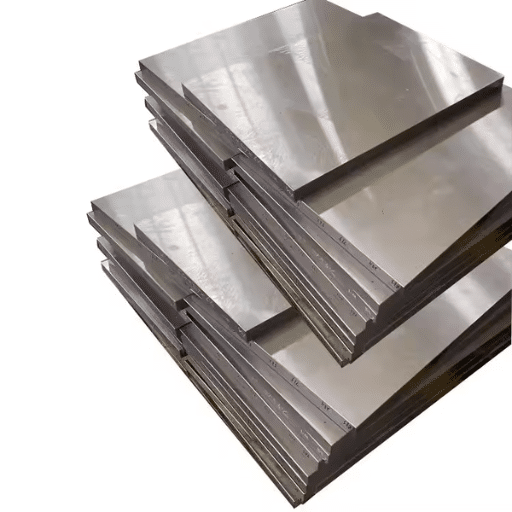
Current China FOB Pricing by Thickness & Finish
The starting point for export pricing emerges from the Wuxi spot market. The domestic price of 304 cold-rolled coil reaches approximately 13,300 RMB per metric ton in April 2026, which translates to 1.80 to 1.90 per kilogram according to ex-works pricing. The export price exceeds this minimum because it includes all costs for export packaging and documentation, profit margin, and value-added tax adjustments.
For standard ASTM A240 304 cold-rolled sheet in commercial volumes, here is what factory-direct pricing looks like:
| Thickness | Finish | FOB China (USD/kg) | Notes |
|---|---|---|---|
| 0.3–0.5 mm | 2B | 2.90–2.90–3.50 | Thin-gauge premium; tight rolling tolerance |
| 0.8–1.0 mm | 2B | 2.60–2.60–3.10 | Standard decorative / appliance gauge |
| 1.2–2.0 mm | 2B | 2.50–2.50–3.00 | Most common industrial range |
| 2.5–3.0 mm | 2B | 2.45–2.45–2.95 | Baseline pricing band |
| 4.0–6.0 mm | No.1 (HR) | 2.00–2.00–2.50 | Hot-rolled plate; lower per-kg cost |
| Any gauge | BA | +0.15–0.15–0.30/kg above 2B | Bright annealed; controlled atmosphere |
| Any gauge | No.4 / HL | +0.20–0.20–0.40/kg above 2B | Brushed or hairline; post-processing |
| Any gauge | Mirror (8K) | +0.40–0.40–0.80/kg above 2B | Polished; labor-intensive |
These ranges assume multi-ton orders from established mills or authorized distributors. Small lots, custom slitting, or non-standard widths shift pricing toward the upper bound.
Mill-by-Mill CIF Export Reference
Not all 304 sheets are priced equally at the mill level. Brand reputation, certification depth, and alloy surcharge policies create real spreads. Here are representative CIF ranges from major Chinese and regional mills for March 2026:
| Mill / Brand | CIF Range (USD/MT) | Premium vs TISCO | Why the Difference? |
|---|---|---|---|
| TISCO | 2,260–2,260–2,550 | Baseline | Largest Chinese stainless producer; competitive base pricing |
| LISCO | 2,280–2,280–2,560 | +20–20–30/MT | Strong coil quality; reliable certification |
| JISCO | 2,290–2,290–2,580 | +30–30–50/MT | Good surface quality; consistent chemistry |
| Tsingshan | 2,320–2,320–2,600 | +60–60–70/MT | Integrated nickel supply; volatile surcharge policy |
| POSCO (Korea) | 2,360–2,360–2,660 | +100–100–150/MT | Premium brand; tighter tolerances; full EN 10204 3.2 |
| YUSCO (Taiwan) | 2,410–2,410–2,710 | +150–150–200/MT | Highest surface quality; preferred for decorative |
Key insight: The $450 spread between TISCO and YUSCO is not a markup. The two companies show actual differences in three areas, which include surface defect rates, thickness consistency, and certificate granularity. The premium becomes acceptable when the product requires food-grade or mirror-finish specifications. TISCO and LISCO provide the same performance for structural and hidden components at a lower price.
For a deeper technical comparison of how 304 stacks up against other grades, see our guide to 304 vs 316 stainless steel sheet. The 20–30% price premium for 316 is driven by molybdenum, not nickel alone.
What Drives 304 Stainless Steel Sheet Prices?
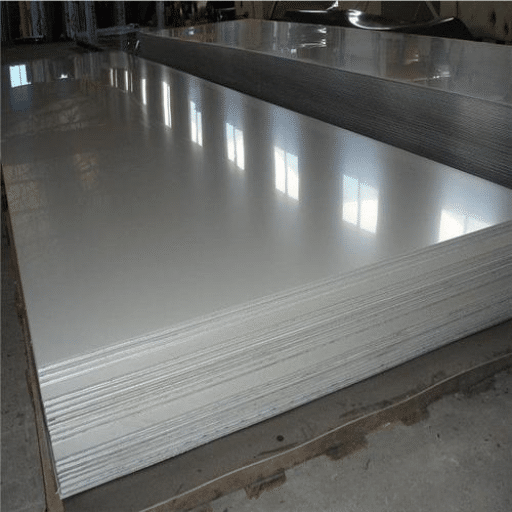
Nickel Market Volatility & LME Correlation
Nickel constitutes 8–10.5% of 304 by weight and represents 60–75% of its raw material cost. This means the London Metal Exchange (LME) nickel price is the single largest variable in your sheet quote.
| LME Nickel Level | Approximate 304 CR Sheet FOB (USD/kg) |
|---|---|
| $14,000/tonne | 2.20–2.20–2.70 |
| $16,000/tonne | 2.40–2.40–2.95 |
| $17,000/tonne | 2.50–2.50–3.10 |
| $18,000/tonne | 2.65–2.65–3.25 |
| $20,000/tonne | 2.85–2.85–3.50 |
Why nickel moves: Indonesian mining quota policy (RKAB), Philippine seasonal supply, and global stainless production demand are the three primary drivers. The SHFE stainless steel futures contract in Shanghai now acts as a real-time proxy for Chinese domestic pricing. Check SunSirs for daily China spot movements and MEPS International for regional benchmarks.
Thickness & Gauge Impact on Per-Kg Cost
Thickness does not scale linearly. Very thin and very thick materials carry premiums for different reasons:
- Below 0.5 mm: More rolling passes, lower mill yield, and higher surface control requirements push per-kg costs up by 10–20%.
- 0.5–3.0 mm: The baseline pricing band where competition is highest and mills are most efficient.
- Above 6 mm: Classified as plate, not sheet. Production moves to hot-rolling lines with different cost structures. Per-kg pricing often drops, but total project cost rises because you are buying more mass.
Surface Finish Premiums
Finish is not cosmetic-only. Each step after 2B adds labor, energy, and yield loss:
| Finish | Process | Premium vs 2B |
|---|---|---|
| 2B | Cold rolled, annealed, pickled | Baseline |
| BA | Bright annealed in controlled atmosphere | +5–10% |
| No.4 | Brushed with abrasive belts | +10–15% |
| HL (Hairline) | Directional brushing | +10–15% |
| Mirror (8K) | Multi-stage polishing | +15–25% |
For a full breakdown of when to specify each finish, refer to our 304 stainless steel sheet technical guide.
Volume Pricing & MOQ: What to Expect from China Suppliers

The same 304 sheet can quote anywhere from 0.70to0.70to4.21 per kg, depending on one variable: how much you are buying. Here is how MOQ tiers work in practice:
| Volume Tier | Typical Price (USD/kg) | Who This Applies To |
|---|---|---|
| Less than 1 ton (samples, small lots) | 1.60–1.60–4.21 | Fabricators, prototyping, repair jobs |
| 1–3 tons (standard import) | 0.89–0.89–1.50 | Regular buyers, small distributors |
| 5–10 tons (industrial bulk) | 0.70–0.70–1.20 | Mid-size fabricators, contractors |
| 20+ tons (mill-direct / FCL) | 0.46–0.46–0.70 | Large manufacturers, project buyers |
Important: The lowest tier is priced per-kg or per-piece, not per-ton. A single 1.2 mm decorative sheet in mirror finish might cost 55perpiece,equivalenttoover55perpiece,equivalenttoover4,000 per ton, because the supplier is cutting, polishing, and packaging one unit.
The practical takeaway: If your annual consumption is below 5 tons, you will negotiate with a mill-authorized distributor or trader, not the mill itself. That is normal. Mills like TISCO and Tsingshan typically require 50–500 ton annual commitments for direct contracts. A good distributor adds value by consolidating volumes, managing customs documentation, and offering smaller lot flexibility.
For buyers who need cut-to-size processing, our custom processing services include laser cutting, slitting, and edge finishing, priced separately from raw material.
FOB vs CIF vs DDP: Choosing the Right Incoterms
Your Incoterms choice changes the per-kg cost by 0.10–0.10–0.35 depending on destination and who controls logistics.
| Term | What You Pay | Who Arranges Freight | Best For |
|---|---|---|---|
| FOB (Free On Board) | Product + loading to vessel | You arrange ocean freight | Experienced importers with forwarder relationships |
| CIF (Cost, Insurance, Freight) | Product + freight + insurance to destination port | Supplier arranges | First-time buyers; simpler logistics |
| DDP (Delivered Duty Paid) | All-inclusive landed cost | Supplier arranges everything | Buyers who want zero logistics involvement |
When to Push for FOB
The use of the FOB shipping method provides lower costs for companies that have freight forwarder or NVOCC relationships. Chinese suppliers often embed a 5–15% markup in CIF freight and insurance. You can frequently beat their embedded rate by 10–30% with your own forwarder. FOB enables you to choose your shipping company, determine your departure times, and select your protection methods.
When CIF Makes Sense
For first-time importers or small LCL (less-than-container) shipments, CIF removes the complexity of Chinese export clearance, documentation, and port handling. The supplier manages it. You pay a premium for convenience.
Hidden Cost Warning
A 2.10perkgFOBquotedoesnotequal2.10perkgFOBquotedoesnotequal2.10 per kg in your warehouse. Budget for:
- Ocean freight: 100–100–350 per MT depending on route
- Marine insurance: 5–5–15 per MT
- Import duties and tariffs: Varies by country; US buyers face significant anti-dumping duties on Chinese stainless steel
- Customs clearance and port fees: 150–150–400 per container
- Inland delivery from the port to the warehouse
For buyers in Southeast Asia and the Middle East, the total landed cost raises their expenses by 0.30 to 0.60 for every kilogram, which is calculated from the FOB base. US and EU buyers face tariff increases, which raise their total costs beyond 4.00 when they purchase products at Chinese FOB prices of 4.00 or Chinese FOB prices of 2.50.
Jiangsu Zhonggongte supports FOB, CIF, and DDP terms depending on buyer preference and destination. Our logistics team can quote the full landed cost upfront, no surprises at the port. Contact us for a destination-specific quotation.
How to Request an Accurate 304 Sheet Quotation

The 7 Specifications That Must Be in Every RFQ
If your RFQ says, “304 stainless steel sheet, 2 mm, quote please,” you will receive prices that are not comparable. Here is what to include:
- Grade and standard: AISI 304 / UNS S30400 / ASTM A240, or 304L if welding is involved
- Exact thickness: 1.5 mm, with tolerance (ASTM A480 standard or custom)
- Width and length: 1219 x 2438 mm (4×8 ft) is standard; specify if different
- Surface finish: 2B, BA, No.4, HL, or Mirror, be specific
- Edge condition: Mill edge (ME) or slit edge (SE)
- Quantity: Per-kg pricing changes at 1 ton, 5 tons, 10 tons, and 20 tons
- Incoterms and destination: FOB Shanghai vs CIF Hamburg vs DDP Los Angeles
Send the same specification to 3–5 suppliers. Only then are you comparing real alternatives.
Red-Flag Pricing: When a Quote Is Too Cheap to Be Real
Reddit manufacturing communities have a rule: if a 304 quote is 30% below the Wuxi spot price plus a reasonable export margin, you are not getting 304. The most common fraud is substituting 201 stainless steel (or lower J-series grades) while charging 304 prices. The supplier pockets the 35–45% grade spread.
Warning signs:
- Refusal to provide a mill test certificate (MTC) with heat number
- MTC nickel content below 8% for claimed 304
- Pressure to pay 100% upfront with no inspection window
- Price per kg below 2.00FOBforstandard2BsheetwhenLMEnickelisabove2.00FOBforstandard2BsheetwhenLMEnickelisabove16,000
For a complete verification framework, see our 304 vs 201 buyer’s comparison, it includes XRF pass/fail criteria and MTR red flags.
Payment Terms That Protect Your Budget
Standard China export terms are 30% deposit, 70% balance against bill of lading. For larger orders, negotiate an irrevocable letter of credit (L/C) at sight. It forces document compliance and shifts trust risk to the banking system.
If a supplier insists on 100% T/T before shipment, treat it as a negotiation point, not a requirement. Demand a price discount in exchange for taking that risk, or walk away.
Managing Price Volatility: Nickel Hedging & Contract Strategies
The daily price changes of 304 materials, which depend on nickel futures, will create monthly spot purchasing risks that result in project budget variations between 12 percent and 15 percent throughout the year. Two strategies provide a solution for this particular risk:
Fixed-price contracts: Lock in pricing for 90–180 days. The system operates most effectively when you possess both predictable usage patterns and a reliable business partnership with your supplier. The tradeoff is that you miss downside movements if nickel falls.
LME-linked adjustment clauses: The contract establishes a fundamental price that requires monthly changes that depend on the average LME nickel price. The arrangement divides responsibility between the two parties involved in the transaction. The procedure stands as the established method for conducting annual agreements with major steel mills.
Practical tip: Do not try to time the nickel market. Stainless steel procurement professionals budget for the current price and build a 10–15% contingency into project estimates. The contingency will transform into savings if nickel prices decrease. The project maintains its budget when nickel prices increase.
Frequently Asked Questions
Why do 304 stainless steel prices vary so much between suppliers?
The spread requires four factors, which include order volume (MOQ), surface finish, mill brand, and Incoterms. A 1-ton BA finish order from a trader quoting CIF will cost 50–100% more per kg than a 20-ton 2B order from a mill quoting FOB. To compare two quotes, you should first standardize both quotes to identical specifications.
How can I assess whether a 304 sheet price quote represents a reasonable price?
The current Wuxi spot price provides the benchmark, which requires 0.50–0.50–0.80 per kg to cover export packaging, margin, and documentation expenses. Your FOB quote for the standard 2B sheet falls within this band, which indicates it is fair. The grade requires verification through an XRF analyzer or third-party inspection if it falls 30% below.
Does 304L cost more than 304?
Yes, but the price difference remains small because it costs 50–50–100 per MT more than regular steel. The process control needs increased control because of the lower carbon content which requires 0.03% maximum content compared to 0.08% maximum content. The small premium for welded structures gets recovered through the decrease in total costs for post-weld passivation.
How much does shipping add to the per-kg cost?
Shipping costs from Shanghai to Southeast Asia and the Middle East require approximately 0.10 to 0.20 per kilogram for full container loads from 20 to 25 metric tons. To Europe, 0.15–0.15–0.25 per kg. To the US East Coast, 0.20–0.20–0.35 per kg before tariffs. LCL shipments can double these figures.
Can I negotiate stainless steel sheet prices with Chinese mills?
Direct mill negotiation requires volume, typically 50+ tons annually. The authorized distributors handle negotiations for buyers who purchase smaller quantities. The negotiation process involves three points, which include annual volume commitments and payment terms of L/C versus T/T, and the option to bundle multiple grades or sizes into one order.
Conclusion
304 stainless steel sheet pricing is not a mystery. It is a function of nickel, thickness, finish, volume, and terms, each quantifiable and each negotiable.
Here are three actions to take this week:
- Benchmark your next quote against the current Wuxi spot + export margin. If it is an outlier, ask why before signing.
- Specify precisely, grade, standard, thickness tolerance, finish, edge, quantity, and Incoterms. Vague RFQs produce vague quotes.
- Verify before paying, request the MTC with heat number, check nickel content, and reserve the right for pre-shipment inspection on first orders.
The buyers who overpay are not the ones who failed to negotiate. They are the ones who compared five quotes for five different products and chose the cheapest by mistake.
Submit your material list today. Our metallurgical team will review your specification, confirm current mill pricing, and respond with a detailed quotation within 24 hours.