Your project schedule experiences delays when your pressure vessel inspector rejects a batch of stainless steel sheet because the Mill Test Report fails to match ASTM A240 specifications. The situation occurs more frequently than it should because all instances of this problem can be avoided.
ASTM A240 304 stainless steel sheet is the world’s most widely specified austenitic stainless steel for pressure vessels, chemical processing equipment, and architectural applications. When sourced with full documentation and verified composition, it delivers predictable corrosion resistance, excellent formability, and reliable weldability at a cost that makes sense for most industrial projects. For the complete technical and sourcing guide to this grade, see our 304 stainless steel sheet overview.
In this guide, you will learn about the exact requirements of ASTM A240 for Grade 304 sheet. The guide shows how 304 differs from 304L and ASME SA-240. The guide presents all available surface finishes and it shows which documentation suppliers must provide to protect your procurement process.
Key Takeaways
- ASTM A240 defines the chemical, mechanical, and dimensional requirements for 304 stainless steel sheet, plate, and strip
- Grade 304 contains 18.0-20.0% chromium and 8.0-10.5% nickel, forming the protective passivation layer that defines its corrosion resistance
- Specify 304L (carbon ≤ 0.03%) instead of 304 when welding is involved to prevent sensitization and intergranular corrosion
- ASME SA-240 is identical to ASTM A240 in content but carries the certification required for boiler and pressure vessel code compliance
- Every order should ship with a Mill Test Report verifying heat number, chemical composition, and mechanical test results
What Is ASTM A240? Standard Scope and Authority
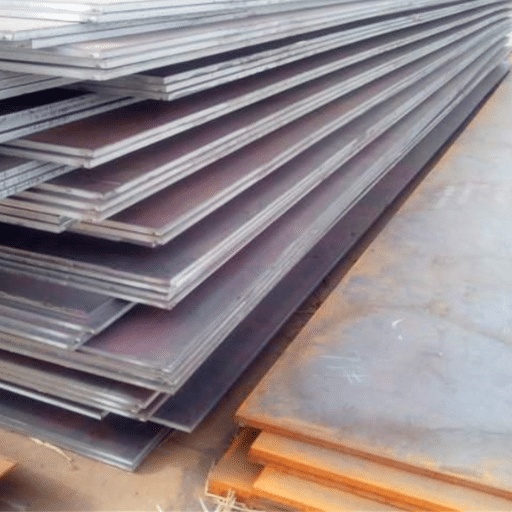
ASTM A240 / A240M is the standard specification for chromium and chromium-nickel stainless steel plate, sheet, and strip for pressure vessels and for general applications. Published by ASTM International, it defines the chemical composition limits, mechanical property minimums, dimensional tolerances, and testing protocols that manufacturers must follow.
The standard covers multiple grades, but Type 304 (UNS S30400) is by far the most commonly specified. The stainless steel known as “18/8” which contains 18 percent chromium and 8 percent nickel creates a stable passive oxide film that protects against corrosion in various oxidizing environments.
For procurement professionals, the critical distinction is between ASTM A240 and ASME SA-240. The two specifications are identical in technical content. The difference lies in certification: ASME SA-240 is approved for use under the ASME Boiler and Pressure Vessel Code (BPVC). If your project involves a pressure vessel, boiler, or nuclear component, your purchase order must reference ASME SA-240, not just ASTM A240. A supplier who understands this distinction — and can deliver material certified to either standard — saves you from costly compliance failures at inspection.
ASTM A240 references ASTM A480 / A480M to provide general specifications for flat-rolled stainless steel. A480 delivers measurable requirements which your supplier needs to fulfill when you define dimensional tolerances and flatness and edge condition specifications in your purchase order.
ASTM A240 304 Chemical Composition: The 18/8 Foundation
The corrosion resistance, formability, and weldability of ASTM A240 304 stainless steel sheet all trace back to its carefully controlled chemistry. The following composition limits are specified in ASTM A240 / A240M for Type 304 (UNS S30400):
| Element | Requirement (% by weight) |
|---|---|
| Chromium (Cr) | 18.0 – 20.0 |
| Nickel (Ni) | 8.0 – 10.5 |
| Carbon (C) | ≤ 0.08 |
| Manganese (Mn) | ≤ 2.00 |
| Silicon (Si) | ≤ 0.75 |
| Phosphorus (P) | ≤ 0.045 |
| Sulfur (S) | ≤ 0.030 |
| Nitrogen (N) | ≤ 0.10 |
| Iron (Fe) | Balance |
The 18% chromium content forms a continuous, self-healing chromium oxide (Cr₂O₃) layer on the surface — the passive film that gives stainless steel its corrosion resistance. In most oxidizing environments, this film reforms instantly if scratched or damaged. The 8% nickel stabilizes the austenitic crystal structure at room temperature, ensuring excellent ductility, toughness, and ease of forming. For chloride-rich environments where pitting resistance is critical, see our 304 vs 316 stainless steel comparison.
The standard 304 material allows only 0.08 percent carbon content. The material maintains its weldability across various conditions yet operates at a level which enables chromium carbides to form at grain boundaries during a temperature range between 425°C and 860°C (797°F to 1,580°F), which represents the material’s sensitization range. 304L exists because your welding procedure has a significant impact on its implementation.
The Mill Test Report must provide actual heat analysis results when you receive material instead of showing only grade compliance information. Our facility uses direct-reading spectrometers to verify every heat before we release it to customers. The spectral report should confirm that chromium, nickel, and carbon all fall within the ASTM A240 ranges above. Your supplier needs to obtain this requirement because you are purchasing based on trust instead of specified verification.
Mechanical Properties: What ASTM A240 Requires

ASTM A240 establishes essential mechanical property requirements which apply to annealed 304 sheet and plate materials. The established values function as mandatory business obligations which must be fulfilled. The design requires these minimum standards when your project includes structural loads or pressure containment or formed components.
| Property | Minimum Value (Imperial) | Minimum Value (Metric) |
|---|---|---|
| Tensile Strength | 75 ksi | 515 MPa |
| Yield Strength (0.2% offset) | 30 ksi | 205 MPa |
| Elongation (in 50 mm / 2 in.) | 40% | 40% |
| Hardness (Rockwell B) | ≤ 92 HRB | — |
| Hardness (Brinell) | ≤ 201 HBW | — |
You have access to information that was collected until the month of October in the year 2023. The tensile strength minimum of 515 MPa (75 ksi) demonstrates that 304 sheet material can endure high mechanical stress until it breaks. This value serves as a direct input for pressure vessel designers who need to calculate allowable stress according to ASME Section VIII.
The yield strength of 205 MPa (30 ksi) establishes the stress point that leads to permanent material deformation. In structural and formed applications, design stresses are typically kept well below this value to maintain dimensional stability.
The 40% minimum elongation requirement makes 304 material highly formable. The ductility of this material permits deep drawing, bending and stretching without producing cracks which explains why 304 material is used to manufacture kitchen sinks, automotive trim and architectural panels.
It is important to distinguish between annealed and cold-worked conditions. Cold rolling and drawing operations result in increased strength and hardness while causing ductility loss. Your specification requires full annealed properties; therefore, you need to check the MTR documentation, which should show “annealed” and confirm that hardness does not exceed the ASTM A240 maximums above.
304 vs 304L: When the Carbon Difference Matters

The only meaningful chemical difference between ASTM A240 304 and 304L is carbon content. Standard 304 allows up to 0.08% carbon. 304L limits carbon to 0.03% maximum. That 0.05% difference drives every performance distinction between the two grades.
Sensitization and Weld Decay
The heating process of 304 stainless steel between 425°C and 860°C creates the conditions in which carbon and chromium combine to form chromium carbides at the grain boundaries. This process is called sensitization. The chromium depleted from the areas adjacent to the grain boundaries can no longer maintain the passive oxide film, leaving the material vulnerable to intergranular corrosion — commonly called “weld decay.”
The material 304L serves as a protective barrier. The welding process requires carbon to remain below 0.03%, which prevents any formation of harmful chromium carbides during typical welding heat cycles. The safer option for welded assemblies includes 304L, which should be used in pressure vessels, tanks, and piping systems. For detailed welding parameters, filler wire selection, and post-weld passivation guidance, see our article on welding 304 stainless steel sheet.
When to Specify Which Grade
| Application | Recommended Grade | Reason |
|---|---|---|
| Welded structures, tanks, vessels | 304L | Avoids sensitization; no post-weld anneal needed |
| Pressure piping (welded) | 304L | Maintains corrosion resistance at welds |
| Heavy plate, multi-pass welds | 304L | Critical for thick-section weldability |
| Machined, non-welded structural parts | 304 | Slightly higher strength; perfectly adequate |
| General fabrication (no welding) | 304 | Cost-effective; excellent properties |
| High-temperature service (>500°C) | 304H | Higher carbon provides better creep resistance |
Dual Certification
Many modern mills produce material that is dual-certified to both 304 and 304L. The heat meets 304L chemical requirements because its C content remains below 0.03% while it also meets 304 minimum mechanical strength requirements, which demand a tensile strength of 515 MPa. The use of dual-certified material helps companies manage their inventory needs because the material can be used in various projects. The use of dual-certified stock for your project, which needs both welded and non-welded parts, will simplify your buying process.
Product Forms, Sizes, and Surface Finishes Under ASTM A240
ASTM A240 covers 304 stainless steel in plate, sheet, and strip form. While the standard does not rigidly define thickness boundaries, industry practice distinguishes them as follows:
- Sheet: Typically 0.1 mm to 6.0 mm thick
- Plate: Typically > 6.0 mm thick, commonly up to 100 mm or more
- Strip: Narrow widths, typically < 600 mm, in coil form
Standard Dimensions
| Parameter | Typical Range |
|---|---|
| Thickness | 0.1 mm – 100 mm |
| Width | 1,000 / 1,219 / 1,500 / 2,000 / 2,500 mm |
| Length | 2,000 / 2,440 / 3,000 / 5,800 / 6,000 mm |
For a complete gauge-to-millimeter reference and standard stock sizes, see our 304 stainless steel sheet thickness chart. Custom dimensions outside these ranges are available through cut-to-size and slitting services. When specifying dimensions, always reference ASTM A480 / A480M for thickness, width, length, and flatness tolerances.
Common Surface Finishes
| Finish | Process | Appearance | Typical Applications |
|---|---|---|---|
| No. 1 | Hot rolled, annealed, pickled | Rough, dull, oxidized | Industrial tanks, structural plates, subsequent fabrication |
| 2B | Cold rolled, annealed, pickled, skin passed | Smooth, semi-reflective | Forming, drawing, general fabrication, subsequent polishing |
| BA (Bright Annealed) | Cold rolled, bright annealed | Highly reflective, mirror-like | Decorative, reflectors, food equipment, pharmaceutical |
| No. 4 | Brushed / satin finish | Uniform directional grain | Architectural panels, kitchen equipment, elevators |
| HL (Hairline) | Long continuous polishing lines | Fine directional grain | Decorative trim, appliance fronts |
The specified finish affects multiple aspects beyond its visual appearance. A No. 1 finish carries the scale and roughness from hot rolling and may require additional surface preparation for critical corrosion service. A 2B finish provides the smooth surface needed for deep drawing and subsequent polishing. For food-contact and pharmaceutical equipment, BA or No. 4 finishes are typically specified for cleanability and hygiene. See our guide to food-grade 304 stainless steel sheet standards, certification, and applications.
How to Verify ASTM A240 Compliance When Sourcing

Here is where most technical guides stop — and where procurement risk actually begins. Knowing the ASTM A240 specification is useful. Knowing how to verify that your supplier has delivered compliant material is essential.
The Documentation Checklist
Every order of ASTM A240 304 stainless steel sheet should arrive with the following:
1. Mill Test Report (MTR) / Mill Test Certificate (MTC)
- Heat number with full traceability
- Actual chemical composition (not just grade claim)
- Mechanical test results: tensile strength, yield strength, elongation, hardness
- Heat treatment condition (annealed, cold-rolled, etc.)
- Specification reference: ASTM A240 or ASME SA-240
2. Spectral Analysis Documentation
- Elemental composition verified by direct-reading spectrometer or optical emission spectroscopy (OES)
- Confirms chromium, nickel, carbon, and all limiting elements are within specification
3. Third-Party Inspection Certificate (for critical applications)
- SGS, Bureau Veritas (BV), or TUV certification
- Confirms dimensional tolerances, surface quality, and specification compliance
4. EN 10204 Certificate (for European projects)
- 3.1: Manufacturer’s own test results, confirmed by an independent inspector
- 3.2: Manufacturer’s test results verified by an independent third party
Red Flags to Watch For
A chemical processing plant in Southeast Asia once ordered 20 tons of ASTM A240 304 sheet for a tank farm expansion. The delivery arrived as expected, but the material test report lacked heat number traceability, and the report showed no spectral data. The procurement team sent samples to an independent laboratory, which found carbon content at 0.06% that technically met 304 standards but raised doubts about its authenticity. The chromium content reached 17.2%, which fell short of the ASTM A240 minimum requirement of 18.0%. The entire batch was rejected. Three weeks were lost to re-sourcing, inspection, and re-delivery.
The supplier they ultimately chose delivered a sheet with full MTRs, in-house spectral reports, and third-party inspection by SGS. The material was accepted on day one. The delivery difference stemmed from documentation discipline, which showed different information than the grade.
Field Verification Tips
- Magnet test: 304 is non-magnetic in the annealed condition. If a sample is strongly magnetic, suspect grade substitution (201 or 430 stainless steel is commonly passed off as 304). Note: cold-worked 304 may develop slight magnetism — this test is a screening tool, not proof.
- Price check: Offers significantly below market rate for 304 sheet are a warning sign. Grade substitution is a known risk in uncertified supply chains.
- Surface markings: Legitimate mill products carry grade stamps, heat numbers, or bar-coded traceability labels. Missing markings should prompt additional verification.
At our Wuxi facility, every heat of 304 sheet is analyzed on direct-reading spectrometers before release. We ship with full MTR documentation, spectral analysis reports, and can arrange third-party inspection by SGS, BV, or TUV on request. Whether you need standard stock or custom-cut dimensions, the documentation package remains the same — because specification compliance is not optional.
International Standards and Grade Equivalents
Global projects often require materials certified to multiple national standards. ASTM A240 304 has direct equivalents across major industrial standards:
| Region / Standard | Grade Designation | Notes |
|---|---|---|
| USA — ASTM A240 / ASME SA-240 | 304 (UNS S30400) / 304L (UNS S30403) | Base standard for North American pressure vessels and general applications |
| Europe — EN 10088-2 | 1.4301 (304) / 1.4307 (304L) | Widely specified for EU construction, food equipment, and chemical plants |
| Japan — JIS G4305 | SUS 304 / SUS 304L | Common in Asian manufacturing and export contracts |
| China — GB/T 24511 | 06Cr19Ni10 (304) / 022Cr19Ni10 (304L) | Chinese national standard for pressure vessel stainless steel |
| Germany — DIN / Werkstoff | 1.4301 / 1.4307 | Still referenced in legacy European specifications and some machinery standards |
The dual-certified material, which includes both ASTM A240 and EN 10088-2 certification, enables EPC contractors and global manufacturers to maintain their inventory while satisfying multiple project requirements through one stock item. You must provide all necessary standards when you place your order. The supplier possesses in-house testing capabilities and expertise in multiple standards, which allows them to certify materials according to ASTM, ASME, GB, and JIS standards without requiring additional suppliers for identical base materials.
Frequently Asked Questions
What is the difference between ASTM A240 and ASME SA-240?
The two standards share identical content between ASTM A240 and ASME SA-240. The difference is certification: ASME SA-240 is approved for use under the ASME Boiler and Pressure Vessel Code. The ASME standard ASME SA-240 is necessary for applications that involve pressure vessels and boilers and nuclear components. ASTM A240 meets the requirements for general industrial, architectural, and food-grade applications.
How do I verify that a 304 stainless steel sheet meets ASTM A240?
Request the Mill Test Report (MTR), which contains heat number traceability and shows the actual chemical composition and mechanical test results. Cross-check the chemistry against ASTM A240 limits: chromium 18.0-20.0%, nickel 8.0-10.5%, carbon ≤ 0.08%. For additional assurance, ask for spectral analysis documentation or arrange a third-party inspection through SGS, BV, or TUV.
When should I specify 304L instead of 304?
You should choose 304L for your application when it requires welding for pressure vessel tanks, piping, and thick-section assemblies. The lower carbon content (≤ 0.03%) prevents chromium carbide precipitation and sensitization in the heat-affected zone. Standard 304 provides slightly better strength than 304 for non-welded general fabrication at an equivalent price.
What surface finish should I choose for my application?
Industrial structural plate should be selected as Choose No. 1 for all subsequent fabrication work. Forming, drawing, and general fabrication work require a smooth surface so 2B should be selected. The high reflectivity and cleanability requirements for decorative and pharmaceutical, and food-grade applications need BA (Bright Annealed) as the solution. The No. 4 finish should be used for architectural panels and kitchen equipment because it creates a brushed appearance.
What documentation should come with ASTM A240 304 sheet?
Every order should include a Mill Test Report (MTR) verifying heat number, chemical composition, mechanical properties, and heat treatment condition. For critical applications, also request spectral analysis documentation and third-party inspection certificates. European projects typically require EN 10204 3.1 or 3.2 certificates.
Is 304 stainless steel magnetic?
The austenitic crystal structure of 304 stainless steel makes it fully non-magnetic when in its completely annealed state. The process of cold working, which includes bending, rolling, and drawing, results in the formation of small amounts of martensite, which creates minimal magnetic properties. If a sample exhibits strong magnetic properties, it probably contains a ferritic or martensitic grade such as 201 or 430, which has been substituted for the original grade.
Conclusion
The worldwide standard for general-purpose corrosion-resistant applications remains ASTM A240 304 stainless steel sheet because its 18/8 chemical composition provides consistent and dependable results throughout multiple decades of industrial application.
The specification itself is only as reliable as the supplier’s quality system behind it. Three principles protect your procurement:
- Specify the right grade — 304 for general fabrication, 304L for welded assemblies, ASME SA-240 for pressure vessels
- Demand full documentation — MTR with heat traceability, spectral analysis, and third-party inspection for critical orders
- Verify on receipt — cross-check chemistry against ASTM A240 limits and inspect surface quality and dimensional tolerances
Jiangsu Zhonggongte Metallurgical Technology Co., Ltd. supplies ASTM A240 / ASME SA-240 304 and 304L stainless steel sheet with full material certification, in-house spectrometric verification, and 24-hour logistics support. From standard 2B finish coils to custom-cut plate with third-party inspection, we deliver documented compliance on every order.
Submit your material specifications today — our metallurgical engineers will confirm grade selection, review your dimensional and finish requirements, and deliver a certified quotation within 24 hours.