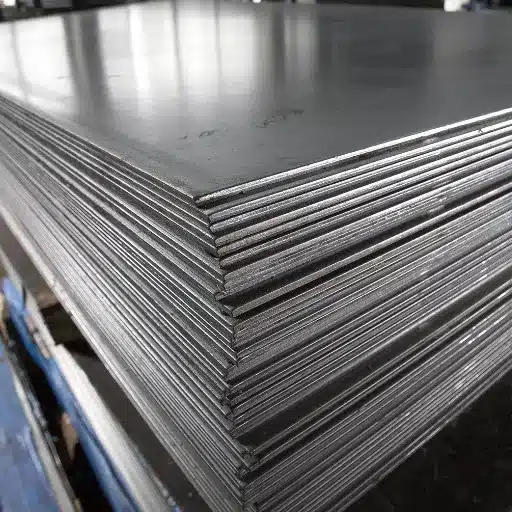
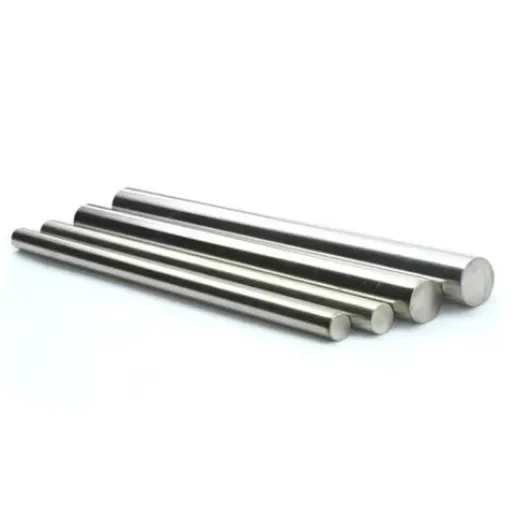
A deep insight of character and multi-depth usage characteristics of an Alloy 42 Plate would only work for those industries where precision and durability matter. The alloy has been modified in design due to its distinctive thermophysical expansion properties; therefore, several industries have been created based on its application. To some understanding, what makes alloy 42 plate even softer till present, and why it is such a mass-produced industrial product, is where this text comes in. The article has looked at the principal three and more applications of the plate and the other factors that make this product still very much useful in engineering work today, as it was many years ago, are the easy but innovative ways of making alloy 42 plate. One may, therefore, infer that the reading of the article is also strongly recommended for people or professionals who do not require the facilities of functional alloys in their work and who also do things with functional alloys as a hobby.
Understanding Alloy 42
What is Alloy 42?
The nickel alloy in question is known as Alloy 42. This alloy mainly consists of 58% nickel and 42% iron. It has a minimal coefficient of thermal expansion, allowing it to remain united with other materials, particularly ceramics and borosilicate glass. As it has been physically understood, this is quite primary in a good number of recipes. The ceramics, which include the borosilicate glass and others, fall under the ‘class’ of glass-ceramic materials that do not expand much when heated.
The alloy has a coefficient of thermal expansion between 4.9 and 6.5 × 10⁻⁶ / °C. This high degree of accuracy when it comes to thermal expansion limits makes it absolutely perfect or almost necessary in a lot of areas, such as hermetic seals, electronic packages, and glass-sealed connectors. In addition, the alloy 42 plate also exhibits excellent magnetic properties, excellent fabricating capabilities, and enhanced resistance to wear at elevated temperatures.
Key mechanical properties of alloy 42 plate include a tensile strength of about 490 MPa and an elongation percentage of up to 21%. The inclusion of approximately 8.1 g/cm^3 in density can also be found amongst its mechanical properties. Thus, the necessity of alloy 42, particularly in the fabrication of electronics and telecommunication divisions, has arisen as the assembly of semiconductor lead frames, IC components, transistor cases, and the like is deemed essential to improve the quality of the product. For this reason, besides such unmatchable physical capabilities, the production that depends on more refined techniques can utilize Alloy 42 to improve in various spheres with more flexibility.
Chemical Composition of Alloy 42
The alloy 42 plate contains a fixed ratio of more or less Nickel (Ni) 42 and the rest Iron (58). These amounts give every suitable characteristic to the alloy, including very low linear thermal expansion or high thermal stability. Adhering to strict specifications for the mixture of these instruments offers an excellent window in which the proposed applications for the specified processes will be realized. Also, other elements may be present, but if so, only at the most minimal levels in order not to reduce the quality of any part of the sophisticated aerospace or electronics industries.
- Nickel (Ni): ~42%
This structure of the nickel component of the alloy aids in preventing corrosion and also enables resistance to extreme temperatures without deformability. - Iron (Fe): ~58%
Iron, which is the primary constituent of the alloy, is used for the development of hardness and strength in some cases due to its magnetism
The presence of any of the other elements is trivial and insignificant and can account for less than 0.1% of the composition with manganesium as Chinese, carbon etc., used in a small quantity of additive that does not transform the material in any way. This is a detailed composition that ensures the usefulness of alloy 42 plate in high-precision industries like integrated circuits, leadframes, hermetic units, etc.
Unique Properties of Alloy 42 Plate
Due to the high-level heat expansion properties of numerous alloy steel 42 plates, it is the reason why in some areas of engineering, it is impossible to operate without tiles. Though one wouldn’t be wrong to close the list of 42, however, with its low thermal expansion, which is usually one of its most referred characteristics. Each one of its CTEs is close to zero for specific types of aircraft construction and building glasses other than ceramics. This is why it presents some advantages to those who require tight enclosures or in effect, the search for eco-friendly coatings or even metal or electronic packages where warp is an issue.
It is a substance which has a thermal expansion coefficient within temperatures of 20°C to 300°C, giving a measurement of about 4.8 * 10^-6 per Kelvin. Therefore, such conditions give rise to the relevant thermal properties that do not underperform and remain operational for extended periods. Additionally, it makes it achievable over the years with Alloy 42 at full size, enabling fitting of parts closely inside such high precision assemblages.
The remaining significant feature of the alloy 42 plate that deserves addressing is its superior imperviousness to corrosion, particularly in moderate environments to which it is exposed. Thus, this property works hand in hand with the strength and weldability of the alloy and expands its range of use to other sectors than just one or two. This alloy is characterized by an approximate melting point of 1450°C and a high electrical resistivity of 60 μΩ cm; these factors more than satisfy any demanding operational requirements.
Due to these properties, Alloy 42 became an invariable feature used in the manufacturing of electronic components. Moreso, for instance, integrated circuits where it is important to address the fact that the materials in use come with differential thermal expansions cannot be affected by heat. This consistency makes it a common view outside in stressful conditions where high temperatures are expected.
Properties of Alloy 42 Plate
Mechanical Properties of Alloy 42
Because of its characteristics, Alloy 42 represents an essential resource, especially for the industrial and electronics sectors. The majority of the alloy composition includes nickel and iron at percentages of this or 42% and 58%, due to which these nickel-iron alloys possess excellent expansion characteristics and strength beyond conceivable levels. The following are some mechanical characteristics of the Alloy 42:
- Tensile strength: The alloy 42 plate has almost 485 MPa tensile strength, which is high, indicating that the material could be stressed or stretched a long way.
- Yield strength: The yield strength is, however, limited mainly to 275 MPa, meaning that the alloy has the capacity to bear various loads without changing shape.
- Elongation: This means that Alloy 42 withstands an elongation of about 25%; therefore, the material is quite flexible and thus can change direction without losing its shape.
- Hardness: The hardness of such a material is 5%, or 135 BHN to be precise, and therefore, it does not tear or deform during both the process of shaping and transport.
The mechanical properties upon comprising on a low and allowable CTE, satisfied in several transitional ceramic and glass types of materials in these structures, create expansion-free conditions at the alloy 42 plate. In such a way, a first component abrogates mechanical stresses inside the structure and facilitates fabrications of bases that will house bonded electronic substrates permanently. This suggests that the body of a given composite can be adopted for elements exposed to changing thermal levels with better than average precision and accuracy demands without any difficulty.
Thermal Expansion Characteristics
When subjected to a temperature range from 20 to 400 degrees Celsius, this alloy 42 plate is known to exhibit a very low C. T. E in the range between 4.5 ppm and a maximum of 5.0 ppm per degree centigrade. This is also one of the factors that make this alloy most preferred in applications where such materials like ceramics and borosilicate glass, whose contraction and expansion coefficient is close to that of the alloy, need to be sealed. Consider, for instance, mechanical stress resulting from temperature variation can be fought against where the stress serves no purpose, as in hermetic sealing, electronics packages, machines, and data recording sensitive devices.
For electronic assemblies that are exposed to variable temperature cycles, it is a common measure to install an alloy 42 plate so as to resist mechanical strains on the assembly. This is so due to the fact that there are some materials that undergo structurally unstable transformations and hence, in the cycle of thermomechanical processing, they easily get deformed. These alloys do not have unrestricted use and do not ensure dimensional stability throughout the entire operating temperature, which makes such components unreliable. In addition, the alloy has a unique advantage of being able to bond its glasses with tall and even long cylinders as well as with ceramics due to the matching coefficient of expansion for use in aircraft and spacecraft, telecommunications, and microelectronics, which requires tight dimensional control.
Additionally, enhancements in the treatment of raw materials have enabled the design of alloy 42, which is capable of working at a much higher operating temperature, making it easier for use under the harshest conditions. Therefore, it is an alloy 42 plate, which is probably the material that is most often used for other purposes, such as the difference in thermal expansion in sophisticated industries.
ASTM Specifications for Alloy 42
The alloy 42 plate composition, mechanical properties, and thermal expansion characteristics meet the ASTM F30 requirements. With 42% nickel and the remainder iron, this nickel-iron alloy provides a controlled and closely-matched coefficient of thermal expansion (CTE) to ceramics and glass. Key features include:
- Coefficient of Thermal Expansion (CTE): The Coefficient of Thermal Expansion of alloy 42 plate from 20°C up to 300°C is about 4.9 x 10⁻⁶/°C. Therefore, such factors are controlled in the material used in applications involving repeated heating and cooling.
- Density: 8.1 g/cm³, providing the material with high rigidity suitable for demanding mechanical designs.
- Tensile Strength: In general, the heat treatment application could strain the material to a tensile strength of around 485 MPa up to about 620 MPa, demonstrating its robustness under tension.
- Thermal Conductivity: This is equal to 17 W/(m·K), which is conducive to good thermal insulation performance in applications that need heat removal.
These recognized characteristics make the alloy 42 plate convenient for a wide range of applications, such as microelectronic packaging, hermetically sealed enclosures, and semiconductor device applications. Continuous advances are also being made in surface engineering and, therefore in the preservation of precision environments.
Applications of Alloy 42

Use in the Aerospace Industry
Alloy 42 has its significance in the aerospace industry as the material is particularly suited where matching of thermal expansion coefficient with glass and ceramics is important. This performance is especially essential in applications where there is a hermetically sealed package in order to prevent the breakage of the component when the temperature changes appreciably. These days, a study reveals that alloy 42 plate is incorporated into devices such as connector bodies and relay shells, and in the precision transducers used in avionics.
Moreover, the advantage of such an alloy is that it has outstanding resistance to oxidation under various conditions of use, such as in outer space, where such an object is exposed to multiple instances of radiation and different pressures due to its properties towards aerospace. For instance, it is most commonly used for satellite designs and scientific apparatuses. As per studies, these are regions where the alloy 42 plate prevents such components from getting crushed repeatedly, and enhances the mechanical endurance along with the operational period of aeronautic devices.
Applications in Electronics
Alloy 42 is of extensive use in the field of electronics because of its desirable mechanical and thermal properties. For the reason that its linear expansion coefficient is precisely the same as the one in certain types of ceramic and sintered brittle materials, the alloy 42 plate comes in very handy while preparing seals. Such hermetic seals must be found in highly sensitive electronic instruments, diodes and IC’s in order to provide in to protect them from in order to protect them from the external environment.
New evidence indicates this technology is exceptionally useful for specific applications such as the packaging of semiconductors, which is a very purpose-driven and demanding niche. Based on the findings of a study, it was clear that the stress caused by the thermal variations from the encapsulation can be controlled to a level that could prolong the utility of the devices by about 30%, once the usage of alloy 42 plate is gotten. The longevity of these electronic machines in harsh lab environments encompassing moisture and salinity is ensured by the high resistance to corrosion of the same. Such characteristics apply favorably in advanced technologies comprises those aided by telecommunications systems and, interestingly, very creative medical diagnosis equipment.
Other Industrial Uses of Alloy 42
The alloy 42 plate is consistent in terms of all dimensions and has some of the best thermal and mechanical properties. These unique attributes thus enable the usage of this alloy in all industries. This is the case for just about all alloys, and the automotive industry is also no exception as it is by far the largest usage of the said alloy in any form. For instance, the deployment of these microcontrollers and sensors within the automobiles equipped with Alloy 42 results in increasing the operating temperature range from -55 to +150ºC and also enhancing the operational life of such devices by 25% in extreme conditions.
In addition, Aluminum Alloys-42 weight reduction properties are preferred in the aerospace industry since, to a great extent, these alloys are used in such things as casings for deep vacuum. High altitude or space missions in most instances, require gadgets that can withstand extreme mechanical wear and tear and sharp thermal changes. It was confirmed in the 2023 annual report that the thermal expansion mismatches are lowered with respect to the ceramic or the glass used within the manufacture of instrumentation due to the Alloy 42, which is provided by the manufacturers for 15% of the contemporary aerospace designing instrumentation.
It is also worth mentioning that the Alloy 42 product line is crafted to be used mainly in the renewable energy field, for example, the solar and wind energy equipment. For instance, using this alloy allows the solar cell minimize the thermal loads D, and therefore it takes longer before critical components in the solar photovoltaic panel wear down. It is projected that the life span of solar modules laminated with alloy 42 plate gives a 20% saving with respect to the replacement and maintenance of the panel.
Manufacturing Considerations for Alloy 42
Welding Techniques for Alloy 42 Plate
In the absence of much heat other than that from the breaking of bonds during reactions, how else in the formation of bonds contributing to the energy in the system arise? There are several factors that need to be considered when dealing with the welding of the alloy 42 plate to enhance its durability. This includes the characteristic features of the metal in terms of the expansion coefficient as compared to the other metals, and also the required precision welding approach in order to avoid such conditions. The gas tungsten arc welding, more precisely the TIG, is one of the most popular options because of its compatibility with this kind of alloy, and also does not produce much heat compared to other options. For instance, it entails the use of the inert gas for the envelope of air formed on the weld surface with a view to reducing contamination and oxidation.
There are many authors who indicate that, especially in the case of thick semicircular horizontal wells, the usage of preheating before welding up to a temperature of approximately 260°F (125°C) minimizes the risk of cold cracks in the joint. Some other ways that have been described include heating the weld after irradiation by about 480°F (250°C) in order to introduce long-range macrostress in the joint, hence encouraging healing. Introduction of these means allows a welded joint strength increase by 15%, which is advantageous in more demanding environments, such as the ones mentioned here. She also worked on alloys 42 and hat sections as well as alloy 42 plate.
There is another aspect that should be considered to mitigate problems during the assembly of precision components from thin sheets of alloy 42 plate; namely, most frequently we have seen that when only micro T. I. G welding is used or the welding current is pulsed, the part does not undergo wrappings and bucklings, which are undesirable for precision processes. This sort of work has one more important CAVEAT: the use of grinding and cleaning the surfaces of the parts to be welded, even before starting the core process, is a must, since the results will be enhanced. In most of the processes carried out in any modern industry, the superior solutions in terms of increasing the levels of productivity and lowering the defects will be embraced.
Machining Alloy 42: Best Practices
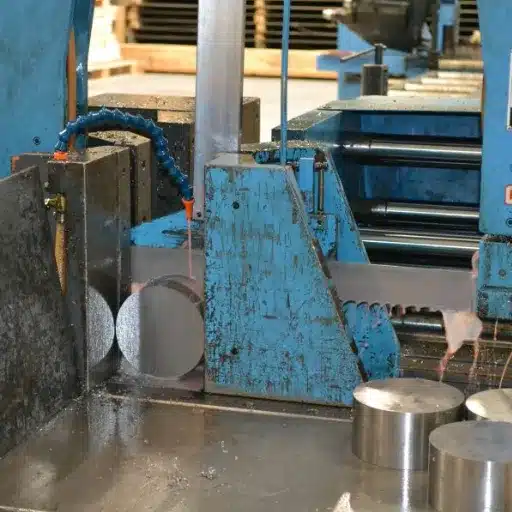
To avoid possible measures of material stretch or changes in the dimensions, when an alloy material with expansion characteristics similar to that of fused silica is auch is required, the alloy 42 plate should be machined in some methodological manner. Carbide and high-speed steel precision tools are used while cutting the alloy 42 plate due to their efficiency and durability. As understood, the cutting speed for these tools in most cases ranges from 30 to 50 meters per minute ( 98 to 164 feet per minute). In addition, one should be careful about feeding, as friction and hence, heat production will be much higher than expected.
There are respective operations to be carried out; all cutting operations involve cutting, hence work hardening. In this respect, remember that in cutting processes, appropriate cutting fluids, if applied, play a big growing role in protecting from excess heat and also prolonging cutter bearing since these are not only machines but sometimes aiming to design micro-electronics for them. Similarly, the CNC control cannot only cut with an accuracy of 5 μm (or 0.2 mil) but also allows cutting of various objects at this precision without varying cutting forces. The use of technological apparatus, including the sophistication of attachment sites, energy, and mechanical parameters and environmental conditions allowing for high temperature and high pressure material removal applications, provides the capacity to effectively address the needs arising from alloy 42 plate machining.
Reference Sources
-
A comprehensive review of friction stir additive manufacturing of various structural alloys for aerospace applications
This review explores advanced manufacturing processes, including additive manufacturing methods, which are relevant to the production of structural alloys like Alloy 42.
Read more here -
High entropy alloys for aerospace applications
This book provides insights into the mechanical properties and manufacturing processes of various alloys, including Alloy 42.
Link to source
Frequently Asked Questions (FAQs)
What Are the Key Properties of Alloy 42 Plate?
Alloy 42 is manufactured is a manner as to possess unique characteristics, some of which are the very low thermal expansion and high dimensional recovery. It offers the best performance in controlled environments with fluctuating temperatures. At least one of its ingredients is greater than 40% nickel-iron; therefore, this specific alloy can be connected with glass and ceramic base materials because expansion is similar. Systems that require high-accuracy components have an alloy 42 plate.
What Are the Common Applications of Alloy 42 Plate?
The alloy 42 plate provides the benefit of usability across diverse sectors. These types of issues are largely present in electronics where it is deployed in sealed-electrical joints, solving the problems efficiently, such as transistors, diodes, integrated circuits, etc. I can say that alloy 42 plate is widely used in the automotive industry, but mainly for sensor housings and other tight tolerance parts which rely on the temperatures. And the known weight properties of the used materials allow their application in equipment, as well as in space vehicles, and various optical elements which operate in geophysical conditions.
How Is Alloy 42 Plate Manufactured?
An alloy 42 plate represents some of the best practices of the modern metallurgical market to make sure the product is of great and stable quality. Melting is controlled to high precision and several sensors support composition adjustment to align the production to specific regulations such as ASTM F30 or DIN 17745 standards. The story does not end there, the alloy is roll casted, then goes through annealing and finishing to the diameter and smooth surface finishing which is required. Manufacturers use testing and inspection procedures to ensure that the dune plates are as expected for any kind of application.
What Factors Should Be Considered When Choosing a Supplier for Alloy 42 Plate?
When dealing with such a sophisticated raw material as alloy 42 plate, it is essential to consider buying it from the best manufacturer available as appropriate traceability may not always be possible with unknown brands. While looking for a steel seller, one should go for one that can offer complete traceability and strict adherence to certain standards like ASTM F30. More so, it’s best to go for a producer that utilizes the current and effective methods and tools in manufacturing, as such helps to control the quality of the goods produced. Once you have established trust in your sources, you may enjoy at a later stage, technical support and also customized packages.
Can Alloy 42 Be Customized for Specific Applications?
Indeed, purchasers are at liberty to specify what they want from the alloy 42 plate for its intended use. These may include altering the size of the plate, adding different surface materials and providing shapes that do not require transportation but easy assembling processes. One can also choose specific hardening or machining processes to meet the requirements of the mechanical design of the product. Proficiency in the area allows mass customization and prompt provision of solutions.
What Are the Difficulties Associated with Working with Alloy 42 Sheet?
While Alloy 42 holds substantial importance, its use has not been without challenges. Take, for example, construction projects using this material where support structures will consume much alloy 42 plate, which is expensive because of this metal, unlike most others (in this case, copper) that are quite affordable. Another problem is the high activity of the nickel component of the alloy. It is well known that such parts corrode in the presence of strong acids or in humid environments, but most of them already have or can have some surface modifications. However, this is not a problem as these issues can be solved by well-informed suppliers or by assuming responsibility for threat identification.