Nickel alloy casting is the backbone of various industries where high durability, heat resistance, and corrosion performance are the main requirements. The excellent characteristics of nickel-based alloys make them the preferred material for critical applications in aerospace, marine, and industrial sectors. In this article, we will discuss the broad spectrum of nickel alloy casting and the advantages of investment casting, as well as the special features of nickel-based alloys. Starting from their unbeatable performance to their usability in high-stress areas, we will see in-depth why these materials are the key for manufacturers to be innovative and reliable.
Introduction to Nickel-Based Alloy Castings
Definition and Overview of Nickel-Based Alloy Castings
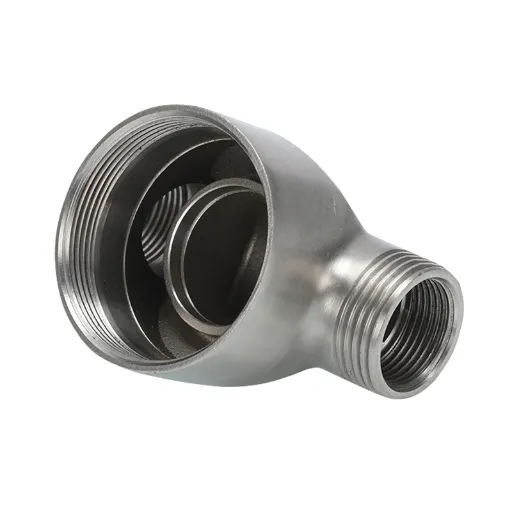
Nickel-based alloy castings are materials that consist mainly of nickel, along with other metals like chromium, iron, molybdenum, and cobalt, which are present to the point where the properties of the alloys are influenced or improved. Being very tough materials, these alloys can endure extreme temperatures and they are also highly resistant to oxidation, chemicals, and different types of mechanical forces. Thus, they can be used in the manufacture and processing of very critical sectors like aerospace, energy, automotive, and chemical processing.
First of all, nickel alloys possess one distinct characteristic, which is they can work in high-temperature places without any deterioration, whereas, for the other standard materials, it becomes the failure point. Their melting point is usually more than 2,600°F (1,426°C), which allows them to retain their integrity and be applied in turbine blades and power generation equipment. According to experts in the field, the worldwide nickel alloy market is going to increase with a CAGR of 3.6% from 2023 to 2030, the demand from the new technologies and the renewable energy sectors being one of the main reasons.
Significance in Different Industries
Nickel alloys and investment casting are at the top of the technological revolution since they are the strongest and most durable materials that can also be reshaped without much hassle. The aerospace industry, for instance, has a great dependence on nickel alloys to manufacture the entire family of aircraft: turbine blades, engine parts, and exhaust systems where the high-temperature resistance is a must. The latest data indicates that about 80% of the production of nickel superalloys directly goes to the aerospace industry, which clearly shows the importance of these materials for this sector.
Oil and gas are the major beneficiaries of the energy sector as it has been the situation in the past when nickel alloys were used for tubes, valves, and drilling machines because of their ability to stand corrosion even in the most extreme conditions. The use of nickel alloys in renewable energy applications such as wind and geothermal has been one of the main reasons for the increase in both efficiency and longevity.
Furthermore, the automotive sector is gradually switching to nickel-based materials for electric vehicle batteries. The recent article on market research shows that the rise in nickel demand by 2030 will mainly come from the EV battery sector, accounting for more than 70% of the total increase, since the metal plays a part in improving the energy density and performance of lithium-ion batteries.
Manufacturing Process of Nickel Alloy Castings

Investment Casting Techniques
Investment casting is a technique that successfully merges precision and detail to fabricate nickel alloy castings with a remarkable surface finish. Initially a wax model is built which is the replica of the part. This wax pattern is then coated with several layers of ceramic material to create a mold. When the ceramic coating dries, the wax is melted and removed leaving a mold that is hollow and made of ceramic. Finally, the molten nickel alloy is poured into the shell and allowed to cool down.
Market Insights
The recent advancements point out that, the adoption of 3D-printed wax patterns has helped in making the process not only efficient but also precisely accurate. The latest market analysis suggests that the global investment casting market was worth $14.6 billion in 2022 and will likely reach $20.2 billion in 2028, thus signifying a 5.5% CAGR during this period. The investing industries that include aerospace, energy, and automotive sectors due to the investment casting technique’s potential for creating intricate shapes and high-quality parts with almost no material waste, are on the rise.
Practices in Foundries for Working with Nickel – Based Alloys
The investment casting of nickel-based alloys is always a process where maximum precision and the best techniques are used to ensure the components produced are of the highest quality. The foremost practices in the foundry are temperature control, alloy preparation, and mold quality. Nickel alloys typically need melting that runs at more than 2,300°F (1,260°C), thus requiring very different types of furnace technology and safe work procedures. Induction furnaces are chosen most due to their high efficiency and ability to maintain very precise temperatures throughout the melting process.
One of the factors that have a lot of effect on the working with nickel-based alloys is the chemical composition of the material controlled in such a way that no contamination occurs. The mechanical properties of the alloy can be greatly reduced even by very small amounts of impurities, which is the reason for very tight control over the alloy. As an example, it is a very common practice nowadays in modern foundries to use vacuum induction melting (VIM) as a method for reducing the amount of gas that is absorbed and the amount of impurities that exists in the alloy, which in turn results in the quiter and more reliable material property.
Key Properties and Benefits of Nickel-Based Alloys
Corrosion Resistance
Nickel alloys have good resistance to corrosion and have become the metals preferred in very hot environments. But corrosion resistance is not the only property of these materials that is considered a blessing. Their excellent property has led to many applications in a variety of sectors such as chemical, marine, and power generation. Amongst the pro and con lists of using nickel-based alloys, these three industries where they are best used due to their long lasting reliability are highlighted.
One such example Nickel-chromium is an alloy, more specifically, Alloy 625 among which is the one with the highest melting point that could endure not only the contact with highly aggressive hydrochloric acid and oxidizing agents but also preserve the same structural strength. The most current research says that Alloy 625 is still so powerful and so heat resistant that the temperature more than 1,000 ° F (538 ° C) which is why it is the number one material for the industrial applications of heat exchangers and reactor vessels.
Performance Data
To support the argument that nickel alloys are effective there is anti-corrosion statistical data. For instance, on a site where seawater is discharged, nickel-copper alloys like Monel 400 demonstrate the lowest corrosion of about 0.02 mm per year, which is considerably lower than the conventional material carbon steel and is by no means negligible. Besides, the sulfuric acid production industry which has adopted the use of high-performance alloys has reported over 95% corrosion resistance thus making the life of the industrial components prolonged by 20 times.
High-Temperature Strength
Nickel-based steals’ exceptional high-temperature strength is the other reason behind their popularity. They have a vast application in the aerospace, power generation, and chemical processing sectors. The unique microstructures and very good creep resistance of nickel-based alloys have enabled them to conquer the temperature phenomenon by maintaining their mechanical integrity and not going through significant deformation even when subjected to 1,000 ° F (540 ° C) hot conditions.
The gamma prime (γ′) precipitates, a chemically modified nickel-based alloy, are the major reason for its high-temperature application. The dislocation movement is restricted by these. In the case of the alloys, Inconel 718 can still retain a tensile strength of 205 MPa (29.7 ksi) at the high temperature of 1,300 ° F (700 ° C). In the case of Hastelloy alloys they are subsequently subjected to the combination of rigorous mechanical stress and temperature changes, however, in certain instances, they can survive more than 1,400 ° F (760 ° C) environments.
Common Applications of Nickel Alloy Castings
Aerospace Industry
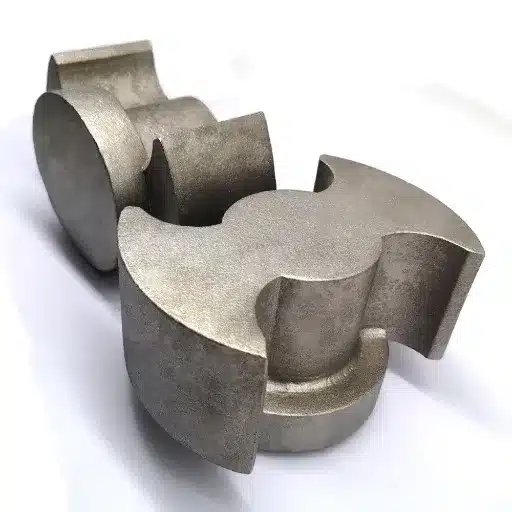
Nickel alloy castings are the principal materials in the aerospace industry as they have excellent mechanical properties and also can survive in the most severe environmental conditions. Because of these advantages, they have been labeled as super materials and are needed in applications such as turbine blades and jet engine exhaust systems. The aerospace sector needs materials that can withstand temperatures above 2000F (1093C) and the nickel-based alloys are the ones that can really maintain their strength, resistance to stretching, and corrosion even at such extreme conditions.
A recent study pointed out that the aerospace sector was the largest buyer of nickel alloys worldwide with a share of approximately 35% of the total consumption. The reason mainly was the growing necessity for modern and fuel-efficient aircraft. One of the innovations in nickel-based superalloys, the introduction of single-crystal alloys, is one the factors that have contributed even more to the performance of aircraft engines and hence to the reduction of fuel consumption and emissions.
In the Automotive Sector
Nickel alloy castings supporting the automotive sector have become more and more needed and this demand is primarily due to the manufacturers who find it difficult to meet the higher performance and efficiency expectations while at the same time, adhering to the stricter environmental regulations. It is not unusual for these alloys to be a part of the most critical engine components, like turbochargers, exhaust valves and fuel injection, because of their high-temp resistance and durability, and thereby the engine efficiency and life cycle are improved.
As per the latest report, the global automotive market will reach a value of $28 trillion by 2028. The rise of electric and hybrid cars has been the chief reason behind this surge. Nickel alloys have a crucial place in the EV battery technology and especially in the case of nickel-rich lithium-ion batteries used by the leading car makers like Tesla and BYD. These batteries typically have more than 80% nickel in their cathodes which in turn increases the energy density and allows a longer range and better performance.
Recent Advancements in Nickel Alloy Casting Technology
Innovations in Materials
Nickel alloys combined with kaustic soda were initially employed for alloying purposes, but further experimentation resulted in the addition of other elements that were also suitable for this purpose, leading to the production of „super alloys”. Chemical, aerospace, and power generation are the main industries that consume around 55000 metric tons of nickel and niobium alloys each year for applications in turbine engines and electric power generating systems. The automotive industry is also a major user of nickel alloy titanium, accounting for about 25% of the demand for high temperature and high corrosion resistant alloys. Additive manufacturing is the most talked-about topic in metallurgy and at the same time it has unlocked the new character for nickel superalloys. Electron-beam melting (EBM) typical applications include molds for plastic and rubber parts, tooling for metal injection molding, and prototypes.
Sustainability Achievement
One of the most striking advancements is that powdered metallurgy methods have been invented that resulted in nickel alloy products with superior microstructures and strength. These processes offer better resistance to heat and corrosion, allowing them to be used in extremely hot and chemically aggressive environments. Additionally, the eco-friendliness of the nickel alloy production processes through old technologies has reached remarkable levels by using approximately 68% of the nickel in the products sourced from recycled materials.
Innovation in Casting Techniques
Novel techniques have totally changed the way alloys are made and used and have turned into a must in industrial processes where the highest accuracy, productivity, and ecologically sound approaches are the main priorities. Among the various innovations, 3D printing methods are the most commonly used. The printing process is no longer restricted to simple shapes; sharp brains have developed the methods that yield models which are not possible to achieve with other techniques and with the least waste, thus slashing the material costs by as much as 70% in some instances.
The other major advancement is the employment of numerical techniques and simulations that support the casting process by spotting the areas likely to have flaws and by ensuring that the materials are correctly distributed. This has resulted in the reduction of defect occurrence by up to 30% which in turn has increased the reliability of parts used in turbines, jet engines, and power plants.
Reference Sources
-
A feasibility study on phase characterisation of nickel-based superalloys
This research explores a novel ultrasonic technique for characterizing bulk materials of nickel-based superalloys.
Read more on ScienceDirect -
Chapter 21: Nickel-Base Castings – ASM Digital Library
This chapter discusses the production and properties of nickel-base castings, focusing on their composition and applications.
Read more on ASM Digital Library -
Modeling and Process Optimization of Investment Casting for Nickel-Based Alloys
This study highlights the investment casting process for nickel-based alloys, emphasizing its role in producing complex shapes.
Read more on Springer
Frequently Asked Questions (FAQs)
What are nickel-based alloy castings and where are they used?
Nickel-based alloy castings are parts made from metal casting process in which nickel is the main metal and it is mixed with other elements to make alloys with improved strength and oxidation and corrosion resistance (such as chromium, cobalt, molybdenum, manganese, etc.). They are high-precision castings and are mainly of two types of investment casting and other precision casting, which are highly suitable for high-temperature applications and harsh environments such as gas turbine blades, jet engine components, and the rest of the industry where aluminum and steel would not work.
How does the chemistry of nickel-based alloys affect performance?
The chemistry of nickel-based alloys determines high-temperature properties, ductility, high tensile strength and resistance to oxidation and corrosion. When the alloying elements such as chromium and manganese are controlled the manufacturer can apply the oxide resistance, thermally induced vacancies behavior and corrosion resistance to the parts and the pieces would still be perfect for use in extreme and harsh conditions over a wide temperature range.
Are Hastelloy castings different from other nickel alloy investment castings?
Hastelloy is a registered brand name for the family of nickel-chromium-molybdenum alloys that are characterized by their exceptional resistance to corrosion. The difference between Hastelloy and other nickel alloy investment castings (like Inconel or Monel) is that the attention is paid to the resistance of the former to aggressive chemical attack and pitting, hence they are the best choice for chemical processing, high-temperature applications and casting when the requirement is to have corrosion resistant quality that cannot be matched.
When should I choose nickel-based castings over stainless steel?
Nickel-based castings are preferred to stainless steel when the application requires the highest possible resistance to oxidation, a superior strength with a wide range of temperatures, or when such extreme environments are present where stainless steel cannot resist oxidation or high temperature. Nickel-based and nickel alloy investment castings find their way into gas turbine blades, jet engine components, and other harsh places where stainless steel would be soft or oxidized at a high temperature.