In the sectors where the matching of materials is possible, the stainless steel that the industry uses is a significant substance. But, if you have ever been curious about the reasons behind the exceptional properties of stainless steel, mainly its fire resistance and melting points, then this article will be the right one for you. The article will not only debate the scientific melting point of stainless steel but also bring out different implications and show how this factor affected the whole industry from production processes to daily consumption. Whether you are a professional or just an interested reader, you will find very helpful information about this incredible material.
Introduction to Melting Point of Stainless Steel
What is Melting Point?
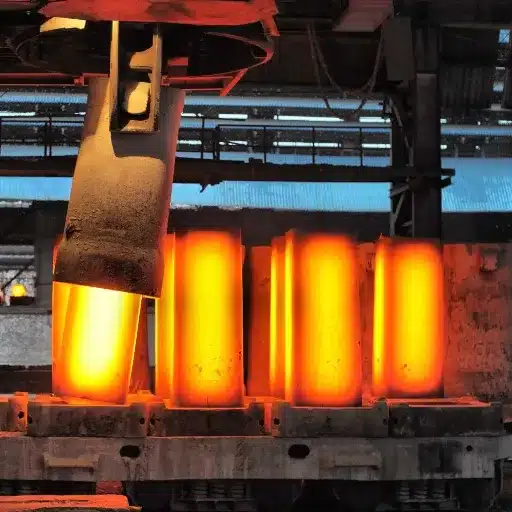
A material’s melting point is a one-of-a-kind temperature wherein the substance switches its state from solid to liquid. Throughout the melting point, the different materials will have different extremes according to their properties and the amount of energy they can yield. To illustrate, the melting point of metal alloys such as stainless steel is entirely based on their composition since the steel consists of mainly iron, chromium, nickel, and some other elements. Hence, the melting point of stainless steel is not a fixed number but rather a range of numbers due to the different occurrences.
Generally speaking, the melting point of stainless steel is around the 2,500°F (1,370°C) to 2,800°F (1,540°C) area, with the specific grade as an important factor. To give an example:
- Austenitic stainless steel (e.g., 304, 316): Melting point range from 2,500°F to 2,550°F (1,370°C to 1,400°C).
- Ferritic stainless steel: Melting point range slightly above, approximately 2,500°F to 2,800°F (1,370°C to 1,540°C).
- Martensitic stainless steel: Similar to ferritic, though the carbon content fluctuations might influence the range somewhat by lowering it.
Importance of Melting Point in Metallurgy
The melting point is an essential parameter in metallurgy and is a major factor that influences the use, processing, and performance of metals and alloys. It is of utmost importance for the melting points to be known accurately by the metallurgists so that they can continue to generate and develop materials that can survive the given thermal conditions without deforming or failing. For example, the melting points of stainless steel alloys of austenitic or ferritic types are about 2,500°F to 2,800°F (1,370°C to 1,540°C), which allows using them for making parts in high-temperature areas like heat exchangers, boilers, and turbines.
In addition to this, the melting points are being used in advanced metallurgical methods for metal refining services. The application of techniques like vacuum arc remelting or induction melting necessitates continuous temperature control throughout the process in order to achieve the required purity levels while allowing the alloy’s microstructure to be homogeneous. Furthermore, the understanding of melting behavior is a significant factor in welding and casting, where the controlled heating and cooling directly influence the mechanical and thermal properties of the final product.
Understanding Stainless Steel Composition
Types of Stainless Steel
1. Austenitic Stainless Steel
Austenitic stainless steel is the most commonly used type accounting for around 70% of the world’s total stainless steel production. This steel contains high levels of chromium (16-26%) and nickel (6-22%) as its principal constituents; these features give its very good corrosion resistance, high ductility, and non-magnetic properties. There are many stainless steel grades like it’s 304 and 316, e.g. 316 has molybdenum in its composition which makes it more resistant to chlorides and marine environment. It is found in articles such as kitchen utensils, chemical processing equipment, and construction materials.
2. Ferritic Stainless Steel
Ferritic stainless steel is composed mainly of chromium (10.5-30%) mixed with a minor amount of nickel or none at all which makes this type less expensive than austenitic ones. Its resistance to corrosion is moderate and it is a magnetic material; besides, it has improved electrical conductivity and thermal expansion characteristics. The grades that are usually used are 430 and 409, which are applied in the manufacture of automotive exhaust systems, home appliances, and industrial equipment.
3. Martensitic Stainless Steel
Martensitic stainless steel is known for its hardness and strength, it is produced by using 12-18% chromium and varying amounts of carbon. It is a magnetic material that can be made harder by heat treatment; however, its resistance to corrosion is not as good as austenitic or ferritic types. A grade 410 material is commonly used for cutlery, surgical instruments, and turbine blades.
4. Duplex Stainless Steel
Duplex stainless steel is a combination of austenitic and ferritic stainless steels, presenting a trade-off between high strength and good resistance to corrosion. Generally, it consists of 18-28% chromium, 4.5-8% nickel, and the addition of molybdenum and nitrogen which improves its resistance to pitting and stress corrosion cracking. Its remarkable strength and reduced nickel content make it an economic option for the oil and gas industries, chemical plants, and structural components manufacturing. The grades that are particularly notable are 2205 and 2507.
Chemical Composition and Its Impact
Different types of stainless steels with such varied properties, performance, and applications owe their existence primarily to their chemical compositions. The foundation of stainless steel is iron, which always contains at least 10.5% chromium. This chromium forms a passive chromium oxide layer on the surface, which makes it corrosion resistant. After this, the quality of steel is determined by adding various alloying metals such as nickel, molybdenum, carbon, manganese, nitrogen in conjunction with iron in different ratios.
For example, austenitic stainless steel, which comprises very high amounts of chromium (16-26%) and nickel (6-22%), provides excellent corrosion resistance and can take on different forms easily, hence, its use in chemical processing and food-grade applications. On the contrary, ferritic stainless steel, characterized by lesser nickel and higher chromium content, is stimulated by chloride-induced stress corrosion cracking, which is a great advantage for the marine and automotive industries.
The findings point to duplex stainless steel, which bears an adjusted ratio of ferritic to austenitic and rather is composed of 22-25% chromium, 4-7% nickel, and up to 3% molybdenum. This particular composition not only strengthens the metal but also pitting and crevice corrosion resistance permits its effective usability in oil and gas exploration and wastewater treatment systems.
Factors Affecting the Melting Point

Alloying Elements and Their Contributions
Role of Chromium and Nickel
Chromium and nickel are the people who cannot be accounted for stainless steel without the trial of their main qualities, which are resistance to corrosion and overall performance. The basic resistance of stainless steel to corrosion comes from chromium, since it creates a very thin and tightly bonded surface oxide layer, called a passive layer, on the steel’s surface. This barrier protects the material from oxygen, moisture, and other corrosive agents. Usually, the stainless steel has no less than 10.5% chromium for the period of the property, while the more the amounts the more the resistance to harsh environments.
Nickel also adds to the strength and toughness of stainless steel but mainly in cryogenic conditions. Besides, it also makes the alloy more ductile and simpler to mold and weld. Increased nickel content gives a higher resistance to stress corrosion cracking and an even better performance in aggressive chemical environments. For instance, austenitic stainless steels like 304 and 316 grades widely contain 8-12% nickel, which is one of the factors behind their outstanding performance and versatility.
Melting Points of Common Metals
Comparison with Carbon Steel
A superficial comparison reveals the differences of a basic nature between austenitic stainless steel and carbon steel in terms of their chemical composition, physical and mechanical properties, and application areas. The major difference that sets the two materials apart is the presence of alloying elements. To elaborate, the primary constituents of carbon steel are iron and carbon, while stainless steel at least contains 10.5% of chromium, which in general is combined with nickel as well; both of these elements give steel its excellent resistance to corrosion and long life in service.
When compared regarding mechanical properties the carbon steel comes out with its high tensile strength and hardness as its major advantages and thus it is regarded as the material of choice for buildings that require heavy load capacity. It is a common understanding in the industry that mild carbon steel has a tensile strength of approximately 400-550 MPa whereas austenitic stainless steel like 304-grade can be anywhere from 505-750 MPa depending on the alloy used and the method of treatment applied. Still, the stainless steel is the clear winner in terms of ductility, formability, and toughness at both high and low temperatures.
Melting Points of Other Common Alloys
There is a tremendous variation in melting points of alloys due to different compositions and purposes. The case of brass is a good example, which is an alloy made up of copper and zinc and has a melting point of zinc content ranging from 900 to 940 (1652 – 1724) depending on the proportion of zinc used. In the case of bronze, which is predominantly copper and tin, it has a melting point of about 850 – 1000 (1562 – 1832).
Corrosion-free and very light, the melting temperature of aluminum alloys, which are not, is set at about 463-671 (865-1240) depending on the specific alloying such as magnesium or silicon. If anything, titanium alloys are the complete opposite in terms of their melting and making as they are strong and heat resistant but need a higher melting point of around 1600-1660 (2912-3020) for melting.
Nickel-based superalloys, which are commonly employed in the manufacture of jet engines due to their high-performance capabilities, their melting points generally lie between 1300-1400 (2372-2552) which grants the material strength in the most extreme heat conditions. The understanding of the melting points of such alloys is a crucial factor in the material selection process for specific engineering and manufacturing applications.
Applications of Melting Point Knowledge in Industry
Engineering and Manufacturing Considerations
Knowledge about melting points is very important in the engineering and manufacturing fields as it influences the material selection, process design, and product performance. To illustrate, tungsten, which is one of the elements with the highest melting point (melting point 3422°C or 6192°F), and molybdenum with a melting point of 2623°C or 4753°F are both employed in very high-temperature applications like space parts, industrial furnaces, and energy technologies because of their high heat resistance.
On the other hand, high melting point metals like stainless steel—about 1375–1530°C (2507–2786°F)—are widely used due to their properties of forming strong bonds with other metals and therefore making them an inseparable part of the automotive, construction, and medical industries where high resilience, and resistance to oxidation and corrosion are the most important factors, so the manufacturing process can take place with these materials. The addition of elements like chromium and nickel not only enhances these properties but also slightly modifies the melting point depending on the specific alloy in question.
A clear understanding of melting points leads to the use of 3D printing which is one of the methods in additive manufacturing. Modern techniques like laser powder bed fusion (LPBF) are based on very high heating and cooling cycles and require very precise temperature control for the materials to join without being damaged. For example, the selection of appropriate materials such as titanium alloys (melting point ~1668°C or ~3034°F) ensures the manufacturing of strong lightweight parts in aerospace and medical applications, among others.
Corrosion Resistance and Melting Point
Corrosion resistance and melting point are considered the two main factors that to a large extent determine material performance and viability in challenging environments in the long run. It is only because of their resistance to corrosion coupled with their good stability that these high-performance materials have been identified as the best candidates for industrial, aerospace, and energy applications; namely: stainless steels, superalloys, and ultra-high-temperature ceramics (UHTCs).
For example, the corrosion resistance of stainless steel alloys like 316L can be attributed to the addition of chromium which not only creates a passive oxide layer but also protects the substrate even in aggressive surroundings. Chromia (Cr₂O₃) is produced naturally and that too in a stable state for both acidic and alkaline conditions thus extending the alloy’s life. It is the case of nickel-based superalloys like INCONEL 718 that they also have become known for having excellent ability to resist oxidation and corrosion by acids especially at melting points which are in the range of 1260-1350°C (2300-2462°F).
Reference Sources
-
“Effect of Single Oxide Fluxes on Morphology and Mechanical Properties of ATIG on 316 L Austenitic Stainless Steel Welds”
- Key Findings: This study examines the mechanical properties and melting point of 316L austenitic stainless steel. It reports a melting point of approximately 1440°C and evaluates the effects of oxide fluxes on weld morphology and mechanical properties.
- Methodology: The research involves experimental welding processes using oxide fluxes and subsequent testing of tensile strength, hardness, and weld morphology.
- Read more
-
“Efficiency of dissimilar friction welded (Super duplex stainless steel SAF 2507-mild steel) joints”
- Key Findings: This paper discusses the welding of stainless steel and mild steel, focusing on the temperature conditions relative to the melting points of the materials. It highlights the importance of maintaining temperatures below the melting point to ensure joint efficiency.
- Methodology: The study uses friction welding techniques and evaluates the mechanical properties of the resulting joints.
- Read more
-
“The Optimized Homogenization Process of Cast 7Mo Super Austenitic Stainless Steel”
- Key Findings: This research explores the homogenization process of 7Mo super austenitic stainless steel, focusing on how the melting point of inter-dendritic regions can be increased by holding the material slightly below its melting temperature.
- Methodology: The study employs thermal treatments and microstructural analysis to optimize the homogenization process.
- Read more
Frequently Asked Questions (FAQs)
What are the metal’s typical melting points in the case of 304 austenitic stainless steel?
The melting point of the austenitic stainless steels like 304 steel is not given as a single number but instead as a range because stainless steel is an alloy. The melting range of 304 stainless steel runs from about 1400°C to 1450°C (2552°F to 2642°F), however, the melting point may be altered because of the small changes in the chemical composition and the presence of impurities. It is very important to note that stainless steel melts in several steps when one considers the transition from solid to liquid in terms of melting temperatures in celsius or degrees fahrenheit.
What are the factors and effects of nickel and chromium on the melting point of 316 stainless steel compared to the one of 304?
Nickel and chromium do not only behave as factors of melting in general but also affect the casting during the whole process. In 316, compared to 304, nickel and molybdenum are the major pluses which can even lead to dropping the solidus and liquidus temperatures a bit or enhancing the melting range because of broadening. Practically speaking, 316 stainless steel is considered to melt generally in the same range as 304 (around 1375°C–1400°C to 1450°C), but the differences in composition and minor elements mean the melting point will vary with the alloy formulation that is specified.
Which methods can be used to find the melting point for different grades of stainless steel?
Austenitic 304 and 316 stainless steels have the most accurate melting temperature data from manufacturers’ specifications and metallurgy handbooks so thus manufacturers’ technical datasheets, standard references for stainless steel grades, or performing differential scanning calorimetry (DSC) in a lab are the best and most reliable sources to find the melting point of a specific grade of stainless steel. Since stainless steels are alloys, the melting point is always reported as a range (from solidus to liquidus).
Is it true that 316 stainless steel has melting point higher than that of 304 stainless steel?
By and large, the melting point of 304 and 316 stainless steels is fairly close and this consequently implies that there is the probability of overlap. The presence of extra elements in 316 (for instance, molybdenum) and the slight variations in the levels of nickel and chromium may modify melting and solidification behavior, but the melting point of the 316 stainless steel is not significantly higher than the 304. Both of them fall under austenitic stainless steel category and they are used in environments where corrosion resistance and ductility at high temperature are the main requirements.
Why is the lowest temperature in the melting range so important?
The melting temperature range (solidus to liquidus) of stainless steels indicates not only the start of softening of the metal but also the complete softening of the alloy. For the austenitic stainless steels, the lower limit of the range (the lowest temperature at which melting starts) is highly significant for welding and casting processes, as partial melting might result in defects. Knowing the lowest temperature helps to set the operating temperatures safely and thus to prevent accidental melting of stainless steel parts.