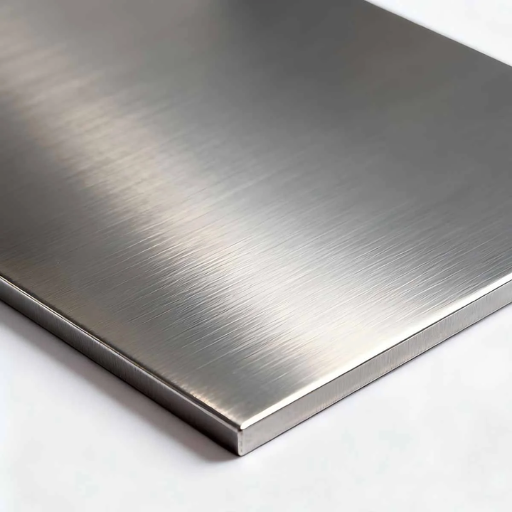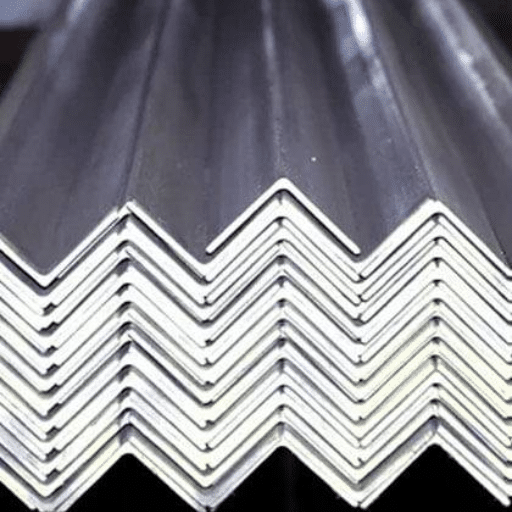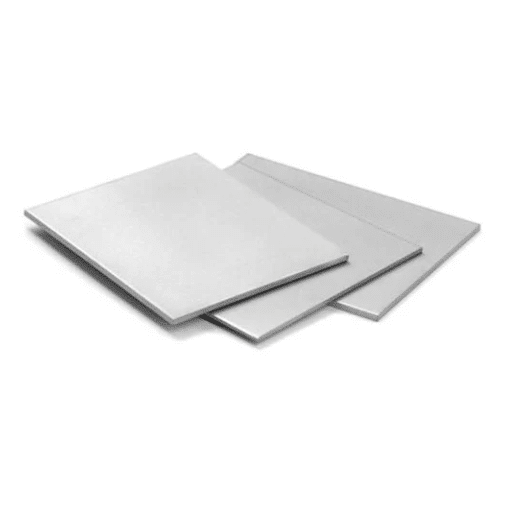
Standard surface finishes for 304 stainless steel include No. 1 finish, 2D finish, 2B finish, BA (2R) finish, No. 4 finish, No. 8 mirror finish, and hairline (HL) finish, which all arise from different mill processes and serve specific application requirements. The architectural contractor in Southeast Asia discovered this information after experiencing bad consequences. For his facade project, he ordered 304 sheet with No. 4 finish from two different suppliers. The two deliveries contained panels that both carried “No. 4 per ASTM A480” labels. The panels showed different visible characteristics because their grain direction, reflectivity and perceived color all varied between the two samples. The contractor needed to discard half of his order because he needed to buy new materials from one mill run. This new purchase cost him money, which canceled out all of his financial benefits from dividing the order between two suppliers.
Buyers understand the finish names 2B and No. 4, and mirror finish. However, buyers need to learn how these factors affect costs, product quality and product suitability for their particular needs. This guide explains all standard 304 sheet finishes and their specifications, including Ra roughness values which show what suppliers need to deliver for specific customer expectations. You will learn all finish costs and the times when higher finishes provide financial advantages and the surface production methods used by Chinese mills.
Key Takeaways
- 2B is the baseline mill finish for cold-rolled 304 sheet (Ra 0.1–0.5 µm) and suits most welded fabrications.
- BA (bright annealed) delivers the smoothest as-rolled surface (Ra 0.02–0.06 µm) without additional polishing.
- No. 4 brushed finish (Ra 0.2–1.0 µm) is the standard choice for food equipment and architectural cladding.
- No. 8 mirror polish can cost 30–50% more than 2B and is often over-specified where No. 4 would suffice.
- Always specify the standard (ASTM A480) and, for critical jobs, the Ra range — not just the finish name.
What Determines Surface Finish? The Mill Process
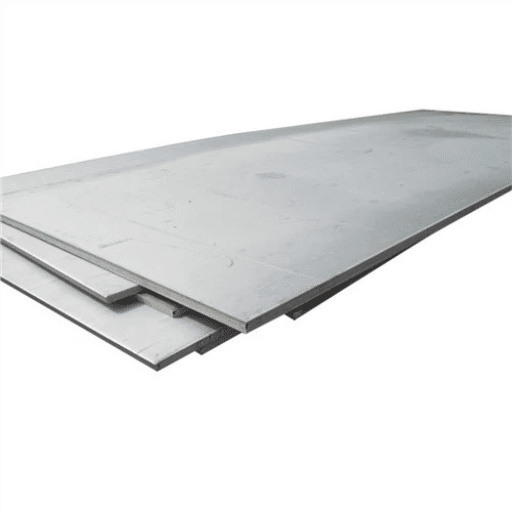
Surface finish is essential because it originates from the last mill processing step, which establishes surface roughness and reflectivity, material thickness and manufacturing expenses.
The standard process sequence for cold-rolled 304 sheet includes three steps: cold rolling, annealing, and pickling before final surface treatment. The cold rolling process decreases strip thickness while creating work-hardening effects. The annealing process at 1,050°C enables the recrystallization of the grain structure which results in restored ductility. The pickling process uses mixed nitric-hydrofluoric acid to eliminate oxide scale that developed during the annealing process. The finishing process begins after the next step. For a deeper comparison of how cold rolling and hot rolling affect surface quality and thickness range, see our cold rolled vs hot rolled 304 guide.
The 2D finish requires pickling to achieve its complete stop. The surface has a matte finish, which shows no specific direction and exhibits a light roughness. The 2B finish requires a skin pass, which uses cold-rolling to achieve its standard mill finish appearance through work rolls that display highly polished surfaces. The BA finish begins with cold rolling and uses hydrogen-nitrogen gas to perform bright-annealing of the strip, which prevents oxide formation before applying a light skin pass. The process creates a product that exhibits extreme brightness together with a totally smooth finish that needs no mechanical polishing.
The mechanical finishes No. 4 and No. 8 do not show any other results. The mill starts with 2B sheet and polishes it with abrasive belts or wheels. No. 4 uses 120–180 grit abrasives to create the characteristic directional grain. No. 8 uses finer grits until it reaches a mirror-like surface, which shows no specific direction. The cost of each polishing stage increases because it requires more labor, equipment time and inspection work.
Pro tip from the floor: At our Wuxi facility, we always advise buyers to consider whether they need the surface as-delivered or whether they will polish after fabrication. Welding on a No. 4 finish ruins the grain pattern in the heat-affected zone, forcing a full re-polish. It is often cheaper to specify 2B or BA, weld, then polish the completed assembly.
The thickness range also varies by finish. BA is typically limited to ≤3 mm because the bright-annealing atmosphere must penetrate evenly. No. 8 mirror polishing becomes impractical below 0.5 mm because the sheet distorts under polishing pressure. For a full breakdown of standard thicknesses and gauge conversions for each finish, see our 304 stainless steel sheet thickness chart. Understanding these constraints before you specify prevents procurement delays.
The Standard Finishes for 304 Sheet: A Visual and Technical Guide
The table below summarizes every finish you are likely to encounter when sourcing 304 stainless steel sheet, with process, typical Ra range, appearance, and standard thickness availability.
| Finish | ASTM A480 | Process | Typical Ra (µm) | Appearance | Typical Thickness |
|---|---|---|---|---|---|
| No. 1 | No. 1 | Hot-rolled, annealed, pickled | 3–6 | Dull, rough, non-directional | 3.0–50 mm (plate) |
| 2D | 2D | Cold-rolled, annealed, pickled | 0.1–0.4 | Matte, non-directional | 0.4–3.0 mm |
| 2B | 2B | 2D + skin pass | 0.1–0.5 | Bright, smooth, slightly reflective | 0.3–3.0 mm |
| BA (2R) | BA | Cold-rolled, bright-annealed | 0.02–0.06 | Highly reflective, mirror-like as-rolled | 0.3–3.0 mm |
| No. 4 | No. 4 | Mechanically polished, 120–180 grit | 0.2–1.0 | Directional brushed grain | 0.5–6.0 mm |
| No. 8 | No. 8 | Mechanically polished to mirror | <0.05 | Bright, non-directional mirror | 0.5–6.0 mm |
| HL (Hairline) | — | Fine abrasive, 240+ grit | 0.1–0.5 | Fine directional lines | 0.5–3.0 mm |
The hot-rolled plate domain provides its services through product No. 1. The No. 1 product works as the only budget-friendly option when your project needs thick materials for structural supports and heavy tanks, and load-bearing elements. The rough surface provides good welding properties because it receives paint or insulation during its operational use.
The industrial sector relies on 2B finish 304 stainless steel sheet as its main material. About 70 percent of cold-rolled 304 sheet material is delivered to customers in 2B finish. It provides the best combination which includes cost efficiency, protection against corrosion and the ability to be manufactured. The skin-passed surface creates an oxide film, which improves the appearance of TIG welding. For a deeper look at the base material specification, see our ASTM A240 specification for 304.
People mistakenly interpret BA finish 304 stainless steel because they lack a proper understanding of its properties. Buyers sometimes assume it is “just a shiny 2B.” The two processes operate on different principles because bright annealing involves a different technique from its definition. The oxygen-free atmosphere prevents oxidation during recrystallization, which results in a surface that exceeds 2B smoothness and delivers better protection against corrosion than its original state. BA serves as the preferred finish for reflective surfaces used in appliance panels, lighting fixtures, and specific medical components that cannot undergo post-polishing procedures.
No. 4 stainless steel finish dominates architectural and food-service markets. The directional grain hides minor scratches, fingerprints are less visible than on mirror finishes, and the surface meets FDA cleanability requirements for most food-contact applications. For a complete breakdown of food-grade certification requirements for 304 sheet, see our food-grade 304 requirements guide. The key variable is grit: 120-grit No. 4 is coarser and more industrial; 180-grit is finer and more refined. Specifying only “No. 4” without a grit range is a common source of supplier inconsistency.
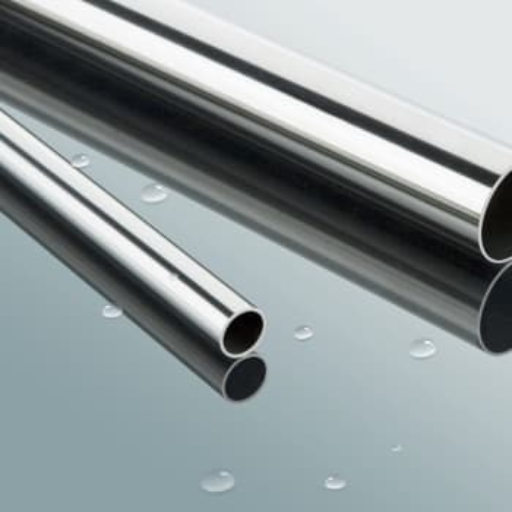
The premium choice between mirror finishes for stainless steel exists in true stainless steel mirror finish Number 8. The process of attaining a genuine mirror finish needs multiple polishing steps which begin with coarse abrasives and progress through medium and fine abrasives until reaching buffing. The labor content is substantial, which explains the 30 50 cost premium over 2B. The No 8 finish is required for applications that need the highest visual standards, which include luxury elevators, high-end kitchen equipment and pharmaceutical clean rooms. The solution is too complex for most situations.
The Decorative Hairline Finish of stainless steel (HL) creates a more attractive appearance than No 4 because it produces finer and more even lines. The material finds extensive use in elevator cabs, escalator cladding and architectural trim, which need subtle directional texture.
Roughness Values (Ra) Explained: What the Numbers Mean

Ra — arithmetic average roughness — measures the average deviation of the surface profile from its mean line, expressed in micrometers (µm). The metric serves as the most effective method to measure surface finish which competitors ignore in their content.
Ra represents an important measurement because it affects three factors: cleanability and corrosion initiation and coating adhesion. The lower Ra value results in reduced microscopic peaks and valleys, which bacteria use as hiding spots and chloride ions use as concentration points, and paint or powder coat uses as bonding failure locations. Ra directly impacts sanitation audit results for the food and pharmaceutical industries. Ra determines architectural spaces through its effect on light reflection and fingerprint visibility.
The 2B finish reaches a surface roughness measurement between 0.1 and 0.5 micrometers. The skin-passed surface delivers sufficient smoothness for industrial uses while maintaining enough texture to enable proper painting adhesion.
The BA finish exhibits a surface roughness measurement between 0.02 and 0.06 micrometers which makes it approximately ten times smoother than the 2B finish. BA sheet achieves excellent light reflection because of its surface properties, which also prevent bacteria from sticking to it more effectively than any as-rolled finish.
The No. 4 finish exhibits a surface roughness range between 0.2 and 1.0 micrometers, which depends on both the grit size and the equipment used by different suppliers. A 120-grit No. 4 from an older polishing line might measure 1.0 µm. A 180-grit No. 4 from a modern line with automatic belt tensioning might measure 0.3 µm. Two suppliers can both deliver “No. 4” but their different production processes result in two different panel designs.
No. 8 mirror achieves Ra. How do you verify Ra on receipt? The supplier must provide a profilometer trace from a typical sample for large orders or critical orders. For smaller orders, a surface roughness comparison specimen set — physical blocks with certified Ra values that you touch-compare to the delivered sheet — provides a quick field check. At Zhonggongte, we include profilometer data on request for all polished finishes.
Which Finish for Which Application? A Decision Framework
Choosing the right 304 stainless steel surface finish means matching the surface properties to the operational demands — not simply selecting the most attractive option.
| Application | Recommended Finish | Why |
|---|---|---|
| Food & beverage processing | 2B or No. 4 | FDA requires surfaces that are smooth and free of cracks or pits. No. 4 meets this at lower cost than No. 8. |
| Architectural cladding | No. 4 or HL | Directional grain hides fingerprints and minor scratches from handling during installation. |
| Chemical tanks & vessels | 2B | Cost-effective, welds cleanly, passivates well after fabrication. No aesthetic requirement. |
| Medical / pharmaceutical | BA or No. 8 | Maximum cleanability, minimal bacterial adhesion. No. 8 for clean rooms; BA for equipment enclosures. |
| Appliance panels | No. 4 or BA | Balance of appearance and cost. BA for reflective designs; No. 4 for brushed looks. |
| Industrial fabrications | 2B or No. 1 | Function over form. No. 1 for heavy plate structures; 2B for sheet fabrications. |
| Marine & offshore | 2B or No. 4 | Corrosion resistance is identical across finishes; 2B minimizes cost for structural work. |
Food and beverage is where the most expensive mistakes happen. An equipment buyer in the dairy industry once specified a No. 8 mirror for all interior tank surfaces because he believed that “the smoother, the cleaner.” The material cost increased by 35%. The team examined the specifications and found that FDA 21 CFR Part 110 requirements, together with its European counterpart only need surfaces to be “smooth and adequately cleanable.” The standard requires No. 4 at Ra ≤0.8 µm to meet this requirement. The buyer revised the spec, saved significantly, and passed sanitation inspection on the first audit.
Architectural cladding requires material selection based on two factors, which are finish type and grain direction. The mill finish grain of large panel facades needs to run in a single direction, which follows the panel’s long dimension. When adjacent panels display different grain patterns, their reflectivity appears different at various viewing angles which creates a patchy appearance on the facade. Your purchase order for architectural No. 4 or HL needs you to specify grain direction.
Chemical tanks rarely need polished finishes. The 2B surface provides sufficient protection against corrosion while maintaining weld quality through low discoloration rates and allowing easy post-weld passivation. The money saved from finishing work enables the purchase of thicker gauge materials or superior alloy products whenever chemical requirements mandate those specifications.
Cost Implications: How Finish Affects Your Budget

Finish selection is one of the most direct levers for controlling 304 sheet cost. Using 2B as a baseline (100%), the typical market premiums run as follows:
| Finish | Typical Premium vs. 2B | Cost Driver |
|---|---|---|
| 2B | 100% (baseline) | Standard mill process |
| BA | 105–110% | Additional annealing atmosphere control |
| No. 4 | 115–125% | Mechanical polishing labor + abrasive consumption |
| HL | 120–130% | Fine abrasive processing + quality control |
| No. 8 | 130–150% | Multi-stage polishing + buffing + inspection |
The presumed premiums operate with standard gauge and width metrics. The cost of polishing setups increases when organizations need to handle non-standard dimensions and work with minimal equipment.
The business incurs additional costs. The fabricator who purchases 2B sheets material and pays a polishing service to create No. 4 finish for their entire assembly work will spend more than if they had ordered No. 4 finish from the mill. The only exception exists for welded fabrications because welding procedures destroy polished surfaces, which makes polishing after welding for 2B material the most effective solution.
For current per-kg pricing across all finishes and gauges, see our 304 stainless steel sheet pricing guide.
Protective Film: When to Remove It (and When Not To)
Not all finishes ship with stainless steel protective film (PVC), and misunderstanding film handling is a common source of expensive rework.
| Finish | Ships with PVC Film? | Notes |
|---|---|---|
| 2B | Usually no | Surface is durable enough for normal handling |
| BA | Usually no | Highly reflective surface is surprisingly scratch-resistant |
| No. 1 | No | Hot-rolled oxide layer provides natural protection |
| No. 4 | Yes | Film protects the polished grain from scratches during transit and handling |
| No. 8 | Yes | Mirror surface scratches easily; film is essential |
| HL | Yes | Fine lines are vulnerable to abrasive damage |
The essential guideline demands that all manufacturing work needs to maintain film protection during its entire duration. The appliance industry fabricator removed PVC film before performing laser cutting because he believed that this method would produce cleaner laser cuts without any plastic remnants. The outcome turned out to be more detrimental. The laser melted the adhesive backing of the film into the cut edge, and the heat drove vaporized adhesive onto the adjacent sheet surface. The No. 4 panels required solvent cleaning and localized re-polishing — adding half a day of labor per sheet.
The best method requires you to keep the film on during fabrication work and remove it only when you need to prepare for final assembly or product shipment. Your purchase order needs to state laser-grade PVC film when you plan to use fiber laser cutting. Standard films can leave more residue under high-power fiber laser cutting than under older CO2 systems.
International Standards and Finish Designations
A finish specification that is clear in one country can be ambiguous in another. The table below maps the major international standards for 304 cold-rolled sheet finishes.
| Finish | ASTM A480/A480M | EN 10088-2 | JIS G4305 | GB/T 3280 |
|---|---|---|---|---|
| No. 1 | No. 1 | 1D | No. 1 | No. 1 |
| 2D | 2D | 2D | 2D | 2D |
| 2B | 2B | 2B | 2B | 2B |
| BA | BA | 2R | BA | BA |
| No. 4 | No. 4 | 2J | No. 4 | No. 4 |
| No. 8 | No. 8 | 2P | No. 8 | No. 8 |
For global projects, we recommend specifying the ASTM designation plus the EN equivalent. The World Stainless organization maintains a helpful reference for international finish standards. For example: “No. 4 per ASTM A480 / 2J per EN 10088-2.” This dual specification eliminates ambiguity when materials are sourced across continents and inspected against different national standards.
The ASTM A480/A480M-24 standard defines finish appearances by process and typical roughness, though it does not mandate specific Ra values. For projects requiring quantitative surface control, add an Ra range to the purchase order — for example, “No. 4 finish, Ra 0.4–0.8 µm maximum.”
Sourcing 304 Sheet by Finish from China: What to Specify

Chinese mills produce every standard finish, but their manufacturing capabilities and default product offerings differ from one producer to another. Understanding what is standard stock versus custom order prevents procurement surprises.
TISCO (Taiyuan Iron & Steel) and BAOSTEEL produce 2B and BA as standard stock across their full gauge range. The warehouse carries No. 4 during normal operations but production occurs only when customers request it. ZPSS (Zhangjiagang Pohang Stainless Steel) — the Chinese-Korean joint venture — specializes in cold-rolled sheet and carries a broad 2B and BA inventory with strong thickness consistency.
When specifying finish on your purchase order, include:
- Finish designation: “No. 4 per ASTM A480”
- Grit range (for polished finishes): “120–180 grit”
- Ra range (for critical applications): “Ra max 0.8 µm.”
- Grain direction (for architectural No. 4/HL): “Grain parallel to long edge”
- Protective film: “Laser-grade PVC film, 80 µm thickness.”
- Standard equivalence (for multi-national projects): “Also to meet EN 10088-2 2J.”
The process of ordering architectural projects needs production samples to be requested as the first step before making any binding purchase commitments. The mill finish appearance shows different results because the production lines create different outputs, which are controlled by the design team-approved sample that serves as the permanent specification for the entire order.
The organization enforces thickness limitations, which it considers mandatory. The BA finish reaches its maximum capacity at three millimeters because the hydrogen atmosphere needs to distribute through the coil. The manufacturing process needs to maintain thickness because it produces surface defects when the material exceeds certain limits. Most mills establish 0.5 mm as the practical minimum because No. 8 mirror polishing below this thickness causes sheet deformation during the polishing process.
Our team at Jiangsu Zhonggongte ships 304 sheet in all standard finishes with full mill certification. We also provide 304 stainless steel sheet cut-to-size services — laser cutting, shearing, and edge finishing — with protective film intact. For standard stock inquiries, our 24-hour logistics center can confirm availability and dispatch samples within one business day.
How Surface Finish Affects Welding and Post-Weld Treatment
Welders frequently ignore finish selection, yet this choice determines how welds will appear and how much contamination risk and post-weld cleanup work will be needed.
The cleanest welding results from 2B and BA surfaces. The skin pass process and bright annealing process create a thin and uniform oxide layer which protects against atmospheric contamination during TIG welding. The smooth surfaces undergo post-weld passivation through nitric acid or citric acid treatment, which effectively restores the chromium oxide layer.
The No. 4 and No. 8 surfaces need special inspection. The mechanical polishing process embeds abrasive particles into the surface, while the directional grain pattern of the material creates a greater risk of base material contamination than 2B. The joint area of polished finishes needs cleaning with a dedicated stainless steel wire brush material and degreasing requires a non-chlorinated solvent. (Operators should not use chlorinated brake cleaner on stainless steel because heating the substance creates phosgene gas.)
The polished fabrications will develop a heat-affected zone, which will change color and lose its polished finish. The matching grit abrasive should be used to re-polish the weld area on No. 4 assemblies to restore the original grain pattern. The No. 8 panel needs complete re-buffing to create a consistent mirror finish. Fabricators tend to use 2B or BA for welding because they find it easier to polish their finished products, which makes this detail important when you select your purchase order finish.
For detailed welding parameters and filler selection, see our welding 304 stainless steel best practices guide.
Frequently Asked Questions
What distinguishes a 2B finish from a BA finish?
The process for creating 2B involves cold-rolling, annealing, and pickling the material before performing skin-passing through polished rolls. The BA process begins with cold-rolling before proceeding to bright-annealing, which occurs in an oxygen-free environment, followed by a light skin-passing procedure. The surface of BA exhibits superior smoothness compared to the 2B surface, which has Ra values between 0.1 and 0.5 microns. BA displays superior initial corrosion resistance because its oxide scale protection remains intact throughout the entire annealing process.
What Ra value does No. 4 finish have?
The No. 4 finish standard operates between Ra 0.2–1.0µm because both abrasive grit size and supplier equipment determine the actual measurements. A 120-grit No. 4 is coarser (Ra ~0.8–1.0 µm). A 180-grit No. 4 has a finer surface texture, which produces Ra values between 0.3 and 0.5 micrometers. Different suppliers produce distinct surface finishes because they only specify “No. 4” without providing specific requirements for grit or Ra measurements.
Is No. 4 food-grade?
Yes. The No. 4 finish meets FDA cleanability requirements for most food-contact applications according to its specifications. When cleaned properly, the surface becomes smooth enough to stop bacteria from residing on it. Food-grade compliance does not require the use of No. 8 mirror because it serves as an aesthetic requirement rather than a cleanliness standard.
Can you weld No. 4 stainless steel sheet?
You can weld but the heat from welding will damage the heat-affected zone, polished grain, which needs re-polishing to regain its original look. For fabrications that will be polished after welding anyway, it is usually more economical to start with 2B or BA and polish the completed assembly.
What causes the No. 4 differences between two suppliers?
Three variables: grit size (120 vs. 180), polishing equipment condition (belt tension, wheel wear), and the base surface (2B vs. 2D) that was polished. The standard should include ASTM A480 as a specification together with the required grit range and maximum Ra value for critical jobs. Better still, approve a production sample before placing the full order.
What is the cheapest finish for 304 sheet?
The most affordable option No. 1 (hot-rolled, annealed, pickled) is available only for plate thicknesses that reach or exceed 3 mm. For cold-rolled sheet, 2B is the baseline and most economical finish. The solution provides industrial, chemical and welding applications without requiring additional polishing expenses.
Do surface finishes impact the ability to resist corrosion?
The finish of an alloy does not alter its fundamental corrosion resistance which depends on the levels of chromium and nickel present in the material. The smoother surface of a material protects against localized corrosion because it contains fewer microscopic crevices that allow chlorides to accumulate. BA and No. 8 surfaces maintain their protective oxide layer better than rougher No. 1 surfaces when exposed to harsh environmental conditions.
Conclusion
The right 304 stainless steel surface finish balances function, appearance, and cost. For the broader context of 304 grade selection, sizing, and sourcing, see our complete 304 stainless steel sheet guide. The suitable baseline for most welded fabrications exists in 2B because it offers smoothness and corrosion protection while remaining budget-friendly. No. 4 delivers a professional brushed look, which costs more than standard options when visual appeal becomes important. BA provides extremely smooth results, which eliminate the need for polishing work. The design use of No. 8 mirror material only becomes acceptable when appearance acts as the main design element.
The key takeaway for procurement: specify not just the finish name but the standard, and for critical or architectural jobs, add the Ra range and grain direction. The purchase order specifies “No. 4 per ASTM A480, 180 grit, Ra max 0.6 µm, grain parallel to long edge, with laser-grade PVC film,” which establishes clear requirements that leave no room for supplier interpretation. The product you receive will exactly match the product you anticipated.
Please submit your RFQ with finish requirements for 304 stainless steel sheet when you need it for your upcoming project. Our mill team will confirm availability, review grain direction and thickness constraints, and deliver a certified quotation within 24 hours. We provide complete material traceability together with necessary technical support for your project needs from our standard 2B stock to our custom No. 8 mirror polish finishes.