In terms of high-end knives, the composition of the steel is an important aspect that usually determines the quality of the blade. Among the many kinds of steel that are available, Nitro-V and S35VN have become popular as the two main players, each having properties that suit certain uses and tastes. The present discussion is about a one-on-one contest between the two steels, but this time the main character is the edge retention which is the most significant factor for knife users who prioritize longevity and reliability. No matter if you are a collector, an outdoor adventurer, or a chef, being aware of the differences between Nitro-V and S35VN will enable you to pick a better one.
Introduction to Knife Steel Types
Defining Nitro-V and S35VN
Nitro-V Steel
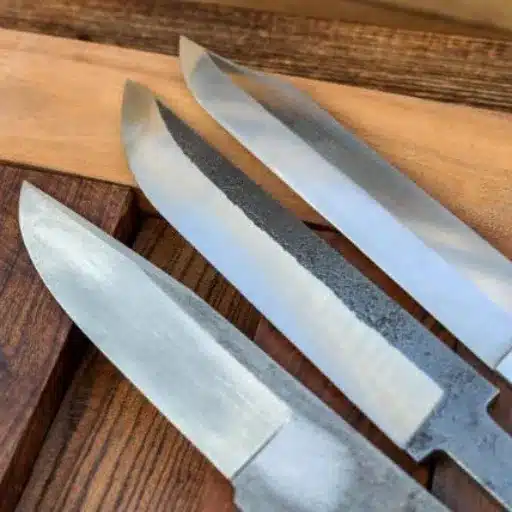
The nitrogen-boosted stainless steel Nitro-V is among the new materials that fully utilize the AEB-L steel. The New Jersey Steel Baron designed Nitro-V for its excellent toughness and high resistance to corrosion. It was even classified as being friendly to sharpening. The fine-grained structure owing to nitrogen and vanadium makes the steel soft enough to attain great sharpness and retain it. Nitro-V is a steel that smiths specified for its versatility, as it is suitable not only for knives, but also for EDC (Every Day Carry) and chef’s knives, among others. It normally has a Rockwell Hardness (HRC) that ranges from 59 to 63, depending on the treatment it has gone through.
S35VN Steel
S35VN is the next stainless steel of the highest quality proposed by Crucible Industries as a progressive step from its predecessor S30V. S35VN is a composition of vanadium, molybdenum, and niobium rendering it with remarkable, among others, characteristics of wear resistance, edge retention, and toughness. Additionally, it possesses a property of hardness that prevents chipping and hence durability for work needing long-lasting edges. S35VN is usually found in premium knives and thus it has a normal Rockwell Hardness of about 58-61, which makes it not too hard to sharpen compared to harder steels.
The Importance of Edge Retention in the Knife Performance
Edge retention is an aspect that is given the highest priority when determining a knife’s performance, as it is the indicator of how long the blade will be sharp during use. A knife with an excellent edge retention needs to be sharpened less frequently, and thus it is, along with the activities of its users, more and more efficient and convenient whether in the kitchen, for outdoor survival or in the industrial sector. The significance of this property is most evident in the case of rigorous conditions when cutting performance is the only thing that matters.
Some of the factors that can affect edge retention are steel hardness, blade geometry, and the user’s technique. For example, S35VN steel, even though it is expensive, is the best in edge retention and the reason for this is its high carbon and vanadium content which produces hardness and wear resistance. A research work comparing different knife steels shows that S35VN can last for 30% longer than Nitro-V the less expensive alternative, which is based on the continuous cutting tests with cardboard and rope materials conducted as supporting evidence.
Comparing Key Characteristics
Durability and Toughness of Nitro-V vs S35VN
Nitro-V Toughness
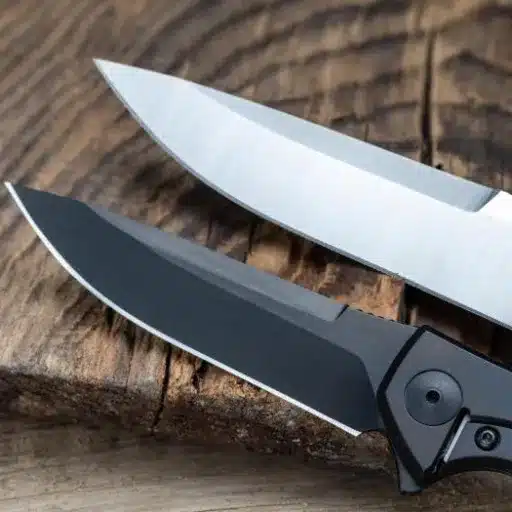
Nitro-V is a nitrogenous stainless steel that is tough and easy to sharpen. The main element of this material is a mix of chromium, vanadium, and nitrogen which together enhance its resistance to rust and hence its lifespan. Nitro-V is the ideal material for applications involving high-pressure and is regarded as extremely strong for the manufacture of tools. The common evaluations indicate that very hard conditions would not make the nitro-V blades to chip. The nitrogen addition dramatically lessens brittleness which is a characteristic problem faced in toughened steels.
S35VN Toughness
S35VN, on the other hand, is a really tough stainless steel that was the cooperation’s product of Crucible and Chris Reeve knives. The steel is subjected to the common chrome, vanadium, and molybdenum, but relatively with the niobium addition the toughness is also improved. The steel is very popular among professional users who demand sharp and reliable blades as it is perfectly balanced with good edge retention put together with wear resistance.
Nitro-V and S35VN Resistance to Corrosion
Nitro-V Resistance to Corrosion
Nitro-V has a wonderful resistance to corrosion which is indeed one of its strongest points. Performance is attributed to chromium being the main alloying element at approx. 12% plus the presence of nitrogen. The latter enhances the former in terms of corrosion resistance; besides that, the carbide forming deep in the surface that will eventually become the oxide layer is less reactive that is the main reason for that protective oxide layer. The users have indicated that Nitro-V does even better in the areas that have salt or coastal water as nitrogen is the cause of the steel’s being more resistant to pitting and surface rusting.
S35VN Resistance to Corrosion
S35VN is also a very good grade in the aspect of corrosion resistance and that is purely a consequence of its being slightly higher in chromium (approx. 14%) content. On the other hand it doesn’t possess nitrogen which implies that in very aggressive or extreme environments it will be somewhat less resistant to rust or pitting compared to Nitro-V. Nevertheless, S35VN is made with vanadium and niobium carbides which enhance the edge retention and overall wear resistance. These alloys contribute to the steel’s long-term durability but might also reduce the steel’s maintenance requirements in highly corrosive environments relative to Nitro-V.
Expert Opinions and Reviews
Professional Reviews on Steel Performance
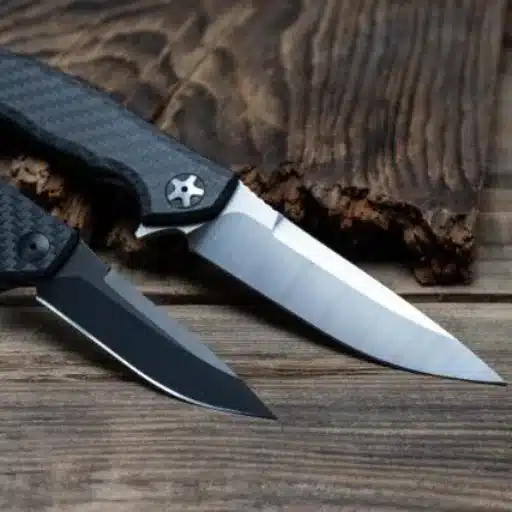
In terms of professional assessments, both Nitro-V and S35VN steels are remarkable but cater to diverse needs. Nitro-V gets much credit for its exceptional resistance to corrosion, which places it at the lead as a material for professionals who work in wet or humid environments. The reviewers are unanimous in their opinion that Nit-V loses its edge very slowly but at the same time, it is one of the easiest to resharpen, a feature that is very much appreciated by extremely demanding users who work with their tools every day. An expert has made a point of the fact that the addition of nitrogen to the steel has also contributed to the latter’s increased resistance to pitting and this is quite handy when it comes to letting the blade be exposed to saltwater.
On the contrary, the S35VN steel is the most talked-about steel, giving such a great combination of properties like toughness, edge holding capacity and corrosion resistance at the same time. The professionals who carry out the tests generally say that although S35VN is corroded less than Nitro-V, still, its excellent wear resistance and maintenance-free edge holding characteristics make it more suitable for the type of users who prefer extra durability rather than hassle-free maintenance.
Comparative Analysis of User Feedbacks
User Feedback: Nitro-V
Customer feedbacks highlight the difference in performance aspects of Nitro-V and S35VN steels. Recent discussions on forums and consumer reviews suggest that corrosion-resistant qualities of Nitro-V has caused exclusive use of it in humid or marine climate. The users of this steel claim that they’d show no rust signs, even after a blade made of Nitro-V has been used in water and salt spray for several months, if it has been properly cared for. Apart from this, the reports of the blades getting dull easily and thus being hard to maintain are rife in the feedback which ultimately ends up being a reason for the users giving importance to field maintenance.
User Feedback: S35VN
On the other hand, the sharpness and the longevity of S35VN are claimed to be the factors. User feedback from knife-testing communities, plus Rockwell hardness ratings, provides proof for this. Being the steel type frequently encountered in the 58-61 HRC range, S35VN is thus characterized by a good degree of toughness. S35VN knives are reported by consumers to need quite a lot of punishment before they can be designated as getting dull, thus it would be fair to claim that these knives can withstand heavy-duty uses or they can be present at long outdoor activities where sharpening is not an option.
Applications and Recommendations
Best Uses for Nitro-V Pocket Knives
Outdoor Activities
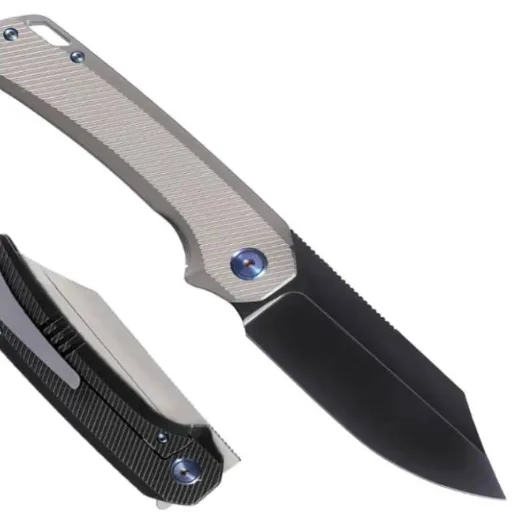
Nitro-V is no doubt the top pick for those who love nature and the outdoors since it boasts remarkable corrosion resistance and strength. A Nitro-V folding knife can withstand the most severe outdoor situations, including hiking, camping, and fishing, even with heavy rain or wetlands. Fishermen will be most pleased with the knife because it is less prone to rust by preventing salt water and moisture from getting to the blade, thus lessening the time and effort spent on maintenance.
Everyday Carry (EDC)
It is a great thing that Nitro-V steel is the ideal material for EDC knives for it is both strong and easy to sharpen. The knife is trustworthy and functional for opening packages, cutting ropes, and making food when on the road. Knife discussions and online feedback all say the same thing; users of Nitro-V are very content with the fact that it stays sharp even after heavy use.
Food Preparation
The non-toxicity of the metal due to the high corrosion resistance makes it suitable for food and kitchen tools. Many professional cooks and chefs, who are often exposed to moist or acid conditions, prefer Nitro-V knives for their non-rust and discoloration character.
Tactical and Survival Situations
The quality of Nitro-V allows it to be used in hostile conditions, including cutting of hard materials and self-defense situations. Most survivalists recommend Nitro-V pocket knives because they keep lasting even in the most unfavorable conditions, hence, they are reliable during crises.
Optimal Applications for S35VN Blade Steel
- Outdoor and Survival Knives: S35VN steel is excellent for making outdoor and survival knives due to its outstanding toughness (with Charpy C-notch impact values around 5.5-6 J, usually higher than S30V) and edge retention characteristics.
- Everyday Carry (EDC): S35VN is perfect for everyday carry pocket knives due to its incredible corrosion resistance (thanks to niobium addition). The material is very suitable for wet and humid conditions.
- High-End Kitchen Cutlery: Premium kitchen knives are increasingly made from S35VN due to its resistance to food acids and thus excellent sharpness retention. The alloy content permits very fine and sharp edges that last even after extensive chopping or slicing.
- Tactical and Combat Knives: S35VN is widely used by tactical knife manufacturers who supply military and police forces. This steel is characterized by its high toughness and strength allowing to resist chipping and provide cutting power even under the most intense use.
- Custom and Collectible Knives: S35VN is a highly sought-after material for custom knife makers due to its increased machinability compared to S30V. Its neat and uniform carbide structure increases polishing and makes it suitable for beautiful custom and top-grade collectible knives.
Choosing the Right Steel Type for Your Needs
Reference Sources
-
A Comprehensive Understanding of Knife Cutting: Effects of Hardness, Blade Angle, and the Micro-Geometry of Blade Edge on the Cutting Performance
- Key Findings: This study discusses the presence of carbides like M23C6 and V8C7 in S35VN steel and their impact on wear resistance and hardness. It provides insights into how these microstructural elements influence cutting performance.
- Methodology: The research involved analyzing the micro-geometry of blade edges and their cutting performance, focusing on the role of carbides in wear resistance.
Read more here
-
Enhanced Wear Resistance of Blades Made of Martensitic Steels: A Study of Diverse α′-Matrix/Carbide Microstructures
- Key Findings: This study evaluates the wear resistance of martensitic steels, including S35VN, by analyzing their α′-matrix and carbide microstructures. It highlights the superior wear resistance of these steels in blade applications.
- Methodology: The research used quantitative analysis of microstructures and wear resistance testing to assess the performance of martensitic steels.
Read more here
Frequently Asked Questions (FAQs)
Is Nitro-V less difficult to sharpen than CPM S35VN?
Sure! Nitro-V as a rule is less difficult to sharpen than CPM S35VN. Users are able to quickly build up a decent edge with commonly used stones thanks to the carbide structure and overall hardness of Nitro-V. On the contrary, powder metallurgy steel like S35VN has very fine hard carbides that provide extremely high edge retention but at the same time slow sharpening.
How does the difference in steel composition affect edge holding and toughness?
The steel composition determines the hardness, carbide distribution and, to some extent, the corrosion resistance which all together impact the edge holding and toughness. Metals containing more vanadium or niobium (like Nitro-V, CPM S35VN) yield very fine carbides which can both wear out resistibly and form edges so fine. D2 or tool steel and powder metallurgy steel like 154CM, 14C28N, or 3V each balance hardness and toughness differently: D2 is wear resistant but might not be as corrosion resistant; 3V is recognized for its toughness; 14C28N is budget stainless with good fine edge potential.
Which steel has better edge retention, Nitro-V or S35VN?
In a comparison of performance that puts the edge retention first, CPM S35VN often beats Nitro-V. S35VN’s powder metallurgy and the distribution of carbide give the best edge retention among numerous of the modern stainless steels. Nitro-V has good resistance and edge for its class but still usually does not last as long as S35VN. However, the hardness and edge geometry can influence the retention difference: a harder S35VN with a refined edge will last longer while a well-treated Nitro-V with a fine edge geometry can be perfect for everyday carry.
Can I have a fine edge on Nitro-V like that of Damascus or powder steels?
Yes, Nitro-V can make an extremely fine edge geometry that is not only similar to many modern stainless steels but also some Damascus patterns if the processing and heat treatment are done properly. Whereas true Damascus or premium powder steel (like some CPM variants) blades can provide incredibly high edge retention, the vanadium and other alloying elements in Nitro-V allow it to produce a fine edge that is both sharp and relatively easy to maintain.