The different industries, such as manufacturing, engineering, and others, have steel hardness as one of the most important factors to take into account. The issue is that there are numerous test methods and scales available, making it quite confusing to understand and navigate the topic. The Brinell, Rockwell, and Vickers methods of steel hardness testing will be pointed out and their results translating between different scales will be elaborated on. No matter whether you are a professional with lots of experience or just a beginner in materials testing, this post will give you the skills to interpret steel hardness measurements confidently and apply them in your projects. Join us in this journey as we make the science easy and practical!
Introduction to Steel Hardness
Defining Steel Hardness
Steel hardness denotes the extent to which the material can resist deformation from pressure, and it is also one of the aspects that defines the performance and lifetime of the material at the very beginning. Majorly, the steel hardness is a function of its composition, and the amount of carbon that is in the mixture is a very important determining factor, in addition, the heat treatment methods the steel has been subjected to also play a significant role. It is true that the steel hardness is an absolute measure of the carbon concentration; but the steel produced might possess less ductility.
Steel hardness can be evaluated using several standardized tests, which produce a numeric value that corresponds to the hardness on a particular scale. The Brinell Hardness Test (BHN) shows the diameter of the indentation made by either a steel or tungsten carbide ball under a certain load, with a typical range for steel being 150 to 600 HB. The Rockwell Hardness Test (HR), which is chiefly used in the industrial field, gives the hardness value by measuring the depth of the imprint created by a specific load, where usual ranges are HRB 60-100 for softer and HRC 20-70 for harder steels.
Importance of Hardness in Industrial Applications
The hardness of a material is the decisive factor for its selection among many other materials in the industry, as it directly affects the duration of the lifetime of the material, the amount of wear it will take, and its performance in different operating conditions. The hardness of the materials in the aerospace, automotive, construction, and manufacturing industries must be the best possible for the reliable and efficient operation of the machines and the parts that are related.
Industry Example: In the automotive industry, the surface-hardened components such as the teeth and balls of gears must be capable of resisting wear during the engine and transmission operations to a significant extent. Scientific investigation has revealed that the lifespan of heat-treated steels with a hardness rating of about 60 HRC is 50% less compared to the ‘softer’ materials. Similarly, tungsten carbide or ceramics characterized by a hardness level of over 1,000 HV are commonly used by those industries dealing with cutting tools like machining and mining since they are fairly adaptable to the toughest working conditions.
Hardness Testing Methods
Rockwell Hardness Test
The Rockwell Hardness test is a method that is often viewed as the most preferred way for determining hardness of materials, as it is easy, precise, and besides, applicable for different purposes. The test gives a direct reading of hardness; this is done by measuring the depth of penetration of the indenter under a defined force, which the test denotes as penetration.
The Rockwell scales are multiple (i.e., HRC, HRB, HRA). All these scales are suitable for specific kinds of materials and their hardness ranges. To give an example, the scale HRC is mainly used for hard materials like steel and the other metals that are hard; while, the HRB scale is great for non-ferrous, softer metals like aluminum and brass. The operation involves putting either a ball of steel or tungsten carbide or of diamond cone on the surface of the material and reading the hardness in terms of the penetration depth.
Brinell Hardness Test
The Brinell Hardness Test is thought to be one of the best ways to measure hardness of materials, especially for metals and alloys. It was developed by Johan August Brinell in the year 1900, and the test is excellent for those materials that have coarse-grained structures or rough surfaces, such as cast metals. The main advantage of the technique is that it applies the force on a larger area which in the end diminishes the unevenness of results and at the same time provides an accurate picture of the hardness of the material.
The Brinell Hardness Test involves a spherical piece of hardened steel or tungsten carbide of usually 10 mm diameter which is pushed into the surface of the material at a certain force. The force is usually 500 kgf to 3,000 kgf depending on the type and thickness of the material. After the force is applied, the diameter of the indentation made on the surface of the material is measured using a microscope or a special optical device. The Brinell Hardness Number (BHN) is then calculated using the formula:
BHN = (2P) / (πD(D – √(D² – d²)))
Where:
P = Applied force (kgf)
D = Diameter of the ball (steel or tungsten) (mm)
d = Diameter of the indentation (mm)
Some materials’ BHNs, such as 25 BHN for soft metals like aluminum and 600 BHN for hard steel, are very common, so to speak. This test is accepted in several industries, such as automotive and aerospace, as well as in research for material development and quality control.
Understanding Different Types of Steel

Carbon Steel and Its Hardness Properties
| Steel Type | Carbon Content | Hardness (BHN) | Common Applications |
|---|---|---|---|
| Low Carbon Steel | 0.3% maximum | 120–180 BHN | Car parts, structural steel, pipes |
| Medium Carbon Steel | 0.3% to 0.6% | 200–300 BHN | Railways, crankshafts, machine parts |
| High Carbon Steel | 0.6% to 2.0% | 300+ BHN (up to 600 BHN heat-treated) | Cutting tools, blades, high-strength wire |
Low Carbon Steel (Mild Steel)
Low Carbon Steel is identified by the amount of carbon in it which is 0.3% maximum and the hardness measured in Brinell scale (BHN) 120–180 BHN. It is mainly selected for making such things as car parts, structural steel and pipes because of its properties like low hardness and high ductility which in turn they are easy to weld.
Medium Carbon Steel
Medium carbon steel has a carbon content between 0.3% and 0.6%, which gives it hardness and strength that are higher than those of low-carbon steel. The hardness is always between 200 and 300 BHN usually and it is most commonly used in the production of railways, crankshafts and machine parts. Moreover, hardening and wear resistance can be achieved through quenching and tempering.
High Carbon Steel
High-carbon steel is the kind of steel that has the highest carbon content, that is, 0.6% to 2.0% and the most praised for its hardness, wear resistance. The treatment may bring about more than 300 BHN of hardness and even 600 BHN when heat-treated in the case of such materials. These are the main applications: cutting tools, blades, and high-strength wire.
Alloy Steel: Raising Hardness and Toughness
Alloy steel is a steel variety obtained by combining with metals like chromium, nickel, molybdenum, manganese, and vanadium, which are improving its characteristics. The new elements considerably increase the steel’s hardness, strength, toughness, and resistance to acid, thus the steel is suitable to the toughest jobs in various industries.
One of the biggest benefits of alloy steels is their ability to provide excellent performance in the most demanding conditions. For example, chromium not only brings about the material’s hardenability and oxidation resistance, but also helps to produce tools and dies. Nickel ensures that toughness is maintained even at extremely low temperatures, and this is the main requirement for cryogenic storage systems. Molybdenum adds to the strength and heat resistance features mainly in the areas of aerospace and energy plant components.
Applications of Steel Hardness
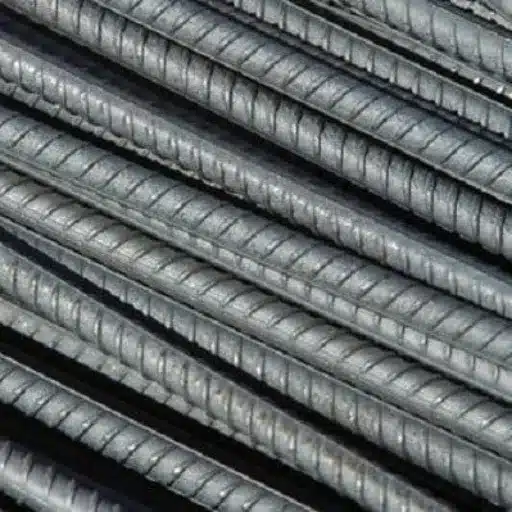
Construction Industry Requirements for Steel Hardness
The construction industry is such that it needs steel with a proper combination of hardness and flexibility tailored to meet their architectural and functional requirements. The steel for construction has to resist a lot of stress, wear and tear, and weather, hence hardness is a very important quality. For example, the Brinell Hardness Number (BHN) for common structural steel parts is in the range of 120-180 HB, thus keeping the steel strong, though not too brittle, which is one of the requirements for the construction of load-bearing structures like beams and columns.
The same case hardness is the reason why rebar (reinforcement steel) used in concrete constructions is considered to be a significant metal property. Nowadays, rebars are generally produced following ASTM standards like ASTM A615, which specify tensile strength and yield requirements for the bars so that their application in seismic areas is not a concern. Moreover, the TMT rebar process has not only enhanced the surface hardness but has also retained the ductility of the core layer, thus improving the overall resistance to both mechanical and environmental stress.
Automotive Applications and Material Selection
Steel is the heart of the auto industry. It is one of the most important materials in the design and manufacturing of car parts where strength and lightness are indispensable. The automakers have been more inclined to advanced high-strength steels (AHSS) as a way to reduce their environmental footprint, save fuel, and at the same time increase the safety of their cars. Industry reports indicate that AHSS can weigh up to 25% less than conventional steel yet still deliver the required strength for crash-resistance and durability.
The automotive industry is a significant consumer of steel for a variety of reasons such as chassis, body percent, suspension, and even crumple-zone parts. As an example, the third-generation AHSS has a tensile strength of more than 1,000 MPa and ductility that is 2 to 3 times better than that of the first and second-generation AHSS, which allows the manufacturers to make thinner and lighter parts without compromising safety. The same metal is used to support the electric vehicle (EV) market as weight reduction is a factor that directly affects the battery recharge times and the driving range.
Recent Advancements in Steel Hardness
New Technologies for Enhancing Hardness
- Nanostructured Steel Production:
The procedure of nanostructuring concerns the actual atomic level manipulation of the steel, resulting in extremely small grain sizes, which lead to achieving very high hardness and strength. Studies show that there is a significant improvement in the hardness if the size of the grains is reduced to less than 100 nanometers and the toughness of the material is not diminished at the same time.
- Laser Surface Hardening:
Laser surface hardening is an advanced technique, which employs a laser beam to quickly heat the surface of a metallic part and then cool it down, thereby forming a hard layer that is resistant to wear and has a significantly high wear resistance. The automotive industry has benefitted from this process and is very pleased with the results as they claim that the parts under heavy mechanical stress last 20% longer.
- Cryogenic Treatment:
The cryogenic treatment first takes steel to a very low temperature (-300°F) for a while and this action immediately raises the mechanical characteristics of the metal. The process of drawing the martensitic phase of the alloy will further increase its hardness and resistance to deformation. One claim from the cryogenically treated steel industry, which is backed by the research studies, is that they can provide steel with up to 40% more hardness than that of the conventionally treated steel.
Innovations in Heat Treatment Processes
Heat treatment processes have undergone a dramatic change over the last few years as they are closely bound by the requirements of the materials which have to be better mechanically, with higher performance and more reliability. The introduction of new techniques such as induction hardening, laser heat treatment, and modern cooling methods brings about a revolutionary change in the way manufacturers process the microstructure of steel.
Key Innovation: Laser heat treatment is the most important innovation that allows for the very precise heating of selected areas of the part. Studies have shown that laser treatment can not only aid in getting a considerably harder surface but also be capable of surpassing the hardness levels by up to 30% compared to the conventional methods. This method not only enhances wear but also lessens distortion owing to the controlled heating and cooling cycles.
Reference Sources
-
Appendix I Table of Hardness Values
This source provides a detailed table of hardness values for various types of steel, including mild steel, ferritic stainless steel, and martensitic stainless steel.
Source: OpenLearn -
Material Hardness
This resource from the University of Maryland explains hardness measurement techniques, including macro-, micro-, and nano-scale methods, which are essential for understanding steel hardness.
Source: University of Maryland -
Correlation of Yield Strength and Tensile Strength with Hardness
This research paper compiles hardness values along with yield and tensile strength for over 150 nonaustenitic, hypoeutectoid steels, offering a comprehensive analysis.
Source: Mines Files
Frequently Asked Questions (FAQs)
What is steel hardness and how does the hardness scale like Rockwell B relate to tool steels?
Resistance of steel to permanent indentation or scratching is measured as hardness, and the results are presented using hardness scales like Rockwell B and Rockwell C; high hardness values on toughness of Rockwell C scale are typically targeted by tool steels for improved wear and impact resistance, while Rockwell B is applied for softer or annealed conditions.
How does heat treat influence higher hardness and the ability to keep an edge on knives?
Heat treat changes microstructure through processes like quenching and tempering to get high hardness or high toughness, depending on the desired properties; for kitchen knife and pocket knives, heat treat decides how much longer the knife can remain sharp and how much higher hardness can be obtained without compromising good toughness.
Why do stainless steels vary in hardness and what role does chromium content play?
Stainless steels have different hardness because of the variations in chemical composition and their treatability; adding chromium improves corrosion resistance and can influence hardenability, with austenitic stainless steels (such as many 300-series) being generally non-hardenable by quench and relying on work hardening, while martensitic stainless steels can attain higher hardness after heat treatment.
Which alloying elements increase hardness and improve abrasion resistance in steel?
Carbon, chromium, vanadium, molybdenum, and tungsten are among the common alloying elements that not only increase the hardness of the steel but also improve its resistance to abrasion; carbon and alloy additions lead to the formation of carbides like cementite that make the material less prone to wear, and the grain refinement and hard phases stabilization done by elements like vanadium are also beneficial.