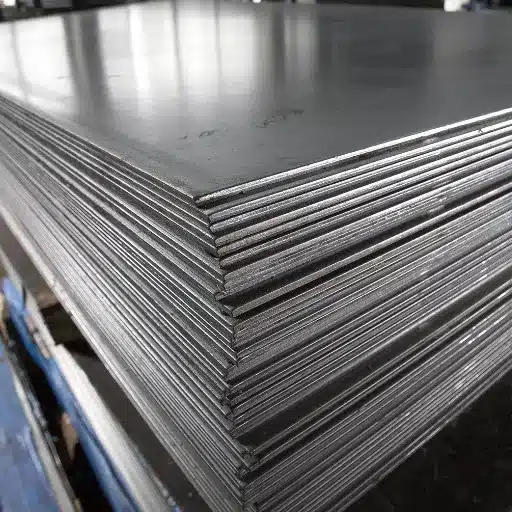
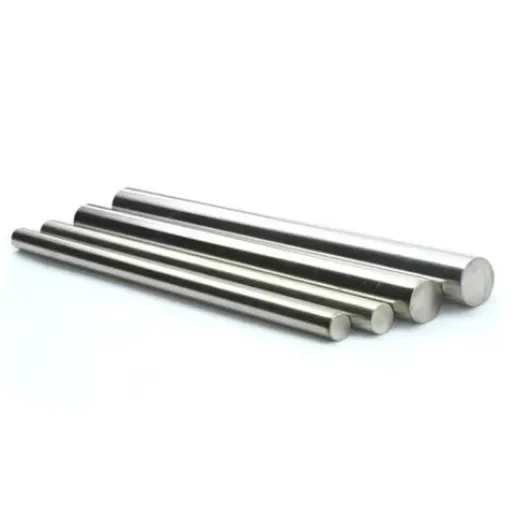
Cobalt alloys introduce a wonderful and captivating group of material types that have opened a new realm of possibilities in various industries due to their exceptional qualities and adaptability. These alloys are recognized for their strength, non-corrosiveness, and high thermal tolerance. Thus, they are very critical in the development of the future with applications in aerospace, medical, and manufacturing sectors. The article will reveal the special traits, many kinds, and advanced uses of cobalt alloys, discussing their attractiveness as the material of choice in the world’s most extreme environments. If you happen to be an engineer, a researcher or just someone interested in cutting-edge materials, this elaborate guide will surely provide you with valuable insights into the fascinating realm of cobalt alloys.
Introduction to Cobalt Alloys
1
Significance of Cobalt Alloys in Modern Industry
Cobalt alloys are of utmost importance in the present day industry due to their very high and unique features such as very high strength, extreme wear resistance, and corrosion resistance even at the most extreme temperatures. As a result, they have become very important in a great number of fields. For example, in the case of the aerospace industry, the cobalt-based superalloys comprising chromium, molybdenum, and others are a jet engine’s turbine that can easily endure the stress and heat of operation and at the same time maintain their integrity. A recent market study predicts that the global market for cobalt-based alloys will reach a staggering $10.4 billion by 2030 mainly due to the ever-growing demand in the high-performance sectors where these materials find their application.
Another industry that benefits from cobalt alloys is medicine which has been another area where cobalt has played a major role. The metals made from cobalt-chromium are used for making orthopedic implants, dental crowns, and stents because they are non-toxic to the body and have great mechanical properties. Laboratory tests say these metals can last for a long time even in the human body, thus, ensuring the patient’s safety and durability. Besides that, the popularity of less invasive surgery has led to the swell of demand for cobalt alloyed elements for surgical tools.
2
Nickel’s Significance in Cobalt Alloy Composition
The existence of nickel is very important in cobalt-nickel metal alloy production, performance, and is a fountain that improves the properties of these alloys for use in advanced areas. The salty of nickel elements in cobalt alloys is a key factor in their corrosion resistance, increasing strength, and hotness durability and these properties are the reasons that they get the industries such as aerospace, power generation, and manufacturing involved. A case in point is that nickel-cobalt combinations are commonly found in jet engines’ superalloys, where the mix is able to tolerate more than 1,000°C temperatures without losing its strength.
The latest reports show that the amount of nickel in cobalt-based superalloys can be between 10% and 50%, depending on the exact needs of the application. By such means, the alloys are making use of the combined qualities of cobalt and nickel to provide the best in oxidation resistance and thermal stability. Moreover, in the renewable energy sector, nickel-cobalt alloys are employed in battery technologies, especially for lithium-ion batteries, where nickel increases energy density and enhances lifecycle performance.
Properties and Composition of Cobalt Alloys

1
High Temperature Strength of Cobalt Alloys
Cobalt alloys are considered the backbone of the aerospace, power generation, and industrial processes due to their excellent performance even under high-temperature conditions and stability. The unique characteristics of these alloys play the part in their capability to not only resist tempers but also to survive oxidation in the extreme ever-changing climates. To be precise, ductile and tough microstructures containing solid solutions strengthened by carbides and intermetallics are typical to these alloys’ remarkable strength at elevated temperatures.
The developments in technology have brought forward their need in the industries no less than critical. To put it differently, cobalt-based superalloys are capable of living to very high temperatures of more than 1,100°C (2,012°F) while still holding their terrific mechanical properties. This has made them so common in the manufacture of jet engine parts like turbine blades which need to be highly effective at maximum temperature and stress thus subjected to them. Moreover, the use of cobalt alloys in the aerospace sector is likely to rise dramatically in line with the ever-increasing need for fuel-efficient engines.
2
Corrosion Resistance and Performance
The cobalt alloys are well-known for their exceptional resistance against corrosion and have become one of the best choices in nearly all the harshest environments where materials are exposed to acids, seawater, and high temperatures. Their resistant behavior is caused by the creation of a protective oxide layer on the surface of the alloys, which effectively limits the degradation process. For example, cobalt-based alloys like Stellite and Haynes are used across a wide range of industries including chemical processing and marine engineering, when at times both hot and humid conditions are present, and thus, both heat and corrosion resistance are major concerns.
Recent statistics indicated the corrosion that takes place translates into a global economy loss of around $2.5 trillion per year which accounts for about 3-4% of the world’s GDP. This urgency has put the spotlight on the use of advanced materials such as cobalt alloys that not only cut down on the maintenance cost but also by a factor of five lengthen the lifespan of major infrastructures. More to this, the innovations like chromium-enriched cobalt alloys have shown superior performance in overcoming pitting corrosion, an old-time dilemma in high-stress environments.
Applications and Uses in Various Industries
1
Cobalt Alloys in Aerospace Engineering
The aerospace engineering industry cannot do without cobalt alloys because of their incredible capacity to endure harsh environments. These materials possess the combination of top-notch high-temperature, oxidation, and wear-resistance that is so necessary in critical components such as jet engine turbines, combustion chambers, and afterburners. The applications of the aerospace industry demand materials that are able to retain strength and stability in the midst of intense thermal stress, cobalt alloys being the best option in this regard.
Data that was published lately has pointed out the trend of cobalt alloys being the increasingly accepted materials in the aerospace industry. Reports suggest that the global aerospace materials market, which includes cobalt alloys, was around $25.5 billion in 2022 and is expected to have a 6.7% CAGR between the years 2023 and 2030. The growth that is partly attributed to the developments in jet propulsion systems and the demand for aircraft having better fuel efficiency is going on with the unique characteristics of cobalt alloys, coupling their properties to resist thermal fatigue and creep, allowing the suppliers meet the strictest regulations while also improving performance and cutting the operational cost.
2
Stellite Alloys in Medical Applications
Stellite alloys with their superior resistance to wear and corrosion have become a must in medical field. These alloys that consist primarily of cobalt are generally used in the production of surgical instruments, dental implants, and orthopedic devices. The durability and biocompatibility required in medical applications are guaranteed by their characteristic of being able to survive arduous biological environments.
One of the most significant benefits that come with Stellite alloys is their tenacity towards oxidation and degradation, even when they are kept in contact with human fluids for extended periods of time. For example, Stellite 21, which is one of the widely used variants, is utilized in joint replacement implants owing to its excellent mechanical properties. The studies have proven that the life span of Stellite-made components can be measured in times of the life span of traditional materials, hence the need for frequent replacements or even the revisiting of the medical procedures is significantly reduced.
Recent Innovations and Research Findings
1
Advancements in Alloy 188
Superalloy in cobalt, Alloy 188, continues to be the top choice wherever high-temperature applications are concerned due to its fantastic performance. This alloy is used for gas turbines, combustion chambers, and aerospace components because it is capable of withstanding the oxidation, strength, and corrosion that takes place at the temperature of 2000°F (1093°C).
Among the recent developments of Alloy 188 were mainly to improve the mechanical properties and the manufacturing processes. One of the new fabrication techniques, which is commonly known as additive manufacturing and advanced powder metallurgy, not only increases the alloy’s production efficiency but also preserves its high-quality characteristics. Furthermore, the research reports have indicated that the grain structure can be improved through the heat treatment process thus resulting in a higher degree of creep resistance and longer fatigue life.
2
One of the New Developments is the Upgrading of the Corrosion Performance
There have been recent developments in technology for corrosion resistance that have come to play in the form of materials such as Alloy 188 exhibiting greatly improved performance in the most aggressive environments. The great research has shown that Alloy 188 has amazing resistance to both oxidation and sulfidation, even when the temperature goes over 1900°F (1038°C). Thus, it becomes a must-have material in those industries that can’t afford ever so slight reliability issues in extremely harsh operating conditions.
The studies point out that it is the combination of chromium and lanthanum in the alloy’s composition that is responsible for the formation of protective oxide layers that can effectively slow down the corrosion process. The corrosive environment simulations have shown the alloy undergoing significantly less oxidation, even up to 40% less than that of regular cobalt-based alloys. Moreover, the results of long-term creep rupture tests also suggest that the alloy’s stability is much greater making it ideal for use in the engines, turbines, and industrial power plants that demand so much.
Comparative Analysis with Other Alloys
Cobalt Alloys vs. Nickel Alloys
1. Resistance to High-Temperature
Cobalt alloys are characterized by high temperature resistance and excellent strength, so they are perfectly suited for gas turbines and high-temperature machining. Nickel alloys are also quite resistant to high temperature but they are used in situations that require surviving thermal fatigue and oxidation resistance such as jet engines. So, for example, nickel-based superalloy can be used at more than 1,000°C, cobalt alloys, however, have lower but very stable performance at similar conditions.
2. Resistance to Corrosion
Cobalt alloys are noted for their outstanding resistance to wear and corrosion, especially in aggressive environments such as seawater and acids. Nickel alloys, in contrast, are very common in chemical processing industries because of their ability to withstand pitting, crevice corrosion and chloride-induced stress-corrosion cracking. A very good example is Alloy C-22 (nickel-based) which is more than cobalt alloys resistant in such environments where aggressive oxidizing and reducing agents are involved.
3. Mechanical Properties
Cobalt alloys are usually harder and resist wear more than nickel ones, thus being very helpful in cutting and wear-resilient components like medical implants and tool coatings. Conversely, nickel alloys, for example, the famous Alloy 718, tend to be more ductile and weldable which makes them easier to be used for producing large or complex parts.
Performance Comparison with Steel Alloys
Strength and Temperature Resistance
Usually, steel alloys like stainless steel will have a combination of excellent strength and corrosion resistance. However, cobalt and nickel alloys will be the ones mainly used in extreme conditions. For instance, nickel-based superalloys will maintain strength at over 700°C (1292°F), thus they are perfect for jet engines and gas turbines. On the other hand, most steel alloys begin to lose their structural integrity at around 500°C (932°F).
Durability and Fatigue Resistance
Stellite cobalt alloys, for example, are characterized by high toughness and resistance to wear even in corrosive and high-stress environments. These features make them essential for applications requiring long-lasting materials, such as turbine blades or cutting tools. Steel alloys, while indestructible, may become less effective in such conditions and lose quickly their durability in case of abrasive or high-friction environments.
Corrosion Resistance
Nickel alloys like Monel and Hastelloy are better than steel alloys in highly corrosive environments, which are usually chemical processing and marine applications. For example, Monel 400 can be in the seawater for a long time without degrading much, which is not the case for stainless steel that is prone to localized corrosion in chloride-rich environments causing pitting or crevice corrosion.
Reference Sources
-
Cobalt Alloys – David Dunand – Northwestern University
This source discusses the high-temperature capabilities of cobalt alloys and their applications.
Link to source -
Cobalt-Base Alloys in Aerospace
This research paper explores the use of cobalt-base superalloys in aerospace applications, focusing on their properties and manufacturing processes.
Link to source -
Alloys of Nickel and Cobalt with Chromium
This document provides insights into the development and properties of cobalt-chromium alloys.
Link to source
Frequently Asked Questions (FAQs)
What is the performance of cobalt alloys in high-temperature applications?
Cobalt alloys and cobalt-containing superalloys express really high-temperature characteristics, keeping strength at high-temperature levels that are hard to beat. Besides this, they possess good mechanical properties such as creep resistance and resistance to softening. The main reason for the use of these materials in gas-turbine vanes and buckets and other hot-section components is their oxidation resistance from chromium oxide scales and strength at high temperature, which are very critical properties.
What is the difference between cobalt-based metals and other metals like stainless steel?
Cobalt-base alloys are developed to combine the distinctive qualities of: outstanding wear alloys performance, satisfactory mechanical properties even at elevated temperatures, and many more. In fact, the wear resistance, frictional properties and high-temperature strength of cobalt steels may be considered, along with the comparable corrosion resistance of cobalt steels.
What are the common compositions and what are their effects on properties?
Cobalt-base materials usually have a considerable amount of chromium (the chromium content is for oxidation and corrosion resistance), varying tungsten or molybdenum content (for solid solution strengthening and high-temperature strength), and sometimes carbon which can lead to the generation of metal carbides that increase wear resistance but may affect corrosion. Pure cobalt is not often used by itself; alloying makes cobalt-based materials with modified magnetic properties, tensile strength, and corrosion resistance that are suitable for applications ranging from cutting tools to biomedical implants.
How do cobalt alloys manage corrosion in various atmospheres?
The passive films enriched in chromium oxide form the basis of cobalt alloys’ corrosion resistance; this occurs only if the content of chromium is adequate. The components are protected by these oxides in oxidizing atmospheres at high temperatures; in contrast, the passive film in biomedical or aqueous environments inhibits the release of metal ions. The performance relies on the atmosphere, chemical composition, and microstructure; wrought and cast processing of alloys and the addition of alloying elements affect the localized corrosion susceptibility and overall corrosion resistance.