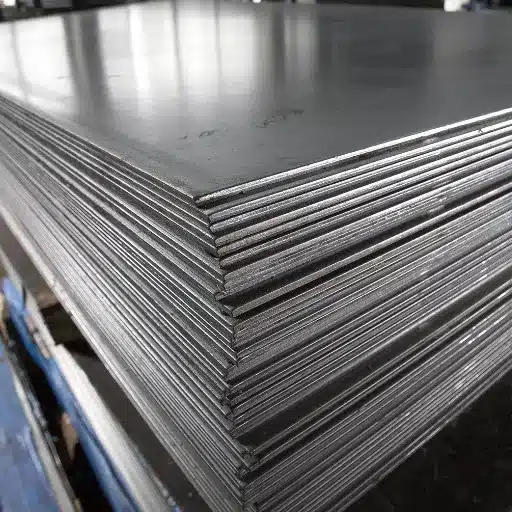
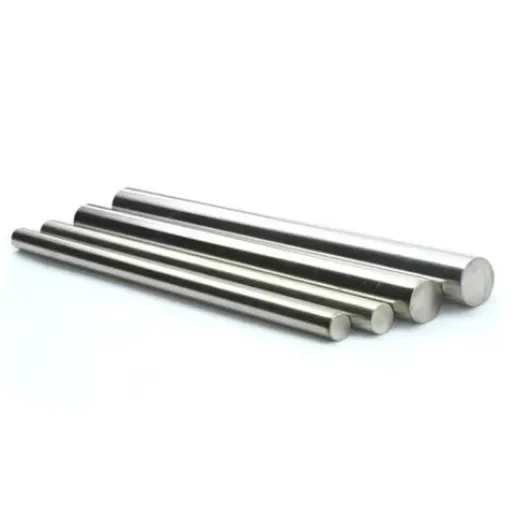
One solid way source itself caused nearly $50,000 in shipping overruns to a marine engineering firm. It wasn’t in their structural calculations: he figured stainless steel’s same density for any grade.
When you specify, procure, or engineer with stainless steel, the variation in density across grades matters in real ways. It matters very directly to you—shipping cost, to the loads calculated in the structures to be designed, to what moves you’ll have to enable to handle it with those structures, and the money under your project budget. Some of these help readers or users find that complication, though–for example, by treating 304 and 316 as the same, no matter where they’re mentioned, though they do actually differ from one another by almost 1%, and it all matters on a huge industrial scale.
Complete density specifications for all important stainless steel grades can be found in this guide as can practically applicable weight calculation formulas for various shapes. When exactly do these variations matter for your application? Whether someone wants to make freight-cost estimates for a load of stainless steel plates or wants to calculate the appropriate dead load for application to an offshore platform design, this text will provide the exact information you seek.
What you’ll learn:
- Exact density values for 304, 316, duplex, and specialty grades
- Unit conversions across metric and imperial systems
- Weight calculation formulas for sheets, bars, pipes, and custom shapes
- When density differences impact material selection decisions
- How density relates to material quality and certification
What Is the Density of Stainless Steel?
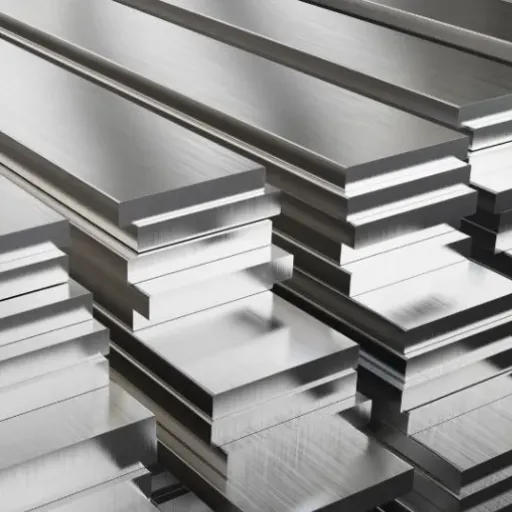
The density of stainless steel can normally range between 7600 and 8000 kg m³ (or 7.6 – 8.0g/cm³) depending on grade and quality. And that proves itself as three times denser in comparison to aluminum or slightly denser than carbon steel.
The density of an alloy depends upon the alloy. All are called as the same, but inside there, there is a certain proportion of various elements like nickel, chromium, molybdenum, atomic weight of other small elements. For instance, it can be said that if one grade has more nickel, like 316, it will be denser than the one with minor nickel, like 304, but they will both be considered as austenitic stainless steel.
Understanding Density Units for Engineering
Engineering projects use different density units depending on regional standards and application requirements:
| Unit System | Typical Values | Common Use |
|---|---|---|
| g/cm³ | 7.93–8.00 | Laboratory testing, scientific reference |
| kg/m³ | 7,930–8,000 | SI engineering, international projects |
| lb/in³ | 0.286–0.289 | American structural engineering |
| lb/ft³ | 495–499 | Construction, shipping calculations |
Converting Factor:
- 1 g/cm³ = 1,000 kg/m³
- 1 g/cm³ = 0.0361 lb/in³
- 1 lb/in³ = 27,680 kg/m³
A figure of 8,000kg/m³ (or 8.0g/cm³) would be adequate for the vast majority of engineering calculations. But for detailed and precision applications, such as specific aerospace components or large-scale structural projects, where every slight error adds up in an unattainable small cumulative manner, it is required to apply the following specific grade values.
Stainless Steel Density by Grade (Complete Chart)
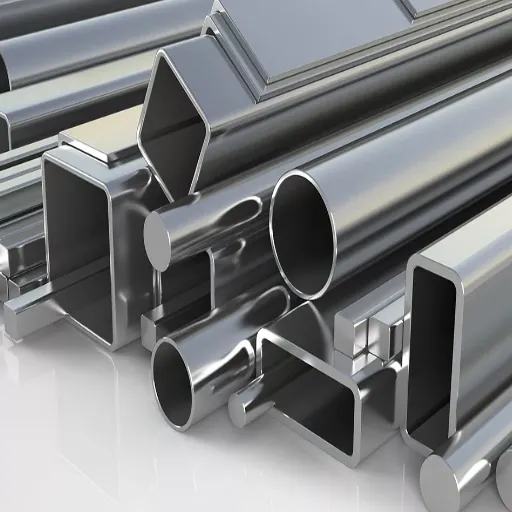
The following table provides density values for all major stainless steel grades used in industrial applications:
| Grade | Type | Density (g/cm³) | Density (kg/m³) | Density (lb/in³) | Key Characteristics |
|---|---|---|---|---|---|
| 304 | Austenitic | 7.93 | 7,930 | 0.286 | General purpose, 18% Cr, 8% Ni |
| 304L | Austenitic | 7.93 | 7,930 | 0.286 | Low-carbon version of 304 |
| 316 | Austenitic | 7.98 | 7,980 | 0.288 | Marine grade, 2–3% Mo |
| 316L | Austenitic | 7.98 | 7,980 | 0.288 | Low-carbon version of 316 |
| 321 | Austenitic | 7.93 | 7,930 | 0.286 | Titanium stabilized, high temp |
| 201 | Austenitic | 7.80 | 7,800 | 0.282 | Lower nickel, cost-effective |
| 202 | Austenitic | 7.80 | 7,800 | 0.282 | Higher manganese than 201 |
| 430 | Ferritic | 7.75 | 7,750 | 0.280 | Magnetic, no nickel |
| 410 | Martensitic | 7.75 | 7,750 | 0.280 | Heat treatable, high-strength |
| 409 | Ferritic | 7.70 | 7,700 | 0.278 | Automotive exhaust applications |
| 2205 | Duplex | 8.00 | 8,000 | 0.289 | Mixed structure, high strength |
| 2507 | Super Duplex | 8.03 | 8,030 | 0.290 | Extreme corrosion resistance |
| 904L | Super Austenitic | 8.24 | 8,240 | 0.298 | Highest alloy content |
Note: Values are typical nominal densities. Actual density may vary ±1% depending on exact composition, manufacturing process, and temperature. For critical applications, always verify with mill test certificates.
Why Grades Have Different Densities
As there is an element of iron, these variants would vary in density:
Nickel increases the density of an alloy. Nickel has an atomic mass larger than iron, 55.85, with 58.69. If you build up the respective concentration of nickel as a percentage of nickel in the steels as 316-4 versus 304-5 steels, the higher the nickel content, the denser the alloy becomes.
Molybdenum outperforms that of iron. At 10.28g/cm³, it has a significantly higher density than iron. To reiterate, grades like 316 cannot be denser compared in nickel to nickel, but molybdenum concentration in the grades causes them to be denser.
In such cases, ferritic grades, which typically refer to the grade 430 with 0 nickel content relying on 11-17% chrome for corrosion resistance, are lighter. Ferritic steel is about 2% lighter than its austenitic counterpart owing to the lower no of nickel atoms to a given weight of nickel-resistant substituting agent in chromium alone.
304 Stainless Steel Density
For an 18% chromium and 8% nickel composition, “18/8” is an alias for 304 stainless steel, which primarily has a density of 7.93 g/cm³ (7,930 kg/m³ or 0.286 lb/in³).
This is what makes 304 the standard density for austenitic stainless steel. The peculiar thing about 304 is the density that remains the same, irrespective of where or by whom the product was made. The benefit of this feature of 304 is very important when doing engineering calculations dealing mainly with precision.
When to use 304 for density-critical applications:
- General fabrication where standard density values apply
- Food processing equipment where material certification is required
- Architectural applications requiring predictable structural loads
- Applications where weight calculations affect shipping costs
316 Stainless Steel Density
The density of 316 stainless is typically around 7.98 to 8.00 g/cm³ (7,980 to 8,000 kg/m³ or 0. 288–0.289 lb/in³).
Its slightly higher density compared to 304 is due to a greater content of nickel (10–14% compared with 8–10.5%) and the addition of 2–3% molybdenum to increase corrosion resistance.
Marine and chemical applications where density matters:
- Offshore platform structural components requiring precise buoyancy calculations
- Chemical tankers where the weight affects vessel stability
- Subsea equipment where material weight influences deployment systems
- Coastal architectural elements where wind load calculations depend on accurate density
Duplex and Specialty Grades
2205 Duplex Stainless Steel: 8.00 g/cm³
The 2205 duplex grade combines austenite and ferrite structures, and it is stronger than the ferritic ones but has a lower density compared to similar austenite grades. The 2205 grade uses only five percent nickel compared to 304 or 316 grades, but the additional nitrogen content augments density.
2507 Super Duplex: 8.03 g/cm³
There is a significantly higher concentration of chromium, molybdenum, and nickel compared to the standard duplex grades and hence further enhances the inferiority in resistance to corrosion compared to 2507, with only slightly higher density.
904L Super Austenitic: 8.24 g/cm³
This grade of high alloy contains a special 20–25% of nickel and 4–5% of molybdenum, the highest density of the stainless steel usually used. The heavy penalty for light materials is forgone in exchange for excellent corrosion resistance in highly aggressive chemical environments.
304 vs 316 Stainless Steel: Density Comparison

The estimating supervisor, working for some time in a chemical factory, confronted the decision of whether to orally represent 304 or 316 during the tender of an unfathomably large vessel. As defined, by approximately 15% higher quotation, the 316 fee would be higher than the 304 charge, but due to density, this difference meant only 0.6% more weight. It is moot for the application, which is why they selected 316 as the material, because weight was determined to be less important than the price gap.
| Property | 304 Stainless Steel | 316 Stainless Steel | Difference |
|---|---|---|---|
| Density (g/cm³) | 7.93 | 7.98 | +0.63% |
| Density (kg/m³) | 7,930 | 7,980 | +0.63% |
| Density (lb/in³) | 0.286 | 0.288 | +0.70% |
| Weight per cubic meter | 7,930 kg | 7,980 kg | +50 kg |
The density difference between 304 and 316 is approximately 0.9%—small enough to be irrelevant for most engineering calculations, but potentially significant for large-scale projects.
When the Small Difference Matters
Large-scale structural projects: For a structure of 100 tonnes in stainless steel, a 0.9% difference in purity could equal almost 1,000 kg, enough to change crane specifications, foundation design, or cargo planners.
Buoyancy-critical applications: Small density variations affecting the exact buoyancy characteristics of the structures are very obvious in offshore and marine engineering.
Aerospace and weight-sensitive designs: Because most kilograms would directly influence fuel consumption and payload capacities and other important factors, here, cutting-edge material science should define and evaluate new materials and high-density carbon fiber technology used in specific engineering applications.
Cost vs. Weight Trade-Off Analysis
When comparing 304 and 316, the density difference is rarely the deciding factor. The real considerations are:
- Corrosion environment: Chloride exposure justifies 316 despite the higher cost
- Temperature requirements: High-temperature applications may favor one grade
- Lifecycle cost: Replacement costs often exceed initial material savings
Weight difference is typically 10–20 times less significant than the price differential between grades. Choose based on performance requirements, not density.
How to Calculate Stainless Steel Weight
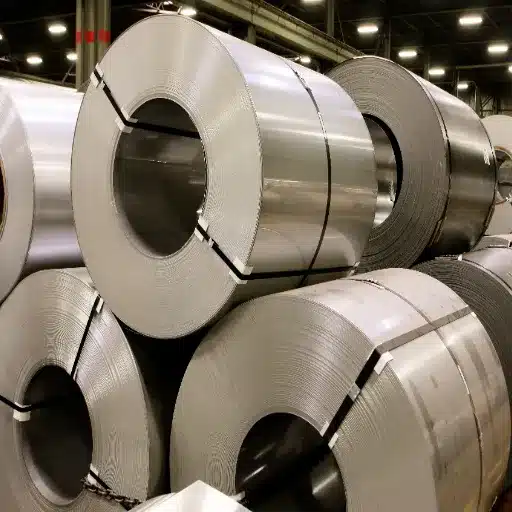
The fundamental formula for calculating stainless steel weight is:
Weight = Volume × Density
For practical engineering applications, use the formulas below for common shapes.
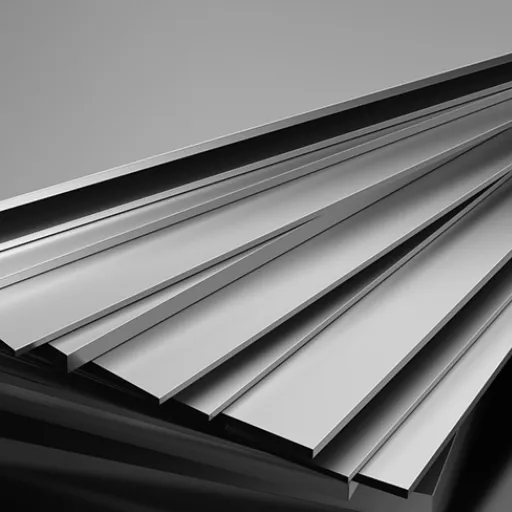
Sheet/Plate Weight Calculation
Metric formula:
Weight (kg) = Thickness (mm) × Width (m) × Length (m) × Density (kg/m³) × 0.001Example: Calculate the weight of a 304 stainless steel plate:
- Thickness: 10 mm
- Width: 1.5 m
- Length: 3.0 m
- Density: 7,930 kg/m³
Weight = 10 × 1.5 × 3.0 × 7,930 × 0.001 = 357 kgImperial formula:
Weight (lbs) = Thickness (in) × Width (in) × Length (in) × Density (lb/in³)Round Bar Weight Calculation
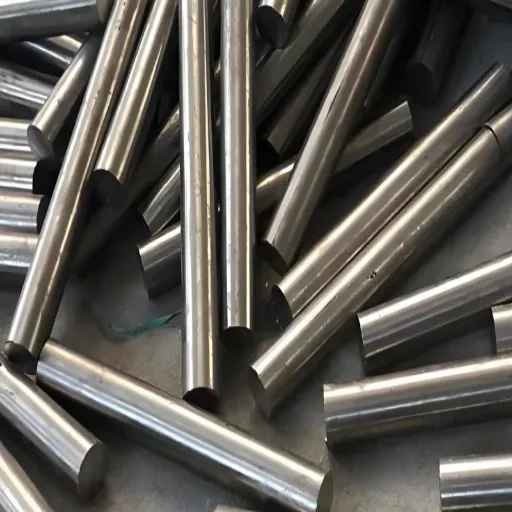
Metric formula:
Weight (kg/m) = (Diameter² × π / 4) × Density × 0.000001Simplified metric:
Weight (kg/m) = Diameter (mm)² × 0.00617 (for 304 stainless steel)Example: 50 mm diameter 304 stainless steel bar:
Weight = 50² × 0.00617 = 15.4 kg/mImperial formula (lbs/ft):
Weight = Diameter (in)² × 2.672 × 1.01 (304 SS adjustment factor)Square/Flat Bar Weight Calculation
Metric formula:
Weight (kg/m) = Width (mm) × Thickness (mm) × Density × 0.000001Example: 40 mm × 20 mm 316 stainless steel flat bar:
Weight = 40 × 20 × 7.98 × 0.000001 = 6.38 kg/mPipe/Tube Weight Calculation
Metric formula:
Weight (kg/m) = (OD - T) × T × 0.02491Where:
- OD = Outer diameter (mm)
- T = Wall thickness (mm)
- 0.02491 = Constant for stainless steel density
Example: 304 stainless steel pipe, 88.9 mm OD × 3.05 mm wall:
Weight = (88.9 - 3.05) × 3.05 × 0.02491 = 6.52 kg/m[Need precise weight calculations for your custom dimensions? Request a quote with detailed weight estimates →]
Weight Calculation Example for Procurement
20 sheets of 304 stainless steel are required for estimating shipping cost by the procurement team.
- Sheet dimensions: 6 mm*1,500 mm * 3,000 mm
- Quantity: 20 sheets
- Freight cost: $0.15 per kg
Step 1: Calculate volume of one sheet
Volume = 6 × 1.5 × 3.0 = 27 m³ × 0.001 = 0.027 m³Step 2: Calculate weight of one sheet
Weight = 0.027 × 7,930 = 214.1 kgStep 3: Calculate total shipment weight
Total weight = 214.1 × 20 = 4,282 kgStep 4: Calculate shipping cost
Shipping cost = 4,282 × $0.15 = $642.30This calculation allows the procurement team to budget accurately and verify carrier quotes against actual material weight.
Why Stainless Steel Density Matters in Industry
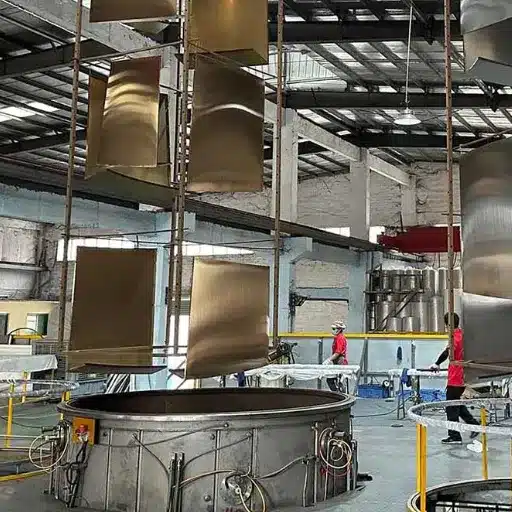
Density is not merely a material property—it is a practical parameter that affects multiple aspects of industrial operations.
Shipping and Logistics Cost Estimation
Freight costs for industrial materials are computed based on weight in reality. It also entails accurate density information.
- Precise budgeting of costs for transportation.
- Most effective planning for container loading
- Checking of delivered quantities
- Supplier agreement comparison on an equal-weight basis
Real-world impact: A mere 2.0% error in density assumptions makes a 1.0-ton variance at 50 tons shipment, affecting crane capacity, transportation permits, and handling equipment specifications.
Structural Load Calculations
Civil and structural engineers use density to calculate dead loads:
- Building structures: Floor loading, column design, foundation specifications
- Offshore platforms: Deck loading, buoyancy calculations, stability analysis
- Process equipment: Support structure design, seismic load calculations
- Transportation: Bridge load limits, vehicle payload calculations
Buoyancy Applications (Marine/Offshore)
In marine engineering, stainless steel density directly affects:
- Subsea equipment deployment systems
- Mooring system design
- Floating platform stability
- Underwater structural anchoring
The difference between calculated and actual weight in buoyancy systems can mean the difference between stable operation and critical failure.
Equipment Handling and Lifting Planning
Knowing exact material weights is essential for:
- Crane and hoist selection
- Lifting rig design
- Worker safety protocols
- Installation sequencing
Case example: An installation contractor assumed standard steel density for a 316 stainless steel heat exchanger. The actual weight was 180 kg heavier than estimated, exceeding the rated capacity of their lifting equipment and causing a 2-day project delay.
Melting and Casting Calculations
Foundry engineers use density data to:
- Calculate charge weights for melting furnaces
- Determine mold capacity requirements
- Estimate yield from raw material inputs
- Plan alloy additions for specific compositions
Aerospace Applications

The weight is set significantly as the objective in aerospace engineering with weight-critical design applications. Here, even a minor variation in the density of the material will affect the selection in material.
17-4PH Stainless Steel: It is a precipitation-hardening grade having a chain density of 7.80 g/cm³, with high strength levels and lower density than the standard austenitic grades. It can be used generally for aircraft structural applications, especially where a high strength-to-weight ratio is necessary.
15-5PH Stainless Steel: It is plenty high with 17-4PH having a density of 7.78 g/cm³. Therefore, this was applied to aerospace fasteners and landing gear base components.
Custom alloy development: Although some aerospace applications require special development of stainless steels, in which high strength-to-weight is important, that is, density and strength ratios shaped to the exact needs of aircraft are incredibly balanced against each other by increasing nickel content for optimum results suitable to the performance demands.
Marine and Offshore
Corrosion-resistant materials are a necessity when it comes to salt environments, yet also quite demanding on the weight front:
316/316L in seawater: These two grades offer the correct choice for the majority of subsea applications because they have the optimal blend of corrosion resistance and density, figured at 7.98 g/cm³. Any additional bit of weight per component provided by 304 over 316 would hardly ever be noticed as the whole system lifecycle savings come mainly from the better corrosion performance.
Duplex 2205 for offshore structures: They have a density of 8.00 g/cm³ but are considerably stronger than austenitic grades, making the alloy thinner-walled because of its higher strength. This is a benefit that, in many cases, speeds up the final weight savings achieved as density only changes linearly.
Buoyancy calculations: For good buoyancy numbers of the specific materials, offshore platform designers must consider the exact relationship of material density data in numerical models of platform stability. As an example, a 200-metric-ton platform made out of stainless steel parts shows varying buoyancy characteristics with the selection of 304 (7.93 g/cm³) or 316 (7.98 g/cm³).
Chemical Processing
Density requires specific treatment as far as both process economics and equipment design are concerned for chemical plant engineers.
Vessel weight calculations: A very large support structure is needed for big chemical reactors and storage tanks. Foundation and support constructions are neither over-engineered nor under-engineered if the density is well estimated.
High-alloy grades (904L): With a total density of 8.24g/cm³, 904L surpasses any common grade. The weight penalty for large components from an equipment design standpoint has to be considered.
Heat exchanger design: Tube bundles significantly influence both the structures of the subject and calculations for thermal expansion. Crack the density between the different grades that will affect the design.
Density Testing and Quality Verification
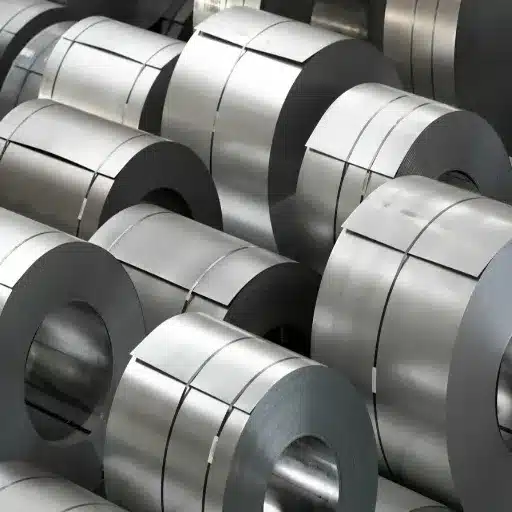
How do you know your stainless steel meets the specified density? Quality verification ensures material integrity.
How Manufacturers Verify Density
The standard way to assess the density of stainless steel is to measure water displacement according to Archimedes’ principle:
- Weigh the sample in the air (mass)
- Weigh the sample submerged in water (apparent mass)
- Calculate density: Density = Mass / [(Mass – Apparent Mass) × Water Density]
It achieves accuracies within ±0.5% as the basis for the majority of certified density values.
Relationship Between Density and Material Quality
Density measurements can indicate the integrity of the material:
Porosity detection: Meager density reform, well below the levels set up by the specification, could discover issues in casting or sintering as it pertains to porosity and inclusions.
Composition verification: Density readings set high thresholds for misalliance in an alloy composition-that is, the very stuff safety is made of for the very strictest applications.
Additive manufacturing: Melting parts generated into selective battery or firing devices may have lower density than wrought material because fragments left unconsolidated get thrown up together as residual porosity. Those service industries, with more advanced equipment, should be able to ensure that their parts will be >99.0 % void-free material.
Certification and Mill Test Reports
Reputable suppliers usually provide mill test records (MTRs) that include:
- Documented chemical composition
- Certification of the mechanical test result
- Heat number for tracing
- Compliance with standards (ASTM, ASME, EN) specified
Red Flags: Density Variations Indicating Problems
Be alert to density values that deviate more than 2% from standard specifications:
- Lower density: Possible porosity, contamination, or incorrect alloy composition
- Higher density: Possible inclusions of denser metals or incorrect heat treatment
- Inconsistent density: Suggests poor manufacturing process control
Always verify supplier certificates and consider independent testing for critical applications.
Temperature Effects on Stainless Steel Density
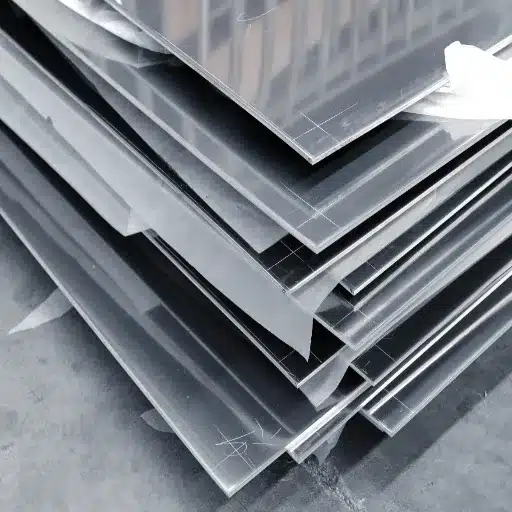
Density is temperature-dependent. While the effect is small for most applications, extreme environments require consideration.
Thermal Expansion Impact on Density
When the temperature rises, there is an increase in material expansion, leading to an increase in volume and a decrease in material density. Take, as an example, a stainless steel:
A reduction in approximate density can amount to about 0.03% for every 100°C rise in temperature.
Example: The density of 304 stainless steel at a temperature of 500°C is about 99.85 of the room-temperature value.
This is usually not important for engineering calculations at ordinary to moderate temperatures, although, in the case of high temperatures, they must provide the corrected temperature-density value.
High-Temperature Applications
Gas turbines and jet engines: Components that operate at 600 to 900ºC go a little bit denser. Thermal expansion calculations have to consider changes in dimensions, as well as variations in density.
Industrial furnaces: For what concerns heat treatment fixtures and radiant tubes are concerned, they work at very high temperatures, where the weight of the material conditions both their load and thermal masses.
Power generation: The high-temperature data of materials is required for engineering design because boiler tubes and components of the steam system work at extreme temperatures.
Cryogenic Applications
Density in stainless steel increases a little bit when the volume decreases due to thermal contraction.
LNG Systems: Storage tanks and pipelines where liquefied natural gas is held are generally down to -162 degrees Celcius. The increased density (about 0.1% more than room temp) is considered for insulation and structure design considerations.
Aerospace cryogenics: The fuels of rockets and spacecraft are stored in stainless steel at cryogenic temperatures, with a density slightly higher than the reference value.
Superconducting systems: Equipment for scientific experiments near absolute zero temperature requires density information on specific properties of cryogenic temperature metals.
Common Questions About Stainless Steel Density
Is Stainless Steel Heavier Than Carbon Steel?
That’s true, but not emphatically so. As an example, stainless steel is slightly denser than carbon steel with a difference of 1%:
- Carbon steel: ~7,850 kg/m³
- 304 stainless steel: 7,930 kg/m³ (+1.0%)
- 316 stainless steel: 7,980 kg/m³ (+1.7%)
This difference is quite unnoticeable in most applications. But it could make a difference when building very large structures or weight-sensitive designs.
Does Higher Density Mean Better Quality?
No. It is all about chemistry, not quality. Grade is such a thing; 316 is not denser, as that could mean “better” compared to 304; it is only made from higher nickel and molybdenum, with this quality.
Quality is determined by:
- Manufacturing process control
- Chemical composition compliance
- Mechanical property achievement
- Surface finish and cleanliness
- Certification and traceability
How Precise Do Density Values Need to Be?
For most applications: Sufficient accuracy is offered by the figure 8.0 g/cm³ (8,000 kg/m³).
For precision engineering: Use the specific value of grade (e.g., 7.93 g/cm³ for 304).
For critical applications: The density values that are certified are always obtained from mill test reports for a particular batch.
Can I Use 8.0 g/cm³ for All Stainless Steel Grades?
For estimation purposes, yes. The variation between common grades is less than 3%, so 8.0 g/cm³ provides reasonable accuracy for:
- Rough shipping estimates
- Preliminary structural calculations
- General material planning
However, for final engineering calculations, procurement specifications, or critical applications, use grade-specific density values.
Which Is Heavier: 304 or 316 Stainless Steel?
316 Stainless Steel is approximately 0.6% heavier compared to 304 Stainless Steel owing to the fact that it contains a higher quantity of nickel and the addition of molybdenum. This means for a 1 cubic meter block, this difference equals approximately 50 kg.
Does Stainless Steel Density Change with Processing?
The density of stainless steel hardly changes with processing since cold working, heat treating, and processes for manufacturing have effects on density ranging from less than 1%. However:
- Cast materials: May be slightly less dense due to porosity
- Powder metallurgy: This is a variable feature depending on sintering quality, and it can be 85%–99% of theoretical.
- Additive manufacturing: SLM parts have been reported to achieve greater than 99% density, which has been properly processed.
Conclusion
Understanding the density of stainless steel is crucial for solid engineering and procurement decisions. Nevertheless, the difference between common grades such as 304 and 316 is small – about 0.9 per cent – but they multiply in industrial scales and affect shipping costs, structural design, and equipment specifications.
- 304 stainless steel density: 7.93 g/cm³ (7,930 kg/m³) – The general-purpose standard
- 316 stainless steel density: 7.98 g/cm³ (7,980 kg/m³) – Slightly denser due to molybdenum
- For calculations: 8.0 g/cm³ is sufficiently accurate for most applications
- For precision: Always use grade-specific values from certified mill test reports
- Temperature matters: Density decreases slightly at high temperatures and marginally increases at cold cryogenic conditions.
Becoming data for the essence of the numbers is rather a usage of the numbers. Thus, proper calculation related to weight is imperative for cost calculations as well as structurally secure design and logistical organization. Are you specifying material for designing a chemical plant, calculating loads for an offshore platform, or just looking to estimate the cost to be paid for a large consignment? You can do much with the confidence of your decision with the values of density in this handbook.
Ready to source certified stainless steel materials with guaranteed specifications? Our engineering team provides detailed material data, weight calculations, and full certification for every order. [Request a quote with certified density specifications →]