The loader bucket, which costs $300,000, experienced a failure after 14 months because the purchasing team used an incorrect AR plate grade for their order. The procurement team at a copper mine in Arizona specified AR400 for every wear surface on their new fleet. The price was competitive, the supplier had inventory, and AR400 was familiar. The bucket floor worked in a rock-on-rock sliding abrasion zone because of its operational conditions. The site used equipment without any impact loads or falling rocks, which required no toughness from AR400 material. The application required material with high hardness. The floor plates reached their full wear capacity after 14 months of usage. The switch to AR500 material resulted in a replacement cycle that lasted more than four years.
Understanding AR plate grades creates an understanding of their significance. The number on the grade is not a universal specification. The ISO standard establishes a hardness target that controls hardness while affecting toughness, weldability, and formability. Engineers, together with procurement teams, need to select proper plate grades because it determines whether their products will operate reliably throughout their expected lifespan or suffer early breakdowns.
The guide provides details about AR plate grade classification systems, together with methods to select appropriate grades for specific uses and methods to confirm actual product specifications.
Need a certified AR plate with full hardness documentation? [Request a quote] with mill test reports and traceability.
What Are AR Plate Grades?
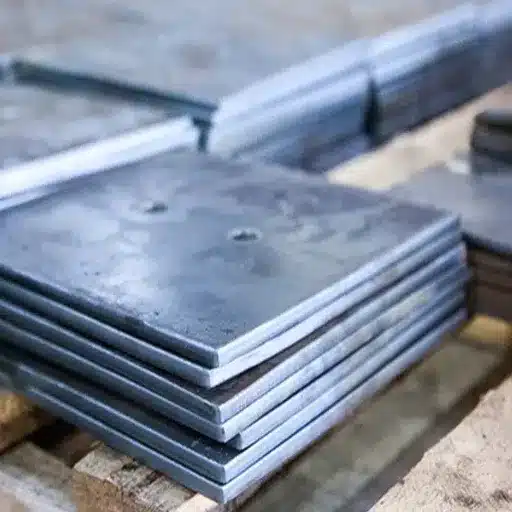
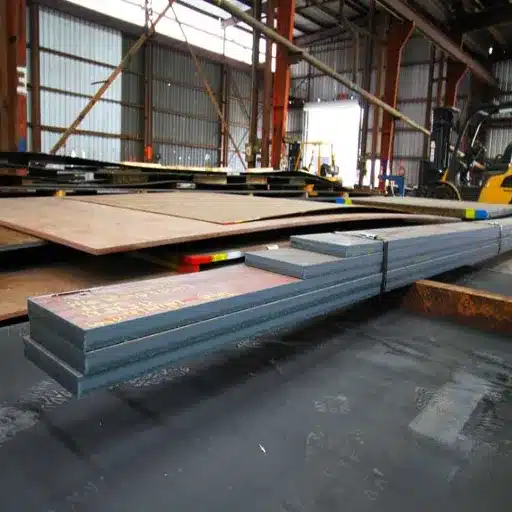
The AR plate grades system establishes standards for distinguishing abrasion-resistant steel based on its Brinell Hardness Number. The “AR” label indicates Abrasion Resistance properties, while the Brinell scale number that follows 400, 450, 500, and 600 shows the specific hardness range that the material is intended to achieve.
The grades lack a specific chemical composition that defines their boundaries. Different mills use proprietary alloy recipes to reach the same hardness target. The two “AR400” plates show different chemistries, weldability characteristics, and toughness profiles because they originate from different manufacturers.
How Abrasion-Resistant Steel Is Made
The quenching and tempering process (Q+T) produces a high-quality AR plate that undergoes this treatment for production. The steel undergoes heating at high temperatures, followed by rapid cooling, which creates hardness before it undergoes reheating at lower temperatures to enhance toughness while decreasing brittleness.
The material is produced through-hardened steel, which contains uniform hardness throughout its composition. The hardness extends from the surface through the full thickness of the plate. Surface-hardened or case-hardened materials achieve their strength through hardening only applied to their outer layer. The process of through-hardening becomes necessary for heavy wear situations because materials get continuously worn down through abrasion. The plate will fail rapidly once its hard layer gets removed because its strength extends only through the surface level.
The Brinell Hardness System
The Brinell test uses a controlled load to press a hardened steel or tungsten carbide ball into the material surface. The operator determines the Brinell Hardness Number by measuring the indentation diameter that he created.
The combination of BHN and AR plate grades determines how well materials resist sliding abrasion. Higher numbers mean better wear resistance but generally lower ductility, toughness, and ease of fabrication. This trade-off is the central principle of AR plate selection.
AR Plate Grades Comparison Chart
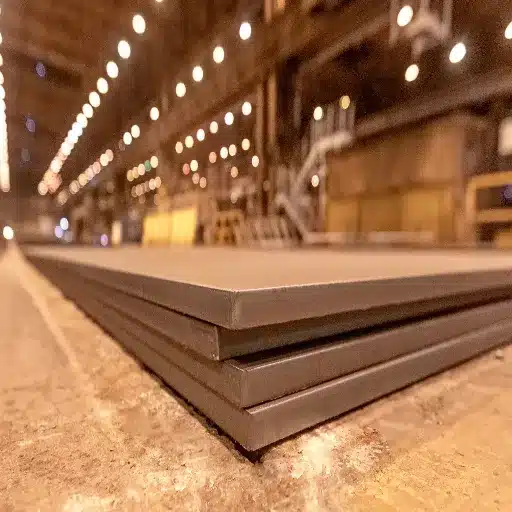
The following table summarizes the most common AR plate grades, their typical hardness ranges, and their best-fit applications. Actual values may vary slightly by mill and plate thickness.
| Grade | Typical Hardness (BHN) | Yield Strength (MPa) | Weldability | Formability | Relative Cost | Best Applications |
|---|---|---|---|---|---|---|
| AR200 | 170–255 | ~550 | Excellent | Excellent | $ | Light-duty chutes, truck liners, cement mixers |
| AR235 | ~235 | ~650 | Excellent | Excellent | $ | Skirt board liners, screw conveyors, bulk handling |
| AR400 | 360–440 | ~1,000 | Good | Good | $$ | Loader buckets, dump trucks, hoppers, crushers |
| AR450 | 420–470 | ~1,100–1,200 | Moderate | Moderate | $$$ | Cutting edges, heavy machinery, mining buckets |
| AR500 | 460–540 | ~1,200–1,300 | Difficult | Limited | $$$$ | Ballistic targets, high-wear chutes, ore screens |
| AR600 | 570–640 | ~1,400+ | Very difficult | Very limited | $$$$$ | Extreme cutting edges, severe abrasion liners |
This chart is a useful starting point, but grade selection requires a deeper look at wear mode, fabrication needs, and lifecycle cost.
Grade-by-Grade Breakdown
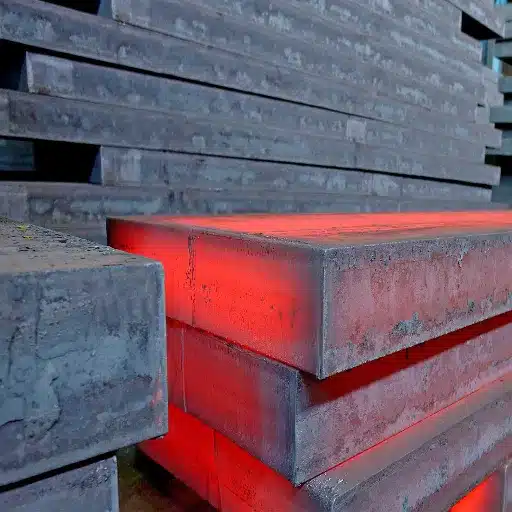
AR200 / AR235: Light-Duty Wear Protection
The abrasion-resistant material group begins with AR200 and AR235 as its two basic entry-level grades. The materials provide moderate hardness, which enables outstanding formability, weldability, and machinability.
These grades are ideal for applications where wear is present but not severe. When AR grades reach their maximum design capacity for heavy-duty applications, these grades become the most affordable selection. The material serves common applications in chutes for transporting materials, cement mixer drums and fins, light truck liners, and screw conveyors.
The softer AR200 and AR235 materials permit standard welding methods without any need for specialized procedures. Standard fabrication practices apply, making them popular for general industrial and agricultural equipment.
AR400: The Fabrication-Friendly Workhorse
The most common steel plate grade used in mining and construction projects is AR400 because it provides exceptional abrasion resistance. The material achieves an optimal combination of wear resistance and toughness through its hardness, which ranges from 360 to 440 BHN.
AR400 displays its unique property because of its ability to be fabricated into different shapes and sizes. Plasma, laser, and waterjet cutting methods enable users to cut the material. The material needs standard equipment for bending and forming operations, which becomes easier to perform when using the AR400F (formable) variant. Proper preheating and low-hydrogen electrodes enable users to weld the material in field conditions.
The material finds typical use in loader buckets, dump truck bodies, trailer liners, and crusher mantles and hoppers that experience falling rock. AR400 serves as the ideal initial material when components require both impact absorption and abrasion resistance protection.
Welding note: The metal requires preheating to 200–350°F (93–177°C) before the welding process. Use low-hydrogen electrodes such as E7018. Maintain interpass temperature control while welding because the plate must never reach a welding temperature above 482°F (250°C). The quenched-and-tempered microstructure will be destroyed when the temperature exceeds this limit, resulting in softening of the heat-affected zone.
AR450: The Industrial Sweet Spot
The AR450 material serves as a middle point between AR400 and AR500, while the material shows its main advantages through better wear performance than AR400 and easier manufacturing than AR500.
In 2023, a quarry operator in Alberta replaced AR400 dump truck liner plates with AR450. The AR400 liners had lasted 18 months in a mixed gravel and sand environment. The AR450 liners reached 24 months with only slightly higher material cost. The quarry used its own plasma cutting and welding capabilities, which allowed it to create AR450 products with minimal additional costs. The switch reduced total liner cost per operating hour by roughly 15%.
The industry utilizes AR450 to manufacture bucket components and cutting edges, construction equipment, and moderate-to-heavy wear liners, which require longer service life despite the minor increase in fabrication work.
Welding note: Preheat to 100–150°C (212–302°F). The use of low-hydrogen electrodes stands as a mandatory requirement. The procedure needs post-weld stress relief when working with highly restrained joints and thick sections.
AR500: Maximum Hardness for Sliding Abrasion
AR500 is designed for protection against extreme sliding wear and penetration attacks. The material reaches a hardness level of 460-540 BHN, which makes it harder than both AR400 and AR450, but this increased hardness leads to decreased metal flexibility and more difficult production processes.
AR500 provides superior performance in situations where materials slide or scrape against steel while under pressure. People commonly use the material for ballistic steel targets and mining transfer chutes, which experience rock-on-rock contact, aggregate screens, ore bins, and high-wear hopper liners.
Heavy impact requires a different material selection than this one. AR500 material experiences cracking and spalling after multiple high-energy impacts because its toughness level remains lower than that of AR400. The material functions poorly when it comes to extensive on-site welding and bending operations.
Welding note: Welding AR500 requires strict procedure control. Preheating is essential, and the exact temperature depends on plate thickness and restraint. The welding process requires maintenance of interpass temperature within specified limits. The use of matching or slightly lower-hardness filler metals is essential for this task. The heat-affected zone will become soft or develop cracks when excessive heat enters the area because field welding lacks proper equipment.
AR600: Extreme Wear Conditions
AR600 is the hardest standard AR plate grade, with a typical hardness range of 570–640 BHN. The material exists to handle extreme abrasion conditions, which require extended service life but allow for easy handling of production difficulties.
The products are designed for use in extreme-duty cutting edges, severe abrasion liners, and high-wear handling systems that operate in mining and aggregate processing. The material has very limited formability, yet certain mills provide AR600F variants which engineers to specific bending requirements.
The high carbon equivalent of AR600 makes it the most difficult grade to both weld and form. The process needs special machinery, which requires both specific preheating and post-weld heat treatment. Most buyers consider AR600 to be a specialized specification that lacks any general-use applications.
How to Select the Right AR Plate Grade
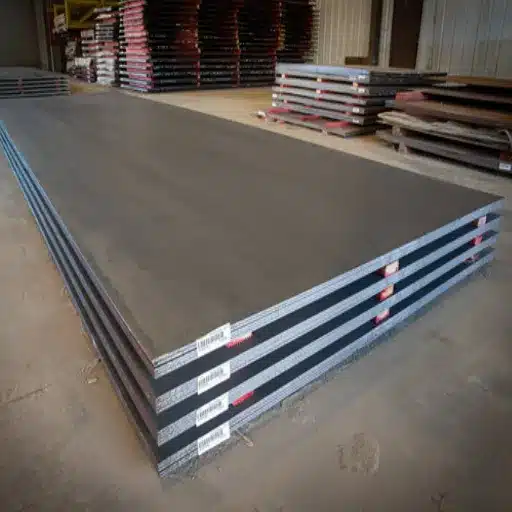
Choosing an AR plate grade should follow a logical sequence. Skip a step, and you risk specifying material that either fails prematurely or drives up fabrication costs unnecessarily.
Step 1: Identify the Primary Wear Mode
The first question is not “How hard do I want the plate to be?” It is “How is the material actually wearing?”
- The combination of impact and abrasion results in material toughness, which protects against falling rock, hammering, and shock loading. Choose AR400 as the appropriate solution.
- The solution for mixed sliding wear with moderate impact requires AR450, which provides extended wear life but incurs moderate fabrication costs.
- Rock-on-rock scraping, high-pressure sliding, and penetration resistance require materials with high hardness. Choose AR500 or AR600.
Step 2: Evaluate Fabrication Requirements
Higher hardness grades may be a problem if there is plate welding, bending, or machining involved in the field by your team.
- If welding and bending are carried out on site using electrodes, stick with AR400 or an AR450F formable variant.
- Fabrication with controlled processes employing great control: AR500 can be fabricated.
- Metal with the least amount of fabrication, but maximum abrasion resistance: Interestingly justified, especially with AR600.
Step 3: Calculate Lifecycle Cost
It’s infrequent that the least costly yield is the most inexpensive solution throughout the services.
A lighter AR500 plate can be substituted for a thicker AR400 or AR450 plate, sometimes saving weight and reducing load on the structure. At least, though, this condition applies when the application will not subject the plate to either heavy impact or fatigue. The right calculation is cost per service hour, not cost per kilogram.
Welding and Fabrication by Grade
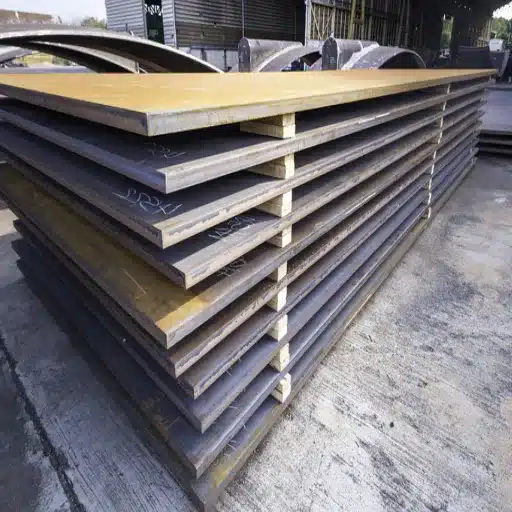
Hardness is not just a material property. It is a manufacturing constraint. The following tables summarize welding and cutting guidelines for the three most common industrial grades.
AR400 Welding Procedure
| Parameter | Recommendation |
|---|---|
| Preheat | 200–350°F (93–177°C) |
| Electrodes | E7018 low-hydrogen |
| Interpass temperature | Maintain within preheat range |
| Maximum temperature | ~482°F (250°C) to preserve Q+T hardness |
| Cooling | Slow, controlled cooling; no quenching |
AR400 is the most weldable of the high-hardness grades. Still, because it is quenched and tempered, overheating will destroy the microstructure. As welding technicians often say, if the steel shows color during welding, it is already too hot.
AR450 Welding Procedure
| Parameter | Recommendation |
|---|---|
| Preheat | 100–150°C (212–302°F) |
| Electrodes | E7018 or equivalent low-hydrogen |
| Interpass temperature | Controlled; do not drop below preheat minimum |
| Post-weld treatment | Stress relief recommended for thick or restrained joints |
AR450 requires more care than AR400 but remains manageable for qualified welding teams.
AR500 Welding Procedure
| Parameter | Recommendation |
|---|---|
| Preheat | Essential; exact temp depends on thickness and restraint |
| Electrodes | Matching or slightly lower hardness filler |
| Interpass temperature | Strictly controlled |
| Crack risk | High if preheat or interpass control is ignored |
| Field weldability | Poor; shop-controlled procedures strongly preferred |
In 2022, a field welding crew in Chile repaired an AR500 ore hopper without preheating because the portable heaters were out of service. Cracks appeared in the heat-affected zone within 48 hours. The hopper had to be taken offline for re-cutting and re-welding, costing the mine nearly a week of production. The lesson: AR500 does not forgive sloppy welding procedure.
Machining and Cutting Guidelines
Cutting:
- AR400: Plasma, laser, and waterjet friendly.
- AR450: Standard plasma and waterjet cutting work well.
- AR500: Plasma or waterjet preferred. Thermal cutting creates a significant heat-affected zone (HAZ) at the edges that may soften locally.
Drilling and Machining:
- AR400: Carbide tooling recommended; relatively straightforward with proper feeds and speeds.
- AR450: Moderate difficulty; carbide tooling required.
- AR500: Most difficult; requires carbide or diamond-coated tooling, conservative feed rates, and rigid setups.
Bending and Forming:
- AR400: Most forgiving. AR400F variants are available for tighter bend radii.
- AR450: Limited bending possible. AR450F improves formability.
- AR500: Very limited. High risk of surface cracking. Pre-engineered bends or F variants are strongly recommended.
Global Equivalent Grades and Proprietary Brands
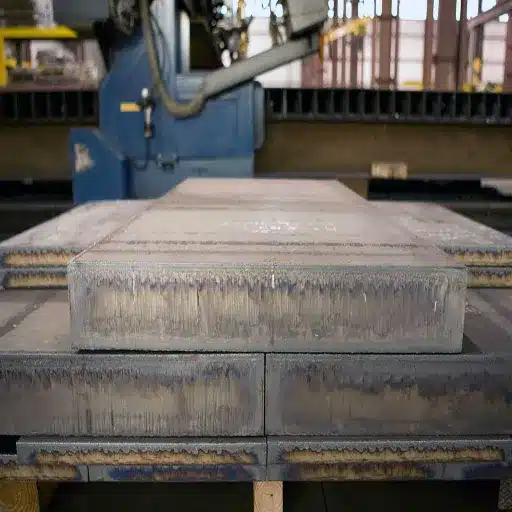
AR plate is produced under multiple standards and brand names worldwide. Understanding these equivalents helps procurement teams compare quotes, substitute materials in emergencies, and align specifications to project requirements.
ASTM / Generic AR Grades
The AR grating designations that are found most commonly in North America are AR400, AR450, AR500, and AR600. They are mainly hardness targets, rather than fixed chemistries. The method for testing the Brinell hardness test is defined by ASTM E10, but the alloy composition is up to the mill.
Chinese GB Standard (NM Series)
The NM series name refers to the “Nai Mo” mark for a series of wear-resistant steels formulated by China under GB/T 24186.
- NM400 is almost similar to AR400.
- NM450 is rather close to AR450.
- NM500 is equivalent to AR500 to a lesser extent.
- NM600, in many ways, is almost identical to AR600.
They are general and easily available, as well as affordable in most cases. Mostly, though, the quality varies with mills. Therefore, when in a situation with critical applications, verify the mill test certificate with respect to hardness profile, impact toughness temperature, and chemical composition before replacing NM with AR grades.
Proprietary Brands
Several manufacturers produce highly branded products, which come with the guarantee of hardness and tighter tolerances:
- SSAB Hardox 400 / 450 / 500 / 600
- ThyssenKrupp XAR 400 / 450 / 500
- Ruukki Raex 400 / 450 / 500
- Dillinger DILLIDUR 400V / 450V / 500V
- JFE-EH400 / EH450 / EH500
These, too, usually stand for better low-temperature tough impact strength, flatter appearance, and better through-thickness hardness consistency compared to generic AR plates. But they cost much more than the bulk stuff and can often be proven to have an extended life span, better expected behavior of fabrication.
Selection Guidance by Grade Family
- Select NM grades if high cost is the main criterion, and you have an ordinary application in industries or an excavation facility within a moderate environment.
- Select the standard NA grade and low-temperature exhibited plasticity properties when fabricated with certified brogan toughness on the fret.
- Take premium brands like Hardox, where reliability may be fulfilled directly from caliber assurance; a fine example looks to be the case where one gets the parts with actual guaranteed hardness on them.
Specifying and Verifying the AR Plate in Procurement
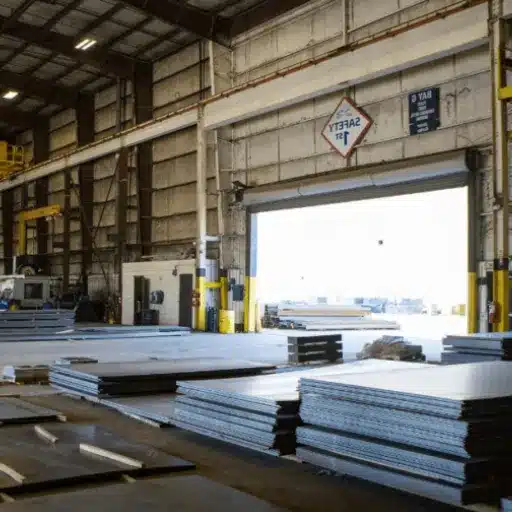
For critical wear applications, the AR plate should be specified clearly on the purchase order and verified on delivery. Assumptions about grade equivalence have caused premature failures, rejected shipments, and fabrication headaches.
What to Include on Your Purchase Order
A complete AR plate specification includes the following items:
- Grade and hardness range: For example, AR400, 360-440 BHNor NM450, 420-480 HBW.
- Test method: ASTM E10 for Brinell hardness.
- Through-thickness requirements: For plates thicker than 20 mm, request surface and mid-thickness hardness verification
- Delivery condition: Quenched and tempered (Q+T).
- Impact toughness: Specify test temperature if the equipment operates in cold climates.
- Mill or brand: If substituting is not acceptable, name the specific producer or proprietary brand.
Reading the Mill Test Report (MTR)
The MTR is the primary document certifying material properties. For the AR plate, verify three things:
- Hardness: Check that the reported Brinell hardness falls within your specified range. For a thick plate, confirm both surface and mid-thickness values.
- Impact toughness: Verify that the Charpy V-notch test temperature and absorbed energy meet your requirements.
- Chemical composition: Review carbon, chromium, manganese, and molybdenum levels. Higher carbon equivalent generally means harder plate but more difficult welding.
Common QA Pitfalls
Other common mistakes or errors that are made by the most experienced buyers in the AR plate are:
- Assuming all AR400 is identical: All AR400 is an equal one: Dissimilar mills can use dissimilar chemistries. So one mill’s AR400 will not weld just like the other’s.
- Ignoring mid-thickness hardness drop: Thick plates display the property of hardness drop in the middle portion in the lower rung products. Thus, you should check for mid-thickness data on the MTR.
- Field welding AR500 without preheat: This is one of the most common and leading causes of failure relating to AR500. Instead of AR500, AR400 or AR450 needs to be selected in case of frequent field repair.
- Confusing surface-hardened with through-hardened plate: Cheaper surface-hardened products quickly fail once the hard layer wears through. It is important to check the Q+T delivery condition on the MTR.
Conclusion
AR plate grades do not mix and match. AR400 will give the best compromise between toughness and ease of fabrication in terms of withstanding impacts. AR450 is a reasonable rate between durability, resistance to wear, and the cost of production. AR500 and AR600 are notable for their unrelenting hardness for the worst sliding abrasion conditions, although forming and welding parameters should be observed for these.
The right specification framework begins with knowing the wear pattern, proceeds to analysis of potential manufacturing limitations, and concludes with a review of the mill test certificate. Mistake any one of the three, and excellent steel will still wear out prematurely.
That’s why clear and concise purchase orders, supplemented by a proper MTR, correct welding processes, and subjecting the gamut of test pieces to offer variations to reduce exposure, is very important.
Need AR plate with certified hardness and full documentation? [Request a quote] for AR400, AR450, or AR500 plate aligned to your exact specifications, standards, and delivery requirements.