Metals are essential components in modern societies, such that their use forms the basis of economies of various countries and even the greatest of engineering feats. Notably among them is the construction of mild steel that constitutes most structures due to its high strength, low cost, and ease of fabrication. But what if one were to superheat all the mild steel stays on one top? What would happen? Apart from construction and manufacturing, among other things, it is important to determine the specific temperatures at which different metals, mild steel in this case, will melt. Therefore, this study investigates the conformance to concepts of melting of metals and describes why compositions and temperature variations have significant impacts on the metal in each scenario. The paper should provide some insight into why this knowledge is useful in industrial applications and engineering.
What is Mild Steel?
Definition and Composition
One kind of steel called mild steel is a low-grade steel in terms of carbon content since it has very low levels of carbon, as low as 0.05% up to 0.25% by weight. With such low levels of carbon, mild steel is very ductile, soft, and easy to weld as compared to either high carbon or other alloy steels. In mild steel, some amount of manganese is permissible up to 1.65%, and the same applies to silicon, which is allowed up to 0.60%. Also, some other impurities like sulfur and phosphorus are permissible in mild steel apart from carbon. Mild steel, however, cannot be considered as an alloy steel since the content of alloying elements such as chromium and molybdenum is absent.
Mild steel is a type of steel that contains a relatively low level of carbon and has a soft core, which is partly made of ferrite and pearlite. As such, it is highly resilient to fatigue – a combination of characteristic softness and strength. A traditional mild steel melting point is typically between 770–815°C (1425–1500°F), and so it is appropriate for many different applications, for instance, structural shapes, tubing, and automotive parts. Unlike the other high-carbon or alloy steels, it is not as tough; however, since it is light in construction, cost-effective, and easy to draw, it has forestry applications, where elasticity ratings are required, as it is the most commonly used material for engineering purposes across the globe.
Characteristics of Mild Steel
Mild steel is widely recognised as having a low-carbon component with approximately 0.05% – 0.25% carbon content, which is lower than medium or high carbon steels; thus, it is more yielding. The ultimate tensile strength of the material is 400 – 550MPa. It is suitable for most everyday constructions because of its mechanical properties, which include both strength and plasticity. These good mechanical properties also enable the mild steel to be welded well, but unlike other carbon steels, the carbon content is low ma
One of the advantages of this kind of steel, which is very appropriate, is that it can be machined well. Cutting, drilling, and forming of this steel is possible without much damage to the tool, and hence, this is used for manufacturing industries with more intricate shapes. It is also claimed that mild steel has high permeability with respect to magnets, making it suitable for Manuel while creating electro components.
In addition, if such steel has to be transported on already existing cables, it is assumed that the mild steel melting point is a required value.
When a low-carbon steel is exposed to air and water or moisture, it quickly starts rusting from the surface due to oxidation. Thus, to increase resistance against erosion, such steel is frequently covered or treated with other protective substances. The density of such steel is roughly equal to 7.85 g/cm cubic while its melting point of mild steel may be lowered within the temperature range 1425 Fahrenheit to 1500 degrees Fahrenheit or 770 to 815 degrees Celsius.
The use of mild steel is not limited to the construction of buildings; it is also found in the manufacturing industry of cars, pipelines, working tools, and even everyday items such as nails and screws. It is one of the few materials for constructing purpose which is likely to be used irrespective of geography and size of constructions majorly because of its affordable cost and universal applicability.
Comparison with Other Types of Steel
The key ingredient that resulted in this pediotropic structure of steel, rather than one that is found in a high carbon, stainless or alloy steel, was the relatively low carbon content, which ranges from 0.05% to 0.25%. As for high-carbon steels, the percentage of carbon present is from 0.60%to 1.7%, which implies that it is stronger and harder, but advanced deformation boundaries are also reached, which makes it less tough or hardenable than, say, mild steel. Hence, the high carbon steel is widely employed in the production of most cutting and even boring tools, apart from the milder variety of steel, which is not only quite machined to the extent of vaporizing but also more easily welded to other structures.
In contrast, steel, which contains at least 10.5% chromium, acts as stainless steel, and the presence of this element provides durability against corrosion. This, however, comes at a price as it is expensive compared to mild steel. And for this reason, the stainless steel is employed more often than not in situations which frequently involve moisture, chemicals, and salt, for instance, kitchenware, surgical tools, and marine structures. Stainless steel Type 304 could be presented in view here, with its average tensile strength being 515 MPa, while mild steel can typically be found within the range 400–550 MPa, depending on grades.
Alloy steel that contains additional alloying elements such as manganese additions, nickel, chromium, etc., is used to improve the strength, toughness, and wear resistance of the material. It is not easy or cheap to make such a material, and so it is used where the reliability is of utmost importance, such as in automotive gears or aerospace components. Even though the alloy elements in this steel make it possible for sufficient strength to be achieved, the cost of the alloy elements undermines its use in many applications. Thus, it leads to the understanding that such alloy steels are not widely used in structural engineering practices.
Based on recent analyses, it is unlikely that there will be a decline in the global demand for mild steel any time soon, thanks to its price and adaptability. It is reported that in 2022, the production of steel worldwide was more than 1.9 billion tons, out of which a substantial proportion consisted of mild steel with a melting point in the range of its use in building, power, and manufacturing industries. Going by these figures, it is evident that mild steel plays a key role in supporting economies in the fulfillment of strategic goals such as infrastructure development and industrial production.
Melting Point of Mild Steel
Typical Melting Point Range
The heat range at which mild steel turns into a liquid extends between 1370°C and 1450°C (2500°F – 2640°F), which is a vast temperature range. The specific alloying in this case particularly means the amount of carbon that is present in the steel. Low-carbon steel is sometimes referred to as mild steel. It typically consists of 0.05%-0.25% carbon by mass, which changes its melting range. The amount of carbon in mild steel, however, is comparatively lower than in high-carbon steel; thus, the melting point is also slightly lower.
Elevated temperatures at which mild steel melting is possible, obviously, impede the following industries the most – welding, forging, casting, and a lot of other – howancying the welders where the pieces are heated locally to join them, and how the temperature of these pieces that are being joined should be to get a strong and precise joint. In addition, another reason why mild steel is so easy to work with is that its melting point is lower than that of steels with a high amount of carbon, which is why it finds great use in industries like construction, vehicle design, and machine building.
In order to achieve better results and be more cost-effective, advances in technology and studies in the steel industry led to changes in mild steel smelting and processes to improve the efficiency of the output and titrants. For infrastructure purposes, steel satisfies one of the main functions of entire production; therefore, its performance characteristics, including the mild steel melting point, have to be clear and without any mistakes.
Factors Influencing the Melting Point
The melting point of mild steel can vary from about 1,350°C to 1,538°C (2,462°F to 2,800°F), depending upon the carbon and alloy content. Because of the typically low carbon content of about 0.05 to 0.25%, it may be considered as mild steel and melts primarily by contamination and additives introduced during the possible manufacturing process.
- Carbon Content: An increase in carbon levels in steel decreases the melting point. For example, consider cast iron, which has mostly high carbon melt in a lower temperature in contrast to mild steel due to its fragile state and changed molecular network.
- Additive Elements: Manganese, silicon, nickel, and chromium affect the thermal behavior of mild steel. For example, chromium has high strength characteristics and resistance to corrosion and can sometimes a bit decrease the melting point.
- Impurities and Oxidation: Chips caused during production processing or while being exposed to an oxygen-rich atmosphere could decrease its effective melting point, sometimes leading to low-grade structural performance at high temperatures.
Accurate data modeling and cutting-edge techniques in modern steel making exploit detailed composition analysis to improve heat resistance, while also maintaining its ideal mechanical properties. These improvements ensure mild steel remains a very competitive material for infrastructure, automobiles, and other applications in engineering.
Melting Points of Different Alloys
Different kinds of materials have individual melting or freezing points, which vary depending on the composition and purpose of the alloy. Examples provided below would be common alloys and their melting ranges in order to reflect the adequacy of their applications on the basis of their thermal properties.
- Mild Steel: The typical composition range of mild steel is from 0.05% to 0.25% carbon, having a melting temperature situated from 1, 370°C to 1, 540°C around about 2,500°F to 2,800°F; it is employed widely in construction and manufacturing due to its affordability and its flexibility.
- Stainless Steel: Melting Range: 2,500°F to 2,750°F, depending on the grade and composition thereof. This increase in temperature allows it to resist corrosion if it has chromium in the mix to keep the high thermal indices.
- Aluminum Alloys: They are light because they have smaller melting points compared to other materials, ranging from 463°C to 671°C (865°F-1,240°F). Thus, they are great for applications in which weight is an issue, like constructing small structural components and heat exchange systems.
- Copper Alloys: Brass and bronze have high copper content and have melting points ranging from 1,675-1,980 F to 913- 1,082°C, with the best conductivity and wear resistance.
- Titanium Alloys: Known for their high strength-to-weight ratio, titanium alloys have higher melting points of 2900°F-3034°F or 1600-1668°C and are indispensable in aerospace and medical engineering.
These are some examples of how alloying elements such as carbon, chromium, and aluminum can influence the melting points of a material and how they have to be selected for different applications in engineering and industry. There is a substantial set of research underway to develop even more efficient compositions suitable for high-temperature and high-pressure applications.
Factors That Influence the Melting Point
Carbon Content and Its Effects
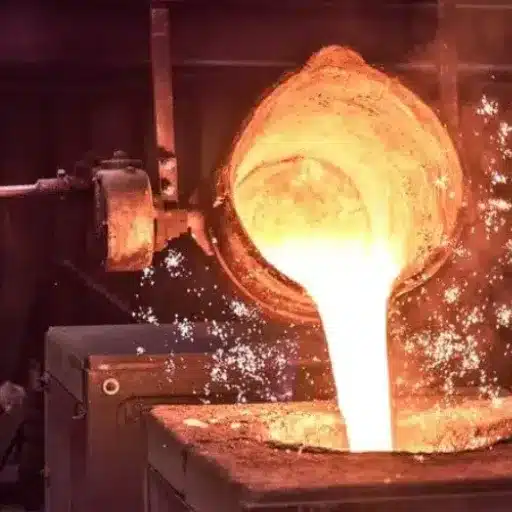
The melting point and the overall properties of the alloy can indeed be significantly influenced by carbon content therein. For example, the addition of carbon to steel will commonly lower the melting point and increase hardness and strength. The fusion point of metallic iron is approximately 2800°F (1538 °C). When one adds carbon to it, it becomes known as steel, and the fusion point drops to 2500 (1370)°F, depending on the carbon, in the alloy. The problem, however, is when they add too much of it, the problem being that a high carbon content of carbon can make steel brittle, thereby having the result that, should it have to be drawn into wires or cut into sheets or done anything else that has something to do with ductility and toughness, it won’t survive, alone or in a bicomponent stage.
Carbon is used to adjust almost every kind of material now when it comes to another degree of the stainless nature, and the desire for the manufacture of specialized alloys for various uses relies on controlled carbon levels; examples include high-carbon steels with 0.6-1.0% carbon used in industries for tools and knives because they are very high strength, but their melting points are slightly lower. Low-carbon steels, however, have a lower percentage of carbon in them, maintaining good ductility without embrittlement and therefore, are much improved for cold processes like forging and welding, thereby ideally more applicable to construction applications.
Through understanding the carbon’s role in changing CPs and properties, engineers and scientists build a platform on which they can further tune alloys that can be adjusted for almost every application- be it the automotive sector or linked to construction, since creating novel material is often required for deep thermal and mechanical operational conditions.
Presence of Alloying Elements
Steel and alloys have been tailor-made to suit particular applications in various industries, relying on the incorporation of different alloying elements. Of these, chromium, manganese, silicon, molybdenum, and even some vanadium are common additions to enhance specific mechanical and chemical properties. For example, chromium adds high resistance against corrosion that is so vital in stainless steel applications, while nickel enhances toughness and strength at low temperatures.
- Manganese increases hardenability and wear resistance, with the usual quantity of addition being of the order of 0.3% to 2% in steels.
- Chromium improves resistance against corrosion and oxidation, especially up to concentrations of about 12% in stainless steel.
- Nickel exacerbates strength and toughness, with anywhere between 2% to 20% addition being used in applications like gas turbines and cryogenic equipment.
- Molybdenum improves high-temperature strength and corrosion resistance within such a set of amounts, so in even the smallest proportions of up to 0.2%-5%.
- Vanadium increases exertion and hardenability, especially in high-strength, very low-alloy (HSLA) steels by additions in the range of 0.03-0.15%.
- In electrical steel, silicon improves the strength and magnetic properties.
It has an impact on the kinetics of phase transformations, grain structure, and resulting microstructure calculation during processing. For instance, carbide precipitation is prevented upon the addition of molybdenum, but some grain refinements are essential if the desired balance between strength and ductility is to be achieved.
An increasing usage of complex alloying has occurred in many key industries over the past few years, as per some of the known studies. During 2022, a stainless steel market analysis report suggested that in 2022, the percentage of chromium had risen by 4%, driving the growth of nickel primarily from the construction and automotive sectors. It was further added that the research published in materials science periodicals suggests that innovative alloying combinations are major energy-saving systems for creating sustainability in lightweight automotive parts and in the metal materials that will be used in energy infrastructures last mentioned.
The effect of alloying elements is of great importance to understand these materials to enhance their utilization variety under certain conditions. With this knowledge, a nit increases the creation of better and more durable materials for various kinds of applications, even from aerospace to energy production.
Manufacturing Processes and Their Impact
Most applications of these types of materials undergo an influencing factor which usually changes form, improves quality, or tightens costs. These comprise: casting, forging, welding, and additive manufacturing techniques, each yielding advantages but with challenges in the manipulation of the said materials.
Just like how it looks in manufacturing through transforming how components are currently designed and built, it’ll affect the way in which industries and sectors work. By 2023, the AM market is expected to reach market growth at about 24.3% over the forecast into 2030; thus, a growing upward trajectory with an increasing adaptation to new design-form-making capabilities and minimization of material waste is becoming more and more for complex forms. Amidst the astonishing rapid growth in aerospace industries and precision yet complicated demands of health, probably the most crucial attribute set for industries would be flexibility to the required intervention. On the other hand, the microstructure of parts produced using additive manufacturing is in most cases, different from those manufactured by conventional means. Performance testing can then be used to quantify improvements in performance under a variety of operating conditions.
Nevertheless, forging leads to very strong materials, which are accompanied by plastic deformation occurring through high compression of metal. Additionally, most excellent improvements have been implemented on the gross grains refining, which improves high fatigue resistance coupled with high stress for this component. Generally, it applies to heavy machinery and automotive parts where durability is essential.
With an excellent choice to manufacture innumerable items that are hard to produce incorrectly, casting strives to retain its predominant position. The development that is surely an advancement in the simulation tools in the context of casting process was published in the year 2022, showing increased defect control, such as porosity, therefore improving the quality of the end products from the process. Energy-profit casting is just one of two things in modern casting technologies that need energy; the other is very necessary for innovation in design.
A big symbolic change in this content had taken place eight or nine years back when Welding was used in connection with joining two parts or components to one another. Especially in the construction and infrastructure sectors, and that was the start of something truly interesting. This made it possible to effectively cook up the fundamentals of this process right now.
Heightened scrutiny of production processes follows greater interest in how processes impact the environment. Production accounted for 23% of global CO2 emitted by all sectors in the same year. Industrial production in the 21st century needed to be powered by cleaner technologies, such as green technology, which were hardware interaction technologies of saving energy and recycling, and made sustainable practices within the confines of manufacturing factories.
Knowing about these processes and their optimization mobilizes the mechanical behavior of materials and goes hand in hand with catching on to the bandwagon of a behavioral change in line with sustainability, where it performs best in the way it deals with economic issues and environmental issues at the same time.
Practical Applications of Mild Steel’s Melting Properties
Construction Industry Uses
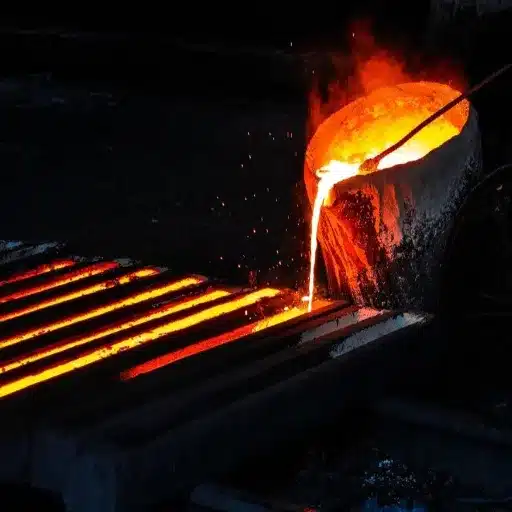
Structural mild steel is ideal for construction applications. Its melting point rests at about 1000°C (1832ºF) to 1520ºC (2768ºF), but is already malleable and strong enough to be highly necessary for constructing frameworks, reinforcing bars (rebar), and beams. It actually even made a perfect material to be utilized as it effectively curtailed construction costs due to its affordability and weldability, much to the added benefit of saving the structural integrity of things.
All in all, recent data says that it is mild steel that 70% of nations in the globe use as total structural steel within their house constructions. Incomprehensible in today’s sustainability efforts is recrystallization at greater than 80%. The combination of this affordability with “greenness” now makes mild steel fit right to the preference of houses worldwide, as well as commensurate-built business infrastructure.
Applications in Manufacturing
Mild steel is one of the imperative materials in numerous manufacturing techniques. This sort of materials is regularly taken in the designing of substantial automotive constituents: its due frames and parts of the body, engine parts, and so forth because very good machinability and high load-carrying capability, providing that interdisciplinary heavy might be considered the base component in the global automotive market when all the industry-revealed facts and the latest potential outreach is examined as recently proved in 55% material demand.
Equally, mild steel is one of the essentials in tube construction and equipment. It serves most of the different bending and welding requirements because of its flexibility, just pocket-friendly on account of the material costs. Over 65% of mild steel, in particular, is demanded for use in gas and water mains by catastrophically large companies in the year 2023. This is possible mainly because of its good durability and resistance to change upon itself when loaded.
A good option to have these heavy tools made for steel fabrication, the frame carriage welding, and specific other components is mild steel. Mild steel reports go ahead to say heavy engineering around the world usually has up to 30± percentage use. This is also very versatile in various production areas as well as industries.
Welding and Fabrication Considerations
Mild steel is the most popular steel type for welding and fabrication. It has less carbon than other steel compositions. Carbon reduction lowers the potential of cracking owing to welding properties that are somewhat diffused as compared to high-carbon steels. With the recent advances in welding technology, such as the advent of newer technologies like laser or plasma welding, the fabrication of mild steel can now be achieved in a more precise and efficient way. According to data, over 60% of all materials utilized in the world welding industry are made from mild steel.
Moreover, mild steel is, most of the time, coated to withstand corrosive and oxidative activities much better in outdoor-industrial areas. The level of demand rises by some 5.7 % in the mild steel market used in the making process, according to global industry analysts. Thus, the present practice of the century through computer-assisted technologies, in tandem with the performance of mild steel fabrication, is to bring ease in production processes. Mild steel is quite popular in the automotive, construction, and energy industries, which is why it happens to be a very popular material.
Reference Sources
-
Properties Evaluation of Mild Steel, Medium Carbon Steel, and High Carbon Steel – This document discusses the properties of mild steel, including its melting point and carbon content.
-
Investigation of Heat Treatment on Mechanical Properties of Mild Steel – This paper explores the characteristics of mild steel, including its composition and thermal properties.
Frequently Asked Questions (FAQs)
What is the degree of temperature required to melt mild steel?
Mild steel melting point is usually in the order of 1,425°C to 1,500°C (2,597°F to 2,732°F). Factors such as alloying elements, sulfur, and phosphorus contents within the raw material can change this temperature range by a few degrees. As the melting point of mild steel in not very high, it finds application in the manufacturing sectors, namely the welding, casting, and machining sectors.
Why is mild steel commonly used in fabrication?
Mild steel is a metal that finds high use in the mechanical fabrication industry. The primary reason for its widespread application in fabrication is its machinability, weldability, cost, and its use is also quite common in the fabrication of structural applications and material design. The strong but soft materials are what made it helpful for the construction of infrastructure, heavy equipment, diffusion, and mechanical components not forgetting the pipeswork. It is easily modifiable into a wide array of shapes and sizes and still retains its strength, hence its common usage in construction and oil and gas industries.
How does mild steel compare to other metals regarding melting points?
The overwhelming majority of metals have a greater melting point than that of mild steel, in the case of the temperature found in aluminum (660°C, 1,220°F) or copper (1,085°C, 1,984°F). Yet, this is, however, to be lower than the melt point obtained in some highly specialized alloy forms; thus, austenitic stainless steel’s melt points exceed 1,500°C (2,732°F). This may affect material suitability for specific applications that require resistance to intense heat.
What role does carbon content play in the melting point of mild steel?
The melting point of low/no-carbon mild steel isn’t a significant one. Most of the feedstock has 0.05% to 0.25% weight percent of carbon in mild steel alloys. Due to the low carbon content, the mild steel has a lower melting point than high-carbon steels. Indeed, mild steel, in contrast to high-carbon and, therefore, hardened, high-ductility-grade steel, retains virtually all necessary qualities of malleability.
Can mild steel maintain its properties at high temperatures?
This specific material, however, is not suitable for operating at elevated temperatures, at which it begins to lose its mechanical properties. At temperatures exceeding those at which this material could be utilized with appropriate criteria, others for use in a high-temperature scenario are made of stainless steel or heat-resistant alloy.
How can mild steel be protected in extreme conditions?
Mild steel may usually be refortified, protected, or sheltered from the environment by utilizing protective layers, e.g., galvanization or thermal spray coatings, under specific conditions. Their surface treatment further supports mild steel by expensive and better corrosion shields in extreme environments. Additionally, performance improvement takes effect at elevated temperatures.