Choosing a specific type of stainless steel can prove to be a very important decision in many different industries such as construction and kitchenware. The most usual stainless steel types are 201 and 304, with each one having its own specific features that affect their performance, durability, and price. So how can you tell which one is better for you? This article takes a closer look at the main differences between 201 and 304 stainless steels, dissecting their makeup, benefits, and perfect uses. It doesn’t matter if you are a manufacturer, an engineer, or just a curious person when it comes to materials science, this guide will give you the knowledge needed to make a smart choice and comprehend the reason why these steel types are still the kings in their respective applications.
Introduction to Stainless Steels
Significance of Stainless Steels in Industries
Stainless steel is definitely among the top materials for a variety of industries and applications thanks to their exceptional properties which include strength, corrosion resistance, and aesthetic value. The aforementioned sectors like construction, automotive, medical, food processing, and aerospace, which are the most demanding ones, are using these materials extensively, as they are all highly reliability and durability demanding. The industry’s latest statistics put the market of global stainless steel at an enormous figure of 104 billion dollars for 2022 and suggest a gradual increase with a compound annual growth rate (CAGR) of 5.2% during 2023-2030, which points to its development of industrial use.
To give an example, in the food and beverage sector, stainless steel is the favorite material for kitchen equipment, storage tanks, and utensils because of the property’s maintenance-free nature of being rust and contamination-resistant, thus, letting the food stay safe. Conversely, the medical domain, stainless steel is the common material for surgical instruments and implants due to its biocompatibility and resistance to bodily fluids and sterilizing agents. Besides, modern architecture is the majoriz beneficiary of stainless steel for cladding, roofing, and non-structural elements, since its modern appearance and long life with minimal maintenance are primary advantages.
Overview of 201 and 304 Stainless Steels
201 Stainless Steel
201 stainless steel is known for its quality at a low price. Conversely, 304 stainless steel is a more costly premium offering and the primary reason for the lower price of 201 is its limited nickel content. The saving on raw material costs does not affect the performance of 201 too much, so it still has a bit lower rust resistance than 304 steel. However, on the other hand, the two are equal in tensile strength and therefore 201 can be used in the places where long life and low cost are important together. Most often it is found in kitchenware, appliances, and building architraves where the conditions are not so harsh and the risk of chemical attack is low.
304 Stainless Steel
304 stainless steel sometimes called the “workhorse” among stainless steels, shows clearly its superiority over the 201 grade in corrosion resistance and versatility. The most important difference that sets it apart from 201 is its nickel content, which normally is 8%-10.5%, together with the reduced manganese content that makes it highly resistant even in the environments with moisture, acid or salt. This grade is very popular in the food processing, medical, chemical, and even outdoor construction industries. Its tensile strength is around 515 MPa to 750 MPa, and yield strength is 205 MPa to 275 MPa corresponding to the application.
Composition and Properties of 201 Stainless Steel
Chemical Composition of 201 Stainless Steel
| Element | Percentage | Function |
|---|---|---|
| Chromium (Cr) | 16.0–18.0% | The element of Chromium not just the corrosion resistance of the alloy but also the life span of the alloy. |
| Nickel (Ni) | 3.5–5.5% | This alloy has a lower nickel content when compared to 304 stainless steel, yet it is still able to resist corrosion in very mild environments. |
| Manganese (Mn) | 5.5–7.5% | Manganese is added primarily to increase the steel’s tensile strength and toughness, but it also allows for the reduction of nickel content, which makes 201 a more economical choice. |
| Carbon (C) | Up to 0.15% | The alloy containing carbon becomes harder and stronger, but 201 may lose some of its corrosion resistance when compared to 304. |
| Nitrogen (N) | Up to 0.25% | Nitrogen contributes to the improvement of mechanical properties and the resistance to corrosion, particularly in areas vulnerable to pitting or crevice corrosion. |
| Iron (Fe) | Balance | The iron forms the major part of the alloy and thus provides the metal with a base structure. |
| Silicon (Si) | Up to 1.0% | Silicon is the element that is consumed for better oxidation resistance and for the metal to be stronger at higher temperatures. |
| Phosphorus (P) and Sulfur (S) | Up to 0.06% and 0.03% respectively | These impurities are usually present in very low concentrations so as not to impair the good structure and cutting ability of the steel. |
Physical Properties of 201 Stainless Steel
- Density: Approximately 7.87 g/cm³ (0.284 lb/in³), which is very close to austenitic stainless steels, hence, contributing to its longevity and fruitfulness of its structural property.
- Melting Point: 1400–1450°C (2552–2642°F), causing sufficient heat resistance to various chemical and metallurgical industries.
- Thermal Conductivity: around 15 W/m·K at 100°C, although less thermally conductive than carbon steel, still good for moderate thermal applications.
- Coefficient of Thermal Expansion: ~17.2 µm/m·°C (20-100°C), embodying stability when temperature fluctuations occur but also being a factor in precision measuring areas.
- Elastic Modulus: About 200 GPa (29,000 ksi), which means that it can stand heavy loads without showing signs of strain.
- Electrical Resistivity: 720 nΩ·m, revealing its property of a fairly conducting electrical material.
Composition and Properties of 304 Stainless Steel
Chemical Composition of 304 Stainless Steel
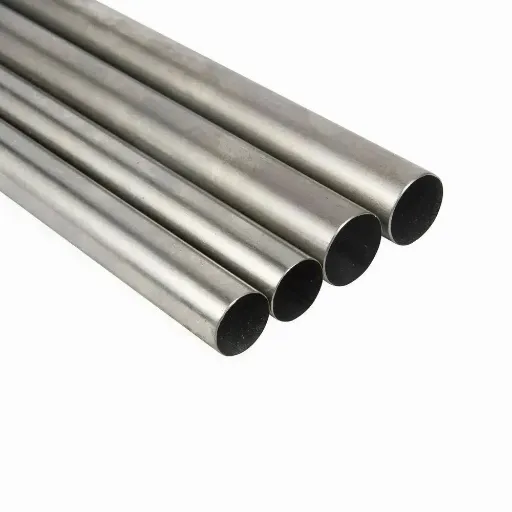
304 grade stainless steel, which is one of the most widely used grades of stainless steel, consists mainly of iron, chromium, and nickel in addition to minor amounts of other elements that are added to improve its properties. The composition of steel is so managed that it gets the best corrosion resistance, the highest durability, and the best formability at one and the same time. The chemical composition that is generally found in 304 stainless steel is as follows:
| Element | Percentage |
|---|---|
| Chromium (Cr) | 18.0% – 20.0% |
| Nickel (Ni) | 8.0% – 10.5% |
| Carbon (C) | Maximum 0.08% |
| Manganese (Mn) | Maximum 2.00% |
| Silicon (Si) | Maximum 0.75% |
| Phosphorus (P) | Maximum 0.045% |
| Sulfur (S) | Maximum 0.03% |
| Nitrogen (N) | Maximum 0.10% |
Physical Properties of 304 Stainless Steel
- Density: 8.00 g/cm³ (0.289 lb/in³) The density of such a degree guarantees the utmost support to the structure while being very light in comparison to other metals.
- Melting Point: Approximately 1,400°C to 1,450°C (2,552°F to 2,642°F) The high melting point of 304 stainless steel prevents it from ever being able to undergo a major shape change due to its very high temperature.
- Tensile Strength: 515 to 750 MPa (74,720 to 108,750 psi) The stainless steel of 304 type appears to have enormous tensile strength endurance which is furthermore an attribute it can carry heavy loads and receive heavy blows with.
- Yield Strength: ≥ 205 MPa (29,732 psi) This particular trait shows the minimum stress level that would lead the material to be plasticized and so the material is regarded as the one for the duration of stress.
- Modulus of Elasticity: 193 GPa (28 x 10⁶ psi) A highly elastic structure is possessed by 304 stainless steel which indicates that great forces can be applied before it takes a permanent deformation of bending or stretching.
- Thermal Conductivity: 16.2 W/m·K (at 100°C) The 304-type stainless steel has low thermal conductivity like the aluminum one, which is very good and considered the major resistance of the metal to heat.
- Thermal Expansion: 17.2 µm/m·K (at 20°C to 100°C) The 304 stainless steel thermal expansion characteristic is rather limited which thus favors maintaining the metal at its original size and shape when going through temperature variation.
- Electrical Resistivity: 0.072 x 10⁻⁶ Ω·m The extremely high electric resistivity of 304 type stainless steel makes it suitable to be used in places where the conduction of electricity should be at its minimum.
Comparative Analysis: 201 vs 304 Stainless Steel
Strength and Durability Comparison
When talking about the comparison of 201 and 304 stainless steel in terms of strength and durability, the above-described factors are indeed very revealing of their uniqueness in properties and applications. It is a well-established fact that 304 stainless steel has a significantly higher tensile strength value and a yield strength value, which is usually about 515 MPa (megapascals) and approximately 205 MPa. The values of 201 stainless steel range between 380 and 450 MPa for tensile strength and close to 200 MPa for yield strength. The great performance of the 304 steel quality in the field of mainstream applications with high durability and load-bearing capacity comes from the fact that it is stronger.
The other area where 304 stainless steel really does come out on top is its durability, which is primarily the consequence of being able to resist corrosion and oxidation better. By containing more chromium (18-20%) and nickel (8-10.5%), 304 does indeed provide better protection in areas where there are high moisture levels, acids, or temperatures. On the rarer side, 201 steel with less nickel (3.5-5.5%) and more manganese is going to develop rust over the time being, especially in the case of cutting and chloride-rich environments.
Welding and Fabrication Differences
In the matter of welding and fabrication, 304 stainless steel is one which consistently excels over 201 stainless steel at every step of its industrial applications. 304 stainless steel with its higher chromium and nickel content is not only able to facilitate the welding process but also make the resulting weld strong and resistant to corrosion at the same time. This type of stainless steel is also quite adaptable and can be welded using various techniques. Therefore, it can undergo TIG (Tungsten Inert Gas) welding, MIG (Metal Inert Gas) welding, and resistance welding without the need for post-welding heat treatment. Although post-weld annealing can further enhance its corrosion resistance, it is not a requirement.
On the other hand, 201 stainless steel is more likely to work harden during the manufacturing process which can cause problems with welding due to its lower nickel content and higher manganese. The term of welded joints adjoining the 201 stainless steel may be at a greater risk of corrosion in conditions where there is a lot of moisture or chloride, which is why this grade of steel becomes less acceptable in industries where welding is done and the results need to be completely reliable.
Advantages and Disadvantages of 201 and 304 Stainless Steels
Benefits of Using 201 Stainless Steel
The market for 201 Stainless Steel is very broad, and sometimes, people get confused about which product to select and which one to leave. One of the reasons is the price, which is quite high, but still, the 201 Stainless Steel is a number one choice for many due to its excellent resistance to rust, especially in areas with acid. The less nickel in 201 stainless steel is a very important issue that people look at when they are evaluating it against 304 stainless steel, which is very expensive, and so it is very hard not to buy.
One good feature that 201 stainless steel has is its tensile strength, which is usually between 515 and 735 MPa. This supports the use of 201 stainless steel in construction components that require the durability and strength to withstand the moderate physical stress. In addition, it is the high manganese content that causes the good work hardening property and, thus, the easy forming, bending, and welding of stainless steel for kitchen utensils, decorative trims, and light-duty industrial parts.
201 Stainless Steel Drawbacks
The drawbacks of using 201 stainless steel are few, and they are worth mentioning still. It is a high-cost product, it will have limited applications, and its performance in ordinary applications is still an issue. The most talked-about drawback is that the product is less resistant to corrosion because of the low content of nickel, which is a significant contributor to the resistance offered by the higher grades like 304 and 316. Consequently, 201 stainless steel would not work under conditions of constant exposure in marine and other highly corrosive environments where saltwater and harsh chemicals are common.
The other disadvantage is that the steel’s lower ductility and toughness are attributable to the higher manganese and nitrogen content that the steel possesses. This could cause difficulties during operations like deep drawing, bending, or forming processes, particularly when detailed designs are involved. Moreover, at extremely high or low temperatures, 201 stainless steel may experience performance degradation faster than its higher-grade counterparts and this makes it unsuitable for use in industries where such conditions are present.
Benefits and Drawbacks of 304 Stainless Steel
Benefits of 304 Stainless Steel
Corrosion Resistance
304 stainless steel is among the most recognized and appreciated metals due to its exceptional resistance to rust and corrosion. To be precise, the high amount of chromium not only forms a protective oxide layer on the surface but also easily maintains its ability to resist oxidation in different even harsh environments, including moist or mildly acidic conditions.
Versatility and Ease of Fabrication
The 304 stainless steel toughness and softness properties allow for the production of the most intricate forms even through welding and further machining without any chance of cracking or alteration of the material’s structure. This is one of the major factors that make the metal so incredibly in demand in the construction, transportation, and manufacturing sectors.
Temperature Tolerance
304 stainless steel does not show any signs of deterioration even with the temperature alterations, thus it indeed can stand both very low and moderately high temperatures (up to 870°C or 1600°F for continuous use). This good reason lets it in the fields of heat exchangers, boilers, and chemical processing equipment.
Low Maintenance and Durability
The inherent nature of 304 stainless steel to resist staining and wear basically means that it can last for a long time and very little maintenance is required. This, in turn, results in the reduction of operating costs for the industrial and commercial sectors.
Drawbacks of 304 Stainless Steel
Susceptibility to Chloride Environments
Even if corrosion resistance of 304 is great, the steel is still usually subject to pitting and crevice corrosion after long exposure to chloride environments like this of sea or de-icing salts. Thus, applications demanding better corrosion resistance often utilize higher grade, more expensive stainless steel like grade 316 that has a higher molybdenum content.
Higher Cost Compared to Carbon Steel
The production process of stainless steel 304 is so that it becomes more costly than standard carbon steel or other materials. Even though its durability and performance fully justify the price, sometimes the projects with tight budgets may still prefer cheaper alternatives.
Work Hardening
During processing or fabrication, 304 stainless steel can quickly harden under stress. Although this is a desirable and strength-giving property, it still causes difficulties during machining or deep-drawing operations, thus the use of proper tooling and techniques is a must.
Magnetic Properties under Cold Work
In the condition of annealing, 304 stainless steel is non-magnetic, however, it can slightly become magnetic if cold-working is applied to it. This feature could be a limitation for some applications where the non-magnetic property is absolutely crucial.
Reference Sources
-
Study on Short-Term Corrosion of Stainless Steels 201 and 304
This study compares the corrosion resistance of SS201 and SS304, highlighting that SS201 is more prone to local corrosion around grain boundaries.
Source: Harvard ADS -
Classification of Steel 201
This resource provides an overview of steel classifications, including AISI 201 stainless steel, focusing on its composition and applications.
Source: Purdue University -
Emission Spectroscopy of Plasma During Laser Welding of AISI 201
This research examines the behavior of AISI 201 stainless steel during laser welding, analyzing the vaporization rates of alloying elements.
Source: Penn State University
Frequently Asked Questions (FAQs)
Type 201 stainless steel, what is it and where does it stand in the stainless steel family?
Stainless steel type 201 is austenitic chromium-nickel-manganese variety that is of very low cost and low nickel content. This type of stainless steel is usually used for various applications like in consumer products and in industrial equipment and in the form of steel plate where nickel is reduced to lower cost. Mainly 316-grade and 304-grade various characteristics of the lower-cost 201-grade can be attributed to its moderate corrosion resistance and good mechanical properties in heavily contaminated medium.
What is the comparison between 201 and 316 and other 300-series alloys?
Type 201 has a considerably lower content of chromium, nickel, and molybdenum than 316 which means it will corrode more easily. In the meantime, 304, which is often compared with 201, beats the former regarding longevity and, thus, is more expensive. 201, however, is more cost-effective and employed less corrosive environments.
Give the mechanical properties and work-hardening traits of 201 type?
Due to the addition of alloying elements, the composition of type 201 is such that it has very good mechanical properties and higher strength than some ferritic or plain austenitic grades. It work-hardens easily, i.e., it becomes magnetic when cold worked and it can reach higher strength through work-hardening. Its good mechanical properties make it suitable for use in moderate strength and formability application areas.
Can type 201 stainless steel undergo annealing and will it lose its magnetism post annealing?
201 type stainless steel can be subjected to the annealing process. The non-magnetic condition of 201 when in the annealed state is a normal situation for the austenitic grades. The annealing and correct heat treatment decrease magnetism caused by cold working and thus, a process of repeated cold work can make it magnetic again as it can partially transform to the martensitic structure under strain.
Is type 201 stainless steel welding difficult and what factors should be taken into account?
Though standard stainless steel welding methods are applicable, due to the lower nickel content in type 201 and the higher manganese, weld-related procedures need to take this into consideration. Post-weld annealing or stress relief may be advised in order to reduce weld-zone corrosion susceptibility. Furthermore, welding may result in increased local magnetism as cold work and heat cycles are more likely to cause phase transformations.