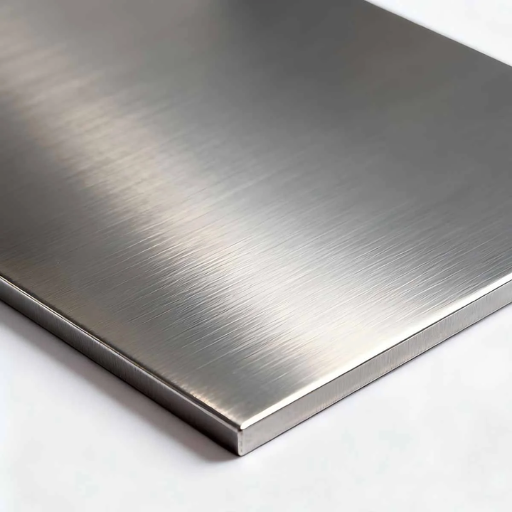
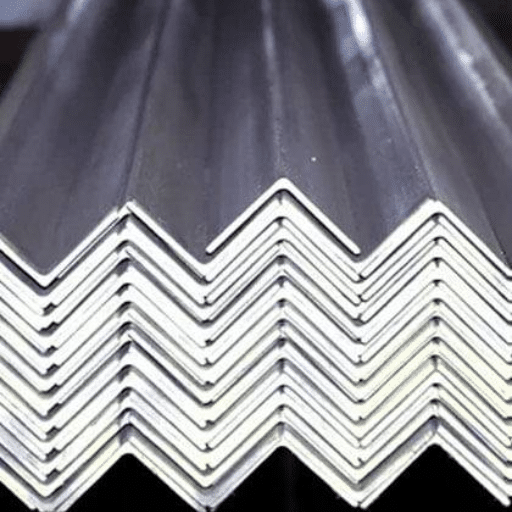
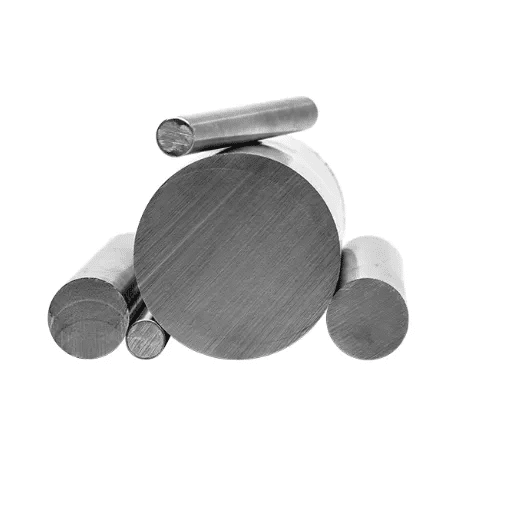
304 stainless steel sheet prices in 2026 range from approximately 2.60to2.60to3.75 per kilogram for cold-rolled 2B finish, depending on volume, thickness, and delivery terms. Prices jumped roughly 12% in Q1 2026 driven by Indonesian nickel supply constraints and LME nickel climbing past $19,000 per ton, and the market remains structurally supported at levels well above historical averages.
In January 2026, a German fabrication contractor named Klaus budgeted EUR 2,800 per ton for 304 sheet in a twelve-month infrastructure project. By late March, his supplier revised the quotation to EUR 3,400 per ton, a 21% overrun that erased his material contingency fund entirely. The cause was not supplier margin expansion. It was the confluence of Indonesian nickel ore quota cuts under the RKAB system, the Eramet Weda Bay mine entering maintenance, and Chinese mills raising export quotes by approximately $90 per ton in a single week.
This guide delivers the real-time price intelligence, quarterly forecast, and procurement risk management strategy that engineering and procurement teams need to navigate the most volatile 304 stainless steel market in three years. You will learn what drives current pricing, where prices are headed through Q4, how nickel volatility translates to sheet costs, and how to structure contracts that protect your project budget.
Key Takeaways
- 304 stainless steel sheet prices surged ~12% in Q1 2026 and currently trade at 2.60−2.60−3.75/kg FOB China depending on volume tier.
- LME nickel at ~$19,140/ton is the dominant price driver, contributing 60-75% of raw material cost for 304 grade.
- Q3 2026 typically brings the seasonal peak; Q2 offers the best entry point for buyers with flexible timing.
- The 304 vs 316L price spread currently sits at 25-40%; grade switching only makes economic sense above 50 ppm chloride exposure.
- Buyers should require EN 10204 3.1 certification, nickel-linked contract clauses, and CBAM-ready carbon documentation for EU imports.
What Drives 304 Stainless Steel Sheet Price Trends 2026

Understanding price movements requires dissecting the three forces that account for over 90% of 304 sheet cost variation: nickel feedstock, energy and alloying inputs, and the supply-demand balance in China, which produces roughly 60% of global stainless steel output.
The Nickel Factor
304 stainless steel contains 8-10.5% nickel by weight. Nickel is the single largest cost component, representing 60-75% of total raw material expenditure. The nickel price impact on stainless steel sheet costs is immediate and measurable. When LME nickel moves, 304 sheet prices follow, typically with a lag of two to four weeks.
| LME Nickel Price (USD/ton) | Approximate 304 CR 2B Sheet FOB (USD/kg) |
|---|---|
| $14,000 | 2.20−2.20−2.70 |
| $16,000 | 2.40−2.40−2.95 |
| $18,000 | 2.65−2.65−3.25 |
| $20,000 | 2.85−2.85−3.50 |
| $22,000 | 3.10−3.10−3.80 |
In April 2026, LME nickel traded at approximately $19,140 per ton, up 22% year-on-year. The primary catalyst was Indonesian supply policy. The Ministry of Energy and Mineral Resources tightened RKAB (Work Plan and Budget) mining quotas, reducing nickel ore availability for Chinese nickel pig iron (NPI) producers. Simultaneously, Eramet announced that its Weda Bay operation would enter maintenance in May 2026 after exhausting its current quota, removing a significant supply source at a critical moment.
Tsingshan, the world’s largest stainless steel producer, responded by raising 304 cold-rolled export quotes by approximately $90 per ton between April 24 and 25. This was not opportunistic margin expansion. It was a direct pass-through of nickel cost increases that Tsingshan could not absorb internally.
Chrome, Molybdenum, and Energy Costs
While nickel dominates, chrome and energy costs provide the floor. Chrome prices have remained relatively stable in 2026, offering some cost relief to producers. Molybdenum is more relevant to 316L grade pricing but influences the overall stainless steel complex sentiment. Energy costs in China, particularly electricity for electric arc furnace (EAF) production, have edged upward, adding approximately 30−30−50 per ton to base production costs.
Supply-Demand Balance
Global stainless steel production is forecast at 34.2 million tonnes in 2026, with 304 and 304L maintaining 48-52% of total austenitic output, according to World Stainless Association data. Chinese mills are currently operating at 65-70% of rated capacity, a deliberate production discipline measure to prevent inventory overhang. Warehouse stocks at Wuxi and Foshan, the two primary Chinese distribution hubs, sit at moderate levels, neither tight enough to spark panic buying nor ample enough to drive price weakness.
Want real-time 304 sheet pricing tied to current SHFE futures? Request a competitive quotation with your grade, thickness, and volume requirements. Our team responds within 24 hours.
Current 304 Stainless Steel Sheet Prices: May 2026
Pricing transparency is essential for procurement negotiations. For buyers tracking 304 stainless steel price per kg and 304 stainless steel price per ton, the tables below reflect 304 stainless steel sheet FOB China export conditions and domestic spot pricing as of May 2026. For live product quotes, see our dedicated 304 stainless steel sheet price page.
China Domestic Spot Market (Wuxi/Foshan)
| Product | Thickness | Price per Ton (RMB) | Price per Ton (USD) | Price per kg (USD) |
|---|---|---|---|---|
| 304/2B Cold Rolled | 0.5 mm | 14,200-14,900 | 1,960-2,050 | $1.96-2.05 |
| 304/2B Cold Rolled | 1.0 mm | 13,800-14,500 | 1,900-2,000 | $1.90-2.00 |
| 304/2B Cold Rolled | 2.0 mm | 13,500-14,200 | 1,860-1,960 | $1.86-1.96 |
| 304/2B Cold Rolled | 3.0 mm | 13,600-14,300 | 1,875-1,970 | $1.88-1.97 |
| 304 No.1 Hot Rolled | 4.0 mm | 13,200-13,800 | 1,820-1,900 | $1.82-1.90 |
| 304 No.1 Hot Rolled | 6.0 mm | 13,000-13,600 | 1,790-1,875 | $1.79-1.88 |
Note: China domestic prices reflect ex-mill or warehouse terms in Wuxi. Export FOB pricing carries a premium for processing, documentation, and logistics.
Export FOB Pricing by Volume Tier
| Volume Tier | Typical MOQ | 304/2B FOB (USD/kg) | 304/2B FOB (USD/ton) |
|---|---|---|---|
| Small lot / urgent | < 5 MT | 3.50−3.50−3.75 | 3,500−3,500−3,750 |
| Standard OEM | 5-25 MT | 3.10−3.10−3.40 | 3,100−3,100−3,400 |
| Project scale | 25-100 MT | 2.85−2.85−3.15 | 2,850−2,850−3,150 |
| Contract / mill-direct | > 100 MT | 2.60−2.60−2.90 | 2,600−2,600−2,900 |
Thin gauge material below 1.0 mm and precision-tolerance strip command premiums of 10-20% above standard sheet. Surface finish also affects pricing: No.4 brushed adds 0.15−0.15−0.25/kg, BA (bright annealed) adds 0.20−0.20−0.35/kg, and HL (hairline) adds 0.25−0.25−0.40/kg over base 2B cold-rolled.
Regional Price Comparison
| Region | 304/2B CRC Equivalent (USD/ton) | Key Cost Factor |
|---|---|---|
| China (FOB export) | 2,600−2,600−3,100 | Baseline, lowest global production cost |
| India (Mumbai, domestic) | 2,100−2,100−2,170 | Import duty protection; local infrastructure demand |
| Europe (landed, CBAM-adjusted) | 2,800−2,800−3,200 | CBAM Phase 2 adds ~EUR 50/MT; energy cost premium |
| United States (landed) | 3,100−3,100−3,500 | 25% Section 232 tariff; domestic mill premium |
For buyers in North America, the 25% Section 232 tariff on stainless steel imports creates a structural price floor that makes domestic sourcing appear competitive even when Chinese mill costs are significantly lower. European buyers face an additional layer of complexity with the Carbon Border Adjustment Mechanism (CBAM), which requires documented carbon content data and adds compliance costs of approximately EUR 50 per metric ton.
2026 Quarterly Price Forecast

Forecasting stainless steel prices requires balancing raw material momentum against seasonal demand patterns and inventory cycles. This stainless steel 304 price forecast reflects market consensus from CRU Group and other research providers as of May 2026.
Q2 2026 (April-June): Consolidation Phase
After the Q1 surge, the market is digesting higher price levels. Chinese mills are maintaining production discipline at 65-70% capacity. Inventory at Wuxi/Foshan is neither burdensome nor tight. The most likely scenario is range-bound trading with mild downward corrections as buyers push back against elevated spot quotes.
Forecast range: 2,750−2,750−3,200/ton FOB China for standard 304/2B.
Q3 2026 (July-September): Seasonal Peak
The “Golden September, Silver October” construction and manufacturing cycle in China drives peak seasonal demand. New energy sector projects, including EV battery enclosures and renewable energy infrastructure, add baseline consumption that did not exist at these volumes three years ago. If Indonesian nickel supply remains constrained, Q3 will likely mark the yearly price high.
Forecast range: 2,900−2,900−3,400/ton FOB China.
Q4 2026 (October-December): Stabilization
Year-end procurement patterns are mixed. Some buyers destock to manage balance sheets; others restock ahead of Chinese New Year 2027 shutdowns. The net effect is typically price stabilization rather than sharp movement, unless a macroeconomic shock disrupts industrial demand.
Forecast range: 2,800−2,800−3,250/ton FOB China.
2027-2028 Structural Outlook
| Scenario | 2027 Average (USD/ton) | 2028 Average (USD/ton) | Rationale |
|---|---|---|---|
| Bear case | 2,500−2,500−2,800 | 2,400−2,400−2,700 | Global recession; Indonesian NPI capacity expansion; |
| Base case | 2,900−2,900−3,300 | 3,000−3,000−3,400 | Steady demand; moderate nickel supply growth |
| Bull case | 3,400−3,400−3,900 | 3,600−3,600−4,200 | EV demand surge; further Indonesian export restrictions; green steel premium expansion |
The structural floor for 304 sheet pricing has risen. Waiting for a return to 2023 price levels ignores the new baseline of nickel supply constraints, energy transition demand, and production discipline among Chinese mills.
304 vs 316L: Price Spread and Grade Switching Economics
Grade selection is not purely a technical decision. It is also an economic one. The 304 vs 316L price spread currently sits at 25-40%, meaning 316L costs roughly 750−750−1,200 per ton more than 304 for equivalent dimensions.
| Nickel Price (USD/ton) | 304/2B (USD/kg) | 316L/2B (USD/kg) | Spread (%) |
|---|---|---|---|
| $16,000 | $2.50 | $3.15 | 26% |
| $18,000 | $2.75 | $3.50 | 27% |
| $20,000 | $3.00 | $3.85 | 28% |
| $22,000 | $3.25 | $4.20 | 29% |
At Jiangsu Zhonggongte, our metallurgical team reviews grade selection daily. The rule is straightforward: specify 316L only when the operating environment demands molybdenum protection. For chloride concentrations below 50 ppm, indoor industrial service, or non-marine architectural applications, 304 or 304L is the cost-optimal choice. Upgrading to 316L “just to be safe” adds 25-40% to material cost with no engineering benefit.
Need help determining whether 304 or 316L is right for your environment? Submit your application requirements, and our engineers will recommend the optimal grade within 24 hours.
How to Procure 304 Stainless Steel Sheet Strategically

Price volatility creates both risk and opportunity. The buyers who structure their procurement intelligently capture cost advantages that passive spot buyers miss.
Lock vs. Float: When to Fix Prices
| Procurement Situation | Recommended Strategy | Rationale |
|---|---|---|
| Urgent need, < 4 weeks | Lock immediately | Further upside risk outweighs any potential dip |
| Flexible timing, 2-3 months | Monitor Q2 corrections; target dips | Range-bound market offers entry opportunities |
| Long-term contract, 6-12 months | Fix with nickel-linked adjustment clause | Locks baseline; shares nickel risk with supplier |
| Project with fixed budget | Fixed-price with volume commitment | Eliminates price variance risk entirely |
Contract Structures That Reduce Risk
Buyers with quarterly or longer procurement cycles should consider LME nickel-linked adjustment clauses. These contracts fix a base price at signing, then adjust monthly or quarterly based on an agreed LME nickel reference price. Analysis shows that buyers with nickel-linked clauses experienced 11.4% lower price variance in 2025 compared to those renegotiating spot prices monthly.
For buyers with predictable volume requirements, fixed-price annual contracts with volume commitments offer the greatest budget certainty. The trade-off is reduced flexibility if spot prices fall significantly.
Volume and MOQ Considerations
Mill-direct pricing requires volume. Major Chinese mills typically set minimum order quantities at 20-50 metric tons for standard grades. For smaller requirements, authorized distributors and stockholders offer flexibility at a 5-15% price premium. Random lengths are cheaper than fixed-cut dimensions because they avoid secondary processing charges.
Documentation for International Buyers
Every 304 stainless steel sheet order should ship with:
- EN 10204 3.1 certificate: Confirms compliance with order requirements via manufacturer inspection.
- Mill Test Report (MTR): Includes heat number, chemical composition, mechanical properties, and dimensional results.
- CBAM-ready carbon documentation: Required for EU imports from 2026 onward; specifies CO2 equivalent per ton of steel.
- Certificate of Origin: Relevant for tariff engineering and preferential trade agreement claims.
At our Wuxi facility, we track SHFE stainless steel futures daily to ensure our quotations reflect actual market conditions. Every 304 sheet shipment includes full MTR documentation, EN 10204 3.1 certification, and in-house spectral analysis. For EU-bound orders, we provide CBAM-compliant carbon content declarations as standard.
Why Zhonggongte for 304 Stainless Steel Sheet
Jiangsu Zhonggongte Metallurgical Technology Co., Ltd. manufactures and supplies 304 stainless steel sheet from our Wuxi facility, combining in-house production capabilities with authorized global mill partnerships including Taiyuan Steel, Zhangjiagang Pohang, and Outokumpu.
Real-Time Pricing and Grade Range
Our quotations are tied to live SHFE and LME nickel benchmarks, not static price lists from last quarter. We supply the full austenitic grade range: 304, 304L, 316L, 321, 309S, 310S, and 904L, plus ferritic options including 430 stainless steel for applications where magnetic properties and lower cost are advantageous.
Quality Verification
Every sheet shipment leaves our facility with:
- In-house direct-reading spectrometer analysis
- Full Mill Test Report (MTR) per ASTM A240 or EN 10088
- EN 10204 3.1 or 3.2 certification on request
- Dimensional inspection report
- CBAM-compliant carbon content documentation for EU buyers
Related Products and Logistics
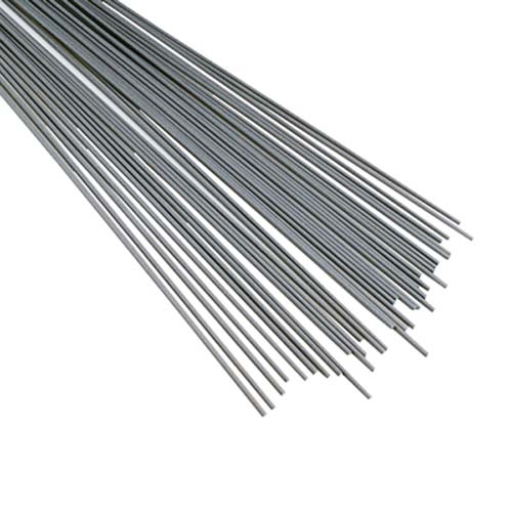
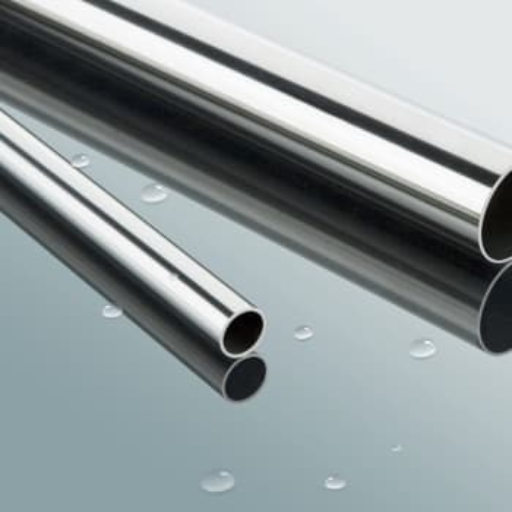
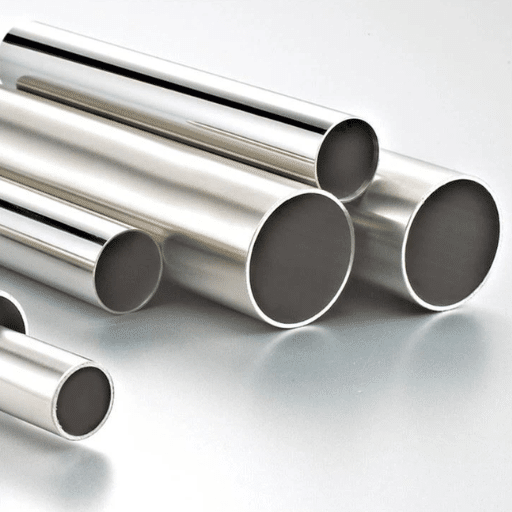
For projects requiring multiple product forms, we supply complementary stainless steel coil, stainless steel pipe, and stainless steel bar from the same heat lot, ensuring matched chemistry across your entire material package. Our 24-hour logistics center supports FOB, CIF, and EXW delivery terms to North America, Europe, Southeast Asia, and beyond.
Frequently Asked Questions
Q: How much does a 304 stainless steel sheet cost per kg in 2026?
A: As of May 2026, 304 cold-rolled 2B sheet costs approximately 2.60−2.60−3.75 per kg FOB China, depending on volume, thickness, and surface finish. Small urgent orders (< 5 MT) sit at the high end; contract volumes (> 100 MT) reach the low end.
Q: Is the price of 304 stainless steel expected to rise or fall in 2026?
A: The base case is a moderate upward bias through year-end. Q2 may see mild consolidation, but Q3 seasonal demand and persistent nickel supply constraints support prices. The floor is unlikely to break below $2,600/ton FOB China unless a major global demand shock occurs.
Q: What is the cheapest month to buy 304 stainless steel sheet?
A: Historically, February (post-Lunar New Year lull) and June (mid-summer slowdown) offer the weakest seasonal demand and best buyer negotiating leverage. However, in 2026, Indonesian nickel policy and production discipline may limit downside even in traditionally soft months.
Q: How does the nickel price affect 304 stainless steel costs?
A: Nickel represents 60-75% of 304 raw material cost. Every 1,000movementinLMEnickeltranslatestoapproximately1,000movementinLMEnickeltranslatestoapproximately0.10-$0.15 per kg in 304 sheet pricing, with a lag of two to four weeks.
Q: What is the price difference between 304 and 316L?
A: In 2026, 316L commands a 25-40% premium over 304 for equivalent dimensions. The spread widens when nickel and molybdenum prices rise simultaneously. For chloride-free or low-chloride environments, 304 is the cost-optimal choice.
Q: Should I choose FOB or CIF when importing 304 sheet from China?
A: FOB gives you control over freight and insurance, often reducing total landed cost if you have established freight forwarders. CIF simplifies logistics but may carry hidden margin in the freight component. For buyers with in-house logistics teams, FOB is typically preferred.
Q: What documentation should I require with my 304 sheet order?
A: Minimum: EN 10204 3.1 certificate and full MTR with chemical composition and mechanical properties. For EU imports: add CBAM carbon content declaration. For critical applications: EN 10204 3.2 with third-party inspection witness.
Conclusion
Understanding 304 stainless steel sheet price trends 2026 is essential for buyers navigating this volatile market. The 304 stainless steel sheet market in 2026 is defined by a new, higher price floor. Indonesian nickel supply constraints, EV and renewable energy demand growth, and disciplined Chinese mill production have shifted the baseline upward. Buyers who understand these drivers, monitor quarterly seasonal patterns, and structure contracts with nickel-linked adjustments or fixed-price volume commitments will outperform those who simply accept spot quotations.
The data is clear: Q2 offers the best entry point for flexible buyers, Q3 brings the seasonal peak, and Q4 stabilizes as the market balances restocking against year-end inventory management. For procurement teams building 2027 budgets, planning around a 2,800−2,800−3,200 per ton base case is the prudent approach.
Ready to lock in competitive 304 stainless steel sheet pricing? Request a competitive quotation with your grade, thickness, quantity, and delivery terms. Our metallurgical team will respond within 24 hours with ex-factory and delivered options tied to current market levels.