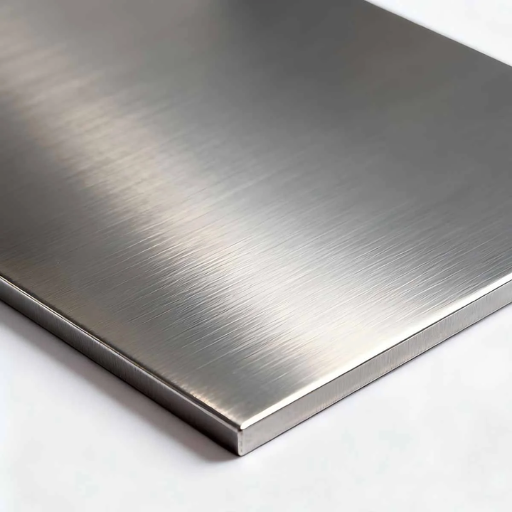
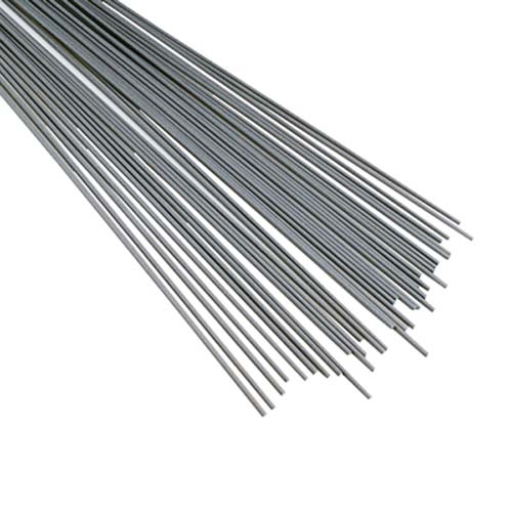
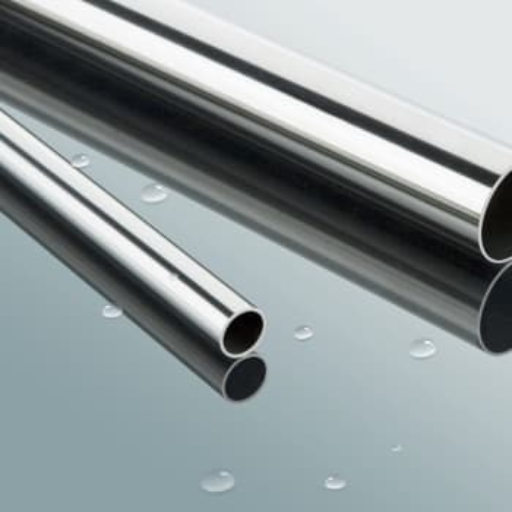
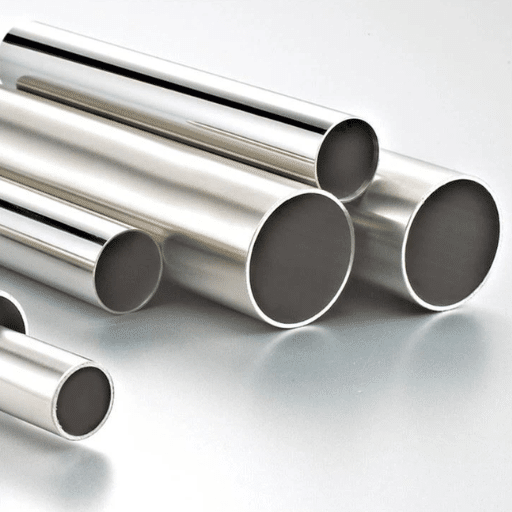
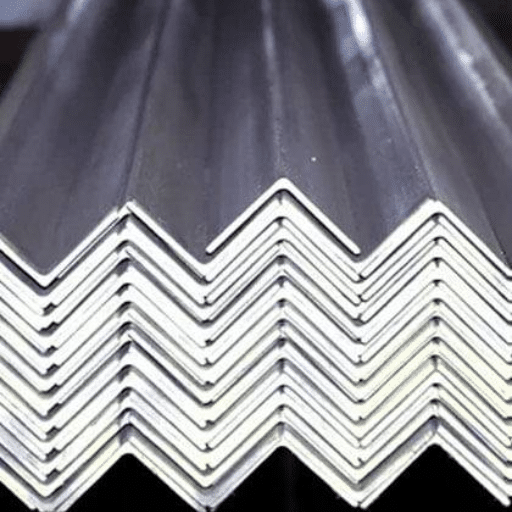
This non-hardenable 430 Stainless Steel grade belongs to the ferritic class of metals, which is magnetic, has between 16-18% of chromium, no or negligible amount of nickel contained, thus making it approximately 20-30% cheaper than high-nickel based ‘304’ and capable of delivering adequate corrosion resistance under dry, damp, and indoor conditions. Procurement specialists and those involved in engineering designs need to determine which is appropriate for one’s application, 430 versus 304, and when there is a concern about performance, such as saving on material costs can be significant.
A procurement manager working at one of the leading home appliance manufacturers in Asia in 2024 was in a rather similar situation. His chief engineer provided the refrigerator doors with a specification, 304 Stainless Steel, though the said component did not involve food contact, nor was it going to be installed in a wet condition. Two point eight million was budgeted for certain material provisions for the whole year. A 430 stainless steel 2B finish was supplied instead after consulting with sme min turn radiation design experts from Muler Material. In longitudinal terms, the equivalent aesthetic was maintained, met the ASTM A240, and had an additional cash of 78798.49 for other expenses that were enhanced into the project. This is not a one-off occurrence. Engineers in the automotive, appliance, and building industries often tend to choose austenitic over ferritic (430) when the latter can work exactly the same way at lower expenses.
This manual equips you with the technical specifics and decision-making outlines required to confidently specify 430 Stainless Steel. It details the elements of 430 according to ASTM A240, explains the dissimilarities between 430 and 304 in practical terms, states when heat-treatment after welding is essential, and the other grades 430F, 434, 439, which address particular engineering problems.
Key Takeaways
- 430 stainless steel (UNS S43000) is a ferritic grade with 16-18% chromium, zero nickel, and full magnetic permeability, costing 20-30% less than 304.
- It performs excellently in dry indoor environments but should not be specified for marine, coastal, or chloride-exposed applications.
- Welding 430 requires preheat to 150-200°C and mandatory post-weld heat treatment at 730-815°C to restore ductility and avoid embrittlement.
- Related grades 430F (machining), 434 (outdoor/molybdenum-enhanced), and 439 (welded exhaust) extend the ferritic family for specialized needs.
- Every order from Zhonggongte ships with full MTR documentation, spectral analysis, and EN 10204 3.1/3.2 certification.
What Is 430 Stainless Steel?

UNS S43000 and EN 1.4016 are the codes designated for 430 Stainless Steel, which is a non-toughened ferritic stainless steel. The term 400 series stainless steel I community of steels with body-centered cubic ( BCC ) structure and hence has amagnetic properties induced by conformation of the crystal structure. It is an alloy composed of 16 to 18% chromium, which allows the formation of a passive layer giving moderate protection against corrosion and less than 0.75% nickel, consequently reducing the cost in comparison with the austenitic grade.
The specifications for the grade are ASTM A240/A480 for plate, sheet, and strip; EN 10088-2 in Europe; JIS G4305 in Japan. As 430 stainless steel is nickel-free, the price of this stainless steel is not affected by the nickel price of the LME, among other stainless steels, and is also one of the few that remains very constant in price when the price movements are very extreme in the stainless.
In dry interior settings, decorative cladding cases, or other situations involving magnets, 430 stainless steel has enhanced performance against type 304 or 316 performance, but at a much lower cost of total ownership. 430 Stainless Steel, however, is not austenitic stainless steel’s overall substitute as it limits use in chloride media or is difficult to weld, among other characteristics.
Ready to evaluate 430 stainless steel for your next project? Submit your specifications to our metallurgical team and receive a certified quotation with availability within 24 hours.
430 Stainless Steel Chemical Composition and Mechanical Properties
Chemical Composition (ASTM A240)
The following table shows the specified composition range for 430 stainless steel per ASTM A240/A240M:
| Element | Minimum % | Maximum % | Role in Performance |
|---|---|---|---|
| Chromium (Cr) | 16.0 | 18.0 | Forms passive oxide film; provides corrosion and oxidation resistance |
| Nickel (Ni) | — | 0.75 | Minimal; keeps cost low versus austenitic grades |
| Carbon (C) | — | 0.12 | Affects hardness and weldability; kept low to avoid sensitization |
| Manganese (Mn) | — | 1.00 | Deoxidizer; improves hot working properties |
| Silicon (Si) | — | 1.00 | Deoxidizer; enhances oxidation resistance at elevated temperatures |
| Phosphorus (P) | — | 0.040 | Trace impurity controlled to avoid embrittlement |
| Sulfur (S) | — | 0.030 | Trace impurity; minimized for corrosion resistance |
| Iron (Fe) | Balance | Balance | Base element providing structural integrity |
What sets this material apart is that it lacks appreciable amounts of nickel. Where the 304 grade has a nickel concentration of 8-10.5%, and the 316L grade has a nickel percentage of 10-14%, the 430 grade is alloyed with less than 0.75%. This explains why this grade is cheaper, why it is magnetic, and why it does not corrode well in harsh conditions.
Mechanical Properties
| Property | ASTM A240 Minimum | Typical Value | Notes |
|---|---|---|---|
| Tensile Strength | 450 MPa (65 ksi) | 450-530 MPa | Adequate for most structural and panel applications |
| Yield Strength | 205 MPa (30 ksi) | 205-310 MPa | Lower than 304; sufficient for non-load-bearing uses |
| Elongation | 22% | 22-25% | Moderate ductility; adequate for forming and bending |
| Hardness (max) | 89 HRB | 85-89 HRB | Softer than cold-worked 304; easier to form in annealed condition |
| Modulus of Elasticity | — | 200 GPa | Comparable to carbon and stainless steels |
| Density | — | 7.75 g/cm³ | Slightly lower than austenitic grades |
Compared to 304 stainless steel, 430 offers roughly 15% lower tensile strength and half the elongation. For flat panel applications, appliance housings, and decorative trim, these differences are irrelevant. For deep-drawn components or complex formed shapes, 304’s superior ductility becomes the deciding factor.
Physical Properties
| Property | Value | Significance |
|---|---|---|
| Melting Point | 1425-1510°C | Standard for ferritic stainless steels |
| Thermal Conductivity | ~26 W/m·K | Higher than austenitic grades; advantageous for heat exchangers |
| Thermal Expansion | 10.4 × 10⁻⁶ /°C | Lower than 304; reduces thermal distortion in cycling service |
| Magnetic Permeability | High (ferromagnetic) | Enables magnetic separation for recycling; essential for electromagnetic applications |
| Maximum Continuous Service Temperature | 815°C (1500°F) | Excellent oxidation resistance in dry heat |
| Maximum Intermittent Service Temperature | 870°C (1598°F) | Suitable for furnace components and exhaust systems |
Is 430 Stainless Steel Magnetic?
That is correct. 430 Stainless Steel exhibits full magnetic properties under all conditions. It has a body-centered cubic (BCC) structure, which is inherent in all ferritic stainless steels, and this structure aligns electrons on certain spins thus allowing the material to have very high ferromagnetism. This is not a film or process-induced phenomenon. This is the material property of this composition.
By contrast, 304 stainless steel has the face-centered cubic austenite structure, because of which, in the annealed state, it is not magnetic. However, the 430 stainless steel has a very high degree of magnetism in comparison. 304 stainless steel can attain slight magnetism with cold working; however, it does not produce magnetism to the same levels as that of 430.
This magnetism is an advantage, not a limitation, in numerous applications:
- Induction cooktops and cookware: 430-bottom cookware heats efficiently via magnetic induction.
- Solenoid valves and relays: The grade’s magnetic permeability enables compact electromagnetic designs.
- Magnetic fasteners and tool holders: Kitchen knife strips and workshop organizers rely on 430’s attraction to permanent magnets.
- Recycling and separation: At end-of-life, 430 separates easily from non-magnetic austenitic scrap via magnetic sorting, reducing contamination and improving recycling economics.
For engineers specifying electromagnetic components, 430’s predictable magnetic behavior and low coercive force make it preferable to austenitic alternatives.
430 Stainless Steel Corrosion Resistance
General Corrosion Performance
430 Stainless Steel optimally provides for environments shielding against pollution, moisture, and corrosion caused by atmospheric stains only in cores without water. The passivation layer is created by the 16 – 18% chromium content, which is often found in stainless steel alloys. It helps to protect the lower-grade stainless steel from oxidation in normal environmental conditions. It is also used in decorative stalls indoors for many years without any measurable deterioration in surface appearance.
Again, this grade has very good resistance when subjected to oxidative conditions at high temperatures. The perfect operation encompasses continuous use temperatures to 815°C and up to 870°C in heavy solution heat treat operations. 430 also finds application in furnaces, fins for heat exchangers, and automobile exhaust trims as they do not heat up easily.
Limitations
The corrosion resistance of 430 stainless steel has clear boundaries that engineers must respect:
- Chloride and marine environments: 430 is not suitable for continuous seawater exposure, coastal installations, or chloride-laden chemical processing. Pitting and crevice corrosion occur rapidly in these conditions.
- Acidic environments: Concentrated acids, including sulfuric and hydrochloric acid, attack 430 at rates that make it unsuitable for chemical tanks or pickling equipment.
- Stress corrosion cracking: While ferritic grades are generally more resistant to chloride stress corrosion cracking than austenitic grades, extreme combinations of stress, temperature, and chloride can still cause failure.
When 430 Corrosion Resistance Is Sufficient
Specifying 430 Stainless Steel is appropriate in areas that have moderate or low humidity, especially in the interiors of a building, that are not exposed to salted water or chlorides, do not come in contact with harsh acids, and have no concerns of rust staining on aesthetic appearance since this exposure will only be occasional and very minor. The corrosion of the grade is enough for such environments and isn’t pricey compared with the 304.
When your application faces wet, salty, or acidic conditions, 304 or 316L is the minimum specification. Our full range of stainless steel products includes grades suited to every environment, from dry indoor panels to offshore seawater systems.
430 vs 304 Stainless Steel: How to Choose

Composition Differences
The properties of grades 430 and 304 are defined by their nickel content and mechanical structure. 430 Stainless Steel is ferritic (BCC) and contains no notable nickel. On the other hand, 304 is an austenitic structure (FCC) containing nickel of about 8-10.5%. The difference in structure and composition is one main reason for all the performance variations between the two grades.
Nickel is able to retain the austenitic phase of 304 in equilibrium, which renders it non-magnetic, promotes high formability, and makes it very easy to weld. Without nickel, in determining the cost of 430, this works to the advantage, but at the expense of ductility, and makes welding a hazard.
Performance Comparison
| Property | 430 Stainless Steel | 304 Stainless Steel | Winner |
|---|---|---|---|
| Cost per ton | $1,800-2,300 | $2,500-3,200 | 430 (20-30% lower) |
| Nickel content | <0.75% | 8-10.5% | — |
| Magnetic | Yes, fully | No (annealed) | Depends on application |
| Corrosion resistance (indoor) | Good | Excellent | 304 (marginal difference) |
| Corrosion resistance (marine) | Poor | Good | 304 |
| Formability | Moderate | Excellent | 304 |
| Weldability | Fair (PWHT required) | Excellent | 304 |
| Deep draw capability | Limited | Excellent | 304 |
| High-temp oxidation resistance | 815°C continuous | 870°C continuous | 304 (slight) |
| Appearance (annealed) | Bright, reflective | Bright, reflective | Tie |
Decision Matrix
Choose 430 stainless steel when:
- The application is indoors or in dry, mild atmospheric conditions
- Magnetic properties are required or beneficial
- Budget constraints are significant and corrosion exposure is minimal
- Forming is limited to simple bends, flat panels, or shallow draws
- The component does not require extensive welding
Choose 304 stainless steel when:
- The environment is wet, salty, acidic, or chemically aggressive
- Complex deep drawing, spinning, or intricate forming is required
- Extensive welding is needed without post-weld heat treatment
- Food-grade certification or non-magnetic behavior is mandatory
- Long-term durability in outdoor or harsh conditions justifies the premium
Cost Analysis
430 Stainless Steel is, on average, cheaper by as much as 20-30% as compared to 304 Stainless Steel, and this can be solely attributed to a lack of nickel in its composition. In April in 2026, the price of cold rolled 430 coil, which was essentially located within the Chinese spot market, was in the range of about 1164164 and 1265 dollars per metric ton. Meanwhile, the 304 coil that performs a similar function sells at the rate of 1800 to 2200 dollars per tonne. That can show snags which run into hundreds of meters in high-size appliances or even automotive programs where, with the help of over hundreds of tonnes in texture, there will be e 6 digit, because of that fee difference.
The difference between 430 and 304 is also at the origin of another significant effect: the possibility to manage the Government budget in any case of ICE prices of nickel. And when Nickel shot up in the market in 2022, prices for 304 materials suddenly increased by 15-20% over a quarter, but 430 remained unchanged.
Welding and Heat Treatment of 430 Stainless Steel
Welding Parameters
Welding 430 stainless steel requires more care than welding austenitic grades. The ferritic grain structure is prone to grain coarsening in the heat-affected zone, which reduces toughness and ductility. Martensite can also form in the HAZ upon cooling, creating brittle regions that crack under stress.
The following parameters are essential for successful welds:
- Preheat temperature: 150-200°C (302-392°F)
- Maximum interpass temperature: 260°C (500°F)
- Post-weld heat treatment (PWHT): Mandatory. Hold at 730-815°C (1,350-1,499°F) for a minimum of 1 hour per inch of thickness, with a 15-minute minimum for sections under 2 inches.
PWHT restores ductility by tempering martensite and relieving residual stresses. Skipping this step risks brittle fracture in service, particularly in dynamically loaded or thermally cycled components.
Filler Metal Selection
| Filler Metal | Application | Notes |
|---|---|---|
| ER430 | Matching composition | Best for corrosion resistance in mild environments; limited toughness |
| ER308L | General fabrication | Austenitic filler provides better ductility; acceptable for non-critical applications |
| ER309 | Dissimilar metal welding | Used when joining 430 to carbon steel or austenitic grades |
| ER310 | High-temperature service | Best for furnace components and exhaust systems operating above 600°C |
For most structural and panel applications, ER308L offers the best balance of weldability and performance. For high-temperature exhaust or furnace components, ER310 is the safer choice.
Heat Treatment Warning: Avoiding Embrittlement
Solution treatment of grade 430 must be practiced within a temperature range of 815-845°C and rapid quenching to prevent prolonged exposure to the temperature range between 540-400°C. Prolonged exposure in this range would result in a certain embrittlement effect as a result of carbides and nitrides built along the grain boundaries. This, in turn, will affect both the strength and resistance to corrosion.
Other researchers reported that higher cold working rates of 10% and above enhanced the mechanical parameters but decreased the magnetic properties and corrosion resilience of type 430 vegetable dish (MDPI, 2025). In electromagnetic uses, cold working with a level of about 10% coupled with a magnetic heat treatment gave achievable results whereby the least coercive force of about 286-293 A/m was attained in the absence of severe corrosion.
Related Ferritic Grades: 430F, 434, and 439
The 430 family extends beyond the base grade to address specific manufacturing and service challenges.
430F (UNS S43020), Free-Machining Grade
430F enhances machinability for automatic lathes and CNC turning centers by adding 0.15-0.35 % sulfur on top of the main chemical composition. The sulfur precipitates as manganese sulfide, which improves chip breaking and tool life. Unfortunately, the presence of this sulfur also makes welding more difficult and slightly compromises corrosion resistance. Use 430F where the materials, such as fasteners, valve components, or pump parts, are highly machined and not to be welded.
434 (UNS S43400), Molybdenum-Enhanced
When dealing with 434, the alloy includes molybdenum in the range of about 0.90–1.40%, a contributing factor in enhancing the resistance to pitting corrosion and also to crevice corrosion, especially when compared to 430. Typically, it is the ferritic type, which is preferred for outdoor architectural trim, automotive rims, and anywhere there is salt or moisture intermittently. The cost is a little bit greater because of the addition of molybdenum, but this will increase the lifetime in areas, for instance, where staining or pitting would occur in the ordinary 430 Stainless Steel.
439 (UNS S43900), Titanium-Stabilized
439 is mixed with titanium and carbon, reduced to minimal levels (0.07% maximum). Thus, 439 is the most sought-after ferritic grade when it comes to welded assemblies of exhaust systems, water heaters, and components of domestic heating units. In the case of non-corrosive welding applications, especially, 439 can replace 304 content with cost-benefit advantages since there is virtually no requirement for post-weld heat treatment.
| Grade | Key Addition | Best For | Avoid When |
|---|---|---|---|
| 430 | Base grade | General indoor, magnetic, cost-sensitive | Welding without PWHT; marine exposure |
| 430F | 0.15-0.35% S | Machined components, fasteners | Welding required; maximum corrosion resistance |
| 434 | 0.90-1.40% Mo | Outdoor trim, salt exposure, automotive | Cost-sensitive indoor applications |
| 439 | Ti-stabilized, low C | Welded exhaust, furnace components | Machining productivity is priority |
Industry Applications and Grade Selection

Automotive Trim and Decorative Components
Firstly, 430 dominates decors both internal and external of automobiles because of its luster, magnification, temperature tolerance, and eco-friendliness. Few manufacturers of exhaust systems prefer to use 439 when the sheet is to be welded far and wide; 430 remains the standard for decorative use. For example, an Eastern European tier 1 supplier, which was using 304 for the interior trim strips in 2023, switched to 430 after confirming that salt spray in the cabin environment was not significant. This meant a 24% reduction in material cost for a 450-ton program implemented in a year and a half with no field failures.
Appliances in the Home and the Kitchen
This material (stainless steel) is used in door panels of fridges, interiors of dishwashers, cavities of ovens, and range hoods. These stainless steels fulfill the aesthetic requirements for stainless by providing glossy 2B or BA types finish and are magnetic, thus offering their bases for induction cooking.
When considering surfaces that come in touch with food and need regular washing using detergents that have chlorine in them, 304 is the safest option to go for. When it comes to exterior modules that are not in contact, and dry internal enclosures for that matter, 430 comfortably satisfies the requirements in terms of costs, too.
Architectural and Decorative
Commercial constructions make regular use of 430 Stainless Steel in such applications as interior wall cladding panels, lift surfaces, balustrades, and ornamental grilles, divided into 2B, BA, 4, or mirror-polished finishes. The material’s ductility is adequate for flat and lightly bent panels, and its low cost encourages the use of stainless steel where painted steel panels are more cost-effective.
Where the architectural facade of the building is near the coast and near the sea, more salt-resistant tick walls or even 434, 304 – 316 cladding should be used. The costs are higher but there is no permanent staining, and the maintenance is reduced.
Functional and Magnetic Allocations
The 430 stainless steel has low temperature thermal expansion and is also well known for its high magnetic behavior, thereby used in the manufacture of heat exchanger fins, furnace parts, solenoid cavities, and magnetic cores. In these cases, magnetization is desired, and all austenitic types are out of the question.
Need help selecting between 430, 434, and 439 for your application? Our stainless steel sheet products are available in all ferritic grades with technical consultation included.
Certifications and Quality Documentation
Every 430 stainless steel order from a qualified supplier must arrive with documentation that verifies composition, mechanical properties, and dimensional compliance. Zhonggongte provides the following with every shipment:
- ASTM A240/A480 compliance: Chemical composition and mechanical properties verified against the standard.
- EN 10204 3.1 and 3.2 certificates: Mill test reports signed by the manufacturer’s authorized inspector (3.1) or by an independent third-party inspector (3.2).
- Mill Test Reports (MTR): Full chemical composition, tensile test results, hardness data, and heat treatment records.
- Spectral analysis: In-house direct-reading spectrometer verification of every batch, confirming chromium, nickel, carbon, and trace elements to within 0.01% accuracy.
- Third-party inspection support: SGS, BV, or TUV inspection arranged on request for critical projects.
Documentation is not an afterthought. It is the foundation of procurement trust. Receiving material without an MTR or spectral report introduces unacceptable risk into any quality-controlled manufacturing process.
Frequently Asked Questions
Q: Can you consider it safe to use 430 stainless steel for food preparation?
A: 430 Stainless Steel is considered to be safe for use in handling dry bulk foodstuffs, food products, and in their packaging appliances that do not contact food. However, there are conditions such as porous and or acidic (submissive) media in the food industry, where direct metal contact is involved, and ‘430’ may not suffice. Still, the best for such conditions is the use of 304 or 316L because of their high corrosion resistance and food-safe ratings.
Q: Does 430 stainless steel corrode? (freeze)
A: In corrosive environments like moisture, salt, or acidity, a passive chromium oxide film on the surface starts breaking down and allows 430 to rust. It works just fine in dry indoor use without rusting. For protection in moist environments and in offshore areas, it is better to use 304 or 316L, or 434 materials.
Q: Is there a way to differentiate 304 from 430 grade steels?
A: Ahh, the simplest way would be the use of a magnet. A strong magnetic field will work with 430, but not with annealed 304. But for the application of grade identification, instruments like sorting out waste by burning or performing X-ray analysis can be used to clearly determine where the nickel is present.
Q: What temperature can 430 stainless steel withstand?
A: The temperature limit for 430 Stainless Steel grade is 815 °C (1,500 °F) for regular use and 870 °C (1,598°F) for short periods of time. Beyond these points, the structure begins to change due to high temperatures enhancing the degradation of metals through oxidation and decreasing the performance of materials.
Q: Is 430 more difficult to weld compared to 304?
A: This is true. The welding of 430 involves great care since it requires a low heating to the range of 150-200°C as preheating and 730-815°C as a post-weld heat treatment so as to avoid embrittlement. While 304 may be easily welded with either the TIG or MIG process without the need for any post-weld heat treatment.
Q: What is the cost of both 304 or 316l grade?
A: 430 is courteous, cheap, meaning that it costs 20%- 30% less than the 304 range. In April 2026, prices for cold-rolled 430 coils on the Chinese spot market varied between 1,164−1,265 metric tons, whereas 304 coils’ price was 1,164-1,265 per metric ton; while 304 coils were up to 1,800-2,200 per ton.
Why Zhonggongte for 430 Stainless Steel
Jiangsu Zhonggongte Metallurgical Technology Co., Ltd., found in Wuxi, manufactures and distributes 430 Stainless Steel in foil, plate, sheet, strip, and bar, using the cutting-edge coil and sheet process. Alternatively, we can apply hot and cold rolling, slitting, cut-to-length, and sheet steel sharing techniques, which enable us to achieve even the strictest dimensional tolerance as required by ASTM A480 or EN 10258.
Specifications 430, 430f, 434, 439 in formats 2b, ba, mil, and mil, as well as ‘hig’ quality imports are loaded in the prairies warehouses. A FMD report, spect drastically done FG21 and EN 10204 support is issued for all orders given before dispatch.
Kindly forward your requirements as our metallurgists will go through them and reach a decision whether to supply 430, 304, or a related grade. All requests for information are considered and, if necessary, taken care of within 24 hours.
Conclusion
The 430 series should not be seen as inferior to 304. This is a purposely designed and selected metal alloy to meet certain applications based on the working environment. Predominantly used dry indoor applications such as decorative panels, magnetic elements or space-saving large production activities where costs are the most important consideration, 430 provides satisfactory corrosion resistance, excellent fabrication, and premium oxidation performance at even 20-30% less material cost.
The bottom line is that grades should be suggested correctly. Offer 430 if the conditions are moderate, the magnetic behavior is either acceptable or sought after, and post weld heat treatment can be done. Propose 304 or 316L when there is aggressive corrosion, intricate hull shapes, or food service austenitic applications.
Make a 430 Stainless Steel Specification submission i.e. grade class, thickness, width, finish and quantity needed. On receipt our technical team will look into the matter and reply back within the next 24 hours clarifying availability, approved quotation and the lead time for delivery.