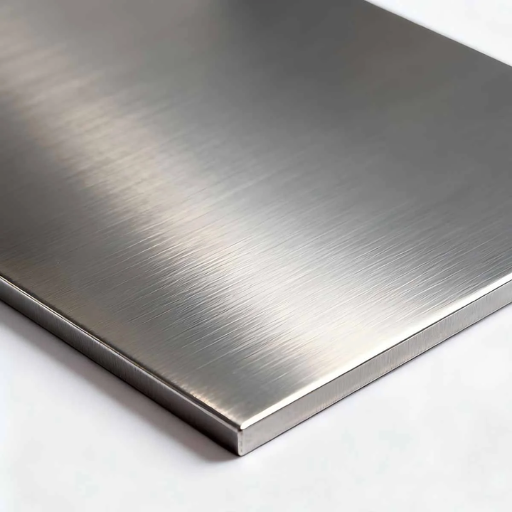
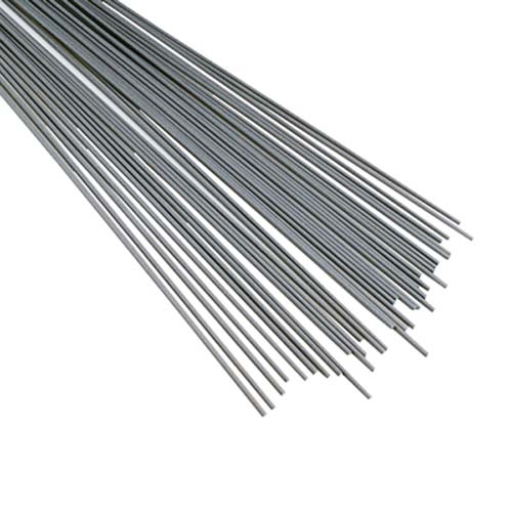
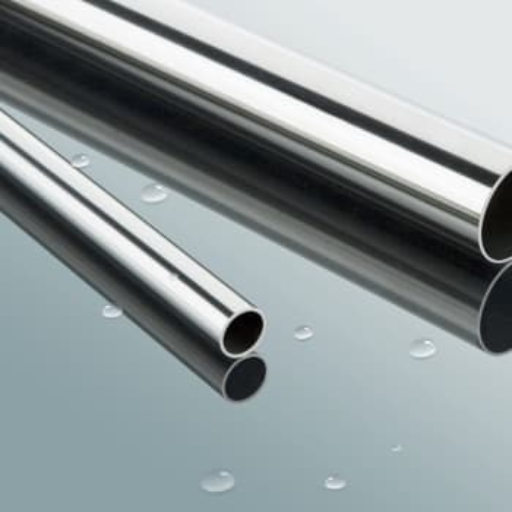
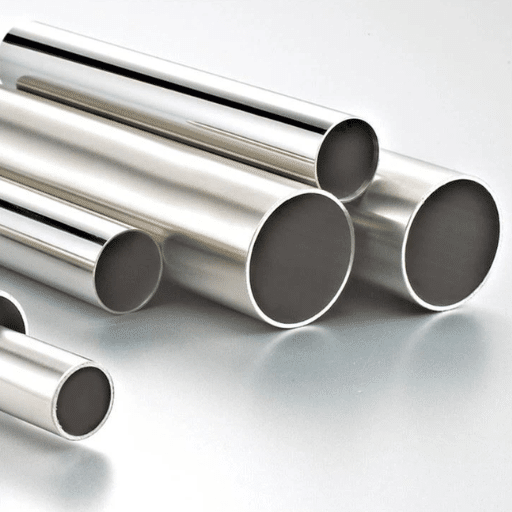
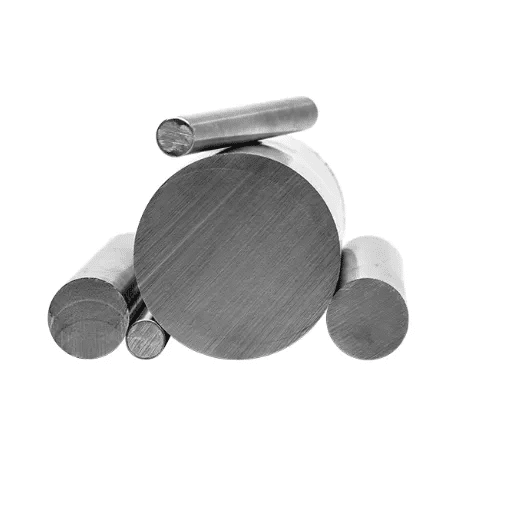
The best approach to welding stainless steel depends on the grade, thickness, and service requirements. TIG (GTAW) delivers the highest quality for thin sections and pipe root passes. MIG (GMAW) maximizes production speed for thicker plate. Stick (SMAW) handles field repairs where shielding gas is impractical. Each grade demands specific filler metal, heat input limits, and post-weld treatment to preserve corrosion resistance.
A pressure vessel fabricator won a contract to build chemical reactors in 316L stainless steel. The welders had decades of carbon steel experience. They used the same amperage, the same travel speed, and the same ER308L filler they always used. Six months after startup, the reactors showed intergranular corrosion at every weld joint. The rework cost exceeded the original material budget because no one on the procurement team specified low-carbon 316L, controlled interpass temperature below 175 degrees C, or post-weld passivation per ASTM A967.
This stainless steel welding guide covers every major grade, every standard welding process, filler selection, defect prevention, and documentation. It is written from the perspective of the metallurgical engineers who supply 304, 316L, 2205, and 2507 to fabricators worldwide.
Key Takeaways
- TIG welding stainless steel delivers the best quality for thin sections, but MIG welding stainless steel is faster for production plate work.
- Each grade requires a matching filler: ER308L for 304, ER316L for 316L, ER2209 for duplex 2205, and ER2594 for super duplex 2507.
- Interpass temperature limits vary by grade: below 175 degrees C for austenitic, below 150 degrees C for 2205, and below 100 degrees C for 2507.
- Post-weld passivation per ASTM A380 or A967 restores the chromium oxide layer and is non-negotiable for corrosion-critical service.
- Hexavalent chromium fumes from all stainless steel welding processes require local exhaust ventilation and respiratory protection.
Why Stainless Steel Welding Is Different from Carbon Steel

Thermal Properties That Change Everything
Stainless steel behaves nothing like carbon steel under the arc. AISI 304 expands approximately 50 percent more than carbon steel when heated, which makes distortion and warping a constant threat. At the same time, its thermal conductivity is roughly one-third that of carbon steel. Heat concentrates at the weld zone instead of dissipating into the surrounding base metal.
This combination means welders must use approximately 20 percent lower amperage than they would for carbon steel of the same thickness. Any reliable stainless steel welding guide must emphasize that travel speed must be faster, heat input must be tighter, and fixturing must be more rigid. The British Stainless Steel Association provides detailed engineering guidance on controlling distortion through weld sequencing and chill bars.
The Chromium Oxide Layer and Why It Matters
The corrosion resistance of every stainless steel grade depends on a self-healing chromium oxide layer approximately 5 nanometers thick. Welding destroys this layer in the heat-affected zone (HAZ) and on the weld bead surface. Without restoration, the exposed iron-rich surface will rust, pit, or suffer stress corrosion cracking in service.
This is why post-weld cleaning and passivation are not optional cosmetic steps. They are metallurgical requirements that restore the passive film to full functionality. Skipping passivation on a 316L chemical reactor is equivalent to leaving a pressure vessel uncoated in a salt spray chamber.
Grade-by-Grade Stainless Steel Welding Guide
Welding 304 / 304L Austenitic Stainless Steel
AISI 304 is the most commonly welded stainless steel grade in fabrication shops worldwide. The standard filler is ER308L for TIG and MIG, or E308L-16 for stick welding. For MIG applications, ER308LSi improves fluidity and wetting action.
The key metallurgical challenge is sensitization. When 304 is heated into the 425 to 815 degrees C range, chromium carbides precipitate at grain boundaries. This creates chromium-depleted zones that are vulnerable to intergranular corrosion.
For welded structures in corrosive service, specify 304L with its maximum 0.03 percent carbon content. The lower carbon reduces carbide precipitation and minimizes the risk of weld decay. For more detailed 304-specific parameters, see our 304 welding guide.
Welding 316 / 316L Austenitic Stainless Steel
The 316L grade adds 2 to 3 percent molybdenum to the chromium-nickel base, which dramatically improves resistance to chlorides and reducing acids. The matching filler is ER316L (or ER316LSi for MIG). The molybdenum in the filler must be protected from oxidation during welding, which is why argon shielding gas purity is critical.
Interpass temperature must remain below 175 degrees C to prevent chromium carbide precipitation and molybdenum oxidation. Post-weld pickling and passivation are essential for full corrosion resistance. This is particularly important in marine and chemical environments where 316L is specified for its superior pitting resistance.
Welding Duplex 2205
Duplex stainless steel 2205 demands a fundamentally different approach. The matching filler is ER2209, which is formulated to maintain the 35 to 65 percent ferrite balance in the weld metal. Using ER308L on duplex 2205, a mistake made by fabricators unfamiliar with duplex metallurgy, produces weld metal with insufficient ferrite. This leads to solidification cracking and catastrophic loss of corrosion resistance.
Heat input must be controlled within 0.5 to 1.5 kJ per mm. Interpass temperature must not exceed 150 degrees C. Nitrogen loss from the weld pool must be minimized, which is why TIG root passes on duplex pipe often use argon with 1 to 2 percent nitrogen added. For comprehensive duplex properties and procurement guidance, see our duplex stainless steel guide.
Welding Super Duplex 2507
Super duplex 2507 has an even narrower welding window than 2205. The matching filler is ER2594. Heat input must stay within 0.5 to 1.0 kJ per mm, and interpass temperature must not exceed 100 degrees C. For critical sour service applications under NACE MR0175, solution annealing after welding may be required to restore optimal phase balance and corrosion resistance.
Need certified 304, 316L, or duplex material ready for fabrication? Submit your RFQ with welding requirements, and our metallurgical team will confirm grade selection and recommend optimal edge preparation for your process.
How to Weld Stainless Steel: TIG, MIG, and Stick Process Selection

TIG (GTAW): Precision and Quality
TIG welding stainless steel remains the gold standard for thin sections, pipe root passes, food-grade equipment, and any application where cosmetic appearance matters. The process uses DCEN polarity, 100 percent argon shielding gas, and 2 percent lanthanated tungsten electrodes sized 1.6 to 3.2 mm, depending on amperage.
| Material Thickness | Grade | Amperage (A) | Filler Diameter | Gas Flow (L/min) | Tungsten Type |
|---|---|---|---|---|---|
| 1.0 mm | 304 / 316L | 40-60 | 1.2 mm | 8-10 | 2% Lanthanated |
| 2.0 mm | 304 / 316L | 70-100 | 1.6 mm | 10-12 | 2% Lanthanated |
| 3.0 mm | 304 / 316L | 100-140 | 2.4 mm | 10-12 | 2% Lanthanated |
| 2.0 mm | Duplex 2205 | 60-90 | 1.6 mm | 10-12 | 2% Lanthanated |
| 4.0 mm | Duplex 2205 | 120-160 | 2.4 mm | 12-14 | 2% Lanthanated |
For pipe welding, back purging with argon is mandatory until the root temperature drops below 250 degrees C. Without back purging, the root surface will sugar, creating granular oxide that destroys corrosion resistance and acts as a crack initiation site.
MIG (GMAW): Speed and Production
MIG welding stainless steel is the right choice for medium to thick plate, structural fabrication, and high-volume production. Shielding gas is typically 98 percent argon / 2 percent CO2 (C-2) or a tri-mix of 90 percent argon / 7.5 percent helium / 2.5 percent CO2. Transfer mode should be spray or pulsed spray. Short-circuit transfer is generally avoided for austenitic grades because it produces excessive spatter and incomplete fusion.
| Material Thickness | Grade | Voltage (V) | Wire Feed (m/min) | Shielding Gas | Transfer Mode |
|---|---|---|---|---|---|
| 2.0 mm | 304 / 316L | 22-24 | 6-8 | C-2 or tri-mix | Spray |
| 4.0 mm | 304 / 316L | 24-28 | 8-10 | C-2 or tri-mix | Spray |
| 6.0 mm | 304 / 316L | 26-30 | 10-12 | C-2 or tri-mix | Pulsed spray |
| 3.0 mm | Duplex 2205 | 23-26 | 7-9 | Argon + 1-2% N2 | Spray |
Si-enhanced wires such as ER308LSi and ER316LSi improve weld pool fluidity and reduce the risk of lack-of-fusion defects in production environments.
Stick Welding (SMAW): Field and Repair
Stick welding stainless steel is the practical choice for outdoor construction, repairs in remote locations, and heavy-section work where gas shielding is impractical. The standard electrodes are E308L-16 for 304 and E316L-16 for 316L. The lime-titania coating on these electrodes provides self-shielding properties that tolerate moderate wind.
The limitations are significant. Slag removal is required between passes, heat input is harder to control than with TIG or MIG, and the risk of slag inclusion is higher. For field repairs on duplex grades, E2209 and E2594 electrodes are available, but TIG or MIG is strongly preferred for critical service.
Filler Metal Selection Master Chart
The most expensive welding mistake is using the wrong filler. Here is the complete cross-reference for stainless steel filler rod selection across grades and processes.
| Base Metal | TIG Filler | MIG Wire | Stick Electrode | Shielding Gas |
|---|---|---|---|---|
| 304 / 304L | ER308L | ER308LSi | E308L-16 | Argon (TIG), C-2 or tri-mix (MIG) |
| 316 / 316L | ER316L | ER316LSi | E316L-16 | Argon (TIG), C-2 or tri-mix (MIG) |
| 321 | ER347 | ER347 | E347-16 | Argon |
| 309 / 309S | ER309L | ER309LSi | E309L-16 | Argon / tri-mix |
| Duplex 2205 | ER2209 | ER2209 | E2209 | Argon + 1-2% N2 (TIG root) |
| Super Duplex 2507 | ER2594 | ER2594 | E2594 | Argon + 1-2% N2 (TIG root) |
| SS to Carbon Steel | ER309L | ER309LSi | E309L-16 | Argon / tri-mix |
Matching filler matters because corrosion resistance depends on the weld metal containing equivalent chromium, nickel, and molybdenum levels to the base metal. Mechanical properties must also be compatible.
For duplex grades, the filler is specifically formulated to solidify with the correct ferrite number. Using ER308L on duplex 2205 is not a minor deviation. It is a specification failure that will produce cracks in service.
Critical Best Practices for Stainless Steel Welding
Pre-Weld Preparation
Contamination is the enemy of stainless steel weld quality. Every stainless steel welding guide stresses that dedicated brushes, grinding discs, and clamps must be used. Never share tools between carbon steel and stainless steel work areas. A single carbon steel particle embedded in a 316L weld can nucleate rust that spreads across the entire heat-affected zone.
Degreasing must use acetone or isopropyl alcohol. Never use chlorinated solvents such as trichloroethylene or brake cleaner. Chlorine residue will vaporize in the arc and cause intergranular corrosion that may not be visible for months. Edge preparation must produce clean, dry, oxide-free surfaces before striking the first arc.
During Welding
Interpass temperature control is non-negotiable. For austenitic grades, keep it below 175 degrees C. For duplex 2205, the limit is 150 degrees C. For super duplex 2507, the limit is 100 degrees C.
Heat input for austenitic grades should generally fall within 30 to 60 kJ per inch. For duplex grades, the narrower window is 0.5 to 1.5 kJ per mm.
Back purging for pipe and tube welding is mandatory. Argon must flow through the bore until the root temperature drops below 250 degrees C. Removing the purge too early causes sugaring, a granular oxide formation on the root surface that is impossible to passivate and must be ground out and re-welded.
In 2023, a dairy processor in Wisconsin welded new 304 storage tanks without back purging the root passes and without performing post-weld passivation. The heat tint and surface contamination created microscopic crevices that harbored bacteria. The facility failed FDA inspection, was forced to scrap three completed tanks, and incurred over 45,000 dollars in rework and lost production time.
Post-Weld Treatment
Heat tint must be removed by mechanical cleaning or pickling. The color chart is straightforward: silver is ideal, straw is acceptable, blue is marginal, and purple or black is unacceptable. TWI Global provides authoritative guidance on heat tint avoidance and evaluation.
Passivation restores the chromium oxide layer. Nitric acid passivation follows ASTM A967. Citric acid passivation is increasingly preferred for environmental and safety reasons and is also covered under ASTM A967. Verification methods include the copper sulfate test and the ferroxyl test for free iron detection.
Common Stainless Steel Welding Defects and Solutions
The following matrix covers the stainless steel welding defects that fabricators encounter most frequently. Refer back to this stainless steel welding guide whenever a new defect appears in production.
| Defect | Visual Sign | Root Cause | Prevention | Remediation |
|---|---|---|---|---|
| Porosity | Small holes in the weld bead | Contamination, moisture, poor gas coverage | Clean thoroughly, use pure argon, back-purge pipe | Grind out and re-weld |
| Heat tint / Oxidation | Rainbow colors from straw to black | Insufficient shielding gas coverage | Back-purge, increase gas flow, check fittings | Mechanical removal plus passivation |
| Cracking | Linear fractures in bead or HAZ | Wrong filler, excessive heat, high restraint | Match filler to grade, control heat input, minimize restraint | Grind out completely and re-weld with corrected WPS |
| Sensitization | No visible sign; corrosion later | Heat exposure in 425-815 degrees C range | Use 304L/316L, control interpass temperature | Cannot be repaired; material must be replaced |
| Distortion | Bowing, buckling, angular change | High heat input, poor fixturing, thermal expansion | Skip welding, chill bars, proper sequence, rigid clamping | Heat straightening or mechanical correction |
| Sugaring | Granular, rough root surface | No back-purge on root pass | Mandatory argon back-purge for all pipe root passes | Grind out and re-weld |
In 2022, an offshore platform contractor used ER308L filler wire to weld duplex 2205 subsea pipe because the specified ER2209 was not available on site. The weld metal contained less than 20 percent ferrite. Within three months of subsea pressure cycling, solidification cracks propagated through the girth welds. The repair required platform shutdown, dry-dock mobilization, and replacement of over 200 meters of pipeline.
Stainless Steel Welding Safety: Hexavalent Chromium and Beyond

Hexavalent Chromium (CrVI) Exposure
Every stainless steel welding process generates hexavalent chromium fumes. OSHA sets the permissible exposure limit at 5 micrograms per cubic meter as an 8-hour time-weighted average. Stainless steel welding can generate concentrations well above this limit in confined spaces or without adequate ventilation.
Mitigation requires a hierarchy of controls. Local exhaust ventilation at the arc is the first line of defense. Fume extraction guns for MIG welding capture contaminants before they reach the welder’s breathing zone. Where engineering controls cannot reduce exposure below the PEL, respiratory protection with P100 or supplied-air respirators is mandatory.
Ventilation and PPE Requirements
TIG welding generates elevated nitrogen dioxide and ozone due to the high arc temperatures. Confined-space welding of stainless steel requires continuous mechanical ventilation and atmospheric monitoring. PPE must include leather gloves, flame-resistant clothing, and a welding helmet with the appropriate shade rating. For processes generating significant spatter, a leather apron and arm guards provide additional protection.
Acetone and alcohol used for degreasing are flammable. Cleaning solvents must be allowed to evaporate fully before welding begins. Oxygen enrichment near oxy-fuel cutting operations creates a severe fire and explosion hazard that must be isolated from welding areas.
Documentation for Stainless Steel Welding: Quality Assurance for Fabrication
What to Specify in Your Fabrication RFQ
Procurement teams often specify “stainless steel tanks, welded” without defining the welding requirements. This ambiguity leads to field failures, inspection rejections, and project delays. A thorough stainless steel welding guide should be referenced in every fabrication RFQ. A complete fabrication specification should include the following elements.
- Welding process: TIG, MIG, stick, or combination
- Filler metal specification per AWS A5.4 or A5.9
- Welding procedure specification (WPS) and procedure qualification record (PQR) per ASME Section IX
- Welder performance qualification (WPQ) records
- Inspection level: visual, dye penetrant testing (PT), radiographic testing (RT), or ultrasonic testing (UT)
- Post-weld treatment: pickling and passivation per ASTM A380 or A967
- Material traceability: heat numbers on material test reports must match base metal certificates
Inspection Methods
Visual inspection checks weld profile, undercut, overlap, and heat tint. Dye penetrant testing detects surface-breaking cracks in non-ferrous materials. Radiographic testing reveals internal porosity and lack of fusion.
Ultrasonic testing measures wall thickness and detects subsurface defects. For critical pressure vessels and piping, RT or UT of 100 percent of welds is standard practice.
Specify certified material with full MTR traceability from the start. When your RFQ includes welding consumable matching and corrosion verification requirements, your fabricator cannot substitute unspecified filler or skip post-weld treatment.
Why Source Certified Stainless Steel from Zhonggongte
Pre-weld quality starts with the base metal. The best stainless steel welding guide is useless without certified material. Jiangsu Zhonggongte Metallurgical Technology Co., Ltd. verifies every batch of stainless steel sheet, pipe, and bar with direct-reading spectrometers to ensure composition matches your welding specification. Pre-cleaned and degreased material options reduce pre-weld preparation time. Cut-to-size service with clean edges minimizes edge preparation labor and contamination risk.
For multi-grade projects, a single-source supply of 304, 316L, 2205, and 2507 ensures consistent documentation and matched chemistry across your entire bill of materials. Every order ships with full material test reports per ASTM A240, A790, or EN 10088. EN 10204 3.1 and 3.2 certification is available for projects requiring third-party verification.
Submit your material list today and receive a competitive quotation within 24 hours. Our metallurgical engineers will review your welding requirements, confirm grade selection, and advise on edge preparation and certification needs.
Frequently Asked Questions
How do I weld stainless steel? What is the best process?
If you are learning how to weld stainless steel, start with TIG (GTAW) for the highest quality on thin sections, pipe, and cosmetic applications. MIG (GMAW) is faster for production work on thicker plate. Stick (SMAW) is practical for field repairs. The best process depends on thickness, grade, and service requirements.
Can I use the same filler for 304 and 316 stainless steel?
No. ER308L is the matching filler for 304 and 304L. ER316L is required for 316 and 316L to maintain molybdenum content and corrosion resistance in the weld metal. Using ER308L on 316L will produce a weld with lower pitting resistance than the base metal.
Why is my stainless steel weld rusting?
Rusting indicates that the chromium oxide layer has been compromised. When learning how to weld stainless steel, remember that common causes include inadequate shielding gas coverage leading to heat tint, carbon steel contamination from shared tools, or skipping post-weld passivation. The defect is almost always in the procedure, not the base metal.
Do I need to passivate after welding stainless steel?
Yes. Any complete stainless steel welding guide will tell you that passivation is mandatory. Welding destroys the passive chromium oxide layer in the heat-affected zone. Passivation per ASTM A380 or A967 restores this layer and is required for full corrosion resistance. Exceptions are extremely rare and limited to specific high-temperature service where oxide growth is expected.
What is the maximum interpass temperature for stainless steel?
For austenitic grades such as 304L and 316L, keep interpass temperature below 175 degrees C. For duplex 2205, the limit is 150 degrees C. For super duplex 2507, the limit is 100 degrees C. Exceeding these limits risks sensitization, nitrogen loss, or ferrite imbalance.
Can you weld stainless steel to carbon steel?
Yes, but it requires ER309L filler metal, which has a higher alloy content than either base metal. The joint design must accommodate the different thermal expansion rates. Post-weld heat treatment is generally not performed on austenitic stainless sides due to sensitization risk.
What causes sugaring on stainless steel pipe welds?
Sugaring is root-surface oxidation caused by welding without argon back purging. Oxygen in the bore reacts with the molten root metal, creating a granular, non-passive oxide. It must be ground out and the joint re-welded with proper purge flow maintained until the root cools below 250 degrees C.
Is post-weld heat treatment required for austenitic stainless steel?
Generally no. Austenitic grades such as 304L and 316L are used in the as-welded condition. Post-weld heat treatment can actually cause sensitization in standard grades. For duplex and super duplex grades, solution annealing may be specified for critical sour service to restore optimal phase balance.
Conclusion
Successful stainless steel welding requires control over three variables: chemistry, heat, and atmosphere. Chemistry means matching the filler metal to the grade. Heat means respecting interpass temperature limits and heat input windows. Atmosphere means pure argon shielding, back purging, and post-weld passivation to restore the passive layer.
Generic welding advice causes more field failures than any other fabrication mistake. The most expensive weld is the one that fails in service because the specification was incomplete. Whether you are welding 304 food equipment, 316L chemical reactors, or duplex 2205 subsea pipelines, the procedure must match the grade.
Need certified stainless steel sheet, plate, pipe, or bar ready for fabrication? Submit your RFQ with welding requirements. Our metallurgical team will confirm grade selection, recommend optimal edge preparation, and ensure your material ships with the certification your project demands.