17-4PH heat treatment is a two-step process: solution anneal the alloy to Condition A, then age it at a controlled temperature to reach the required H-condition. The aging temperature alone determines whether the final part delivers peak strength, balanced toughness, or sour-service compliance.
That single process parameter is where most specification errors begin. A procurement team orders H900 because it is the strongest condition, only to find the valve trim fails NACE MR0175 hardness limits. A machine shop receives already-aged bar and burns through carbide inserts because no one specified Condition A for machining.
A maintenance crew direct-ages a weld repair and leaves a soft heat-affected zone that will not pass inspection. These mistakes are expensive, but they are avoidable.
This guide explains the full 17-4PH stainless steel heat treatment cycle from solution annealing through final aging. You will learn the exact temperature and time for each H-condition, how to choose the right condition for aerospace, oil and gas, marine, and medical applications, and how to write a complete heat-treatment requirement on a purchase order or RFQ.
Key Takeaways
- 17-4PH heat treatment always starts with solution annealing at 1,020–1,060°C to produce machinable Condition A.
- Aging temperature controls everything: H900 at 482°C gives 40–47 HRC; H1150 at 621°C gives 28–37 HRC; H1150D stays below ~33 HRC for sour service.
- Condition A is the machining baseline: machine near-net shape first, then age to final hardness to avoid tool wear and distortion.
- H1150D is the standard choice for NACE MR0175 / ISO 15156 sour-service components because it limits hardness and improves toughness.
- Post-weld heat treatment requires full re-solution and aging; direct aging alone leaves degraded properties in the HAZ.
- Zhonggongte supplies certified 17-4PH / UNS S17400 / 0Cr17Ni4Cu4Nb with full heat-treatment documentation and 24-hour RFQ response.
What Is 17-4PH Heat Treatment?

17-4PH is a precipitation-hardening martensitic stainless steel. Its strength comes from tiny copper-rich precipitates that form inside the martensitic matrix during aging. These precipitates strengthen the alloy without cold work. The term 17-4PH heat treatment therefore refers to the thermal cycle that creates those precipitates and sets the final mechanical properties.
The process has two distinct stages:
- Solution annealing dissolves copper and carbides into a homogeneous austenitic structure, which transforms to soft martensite on cooling. The result is Condition A.
- Aging reheats Condition A to a lower temperature, usually 482–621°C, so that copper precipitates form in controlled sizes and distributions. The result is an H-condition such as H900, H1025, or H1150D.
The H-code naming system is simple once you understand it. The letter H stands for hardened, and the number is the nominal aging temperature in degrees Fahrenheit. H900 is aged at approximately 900°F. H1150 is aged at approximately 1,150°F.
Modified variants such as H1150M and H1150D add extra conditioning or a double-aging step. These steps improve toughness or meet sour-service hardness limits.
For a broader introduction to the alloy itself, including composition and grade designations, see our complete 17-4PH stainless steel guide.
17-4PH Solution Annealing: Condition A
Every 17-4PH heat treatment cycle begins with solution annealing. Skipping this step, or performing it incorrectly, will produce inconsistent hardness and poor mechanical properties after aging.
Why Solution Anneal First
Solution annealing serves three purposes. First, it dissolves the copper and carbides that exist from prior processing so they are uniformly distributed in the austenite. Second, it produces a grain structure that transforms predictably to martensite on cooling. Third, it leaves the alloy in a soft, machinable state that is ideal for near-net-shape machining before final aging.
If you age directly from a hot-rolled or forged condition without solution annealing, the copper distribution will be non-uniform. Some areas will over-age, others will under-age, and the final hardness will vary across the part. That inconsistency is one of the most common reasons for rejected material.
Recommended Temperature, Hold Time, and Cooling
The standard 17-4PH solution annealing temperature is 1,020–1,060°C (1,870–1,940°F). Hold time depends on section thickness, but a typical rule is 30–60 minutes at temperature for bars and sections up to about 50 mm. Thicker sections require longer holds to ensure the center reaches the solution temperature.
Cooling is normally done in still air. Oil quenching is sometimes used for heavy sections to ensure full martensite transformation, but air cooling is sufficient for most product forms. After solution annealing, 17-4PH is in Condition A with a hardness of roughly 28–32 HRC and a microstructure of soft martensite.
Transformation Temperatures
Understanding the phase transformations helps explain why the solution temperature matters:
| Temperature | Event | Significance |
|---|---|---|
| Ac1 ≈ 670°C | Austenite begins to form on heating | Defines the lower bound for solution treatment |
| Ac3 ≈ 740°C | Austenite formation complete | Must be exceeded to fully dissolve strengthening phases |
| Ms ≈ 80–140°C | Martensite start on cooling | Marks the beginning of martensitic transformation |
| Mf ≈ 32°C | Martensite finish on cooling | Room-temperature structure is essentially martensite |
Because the Mf temperature is close to room temperature, some retained austenite can remain in thick sections or after slow cooling. That retained austenite is one reason heavy sections are sometimes oil-quenched or sub-zero treated before aging.
What Condition A Looks Like on the MTR
When you order 17-4PH Condition A, the material test report should state the solution-annealing temperature, hold time, and cooling method. It should also report the resulting hardness, typically in HRC or HB. If the MTR does not include a heat-treatment chart, ask for it; the chart is the only way to confirm that the material was properly conditioned before any subsequent aging.
17-4PH Aging Conditions and H-Codes
17-4PH aging is where the final properties are set. The same Condition A starting material can be transformed into a wear-resistant H900 fastener or a tough H1150D sour-service component simply by selecting the right aging temperature and time.
H900, Maximum Strength
17-4PH H900 aging is performed at 482°C (900°F) for approximately 1 hour, followed by air cooling. This produces the highest strength and hardness available in 17-4PH.
Typical H900 properties include:
- Hardness: 40–47 HRC
- Tensile strength: ≥ 1,310 MPa
- Yield strength: ≥ 1,170 MPa
- Elongation: ≥ 10%
H900 is the right choice when wear resistance, static strength, and fatigue resistance are the dominant requirements. It is commonly used for high-performance fasteners, valve internals, precision shafts, and aerospace fittings. The trade-off is lower toughness and reduced corrosion resistance compared to overaged conditions.
H1025 / H1075, Balanced Properties
These intermediate aging temperatures offer a compromise between strength and toughness. H1025 is aged at 552°C (1,025°F) and H1075 at 580°C (1,075°F), typically for about 4 hours.
| Condition | Aging Temperature | Typical HRC | Typical Tensile Strength |
|---|---|---|---|
| H1025 | 552°C / 1,025°F | 35–42 | ≥ 1,070 MPa |
| H1075 | 580°C / 1,075°F | 31–38 | ≥ 1,000 MPa |
H1025 and H1075 are common choices for aerospace structural components, landing gear pins, and shafts where fatigue life and impact resistance matter as much as static strength. The slightly lower hardness reduces brittleness while still delivering tensile strength well above 1,000 MPa.
H1100, Higher Toughness
Aging at 593°C (1,100°F) produces H1100, a condition with higher toughness and ductility than H900 or H1025. Typical hardness is 28–37 HRC and tensile strength is ≥ 965 MPa. H1100 is often selected for components that must survive impact or shock loading without the extreme hardness of peak-aged conditions.
H1150, Best Toughness and Corrosion Resistance
17-4PH H1150 aging is performed at 621°C (1,150°F) for approximately 4 hours, followed by air cooling. This overaged condition gives the softest, toughest properties in the standard H-code range.
Typical H1150 properties include:
- Hardness: 28–37 HRC
- Tensile strength: ≥ 930 MPa
- Yield strength: ≥ 725 MPa
- Elongation: ≥ 16%
The higher aging temperature coarsens the copper precipitates, reducing hardness but improving toughness, ductility, and resistance to stress-corrosion cracking. H1150 is a good general-purpose condition when machinability and corrosion resistance are as important as strength.
H1150M and H1150D, Modified and Double-Aged
H1150M uses an initial conditioning treatment near 760°C (1,400°F) for about 2 hours. The part is air cooled, then aged at 621°C (1,150°F) for approximately 4 hours. The high-temperature conditioning step further improves toughness and stress-corrosion resistance for critical oil and gas components.
H1150D is a double-aging cycle at 621°C (1,150°F), typically performed as two separate 4-hour treatments with an air cool between them. The result is the lowest hardness of the common conditions, typically 24–33 HRC, which makes H1150D the default choice for NACE MR0175 / ISO 15156 sour-service applications.
17-4PH Heat Treatment Chart

The table below is the standard 17-4PH heat treatment temperature chart. It summarizes temperature, time, and hardness for each condition and is the reference most engineers keep open when writing a heat-treatment requirement.
| Condition | Aging Temperature | Hold Time | Typical HRC | Typical Tensile Strength |
|---|---|---|---|---|
| A (solution annealed) | 1,020–1,060°C | 30–60 min | 28–32 | ≥ 930 MPa |
| H900 | 482°C / 900°F | 1 h | 40–47 | ≥ 1,310 MPa |
| H1025 | 552°C / 1,025°F | 4 h | 35–42 | ≥ 1,070 MPa |
| H1075 | 580°C / 1,075°F | 4 h | 31–38 | ≥ 1,000 MPa |
| H1100 | 593°C / 1,100°F | 4 h | 28–37 | ≥ 965 MPa |
| H1150 | 621°C / 1,150°F | 4 h | 28–37 | ≥ 930 MPa |
| H1150M | 760°C / 1,400°F + 621°C / 1,150°F | 2 h + 4 h | 26–33 | ≥ 860 MPa |
| H1150D | Double 621°C / 1,150°F | 2 × 4 h | 24–33 | ≥ 860 MPa |
Values are typical specification minima or common ranges for the 17-4PH heat treatment process. Always confirm the exact requirements of the applicable standard and product form. For additional property data, see the Sandmeyer 17-4PH technical datasheet.
How to Heat Treat 17-4PH Stainless Steel
The complete 17-4PH heat treatment process can be written as a simple four-step procedure. This is the format most useful for work instructions, RFQs, and quality plans.
- Solution anneal at 1,020–1,060°C for 30–60 minutes, then air cool or oil quench to Condition A.
- Select the aging condition based on the required hardness and application: H900 for maximum strength, H1025/H1075 for balanced properties, H1150 for toughness, or H1150D for sour service.
- Age at the selected temperature for the specified hold time, then air cool to room temperature.
- Verify hardness and mechanical properties against the ordered standard, and confirm the heat-treatment chart is recorded on the MTR.
That sequence sounds straightforward, but each step has practical details that determine whether the final part passes inspection.
Heating Rate and Furnace Atmosphere
Use a controlled-atmosphere furnace or protective atmosphere to avoid surface oxidation and decarburization. For critical aerospace or medical components, vacuum heat treatment is preferred because it produces cleaner surfaces and more uniform temperature distribution.
Heat the furnace to the set aging temperature before loading, or use a controlled heating rate if the furnace permits. Temperature uniformity must be verified with calibrated thermocouples. A furnace that is 15°C hotter than specified can produce measurably lower hardness in H900.
Section Size and Cooling
Thin sections cool quickly and respond predictably to standard aging cycles. Heavy sections, forgings, and thick plates may require longer holds or lower heating rates to ensure the core reaches temperature. After aging, air cooling is standard. Quenching after aging is not required and can introduce distortion or cracking.
Distortion and Dimensional Stability
Aging causes a small volume change as precipitates form in the martensite. The change is small, typically well under 0.1%, but it matters for tight-tolerance parts. That is why aerospace and medical manufacturers machine to near-net shape in Condition A and use final aging only to achieve the last hardness increment. For a deeper discussion of machining strategy, see our 17-4PH machining guide.
How to Choose the Right 17-4PH Heat Treatment Condition
The right 17-4PH heat treatment condition is the one that satisfies the dominant failure mode of the application. Strength, toughness, corrosion resistance, and machinability all trade against each other in 17-4PH.
Strength vs. Toughness vs. Corrosion Resistance
Use this decision framework:
- Maximum strength and wear resistance → H900
- High strength with better toughness → H1025 or H1075
- Best toughness and ductility → H1100 or H1150
- Sour service / NACE compliance → H1150D
- Best machinability before aging → Condition A
Higher aging temperatures reduce strength but improve toughness and stress-corrosion cracking resistance. Lower aging temperatures maximize hardness but make the material more brittle and more susceptible to hydrogen embrittlement in H₂S environments.
Aerospace Structural Components
Aerospace parts such as landing gear fittings, actuator housings, and structural fasteners often use H1025 or H1075. These conditions provide tensile strength above 1,000 MPa with enough toughness to survive impact and fatigue loading. Peak-aged H900 is reserved for components where static strength and wear resistance dominate, such as certain fasteners and pins.
Maximum Wear Resistance
For valve trim, pump shafts, bushings, and tooling fixtures where galling and wear are the main concerns, H900 is the standard choice. The 40–47 HRC hardness resists indentation and adhesive wear better than in overaged conditions.
Sour Service / NACE Applications
Oil and gas components exposed to hydrogen sulfide must meet hardness limits defined by NACE MR0175 / ISO 15156. Depending on product form and clause, the limit is often around 33 HRC. H1150D is specified because its double-aging cycle reliably keeps hardness below this limit while still providing adequate strength for valve stems, wellhead components, and downhole tools.
Machining-Then-Aging Workflow
The standard production strategy is to order material in Condition A, machine to near-net shape, and then age to the final H-condition. This avoids machining hardened material, reduces tool wear, and controls distortion. If the drawing requires tight tolerances after aging, leave a small grind stock rather than trying to hold final dimensions from a cut surface.
17-4PH Heat Treatment for Specific Applications
Each industry uses 17-4PH heat treatment differently. The examples below show how condition selection maps to real engineering requirements.
Aerospace and Defense
Aerospace engineers value 17-4PH because it can be heat-treated to precise strength levels after machining. Typical uses include landing gear pins, actuator rods, structural fittings, and missile hardware. H1025 and H1075 are the most common conditions because they balance high strength with the toughness required for impact and fatigue loads. AMS 5643 and AMS 5622 are the typical specifications.
Oil and Gas / Sour Service
Valve stems, wellhead fasteners, pump shafts, and downhole tools often require H1150D. The lower hardness satisfies NACE MR0175 requirements, and the overaged microstructure resists hydrogen embrittlement and sulfide stress cracking better than H900. Always confirm the exact NACE clause for the product form and service conditions; the hardness limit can vary.
Marine
Marine components such as propeller shafts, couplings, and underwater fasteners use 17-4PH for its combination of strength and moderate seawater resistance. H1150 or H1150D is usually preferred over H900 because the overaged condition offers better toughness and stress-corrosion cracking resistance in chloride environments. For long-term immersion, however, duplex or super-duplex stainless steels may be a better choice.
Medical and Food Processing
Surgical instruments, orthopedic tools, and food-processing equipment use 17-4PH when high strength, magnetic response, or polishability is required. H900 or H1025 is common for instruments that must hold a sharp edge or resist wear. Passivation after machining and aging improves corrosion resistance in sterilization and cleaning environments.
Common 17-4PH Heat Treatment Mistakes

Even experienced shops make errors with 17-4PH heat treatment. The following mistakes account for the majority of rejected parts and field failures.
Aging Directly Without Solution Annealing
Some buyers assume they can skip solution annealing if the material is already supplied in Condition A. That is correct. The mistake occurs when someone tries to age as-rolled or as-forged bar directly.
Without solution annealing, the copper distribution is non-uniform. The final hardness will vary across the part. Always confirm the starting condition before aging.
Specifying H900 for Chloride or Sour Service
H900 is attractive because it delivers the highest strength, but that strength comes with reduced toughness and lower resistance to hydrogen embrittlement. In sour or chloride-rich environments, H900 can fail by sulfide stress cracking or stress-corrosion cracking. For these applications, specify H1150D and confirm NACE compliance. If you are also deciding whether an austenitic grade is a better fit, see our 17-4PH vs 316 stainless steel guide.
Skipping Post-Weld Re-Solution and Aging
Welding disrupts the aged microstructure and creates a heat-affected zone with different properties than the base metal. Direct aging a weld repair may raise hardness in some areas and leave others soft. For critical welds, the component must be fully re-solution-annealed and re-aged. See our 17-4PH welding guide for filler metal selection, preheat, and the full PWHT procedure.
Using 17-4PH Above 300°C Service Temperature
For prolonged service, 17-4PH is generally limited to approximately 300°C (572°F). Above this temperature, the copper precipitates coarsen and over-age, causing a permanent loss of strength. If the operating temperature is higher, consider a nickel-based superalloy such as Inconel 718 or a precipitation-hardening nickel alloy.
17-4PH Post-Weld Heat Treatment
Welding changes everything about 17-4PH heat treatment. A properly aged component that is welded without re-treatment will not meet specification.
Why Welding Disrupts the Aged Structure
During welding, the base metal adjacent to the fusion line is heated above the aging temperature and into the austenite range. On cooling, this heat-affected zone transforms to untempered martensite in some regions and over-aged martensite in others. The result is a mixture of hard, brittle zones and soft, weak zones. Properties become unpredictable, and corrosion resistance drops.
Required Re-Solution and Aging Cycle
For critical welds, the component should be:
- Solution annealed at 1,020–1,060°C to homogenize the weld metal and HAZ.
- Air cooled or oil-quenched to Condition A.
- Aged at the selected H-condition temperature to restore uniform hardness and properties.
This full cycle ensures the weld metal, HAZ, and base metal all reach the same microstructure and hardness.
When Direct Aging May Be Acceptable
For minor repairs on non-critical components, direct aging after welding may be acceptable if the design allows lower properties in the weld area. However, this approach should be reviewed by a welding engineer and approved by the end customer. For pressure-containing, structural, or sour-service components, full re-solution and aging is the only safe route.
For a complete welding procedure discussion, including filler metal selection, see our 17-4PH welding guide.
17-4PH Heat Treatment Standards and Specifications
Several international standards define the 17-4PH heat treatment process and the resulting mechanical properties. The most commonly referenced are listed below.
| Standard | Scope |
|---|---|
| ASTM A564 | Hot-rolled and cold-finished age-hardening stainless steel bars and shapes |
| ASTM A693 | Precipitation-hardening stainless and heat-resisting steel plate, sheet, and strip |
| ASME SA693 | Boiler and pressure vessel code equivalent of ASTM A693 |
| AMS 5643 | Bars, forgings, and rings, corrosion- and heat-resistant |
| AMS 5604 | Sheet, strip, and plate, corrosion- and heat-resistant |
| AMS 5622 | Bars and forgings, premium aircraft quality |
For oil and gas sour service, NACE MR0175 / ISO 15156 places hardness limits on materials exposed to hydrogen sulfide. The limit depends on the product form and the clause. In many cases, 17-4PH qualifies up to approximately 33 HRC when supplied in H1150D or a similar overaged condition. Always consult the latest NACE standard for your specific component and application. The NACE MR0175 / ISO 15156 standard is available from NACE International.
The official ASTM A564 specification provides the mechanical property minima for each condition, and the AK Steel / ARMCO 17-4PH datasheet gives additional processing guidance.
Sourcing 17-4PH Heat-Treated Material from China
Buying 17-4PH heat-treated material from Chinese suppliers is common and cost-effective, but the 17-4PH heat treatment requirement must be written clearly to avoid rejected material.
What to Specify on the Purchase Order or RFQ
A complete heat-treatment requirement should include:
- Grade and standard: 17-4PH / UNS S17400 / AISI 630, or Chinese 0Cr17Ni4Cu4Nb / SUS630 per GB/T 1220.
- Heat treatment condition: Condition A, H900, H1025, H1075, H1100, H1150, H1150M, or H1150D.
- Hardness requirement: Minimum, maximum, or target range with test scale (HRC, HB, or HV).
- Aging cycle: Reference the standard cycle or specify exact temperature, time, and cooling method.
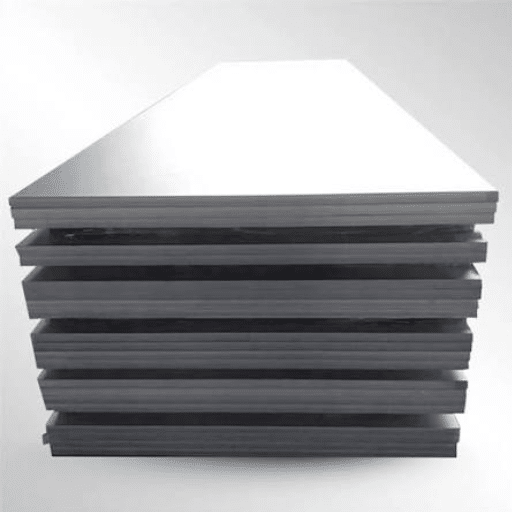
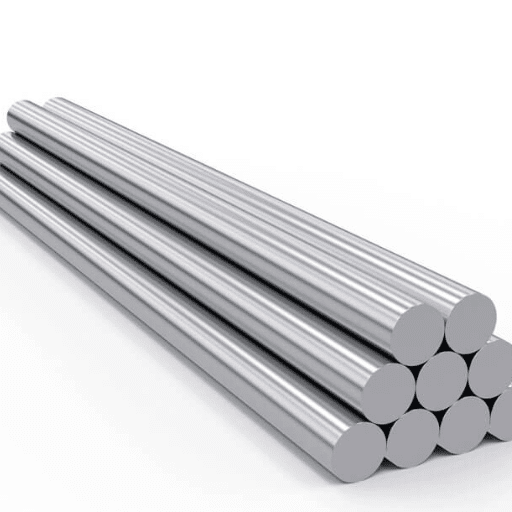
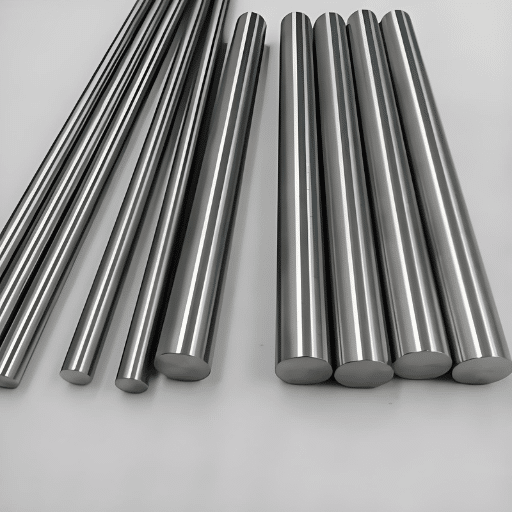
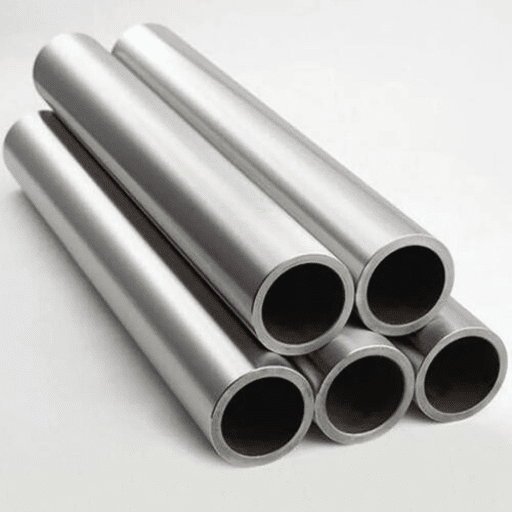
- Product form: stainless steel bar, plate, stainless steel sheet, forging, or other form.
- Certification: MTR, heat-treatment chart, EN 10204 3.1/3.2, third-party inspection, NACE compliance if required.
- Test method: Rockwell C, Brinell, or Vickers hardness; tensile test standard.
- End use: Helps the supplier confirm condition selection and testing requirements.
0Cr17Ni4Cu4Nb / SUS630 Equivalence
The Chinese equivalent 0Cr17Ni4Cu4Nb and the Japanese SUS630 are metallurgically identical to 17-4PH / UNS S17400 when produced to the correct standard. They respond to the same solution-annealing and aging cycles and produce the same hardness ranges. When sourcing from China, request that the material be produced and tested to GB/T 1220 or an export standard such as ASTM A564 / AMS 5643.
MTR Requirements and EN 10204 3.1/3.2
The material test report should contain:
- Heat number and full chemical analysis
- Heat-treatment chart showing solution annealing and aging cycles
- Hardness values with test method and scale
- Mechanical test results for the ordered condition
- Melt practice and certification level
- Third-party inspection report if EN 10204 3.2 is required
For critical applications, EN 10204 3.2 certification with witness testing by an independent inspector provides the highest level of traceability.
Zhonggongte 24-Hour RFQ Pathway
Jiangsu Zhonggongte supplies 17-4PH / UNS S17400 / 0Cr17Ni4Cu4Nb from Wuxi with in-house heat treatment, hardness testing, and full material traceability. Our testing laboratory includes direct-reading spectrometers, tensile testing machines, and Rockwell, Brinell, and Vickers hardness testers.
Every heat-treated order ships with a material test report and heat-treatment chart. We can provide EN 10204 3.1/3.2 certification, third-party inspection, and NACE MR0175 compliance documentation on request. Submit your specification and our metallurgical engineers will confirm the right condition, hardness range, and certification pathway within 24 hours.
Request a 17-4PH Heat Treatment Quote
Frequently Asked Questions About 17-4PH Heat Treatment
What is the heat treatment process for 17-4PH?
17-4PH heat treatment is a two-step process. First, solution anneal the alloy at 1,020–1,060°C to create machinable Condition A. Then age it at the selected H-condition temperature, usually 482–621°C, for the required hold time.
What is the solution annealing temperature for 17-4PH?
The standard 17-4PH solution annealing temperature is 1,020–1,060°C (1,870–1,940°F). Hold for 30–60 minutes and air cool, or oil quench heavy sections to ensure full martensite transformation.
What is Condition A in 17-4PH?
Condition A is the solution-annealed state. It has a soft martensitic microstructure with hardness around 28–32 HRC and is the standard starting point for machining before final aging.
How long do you age 17-4PH at 900°F?
17-4PH H900 is aged at 900°F (482°C) for approximately 1 hour, followed by air cooling. This produces the highest strength and hardness of the standard H-conditions.
What hardness does 17-4PH H900 reach?
H900 typically reaches 40–47 HRC with a minimum tensile strength of 1,310 MPa, making it the strongest standard 17-4PH condition.
What is the difference between H900 and H1150 in 17-4PH?
H900 is aged at 482°C for maximum strength and lower toughness. 17-4PH H1150 is aged at 621°C for higher toughness, better corrosion resistance, and lower hardness (28–37 HRC).
What is H1150M vs H1150D?
H1150M conditions the alloy at 760°C before a final 621°C aging step to improve toughness. H1150D uses a double-aging cycle at 621°C to achieve the lowest hardness, typically 24–33 HRC, for NACE MR0175 sour service.
Can you heat treat 17-4PH after welding?
Yes, but welding disrupts the aged microstructure. Critical weldments must be fully re-solution-annealed and re-aged to restore uniform hardness and properties in the weld metal and heat-affected zone.
Conclusion
17-4PH heat treatment is the key that unlocks the alloy’s usefulness. Solution annealing creates a soft, machinable Condition A. Aging at the right temperature transforms that baseline into H900 peak strength, H1025/H1075 balanced properties, or H1150D sour-service toughness. The entire decision reduces to matching the aging condition to the application’s dominant requirement.
The most important practical rules are simple. Machine in Condition A and age afterward. Never specify H900 for sour or chloride service.
Always re-solution and age after welding. And always confirm the heat-treatment chart and hardness test method on the MTR.
Zhonggongte manufactures and supplies certified 17-4PH / UNS S17400 / 0Cr17Ni4Cu4Nb with controlled heat treatment, full documentation, and 24-hour RFQ response. Whether your drawing calls for Condition A, H900, H1150D, or a custom aging cycle, our team will confirm the specification and deliver a competitive quotation.