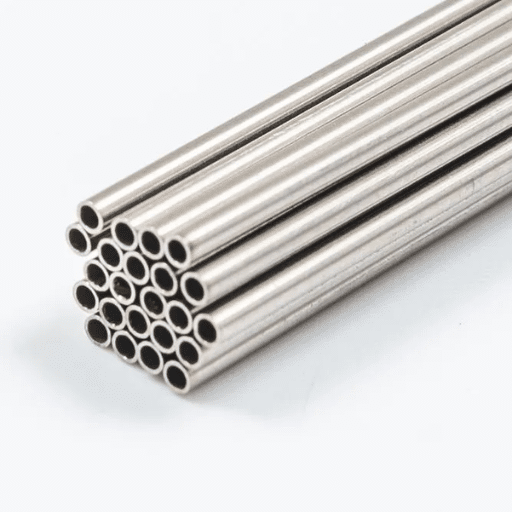
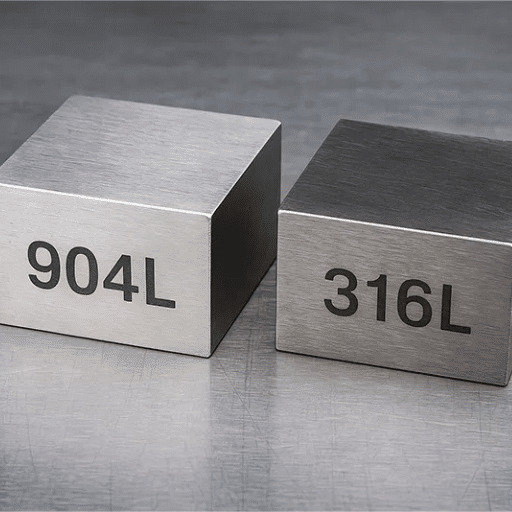
Direct answer: The 904L equivalent grades are UNS N08904, EN/DIN 1.4539, X1NiCrMoCu25-20-5, JIS SUS 890L, BS 904S13, and the Chinese designations S31782 (GB/T 20878 ISC code) and 015Cr21Ni26Mo5Cu2. Every one of these names refers to the same 20Cr-24Ni-4.3Mo-1.5Cu super-austenitic stainless steel. But equivalent is not the same word as identical, and in pressure-equipment work that distinction lives on the mill certificate.
S31782. Six characters a European procurement engineer has never seen, sitting on the material test report for a sulfuric-acid vessel, two lines below a UNS number he does know. Are they the same alloy? Will the notified body accept it?
That question is asked thousands of times a year, and the honest answer is more useful than the reassuring one. 904L travels under more than a dozen designations across five standards systems, and its four Chinese identifiers appear on every MTR an importer receives from China. Most pages answer “yes, they’re all 904L” and stop. That is exactly where specification risk begins.
This guide gives you the complete cross-reference, decodes the GB/T 20878 designation system, separates the genuine equivalents from the grades 904L is confused with, and closes with a procedure to prove the grade on paper before you release the material. It sits inside our complete 904L stainless steel guide and the wider stainless steel grade range we stock from Wuxi.
Key Takeaways
- S31782 = 904L = UNS N08904. S31782 is the GB/T 20878 ISC digital code; the current Chinese designation is 015Cr21Ni26Mo5Cu2.
- 904L carries four Chinese identifiers, S31782, 015Cr21Ni26Mo5Cu2, 00Cr20Ni25Mo4.5Cu and the pressure-equipment recode, and all four appear on Chinese certificates.
- “Equivalent” is designation-equivalent, not specification-identical. EN 1.4539 imposes tighter carbon, sulfur and phosphorus limits than the ASTM N08904 chemistry.
- Cu (1.0–2.0%) and Mo (4.0–5.0%) are the two elements substituted in lookalike stock. Check those two lines first on any certificate.
- 317L is a downgrade, 254 SMO and 926 are upgrades, and Alloy 20 is a different family. None is interchangeable with 904L.
- PREN for 904L is ~34–36, not the 40–45 printed in some supplier tables. There is no deliberate nitrogen addition.
What Is S31782? (Direct Answer)

S31782 is the GB/T 20878 ISC digital code for 904L. The corresponding Chinese designation is 015Cr21Ni26Mo5Cu2, and the superseded designation is 00Cr20Ni25Mo4.5Cu. All three are 904L, UNS N08904, EN 1.4539, a copper-bearing super-austenitic stainless steel with 20% chromium, 24% nickel, 4.3% molybdenum and 1.5% copper.
The ISC code itself is not a chemistry. It is a lookup key. GB/T 20878 assigns every grade in the Chinese system both a digital code, S31782, and an alphanumeric designation written in the international element-ordered style. When a Chinese mill prints S31782 on a certificate, it is telling you which row of that standard the heat was made to.
For a buyer holding a drawing that reads only “S31782,” the immediate translation is:
- S31782 → 904L
- UNS → N08904
- EN / W.Nr. → 1.4539
- Common name → 904L, sometimes written SUS 890L in Japan
One line, four systems. Everything below expands that line into the full chart, because the detail is where acceptances are won and lost.
The Complete 904L Equivalent Grade Table
This is the cross-reference no English-language page in the top results publishes in full, because the Chinese rows require reading the GB standard, and because reconciling the conflicts takes a position. Here is ours.
| System | Designation | Notes |
|---|---|---|
| Common / AISI | 904L | The trade name in almost universal use |
| UNS | N08904 | ASTM/ASME identifier; the number to quote in North America |
| EN / DIN W.Nr. | 1.4539 | The number European buyers specify |
| EN material name | X1NiCrMoCu25-20-5 | Element-ordered name (see variant note below) |
| JIS | SUS 890L | Japanese Industrial Standard designation |
| BS (UK) | 904S13 / 904S14 | Two entries reflecting product-form scope |
| SS (Sweden) | SS 2562 | Swedish standard designation |
| SAE | S39042 | See the attribution conflict in the next section |
| French NF | Z2NCDU25-20 | AFNOR designation |
| GOST (Russia) | 06ХН28МДТ | CIS designation |
| ISO | 4539-089-04-I | ISO designation form |
| GB ISC code (China) | S31782 | GB/T 20878 digital code |
| GB designation, current | 015Cr21Ni26Mo5Cu2 | New |
| GB designation, old | 00Cr20Ni25Mo4.5Cu | Superseded, still on legacy drawings |
On the EN name variant. Some sources write the EN material name as X1NiCrMoCuN25-20-5, inserting an N for nitrogen. That is a source inconsistency, not a second grade. 904L has no deliberate nitrogen addition (N ≤0.10% is a residual limit, not an alloying target), so the correct form is X1NiCrMoCu25-20-5. You will meet the N-variant on datasheets; it refers to the same material.
On the JIS designation. The standard designation is SUS 890L. A minority of pages write “SUS 904L.” SUS 904L does not exist as a JIS grade; treat it as an informal shorthand.
For form-specific availability, plate, sheet, bar and tubular product under each of these designations, see the 904L plate and 904L pipe pages, which carry the size ranges and the standards each form is supplied to.
Decoding the Chinese Designations: S31782, 015Cr21Ni26Mo5Cu2 & 00Cr20Ni25Mo4.5Cu
A European buyer’s first encounter with the Chinese naming system is usually confusing for a simple reason: the same alloy carries four Chinese identifiers, and different documents use different ones. Here is why, and how to read each.
The Three Chinese Naming Systems
Chinese stainless standards run two naming conventions in parallel, plus a numeric lookup key:
- The ISC digital code, S31782. A short alphanumeric key assigned by GB/T 20878. It carries no chemistry; it is an index number. Fastest to look up, hardest to read cold.
- The new designation , 015Cr21Ni26Mo5Cu2. Introduced with the GB/T 20878 revision, it follows the international element-ordered style, writing the carbon content first and then the alloying elements. This is the form modern Chinese standards use.
- The old designation , 00Cr20Ni25Mo4.5Cu. The pre-revision name, following the older Chinese convention where “00” signalled ultra-low carbon. It still appears on legacy drawings, older certificates, and archived project files.
How to Read the New Designation
015Cr21Ni26Mo5Cu2 is not a code; it is a readable recipe. Reading left to right:
- 015, carbon content, approximately C ≤ 0.015% (the standard permits ≤0.020%; the designation rounds the target)
- Cr21, chromium at roughly 21% (spec range 19.0–23.0%)
- Ni26, nickel at roughly 26% (spec range 23.0–28.0%)
- Mo5, molybdenum at roughly 5% (spec range 4.0–5.0%)
- Cu2, copper at roughly 2% (spec range 1.0–2.0%)
Once you can read one Chinese designation, you can read most of them. The pattern is consistent across the GB/T 20878 system.
Why the Old Name Still Appears
00Cr20Ni25Mo4.5Cu was the designation 904L carried before the standard revision reframed Chinese grade names. Mills, fabricators, and EPC archivists did not rewrite their libraries overnight. So a 2014-vintage drawing and a 2026 certificate can name the same alloy in two different systems.
If your incoming MTR says 00Cr20Ni25Mo4.5Cu and your purchase order says S31782, you are looking at a documentation vintage gap, not a material discrepancy. Confirm the chemistry lines and it reconciles.
The Pressure-Equipment Recode and the S39042 Question
Chinese pressure-equipment standards, notably GB/T 24511 (stainless plate for pressure equipment) and NB/T 47010 (pressure-vessel forgings), operate alongside GB/T 20878 and have historically carried their own recoded identifiers. S39042 is cited in this context, and here we must be honest about a conflict other pages paper over.
S39042 is attributed in reputable sources both ways: as the SAE designation for 904L, and as a GB 24511-era recode of S31782. Both attributions circulate. We publish this article on the position that the two systems happened to converge on the same number, and that the governing document, not the number alone, decides which one your project is citing.
The practical rule: when a drawing cites S39042, verify it against the current edition of the standard named on the drawing before you quote. If the drawing cites GB/T 24511, read it in the GB context. If it cites an SAE or ASTM document, read it there. This is a two-minute check that prevents a re-quote later.
Where Each Identifier Appears
The Chinese designation you see depends on which standard governs the product form. This is the map:
| Product form | Governing Chinese standard |
|---|---|
| Designations & composition (the master list) | GB/T 20878 |
| Hot-rolled plate | GB/T 4237 |
| Cold-rolled plate and strip | GB/T 3280 |
| Stainless plate for pressure equipment | GB/T 24511 |
| Seamless tube | GB/T 14975 / GB/T 14976 |
| Welded pipe | GB/T 12771 |
| Pressure-vessel forgings | NB/T 47010 |
One alloy, seven standards, four identifiers. This is the decode an international buyer cannot get from an English supplier catalog, and every one of these identifier forms can land on your desk on a Chinese certificate.
Want the designation on your drawing decoded? Send us the governing standard and the designation, and our metallurgical engineers will confirm the correct grade and certificate, usually within 24 hours.
“Equivalent” Is Not “Identical”: What the MTR Actually Proves

Here is the sentence every supplier writes and none of them qualify: “These equivalent grades are interchangeable.”
They are designation-equivalent. They are not specification-identical, and the difference is not academic. It lives on the certificate, in the acceptance criteria, and in whether the notified body signs off.
Two grades can share the same nominal chemistry and still impose different limits on the same elements. Two standards can agree on the alloy and disagree on the minimum yield. The alloy is the same; the rules for accepting it are not.
The 1.4539 vs N08904 Nuance
The clearest example sits between the two designations an European and an American buyer would each reach for first.
EN 1.4539 carries tighter carbon, sulfur and phosphorus limits than the ASTM N08904 chemistry. A project governed by an EN pressure-equipment standard, EN 10028-7 for plate, EN 10216-5 for tube, may therefore not accept a certificate that cites only “N08904,” even for material that is metallurgically on-grade. The inspector is reading the purchase specification, not the alloy family.
The practical consequence for sourcing:
- EN-governed project (European pressure equipment, PED scope) → quote 1.4539, to the EN standard named on the drawing.
- ASTM/ASME-governed project → quote N08904, to the ASTM or ASME specification.
- Neither is “better.” They are the same alloy under different acceptance rules.
Treat this as a verify-your-governing-standard caution rather than a metallurgical law: the exact limit deltas should be read against the current editions of EN 10028-7 and ASTM A240 at the time you quote. But the principle holds, and it is the single most useful honest statement in the equivalence conversation.
Which Lines on the Certificate Prove the Grade
Not every element on an MTR is equally load-bearing. Two are decisive, because they are the two that get substituted when someone sells you something that is not 904L:
- Copper: 1.0–2.0%, the element that gives 904L its resistance to reducing acids, notably sulfuric acid
- Molybdenum: 4.0–5.0%, the element that drives pitting and crevice resistance
Supporting lines worth confirming at the same time:
- Nickel: 23.0–28.0%
- Carbon: ≤0.020%
- Chromium: 19.0–23.0%
Why Cu and Mo are the tell. Lookalike material sold as 904L tends to be a lower-alloyed austenitic grade with nickel and chromium brought into range, the two lines a casual check looks at, while copper and molybdenum are left short, because those are the expensive additions. A certificate that reads “904L (N08904)” with Cu at 0.3% and Mo at 3.1% is not 904L. The two elements that make 904L resistant to the service environment are not there.
This is the failure a verification procedure exists to catch. The next section makes it concrete.
Grades 904L Is Often Confused With (But Is Not Equivalent To)
“Equivalent” gets stretched in supplier conversations to cover grades that are genuinely different alloys. Some are one step down; some are one step up; one is a different family entirely. None is interchangeable with 904L.
The cleanest way to see the relationships is on a PREN axis (Pitting Resistance Equivalent Number, calculated as Cr + 3.3Mo + 16N). 904L sits in the middle of the high-performance austenitic range; grades to its left are downgrades, grades to its right are upgrades.
317L, A Downgrade, Not an Equivalent
317L carries roughly 18–19% Cr, 11.6–13.5% Ni and 3.1–3.5% Mo, with no nitrogen. Its PREN is about 28, against 904L’s 34–36, and its 0.2% proof strength is around 205 MPa against 904L’s 215–220 MPa. It is a legitimate molybdenum-bearing austenitic, but it is a step below 904L on both corrosion resistance and strength. Substituting it for 904L in a sulfuric-acid or chloride service is a downgrade, not a swap.
254 SMO (S31254), An Upgrade
254 SMO runs about 20% Cr, 18% Ni, 6.1–6.2% Mo and 0.2% N, giving a PREN around 43 and a 0.2% proof strength of roughly 300–320 MPa. It will outperform 904L in high-chloride service. That makes it an upgrade, which is a cost decision, not an equivalence. If a specification says 904L and you deliver 254 SMO, you have changed the grade, not translated it. Our 904L vs 254 SMO comparison covers when each is the right call.
926 / N08926 / 1.4529, A Derivative, Not Interchangeable
Alloy 926 (UNS N08926, EN 1.4529, X1NiCrMoCuN25-20-7, sold historically as “1925hMo”) was developed on the basis of 904L. VDM Metals documents it as a 904L derivative. It raises molybdenum to 6–7% and adds nitrogen at 0.15–0.25%, pushing PREN to about 45 and proof strength to roughly 295 MPa. It is often described as “two steps above” 904L.
Because it descends from 904L, it is the grade most often mistaken for an equivalent. It is not. It is a separate specification with a different chemistry, a different PREN and a different designation. Quote it when the service demands it; do not present it as a 904L equivalent.
Alloy 20 (N08020), A Different Family
Alloy 20 runs 32–38% Ni, 2–3% Mo, and 3–4% Cu; it is niobium-stabilized and belongs to a different lineage, a nickel-iron-chromium alloy engineered for sulfuric acid service rather than a super-austenitic stainless. Its PREN is only about 28. It is routinely grouped with 904L because both handle sulfuric acid. They are different families with different metallurgy.
316L and AL-6XN, The Floor and the Ceiling
For orientation: 316L (PREN ~23–28) sits below 904L and AL-6XN / N08367 (PREN ~44–47) sits above it. Neither is an equivalent; they mark the range 904L occupies. If you are weighing 316L against 904L for a specific service, our 904L vs 316L comparison works through the selection directly.
The Comparison at a Glance
| Grade | Typical Mo | N | PREN (approx.) | Verdict vs 904L |
|---|---|---|---|---|
| 316L | 2–3% | None | 23–28 | Below, downgrade |
| 317L | 3.1–3.5% | None | ~28 | Downgrade |
| 904L (S31782) | 4.0–5.0% | None | 34–36 | This grade |
| 254 SMO (S31254) | 6.1–6.2% | 0.2% | ~43 | Upgrade |
| AL-6XN (N08367) | 6.3–7.0% | 0.18–0.25% | 44–47 | Upgrade |
| 926 (N08926 / 1.4529) | 6–7% | 0.15–0.25% | ~45 | Derivative, not interchangeable |
| Alloy 20 (N08020) | 2–3% | None | ~28 | Different family |
On the PREN figure. Some supplier tables print PREN 40–45 for 904L. That is wrong. 904L has no deliberate nitrogen addition, and without nitrogen the calculation lands at ~34–36 (Cr 20 + 3.3 × Mo 4.3 ≈ 34.9 for typical chemistry). The 40–45 figures are either copied from a nitrogen-bearing grade or invented. Publishing the correct number is part of sourcing 904L honestly.
Need help choosing between 904L and a near-neighbour grade? Tell us the service environment, acid, chloride, temperature, and we will confirm which grade the application actually calls for, not just which one is in stock.
Proprietary and Trade Names That Are Also 904L
Not every drawing cites a standards designation. Some cite a producer’s trade name, and a buyer can hold a purchase order that says “Uranus B6” with no obvious path back to a UNS number. Here is the mapping.
| Trade / proprietary name | Producer / origin |
|---|---|
| Uranus B6 | Trade name for 904L |
| NAS 255 | Nippon Yakin Kogyo |
| NAR-20-25LMCu | Nippon Yakin, element-ordered house name |
| UHB 904L | Uddeholm house designation |
| 2RK65 | Alleima (formerly Sandvik) |
| UB-6 | Trade designation |
| Outokumpu Ultra 904L | Outokumpu, within the Ultra range |
| A962 | Trade designation |
All of these resolve to UNS N08904, 904L. The element-ordered house names (NAR-20-25LMCu) follow the same readable pattern as the Chinese new designation: 20 Cr, 25 Ni, low-Mo, Cu. Once you recognise the pattern, proprietary names become self-explanatory.
The practical implication for procurement: when a drawing cites a trade name, confirm it maps to N08904 before quoting. Producer datasheets, Nippon Yakin’s NAS 255 sheet is a clear example, state the UNS number alongside the house name, which is the fastest way to close the loop.
Verifying an Inbound 904L / S31782 Delivery

Here is the procedure we recommend to every buyer receiving 904L or S31782 into a controlled project. It takes minutes and closes the counterfeit route.
- Confirm the governing standard first. Identify the standard named on the purchase specification: ASTM A240, ASME SB625, EN 10028-7, GB/T 24511, and so on. Every check below is made against that standard, not against “904L” in the abstract.
- Match the designation on the MTR to the standard. N08904 for ASTM/ASME, 1.4539 for EN, S31782 or 015Cr21Ni26Mo5Cu2 for GB. A certificate citing the wrong system for the governing standard is a documentation defect even if the chemistry is right.
- Verify chemistry, Cu and Mo specifically, then Ni and C. Cu 1.0–2.0% and Mo 4.0–5.0% are the decisive lines. Ni 23.0–28.0% and C ≤0.020% follow. If Cu and Mo are both in range and the balance is correct, you have 904L.
- Require EN 10204 3.1 as the baseline; specify 3.2 for EPC and nuclear packages. A 3.1 certificate is issued by the mill’s own inspection department. A 3.2 certificate is issued or countersigned by an independent inspection body, which the tier EPC contractors and nuclear-scope projects require. Know which your project demands before you order, because it changes the quotation.
- PMI or OES on receipt. Positive Material Identification (XRF-based) or optical emission spectrometry (OES) on a sample of the delivered material confirms the alloy physically, not just on paper. This is the check that catches a correct certificate paired with incorrect material- rare, but the reason PMI exists.
- Third-party inspection when the project demands it. SGS, Bureau Veritas, and TÜV all provide witness inspection and independent testing, ultrasonic, intergranular corrosion, mechanical, for projects that require an independent signature.
The Lookalike Certificate, In Practice
A fabricator we work with received an incoming consignment documented as “904L (N08904)” for a chemical-process vessel. The certificate showed nickel and chromium comfortably in range, the two lines most people glance at. Then their QC engineer ran the full chemistry.
Copper read 0.3%. Molybdenum read 3.1%.
Both were short of the 904L specification. What was on the pallet was a lower-alloyed austenitic grade carrying a 904L label. Because the fabricator PMI-checked on receipt, the discrepancy surfaced before the plate reached the shop floor. Had it been cut and welded into a sulfuric-acid vessel, the failure would have appeared in service, in the corrosion allowance, in the weld zone, in the first inspection cycle.
The lesson costs nothing to apply: check Cu and Mo first, and PMI on receipt. The certificate and the material are two separate claims, and both need confirming.
Sourcing 904L (S31782) Against an Equivalent-Grade Specification
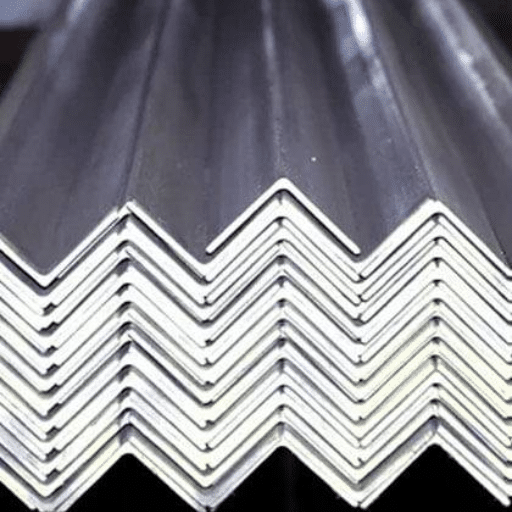
Zhonggongte supplies 904L (S31782 / N08904 / 1.4539) from Wuxi in the forms a project actually consumes:
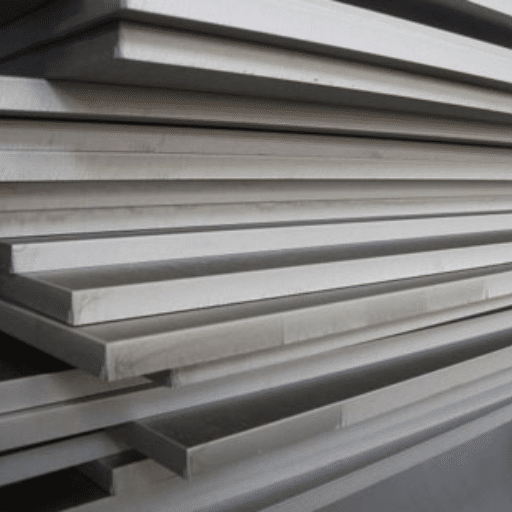
- Plate and sheet, hot-rolled and cold-rolled, to ASTM A240, EN 10028-7 and GB/T 24511 (see the 904L plate page)
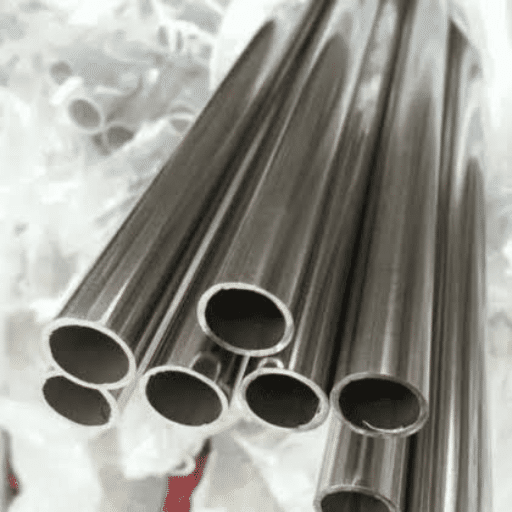
- Pipe and tube, seamless and welded, to ASTM B677 / A312, EN 10216-5 and GB/T 14976 / GB/T 12771 (see the 904L pipe page)
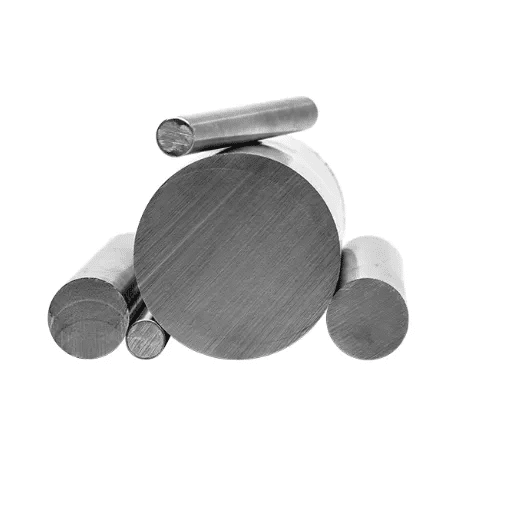
- Bar and rod, to ASTM B649 / A479 and the EN and GB equivalents (see the stainless steel bar range)
- Forgings and fittings, to ASTM B564 / A182-class specs and NB/T 47010
We supply to ASTM B625 / A240 / A312 / B677 / B673 / B674 / A479 / B649 / A182 and their GB and EN counterparts. On request, we annotate the mill test certificate with the equivalent designations, UNS, EN/W.Nr., JIS and GB, so the document set your inspector receives maps cleanly onto the standard on your drawing.
Our documentation package as standard:
- Mill test report (MTR) to EN 10204 3.1, with 3.2 available where the project requires independent attestation
- Spectral and PMI analysis confirming Cu and Mo on every heat
- Third-party inspection support, SGS, BV, TÜV, scheduled to your project’s witness points
We do not publish prices in a cross-reference guide, because a meaningful number requires a specification. For the cost bands by form, the nickel and molybdenum drivers, and how documentation affects the price, see our 904L price per kg guide.
FAQ
What is S31782 equivalent to?
S31782 is the GB/T 20878 ISC code for 904L, equivalent to UNS N08904, EN/DIN 1.4539, X1NiCrMoCu25-20-5 and JIS SUS 890L. The current Chinese designation is 015Cr21Ni26Mo5Cu2; the superseded designation is 00Cr20Ni25Mo4.5Cu.
Is 904L the same as 1.4539?
They are the same alloy under different standards, but not always the same acceptance criteria. 1.4539 is the EN/DIN designation for 904L, corresponding to UNS N08904. EN 1.4539 imposes tighter carbon, sulfur and phosphorus limits than the ASTM N08904 chemistry, so an EN-governed pressure-equipment project should specify 1.4539 to the EN standard rather than “904L” or “N08904.”
Is S31782 the same as 904L?
Yes. S31782 and 904L are the same material. S31782 is the Chinese national-standard code; 904L is the common trade name for UNS N08904. A certificate carrying either identifier, with chemistry in specification, documents the same alloy.
What is 015Cr21Ni26Mo5Cu2?
015Cr21Ni26Mo5Cu2 is the current Chinese designation for 904L, introduced with the GB/T 20878 revision. Read element by element: ~0.015% C, 21% Cr, 26% Ni, 5% Mo, 2% Cu. It maps directly to UNS N08904.
Is 904L the same as 890L?
SUS 890L is the JIS designation for 904L. They are the same alloy. Note that some sources write “SUS 904L”, that designation does not exist in JIS; the standard form is SUS 890L.
Is 926 the same as 904L?
No. Alloy 926 (UNS N08926, EN 1.4529) was developed on the basis of 904L, but it carries higher molybdenum (6–7%) and a deliberate nitrogen addition (0.15–0.25%), giving PREN ~45 versus 904L’s ~34–36. It is a derivative grade, not an equivalent, and not interchangeable.
Is 317L equivalent to 904L?
No, 317L is a downgrade. 317L carries roughly 3.1–3.5% Mo and no nitrogen, giving PREN ~28 against 904L’s 34–36, and lower proof strength. It is a valid austenitic grade but a step below 904L in corrosion resistance.
Can I substitute 254 SMO for 904L?
Only as an intentional upgrade, not as an equivalent. 254 SMO (S31254) carries ~6% Mo and 0.2% N, giving PREN ~43 against 904L’s 34–36. It outperforms 904L in high-chloride service, but substituting it changes the specified grade and the cost, it is a re-specification, not a swap.
What Chinese grade is 904L?
904L is grade S31782 in the Chinese system, designated 015Cr21Ni26Mo5Cu2 under the current GB/T 20878 naming convention and 00Cr20Ni25Mo4.5Cu under the superseded one. The Chinese ISC code S31782 is the fastest identifier to look up.
Conclusion: One Alloy, Many Names, One Certificate That Matters
904L carries more names than almost any other stainless grade, and the names do not all come from the same system. What matters is that the chain is unbroken:
- S31782 = 904L = UNS N08904. S31782 is the GB/T 20878 code; 015Cr21Ni26Mo5Cu2 is the current Chinese designation.
- Four Chinese identifiers exist for the same alloy, and all four appear on Chinese certificates and legacy drawings.
- Equivalent means designation-equivalent, not specification-identical. EN 1.4539 and ASTM N08904 are the same alloy under different acceptance rules.
- 317L, 254 SMO, 926 and Alloy 20 are not 904L. One downgrades, two upgrade, one is a different family.
- Verify Cu (1.0–2.0%) and Mo (4.0–5.0%) first, then PMI on receipt. That is where lookalike material fails.
If you are holding a drawing or an MTR that cites a designation you need decoded, the fastest path is to send it to us. Tell us the governing standard and the designation on your drawing, and our metallurgical engineers will confirm the correct grade, the correct certificate level and the supply form, typically within 24 hours.
→ Request a 904L (S31782) quotation with MTR, PMI and EN 10204 3.1/3.2
We supply 904L to international buyers from Wuxi against ASTM, ASME and EN specifications, with the documentation that lets your inspector release the material. For the wider grade context, start with our complete 904L stainless steel guide or browse the full stainless steel range.