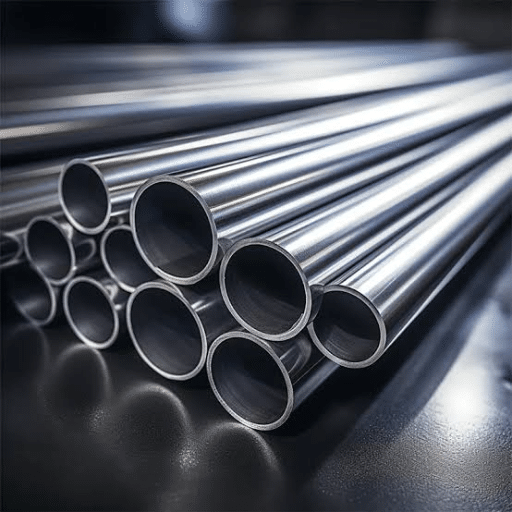
904L stainless steel is a low-carbon, high-alloy austenitic stainless steel with deliberate additions of molybdenum (4–5%) and copper (1–2%), identified as UNS N08904 or EN 1.4539. It was developed specifically for sulfuric acid service, where it resists reducing acids and chloride pitting far better than 316L, at roughly two to two-and-a-half times the cost.
Two identical 904L evaporator circuits went into the same phosphoric acid plant in the same year. Fifteen years later, one is still running. The other has been replaced twice, because it sat on a warm, low-velocity cooling loop where the chloride load, not the acid, was doing the damage. The grade never changed. The environment did.
That is the entire problem with 904L. It gets specified as a grade name when it should be specified as an answer to a specific threat. If you already know you need reducing-acid resistance, jump to our stainless steel grade selection guide for the wider family. If you are still deciding whether 904L is right for your operating environment, keep reading.
This guide gives you one internally consistent dataset for UNS N08904. Composition, mechanical properties, a corrosion envelope with real numbers, the temperature limits resolved (including the widely repeated 870°C figure that is simply wrong), the standards for every product form, welding parameters that match the filler-metal datasheets rather than the internet, and the honest rules for when 904L is the wrong answer. You will know whether 904L fits your application, and exactly what belongs on the purchase order.
Introduction
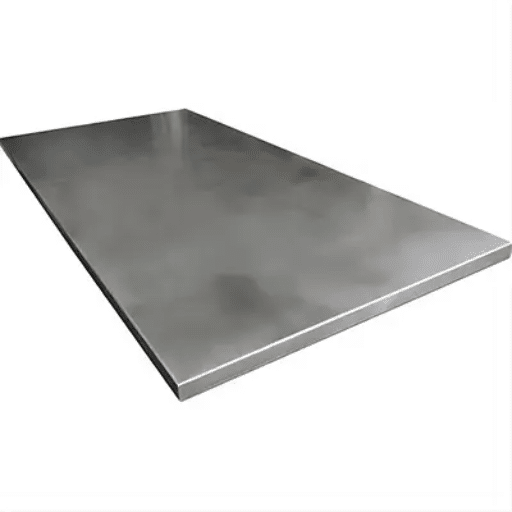
The information problem with 904L is worse than the metallurgy. Search for the grade today and you will find the same material quoted with a maximum service temperature of 400°C, 450°C, 550°C, and 870°C. You will find a PREN of 34 in one table and 45 in the next. You will find welding advice recommending 150–300°C preheat that directly contradicts what every filler-metal manufacturer publishes.
A buyer trying to make a defensible decision from that material cannot.
That matters because 904L stainless steel is the most consistently mis-specified grade in chemical service. It gets over-specified where 2205 duplex or plain 316L would serve perfectly well, and it gets under-specified where 254 SMO or a nickel alloy is genuinely required.
Both mistakes are expensive. The first wastes capital on a premium alloy that buys nothing. The second wastes a plant shutdown when a heat exchanger fails two years early.
Here is what this guide will do about it. It resolves the contradictions rather than repeating them. Every number is tied to the standard that governs it, so you can check it yourself. It also adds the three things the English-language SERP is missing entirely: the Chinese GB designations that appear on every mill certificate you will actually receive, form-by-form 2026 pricing, and the procurement verification steps that catch substituted material before it enters your plant.
Key Takeaways
- 904L = UNS N08904 = EN 1.4539 = X1NiCrMoCu25-20-5. Copper (1.0–2.0%) is the defining addition. It is what separates 904L from 316L.
- Composition: Cr 19.0–23.0, Ni 23.0–28.0, Mo 4.0–5.0, Cu 1.0–2.0, C ≤0.020, N ≤0.10. PREN ~34–36, which is below the ≥40 threshold used for reliable continuous seawater immersion. “Super austenitic” is a convention, not a guarantee.
- Temperature limits, resolved: ASME B31.3 piping limit 260°C, ASME VIII-1 design stress limit 371°C, EN 10216-5 intergranular-corrosion limit 400°C, practical service ceiling ~450°C, and sigma-phase precipitation becomes a risk above ~500°C. The repeated 870°C figure is wrong.
- Corrosion envelope: 0–98% sulfuric acid to about 40°C (including the 20–85% band 316L cannot cover), phosphoric acid 0–85% including wet-process, and acetic and formic acids. Chloride thresholds run ~2,000 ppm at 25°C falling to ~100 ppm at 100°C. Hydrochloric acid only to ~1–2%. Worse than 304L or 310L in nitric acid.
- Weld with ER385 (AWS A5.9 / ISO 14343-A W 20 25 5 Cu L) at heat input ≤1.5 kJ/mm and interpass ≤100°C. ER385 deposits a fully austenitic, 0 FN structure, so it is hot-crack prone. The 150–300°C preheat advice found online is wrong. No PWHT in most cases.
- Documentation: EN 10204 3.1 MTR (3.2 for EPC and nuclear), and PMI on the copper and molybdenum lines. Copper is the element counterfeit material omits.
What Is 904L Stainless Steel?
904L (UNS N08904, EN 1.4539, X1NiCrMoCu25-20-5) is a low-carbon, high-alloy austenitic stainless steel with deliberate additions of molybdenum (4–5%) and copper (1–2%). It was developed in the 1950s and 1960s for the dilute-sulfuric-acid band that 316L cannot cover, and it resists a wide range of reducing acids and chloride pitting far better than 316L at roughly two to three times the cost.
That 40-word answer is the version you want in front of you when a colleague asks. The British Stainless Steel Association tells the origin story well: this grade exists because process engineers needed a material that would survive sulfuric acid at concentrations and temperatures where the standard austenitics failed.
Where 904L Sits on the Upgrade Ladder
It helps to think of corrosion-resistant alloys as rungs on a ladder, indexed by PREN. PREN, the pitting resistance equivalent number, is a rough ranking of chloride resistance calculated as Cr + 3.3Mo + 16N.
| Grade | Typical PREN | Position |
|---|---|---|
| 316L | ~24 | Workhorse austenitic; general chemical and marine-atmosphere duty |
| 904L | ~34–36 | Acid-first high-alloy austenitic; the copper-bearing rung |
| 254 SMO / AL-6XN | ~42–47 | True super austenitic; chloride-first, nitrogen-strengthened |
| Hastelloy C-276, Inconel 625 | ~50+ | Nickel-based; for HCl, severe chlorides and high temperature |
Each rung costs more than the one below it. The engineering job is to find the lowest rung that survives your operating environment, and the most common failure of grade selection is climbing higher than the duty requires. Our nickel-based alloy overview covers the top of the ladder when 904L runs out of capability.
Is 904L Really a “Super Austenitic”?
By convention, 904L is often grouped as a super austenitic stainless steel. Strictly speaking, it is not one.
Using the standard austenitic formula, Cr + 3.3Mo + 16N, with nominal values of Cr 20, Mo 4.5 and N 0.05, you get 20 + (3.3 × 4.5) + (16 × 0.05) = 20 + 14.85 + 0.8 ≈ 35.6. Mill datasheets generally land between 34.5 and 36. A competitor table claiming PREN 40–45 for 904L is simply incorrect, and the error has consequences.
Why it matters: NORSOK-style guidance requires PREN ≥40 for reliable continuous natural-seawater immersion. 904L does not meet that bar. That single fact explains most of the “is 904L good for seawater?” confusion you will find online.
Treat 904L as a high-alloy austenitic optimised for acid, not as a seawater grade. Our 904L stainless steel properties deep-dive works through the full PREN derivation and the element-by-element rationale.
Need the PREN worked through for your own medium? Send us the acid type, concentration, temperature, and chloride level, and our metallurgical engineers will confirm within 24 hours whether 904L clears the bar or whether you need the rung above. Submit your operating conditions
904L Chemical Composition: What Each Element Does
One thing most published tables get wrong: the composition ranges for 904L are not identical between ASTM and EN. Buyers who cross-check a mill certificate against the wrong range will flag a perfectly good heat as non-conforming.
| Element | ASTM B625 (UNS N08904) | EN 10216-5 | Role |
|---|---|---|---|
| C | ≤0.020 | ≤0.020 | Low carbon; eliminates welding sensitisation |
| Si | ≤1.00 | ≤0.70 | Deoxidation; increased Si can promote intermetallics |
| Mn | ≤2.00 | ≤2.00 | Austenite stabiliser; residual |
| P | ≤0.045 | ≤0.030 | Impurity; kept low for weldability |
| S | ≤0.035 | ≤0.010 | Impurity; low sulfur causes gummy machining |
| Cr | 19.0–23.0 | 19.0–21.0 | Passive film; self-repair in aerated acid |
| Ni | 23.0–28.0 | 24.0–26.0 | Austenite stability; SCC and toughness |
| Mo | 4.0–5.0 | 4.0–5.0 | Pitting and crevice resistance |
| Cu | 1.0–2.0 | 1.20–2.00 | The defining addition; reducing-acid resistance |
| N | ≤0.10 | ≤0.10 | Incidental, not a deliberate addition |
| Fe | Balance | Balance | Austenite matrix |
Note how much tighter EN 10216-5 is on chromium (19.0–21.0 versus 19.0–23.0) and nickel (24.0–26.0 versus 23.0–28.0), and how it caps silicon at 0.70%. A European pressure-vessel order and an ASTM plate order for the same nominal grade can legitimately arrive with different chemistries. Know which specification governs your purchase order before you argue with a certificate.
Copper Is the Point
If you take one thing from this section, take this: copper is what makes 904L, 904L.
In reducing (non-oxidizing) acids, the chromium passive film cannot re-form on its own, so the alloy corrodes actively. In practice, copper suppresses that corrosion and promotes the active-to-passive transition in the reducing region. 316L contains no deliberate copper at all. That is why molybdenum alone cannot substitute for 904L in sulfuric acid service, and why every “is this really 904L” question ultimately comes down to the copper line on the test certificate.
By contrast, molybdenum at 4.0–5.0% handles the pitting and crevice side and is the main reason PREN roughly doubles against 316L. Nickel at 23–28% stabilises the austenite, raises resistance to chloride stress corrosion cracking, and lowers the martensite transformation temperature, which matters during cold forming. Chromium forms the passive film. Low carbon, at ≤0.020%, eliminates welding-related sensitisation and intergranular corrosion without needing a stabilising element such as niobium or titanium.
Nitrogen deserves a note. At ≤0.10% it is incidental, not a deliberate alloying addition. Unlike 254 SMO, which carries 0.18–0.22% nitrogen, 904L is not nitrogen-strengthened. This is a large part of why its yield strength sits lower, and why a strength-driven design should not default to 904L.
904L Mechanical & Physical Properties
| Property | Typical value |
|---|---|
| Tensile strength (annealed) | ≥490 MPa (71 ksi); some product specs 520–720 MPa |
| Yield strength, 0.2% proof | ≥220 MPa (31 ksi); Rp1.0 ≥250 MPa |
| Elongation | ≥35% (some specs ≥40%) |
| Hardness | ~70–90 HRB; ≤192 HBW / ≤230 HB typical |
| Density | ~7.95–8.0 g/cm³ |
| Elastic modulus | ~190–195 GPa |
| Melting range | ~1300–1390°C |
| Thermal conductivity | ~12–13 W/m·K at 20°C |
| PREN | ~34–36 |
Two honest observations about this table.
First, 904L cannot be hardened by heat treatment. It is fully austenitic, so it work-hardens only. Any supplier offering a “hardened” 904L is confused about the grade.
Second, compare the yield strength with 2205 duplex. 904L gives you ~220 MPa. 2205 gives you ~450 MPa, at lower cost.
If your design driver is strength or weight rather than corrosion, 904L is the wrong answer. The honest move is to say so early. Our 904L vs 2205 duplex comparison works through that trade-off in detail.
904L Stainless Steel Corrosion Resistance: What It Actually Resists

The following section summarises the mechanism that governs grade selection. The full corrosion-rate tables, critical temperature curves and media-specific data live in our 904L corrosion resistance guide.
Sulfuric Acid: The Reason 904L Exists
Sulfuric acid behaviour depends entirely on concentration. Below roughly 20% H₂SO₄, the acid is reducing and strips the passive film. Above roughly 85%, it becomes oxidizing and actually helps the film re-form.
The 20–85% band is the danger zone, and raising the temperature widens it. That band is precisely what 316L cannot cover.
The benchmark that makes this concrete: in 20% H₂SO₄ at 60°C, 904L corrodes at less than 0.1 mm/yr while 316L exceeds 1.2 mm/yr. That is more than a tenfold difference, and it is the single number that justifies the premium in most acid-service projects. Practically, 904L handles 0–98% concentration up to about 40°C.
Phosphoric Acid
904L performs excellently across 0–85% phosphoric acid, including wet-process phosphoric acid with its chloride, fluoride, sulfate and organic impurities. However, this is where an important inversion appears: 904L outperforms 254 SMO in pure reducing-acid duty. Buyers routinely assume that higher PREN means better performance everywhere. It does not.
254 SMO is chloride-first, and its nitrogen-strengthened chemistry is not ideal for chloride-free reducing acid. Check the 904L vs 254 SMO comparison before assuming the higher rung wins.
Organic Acids
904L shows good resistance to acetic and formic acids, and it is a common duty in terephthalic acid, acetate and formate processes. For applications needing both acid resistance and cleanability, such as pharmaceutical reactor vessels, it also meets the surface and documentation requirements of pharmaceutical-grade stainless steel.
Chlorides: Pitting, Crevice Corrosion and SCC
This is where 904L’s limits become visible.
| Parameter | 316L | 904L | 254 SMO |
|---|---|---|---|
| Chloride threshold | Low | ~2,000 ppm Cl⁻ at 25°C; ~100 ppm at 100°C | ~40,000 ppm at 25°C |
| Critical crevice temperature (ASTM G48-D) | <0°C | ~10–25°C | ~35–45°C |
| Critical pitting temperature (ASTM G48-A) | ~5–15°C | ~30–40°C | ~65–75°C |
However, a note on that crevice-temperature figure is warranted. Some commercial sources quote 904L as high as 45–55°C. The difference comes down to test method, surface finish and specimen preparation. The conservative ASTM G48 range is the number to use for engineering decisions, and the spread is a reason to test rather than trust a datasheet headline.
Chlorinated seawater studies capture the practical limit well. In a Gulf seawater corrosion study published in the Journal of Applied Electrochemistry in 2001, both 904L and 2205 duplex resisted well at 25°C, and both failed at 50°C. 254 SMO and 654 SMO performed better under every condition tested.
The roughly 25% nickel content gives 904L useful resistance to chloride stress corrosion cracking, but crevices remain a problem at any temperature. If your geometry has crevices and the environment contains chlorides, that combination needs to be designed out, not alloyed around.
Where 904L Is the Wrong Grade
Three situations where specifying 904L is a mistake:
Hydrochloric acid. 904L is limited to about 1–2% HCl concentration. Above that, move to the Hastelloy family. Our Hastelloy alloy family guide and Hastelloy C-276 plate pages cover the next step.
Nitric acid. Here is the counterintuitive one. 904L is worse than molybdenum-free grades such as 304L and 310L in nitric acid. Molybdenum, the element buyers pay a premium for, actively harms nitric-acid performance. This surprises almost everyone.
Warm, stagnant or creviced seawater. Not a 904L duty. See the selection section below.
904L Temperature Limits: Resolving the Contradiction
The SERP contradicts itself on this question, quoting 400°C, 440°C, 450°C, 550°C, and 870°C. All of those numbers answer different questions. Once you separate the limits, the confusion disappears.
| Limit type | Value | Source |
|---|---|---|
| ASME B31.3 piping design limit | 260°C | ASME B31.3 |
| ASME VIII Div. 1 design stress limit | 371°C | ASME BPVC II-D |
| EN 10216-5 intergranular corrosion limit | 400°C | EN 10216-5 |
| Practical service ceiling | ~450°C | Mill datasheets |
| Sigma-phase precipitation risk | above ~500°C | Atlas Steels / published literature |
| The 870°C claim | Incorrect | Refuted here |
A design-stress limit is not a corrosion limit, and a corrosion limit is not a metallurgical-stability limit. When someone quotes “904L max temperature,” ask which of those four they mean. The ASME B31.3 figure of 260°C is the one that governs most process piping, and it is far more conservative than the datasheet headline most buyers rely on. Confirm both code figures against the current edition before you finalise a design.
The 870°C number that circulates online is simply wrong. Do not build a specification on it.
Sigma Phase: The Real High-Temperature Concern
Sigma phase is an intermetallic compound that precipitates during aging at 800–900°C and can persist at lower temperatures. It degrades both toughness and corrosion resistance. Solution annealing at 1060–1140°C dissolves any secondary phases that have formed. In service, sigma precipitation becomes a risk above roughly 500°C, which is why the practical ceiling sits at ~450°C and why Atlas Steels advises against continuous use above ~550°C.
A properly solution-annealed 904L is more resistant to ferrite and sigma formation than 316L or 317L, so this is a processing-discipline concern rather than an inherent weakness of the grade.
The Cryogenic Advantage
904L stays stable and ductile down to about −196°C. That is a genuine advantage over duplex grades, which show a ductile-to-brittle transition around −40 to −50°C. If your application combines acid resistance with cryogenic duty, 904L is one of very few grades that cover both, and that combination alone can settle a selection question that looks ambiguous on PREN alone.
904L vs 316L vs 2205 Duplex vs 254 SMO vs Alloy 20: Grade Selection
This is the table to bookmark. It is a one-row-per-grade summary, not a substitute for the head-to-head comparisons.
| Grade | UNS | PREN | Yield (MPa) | Cost vs 316L | Best-fit environment |
|---|---|---|---|---|---|
| 316L | S31603 | ~24 | ~200 | 1.0× | Ambient-temperature dilute or concentrated H₂SO₄; general chloride |
| 904L | N08904 | ~34–36 | ~220 | ~2–2.5× | Dilute-to-mid H₂SO₄ (20–85%), wet-process H₃PO₄, organic acids, mixed acid-chloride |
| 2205 duplex | S32205 | ~34–35 | ~450 | ~1.2–1.5× | Strength-driven seawater and chloride duty; SCC-resistant |
| 254 SMO | S31254 | ~42–44 | ~300 | ~3–4× | High-chloride seawater, brine, bleach, chlorinated acid |
| Alloy 20 | N08020 | ~28–33 | ~240 | ~2.5–3× | Hot or concentrated H₂SO₄, chloride-free high-temperature acid |
904L and 2205 Are Not Interchangeable
They have near-identical PREN, which leads a lot of buyers to treat them as equivalents. They are not.
2205 wins on strength (roughly double the yield), on cost, and on chloride stress corrosion cracking. 904L wins in acid-contaminated seawater, in low-flow or stagnant systems where its copper content and microbial-corrosion resistance help, in non-magnetic applications, in cryogenic duty, and above roughly 300°C where duplex begins to embrittle. Our duplex stainless steel selection guide and the 904L vs 2205 duplex comparison cover the boundary in depth.
The If/Then Decision Logic
Work through these in order and the answer usually falls out:
- Is the controlling threat a reducing acid (H₂SO₄ 20–85%, H₃PO₄, organic)? → 904L.
- Is it hot or concentrated sulfuric acid with no chlorides? → Alloy 20. See the 904L vs Alloy 20 comparison.
- Is it chloride pitting in warm, creviced or flowing seawater? → 254 SMO or 2507, not 904L, because PREN <40.
- Is the driver strength or weight rather than corrosion? → 2205 duplex.
- Is it nitric acid? → 304L or 310L, never 904L.
- Is it HCl above 1–2%? → Hastelloy C-276 or C-2000. Our Hastelloy vs stainless steel upgrade ladder explains the transition.
- Is it sour (H₂S) service? → Check the NACE MR0175 listing before assuming 904L is acceptable.
That last point deserves a paragraph. 904L does appear in sour-service listings, but elemental sulfur is the decisive differentiator. Laboratory evidence shows 904L failing at around 177°C in sulfur-laden sour brine, a condition where only annealed C-276 survived twelve months of exposure at 232°C. If your service involves elemental sulfur, review the NACE MR0175 sour service compliance analysis before you commit to 904L.
The Over-Specified Tank Farm
A mid-sized chemical producer once specified an entire ambient-temperature dilute-acid tank farm in 904L. The medium was mild, well within 316L’s envelope, and the temperature never exceeded 40°C. The project paid roughly two to two-and-a-half times what it needed to, on every tonne, for a decade of anticipated service that 316L would have delivered without difficulty.
The lesson is not that 904L is overpriced. It is that 904L is not a default upgrade. It is the answer to a specific threat, and if you cannot name the threat, you probably do not need the grade.
Not sure which rung of the ladder you need? Describe your medium, concentration, operating temperature, chloride level and product form. Our engineers will recommend the lowest grade that survives, not the highest one we stock. Request a grade recommendation
Standards & Product Forms
Specifying 904L means specifying a standard for the product form. The ASTM and ASME designations are not interchangeable across forms, and a mill certificate issued to the wrong standard is a non-conformance waiting to happen.
| Form | ASTM / ASME | EN / JIS |
|---|---|---|
| Plate / sheet | B625 (SB625); also A240 (SA240) | EN 10088-2; JIS G4304 |
| Seamless pipe | B677 (SB677); also A312 | EN 10216-5; JIS G3459 |
| Seamless tube | B677 (SB677); also A213 | EN 10216-5; JIS G3463 |
| Welded pipe | B673; also A312 / A358 | EN 10217-7 |
| Welded tube | B674; also A249 | EN 10217-7 |
| Bar / rod | B649 (SB649) | EN 10088-3 |
| Forgings | A182 F904L | Not applicable |
| Butt-weld fittings | B366 | Not applicable |
An honest caveat on the welded forms. Supplier charts genuinely disagree about whether B673 covers welded pipe and B674 welded tube, or the reverse. The mapping above is the dominant convention, but specify welded product by scope rather than by number alone, and verify against the current ASTM scope statement.
Taking that extra step is cheap. Discovering the mistake after the material ships is not.
Sizes and Delivery Condition
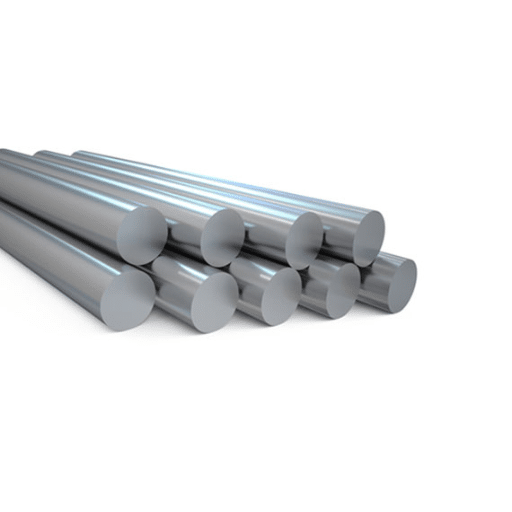
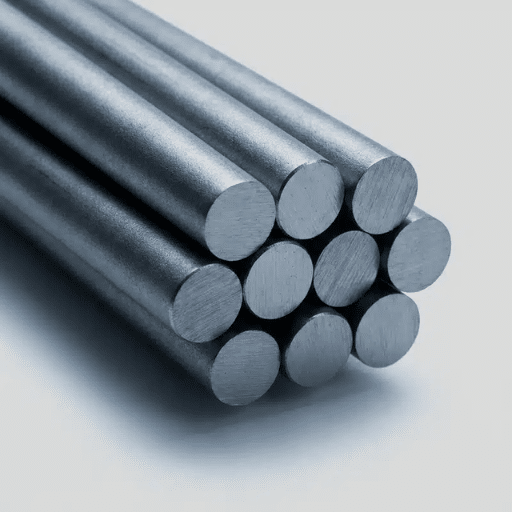
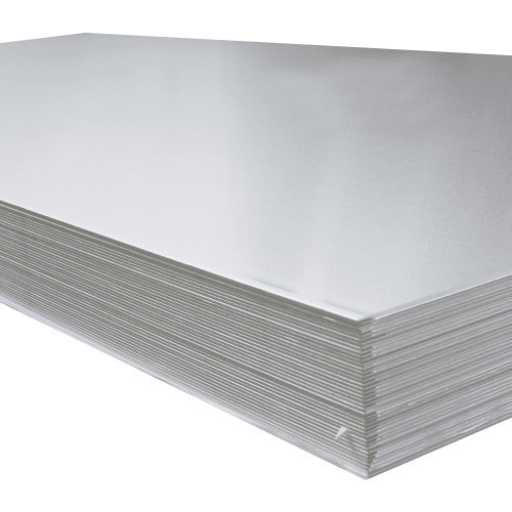
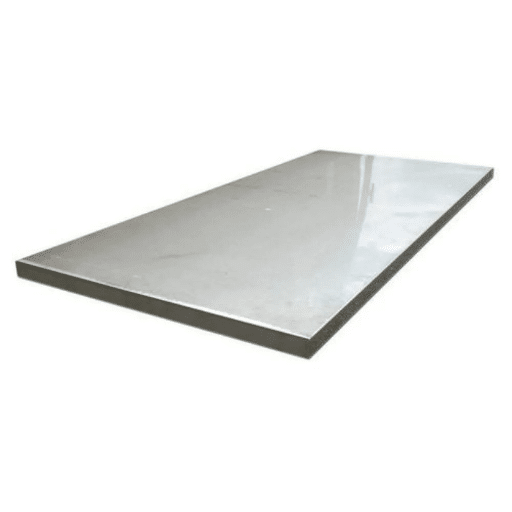
Seamless 904L pipe is available from ½” to 16″ NB, ERW from ½” to 24″ NB, and EFW from 6″ to 100″ NB, in schedules 5S through XXS, in standard 6 m or 12 m lengths (single-random, double-random or cut length) with plain, bevelled or threaded ends. Hot-rolled plate runs 3.0–60 mm in widths up to 2000 mm. Cold-rolled sheet starts around 0.3 mm in widths of 1000, 1219, 1250, 1500, 1550 or 2000 mm.
Always specify solution annealed and pickled delivery condition explicitly on the purchase order. It is the correct default for this grade, but defaults get lost in translation. Our stainless steel sheet, stainless steel pipe and tube and stainless steel bar and rod pages list the stocked forms and size ranges, and the 904L stainless steel plate and 904L stainless steel pipe guides go deeper on those two forms specifically.
Welding & Fabrication
Here the published advice on the internet is actively wrong, and the cost of following it is a cracked weld.
Filler metal is ER385, to AWS A5.9 (SFA-5.9) or EN ISO 14343-A W 20 25 5 Cu L. It deposits roughly 20% Cr, 25% Ni, 4.8% Mo and 1.5% Cu, matching the base metal’s corrosion performance. The chemistry is tightly controlled on carbon, sulfur, phosphorus and silicon for one reason: ER385 deposits a fully austenitic, ferrite-free structure at 0 FN.
That 0 FN deposit is the whole story. In 316L welds, a small amount of ferrite acts as a crack-arresting phase. There is none here, so solidification cracking and crater cracking become the primary defect modes. Parameters are therefore not optional.
| Parameter | Correct value | Widely repeated online |
|---|---|---|
| Heat input | ≤1.5 kJ/mm (some sources <1.0) | Not specified |
| Interpass temperature | ≤100°C (Böhler allows 150°C) | 200–350°C |
| Preheat | None (≤100°C if needed for cold conditions) | 150–300°C |
| Bead technique | Stringer beads, no weaving | Not specified |
The 150–300°C preheat and 200–350°C interpass advice found on supplier pages is wrong for this filler. For a 0 FN deposit, running hot is precisely what causes hot cracking. Use GTAW for roots with argon back-purge, complete the fill by GTAW or GMAW, and clean mechanically plus degrease roughly 30 mm either side of the joint. Crater cracks are the most common 904L defect and the easiest to prevent: grind them out before re-striking.
Two Documented Failure Cases
A fabricator welding a large 904L header for a phosphoric acid plant ran interpass at 200°C to keep production moving. A hairline hot crack opened down a constrained nozzle weld. Rework, non-destructive testing and schedule slip cost far more than the time the shortcut saved.
Separately, a GTAW procedure qualification on 904L returned tensile results of 56,500–57,000 psi against an expectation of 70,000 psi or more. The fix was counterintuitive: a larger filler diameter, more deposited metal per pass, fewer total passes, heat input capped at ≤1.5 kJ/mm and interpass at ≤100°C. 904L weld tensile tests fail when dilution is high and pass counts are numerous. If your procedure qualification fails, look at dilution before you blame the filler.
Where service is severe, or where you are joining 904L to a dissimilar metal, over-alloy with ERNiCrMo-3 (Alloy 625) or ERNiCrMo-4 (Alloy C-276). Remember that in a 904L fabrication the weld is the weak point, not the parent metal. Our 904L welding guide and stainless steel welding fundamentals cover procedures in more detail.
Post-Weld Heat Treatment and Machining
No PWHT is required in most cases. The low carbon content means there is no sensitisation risk to relieve, and heat treatment anywhere in the 600–1150°C range is actively harmful because it precipitates the phases you spent a solution anneal removing. Where heat treatment is genuinely required, solution anneal at roughly 1120°C with a water quench.
Machining 904L is significantly harder than machining 316L. The low sulfur content, a deliberate purity specification rather than an oversight, causes gummy chips and rapid work hardening. Reduce cutting speeds by roughly 40–45% against 316L, take heavier feeds and avoid dwelling in the cut.
904L Heat Treatment
There is only one heat treatment for 904L, and the quench is not optional.
Solution anneal at 1090–1175°C followed by a rapid water quench. The quench is what keeps carbides and intermetallic phases in solution. A slow cool, or a partial anneal, defeats the purpose of the treatment entirely.
Hot working windows: forge at a maximum of about 1180°C and never below 900°C; hot form between 1000 and 1150°C. Stress relief below the annealing range is generally avoided, because partial heating in that band precipitates phases rather than relieving stress. And as noted earlier, 904L cannot be hardened by heat treatment at all. Our 904L stainless steel properties guide carries the full thermal-processing window.
904L Applications by Industry

A list of industries is not useful to an engineer. A list of equipment is. These are the duties where 904L earns its premium:
- Sulfuric acid plants: heat exchangers, evaporators, acid coolers, storage tank internals, transfer piping, pump components
- Wet-process phosphoric acid and fertilizer: evaporator circuits, heat exchangers, reactors, slurry and acid transfer lines, pickling equipment
- Flue gas desulfurization (FGD): absorber internals, spray headers and nozzles, flue liners and ducting, dampers, mist eliminators, chimney construction
- Desalination and seawater cooling: with the caveat that this suits moderate chloride and low temperature only. Long-term warm or stagnant seawater immersion risks severe pitting, and 254 SMO or 2507 should be evaluated instead.
- Pulp and paper: bleach plant washers, digesters, black liquor handling
- Tall oil distillation: column internals and trays. The benchmark duty is instructive. In a tall oil distillation column at 235°C, corrosion rates run 254 SMO at 0.01 mm/yr, 904L at 0.06 mm/yr and 316L at 0.88 mm/yr.
- Pharmaceutical and food processing: reactors, centrifuges, storage vessels and process piping requiring both acid resistance and cleanability
- Hydrometallurgy and minerals processing: autoclave feed lines and leach circuits
- Marine and offshore: ballast water treatment filters, marine exhaust gas cleaning system (EGCS) scrubbers, and sour-gas separator internals after a NACE review
- Instrumentation and control tubing where 316L or 317L is unsuitable
904L Price & What Drives It
Prices here are 2026 FOB China figures for reference. Nickel-linked pricing moves, so treat these as a starting point and confirm against a current quotation. Full detail lives in our 904L price per kg guide.
| Form | 2026 FOB China (USD/kg) | Notes |
|---|---|---|
| Coil, 2B finish, 0.2–3.0 mm | $8.5–10.5 | FOB Shanghai, incl. 13% VAT |
| Coil, thin 0.2–0.5 mm | $9.2–11.8 | 8–12% thin-gauge premium |
| Coil, thick 2.0–3.0 mm | $8.2–10.0 | 3–5% thick-gauge discount |
| Plate, 3–6 mm | $8.20–9.20 | Mill-direct |
| Plate, 8–12 mm | $7.50–8.60 | Mid-range thickness |
| Plate, 15–20 mm | $7.10–8.00 | Cheaper per kg |
| Plate, 25–30 mm | $6.80–7.70 | Cheapest point |
| Plate, 40–50 mm | $7.30–8.40 | Thick-plate premium returns |
| Seamless pipe | $10.2–11.9 | ¥78.5–85.5/kg incl. VAT, FOB Tianjin/Shanghai |
| Welded pipe | $10.2–11.9 | ¥72.8–77.6/kg at the lower end |
| Domestic China spot | ¥75–85/kg | Against ¥90–100/kg imported |
What Drives the Number
Nickel makes up roughly 25% of the alloy and dominates the price swing. Molybdenum at around 4.5% and copper follow. Because the cost tracks the LME nickel price, quotations typically carry validity of only 7–14 days. If you are budgeting a project, plan for a re-quote at award.
The cost multiple against 316L is the number buyers actually want. On comparable form and thickness, 904L runs roughly 2–2.5× 316L. You will see other figures online. Claims of “3–4×” are usually measured against 304, not 316L.
Claims of “$12–18/kg” describe processed, retail or Western-distributor pricing, not Chinese mill or FOB levels. Reconciling those numbers is part of the reason a direct quotation is worth the five minutes it takes to request.
In addition, expect these adjustments: an imported-brand premium of 15–35%; volume discounts of 10–20% above 500 kg; surface finishes from a 5–10% pickled uplift to 15–25% for BA; third-party inspection (SGS, BV, TÜV) adding 5–10%, or roughly $0.40–0.70/kg; and corrosion testing adding 10–20%.
One caution. You will find Chinese listings at ¥1/kg, ¥8/kg and ¥35/kg, and Indian retail listings at ₹300–350/kg. These are minimum-order or placeholder artifacts, not price data. Publishing them as market information misleads buyers, so we do not.
Sourcing 904L from China: Designations, Documentation and Verification
This section is the one most English-language buyers need and no English-language competitor provides.
The Chinese Designations on Your Certificate
When your 904L arrives from a Chinese mill, the certificate will not say “904L” alone. It will carry one of these:
- S31782 – the GB/T 20878 ISC digital code
- 015Cr21Ni26Mo5Cu2 – the current Chinese grade designation (牌号)
- 00Cr20Ni25Mo4.5Cu – the older designation, still seen on legacy certificates
- S39042 – the recode introduced in GB 24511-2009; both codes remain in circulation
The governing Chinese standards are GB/T 20878 for grades and composition, GB/T 4237 and GB/T 3280 for plate and sheet, GB/T 12771 for welded pipe, and NB/T 47010 for pressure-vessel plate. Without this cross-reference, you cannot verify a Chinese mill certificate against your purchase order at all. Our 904L equivalent grades guide tabulates the full international mapping.
The Certificate with No Copper
A buyer once received a 904L plate shipment whose mill test report looked fine at a glance. Chromium, nickel and molybdenum were all in range. The copper figure, though, was indistinguishable from a residual. A positive material identification check confirmed it: the material was a 317L-class substitute, not 904L.
It had passed every visual check. A magnet tells you nothing, because both grades are non-magnetic. A spark test tells you nothing. And a Cr/Ni/Mo verification tells you nothing, because the substitute matched on all three.
Copper is the cheapest of the three alloying elements to omit, and its absence is invisible to every field test except PMI. This is why we consider PMI on the copper line the single highest-value verification step in a 904L purchase.
The Documentation Package to Demand
- EN 10204 3.1 material test report as standard; 3.2 for EPC, nuclear and marine-class projects, witnessed by an independent inspector
- Intergranular corrosion testing to ASTM A262 Practice E, frequently required for 904L in acid service and often omitted unless specified
- Positive material identification on the copper and molybdenum lines, against the heat number rather than the lot
- WPS and WPQR to ASME Section IX for welded fabrication, with NDT (UT, eddy current, hydrotest) as specified
Sourcing 904L from Zhonggongte
We are a factory-direct specialty alloy manufacturer in Wuxi, Jiangsu, with vacuum induction and electroslag remelting furnaces, 6T/4T/1T forging hammers, hot and cold rolling tube lines, precision strip cold rolling units and heat-treatment electric furnaces. We produce and stock 904L alongside 316L, 317L, 321, 309S, 310S, 2205, 2507, Inconel 625 and 718, Incoloy 825 and 800H, Hastelloy C-276, B-2 and C-2000, and Monel 400 and K-500. That matters for a practical reason: if the selection framework above points you to a different grade, it comes from the same purchase order.
We are also an authorized distributor for TISCO, Outokumpu, ThyssenKrupp, Nippon Steel, Nippon Yakin Kogyo, Acerinox, North American Stainless and Aperam/Arcelor, so genuine mill-certified imported product is available with full chain-of-custody documentation when your specification calls for it.
In-house capabilities include direct-reading spectrometers, spectrophotometers, tensile and hardness testers, metallographic analysis and ultrasonic NDT. Every order ships with an MTR, and spectral analysis or third-party inspection is available on request. Custom processing covers cut-to-size plate, precision strip slitting, special-dimension bar and pipe, and solution annealing where required.
Ready to source? Tell us the acid type and concentration, operating temperature, chloride level, product form and required standard. You will receive a grade, form and documentation recommendation with a quotation within 24 hours. Submit your material list
FAQ: 904L Stainless Steel
What is 904L stainless steel used for?
904L is used in sulfuric and phosphoric acid plants, flue gas desulfurization scrubbers, chemical process equipment, heat exchangers, pulp and paper mills, pharmaceutical piping and hydrometallurgy. It fits any service where reducing acids, mixed acids or moderate chlorides defeat 316L.
Is 904L stainless steel magnetic?
No. 904L is fully austenitic and non-magnetic in the annealed condition. A slight magnetic response can appear after heavy cold work, but that is a fabrication artifact, not a change in grade.
Is 904L better than 316L?
For reducing acids and chlorides, yes, at roughly 2–2.5× the cost. In 20% H₂SO₄ at 60°C, 904L corrodes at under 0.1 mm/yr against more than 1.2 mm/yr for 316L. For ambient-temperature dilute acid, and for nitric acid, 316L is the better choice. See the 904L vs 316L comparison for the full picture.
What is 904L stainless steel equivalent to?
UNS N08904, EN/DIN 1.4539, X1NiCrMoCu25-20-5, AISI 904L, UK 904S13/904S14, JIS SUS890L, SS 2562, SAE S39042, and the Chinese designations S31782 and 015Cr21Ni26Mo5Cu2.
What is the maximum temperature for 904L stainless steel?
It depends on which limit you mean: 260°C for ASME B31.3 piping, 371°C for ASME VIII-1 design stress, 400°C for the EN 10216-5 intergranular corrosion limit, and about 450°C as a practical service ceiling, with sigma-phase risk above roughly 500°C. The commonly repeated 870°C is incorrect.
Is 904L good for seawater?
Only for moderate chloride at low temperature and with no crevices. Its PREN of ~34–36 falls short of the ≥40 threshold used for reliable continuous seawater immersion. Above roughly 25–30°C, or in stagnant or creviced geometry, specify 254 SMO, AL-6XN or 2507 instead.
Is 904L a super austenitic stainless steel?
By convention, it is often grouped as one, but strictly, its PREN of ~34–36 and absence of deliberate nitrogen make it a high-alloy austenitic rather than a true super austenitic at PREN ≥40. The distinction has real specification consequences for seawater and high-chloride service.
What is the PREN of 904L?
Approximately 34–36, calculated as Cr + 3.3Mo + 16N. Worked example: 20 + (3.3 × 4.5) + (16 × 0.05) ≈ 35.6. Claims of 40–45 are incorrect.
Is 904L resistant to hydrochloric acid?
No. It is limited to roughly 1–2% concentration. Above that, specify Hastelloy C-276 or C-2000. Our nickel alloy pipe and tube range covers the upgrade, and Inconel 625 round bar is another option for severe chloride duty. For seawater-specific service, Monel for seawater applications is worth reviewing alongside.
What is the difference between 904L and 2205 duplex?
Near-identical PREN, very different trade-offs. 2205 delivers roughly double the yield strength at lower cost with better chloride SCC resistance. 904L wins in acid-contaminated seawater, stagnant systems, non-magnetic and cryogenic duties, and above ~300°C where duplex embrittles.
What is the difference between 904L and Alloy 20?
Copper content. 904L carries 1–2% Cu with 4–5% Mo; Alloy 20 carries 3–4% Cu with 2–3% Mo. 904L wins below roughly 40% H₂SO₄ when chlorides are present; Alloy 20 wins in hot or concentrated sulfuric acid without chlorides.
Can 904L be welded?
Yes, with ER385 (W 20 25 5 Cu L) at heat input ≤1.5 kJ/mm and interpass ≤100°C. It is hot-crack prone because the deposit is fully austenitic at 0 FN, so parameters matter more than they do for 316L. No PWHT is required in most cases.
Is 904L heat treatable?
It is not hardenable. Solution annealing at 1090–1175°C with a mandatory rapid water quench is the only heat treatment. Do not thermally treat 904L in the 600–1150°C range.
Conclusion
Grade selection for 904L comes down to one discipline: identify the controlling threat first, then choose the material. Is it a reducing acid, an oxidizing acid, a chloride, a strength requirement, or a temperature limit? Answer that, and the grade usually selects itself.
Six things are worth carrying out of this guide. Copper is the point, because 1.0–2.0% Cu is what 316L lacks and what makes 904L work in reducing acid. PREN is ~35, not 40, so 904L is not a seawater grade despite its reputation. The temperature limit is 260°C, 371°C, 400°C or ~450°C depending on which standard governs your design, and never 870°C.
Weld with ER385 at ≤1.5 kJ/mm and ≤100°C interpass, because a 0 FN deposit will crack if you run it hot. HCl only to 1–2%, and never nitric acid. And PMI the copper line, because that is the one check a substituted material cannot pass.
Four situations where 904L is the wrong answer, restated plainly: warm or creviced seawater goes to 254 SMO or 2507; strength-driven design goes to 2205 duplex; hot concentrated sulfuric acid goes to Alloy 20; and HCl above 1–2% goes to Hastelloy. Knowing those boundary conditions is worth more than knowing the composition table.
Send us your medium (acid type and concentration), operating temperature, chloride level, product form, and required standard. Our metallurgical engineers will confirm whether 904L stainless steel is the right grade and return a quotation with MTR and PMI documentation within 24 hours. Our wider stainless steel grade selection guide is the place to start if you are still comparing families.