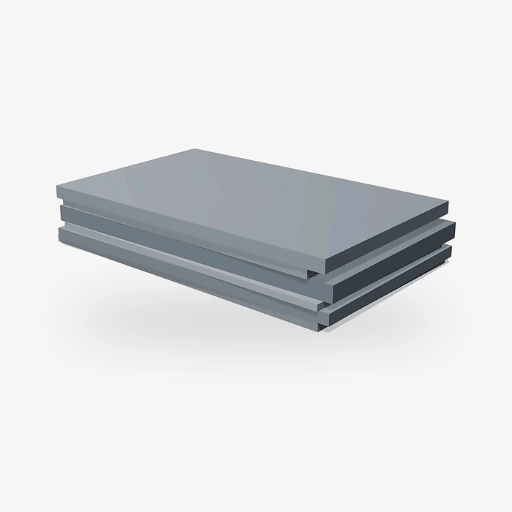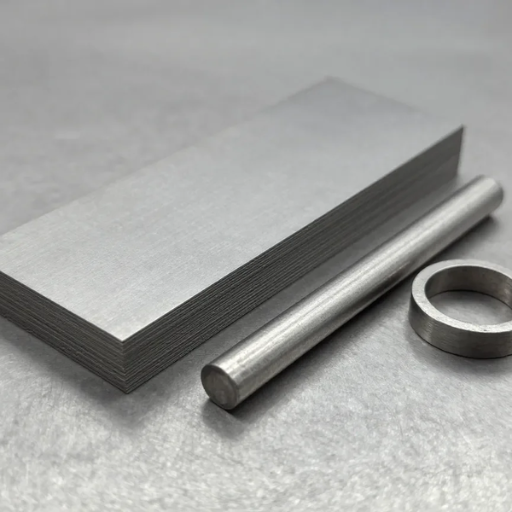
Inconel 600 resists chloride stress corrosion and hot caustic, thanks to 72% minimum nickel, and handles air service to about 1,093°C. Inconel 601 adds 1.0-1.7% aluminum to form an alumina scale that survives 1,200°C and repeated thermal cycling. Pick 601 for furnace fixtures, radiant tubes, and any cycled duty where spalling shortens life. Pick 600 for caustic, high-purity water, and low-oxygen carburizing or carbonitriding atmospheres.
That last clause is where the Inconel 600 vs 601 question gets interesting. Most comparison pages, and the AI Overview that now answers this search, tell you 601 is the better carburizing grade.
The mill’s own test data says otherwise. Special Metals ran gas carburization and carbonitriding tests on both alloys and published the weight gains. At 2,000°F (1,095°C) in a carbonitriding atmosphere, alloy 600 gained 8.65 mg/cm² and alloy 601 gained 16.66 mg/cm².
The aluminum that protects 601 in air doesn’t protect it when there isn’t enough oxygen to grow the scale.
This guide separates the two decisions that get confused. One is oxidation resistance in air. The other is resistance to carbon and nitrogen pickup in a furnace atmosphere with almost no oxygen.
The grades rank differently on those two questions, and your purchase order only asks one of them. It holds whether you write Inconel 600 vs 601 or Inconel 601 vs 600.
Every number below comes from the Special Metals technical bulletins for each alloy (SMC-027 for 600, SMC-028 for 601) or from an ATI data sheet, with the test conditions stated alongside.
Key Takeaways
- Inconel 601 oxidizes to 1,200°C (2,200°F) and resists scale spalling under cycling. Inconel 600 is rated to about 1,093°C (2,000°F) in air.
- At 2,000°F (1,095°C) in 2% methane and 98% hydrogen, 600 gained 12.30 mg/cm² of carbon in 100 hours and 601 gained 16.18 mg/cm². In carbonitriding the gap is nearly 2:1 in 600’s favor.
- At a matched 980°C anneal, 601 rod tested 772 MPa tensile and 455 MPa yield against 624 MPa and 210 MPa for 600. 601 stays ahead on short-time tests through 871°C.
- ASTM B168 guarantees 205 MPa yield for annealed 601 plate against 240 MPa for 600. The stronger grade has the lower floor, which matters when one is substituted for the other.
- 601 can’t be bright-annealed in a normal furnace and needs an alkaline permanganate plus nitric-HF pickle. Above 1,150°C it needs 601 or 617 filler, and filler 82 isn’t recommended.
Know your atmosphere, temperature, and product form already? Send those three details and our team will confirm the grade against the applicable standard.
Inconel 600 vs 601 at a Glance
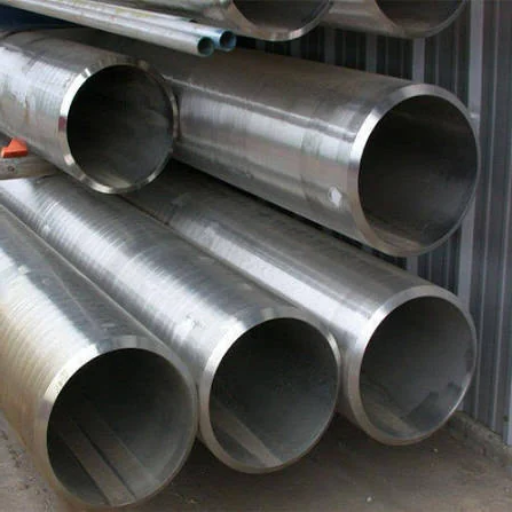
The Inconel 601 chemical composition differs from 600 in three places: more chromium, less nickel, and an aluminum addition. Everything else in this comparison follows from that.
| Property | Inconel 600 (N06600) | Inconel 601 (N06601) |
|---|---|---|
| Nickel | 72.0% min (plus cobalt) | 58.0-63.0% |
| Chromium | 14.0-17.0% | 21.0-25.0% |
| Aluminum | Not specified | 1.0-1.7% |
| Iron | 6.00-10.00% | Balance |
| Density | 8.47 g/cm³ | 8.11 g/cm³ |
| Melting range | 1,354-1,413°C | 1,360-1,411°C |
| Oxidation limit in air | About 1,093°C | 1,200°C |
| Chloride SCC resistance | Very high | Moderate |
| Carbon pickup, 2% CH₄ at 2,000°F | 12.30 mg/cm² in 100 h | 16.18 mg/cm² in 100 h |
| Annealed tensile, rod and bar | 550-690 MPa | 550-790 MPa |
| Yield minimum, ASTM B168 | 240 MPa | 205 MPa |
| Typical duty | Caustic, pure water, heat-treat baskets | Furnace fixtures, radiant tubes, cycled service |
That table answers the easy half of the question. The rest is why each number is what it is.
What the Aluminum Does
Inconel 600 is a nickel-chromium-iron solid solution. Its 72% nickel gives it resistance to chloride stress corrosion cracking and to hot caustic. Its 15% chromium forms a chromium oxide scale that protects it in air and in sulfur-bearing gases at moderate temperature.
Inconel 601 trades nickel for chromium and aluminum. Nickel drops to 58-63%, chromium rises to 21-25%, and 1.0-1.7% aluminum enters the alloy. At temperature, the aluminum and chromium together build a mixed surface oxide with an alumina component beneath the chromia.
That scale is why 601 does everything else better. It grows slowly, stays keyed to the metal through a network of internal oxide penetration, and resists spalling when the part cycles. Special Metals describes the result as unique resistance to oxide spalling under cyclic thermal conditions, and the cyclic tests back the claim.
It’s also why 601 does one thing worse. Aluminum oxide needs oxygen to form. In a furnace gas with high carbon activity and almost no oxygen, the alumina can’t establish itself, and 601 falls back on chromia that is now competing with carbon for the same chromium.
Two Scales, Two Failure Modes
A 600 part in air fails by chromium depletion. The scale thickens, spalls on cooling, and reforms from fresh metal until the chromium near the surface runs out.
A 601 part in air fails much later, because its alumina layer is thinner and more adherent. But a 601 part in a low-oxygen carburizing gas can fail early, by carburization, because the layer it depends on never forms.
Neither failure mode shows on a datasheet. Both show in a micrograph after service.
Inconel 600 vs 601 Oxidation Resistance
The headline difference is 107°C. The useful difference is what happens under cycling.
Special Metals tested 601 in air at 2,000°F (1,095°C) with 15-minute heating cycles and 5-minute air cooling, tracking weight change for about 1,000 hours. Alloy 601 held close to its starting weight across the run. Alloy 600 lost weight continuously, with INCOLOY 800 between them.
Tests at 2,100°F (1,150°C) and 2,200°F (1,205°C), run as ten consecutive 50-hour exposures, showed the same ranking. Both are reported in the INCONEL alloy 601 bulletin, SMC-028.
Weight change is the practical measure. A part that loses mass loses section, and a furnace fixture that loses section sags, distorts, and eventually fails at the weld.
Inconel 600’s oxidation rating is real. SMC-027 documents service from cryogenic temperatures to above 2,000°F (1,095°C), and the alloy holds up in continuous service. But 1,093°C is a limit for lightly loaded parts in a steady atmosphere, not a license to run a cycled fixture there.
Where the Comparison Pages Get the Number Wrong
The AI Overview for this query prints 600 at “up to ~1,000°C / 1,832°F” and 601 at “up to 1,230°C / 2,200°F”.
Both are wrong. 600 is documented to 1,093°C, which is 2,000°F. And 2,200°F converts to 1,204°C, not 1,230°C.
The page mixed a rounded metric conversion into its own imperial rating, then propagated it. That error is common in this grade pair, because most pages copy a table from another page instead of from a mill. When you write a specification, take the number from the bulletin.
Inconel 600 vs 601 Carburizing Behavior
Carburization is carbon diffusing into the metal and forming chromium carbides beneath the surface. It hardens the skin, embrittles it, and consumes the chromium that was protecting the alloy. In a carbon-rich furnace atmosphere, it usually limits life before oxidation does.
The claim that 601 resists carburization better appears on nearly every comparison page. Special Metals tested it, and the results sit in the 601 bulletin beside the oxidation claim. The 600 comparison rows come from Table 24 of the INCONEL alloy 600 bulletin, SMC-027.
| Test atmosphere | Temperature | Duration | 600 gain | 601 gain |
|---|---|---|---|---|
| 2% CH₄, 98% H₂ | 1,700°F (925°C) | 100 h | 2.66 mg/cm² | 2.72 mg/cm² |
| 2% CH₄, 98% H₂ | 1,800°F (980°C) | 100 h | Not tested | 4.32 mg/cm² |
| 2% CH₄, 98% H₂ | 2,000°F (1,095°C) | 25 h | 2.78 mg/cm² | 3.67 mg/cm² |
| 2% CH₄, 98% H₂ | 2,000°F (1,095°C) | 100 h | 12.30 mg/cm² | 16.18 mg/cm² |
| 5% NH₃, 2% CH₄, 93% H₂ | 2,000°F (1,095°C) | 100 h | 8.65 mg/cm² | 16.66 mg/cm² |
Read the last row twice. In a carbonitriding atmosphere, 601 picks up almost twice as much carbon and nitrogen as 600.
At 1,700°F the two grades are effectively tied. At 1,800°F and above, 600 gains less.
This doesn’t make 601 a bad carburizing alloy. It means the ranking depends on oxygen potential, and the mill’s test conditions are the ones that matter: enough carbon to diffuse, too little oxygen to grow an alumina.
Independent work reaches the same conclusion. Kane and Hosier, published through Inco Alloys and catalogued at OSTI record 5393491, tested wrought nickel alloys at 900-1,100°C at unit carbon activity.
Under chromia-forming conditions, where the gas is still oxidizing enough to build an oxide, all the alloys performed well. In less oxidizing gases carburization became severe, and there alloy 600 and the aluminum-bearing 601 and 617 were the best of the set. The same study notes both grades were less resistant at high oxidation potentials, where another mechanism takes over.
The practical rule: if your atmosphere has enough oxygen to keep a scale intact, 601 buys margin. If it doesn’t, 600’s higher nickel is the safer bet, and neither grade substitutes for controlling the atmosphere.
Green Rot and the Low-Oxygen Trap
Green rot connects the carburizing and oxidation problems. It happens when an alloy sees alternating reducing and oxidizing conditions, so chromium is first tied up as grain-boundary carbide and then the carbide, or the chromium-depleted metal behind it, oxidizes internally. The alloy embrittles, and the fracture face has a greenish tint.
The classic window is 815-980°C (1,500-1,800°F), which is exactly where a lot of heat-treating, bright annealing, and endothermic gas equipment runs.
An alumina scale helps only if the atmosphere can sustain it. Vendor pages claim 601 is immune; other suppliers argue alumina formers are more sensitive to swings between reducing and oxidizing. Neither claim is test data. The mill data above is the better guide, and it points to 600 where oxygen is scarce.
If your process cycles between rich and lean atmosphere, describe the cycle when you specify the alloy. A recommendation made without that information is a guess.
Inconel 600 vs 601 Strength and Temperature Limits
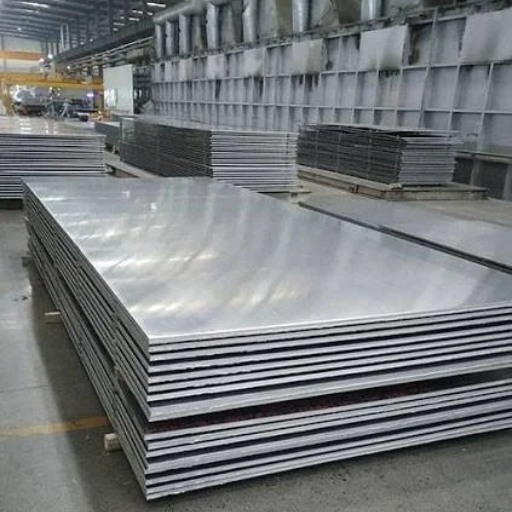
Both grades are solid-solution alloys. Neither is precipitation-hardened, and neither gets stronger from heat treatment. Strength comes from cold work and grain size.
At a matched 980°C (1,800°F) anneal, 601 hot-finished rod tested 772 MPa (112.0 ksi) tensile and 455 MPa (66.0 ksi) yield with 57% elongation. Alloy 600 hot-rolled rod, annealed at the same temperature, tested 624 MPa (90.5 ksi) and 210 MPa (30.4 ksi) with 49% elongation.
The extra chromium and aluminum account for that gap, and it holds up to temperature on short-time tests. That is the short version of the Inconel 601 properties case: higher room-temperature strength, a higher floor at 760°C and 871°C, and no heat treatment to reach either.
| Temperature | 601 tensile | 601 yield | 600 tensile, typical |
|---|---|---|---|
| 20°C | About 690 MPa | About 370 MPa | 550-690 MPa |
| 538°C | 620 MPa | 330 MPa | About 550 MPa |
| 649°C | 415 MPa | 280 MPa | About 450 MPa |
| 760°C | 235 MPa | 180 MPa | About 190 MPa |
| 871°C | 125 MPa | 105 MPa | About 103 MPa |
601 values from the ATI data sheet, typical for annealed material. 600 values are typical published figures, not minimums.
Use that table to compare grades, not to design a pressure part. The 601 numbers are typical producer values rather than specification minimums, and the 600 column is a compilation rather than a single test series.
The larger caution is that short-time tensile isn’t the design limit above about 540°C. Creep and stress rupture govern there, and both alloys are creep-limited far below their oxidation limits. For sustained load, check the Inconel 600 properties data against your duty, or go straight to the ASME allowable stresses.
What the Standards Actually Guarantee
The specification minimums reverse the ranking on one property, and buyers get caught by it.
| Product form | Specification | 600 minimum | 601 minimum |
|---|---|---|---|
| Plate, sheet and strip, annealed | ASTM B168 | 550 MPa tensile, 240 MPa yield, 30% elongation | 550 MPa tensile, 205 MPa yield, 30% elongation |
Alloy 601 typically tests stronger than 600. On plate, sheet and strip it’s only required to reach 205 MPa yield against 600’s 240 MPa. ATI’s data sheet for 601 plate and sheet confirms the 550 MPa and 205 MPa floors, with a 35% elongation minimum.
A design checked against typical values and built from 601 certificate minimums can come out weaker than the same design in 600. If a drawing calls for 600 and the shop proposes 601 as an upgrade, the yield requirement doesn’t automatically follow.
Corrosion: Chloride, Caustic and Sulfur
The grades aren’t close on aqueous corrosion, and the difference is nickel.
Alloy 600’s 72% nickel makes it resistant to chloride-ion stress corrosion cracking. SMC-027 describes it as virtually immune, which is why the grade became the default for high-purity water, caustic service, and chloride-bearing process streams. It also resists many organic and inorganic compounds.
Alloy 601 has 58-63% nickel. It resists many corrosive media and is relatively unaffected by most neutral and alkaline solutions, but it isn’t the chloride SCC grade that 600 is. For caustic or high-purity water duty, 600 is the reference alloy.
Neither grade has meaningful pitting resistance. With no molybdenum in either, neither is a seawater alloy. If chloride pitting is your duty, look at 625 or a super duplex grade instead.
Sulfur is the other split. Alloy 600 resists sulfur compounds at moderate temperatures but is subject to sulfidation in high-temperature, sulfur-bearing environments. Alloy 601 was tested in 1.5% hydrogen sulfide and 98.5% hydrogen at 650-760°C, and its welding table changes for H₂S and SO₂ service.
Fabrication: Welding, Pickling and Heat Treatment
This is where the comparison pages stop, and where projects lose time.
Alloy 601 can’t be bright-annealed in a normal industrial furnace. The aluminum and chromium form a refractory oxide during heating, so the surface has to be pickled to come clean. The sequence matters:
- Light oxide: nitric-HF bath at up to 52°C, 5-60 minutes
- Heavy oxide: alkaline permanganate first (15-20% sodium hydroxide with 3-5% potassium permanganate at 88-93°C)
- Then the nitric-HF bath, then ammonium hydroxide neutralization
Alloy 600 has the easier route: dry hydrogen or vacuum for a bright surface; otherwise, a standard pickle.
Welding differs by service temperature in a way that catches fabricators out.
| Service | 601 filler | 600 filler |
|---|---|---|
| Up to 980°C | Filler 82, 601 or 617 | Filler 82, Electrode 182 |
| 980-1,150°C | Filler 601 or 617 | Filler 82 |
| Above 1,150°C | Filler 601 only | Not addressed |
| H₂S or SO₂ at any temperature | Filler 601, Electrode 117 | Consult the mill |
Filler 82 is the standard choice for 600 and works for 601 at moderate temperatures. Above 1,150°C, the 601 bulletin rules it out and specifies 601 or 617 filler. A fabricator who reads only the first row and welds a 1,200°C fixture with filler 82 has built a joint that won’t match the base metal life.
Heat treatment follows the same logic. Alloy 601 isn’t strengthened by heat treatment: a 1,150°C solution treatment gives coarse grain and the best creep resistance, while a 980°C anneal gives higher tensile strength for service below about 540°C. Alloy 600 is annealed near 1,010°C, with a 1,090-1,150°C solution treatment for maximum creep and rupture strength.
Both alloys sensitize if cooled slowly through 540-760°C, where chromium carbides precipitate at the grain boundaries. Rapid cooling through that range isn’t optional for either.
How to Choose
Three questions settle most cases.
What is the atmosphere? Air, combustion products, or anything with enough oxygen to sustain a scale: 601. Low-oxygen, high-carbon gas, endothermic atmospheres, carbonitriding: 600. Alternating rich and lean: describe the cycle, and start from 600.
What is the temperature and the load? Above 1,000°C with light load, 601. Above 1,000°C with real load, neither grade is the answer. Below 650°C, either grade works mechanically and the choice is about corrosion.
What is the medium? Chloride-bearing water, caustic, or high-purity water: 600. High-temperature sulfur: 601. Seawater or chloride pitting: neither.
When Neither Grade Is Right
Two cases come up often.
The first is load above 900°C. Both grades lose most of their useful strength there, and the high-temperature alloy selection guide covers the grades that hold up. For a specific alternative, Incoloy 800H has higher creep strength in the 650-1,000°C band.
The second is a duty that’s both carburizing and sulfidizing. Neither grade handles that combination well, and the answer usually involves a higher-nickel or higher-chromium grade documented against both. If you’re weighing Inconel 601 vs 625 instead, the Inconel 600 vs 625 comparison explains where molybdenum changes that answer.
Equivalent Grades and Cost
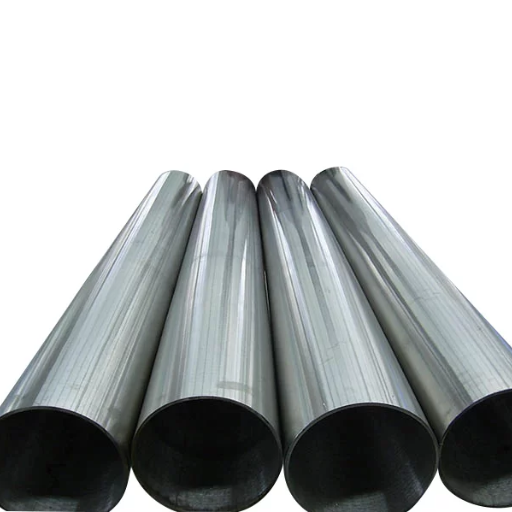
Equivalence matters most to buyers sourcing from China, because two parallel designation systems are in use and suppliers quote both. If you searched for an Inconel 601 equivalent, the table below is the answer set you need to check against the drawing.
| Inconel 600 | Inconel 601 | |
|---|---|---|
| UNS | UNS N06600 | UNS N06601 |
| Werkstoff | 2.4816 | 2.4851 |
| EN name | NiCr15Fe | NiCr23Fe |
| Chinese (GB/T 15007) | NS3102, formerly NS312 | NS3103 |
| Legacy Chinese label | GH3600 | GH3601, reported by suppliers |
| JIS | NCF 600 | NCF 601 |
| BS | NA 14 | NA 49, supplier tables |
| AFNOR | NC15Fe | NC23FeA |
| GOST | Not reported | XH60BT, distributor tables |
| ASTM bar | B166 | B166 |
| ASTM plate, sheet and strip | B168 | B168 |
| ASTM seamless tube | B167 | B167, B163 |
Treat the NS3103 mapping for 601 as reliable. GH3601 is a legacy designation reported by suppliers rather than a current GB/T 15007 grade, NS313 and GH601 circulate as alternate Chinese labels, and some Chinese sources pair NS3103 with GH3608 instead. Confirm the designation and the property requirements on the purchase order rather than accepting an equivalence claim.
On cost, neither grade is simply more expensive. Alloy 601 carries 21-25% chromium against 600’s 14-17%, and 600 carries 72% minimum nickel against 601’s 58-63%. Nickel and chromium move on separate price cycles, so the cheaper grade changes with the market, and 601 adds the cost of the aluminum addition and the harder pickle. That is why a published Inconel 601 price per kg from any source is out of date before it reaches the buyer.
That’s why we quote per order rather than publishing a rate. Send the grade, form, dimensions, condition, and quantity, and the quotation reflects the actual mill and the current alloy surcharge.
Frequently Asked Questions
What is the main difference between Inconel 600 and 601?
Inconel 601 adds 1.0-1.7% aluminum and raises chromium to 21-25%, forming an alumina-bearing scale that resists oxidation to 1,200°C and resists spalling under thermal cycling. Inconel 600 keeps 72% minimum nickel for chloride stress corrosion and caustic resistance, and it picks up less carbon than 601 in low-oxygen carburizing and carbonitriding atmospheres.
Is Inconel 601 better than 600?
It depends on the atmosphere. In air and combustion gases above 1,000°C, 601 is clearly better because of its oxidation and spalling resistance. In carbon-rich, oxygen-poor furnace gases the mill’s own tests show 600 gaining less carbon, and in carbonitriding at 1,095°C the gap runs close to 2:1 in 600’s favor.
Can Inconel 601 replace Inconel 600?
Sometimes, but not on a drawing that specifies 600. ASTM B168 requires 205 MPa minimum yield for annealed 601 plate and 240 MPa for annealed 600 plate, so the substitution can reduce guaranteed strength even though 601 typically tests higher. Any substitution needs the yield requirement and the corrosion duty rechecked, and the material certificate reviewed against the ordered standard.
Will a magnet stick to Inconel?
No. Both grades are austenitic and non-magnetic at room temperature. Alloy 600’s Curie temperature is -124°C and 601’s is below -196°C, so neither turns magnetic until deep cryogenic conditions. A magnet is a rough test for ferritic contamination, not a grade identification.
Is Inconel 601 the same as alloy 601?
Yes. Inconel is the Special Metals trade name, alloy 601 is the generic grade name, UNS N06601 is the specification designation, and 2.4851 is the Werkstoff number. All four refer to the same material.
What is the maximum service temperature of Inconel 600 and 601?
In air, 600 is rated to about 1,093°C and 601 to 1,200°C, but both are oxidation limits for lightly loaded parts. Under sustained load, creep governs far below those figures, and a pressure-retaining design should use ASME allowable stresses rather than a datasheet maximum.
Conclusion
The choice in this Inconel 600 vs 601 comparison comes down to which failure mode your equipment is more likely to see.
If the part runs hot in air, cycles often, and carries little load, 601’s alumina scale buys extra years and its higher strength is a bonus. If it runs in a low-oxygen carburizing or carbonitriding atmosphere, or in chloride-bearing water and caustic, 600’s nickel content and lower carbon pickup are the better match, whatever the comparison tables say.
Two things to carry into the purchase order. First, state the atmosphere, not just the temperature, because the mill test data only predicts performance under conditions you’ve written down. Second, state the condition and the specification, because the guaranteed minimums for these two grades don’t follow their typical values.
Our supply covers nickel-based plate, sheet, bar, and pipe across the Inconel family, with mill test reports reviewed against the ordered standard before shipment. The Inconel 600 tube range is listed on the nickel alloy pipe page, and plate and sheet enquiries route through nickel alloy plate.
Tell us four answers that decide an Inconel 600 vs 601 selection: atmosphere, operating temperature, load, and product form. Our metallurgical team will confirm the grade, check it against the applicable ASTM or AMS specification, and quote the material. Contact our team to start the review.