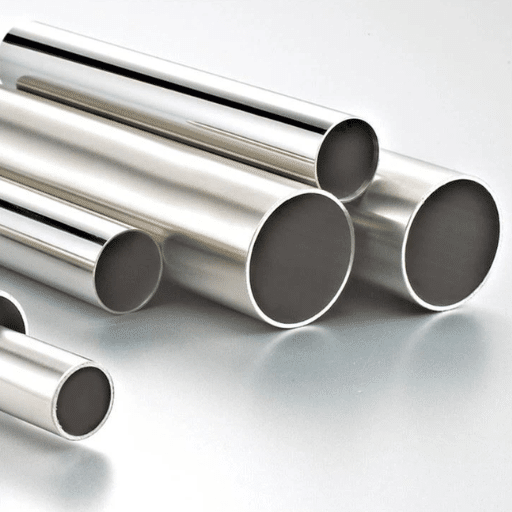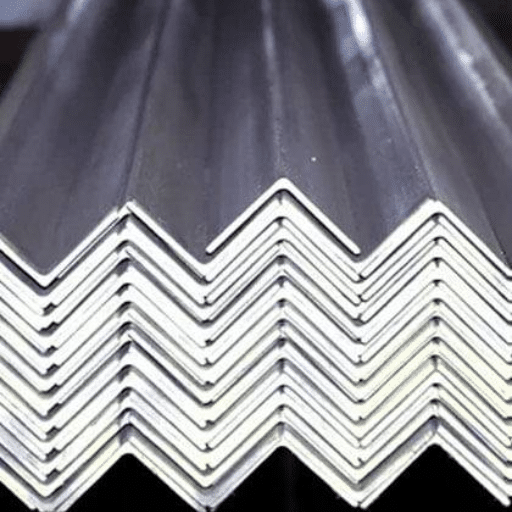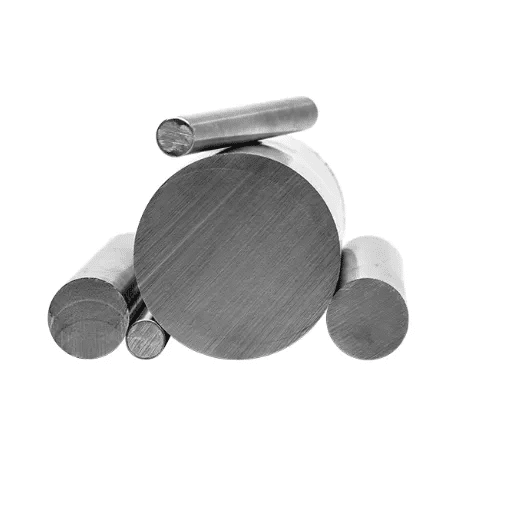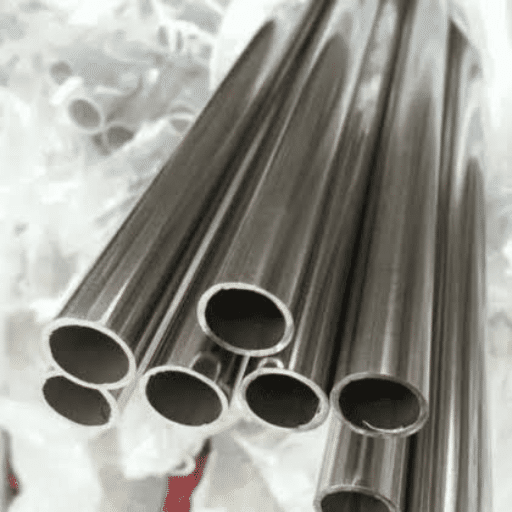
904L vs 254 SMO is not a rank order: neither grade is universally better, and the correct choice turns on one question. Is the controlling threat in your service chlorides, or a reducing acid? 254 SMO (UNS S31254) is the chloride grade, with a pitting resistance equivalent number (PREN) near 43 against 904L’s ~35, and it is the only one of the two that qualifies as a NORSOK “6Mo” material. 904L (UNS N08904) is the reducing-acid grade, and where a stream carries no chloride threat, its higher copper content and lower price make the 254 SMO premium an expense that buys nothing. Reverse the order, and nothing changes: 254 SMO vs 904L is the same fork, decided by the same single question.
The numbers look decisive, and that is the trap. A PREN of 43 against 35 reads like a clear win for 254 SMO on every duty. It is a clear win on exactly one duty.
Buyers who treat 254 SMO as a straight upgrade from 904L pay a 20 to 55% premium anywhere they touch plate or tube, and on an acid stream they pay it for no benefit at all. This guide derives both PREN values on the page, states the NORSOK 6Mo definition and the acceptance test behind it, explains why the weld, not the plate, usually decides the outcome, adds the third grade most comparisons miss (AL-6XN), and is honest about the duties where 904L is the better material. We supply both grades from Wuxi and will tell you which side of the line your duty sits on.
For the parent family, start with our full 904L stainless steel guide.
Key Takeaways
- 904L vs 254 SMO is a fork, not a ranking. PREN separates them cleanly at roughly 35 against 43, and that clarity is itself the trap, because the index measures only one of the two threats.
- 254 SMO is the only grade of the two that meets the NORSOK M-630 “6Mo” definition (Mo ≥6% and PREN ≥40). 904L is not a 6Mo grade, and no amount of 904L substitutes where a 6Mo specification applies.
- The gap is bought mostly with molybdenum and nitrogen, and nitrogen is weighted 16 points per percent against molybdenum’s 3.3, so a 0.15-point nitrogen difference moves the index as much as 0.75 points of molybdenum.
- On a 254 SMO job the plate can pass PMI and the weld can still pit, because molybdenum micro-segregation drops dendrite-core PREN 15 to 20%. The fix is an overmatching nickel filler such as ERNiCrMo-3, not a matching one.
- Where the threat is chlorides, 254 SMO or AL-6XN is the answer and 904L falls short. Where the duty is a chloride-free reducing acid, 904L is both the better and the cheaper material, and the upgrade buys nothing.
Direct Answer: Is 254 SMO Better Than 904L?
Neither grade is better. They answer different threats, and their corrosion indices are separated by about eight PREN points. 254 SMO is the chloride grade: higher molybdenum, nitrogen-strengthened, higher yield, and the only one of the two that meets a 6Mo specification. 904L is the reducing-acid grade: higher copper, more nickel, and materially lower cost. So “254 SMO alternative to 904L” is a fair description only where the duty is chloride; on an acid stream the two do not interchange in that direction. Choose by the failure mechanism you are buying against, not by which grade sits higher on a ladder.
| Property | 904L (N08904) | 254 SMO (S31254) |
|---|---|---|
| EN designation | 1.4539 | 1.4547 |
| GB/T designation | 015Cr21Ni26Mo5Cu2 (S31782) | 015Cr20Ni18Mo6CuN (S31254) |
| Microstructure | Austenitic, single phase | Austenitic, single phase |
| PREN, worked | ~35.6 | ~43 |
| Molybdenum | 4.0–5.0% | 6.0–6.5% |
| Nitrogen | ≤0.10% (typ. 0.05) | 0.18–0.22% |
| Copper | 1.0–2.0% | 0.5–1.0% |
| Minimum yield, Rp0.2 | ≥220 MPa | ~300 MPa |
| NORSOK “6Mo” grade | No | Yes (Mo ≥6%, PREN ≥40) |
| Best-fit duty | Reducing acids, mixed acid-chloride, non-magnetic | Chloride pitting and crevice duty, FGD, seawater, PREN ≥40 specs |
The table is ordered so the PREN row sits above the molybdenum and nitrogen rows, because those two elements produce the gap. One grade clears the 6Mo code threshold and the other does not, and that single row turns a preference into a specification trigger.
Holding a quote that swaps one grade for the other? Send the medium, concentration, temperature, and chloride level, and our metallurgical team will confirm whether the swap is an upgrade, a downgrade, or a lateral move. Send your operating conditions
904L vs 254 SMO Corrosion Resistance: One Index, Two Threats
Deriving both PREN values on the page
PREN = Cr + 3.3(Mo) + 16(N)
On mid-spec 904L (Cr 20, Mo 4.5, N 0.05): 20 + 3.3 × 4.5 + 16 × 0.05 = 35.6.
On mid-spec 254 SMO (Cr 20, Mo 6.0, N 0.20): 20 + 3.3 × 6.0 + 16 × 0.20 = 43.0.
So the 254 SMO PREN lands at 43.0 against 904L’s 35.6, a gap of 7.4 points, and it breaks down cleanly. The extra 1.5% molybdenum contributes 1.5 × 3.3 ≈ 4.9 points. The extra 0.15% nitrogen contributes 0.15 × 16 ≈ 2.4 points. Nitrogen is weighted nearly five times as heavily as molybdenum per percent, which is why a small nitrogen addition moves the index so sharply. Alleima publishes 254 SMO at PREN ≥42.5, and the working range across heats is about 42 to 44.
That arithmetic is also the reason the index stops being useful at the top of the ladder. PREN ranks pitting resistance in chlorides reasonably well for grades with similar microstructures. It has no term for copper, no term for a nitrogen-strengthened grade’s behaviour in a reducing acid, and no term for the weld. When it hands you two grades eight points apart, the honest reading is not “one grade wins everywhere.” It is “one grade wins in chlorides.”
Chlorides: where 254 SMO wins
254 SMO seawater resistance rests on the same two elements: its higher molybdenum and nitrogen lift its resistance to pitting and crevice attack in chloride service, and its critical pitting temperature in 3% sodium chloride sits roughly 15 to 20 °C above 904L’s under comparable ASTM G48 test conditions. The exact critical temperatures are method- and environment-dependent, and our 904L corrosion resistance guide carries the medium-by-medium rate tables and the critical-temperature data this article deliberately does not duplicate.
The practical line is the NORSOK threshold. 904L’s PREN of about 35.6 sits below the ≥40 figure that NORSOK-style guidance applies to ambient seawater service, and the failure is observable in the field. In chlorinated seawater testing, both 904L and 2205 duplex resisted at 25 °C and both failed at 50 °C. Above roughly 40 to 45 °C, or in creviced and stagnant conditions at any temperature, 904L is no longer the right call, and 254 SMO begins where it stops.
Reducing acids: where 904L wins
Here the ladder inverts, and the reversal is the part every supplier comparison leaves out. 904L’s 1.0 to 2.0% copper is the element that carries its performance in sulfuric and phosphoric acid, and 254 SMO carries roughly half that copper. Against a chloride-free reducing acid, 254 SMO’s extra molybdenum and nitrogen buy no additional protection, and its molybdenum content is even mildly detrimental in strongly oxidising acid. The grade that wins on PREN does not win here.
904L is usable across roughly 0 to 98% sulfuric acid to about 35 to 40 °C, with its real advantage in the 20 to 85% mid-concentration band, and it is a workhorse in wet-process phosphoric acid. None of that is improved by paying for 254 SMO. If 316L is the grade you are upgrading from rather than 904L, the 904L vs 316L comparison sets the same arithmetic against the standard austenitic grade.
The 6Mo Definition: NORSOK M-630, PREN ≥40 and the Test You Have to Pass
What “6Mo” actually means
“6Mo” is not a marketing label. Under NORSOK M-630, a 6Mo grade carries at least 6% molybdenum and a PREN of at least 40, and the two conditions are cumulative. 904L fails both: at 4.0 to 5.0% molybdenum and a PREN near 35.6, it is a super-austenitic stainless steel but it is not a 6Mo material. That is why 904L vs 6Mo stainless steel is not a like-for-like comparison: the two are separated by a code, not by preference. 254 SMO clears both conditions, at 6.0 to 6.5% molybdenum and a PREN near 43.
That distinction matters because it converts a preference into a specification trigger. When a project drawing or a material data sheet calls for a 6Mo grade, the requirement is the code threshold, not a corrosion feeling, and a quotation offering 904L “as an equivalent” has not met it. This is the single most common substitution error on chloride jobs.
The test you have to pass
NORSOK M-630 does not stop at chemistry. It sets an acceptance test for the 6Mo material: ASTM G48 Method A, in ferric chloride, held at 50 °C for 24 hours, with no pitting visible at 20× magnification and a weight loss below 4.0 g/m². A heat that meets the composition but fails the coupon test does not qualify.
This is the number procurement and quality teams actually recognise. It is auditable, it is dated, and it is reported on the mill test documentation for any genuine 6Mo supply. Ask for the G48 result alongside the chemistry.
What seawater service actually requires
For ambient seawater and chlorinated seawater duty, the working rule is a 6Mo grade at PREN ≥40, which is why 904L is not the answer for warm or creviced seawater and 254 SMO or AL-6XN is. Where the seawater is also chlorinated, suspended-solids-laden or stagnant, specify the 6Mo grade and verify the G48 coupon, because the crevice condition is where the index’s margin gets consumed. For the sour-service ceiling, 254 SMO and AL-6XN are accepted to roughly 60 °C in the solution-annealed condition, the same ceiling 904L carries; our 904L sour-service and chloride limit table holds that data.
904L vs 254 SMO Composition and Mechanical Properties
| Element | 904L (N08904) | 254 SMO (S31254) | What the delta buys |
|---|---|---|---|
| Chromium | 19.0–23.0% | 19.5–20.5% | Passive film stability; PREN |
| Nickel | 23.0–28.0% | 17.5–18.5% | Austenite stability and chloride SCC resistance; the largest cost swing |
| Molybdenum | 4.0–5.0% | 6.0–6.5% | Pitting and crevice resistance; PREN; the 6Mo threshold |
| Nitrogen | ≤0.10% | 0.18–0.22% | PREN (16× weight) and strength |
| Copper | 1.0–2.0% | 0.5–1.0% | Reducing-acid resistance; also MIC suppression in low-flow service |
Nickel runs the other way here, and that surprises most buyers. 904L carries 23 to 28% nickel against 254 SMO’s 17.5 to 18.5%, so the 254 SMO premium is not a nickel story. It is a molybdenum-and-nitrogen story, plus the specification and brand premium the 6Mo designation commands in the market.
| Property | 904L (ASTM B625) | 254 SMO (ASTM A240) |
|---|---|---|
| Tensile strength, Rm | ≥490 MPa | ≥650 MPa |
| Yield strength, Rp0.2 | ≥220 MPa | ~300 MPa |
| Elongation, min | ≥35% | ~40% |
| Density | 7.95–8.00 g/cm³ | ~8.0 g/cm³ |
| Magnetic | No | No |
Nitrogen is the divisor
254 SMO yields roughly 35 to 45% higher than 904L, depending on product form and heat, and the element responsible is nitrogen. Nitrogen sits in the austenite as an interstitial and strengthens the lattice without adding a second phase, so 254 SMO gains strength while staying fully austenitic and essentially non-magnetic, with relative permeability close to 1. That combination, higher strength with no ferrite, is part of why 254 SMO appears in weight- or pressure-sensitive chloride designs where duplex grades would be ruled out by magnetism or where 904L would need a thicker wall.
Welding 904L vs 254 SMO: Why the Weld, Not the Plate, Decides
This is the section competitors skip, and it is where the most expensive failures live. On a 6Mo weldment, the base metal can pass every check and the joint can still fail.
The mechanism is molybdenum micro-segregation. As the weld pool solidifies, molybdenum partitions preferentially into the residual liquid, so the final interdendritic regions enrich and the dendrite cores deplete. The practical effect is that the dendrite-core PREN drops 15 to 20% below the nominal value of the plate. A 254 SMO plate at PREN 43 can leave a weld zone effectively at 35, back at 904L territory, in exactly the place the chlorides will find.
The fix is an overmatching filler, not a matching one. The standard 254 SMO welding filler is ERNiCrMo-3 (Alloy 625), a nickel-base consumable with roughly 9% molybdenum and a PRE around 52, which overmatches the base metal enough to carry the dendrite cores above the corrosion threshold. For severe duty, ERNiCrMo-4 (C-276 type) or a higher-molybdenum nickel filler is used. The Nickel Institute’s guide to using 6Mo austenitic stainless steel sets out the filler logic in full.
Tomas, a fabricator in Gdańsk, learned this the hard way. His shop welded a 254 SMO absorber vessel with a matching-composition consumable, because the plate was 254 SMO and the weld “should match the plate.” The plate passed PMI on molybdenum and nitrogen. Eighteen months later, the vessel pitted along the weld toes in chloride service while the plate was untouched. The rework used ERNiCrMo-3, and the second problem, the one that had been invisible, was the filler nobody had questioned.
The penalties point in different directions for the two grades.
| Parameter | 904L | 254 SMO (6Mo) |
|---|---|---|
| Matching filler | ER385 (AWS A5.9) | ERNiCrMo-3 (Alloy 625) overmatched |
| Never use | Standard 316L consumables | Matching-composition 6Mo filler without overmatching |
| Solidification mode | Fully austenitic, hot-cracking prone | Austenitic, segregation-prone |
| Heat input | ≤1.5 kJ/mm, stringer beads | Controlled, low, to limit segregation |
| Purge gas | Argon | Argon |
| Post-weld heat treatment | Generally none; solution anneal where specified | Generally none |
| Verification | PMI on copper and molybdenum | PMI on molybdenum and nitrogen, plus G48 coupon |
904L’s penalty is solidification and hot-cracking: a fully austenitic pool is crack-prone and wants clean consumables, low heat input and stringer technique. 254 SMO’s penalty is segregation and filler discipline: the weld zone’s corrosion resistance is a function of the consumable choice and the heat input, not of the plate. Neither grade is easy to weld relative to 316L, and on a chloride job the consumable decision can matter more than the base-metal decision.
Where AL-6XN Fits: The Third 6Mo Grade
Most comparisons stop at two grades. The practical answer often needs a third. AL-6XN (UNS N08367) is the other 6Mo material, and it differs from 254 SMO in the way that matters when the controlling threat shifts from pitting to chloride stress corrosion cracking. On a 904L vs AL-6XN question, AL-6XN is the higher rung on the chloride axis; on a 254 SMO vs AL-6XN question, the answer turns on whether the failure mechanism is SCC rather than pitting.
AL-6XN carries roughly 24% nickel, 20 to 22% chromium, 6.0 to 7.0% molybdenum, and 0.18 to 0.25% nitrogen, giving it a PREN of about 44 to 47. Its higher nickel content buys resistance to chloride SCC and better weldability than 254 SMO at similar PREN, which is why it is often specified for higher-temperature chloride service or for heavier weldments. Rolled Alloys’ comparison of AL-6XN against 254 SMO sets out the case. If your chloride duty is a duplex fork rather than an austenitic one, the 904L vs 2205 duplex comparison covers the strength-and-microstructure route to the same problem.
Above both sits 654 SMO (S32654), at a PREN comfortably above 50, for the most aggressive chloride environments. And where the duty leaves stainless behind entirely, at hydrochloric acid concentrations above about 2%, the answer is a nickel alloy such as Hastelloy C276, not a higher rung on this ladder.
904L vs 254 SMO Price: The Premium Depends on Form
The 254 SMO price per kg carries a real premium over 904L, but it is not one number, and any page that quotes a single percentage is averaging away the most useful part.
| Form | Indicative 254 SMO premium over 904L |
|---|---|
| Bar and billet | ~1–8% |
| Hot-rolled plate | ~20–30% |
| Tube and pipe | ~20–55% |
The pattern is the point. At bar and billet, the two grades trade within single digits of each other, because molybdenum and nitrogen are a smaller share of the finished cost there. At plate the gap opens to 20 to 30%. At tube and pipe it can reach 55%, and the widest figure always appears when an international-brand 254 SMO is compared against a Chinese-mill 904L, because the brand and the 6Mo specification compound the alloy difference.
So the honest answer to “how much more does 254 SMO cost?” is: check the form. Our separate 904L price per kilogram guide carries the full form-by-form 904L table and the nickel and molybdenum cost-driver arithmetic; this article gives the relative multiple only. On a chloride duty the premium is buying a capability 904L does not have, and it pays back the first time a 904L vessel is replaced early. On an acid duty, it is buying nothing, and 904L is the cheaper and better material.
When to Choose 904L, 254 SMO or AL-6XN: Decision Framework
Choose 904L when
- The controlling threat is a reducing acid: sulfuric acid in the 20 to 85% band, wet-process phosphoric acid, or mixed acid-chloride streams
- The chloride level is low or the acid is the dominant failure mechanism
- Non-magnetic behaviour is required
- Cost matters and no chloride specification applies
Choose 254 SMO when
- The threat is chloride pitting or crevice attack, not acid
- Flue gas desulfurization, seawater, brine or chlorinated cooling water duty applies
- A specification calls for a 6Mo grade at PREN ≥40, with the ASTM G48 coupon behind it
- Higher yield is needed in a fully austenitic, non-magnetic material
Choose AL-6XN when
- Chloride stress corrosion cracking, not pitting, is the controlling threat
- Higher-temperature chloride service or heavier weldments are involved
- Higher strength plus improved weldability is wanted at 6Mo-level PREN
Choose neither when
- The medium is hydrochloric acid above about 2%: use Hastelloy C276 or C22
- The acid is hot concentrated sulfuric above about 70%: Alloy 20 territory, covered in 904L vs Alloy 20
- Service runs above about 450 °C: neither grade is correct
| Operating condition | Recommended grade |
|---|---|
| Reducing acid, low chloride (H₂SO₄ 20–85%, wet-process H₃PO₄) | 904L |
| Mixed acid plus chloride, 40–60 °C | 904L |
| Chloride pitting or crevice duty, seawater, FGD | 254 SMO |
| 6Mo specification at PREN ≥40 | 254 SMO or AL-6XN |
| Chloride stress corrosion cracking at temperature | AL-6XN |
| Hydrochloric acid above 2% | Hastelloy C276 |
| Hot concentrated sulfuric acid | Alloy 20 |
Ahmed, a project manager at a Gulf chemical plant, was quoted 254 SMO for a phosphoric-acid evaporator “because it is the better grade.” The stream was a warm reducing acid with negligible chloride. The correct material was 904L, at roughly 70% of the price. We quoted the 904L, said plainly why the upgrade bought nothing, and the plant kept the difference. That is the trade we would rather you learn from us than from a failed vessel.
Sourcing Both Grades from China: Documentation That Proves the Grade
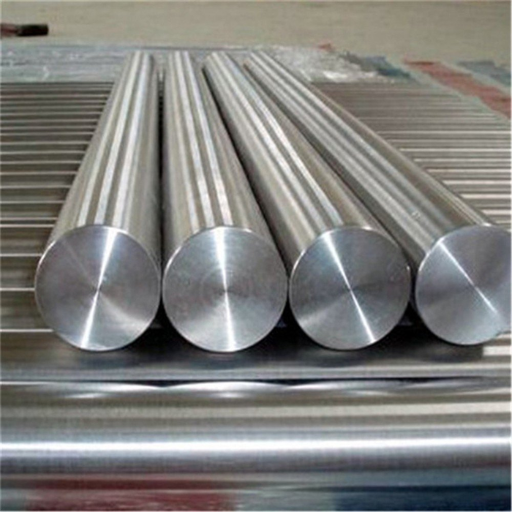
A 904L vs 254 SMO decision is only as good as the material and the certificate that arrive. Both grades are routinely substituted, and each fails differently. The documentation is what closes the gap.
For 254 SMO, specify PMI on the molybdenum (6.0–6.5%) and nitrogen (0.18–0.22%) lines specifically, because those are the two elements that produce both the PREN and the 6Mo qualification, and a heat low on either is 254 SMO in name only. For 904L, specify PMI on copper (1.0–2.0%) and molybdenum (4.0–5.0%), since a heat low on copper is no longer the reducing-acid grade. Both grades must be supplied solution-annealed and water-quenched.
By product form, the applicable standards are ASTM A240 for plate, ASTM B625 for 904L plate and sheet, ASTM A312/A358 for pipe, ASTM A182 for forgings, and ASTM A479 for bar, with 254 SMO carrying the EN 1.4547 designation and 904L the EN 1.4539. Every order ships with a mill test report (MTR); ask for EN 10204 3.1 for routine supply and 3.2 where the project requires independent witness. For a seawater or 6Mo job, ask for a NORSOK M-630 material data sheet (MDS R17) compliance statement and the ASTM G48 coupon result alongside the chemistry. The two grades can be sourced on a single purchase order and a single heat-lot schedule.
904L vs 254 SMO FAQ
Is 254 SMO better than 904L?
Neither is better. They answer different threats, separated by about eight PREN points. 254 SMO is the chloride grade with higher molybdenum, nitrogen-strengthened yield and 6Mo qualification; 904L is the reducing-acid grade with higher copper and more nickel. Choose by the failure mechanism, not by grade rank.
Is 904L a 6Mo grade?
No. NORSOK M-630 defines a 6Mo grade as at least 6% molybdenum and PREN ≥40, and 904L fails both, at 4.0 to 5.0% molybdenum and a PREN near 35.6. 254 SMO meets both. A quotation offering 904L in place of a 6Mo specification has not met the code.
What is 254 SMO used for?
254 SMO is used for chloride pitting and crevice duty: seawater and brine handling, flue gas desulfurization absorber internals, chlorinated cooling water, pulp and bleach plant service, and any application specifying a 6Mo grade at PREN ≥40. It is also chosen where higher yield is needed in a fully austenitic, non-magnetic material.
What welding filler should be used for 254 SMO?
ERNiCrMo-3 (Alloy 625) is the standard 6Mo filler, used overmatched rather than composition-matched, because molybdenum micro-segregation drops dendrite-core PREN 15 to 20% and a matching filler would leave the weld zone under-protected. ERNiCrMo-4 is used for severe duty. Never use a matching-composition 6Mo consumable without overmatching.
Which resists sulfuric acid better, 904L or 254 SMO?
904L. Its 1.0 to 2.0% copper carries its performance in reducing acid, and 254 SMO carries roughly half that copper, while its extra molybdenum and nitrogen buy no additional reducing-acid protection. 904L is usable across roughly 0 to 98% sulfuric acid to about 35 to 40 °C, with its advantage in the 20 to 85% band.
Is 254 SMO more expensive than 904L?
Yes, but by a form-dependent margin. At bar and billet, the two trade within about 1 to 8% of each other; at plate, the gap is about 20 to 30%; at tube and pipe it can reach 55%, widest when branded 254 SMO is compared against Chinese-mill 904L.
Can 904L replace 254 SMO?
Only where the controlling threat is a chloride-free reducing acid. Where the duty is chloride pitting, crevice attack, or a 6Mo specification, 904L is not an equivalent and cannot meet the code threshold. Substituting 904L into a 6Mo job is a downgrade.
Which is better for seawater, 904L or 254 SMO?
254 SMO, for ambient and chlorinated seawater. 904L’s PREN near 35.6 sits below the ≥40 threshold; NORSOK-style guidance applies to seawater service, and 904L failed at 50 °C in chlorinated seawater testing. Above roughly 40 to 45 °C, or in creviced conditions, specify 254 SMO or AL-6XN.
Are 904L and 254 SMO magnetic?
No, both are fully austenitic and essentially non-magnetic, with relative permeability close to 1. That is a point of difference from duplex grades such as 2205, which are magnetic because of their ferrite content and cannot be specified where non-magnetic behaviour is a hard requirement.
What is the difference between 254 SMO and AL-6XN?
Both are 6Mo materials, but AL-6XN carries roughly 24% nickel against 254 SMO’s 17.5 to 18.5%, giving it better resistance to chloride stress corrosion cracking and better weldability at a similar PREN of about 44 to 47. Choose AL-6XN when chloride SCC or heavy weldments drive the decision.
Conclusion
In the 904L vs 254 SMO decision, a PREN of 43 against 35 is a real gap, and it is easy to read as a ranking. It is not. The two grades are separated by a code threshold, Mo ≥6% and PREN ≥40 under NORSOK M-630, and the grade is decided by whether the controlling threat is chlorides or a reducing acid. 254 SMO wins the chloride fork and is the only 6Mo material of the two. 904L wins the acid fork, and on a chloride-free acid stream the 254 SMO premium buys nothing.
Three things carry the decision. The index, working out at 35.6 for 904L against 43.0 for 254 SMO. The code, which turns that gap into a specification trigger and a G48 coupon test. And the weld, where molybdenum segregation drops dendrite-core PREN from 15 to 20% and an overmatching ERNiCrMo-3 filler, not the plate, decides whether the joint survives.
Tell us your medium, concentration, temperature, and chloride level. We will confirm whether the duty is a chloride problem, an acid problem, or neither, and quote 904L, 254 SMO, or AL-6XN from the same heat lot with MTR, PMI, and EN 10204 3.1 documentation. Quotation within 24 hours.