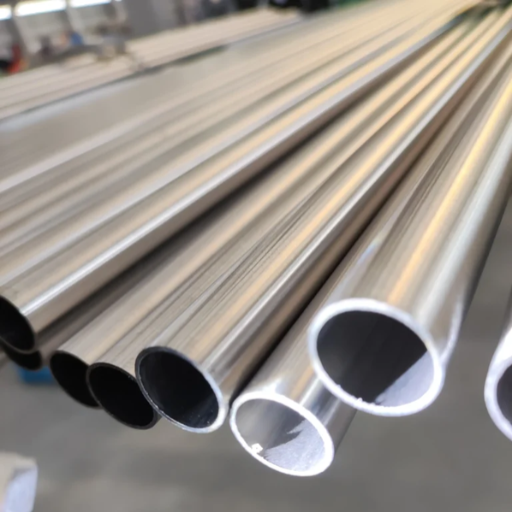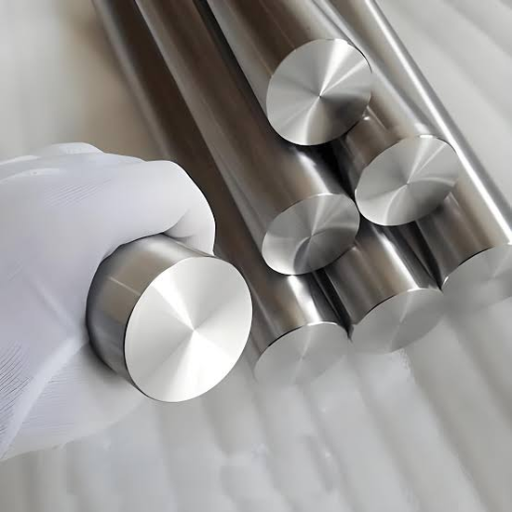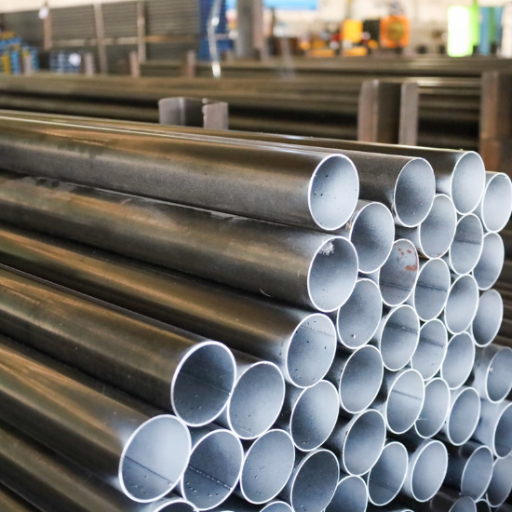
Inconel 600 corrosion resistance is excellent in caustic soda, good in oxidizing acids and high-temperature gases, and poor in seawater and hot dilute sulfuric acid. The alloy (UNS N06600) is virtually immune to chloride stress corrosion cracking because of its 72% minimum nickel content, but it contains no molybdenum, so it pits and crevices where chlorides concentrate.
That short answer is not the useful part. The useful part is the number attached to each medium, with the concentration, temperature, aeration state and test duration that produced it.
Here is why that matters. Product pages in this market routinely publish a stagnant-seawater corrosion rate for Inconel 600 of 0.01 mm/year with “minimal pitting observed.” The producer’s own handbook, in the same medium, records 34 mils of crevice attack in a 30-day test, which is 0.86 mm, and states plainly that the alloy is “not generally used in marine environments.”
Both of those statements are in circulation. One of them will cost you a heat exchanger.
This article takes the producer’s data, page by page, and puts the conditions back on it. If you are specifying 600 for a real duty, start with the Inconel 600 properties page for chemistry and mechanical limits, then come back here for the environment.
Key Takeaways
- Chloride SCC and chloride pitting are different failures. 600 is virtually immune to the first and ordinary at the second. A page that says “resistant to chlorides” without that split is not telling you anything.
- Caustic soda is the alloy’s best case, and the only one with a mandatory pre-treatment. Full stress relief at 900 °C for 1 h or 790 °C for 4 h (1,650 °F/1 h or 1,450 °F/4 h) before service, in boiling NaOH through 80%.
- 0.30% chlorate in a caustic evaporator raises the rate from 2.2 to 380 mpy (0.056 to 9.65 mm/a). That is a process decision, not a metallurgy decision, and it is the fastest way to destroy 600 equipment.
- Aeration changes the sulfuric acid answer by an order of magnitude. At 30 °C in 5% acid, 600 runs 9 mpy (0.23 mm/a) air-free and 78 mpy (1.98 mm/a) air-saturated.
- Seawater is a no. No molybdenum, PREN 16, severe crevice attack under deposits, 0.86 mm in 30 days.
- Sensitization is the hidden risk, and ASTM G28-A is how you test for it. Carbides precipitate between 540 and 760 °C, and most product specifications contain no corrosion test at all.
If your duty is not in the table below, send us the medium, the concentration and the temperature and our engineers will place it against the envelope. If the form is already decided, the Inconel 600 price guide covers what the material costs before you ask for a quotation.
Inconel 600 Corrosion Resistance at a Glance
Use this table to rule a duty in or out before reading the sections below. Every rate is a measured coupon or plant result from the producer’s own published data, with its condition attached. Where a cell carries a verdict rather than a number, no defensible rate exists for that condition in the sources used here.
| Medium | Condition | Verdict | Measured rate | If 600 is not enough |
|---|---|---|---|---|
| Sodium hydroxide | Boiling, 10 to 50% | Excellent | Nil to <1 mpy (<0.025 mm/a) | Stay with 600 |
| Sodium hydroxide | Boiling, 60 to 70% | Good | 2.7 to 4.1 mpy (0.07 to 0.10 mm/a) | Nickel 201 |
| Sodium hydroxide | 73 to 96%, 182 to 449 °C | Good, if chlorate-free | 2.2 mpy (0.056 mm/a) | Remove the chlorate |
| Sodium hydroxide | Same, with 0.30% chlorate | Fails | 380 mpy (9.65 mm/a) | Fix the process first |
| Caustic potash | Boiling 30 and 47%, liquid and vapor | Excellent | 0.1 to 0.4 mpy (0.003 to 0.010 mm/a) | Stay with 600 |
| Sulfuric acid | 5%, 30 °C, air-free | Marginal | 9 mpy (0.23 mm/a) | 825, 904L |
| Sulfuric acid | 5%, 30 °C, air-saturated | Not suitable | 78 mpy (1.98 mm/a) | 825, C-276 |
| Sulfuric acid | 70%, 30 °C, air-free | Marginal | 46 mpy (1.17 mm/a) | 825, C-276 |
| Sulfuric acid | 93%, 30 °C, air-free | Not suitable | 270 mpy (6.86 mm/a) | C-276 |
| Hydrochloric acid | Below 2%, cold, aerated | Fair | Rating only | Monel 400, B2 |
| Hydrofluoric acid | 60 to 65%, 15 to 27 °C, storage | Marginal | 150 mpy (3.81 mm/a) | C-276, 625 |
| Hydrofluoric acid gas | 500 to 600 °C | Good | 0.7 mpy (0.018 mm/a) | C-276 |
| Nitric acid | 10%, boiling | Excellent | Rating only | 690 if sensitized |
| Phosphoric acid | Any concentration, room temperature | Good | Rating only | 625 for hot acid |
| Formic acid | 40%, boiling | Moderate | 10.0 mpy (0.25 mm/a) | 625, C-276 |
| Seawater | Immersed, creviced, 30 days | Not suitable | 34 mils (0.86 mm) crevice | 625, 686 |
| Marine atmosphere | Coastal, dry, 20 to 36 years | Excellent | <0.01 mpy (<0.00025 mm/a) | Not needed |
| Fresh water and steam | High-purity, chloride-free | Essentially immune | Rating only | Not needed |
| Dry chlorine | Below 538 °C | Good | 30 to 60 mpy (0.76 to 1.52 mm/a) | No alternative needed |
| Ammonia | All concentrations and temperatures | Almost entirely resistant | Rating only | Not needed |
Two rows in that table decide most real specifications: the caustic rows, where 600 is the best answer available, and the seawater rows, where it is the wrong one. Everything below is the evidence for both.
Why Inconel 600 Corrosion Resistance Is Not a Single Number
Read a datasheet and you get a sentence: “excellent corrosion resistance in a wide range of media.” Read a test report and you get a number. The gap between the two is the entire discipline.
A corrosion rate only means something when four conditions travel with it. The medium and its concentration. The temperature. Whether oxygen was present.
And how long the test ran, because a 20-hour coupon test and a 504-hour test are not measuring the same thing.
Take the sulfuric acid rows from the producer’s handbook. In 5% acid at 30 °C, Inconel 600 corrodes at 9 mpy over a 20-hour non-aerated test. In the same acid at the same temperature, in a 23-hour air-saturated test, the rate is 78 mpy.
Same alloy, same concentration, same thermometer reading. Eight times the metal loss, because someone let air into the vessel.
That is why this article gives tables instead of adjectives.
There are two conversion facts worth memorizing, and they answer the “corrosion resistance calculator” question directly. One mpy is one thousandth of an inch per year, and one mpy equals 0.0254 mm/a.
To size a corrosion allowance, multiply the rate in mm/a by the design life in years. At 0.1 mm/a over 20 years you need 2 mm of allowance. At 0.5 mm/a over the same period you need 10 mm, and at that point the 600 is no longer a cost problem, it is a design problem.
A note on where these numbers come from. Most rates below are from the Special Metals bulletin SMC-027 and from the Inco handbook High-Performance Alloys for Resistance to Aqueous Corrosion, with the printed page and table cited each time. Where the source’s own table could not be read unambiguously in the copy available, this article says so and prints nothing, rather than guess. If you want the environment reviewed against a duty you are holding, our engineers will check it against your medium and temperature. Send it to us through the nickel alloy pipe desk and we will confirm whether 600 sits inside its envelope.
Composition: Why 600 Tolerates Chlorides but Not Seawater
Inconel 600 is a nickel-chromium-iron alloy with a limiting composition of 72.0% minimum nickel (plus cobalt), 14.0 to 17.0% chromium and 6.0 to 10.0% iron (SMC-027, p.1, Table 1). That is the whole recipe. There is no molybdenum, no niobium, no titanium addition. It is a solid-solution alloy and it hardens only by cold work.
Two of those three numbers do all the work.
Nickel gives you chloride SCC immunity. Austenitic alloys crack transgranularly in chloride solutions, and the tendency falls as nickel rises. Above about 45% nickel the resistance is very high, and at 72% minimum the bulletin describes 600 as “virtually immune to chloride-ion stress-corrosion cracking” (SMC-027, p.1 and p.10; handbook p.56). This is the single most repeated claim about the alloy, and it is a real and valuable property.
Chromium gives you the oxidizing side. The bulletin’s wording is precise: chromium “confers resistance to sulfur compounds and also provides resistance to oxidizing conditions at high temperatures or in corrosive solutions” (SMC-027, p.1). Chromium makes 600 better than commercially pure nickel in oxidizing media, which is why it handles nitric acid and hot oxidizing gases that pure nickel cannot.
The missing molybdenum is what limits you. Molybdenum is the element that buys pitting and crevice resistance in chloride water, and 600 has none. The handbook’s own crevice-corrosion table gives 600 a pitting resistance equivalent number of 16. Inconel 625 is 40.8, C-276 is 45.2 and 686 is 50.8. The same page states the rule that decides the application: nickel alloys with a PRE above 40 are “very resistant to crevice corrosion in seawater” (handbook, p.38, Table 28 and p.39).
So the split is this. 600 does not crack in chlorides, and it does corrode locally in them. Those two facts coexist, and most of the pages ranking for this topic collapse them into one.
Caustic Soda and Caustic Potash: The Best Case and the Trap
If you have one application where Inconel 600 is straightforwardly the right answer, it is hot caustic.
In boiling sodium hydroxide, 600 holds below 1 mpy (0.025 mm/a) from 10% to 50% concentration. It rises to 4.1 mpy (0.10 mm/a) at 60% and 2.7 mpy (0.07 mm/a) at 70%, then returns below 1 mpy at 80%. All of those are 504-hour tests, with the 50% condition additionally run to 720 hours (handbook, p.30, Table 20). The bulletin summarizes the same envelope as resistance “at boiling temperatures in concentrations through 80%” (SMC-027, p.10).
| Boiling NaOH, concentration | Test duration | Corrosion rate |
|---|---|---|
| 10% | 504 h | Nil |
| 20% | 504 h | Nil |
| 30% | 504 h | <1 mpy (<0.025 mm/a) |
| 40% | 504 h | <1 mpy (<0.025 mm/a) |
| 50% | 504 h and 720 h | <1 mpy (<0.025 mm/a) |
| 60% | 504 h | 4.1 mpy (0.10 mm/a) |
| 70% | 504 h | 2.7 mpy (0.07 mm/a) |
| 80% | 504 h | <1 mpy (<0.025 mm/a) |
Field data agree. In a plant test on 23% caustic at 104 °C receiving liquor from an evaporator, 600 ran 0.17 mpy (0.004 mm/a), essentially the same as Nickel 200 at 0.16 mpy (handbook, p.28, Table 15). Caustic potash behaves the same way: in boiling 30% and 47% KOH over 26 days, 600 stayed between 0.1 and 0.4 mpy (0.003 to 0.010 mm/a) in both the liquid and the vapor phase (p.29, Table 16).
The stress-relief cycle that is not optional
Now the part the SERP does not tell you. The same bulletin that calls 600 virtually immune to chloride cracking also says it “is subject to stress-corrosion cracking in high-temperature, high-strength caustic alkalies.” The instruction that follows is specific:
Material for such service should be fully stress-relieved at 1650F/1 hr or 1450F/4 hr (900C/1 hr or 790C/4 hr) prior to use, and operating stresses should be kept to a minimum. (SMC-027, p.10)
Not one of the 32 substantive pages ranking for this topic gives that cycle. Two mention stress relief, and neither gets the parameter right for caustic: one recommends 982 to 1,010 °C for an hour and the other 600 to 760 °C for one to four hours. Two pages contain the numbers 1,650 and 1,450 °F, but in both cases the numbers belong to something else, a 1,650 °F anneal in a mechanical-property table and a 1,550 to 1,650 °F general stress-relief range, not the caustic-specific pair with its two alternates.
The handbook is blunter about the reason: “alloy 600 can suffer stress-corrosion cracking in some alkali environments. For this reason, alloy 600 components should be stress relieved before use and operating stresses should be kept to a minimum” (handbook, p.30).
For an evaporator or a caustic storage vessel, the heat treatment is part of the material specification, not a fabrication detail to be negotiated at the end. The thermal side of that is set out in Inconel 600 heat treatment.
The chlorate catastrophe
Here is the number that should stop a process engineer mid-sentence.
In a laboratory test simulating caustic evaporation from 73% to 96% at 182 to 449 °C over 24 hours, Inconel 600 corroded at 2.2 mpy (0.056 mm/a). Add 0.30% chlorate to the same liquor and the rate becomes 380 mpy (9.65 mm/a), a factor of roughly 170 (handbook, p.29, Table 18). Nickel 200 moves the same way, from 1.5 to 260 mpy.
The handbook’s recommendation is direct: remove chlorates as thoroughly as possible before evaporation in the high-temperature range (p.29). If your caustic loop has a chlor-alkali upstream and the chlorate is not being destroyed or purged, the alloy selection question is moot. You are not choosing a material, you are choosing a replacement interval.
Run the consequence on a real wall thickness. A 6 mm evaporator tube wall losing 9.65 mm per year is gone in under eight months. It will fail at a weld or a support first. A chlorate analyser that has been out of service is not an instrumentation problem. It is a materials problem waiting for a shutdown. The handbook’s instruction to remove chlorates before high-temperature evaporation is the cheapest repair available.
Inconel 600 Sulfuric Acid Resistance: The Aeration Paradox
Sulfuric acid is where the alloy’s reputation and its data part company. Aqueous sulfuric acid appears on exactly one of the 32 pages ranking for this topic, in a single line that names 825 or C276 instead. Nobody gives a rate. Here are the rates.
| Acid concentration | Temperature | Duration | Condition | Corrosion rate |
|---|---|---|---|---|
| 0.16% | 100 °C (212 °F) | not stated | Non-aerated | 3.7 mpy (0.09 mm/a) |
| 1% | 30 °C (86 °F) | 120 h | Air-saturated | 49 mpy (1.24 mm/a) |
| 1% | 78 °C (172 °F) | 22 h | Air-saturated | 110 mpy (2.79 mm/a) |
| 5% | 18 °C (65 °F) | 100 h | Non-aerated | 2.4 mpy (0.06 mm/a) |
| 5% | 30 °C (86 °F) | 20 h | Non-aerated | 9 mpy (0.23 mm/a) |
| 5% | 30 °C (86 °F) | 23 h | Air-saturated | 78 mpy (1.98 mm/a) |
| 5% | 60 °C (140 °F) | 100 h | Non-aerated | 10 mpy (0.25 mm/a) |
| 5% | 80 °C (176 °F) | 20 h | Non-aerated | 30 mpy (0.76 mm/a) |
| 5% | 80 °C (176 °F) | 20 h | Air-saturated | 150 mpy (3.81 mm/a) |
| 10% | Temperature not stated | 24 h | Non-aerated | 4.2 mpy (0.11 mm/a) |
| 70% | 30 °C (86 °F) | 20 h | Non-aerated | 46 mpy (1.17 mm/a) |
| 93% | 30 °C (86 °F) | 20 h | Non-aerated | 270 mpy (6.86 mm/a) |
| 93% | 30 °C (86 °F) | 20 h | Air-saturated | 10 mpy (0.25 mm/a) |
Source: handbook, p.13, Table 3. Every value is a measured coupon result, not an estimate.
Read the table in the direction the alloy actually behaves.
In cold non-aerated acid, 600 is adequate up to about 70% concentration. That is the handbook’s summary (p.13), and the rows support it. The rate is 2.4 to 4.2 mpy in dilute acid at room temperature, and 46 mpy at 70% and 30 °C.
Aeration makes dilute acid worse and concentrated acid better. This is counter-intuitive until you know the mechanism. Dissolved oxygen can only passivate 600 if there is enough acid strength to keep the film stable, and in dilute acid it does not. “The oxidizing power of dissolved air is not sufficient to maintain passivity except in concentrated acid. Consequently, corrosion rates are increased by aeration in pure, dilute solutions” (p.13). That is why 5% acid goes from 9 to 78 mpy on aeration, and why 93% acid goes from 270 down to 10 mpy.
Heat is the other multiplier. At 80 °C in 5% acid, non-aerated, the rate is already 30 mpy (0.76 mm/a). Aerated, it is 150 mpy (3.81 mm/a), which is 3.8 mm per year. No corrosion allowance survives that.
Oxidizing salts can rescue the application. Ferric sulfate, chromates, dichromates, nitrates, nitrites, peroxides and cupric salts all passivate 600. That is why the alloy can be used with acid mine water and brass pickling solutions where Monel 400 cannot (p.13). The caveat is in the same paragraph: passivation “is difficult to maintain in crevices (e.g. bolting, threaded connections, and flange faces) because the oxidizing ions are not replenished therein.” You get a passive tank wall and an actively corroding gasket face, and the gasket face is where the leak starts.
For anything hotter than room temperature at low concentration, or anything above 5% with air ingress, the correct move is a different alloy. Incoloy 825 corrosion resistance covers the grade that handles the intermediate band, and 904L corrosion resistance covers the chloride-contaminated sulfuric duty.
Hydrochloric and Hydrofluoric Acid: Dilute Only
Hydrochloric acid
The bulletin’s summary is one word: “fair” (handbook, p.18). The measured envelope is narrow and worth stating precisely, because “fair resistance to dilute hydrochloric acid” gets quoted as though it meant something broader than it does.
Inconel 600 shows good resistance to cold, aerated acid below 2% concentration, and satisfactory resistance at room temperature to concentrations up to 20% (p.18). Above that, or hot, or aerated at strength, it is outclassed by Monel 400 and Nickel 200, both of which are themselves limited to a few percent in aerated acid.
There is no number for 600 in the handbook’s hydrochloric figures because the iso-corrosion charts on those pages cover 825, 625, 622, C-276 and 686, not 600. That absence is informative. For real hydrochloric service the molybdenum-bearing grades are the answer, and Hastelloy B2 corrosion resistance explains the reducing-acid case.
Hydrofluoric acid
Hydrofluoric acid produces the most counter-intuitive pair of numbers in the whole dataset.
| Test | Medium and conditions | Duration | Corrosion rate |
|---|---|---|---|
| Commercial HF storage | 60–65% HF with 1.5–2.5% fluosilicic acid, 0.3–1.25% sulfuric acid, 0.01–0.03% iron; 15–27 °C | 28 days | 150 mpy (3.81 mm/a) |
| Impure process acid | ~12% HF, 0.2% fluosilicic acid, 1 g/l ferric oxide as ferric salts; 83 °C; 3.2 ft/min | 7 days | 9 mpy (0.23 mm/a) |
Source: handbook, p.20, Tables 5 and 6.
The stronger acid at higher temperature is seventeen times gentler on the alloy than the commercial storage acid at ambient. The reason is the impurity profile. Oxidizing salts in the process stream passivate the surface, and the handbook states it directly: “the presence of oxidizing salts usually improves corrosion resistance” (p.22).
The working rule from the same page is that 600 is “resistant to dilute non-deaerated hydrofluoric acid solutions up to 70 °C (158 °F).” Alkylation plant data show how much the result depends on location, not just on the acid. Across eight plant tests in HF alkylation service, 600 ran between 0.5 and 25 mpy (0.01 to 0.64 mm/a) in most positions. It exceeded 130 mpy (3.30 mm/a) in one, at the bottom of a regeneration column where the acid tar collected (p.21, Table 7). Same alloy, same plant, one wet dead zone.
There is one fabrication trap, and it is a welding issue rather than an alloy issue. “Selective corrosion of weldments will occur if they contain significant amounts of niobium (e.g. INCONEL filler metal 82 and INCONEL welding electrode 182)” (p.22). Filler 82 is the standard choice for 600-to-600 and 600-to-steel joints and it contains niobium.
In hydrofluoric service that choice has to be reconsidered, because the weld becomes the least resistant part of the vessel. The filler selection side of this is covered in Inconel 600 welding.
Nitric, Phosphoric and Organic Acids
Nitric acid
Nitric acid is strongly oxidizing, so it rewards chromium, and 600 has enough of it to do well. The alloy is “resistant to nitric acid in concentrations over 20% at room temperature,” and “in 10% boiling acid, INCONEL alloy 600 is excellent” (handbook, p.25). The handbook’s bar chart of average rates in 10% boiling acid ranks 600 between 625 and C-276, with 690 the best of the group.
The article does not print the bar values. The figure’s labels and numbers separate in every extraction method available, so quoting a specific mpy for 600 in boiling 10% nitric acid would mean guessing at which bar is which. The qualitative statement is the source’s own, and it is safe.
The real risk in nitric acid is not uniform attack. It is sensitization. “It can be sensitized and show high intergranular corrosion rates in hot acid” (p.25). The same paragraph notes that Incoloy 800 has the same weakness, and that “prolonged heating in the 1000-1400 °F (538-760 °C) temperature range” is what causes it.
So the failure mode is a weld heat-affected zone or a badly annealed part in hot nitric acid, not the base metal.
Phosphoric acid
Room temperature only, and this one is not close. Inconel 600 “is resistant to all phosphoric acid concentrations at room temperature. However, corrosion rates increase rapidly with temperature so the alloy is not suitable for use in hot acid” (p.23).
Wet-process phosphoric acid is hot, contaminated with fluoride and chloride, and agitated. It is the classic case where the answer is a molybdenum-bearing alloy: 625, C-276 or 686. If your duty is wet-process, 600 should not be on the list.
Organic acids
This is an underrated strength. Inconel 600 has “satisfactory resistance to hot, concentrated organic acids such as formic or acetic,” and “outstanding resistance to ambient temperature acetic acid and to hot, fatty acids such as stearic, oleic, linoleic and abietic” (p.27).
The one measured figure the handbook gives for 600 is a 24-hour test in boiling 40% formic acid: 10.0 mpy (0.25 mm/a) (p.27, Table 13). For context in the same table, Incoloy 825 ran 7.9 mpy, 625 ran 6.8 to 7.8 mpy, and C-276 ran 2.8 to 2.9 mpy. So 600 is the least resistant of the nickel alloys tested in boiling formic acid, and still within a quarter of a millimetre per year.
Fatty acid distillation, where the temperatures are high but the acid is weak and non-oxidizing, is a genuine 600 application and has been for decades.
Inconel 600 Seawater Corrosion and Fresh Water
This is the section that needs the correction.
Inconel 600 contains no molybdenum. The handbook’s statement is unambiguous: 600 “and INCOLOY alloy 800 contain no molybdenum and, thus, are subject to severe crevice attack beneath deposits in seawater. They are not generally used in marine environments” (p.39).
The measured result behind that sentence: in ambient-temperature seawater, using a washer crevice, 30-day exposure, maximum depth of attack was 34 mils (0.86 mm) on 600, against zero on 625 and C-276 (p.38, Table 28; the 600 row is marked as estimated). The table lists 600’s PRE as 16, against 40.8 for 625.
| Alloy | Molybdenum | PRE | Crevice test | Exposure | Max attack depth |
|---|---|---|---|---|---|
| Inconel 600 | 0% | 16 | Washers | 30 days | 34 mils (0.86 mm) |
| Incoloy 825 | 3.2% | 26.0 | Washers | 30 days | 10 mils (0.25 mm) |
| Inconel 625 | 9% | 40.8 | Machined crevice assembly | 90 days | 0 |
| Inconel C-276 | 16% | 45.2 | PTFE | 180 days | 4 mils (0.12 mm) |
Anything that creates a crevice under a deposit, a gasket, a flange face, a biofouling layer or a settled sludge, is a pitting initiation site on 600 and is not one on a molybdenum grade. Seawater cooling is full of exactly those features.
The correct grades for seawater are the ones with PRE above 40. That is the sentence to carry into a specification meeting, and Inconel 600 vs 625 is the comparison to run before you commit to one.
Fresh water and steam are a different story
Away from chlorides, 600 is close to inert. The handbook describes 600 and 690 as “essentially immune to general corrosion by fresh waters, including the most corrosive of natural waters containing free carbon dioxide, iron compounds, and dissolved air. Although subject to pitting in chloride-bearing fresh water, they remain free from stress-corrosion cracking” (p.37).
The same page notes that both alloys “are resistant to all mixtures of steam, air, and carbon dioxide and are particularly useful in contact with steam at high temperatures.” High-purity water is the environment the alloy was developed around. The bulletin records “excellent resistance to corrosion by high-purity water, and no indication of chloride-ion stress-corrosion cracking in reactor water systems” (SMC-027, p.1).
That last sentence is the reason 600 became the standard steam generator tube material in pressurized water reactors, and also the reason it is no longer the default. Mill-annealed 600 tubing later proved susceptible to primary water stress corrosion cracking in that service. The industry moved to 690, which the handbook itself describes as offering “improved resistance to stress-corrosion cracking in some of the most demanding environments (e.g. nuclear steam generator tubes and components)” (p.37).
Two of the 32 pages ranking for this topic mention that transition. Neither pairs it with the handbook’s own 690 comparison, and neither names the mechanism. It belongs in the record, not in a sales paragraph.
Marine atmosphere
Atmospheric exposure is mild even at the coast. At the Kure Beach test site, coupons 25 m from the ocean showed a corrosion rate below 0.01 mpy (0.00025 mm/a) with no pitting after 20 years. Coupons 250 m from the ocean showed the same rate with 4 mils (0.1 mm) of pitting after 36 years (handbook, p.35, Table 26).
So coastal structural service, where the metal stays dry and there is no standing chloride solution, is fine. Immersed or creviced seawater is not. The distinction is between a splash zone and a bundle.
Inconel 600 High-Temperature Corrosion: Oxidation, Carburization, Sulfidation
Above the water line, the failure mechanisms change completely, and so does the alloy’s ranking.
Oxidation and scaling
The bulletin’s evidence is a cyclic test at 1,800 °F (980 °C), cycling 15 minutes heating and 5 minutes cooling in air, with weight change measured over time (SMC-027, p.11, Figure 11). The point of the test is film retention: whether the protective oxide stays attached through thermal cycling, which is the condition that actually destroys furnace furniture.
That is the basis for the alloy’s furnace and heat-treating use, in retorts, boxes, muffles, wire belts and roller hearths (p.11). It is also why the “2,000 °F” figure needs careful reading.
The bulletin’s service statement is “temperatures from cryogenic to above 2000F (1095C)” (p.1), and that is a service-range statement about the alloy’s versatility. It is not a load rating and it is not a guarantee that a pressure part will hold at that temperature. Separating the oxidation ceiling from the creep-limited working temperature is the whole point of the properties page, and it is set out in Inconel 600 properties.
Carburization and nitriding
Inconel 600 has “good resistance to carburization” (p.11), tested for 100 hours in hydrogen with 2% methane at 1,700 °F and 2,000 °F. The specific weight gains are not printed here because the table’s row-to-column pairing cannot be confirmed from the available copy; the qualitative claim is the source’s own.
Nitriding is a stronger claim and a more specific one: “the alloy is the standard material for nitriding containers because of its resistance to nitrogen at high temperatures” (p.11). If you are building nitriding retorts or fixtures, this is the reference application, not an incidental one. 28% of the pages ranking for this topic mention nitriding, but only two name the container application and only one repeats the reason the bulletin gives.
Sulfidation is the failure mode
Here the alloy’s own bulletin is blunt, and it is the sentence every high-temperature buyer should read twice:
INCONEL alloy 600 resists attack by sulfur compounds at moderate temperatures, but it is subject to sulfidation in high-temperature, sulfur-containing environments. (SMC-027, p.11)
Only 6% of the ranking pages mention sulfidation at all, and the two that do repeat a sentence without saying what it rules out. In a reducing sulfur-bearing furnace atmosphere at temperature, 600 will fail by sulfidation, and no amount of chromium in a 14 to 17% range prevents it. That is a job for a higher-chromium or higher-molybdenum grade.
The same paragraph carries a small, practical warning. Only one of the ranking pages reproduces it, and none explains it: “Molybdenum disulfide, a lubricant sometimes used to aid parts assembly, should not be used if the material will be subsequently exposed to temperatures above 800F (427C)” (p.11). If your assembly drawing calls for an MoS2 anti-seize on 600 fasteners that will see 500 °C, the drawing is creating the failure.
Chlorine and hydrogen chloride
Dry chlorine and dry hydrogen chloride are handled well at temperature. The handbook’s short-time tests place 600 at 30 mpy (0.76 mm/a) at 950 °F (510 °C), 60 mpy (1.52 mm/a) at 1,000 °F (538 °C) and 120 mpy (3.05 mm/a) at 1,050 °F (565 °C). It suggests 1,000 °F (538 °C) as an upper limit for continuous service (p.42, Table 32).
The handbook draws a further conclusion that is unusual and worth knowing. It names Nickel 201 and Inconel 600 as “the most practical alloys for service in chlorine and hydrogen chloride at elevated temperatures.” Between 850 and 1,000 °F (454 to 538 °C), both “would be rated above the Ni-Mo or Ni-Cr-Mo alloys” (p.42). The molybdenum grades win on wet chlorine and on aqueous chloride; 600 wins on dry gas at temperature. Dry means dry. Add moisture and the ranking inverts.
Inconel 600 Sensitization and Intergranular Corrosion
This is the mechanism that turns a correct alloy choice into a failed vessel six months after commissioning, and it is the one most often left out of supplier pages.
The 540 to 760 °C window
Inconel 600 is a solid-solution alloy, but it is not immune to precipitation. Between 1,000 and 1,800 °F (540 and 980 °C), chromium carbides precipitate out of solution, at grain boundaries and in the matrix. Because of the grain-boundary precipitation, the alloy “can be made susceptible to intergranular attack in some aggressive media (sensitized) by exposure to temperatures of 1000 to 1400F (540 to 760C)” (SMC-027, p.11).
The carbides differ across that band: above 1,400 °F (760 °C) the predominant carbide is Cr7C3, and below it Cr23C6 is also present (p.11). The practical consequence is the same either way: chromium is drawn out of the matrix next to the grain boundary, the boundary loses its corrosion resistance, and an aggressive medium attacks the boundary preferentially.
One page in 32 states that window. It gets it right by copying the bulletin’s paragraph. Nobody explains what to do about it.
What to do about it
Three controls, all from the same bulletin:
Anneal properly. About 1,850 °F/15 min (1,010 °C/15 min) produces soft material. A brief 1,900 °F (1,040 °C) exposure gives soft material without coarse grain, because grain growth does not begin until about 1,800 °F (980 °C). Carbide solution begins at about 1,900 °F (1,040 °C), and 1 to 2 hours at 2,000 to 2,100 °F (1,090 to 1,150 °C) dissolves the carbides completely (p.12).
Cool fast through the window. “The alloy is subject to carbide precipitation in the 1000° to 1400°F (540 to 760°C) temperature range and should be rapidly cooled through that range if the material is to be pickled or used in an environment requiring freedom from sensitization” (p.12). Water quench or rapid gas cooling, not furnace cooling.
Keep service temperature out of the band, or accept the risk knowingly. A vessel that runs continuously at 600 °C in a medium that attacks grain boundaries is inside the sensitization window by design. That is a legitimate choice for some media and a mistake for others.
The acceptance test
If you need to know whether the material you received is sensitized, there is a standard test for it, and it is the one the producer’s own handbook lists for this alloy.
ASTM G28, Standard Test Methods of Detecting Susceptibility to Intergranular Corrosion in Wrought, Nickel-Rich, Chromium-Bearing Alloys, Method A, is the ferric sulfate and 50% sulfuric acid test. The handbook’s acceptance schedule for Inconel 600 is G28-A, 24 hours, with no sensitization heat treatment required first (p.59, Table 42).
One thing to understand before you write it into a purchase order: a G28 result is not a general corrosion prediction. The standard says so itself. Its purpose is to detect susceptibility as influenced by processing or composition, and materials shown susceptible “may or may not be intergranularly corroded in other environments. This must be established independently by specific tests or by service experience” (ASTM G28).
Not one of the 32 ranking pages mentions G28 at all.
Sour Service: NACE MR0175 versus NACE MR0103
Two standards with almost the same name give opposite answers about Inconel 600, and the difference decides whether you can use the alloy on a project.
NACE MR0175 / ISO 15156-3 does not list UNS N06600. The exclusion traces to Annex A.4, which requires a minimum molybdenum content of 2.5% for solid-solution nickel alloys in the scope of that standard, and 600 contains none. One ISO 15156 maintenance panel inquiry records that alloy 600 was in the previous revision of MR0175 and was left off in the transition to ISO 15156. The practical consequence is that 600 is not a listed material for new upstream oil and gas equipment in sour service; it may still appear in the refurbishment of equipment built to an earlier edition.
NACE MR0103 does permit it, with a hardness ceiling. Clause 14.1.1.3 states that wrought UNS N06600 shall not exceed 35 HRC. MR0103 is the refining-side standard, addressing sulfide stress cracking in corrosive petroleum refining environments.
So the answer depends on which end of the industry you are in. Upstream, new construction, sour gas: 600 is not on the list, and you need a molybdenum-bearing alloy. Downstream refining: 600 is permitted to 35 HRC, and the hardness is the thing you must control and certify.
Both statements above are reported from NACE MR0103 clause 14.1.1.3 and from the MR0175 Annex A.4 requirement as described in published industry guidance. The standards are licensed documents. Verify the clause text against your own copy before you write it into a specification, and note that 0% of the pages ranking for this topic distinguish the two standards at all.
Other Media: Salts, Ammonia, Mercury and Fluorine
Salts. In oxidizing acid salts, 600 is superior to Nickel 200 and Monel 400, but “this resistance does not extend to solutions containing oxidizing acid chlorides” (handbook, p.32). It is “practically unaffected by silver nitrate solutions” and is used extensively in photographic materials containing silver salts. It is also “one of the few materials suitable for use with strong, hot solutions of magnesium chloride,” at less than 1 mpy (0.03 mm/a) with no tendency to stress-corrosion crack, with one caveat: “at liquid-air interfaces, pitting may occur” (p.32). In nitrosyl chloride above 110 °F (43 °C), 600 is preferred to Nickel 200.
Ammonia. 600 is “almost entirely resistant to attack by solutions of ammonia over a complete range of concentrations and temperatures” (p.30). This is a genuine differentiator against Nickel 200, which is attacked by stronger ammonia solutions when dissolved oxygen is present.
Mercury. The bulletin’s warning is short and appears on no competitor page: “Stress-corrosion cracking may occur also in the presence of mercury at elevated temperatures. The recommendations given for caustic-alkali service should be followed if the alloy is used in an application which involves contact with mercury at high temperatures” (SMC-027, p.10). In other words, if there is mercury in the process, apply the caustic stress-relief cycle. Mercury cells, mercury-sealed instruments and mercury-contaminated feedstocks all fall under this.
Fluorine and hydrogen fluoride gas. Nickel 201, Monel 400 and Inconel 600 all “have excellent resistance to fluorine and hydrogen fluoride,” though at high temperature Nickel 201 and Monel 400 are preferred (handbook, p.40). In hydrogen fluoride gas at 500 to 600 °C over 36 hours, 600 ran 0.7 mpy, better than Nickel 200 at 9 mpy and Monel 400 at 13 mpy, and second only to C-276 at 0.3 mpy (p.40, Table 30).
Specifying Corrosion Requirements on a Purchase Order
Here is the part that catches buyers. The product specifications for 600 do not contain a corrosion test.
ASTM B168 covers rolled plate, sheet and strip of nickel-chromium-iron alloys including UNS N06600, and its test requirements are dimensions, tensile and yield strength, elongation, Rockwell hardness, chemical composition and grain size (ASTM B168). ASTM B166 covers hot-finished and cold-worked rounds, squares, hexagons and rectangles, plus cold-worked wire, and tests tension and hardness.
Neither one tests corrosion resistance. Neither one tests for sensitization. A certificate of compliance to B166 or B168 tells you the chemistry is in range and the mechanicals meet the table. It tells you nothing about whether the material will survive your medium, and nothing about whether it was cooled through 540 to 760 °C slowly enough to sensitize it.
That is not a defect in the standards; they are product specifications, and corrosion performance is a service property. But it means the corrosion requirement has to be written by you, or it does not exist. A workable set of clauses:
- State the medium, concentration and temperature, and whether oxygen or chlorates can be present. A supplier cannot select a delivery condition against “corrosive service.”
- For caustic service above ambient, require full stress relief at 900 °C/1 h or 790 °C/4 h (1,650 °F/1 h or 1,450 °F/4 h) and require the heat-treatment record with the certificate.
- For welded or hot-formed parts in an aggressive medium, require rapid cooling through 540 to 760 °C or require ASTM G28 Method A with a 24-hour exposure and an acceptance criterion you have agreed in advance.
- For sour refining service, require conformance to NACE MR0103 and hardness at or below 35 HRC, tested and reported.
- Require PMI on the finished part, not only on the mill heat. Chemistry verification on delivery is standard practice for us and catches mix-ups that a mill certificate cannot.
- Name the product form and the specification together. “Inconel 600 plate to ASTM B168” and “Inconel 600 bar to ASTM B166” are different purchases with different test schedules.
The material test report and the EN 10204 3.1 certificate are the documents that carry all of this. If you are ordering plate, the nickel alloy plate desk handles the B168 route; for bar and rod it is nickel alloy bar.
When 600 Is the Wrong Alloy: 625, 690 and C-276
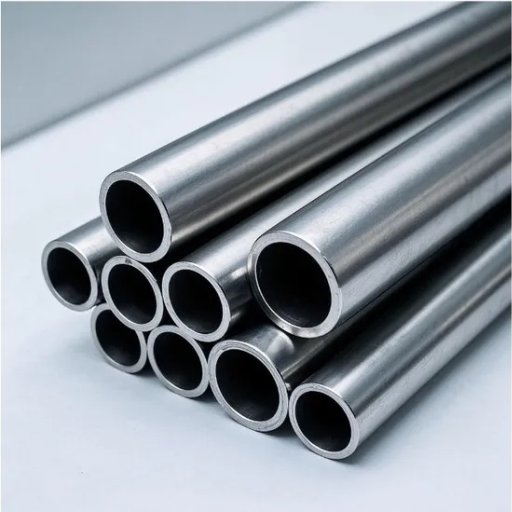
Inconel 600 is a general-purpose alloy in a market full of specialists, and the honest answer for a lot of duties is that it is the wrong one.
Choose 625 when chlorides are the problem. 9% molybdenum, PRE 40.8, no crevice attack in the 90-day seawater test. It costs more and it is the correct answer for seawater, brackish water and chloride-bearing process streams. The comparison is set out in Inconel 600 vs 625.
Choose 690 when hot nitric acid or nuclear service is the problem. Higher chromium, no sensitization heat treatment required in the handbook’s acceptance table, and the alloy the nuclear industry moved to for steam generator tubing.
Choose 601 when oxidation is the problem and strength is not. Higher chromium, better scaling resistance, and a different set of mechanical limits. See Inconel 600 vs 601.
Choose C-276 or 686 when the acid is hydrochloric, wet chlorine, or mixed with oxidizing halides. No version of 600 belongs in those duties.
Stay with 600 when the medium is caustic, ammonia, high-purity water, a fatty or organic acid, dry chlorine or hydrogen chloride at temperature, a nitriding atmosphere, or a furnace gas without sulfur. That is a long list. It is also why the alloy is still specified half a century after it was introduced.
Inconel 600 Corrosion Resistance FAQ
Is Inconel 600 resistant to seawater?
No, not for immersed or creviced service. Inconel 600 contains no molybdenum, has a pitting resistance equivalent of 16, and is described by its producer as subject to severe crevice attack beneath deposits in seawater and “not generally used in marine environments.” A 30-day washer-crevice test measured 34 mils (0.86 mm) of attack. Coastal atmosphere on dry structures is a different case and performs well.
Is Inconel 600 resistant to sulfuric acid?
Only narrowly. It is adequate in cold, non-aerated sulfuric acid up to about 70% concentration. Rates rise steeply with aeration and temperature: 9 mpy (0.23 mm/a) in 5% acid at 30 °C air-free, against 78 mpy (1.98 mm/a) air-saturated, and 150 mpy (3.81 mm/a) in 5% acid at 80 °C with air present. It should not be used in hot sulfuric acid except at low concentration.
Does Inconel 600 suffer chloride stress corrosion cracking?
Effectively no. The 72% minimum nickel content makes the alloy “virtually immune to chloride-ion stress-corrosion cracking,” and the same immunity holds in chloride-bearing fresh water. That immunity does not extend to caustic alkalies at high temperature and strength, to mercury at temperature, or to fused caustic, where stress corrosion cracking is a documented failure mode.
What is Inconel 600’s maximum service temperature in air?
The bulletin’s service range runs from cryogenic to above 1,095 °C (2,000 °F), and cyclic oxidation testing is reported at 980 °C (1,800 °F). That figure is an oxidation and scaling limit, not a load limit. For a pressure part, the working ceiling is set by creep and rupture data, which are lower.
Is Inconel 600 suitable for sour service?
It depends which standard applies. UNS N06600 is not listed in NACE MR0175/ISO 15156-3, because the standard’s Annex A.4 requires at least 2.5% molybdenum in solid-solution nickel alloys for that scope. NACE MR0103 does permit wrought UNS N06600 in refining service, provided hardness does not exceed 35 HRC. Verify against your licensed copy of whichever standard governs the project.
What corrosion rate should I allow for Inconel 600?
Use the rate for your actual medium, not a generic figure. As a sizing rule, multiply the rate in mm/a by the design life in years: 0.1 mm/a over 20 years needs 2 mm of allowance. Anything above about 0.5 mm/a usually means the alloy is wrong for the duty rather than that the wall needs to be thicker.
Conclusion
Inconel 600 corrosion resistance is a set of envelopes, not a property. It is close to inert in caustic soda, high-purity water, ammonia and hot fatty acids. It is good in oxidizing acids and dry high-temperature gases. It is marginal in dilute sulfuric acid and hot phosphoric acid, poor in hydrochloric acid beyond a few percent, and simply wrong for immersed seawater.
The three facts worth carrying into a specification meeting are these. Caustic service above ambient requires the stress-relief cycle, and chlorate in the liquor will destroy the equipment regardless of the alloy. Seawater requires molybdenum, which means 625 or better. And ASTM B166 and B168 do not test corrosion or sensitization, so if the requirement is not in your purchase order, it is not in the material.
Send us the medium, the concentration, the temperature and whatever contamination you know about. We will tell you whether 600 sits inside its envelope, and if it does not, which grade does. Start with the nickel-based alloy range for the full product list, or go straight to Inconel 600 applications and Inconel 600 pipe if the form is already decided.