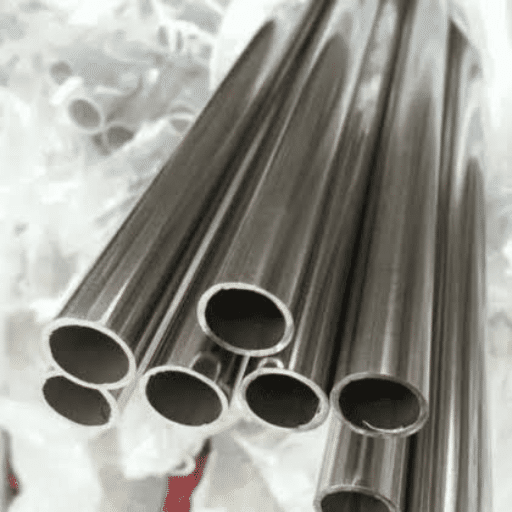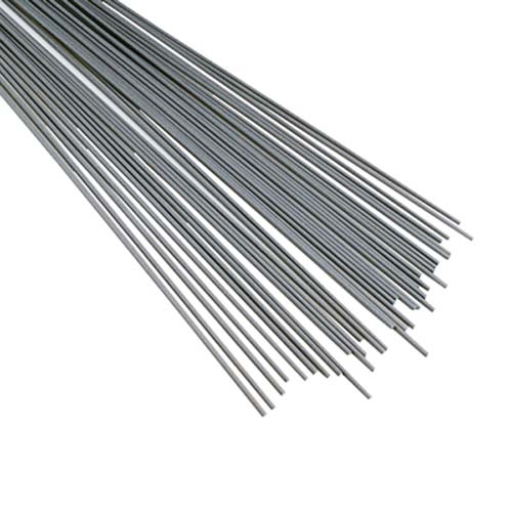
Yes, you can weld 904L with GTAW, GMAW, and SMAW using matching ER385 filler (or E385 electrodes). The catch is that 904L is fully austenitic, so its weld metal contains no ferrite to resist solidification cracking. Success comes down to four controls: match the filler chemistry, cap heat input at 1.5 kJ/mm, hold interpass temperature at or below 100°C, and keep dilution low with stringer beads.
A fabrication shop learned this the hard way. Their procedure qualification on 3-inch Schedule 80 pipe in 904L passed every bend test on the first try. Then the tensile coupons failed at 56,500 and 57,000 psi, well under the ~70,000 psi they expected.
The filler was correct. The problem was dilution and thermal cycling: too much parent metal melted into a small weld pool, deposited over too many passes. Switching to larger-diameter ER385 rod, depositing more metal per pass, and tightening heat-input control fixed a joint that the filler chemistry alone couldn’t save.
904L welding is routine in chemical, desulfurization, and desalination service, and this guide covers the parameters, filler-selection logic, and defect controls that keep a fully austenitic weld sound. It is one article in our complete 904L stainless steel guide. We supply 904L plate, pipe, and bar alongside matching ER385 and E385 consumables with full documentation, so you can qualify a procedure and buy the certified material from one source.
Key Takeaways
- 904L is a fully austenitic, ferrite-free grade, so its weld metal is more prone to solidification (hot) cracking than 316L. Low heat input and low interpass are not optional.
- Use matching ER385 wire (AWS A5.9 / ISO 14343-A W 20 25 5 Cu L) or E385-16/E385-17 electrodes (AWS A5.4). Over-alloy with ERNiCrMo-3 or ERNiCrMo-4 for severe acid or chloride service.
- Cap heat input at 1.5 kJ/mm and interpass temperature at 100°C. No preheat is required, and most joints need no post-weld heat treatment.
- A failed tensile in procedure qualification is usually a dilution and thermal-cycle problem, not a filler-chemistry problem. Larger rod and fewer passes are the typical fix.
- Chinese equivalent designations (S31782 / 015Cr21Ni26Mo5Cu2) and NB/T 47014 qualification matter if you are sourcing or qualifying to Chinese project standards.
Is 904L Weldable? Weldability Overview
904L is readily weldable, and it is welded every day in sulfuric acid plants, flue gas desulfurization (FGD) absorbers, and phosphoric acid circuits. What separates it from a workhorse like 316L stainless steel is its microstructure. 316L solidifies with a small amount of delta ferrite, which scavenges sulfur and phosphorus and resists cracking. 904L is fully austenitic and stays that way, so it has to earn its crack resistance through procedural discipline instead.
Here is the practical picture:
- All common arc processes work. GTAW, GMAW, FCAW, SMAW, and SAW are all used on 904L. GTAW is the default for root passes and thin-wall pipe.
- No preheat is required. 904L is austenitic and doesn’t form hard martensite, so preheating has no metallurgical benefit. Preheat advice of 150-300°C belongs to low-alloy and martensitic steels and shouldn’t be copied onto 904L procedures.
- No post-weld heat treatment in most cases. The low carbon content (0.020% max) removes the intergranular corrosion concern that drives PWHT in other grades.
- Oxyacetylene welding is not suitable. Use an electric arc process with controlled heat input.
In short, 904L rewards clean, cool, disciplined welding. It punishes a welder who runs hot because the material “looks like stainless.”
904L Welding Metallurgy: Why It Hot-Cracks
To weld 904L well, you need to know why it cracks. During solidification, a fully austenitic weld pool rejects sulfur, phosphorus, and silicon at the moving solidification front. These elements concentrate in the last liquid to freeze and form low-melting-point eutectic films along the grain boundaries. If the joint is restrained or the heat input is high, the tensile stress across those still-frozen films tears them open, and you get a hot crack.
Three consequences follow from that mechanism:
- Cleanliness is metallurgical, not cosmetic. Sulfur and iron contamination from a carbon-steel wire brush or a dirty glove feeds directly into the cracking problem. Use dedicated stainless tools and clean each pass.
- Dilution hurts twice. Melting too much parent metal changes the weld chemistry and adds thermal cycles. Low dilution keeps the deposit close to the ER385 design and reduces the number of passes.
- Bead shape matters. A wide weave produces a deep, narrow solidification front that is easy to tear. Stringer beads with a favorable width-to-depth ratio solidify more soundly.
One more factor: molybdenum segregation. In the as-welded condition, molybdenum can segregate within the dendritic structure, creating localized zones that are less corrosion resistant than the bulk 904L corrosion resistance you specified. That is why over-alloyed fillers and, in severe cases, post-weld solution annealing exist.
Need a welding procedure reviewed? Our metallurgical engineers review 904L WPS/PQR packages and consumable selections at no charge. Speak with our technical team
904L Filler Metal Selection: ER385, E385 and Over-Alloying
Filler selection is the first line of defense against hot cracking, because a fully austenitic deposit’s chemistry is designed to resist it.
Matching Filler: ER385 Wire and E385 Electrodes
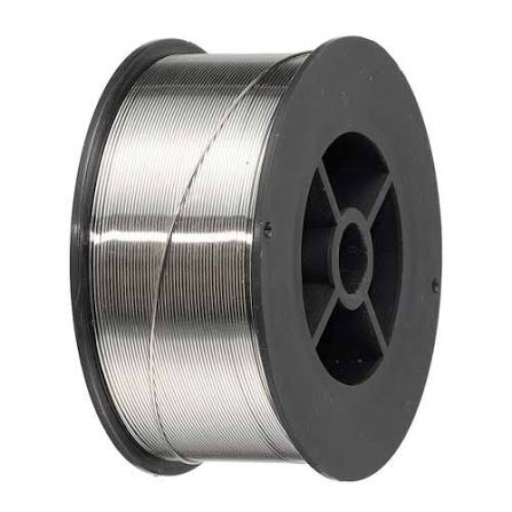
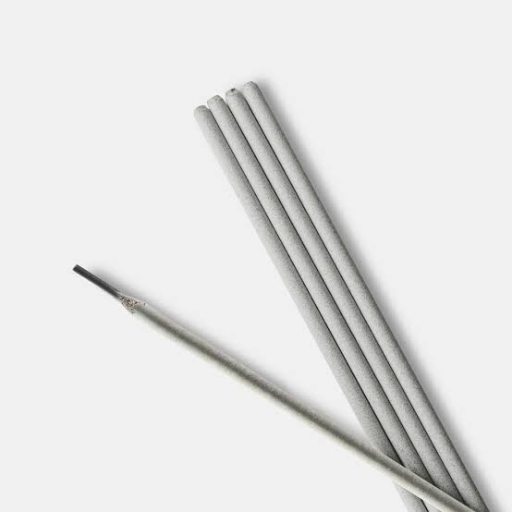
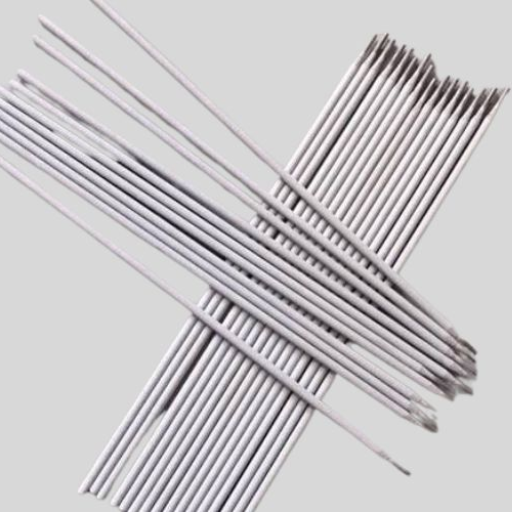
The matching consumable for 904L is ER385 for wire processes (AWS A5.9, ISO 14343-A W 20 25 5 Cu L) and E385-16 / E385-17 for stick welding (AWS A5.4), such as the ESAB Exaton 385-16 covered electrode. ER385 welding wire is the 904L filler wire most fabricators specify for TIG and MIG work. ER385 is formulated with extra-low carbon, sulfur, phosphorus, and silicon specifically to minimize hot cracking and fissuring in fully austenitic weld metal while maintaining corrosion resistance.
A typical ER385 deposit runs about 20% Cr, 25% Ni, 4.8% Mo, and 1.5% Cu, closely matching the base metal.
| Element | Typical ER385 (wt%) | Role |
|---|---|---|
| C | ≤0.02 | Low level prevents intergranular corrosion |
| Cr | ~20.0 | Passive film, oxidation resistance |
| Ni | ~25.0 | Austenite stability, SCC resistance |
| Mo | ~4.8 | Pitting and crevice resistance |
| Cu | ~1.5 | Reducing-acid (sulfuric, phosphoric) resistance |
| S, P, Si | Extra low | Minimize hot cracking |
All-weld-metal tensile strength runs roughly 550-610 MPa, with specification minimums commonly set at 510-520 MPa. For reference, Avesta’s 904L TIG deposit is rated at 610 MPa tensile, 410 MPa yield, and 35% elongation.
Over-Alloying for Severe Service
When the weld will stay in the as-welded condition or the service is aggressive, over-alloy the joint with a higher-molybdenum nickel filler:
- ERNiCrMo-3 (Alloy 625) for hot-chloride and mixed-acid service.
- ERNiCrMo-4 (Alloy C-276) for the most severe oxidizing and reducing acid combinations.
Over-alloying is a legitimate engineering choice, not a shortcut. It buys corrosion margin in a deposit that cannot be solution-annealed after welding. The trade-off is higher cost and a departure from base-metal strength matching.
Filler Selection Decision Matrix
| Base metal/joint | Filler | Notes |
|---|---|---|
| 904L to 904L, root pass | ER385 (GTAW) | 100% argon; back purge for pipe |
| 904L to 904L, fill and cap | ER385 / E385-16 or -17 | Stringer beads, low heat input |
| 904L, severe acid/chloride, as-welded | ERNiCrMo-3 or ERNiCrMo-4 | Restores corrosion margin without PWHT |
| 904L to 304L/316L | ER385 or 309LMo | 309LMo reduces cracking risk in mixed joints |
| 904L to carbon or low-alloy steel | ERNiCr-3, ERNiCrMo-3, or 309LMo | Avoid a hard, crack-sensitive transition |
| 904L to 2205 duplex | Over-alloyed nickel filler (ENiCrMo-3) | Balance dilution and corrosion |
904L Welding Processes: TIG, MIG, Stick and More
Each process has a role, and each has a way to keep heat input under control. For the fundamentals that apply across grades, see our stainless steel welding guide.
GTAW (TIG) is the first choice for 904L TIG welding: root passes, thin-wall pipe, and any joint where cleanliness and dilution control matter most. Use DCEN, 100% argon shielding (99.99% purity or better) at roughly 10-12 L/min, and an internal argon purge for pipe until at least the second layer is complete. Typical parameters for pipe up to NPS 2 are 60-80 A at 18-24 V.
GMAW (MIG) suits thicker fabrication and higher deposition rates. Use an argon-rich mixture (a tri-mix such as Ar + 30% He + 1-3% CO₂, or 98% Ar + 2% O₂) in spray transfer. Keep the wire diameter modest and travel speed steady so heat input stays inside the 1.5 kJ/mm ceiling.
SMAW (stick) is practical for fill and cap on pipe and for field work. Use E385-16 or E385-17 with DCEP. Match electrode diameter to thickness: 2.5 mm for plate up to about 6 mm, and no larger than 3.2 mm above that.
FCAW and SAW handle heavy deposition. Flux-cored welding typically runs on 80% Ar / 20% CO₂, and SAW pairs ER385 wire with a matching flux that is itself rated for hot-crack resistance. In one dissimilar 904L/2205 procedure, FCAW deposited fill passes at heat inputs of roughly 0.55-1.06 kJ/mm, comfortably under the ceiling.
Whatever the process, the rule is the same: short arc, fast travel, no weaving, and stringer beads.
Heat Input, Interpass and Preheat Control
This is where most 904L welds are won or lost. The manufacturer limits are consistent across the major consumable datasheets.
| Parameter | Recommended limit | Why |
|---|---|---|
| Heat input | Max 1.5 kJ/mm (some procedures target <1 kJ/mm) | Limits time at temperature and solidification-front stress |
| Interpass temperature | Max 100°C (some datasheets allow up to 150°C) | Reduces cracking, scale, and distortion |
| Preheat | None required | 904L does not form hard martensite |
| Bead technique | Stringer beads, no weaving | Favors sound solidification |
| Dilution | Minimize | Protects weld chemistry and corrosion resistance |
The interpass limit is the most commonly violated rule. The voestalpine Böhler AVESTA 904L datasheets specify a maximum of 100°C and instruct the welder to let the joint cool to that temperature before the next run. Some datasheets relax this to 150°C, and a few Chinese procedures allow up to 150°C with verification by contact thermometer. Treat 100°C as your default and only relax to 150°C with a qualified procedure and per-pass temperature checks.
Exceeding the interpass limit extends the time the metal spends in the carbide-precipitation range. The result is more scale, more distortion, and a higher risk of the very cracking you are trying to avoid.
Buying 904L and consumables together? We stock 904L plate, pipe, and bar to ASTM B625 and B677 alongside ER385 wire and E385 electrodes, each with MTR and EN 10204 3.1 documentation. Request a quote, pricing and availability within 24 hours
Post-Weld Heat Treatment and Cleaning
For most 904L joints, the answer on PWHT is simple: you don’t need it. The low carbon content removes the intergranular corrosion driver, and the matching or over-alloyed deposit is service-ready as welded.
There are two cases where post-weld thermal treatment enters the conversation:
- Severe service where as-welded corrosion margin is thin. A full solution anneal at 1070-1150°C (typically ~1120°C) followed by a rapid water quench restores homogeneity and removes molybdenum segregation. This is a shop-level operation, not a field repair. See the base-metal 904L heat-treatment windows for the full anneal-and-quench cycle.
- Re-drying coated electrodes. E385-17 electrodes may be re-dried at 250-300°C per the manufacturer’s instruction before use.
What you should never skip is post-weld cleaning. Heat tint and oxide scale are corrosion initiation sites. Brush the weld and heat-affected zone, then pickle and passivate to restore the passive film. For sanitary and high-purity process piping, this step is as important as the weld itself.
904L Welding to Dissimilar Metals
Dissimilar joints with 904L are common in FGD and chemical plants, where 904L components tie into 304L, 316L, or carbon-steel piping.
- 904L to 304L or 316L: ER385 works, but 309LMo is often preferred because its duplex-ferrite content further reduces cracking risk in a mixed joint.
- 904L to carbon or low-alloy steel: use a high-nickel filler such as ERNiCr-3 or ERNiCrMo-3, or 309LMo. The nickel-rich deposit avoids the hard, crack-sensitive transition zone that forms when austenitic weld metal meets ferritic steel.
- 904L to 2205 duplex: use an over-alloyed nickel filler and manage the duplex side’s own heat-input window separately.
Two rules govern all dissimilar work. Control dilution so the weld chemistry does not drift, and respect the two base metals’ different thermal expansion coefficients so you are not adding restraint stress on top of an already crack-sensitive weld.
Hot Cracking, Defects and How to Prevent Them
Most 904L weld defects trace back to heat, contamination, or restraint. Here is how the common ones present and how to stop them.
- Solidification (hot) cracking. The signature 904L defect. Caused by low-melting-point films at grain boundaries under restraint. Prevent it with low heat input, low interpass, minimal dilution, and stringer beads.
- Crater cracks. Occur at the end of a pass where the arc stops. Grind out each crater before re-striking the arc, or use run-off tabs. Do not strike the arc directly in the groove.
- Porosity. Usually from moisture, oil, or incomplete shielding gas coverage. Dry the joint, verify gas flow, and purge pipe interiors.
- Lack of fusion. A consequence of travel speed and bead placement rather than filler choice. Slow the travel and confirm joint prep.
- Contamination cracking. A brush or tool that touched carbon steel can leave sulfur and iron in the joint. Dedicated stainless tools are a hard rule.
A practical prevention checklist: clean the bevel, verify alignment to within 0.5 mm, deposit stringer beads with no weaving, check interpass temperature with a contact thermometer before every pass, use backing gas on pipe roots, and pickle and passivate after welding.
Procedure Qualification: A 904L GTAW Case Study
The clearest illustration of why dilution control matters comes from the shop-floor example that opened this article, documented on the AWS welding forum.
The job was a procedure qualification on SB 677 (904L) 3-inch Schedule 80 pipe, welded with GTAW open root under 100% argon backing. Parameters were modest: 12-14 V, 90-130 A, and 300°F (149°C) interpass, with 1.6 mm ER385 filler. The root and fill passed every bend test with no indications.
Then the tensile tests came back at 56,500 and 57,000 psi against an expected ~70,000 psi, with both coupons failing in the ductile weld metal.
The filler was not the problem. The recommendation from the consumable supplier was to run a larger-diameter ER385 rod so more metal is deposited per pass, reducing the number of passes and the number of thermal cycles. Limiting heat input to 1.5 kJ/mm and interpass temperature to 100°C completed the fix. The lesson is direct: in fully austenitic 904L, the weld’s strength and integrity depend on how you deposit it, not only on what you deposit.
If you are preparing a 904L welding procedure, expect the qualification to stress dilution and thermal-cycle control. Size your filler so you deposit efficiently, and hold the interpass limit on the floor, not just on paper.
Sourcing 904L Base Metal and Consumables
A qualified procedure is only as good as the material you feed it. For 904L, buy base metal in the solution-annealed and pickled condition and confirm the documentation before fabrication begins.
Base metal: order 904L plate and sheet to ASTM B625 / A240 and 904L pipe and tube to ASTM B677, B673, or B674. Specify the delivery condition and the documentation tier on the purchase order.
Consumables: specify ER385 wire to AWS A5.9 and E385 electrodes to AWS A5.4, and ask for the consumable’s own MTR and EN 10204 3.1 or 3.2 certification. A matching filler certificate with the base-metal MTR gives your QA team a complete traceability chain.
Chinese project standards: if your project or MTR uses Chinese designations, note that 904L appears as S31782, 015Cr21Ni26Mo5Cu2 (new), or 00Cr20Ni25Mo4.5Cu (old) under GB/T 20878. Procedure qualification follows NB/T 47014 for pressure-vessel work. Our 904L equivalents reference maps every designation so incoming MTRs line up with your drawings.
A last sourcing note: verify the copper and molybdenum lines on your incoming PMI. Those two elements are where counterfeit or downgraded 904L most often shows up, and the grade’s acid resistance depends on them.
FAQ: 904L Welding
Can 904L be welded?
Yes. 904L welds well with GTAW, GMAW, FCAW, SMAW, and SAW using matching ER385 filler or E385 electrodes, provided heat input and interpass temperature are controlled.
What filler metal is used for 904L?
Matching filler is ER385 (AWS A5.9 / ISO 14343-A W 20 25 5 Cu L) for wire and E385-16 or E385-17 (AWS A5.4) for stick. Use ERNiCrMo-3 or ERNiCrMo-4 where as-welded corrosion margin must be higher.
Does 904L need post-weld heat treatment?
In most cases, no. Where severe service demands it, solution-anneal at 1070-1150°C and water quench. Re-dry coated electrodes at 250-300°C before use.
Does 904L require preheating?
No. Preheating provides no metallurgical benefit for this austenitic grade. Only warm the joint to remove surface moisture in cold or damp conditions, and do not exceed 100°C.
What heat input and interpass temperature should I use?
Cap heat input at 1.5 kJ/mm (some procedures target below 1 kJ/mm) and hold interpass temperature at 100°C or below, relaxing to 150°C only with a qualified procedure and per-pass checks.
Why does 904L hot-crack more than 316L?
904L is fully austenitic and contains no delta ferrite to dissolve sulfur and phosphorus. Those elements form low-melting-point films at grain boundaries, which tear under restraint stress.
Can 904L be welded to carbon steel?
Yes, using a high-nickel filler such as ERNiCr-3 or ERNiCrMo-3, or 309LMo, to avoid a hard and crack-sensitive transition zone.
Is 904L weldable to 2205 duplex?
Yes. Use an over-alloyed nickel filler and manage the duplex side’s separate heat-input window to protect its ferrite-austenite balance.
Conclusion
904L welding is a discipline problem more than a difficulty problem. Match the filler with ER385 or E385, keep heat input at or below 1.5 kJ/mm, hold interpass temperature at 100°C, deposit stringer beads with minimal dilution, and clean each pass. Do that, and a fully austenitic weld will hold up in the sulfuric acid, FGD, and desalination service it was specified for. Ignore it, and the deposits the grade was chosen to resist will find the crack.
The three takeaways worth remembering: 904L’s hot-crack sensitivity comes from its fully austenitic microstructure; matching filler chemistry and low heat input are both essential; and a failed procedure qualification is usually a dilution and thermal-cycle problem you can fix without changing filler.
Zhonggongte supplies 904L plate, pipe, and bar to ASTM B625 and B677 with full MTR and EN 10204 3.1/3.2 documentation, matched to ER385 wire and E385 electrodes so your procedure and your material come from one certified source. Tell us your joint geometry, service environment, and qualification standard, and our metallurgical engineers will confirm the right filler and form for your project.