One of the most heavily utilized materials in the majority of the world will definitely include steel in its order of importance. This is because, to a certain extent, it is used in a wide variety of areas and domestic activities, more specifically, construction and transportation, among many others. But it is not only engineers who work with the remarkable metal that requires an understanding of the melt temp of steel. However, in this part, we shall focus on steel and stainless steel melting points, what they are, where this concept is applied, and how important it is, and all those factors that go parallel with it. For instance, to some of the readers who may be busy constructing robotic arms or mending tools or concerned with issues such as: would steel be useful for certain delicate tasks performed at elevated temperatures, the following brief exposition shall be extremely helpful.
Introduction to Melting Points
Definition of Melting Point
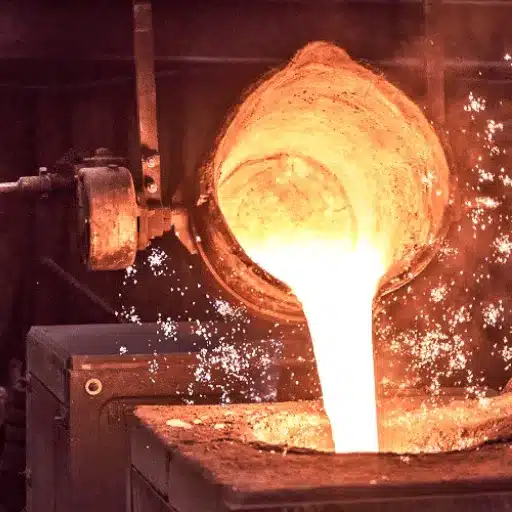
Solid materials have a specific temperature known as the melting point, at which solids transform into liquids only under atmospheric pressure. A pure substance possesses the characteristic of having an absolute melting point, which is important for the utility of the substance. Steel is known to have a defined melting range of between 2500F and 2800F (1370 °C to 1540 °C), depending on the composition of steel and the alloy. Various materials generally used for the decoration of surfaces are made of stainless steel, which has melt temperatures of about 2550º F to 2790° F(1399° – 1533° C), so the melt temp of steel is higher thanks to the addition of chromium and nickel and some other elements.
The melt temp of steel is influenced by a variety of factors, including the carbon content and alloy composition, as well as the method of production and processing. As an example, sometimes increasing the carbon content will lower the melting temperature of steel, while additions of elements, such as tungsten or molybdenum, will increase heat load carrying capacity. The understanding of the above situation is basic to the selection of materials to be used for a specific engineering application. This is commonly encountered in the fields of civil, airframe, and even automotive cooling systems.
Importance of Melting Points in Metallurgy
In metallurgical processes, an understanding of metals and their respective heat levels is elementary because it explains the applicability of the different materials across several manufacturing and construction industries. For example, Aluminum is a light metal and has a melting point of steel less than the temperature of 660°C (1220°F); this temperature makes the metal useful in the fabrication of light materials, fast and easy. On the other hand, metals that are able to stand very high temperatures, such as Tungsten, whose melting temperature has been recorded to be 3422°C (6192°F), are very important in industries such as aerospace manufacturing of equipment and weapons manufacture, where high temperatures play a significant role.
Over the past few years, great strides have been made in improving performance particulary due to the use of a specific category of metals in certain environmental settings. For instance, new types of nickel alloys that are able to withstand 2 192 °F (1 200 °C) melt temps are increasingly being used in the production of turbines as they are able to retain their woeful structural stability at such elevated temperatures. Such advances aim at above all to achieve high performance with regard to energy efficiency and ability to withstand harsh conditions without being abraded.
In traditional forms of 3D printing, there is importance placed on the control of the cooling of the melted material. The metals employed in any 3D printing process, including stainless steel and titanium or any other metals with a melt temp of steel that is around 1510 °C (2750 °F) or that of titanium, which is 1668 °C ( 3034 °F), to manufacture components of the 3D printing device. As the significance of this particular sector eludes a shallower understanding, attention has also switched to the problem of the heat generated in the production process, with attempts at exploiting it for the improvement of technology.
Metallurgical testing, analysis, and or shaped machines have helped forward many, if not all, of the projects that are ongoing in the field. These opportunities, which in turn focus on the operational performance of high alloys within specific melting range conditions without deformation. The importance of such temperatures is always of great concern in the development process.
Overview of Steel Melting
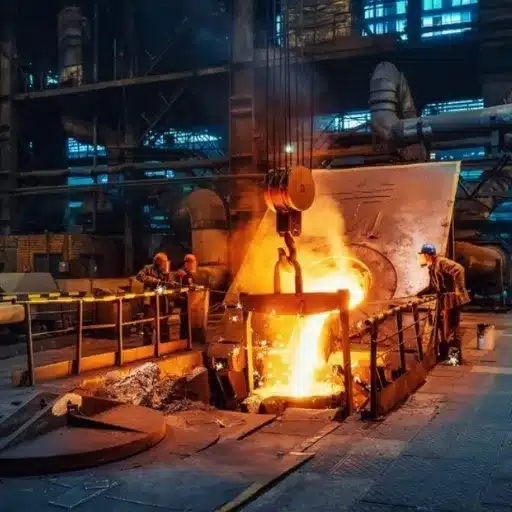
The steel melting process is used in metal production to transform primary substances like steel, which sometimes includes scrap and additives. In general, these procedures include basic oxygen steelmaking (BOS) or an electric arc furnace (EAF), where elements are subjected to melting due to extremely high temperatures.
Nevertheless, studies on this sector reveal that it remains constant with a melt temp of steel approximately between 1,370 and 1,540 °C (2,500 and 2,800 °F), depending on the steel grade and additives present. For instance, the content of carbon, manganese, and silicon greatly affects the application as well as its melting. That means that an increase in the amount of carbon would lead to a low-melting-point material, and other ingredients would require a strategic arrangement that would give the material production resistance to weakening from heat.
Electric arc furnaces are also among the unique category of steel manufacturing units as they don’t need a blast furnace for production, yet manage to attain a high melt temp of steel. They are often easy to find since they use less power, contain the load of metal scrap, and are environmentally friendly, especially in developed nations. By the year 2023, it was found that almost 70% of the available steel uses recycled materials, thereby the bullet green casting concept is working as the current fad.
Also, it seems that, with the updated software suites, it is possible for engineers to make close predictions of the slag melting and heating patterns within the LCO containing the grade powders. They are the kind of steel manufacturing methods that are needed to improve the production capacity of necessary construction, as well as automobile and aviation materials.
Types of Steel and Their Melting Points
Carbon Steel Melting Point
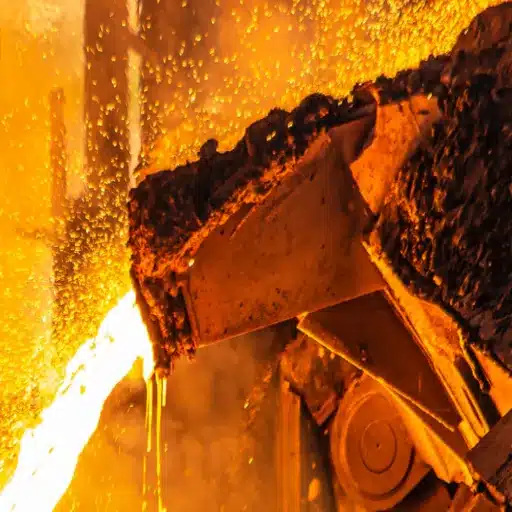
Carbon steel has good strength and versatility. The melt temp of steel is considered to lie between 2500 and 2800 degrees F (1370 to 1530 degrees C). This range also differs with the type or the carbon content of steel; for example, low-carbon steel, which has less than 0.25% carbon content, will exceed the maximum range provided due to the high concentration of iron in the alloy. On the other hand, high carbon steel having more than 0.6 percent carbon content will be the least in this aspect.
Consider the melt temp of steel. It is a vital aspect in many of the steel components-related operations, as some of these tasks are done at very high temperatures, such as welding, forging, or casting. This means that steel could retain any form but could also lose the forms as the metal is heated to its working state. Sergey Alekseev, who is a machine builder and an engineer, comments on how evidential control over the melting temperature has become possible due to technology, which gives more stability for different carbon construction steel grades. Advantages of these properties of carbon steel place it at the list of materials that are difficult to replace when it comes to construction, machinery, or tools.
Stainless Steel Melting Point
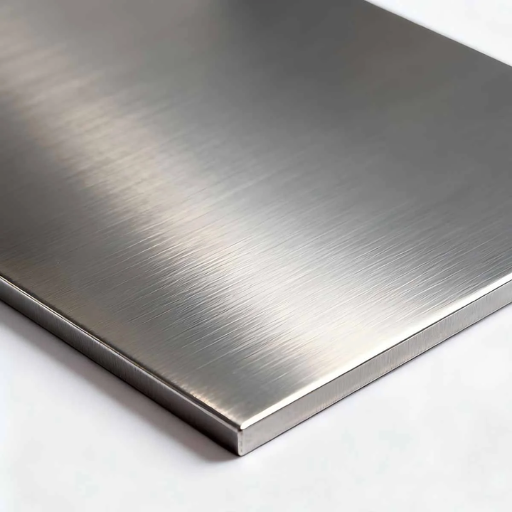
Stainless steel, with its clear characteristics of being strong and resistant to rust, has a melting range of 2500F to 2800F (equivalent to 1370 to 1540 degrees centigrade). Despite this, the melt temp of steel may be altered depending on the kind and the content of the steel. For example, structural steel types can contain different percentages of chromium or nickel concentrations, which will change, to one extent or another, the melting temperature compared to more traditional types.
The available data shows that the two most used in practice, stainless steel grades 304 and 316, melt approximately at a range of 2550 degrees Fahrenheit to 2650 degrees Fahrenheit (1,398 degrees Celsius to 1454 degrees Celsius), respectively. Moreover, these values exceed those of carbon steel, which implies that the stainless steel not only resist to the high temperatures, but also retains its stability in those conditions compared to the carbon steel. This is the reason why stainless steel is important and even necessary in a variety of applications, for example, in construction, aerospace, industrial furnaces, atomic reactors, chemical equipment, etc.
In addition, advances in metallurgical processing, including precise alloying techniques and sophisticated heat treatment has enabled the transformation of melting temperature and improvement of performance in various grades of stainless steel. The melt temp of steel and the characteristics of stainless steel are such that the latter is still the principal material in those areas that are most challenging and exact the durability, amongst other requirements of a material.
Alloy Steel Melting Point
The range of melting temperatures of alloy steels depends on the composition of the alloys and usually ranges between 2,500° F and 2,700° F (1,370° C and 1,480° C). This melting range variation can be attributed to the use of alloying metals other than steel for specific purposes, such as Cr, Ni, Mo, and V. For example, the addition of Cr to alloy steels may contribute to increasing the temperature resistance by a few degrees, while the adding of Ni may cause better impact resilience without altering the melt temp of steel.
Alloy steel has a melting range of temperature that is particularly because of either the mode of manufacture or the m-shaped application. When it comes to ordinary quality alloys, like 4140 or 4340 alloy steel, because ideal amounts of alloys are mediated inside, the melting ranges and melt points tend towards the maximum edge of the range. Such steel is utilized in the aerospace market, in the automotive, and most importantly, in the industrial apparatus creating elements, where strength is high at high temperatures.
The application of a specific alloy or grade of steel depends on the criticality of the application, especially towards intense heat and deformation at elevated temperatures. More advanced in analytical methods and the analysis of thermal properties of alloy steels have led to ascertaining that steel remains one of the strongest and toughest materials, especially at high temperatures.
Factors that Affect the Melting Point of Steel
Alloying Elements and Their Impact
The alloying elements may either increase or decrease the casting temperature of steel. Steel’s primary constituent, iron, melts at a temperature of 1538 degrees Celsius, 2800 degrees Fahrenheit. It is because the hydrogen in steel is very receptive to certain elements found in the matrix of the iron that the melting point of the steel changes with the increase of certain alloying elements.
Some of the alloying elements other than carbon, manganese, or silicon cause the melt temp of steel to come down. Carbon in particular helps in iron carbon cementite formation, which is thermodynamically favorable at lower temperatures or decreases the melting point of steel because the secondary phase of iron carbide has a lower melting point, hence the steel starts melting down at a lower temperature. Nevertheless, elements such as tungsten, molybdenum, and chromium are used because they increase the melting point of steel, making it a pak heat resistant material.
Findings from a study reveal that steels, also known as tools, which mainly consist of iron and relate to high levels of tungsten contain a melt temp of steel well above the value of 3000 degree Fahrenheit or 1650 degree Celsius, hence could be used for a wide array of applications, such as manufacturing wear and heat resisting articles, sparks and knives, or any other cutting contents. Moreover, the carbon steels with appropriate levels of chromium and nickel do not lose their properties at elevated temperatures, and so in most of the cases they can also be used where the temperature exceeds that of heat and corrosion resistant materials, that is, 985°C, or 1800°F.
These elements have well-defined properties, and their corresponding interactions have brought about the emergence of newer alloy types. For instance, thanks to numerical simulation development and the progression of materials science, the steel industry no longer struggles for any ideas to meet the demands in jet turbines, energy, aviation, and other areas involving elevated temperatures.
This system helps in the creation of alloys in which the melt temp of steel will not alter the mechanical properties, axes, and dimensions of the main field of action in the boundary-crashing processes.
Impurities and Their Role in Melting
The inherent characteristics and any given use of materials are evaluated in terms of melting. Impurities are generally known to reduce the melting temperature of a pure substance, often called melting point depression. An example of such melting depression is clearly seen in Steel since iron on its pure form melts around 1538 degrees Celsius, while the melt temp of steel varies greatly with an increase in carbon content. This principle has a wide application in the industry towards efficient casting and forging.
The statement that general purity is detrimental to the relatively strong characterization is incorrect. Some types of impurities may, instead, improve the material properties if under proper management. This is the case in which, for example, deoxidation in the form of deoxidants such as boron, silicon, in particular carbides, and steel does produce some amounts of manganese and silicon, respectively, which helps to avoid the excess of free oxygen in the liquid phase. The given resultant helps to address – addition of deoxidizers in steel affects its strength properties, thereby making it brittle – a very obvious reason that steel, which is not supposed to be used, will become brittle for nothing. Also, techniques for removing unwanted species, such as vacuum arc remelting and directional support casting, are provided for more specific high technology alloys, for example, used in the systems of airplanes and claustron. There are similar techniques used to prevent these sorts of problems, such as porosity and hot tearing in steels, that occur during the same melt temp of steel when the metal solidifies due to the metal’s brittleness.
The experiments conducted in order to analyse the deviant rate of less than 0.02-0.03 % sulfur content variability in steel show that ductility and toughness of the material change significantly. When it comes to utilizing materials in such performance and safety-sensitive industries, it is very helpful to understand those slight variations. The adverse properties present in the host metals and the magnitudes to which they affect the properties assist the engineer in the improvement of the performance of such metals or even components under consideration. But they were also able to accommodate certain stylistic expectations where they had no choice but to grow within or even pushing editor imposed use limits.
Temperature and Pressure Effects
Material behavior changes with environmental conditions and other factors. For instance, steel becomes weaker but more ductile at higher temperatures, and this affects its application in structures. For instance, the mild steel yield strength markedly falls, almost by 50%, if the temperature rises from 25°C to 600°C, hence a change in the nature of the material. On the other hand, a number of materials in a decreased temperature become more brittle; since their ability to bear dynamic loads therefore, worsens.
The state of feeling pressure also controls many things, especially in systems where pressure has to be maintained above certain limits, as in oil and gas transmission pipes or spaceship vessels. This is because an increase in pressure also phases out some elements, for example, in the transformation of graphite into diamond at 150,000 atmospheres. In addition to that, it enables creep increase of the given material through prolonged elevated temperature–pressure conditions, hence the avoidance of such a situation becomes a requirement. This enabled the structural system to counteract such a situation.
Engineers need to determine the temperature and pressure that are appropriate for the type of material they are building because some materials can deform when exposed in harsh conditions. This is due to the fact that it provides information on the properties of the material when subjected to an environment describing a situation, and on how to enhance a given material composition without problems during usage of the material. There is some difficulty with such vacating, one of which is that the melt temp of steel changes at atmospheric pressure compared to enhanced pressure.
Applications of Steel Melting Knowledge
Manufacturing Processes
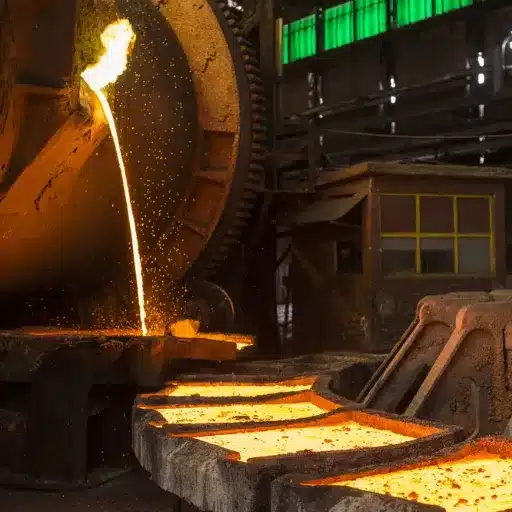
Comprehension of the melt temp of steel becomes essential for every industry in the present era, and in a mass production setting, it is all the more desirable for the civilization. In steel production, there is a need to raise the temperature regime within which all the basic materials, iron ore and scrap steel, as well as additives, are heated in the blast or electric arc furnace and brought to the necessary temperature. About 72% of the global steel production in 2022 is believed to have been made using blast furnaces, whereas the remaining 28% was made using electric arc furnaces, demonstrating the versatility in manufacturing steel.
Subsequently, after the melt temp of steel is achieved, the scope of continuous casting operations is extended. This operation involves a complete transformation of heat and molten steel into rectangular shapes, either large or small, and may also be differently classified into non-dead slabs, billets or blooms. This is a crucial step in the process that guarantees consistency in the material and the reduction of defects in the produced material. Practices like these are about changing the interior design of cast steel tools with the help of electromagnetic mixing and cooling of the materials. And those technologies will be used permanently in the projects.
Apart from this, methods such as rolling, forging, and extrusion are used to shape the steel into the desired form. Using modern rolling mills, etc., different types of metals can be rolled easily with a very minimal tolerance of 0.05 mm ±. Such precision is essential to address the current challenges. Apart from this, the efficient structure of steel is enhanced by the adoption of different heat treatment processes such as annealing, quenching, and tempering processes, which increase properties such as the strength, the hardness, or the ductility.
The advent of Industry 4.0 has brought with it the integration of Artificial Intelligence, the Internet of Things, and analytics to the various manufacturing processes. Systems for condition-based maintenance currently go as far as predicting usage of the machines and even providing a window for the problem of energy use to be tackled with rationalization, whereby the energy consumed for making steel is cut down by up to twenty percent. Certain limited practices can be done and also understood as a fraction of the process of black steel box, though the use of these two worlds in the methodology of manufacturing helps to avoid that.
Engineering Applications
Steel is undeniably necessary for being strong and tough, as it can be widely noticed, even in engineering circles. Imagine issues concerned with the construction of a new bridge, a skyscraper, or any other type of construction. Such factors as durability, ability to carry heavy loads, and resistance to deformation are necessary for the building of bridges, this ideal structural steel has always been used in the construction of bridges.
It will be noted that in the recent past, steel, in particular, high-strength, advanced steels have been incorporated in the automobile manufacturing sector. That is to produce safer and cleaner cars while mitigating the amount of materials used through the optimization of the design. For example, a few of the potential benefits that are linked to the usage of these steels include an overall decrease in the weight of vehicles by up to 25%, which is of great economic benefit due to fuel efficiency, which, inarguably, reduces pollution.
The steel would be everywhere, as it also supports other key economic structures. A good example of typical steel applications can be given by wind turbines, which require around 140 tons of steel per megawatt of generation capacity. This kind of solar equipment and hydroelectric facilities pay the same attention to building steel that can be said to be purely produced and yet preclusive from breakage.
In addition, in the penetration of oil resources, oil industries also have specific types of steel grades used in oil pipelines, in mining equipment, as well as ocean platforms and other structures, the design of which implies the effects of extreme conditions. It is no wonder that, against the background of current progress, a great number of new corrosion-resistant steel grades have appeared in the marketplace.
The abundance of steel grades and their applications only serves to justify the fact that it is the primary element in designing all sorts of engineering industry plants that create aesthetics and environmental security, as well as safety.
Implications in Materials Science
An example of such application of stainless steel is in the use of contemporary materials science and its effect on the industrial sector. Steel grades characterized by strong mechanical properties are better understood with the implication of new materials like dual-phase steels (DPS) and advanced high-strength steels (AHSS). For example, these grades are now extensively used in automotive applications where they are noted to allow a reduction in vehicle mass to approximately 25-30%, which in turn helps in improving fuel efficiency and energy conservation aspects of a typical passenger vehicle.
Stainless steel on its own has several inherent properties that make it the most suitable material for a device that is to prevent corrosion. New materials are developed, such as cobalt-rich cobalt, to make a device last longer by 20% and even more, especially in applications where high-speed or most generally erosive fluid breaks can be seen, such as marine or chemical industries. Even more amazing developments have been enabled, such as, for example, nano-steel, where the loss in tensile strength in the critical load-bearing zone is due primarily to the thin or compact structure and is thus great for military aerospace technology.
On the other hand, replacing steel production with using little or no raw materials and the recycling of steel for a second time have become leading avenues both because of the socio-economic status of these approaches as well as environmental considerations, which are some things to be addressed in this new era. Another interesting fact, according to the latest work from the World Steel Association, is that the steel industry ranks as the highest sector in terms of recycling with a 85%. These are the recent trends in the development of businesses, focusing more on effectiveness but not the extent of deprivation of resources, especially energy and other resources that accompany it, developments that the most recent advances in engineering industries require.
Along with enhancement of some mechanical property through microstructure designing, which was discussed earlier, it is noticeable that steel has a vast potential of energy conservation and in this way, carbon dioxide will be lowered; but even as such, the increasing need for the otherwise evolving and geographically limited amount of energy, in form of sustainable development, is sufficient to contain the above inevitable outcome. Under such circumstances, the properties of steel have to and will naturally be improved from this perspective. This is about looking at steel material itself without any respect to the uses or applications for which the material may be utilized.
Reference Sources
-
Springer: “The ductility of continuously-cast steel near the melting point—hot tearing” – Discusses the behavior of steel near its melting point. Read here
-
J-STAGE: “Effect of cooling rate on ZST, LIT and ZDT of carbon steels near melting point” – Examines the solidus temperature and its relation to carbon content in steel. Read here
-
American Elements: This source provides a detailed list of melting points for various materials, including steel, which ranges from 1425-1540 °C (2600-2800 °F). Visit the source
Frequently Asked Questions (FAQs)
What is the melting temp of steel?
The melt temp of steel is normally taken to be between 2,500°F and 2,800°F, which is around 1,370°C to 1,540°C. It is, however, affected by the type of steel under consideration and specifically by the alloying elements that have been introduced. Carbon content, for example, reduces the melting temperature with an increase in the level of carbon in the steel.
What is the melt temp of steel? Is there any difference with stainless steel?
Typically, the melting point of stainless steel is relatively close, or rather quite low, compared to common steels, for example, around 1400°C – 1500°C or 2550 – 2750°F. However, this is not always the case as other alloying elements, such as nickel and chrome, that help prevent corrosion, will slightly vary the melting point of the steel. Therefore, in order to perform design for high – temperature applications, it is very necessary to be able to determine the components of the materials.
What is the Importance of Knowing the Melting Point of Steel?
The melt temp of steel comes as a necessity in processes involving smithing, soldering, and casting, among others. This helps one to ensure that a particular raw material is of high quality and functions optimally for its intended application. The construction industry, as well as the automotive industry, for instance, utilizes the information and determines which type of steel is suitable for the given engineering purpose, duration, and service.
Are there variations in the melt temp of steel for different grades?
Sure, the melt temp of every kind of steel is unique due to the type of alloy materials, heat treatment, and other variables. In this regard, we can expect that, for instance, low-carbon or alloy steels have higher melting temperatures compared with high-carbon ones and also contain less carbon. Additionally, every stainless steel grade contains a specific proportion of chromium and nickel that is different in each of the stainless steel grades; therefore, the appropriate grade in terms of temperature shall be used for each application.
What Affecting Factors Include Melt Temp Of Steel?
There are many steps that are controlled by the melt temp of steel; some of these steps are common in manufacturing. For instance, a simple example is that, in steel recycling, scrap steel is melted, recovered, and also recycled, where there will be casting of steel because molten steel is contained in a mold shaped to a kneadable figure. Others are fusion processes which are applicable where the melt range is well known and the means of machining do not in any way compromise the probable strain or endurance.
How does steel reuse benefit striving for sustainable development?
Undoubtedly, the reuse of steel comes in handy when striving for the Sustainable Development Goals because it makes it possible to utilize the existing resources with no adverse effect to the environment. Since the melt temp of steel is very high, recycling is achievable without compromising the quality. Furthermore, the process helps reduce the consumption of primary raw materials and energy, in addition to emissions arising from the production of new steel.