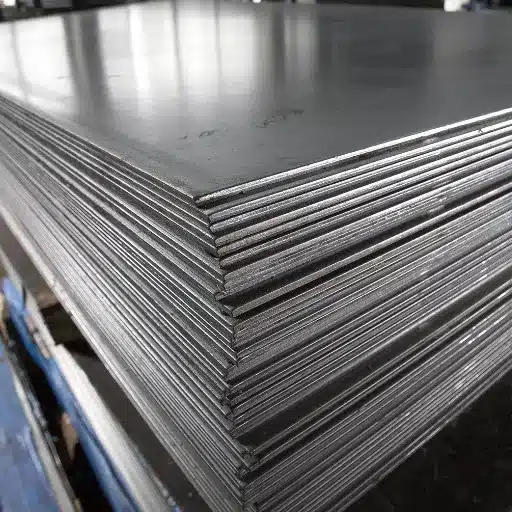
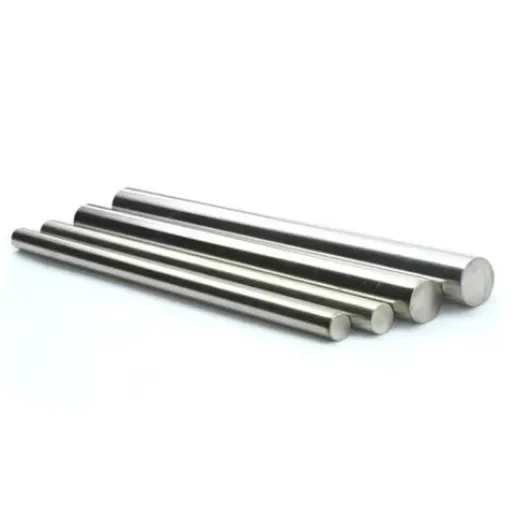
Maraging Steel 350, which carries the additional designations AMS 6515 or Vascomax® 350, is an extraordinary steel alloy of high strength that has established itself as a principal material in the fields where outstanding performance is needed even under extreme conditions. Maraging Steel 350, with its innovative composition and outstanding mechanical properties, is superior to others in terms of its strength, toughness, and corrosion resistance from stress. This article examines the main features, benefits, and uses of this technology alloy, thereby revealing the reason why it is so widely used in pivotal sectors like aerospace, manufacturing, and defense.
Introduction to Maraging Steels
What are Maraging Steels?
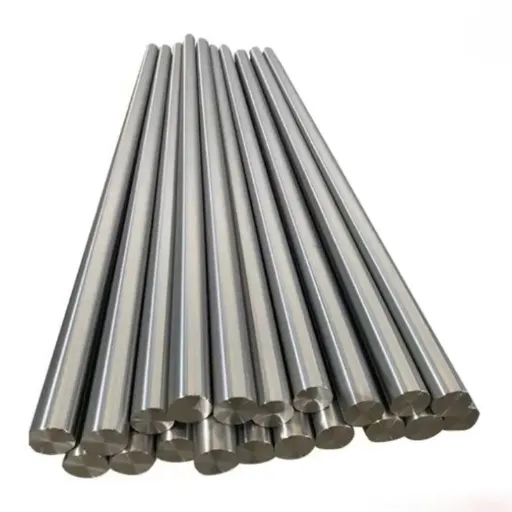
Maraging steels are classified as ultra-high-strength alloys whose main component is iron, and the second one, nickel, in small amounts from 15% to 25%. The process called “maraging” is the origin of the term maraging, indicating the first step “martensite” and the final step “aging” together. Carbon is not to be found in large amounts in these steels, nor is it the sole reason for their superb mechanical characteristics. However, the steels get it through very specific heat treatment plus the adding of other elements like cobalt, molybdenum, and titanium.
The said steels are characters by tensile strength of about 2,500 MPa (megapascals) which is about three times the strength of steel) and so they are also very tough, hence, making them resistant to cracking and deformation even under extreme loads. This property pairing always provides reliability to applications that are demanding in terms of safety and durability, for example, maraging steels are at the core of aerospace engineering as they are used for rocket motor cases and landing gear.
Importance of Maraging Alloys in Industry
Maraging alloys have been a great helping hand in the industry developing as a competitor in the strength, toughness, and adaptability combinations that no other material could offer. The materials’ particularity makes it possible to use them in various areas, where the reliability demanded of the materials under harsh extreme conditions is the critical deciding factor. The aerospace industry, for instance, is one of the industries that extensively depend on these alloys for landing gear components manufacturing, rocket motor casings, and aircraft parts where their high strength-to-weight ratio is crucial.
Not long ago, material processing and additive manufacturing have pushed the limits of maraging alloys to higher grounds. It has been reported that the global maraging steel market is to experience a growth of about 4.6% CAGR from 2023 to 2030. The key factor behind this increase is the demand from the aerospace and automotive industries. The case of the tooling industry is a perfect example where maraging alloys are chosen for making injection molds because they endure high temperatures and pressures for a long time and thus, the need for maintenance is reduced and production efficiency is improved as a result.
Unique Properties of Maraging 350
Mechanical Properties of Maraging 350
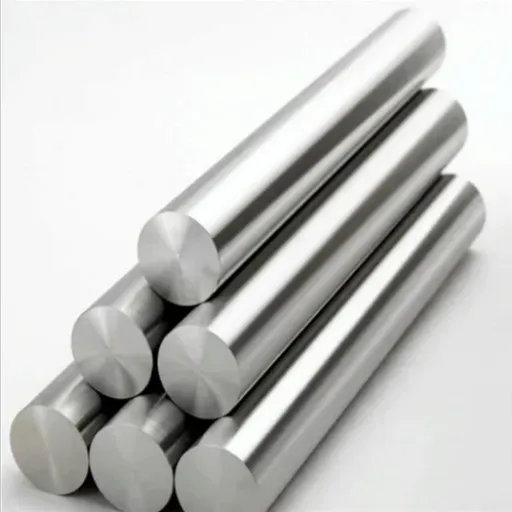
Maraging 350 has excellent mechanical properties that have made it the go-to material for a variety of industrial applications that are a bit demanding. This stainless steel miracle has a characteristic tensile strength that goes as high as 240 ksi or around 1655 MPa after aging plus the other two qualities of toughness and ductility. On top of that, it has a hardness of about 54 HRC which is equivalent to outstanding resistance against wear.
Maraging 350, which is known for its great yield strength, is one of the best examples of this. It can possibly attain 230 ksi that is about 1585 MPa. Moreover, even under such rigorous conditions that include high temperatures, it retains this ability, which is partly the reason for its widespread application in aerospace parts, injection molding, and nuclear power. The material also has excellent machinability when it is in the solution-annealed state which makes it easier to process before the final aging.
Heat Treatment and Aging Process
Maraging 350 goes through an exclusive process of heat treating and aging to receive its extraordinary mechanical properties. The first step is usually solution annealing, in which the material is heated up to around 820°C to 850°C (1508°F to 1562°F) and kept at that temperature to get a uniform microstructure. After this, the material is cooled rapidly, usually by air cooling or quenching, to get the martensitic structure needed for aging.
The aging process involves raising the temperature of the material back to a lower level typically around 480°C to 510°C (896°F to 950°F). This step initiates the precipitation of intermetallic compounds like Ni3Mo and Fe2Mo which are responsible for the strengthening and hardening of the steel to a great extent. The duration of the aging process might vary, but usually it lasts from 3 to 6 hours in order to support precipitation at its most efficient and thus achieve uniform mechanical properties throughout the material.
Applications of Maraging 350
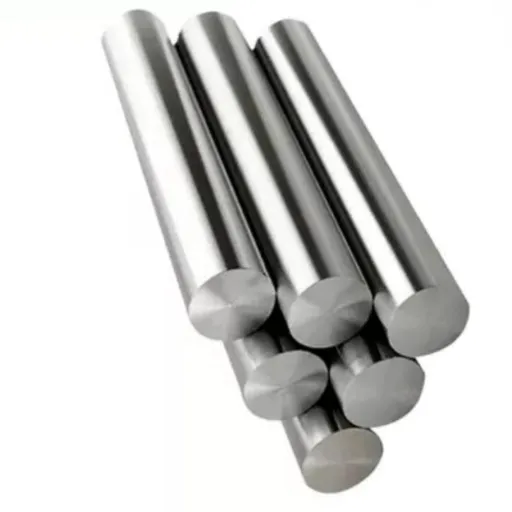
Uses in Aerospace and Defense
- Aircraft Components
Maraging 350’s impressive high tensile strength (up to 2410 MPa) along with excellent fatigue resistance are the major criteria for selecting the aforementioned material for landing gear assemblies that need guaranteed performance under repeated stress cycles. These parts have to take the stresses of loading and unloading during landings and still be safe.
- Rocket and Missile Applications
With Maraging 350, it is possible to machine the material with high precision to allow the development of critical rocket parts, such as motor casings and thrust chambers, with total accuracy. The material’s resistance to high loads and its welding ability have made it possible for the most critical and hardest operating requirements of propulsion systems to be met.
- Defense Equipment
Applying the Maraging 350 steel in military operations leads to production of bullet-proof plates and firearm parts. While the material is strong, it also contributes to the making of equipment that is both light and extremely tough; thus, it is a crucial factor in the development of defense technologies that are characterized by mobility and protection.
Tooling and Manufacturing Applications
Maraging 350 has become a go-to material for tooling and manufacturing industries because of its remarkable qualities such as strength, toughness, and workability. The custom of using this steel in its annealed state guarantees that manufacturing of complex parts will be much easier, because the material is highly machinable. After the desired design is achieved, the component is aged-hardening to get its peak strength, thus making it suitable for high-performance applications.
One of the major areas where Maraging 350 finds application is the making of dies and molds for injection molding and die-casting. Its properties of enduring high temperatures and getting through repeated cycles guarantee its prolonged life and reduced downtime in the manufacturing sectors. As per the data given by the industry, the tools produced with Maraging 350 show up to 30% longer life than regular tool steels which in turn results in a huge reduction in costs.
Comparative Analysis with Other Maraging Steels
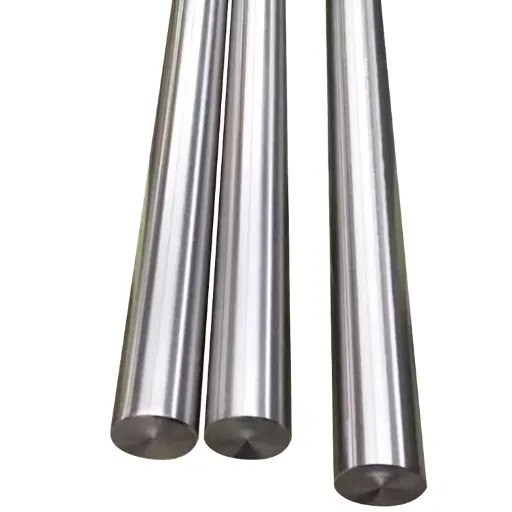
Comparison with Other Grades of Maraging Steel
Maraging 250: This particular grade has a tensile strength of up to around 250 ksi, thus making it apt for such applications that are not very demanding but yet need the material to be good, such as structural parts in the aerospace industry, pressure vessels, and tooling of high performance. It also presents a very nice combination of toughness and machinability, so that it very often becomes the material for those applications, which demand both precision and durability.
Maraging 300: This grade with tensile strength going above 300 ksi gives us a new level of strength which is higher than Maraging 250. It is applied in strictest aerospace applications, such as rocket motor casings and aircraft landing gear. Nevertheless, the Maraging 300 steel possesses excellent ductility and fracture toughness even with the higher strength, meaning it can take a lot of stress and still not be brittle-failed.
Maraging 350: Maraging 350, the furthest among the three, offers tensile strengths over 240 ksi to 350 ksi depending on the specific heat treatment. Its remarkable strength and high fatigue resistance make it perfect for powerful applications such as high-performance dies, extrusion tools, and sophisticated mechanical systems. Nevertheless, the strength increase comes along with a decrease in machinability as compared to the lower grades, which means that skilled manufacturing methods are needed.
Maraging 350 Vs. Competitors Performance Metrics
Strength-to-Weight Ratio: Maraging 350 ranks higher than most high-strength steels and aluminum alloys concerning the ratio of strength to weight. For example, regular tool steels may have a similar ultimate tensile strength; however, they are not able to sustain their performance under cyclic loads or very stress conditions, the performance simply dies.
Hardness: After the aging process, Maraging 350 gets to a hardness level of about 50-55 HRC, not dramatically affecting its machinability. In contrast, high alloy steels may need further processing to reach comparable hardness values.
Fatigue Life: Maraging 350 undergoes fatigue testing in which its performance over the competition is significantly the opposite. For instance, tests have shown it can endure crack-free cyclic stress for a longer time than conventional AISI 4340 and H13 steels.
Future Trends in Maraging Steel Applications

Innovations in Maraging Steel Technology
Maraging steels technology has been progressing to a great extent in the last few years, which is mainly due to the rising demand for materials that possess excellent strength and being lightweight at the same time. One major breakthrough is the application of additive manufacturing, also known as 3D printing, in the production of maraging steel parts. The wonderful features of this technology such as complex shapes and low material waste are already being used in the aerospace, medical, and tooling sectors.
Moreover, there are still ongoing attempts to improve the aging process of maraging steel by means of different heat treatment techniques. The purpose of these approaches is to increase the strength and toughness of the parts even more while cutting down on production time. Besides these, nanostructuring is another area of research where the microstructure of maraging steel is being fine-tuned, which may result in an increase of up to 30% in tensile strength along with keeping ductility intact.
Reference Sources
-
REPORT ON THE THIRD MARAGING STEEL … – DTIC
This report discusses the tensile properties of welds and welded joints in maraging steel, including fracture toughness.
Read more here -
Onset of Creep Stress Measurement of Metallic Materials
This NASA report includes creep stress measurements for maraging steel under specific conditions.
Read more here -
Precision Face Milling of Maraging Steel 350
This study examines the effects of milling variables on the surface quality and energy consumption of Maraging 350.
Read more here
Frequently Asked Questions (FAQs)
What are the physical properties of maraging 350 and how do they contribute to excellent mechanical properties?
Maraging 350 (also known as 350 steel or Vascomax® 350) has a martensitic structure and a beneficial response to precipitation hardening that impart high strength and moderate toughness to the material. The mostly carbon-free, iron-nickel alloy containing ni, mo and ti (with cobalt and titanium in some variants) achieves high hardness after aging but is still soft and easy to machine in the annealed state.
What is the specification and data sheet information for Vascomax® 350 / C350?
The usual specification and data sheet entries for Vascomax® 350 (C350) contain chemical composition ranges (especially ~18Ni maraging chemistry), mechanical property targets (yield, tensile, and elongation in the annealed and aged conditions), recommended aging cycles (thermal precipitation hardening schedules), and recommended heat treatment such as vacuum arc remelting or conventional melt methods.
What is the chemical composition of maraging 350, and how does it differ from other maraging steels?
The chemical composition of Maraging 350 is based on an iron-nickel (Fe-Ni) alloy with a very high nickel content (~18 wt% Ni typical of 18Ni maraging grades), plus alloying elements such as mo (molybdenum), mn (manganese in trace amounts), ti (titanium), and sometimes cobalt. It is completely carbon-free, which is a key distinction from carbon steels and also a reason why the material undergoes precipitation hardening instead of carbide hardening.
What machinability and machining recommendations apply to maraging 350 sheet and billet?
Maraging 350 in the annealed state is easily machined and is often regarded as being favorable from a machinability point of view in the case of tooling applications. For sheets and billets, machine practices should take into account the material’s tendency to harden after aging; thus, final machining is frequently carried out in the annealed state with consideration given to the subsequent dimensional changes occurring during aging.