The procurement manager stared at the specification sheet with growing concern. The project required furnace components that needed operation at 1200°C, but the chosen steel grade had a melting point that exceeded 200 degrees. The high-temperature engineering field considered the distance between two objects to be highly unsafe.
Steel melting point knowledge serves a better purpose than academic learning. The equipment’s operational life span depends on this crucial parameter, which determines whether it will operate for ten years or experience complete failure within months. Buyers incorrectly view melting point as a single measurement because they fail to understand that melting point exists as multiple temperature values, which can result in expenses exceeding millions of dollars for their projects.
The guide delivers accurate melting point information, which engineers and procurement teams require according to their respective grade and application requirements. The document presents exact temperature ranges for carbon steel and stainless steel grades and high-performance alloys while providing practical material selection guidance that ensures performance during extreme heat conditions.
What Is the Melting Point of Steel?
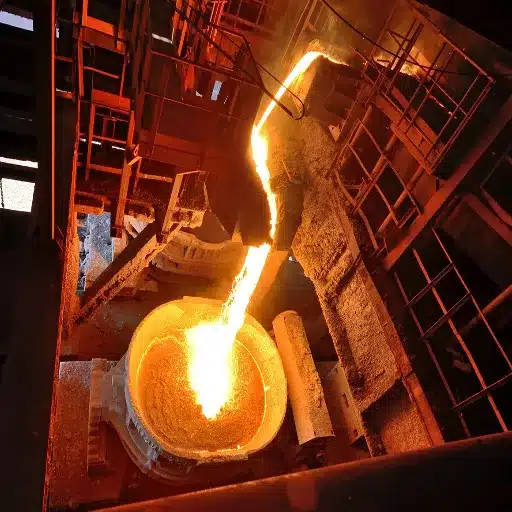
Steel has multiple melting points, which create a melting range for it.
The distinction between steel and pure substances matters because steel exists as an alloy that combines iron, carbon, and various other elements. The different elements present in the alloy operate at different melting temperatures. The transition from solid to liquid occurs in steel through a temperature range that establishes two distinct temperature points:
- Solidus: The temperature at which steel begins to melt
- Liquidus: The temperature at which steel becomes completely liquid
The melting range for plain carbon steel extends from 1370°C to 1510°C, which corresponds to 2500°F to 2750°F. The exact range depends on carbon content and alloying elements.
Engineers who design high-temperature systems need to determine both the maximum temperature and the specific temperature range for their equipment. At 1400°C, a component remains solid, but its structural integrity becomes compromised because it can no longer withstand weight.
Why Melting Range Matters More Than a Single Point
The lab report confirmed Marcus Chen’s evaluation of the cracked heat exchanger tube failure analysis. The 304 stainless steel tube operated at 850°C, which remained under its 1400°C melting point. The wall experienced rupture because the sustained load at high temperatures created creep deformation.
The tube didn’t melt. The tube experienced failure because temperatures exceeded its melting point while operational needs required different measurements. The safe design process requires knowledge of both design parameters.
Melting Point of Steel by Grade: Complete Comparison
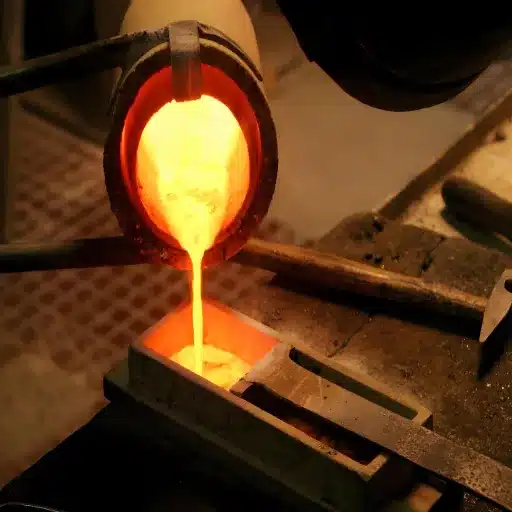
Different steel grades exhibit vastly different melting characteristics. The table below provides precise data for the most common industrial grades.
| Steel Grade | Solidus (°C) | Liquidus (°C) | Solidus (°F) | Liquidus (°F) | Typical Applications |
|---|---|---|---|---|---|
| Carbon Steels | |||||
| Low Carbon (0.05-0.15% C) | 1480 | 1520 | 2696 | 2758 | Structural, automotive |
| Medium Carbon (0.3-0.5% C) | 1420 | 1460 | 2588 | 2660 | Machinery, shafts |
| High Carbon (0.6-1.0% C) | 1320 | 1380 | 2408 | 2516 | Tools, springs |
| Stainless Steels | |||||
| 304 | 1400 | 1455 | 2552 | 2651 | General purpose, food processing |
| 304L | 1400 | 1450 | 2552 | 2642 | Welded components |
| 316 | 1370 | 1400 | 2498 | 2552 | Chemical, marine |
| 316L | 1370 | 1400 | 2498 | 2552 | Welded chemical equipment |
| 321 | 1400 | 1450 | 2552 | 2642 | High-temperature service |
| 430 | 1425 | 1510 | 2597 | 2750 | Automotive trim, appliances |
| 2205 Duplex | 1400 | 1450 | 2552 | 2642 | Oil & gas, marine |
| Nickel-Based Alloys | |||||
| Inconel 625 | 1290 | 1350 | 2354 | 2462 | Aerospace, chemical |
| Inconel 718 | 1260 | 1336 | 2300 | 2437 | Turbines, jet engines |
| Hastelloy C-276 | 1325 | 1370 | 2417 | 2498 | Aggressive chemical |
| Tool Steels | |||||
| H13 | 1320 | 1380 | 2408 | 2516 | Die casting, forging |
| D2 | 1420 | 1460 | 2588 | 2660 | Cutting tools |
Melting Point of Carbon Steel
The melting behavior of plain carbon steel depends primarily on its carbon content. The solidus and liquidus temperatures of the material decrease when its carbon content increases.
The relationship follows the iron-carbon phase diagram. The melting point decreases to about 1147°C at the eutectic composition, which contains 4.3% carbon. Commercial steels rarely exceed 1.2% carbon, which results in their melting points remaining above 1300°C.
Low-carbon steels (mild steel) provide the best melting range together with superior weldability and ductility for most structural uses.
Melting Point of 304 Stainless Steel
A melting point between 1400 °C and 1455°C is attributed to grade 304 steel, the first among stainless alloys. The chromium (18-20%) content raises the melting point when compared to carbon steel, while nickel (8-10.5%) adds the requisite stability through the range.
The melting range for type 304 is quite broad (55 degrees caloria), which is good for welding and casting due to the melting range provided within the range, but, as a result of this, the material slowly softens with temperature rise and loses significant strength at over 800 °C while it’s still solid.
Melting Point of 316 Stainless Steel
While all the same improvements are well executed here, the melting point of 316 is lower than that of 304: its range is 1370-1400°C. Even just improvements in corrosion resistance decrease the melting point slightly by a few hundred degrees.
This melting range is narrower at 30°C than 304, which can affect processing. Tighter range requires more precise temperature control during welding and heat treatment, but then provides more predictable behavior in service.
The compromise is almost invariably away from higher melting points, to adopt them in preference to the lower melting point, highlighting what benefit these features might have to offset the disadvantages.
Factors That Affect Steel Melting Point
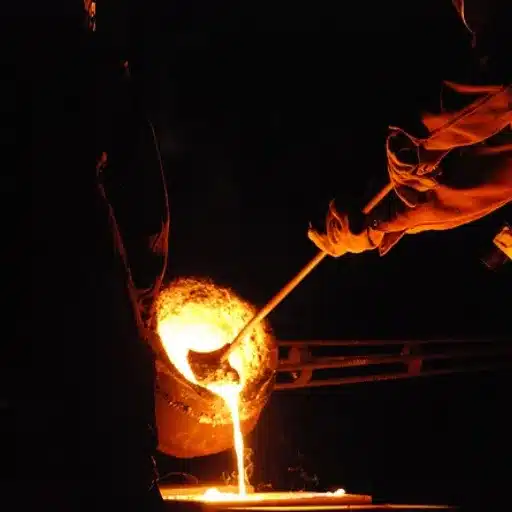
Several variables influence where a specific steel grade falls within the melting spectrum. Understanding these factors helps explain why nominally similar grades can have different melting characteristics.
Carbon Content Impact
Carbon is the single most powerful element to affect the melting point of steel by an alloy effect, even more so than any other elemental alloying. Rising carbon leads to:
- The solidus temperature is decreasing
- The liquidus temperature is decreasing
- Widening the melting range
Low-carbon steel (0.1% C) may start to melt at 1480°C, but high-carbon tool steel (1.0% C) would melt at 1320°C. This is a 160°C difference driven by carbon alone.
This negative relationship exists as carbon forms a carbide (Fe3C) of iron, which melts at a temperature much lower than pure iron. More carbon increases carbide and lowers the total melting point of the steel.
Alloying Element Effects
Other elemental implications alter the melting behavior of carbon.
- Chromium: Raises the melting point and enhances oxidation resistance at high temperatures. Every percent of chromium increases the liquidus by about 5°C-10°C.
- Nickel: Slightly decreases the melting point but establishes the austenitic structure well over a wide temperature range. Vital to keep properties up at high temperatures even through an absolute decrease in melting point.
- Molybdenum: Lowering the melting point slightly but making a remarkable change in terms of creep resistance and strength at high temperatures. It is therefore a worthy compromise for most high-temperature applications.
- Manganese: Moderately lowers the melting point, but significantly improves characteristics in hot working and when deoxidized.
- Silicon: Moderately raises the melting point and increases oxidation resistance at high temperatures.
Manufacturing Considerations
The practical significance of the melting point extends far beyond application temperature into manufacturing applications:
Forging and Hot Working: These processes do not happen at the melting point itself but at a much lower temperature level – usually at the level of 900 to 1200°C, depending on the nature of the material. Materials that have a relatively low melting point also have a low forging temperature.
Welding: Since welding involves localized melting, those with narrow melting variance are relatively more difficult to manage with respect to input of heat (too high a cooling rate results in defects such as hot cracking).
Heat Treatment: Austenitizing temperatures of around 850 degrees Celsius and 1050 degrees Celsius, as mentioned earlier, were utilized well away from the model, bringing sub- to solidus temperatures, obviating the danger of incipient melting or grain boundary attack.
Why Melting Point Matters: Industrial Applications
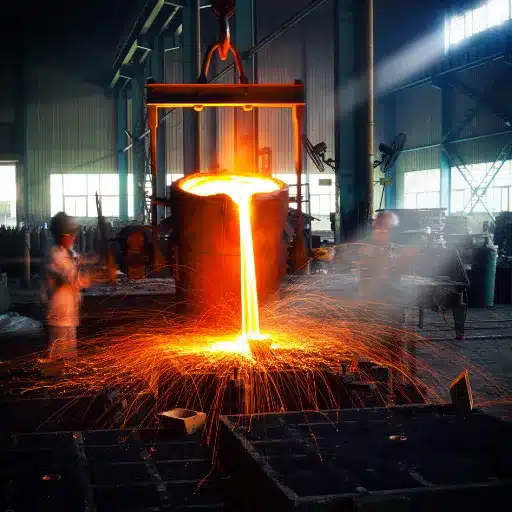
Temperature specifications exist for good reasons. Understanding when the melting point becomes a critical design parameter helps prioritize material selection efforts.
When Temperature Performance Is Critical
The melting characteristics need to be thoroughly observed in specific applications:
High-Temperature Process Equipment: Furnace components, heat treatment fixtures, and kiln furniture are always on the verge of heating elements. The first selection involves the high melting point of the material, and that breathing must resist creeping and oxidation.
Aerospace and Turbine Applications: Jet engine components typically are used to withstand up to 1100°C while being mechanically loaded. Often, materials like Inconel 718 are good as they can maintain strength even when most steels lose their structural integrity at these high temperatures.
Petrochemical Reactors: Such harsh environmental pressure and high temperature, combined with thermal and mechanical loads, make many materials soft, but here they do not.
Exhaust and Flue Systems: Though they are not as severe as turbines, these environments will experience quite a lot of varying temperatures produced continuously for these by-product processes that would lead to scaling of standard grade damage to their very substance.
Procurement Considerations
Buyers sourcing materials for high-temperature service should specify:
- Operating temperature range: Include normal, upset, and transient conditions
- Safety margin: Industry practice typically requires a 200-300°C margin between the maximum operating temperature and the solidus
- Certification requirements: Mill test reports should confirm the chemical composition that affects the melting characteristics
- Testing standards: Reference ASTM or EN standards that include melting point verification
Industry-Specific Examples
Operation temperatures for reactors in the petrochemical industry typically range from 400°C to 600°C, all of which will likely be within the melting range of the steel used as construction material, but hydrogen may be present at a pressure high enough to endanger the material once the temperature reaches boiling.
Boilers operate in temperatures closer to 600°C-620°C and even higher temperatures, the highest pressures (already more than 300 bar) of any system, where the margin between materials’ upper temperature limits and operating temperature may just be hundreds of degrees, not thousands.
How to Select Steel Based on Temperature Requirements
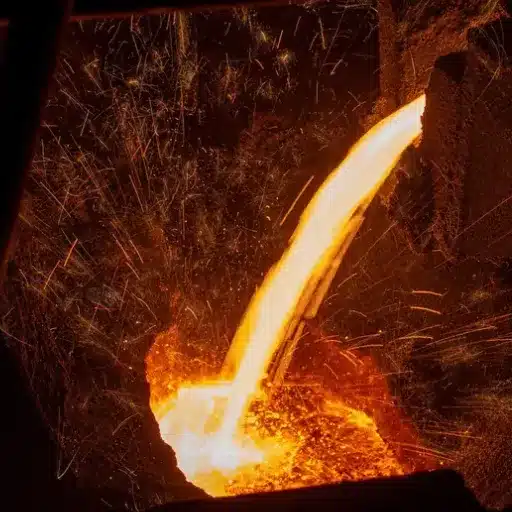
Material selection for high-temperature service requires matching the grade to the actual conditions, not just selecting the highest melting point available.
Temperature Range Classifications
Engineers generally classify applications into temperature bands as follows:
Room Temperature to 300°C: Standard carbon and stainless steels would work adequately. Melting point is rarely of concern, as corrosion resistance and strength usually drive selection.
300°C-600°C: Oxidation resistance becomes important. Stainless steels containing more than 16% chromium develop oxide scales that hinder the penetration of further oxygen. In this region, Grade 316 is the one steel that offers the best compromise for properties.
600°C-1000°C: grades for use at higher temperatures than room temperature have emerged. Austenitic stainless steels of the types 321 and 347, as well as a few ferritic grades, have been rated amongst the most interesting developments to address this issue. In essence, creep resistance, not melting point, mostly controls authorities.
Above 1000°C: Specialized alloys are required. Nickel-based superalloys, for example, Inconel or Hastelloy, may be taken up or even refractory metals. Standard stainless steels would simply lose too much of their strength for construction.
Decision Framework
When selecting materials for elevated temperature service, follow this process:
- Define maximum operating temperature: Include normal, startup, shutdown, and upset conditions
- Determine required safety margin: 200-300°C below solidus is typical for structural applications
- Assess mechanical loading: Stress at temperature causes creep even well below the melting point
- Consider the environment: Whether oxidizing, reducing, or corrosive atmospheres affect the behavior of the material
- Evaluate lifecycle requirements: Long-term vs short-term service affects their choice in grad
- Balance cost-performance: More costly alloys include alternatives; make sure the specification aligns closely with actual needs.
Cost vs. Performance Trade-offs
Using the highest melting point steel could prove counterproductive. A case in point was when a project engineer decided to use Inconel in a heat exchanger working at 350°C. Everything was perfect, but a tough lesson was learned in the budgeting sector. Cost considerations were worse as 316 could have carried the burden for a quarter of the cost.
On the other hand, the same applies when it is suggested to use an ordinary grade material in serious service conditions. For example, in the chemical plant, when the reactor, which should have been made of stainless steel 304 and worked at 550°C in sulfuric acid, has prematurely failed, the consequences of unscheduled stoppage have been ten times the cost of the steel.
Related Thermal Properties
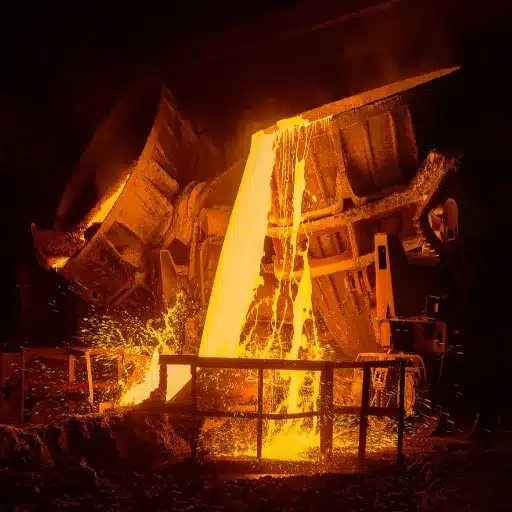
Melting point represents just one thermal characteristic. Several related properties influence high-temperature performance.
Heat Resistance vs. Melting Point
High-temperature resistance and high melting point are not necessarily synonymous. The misconception that has been held for too long relates to these properties.
Tungsten is the metal with the highest melting point, 3422°C, but it is totally inappropriate for most high-temperature uses above 500°C without a protective gas or coating because it oxidizes intensely in air
On the other hand, there are several nickel alloys which have melting points of less than 1400°C but have quite good mechanical properties above 1000°C, and also consider that there is no problem of oxidizing during us also during service, said steel has considerably higher melting points.
Creep Resistance
Creep is the process of the deformation of materials at high temperature and under stress over a period of time. Material creep occurs at temperatures higher than 40% of its melting point (in Kelvin).
An example of a melting point limit on steel is carbon steel. The melting point of carbon steel is about 1770K, creep of carbon steel starts to be significant at temperatures around the region of 700K i.e 427°C. In the case of Inconel 718, whose melting point is about 1600K, creep becomes an issue at temperatures around 640K, i.e. 367°C.
That is why in high temperatures, designs rather exposes possibilities for the application of structures uses creep data rather than melting temperature.
Thermal Expansion
The expansion rates of various steel types differ upon heating. Hence, the following factors vary:
- Fit and clearance: The parts should allow for temperature expansion without jamming.
- Thermal stress: Occurs when expansion is restricted; the stress can be higher than the yield stress.
- Dissimilar metal joints: Elements with different coefficients of expansion in joining need special attention in proposed designs.
Austenitic stainless steels( 304, 316 ) have higher coefficients of expansion than carbon steels. Such a difference should be taken into account when incorporating low-carbon steels in structural designs. Passionate defender of the melting point steel, it might be least interest when calming the expansion of the equipment.
Frequently Asked Questions
What is the exact melting point of 304 stainless steel?
With 304 stainless steel, it fuses at temperatures between 1400°C and 1455°C (2552°F-2651°F). Depending on the chemical composition of the particular steel grade, the precise temperature is found within these limits. The phase of solidus, which is the stage when only melting commences, is at 1400°C, and the phase of liquidus, where all melting is complete, is at 1455°C, respectively.
Will a fire cause a piece of steel to melt or burn?
In usual construction fires, the temperature is said to go beyond 600°C-800 °C, which is way below the threshold of any steel melting point that is commonly used for construction purposes. However, the structural integrity of steel is compromised long before it melts, as only half the strength of steel is retained by the time it reaches 550 °C. There’s a very good reason that steel structures are insulated against fire.
Why do different sources give different melting points for the same steel?
The different reported melting points are influenced by several things. These reasons include the exact composition within the grades, whether it is the solidus or liquidus temperature being given, the methodology in measurement, and the existence of trace elements, which will influence the particular value of the melting point. Always provide a range for engineering calculations rather than a single number.
What type of steel will have the highest melting point?
High-speed tool steels contain elements like tungsten and cobalt, with melting points that may climb up to around 1500°C-1550°C. These are usually not used in structural applications due to cost and brittleness; around this, one can expect to find normal carbon and alloy steel, giving room for enough temperature margins for most engineering purposes.
How does the melting point affect welding?
Welding of metals requires base metal melting and filler melting. It matters that some grades have relatively narrow melting ranges-for example, welding 316 stainless will necessarily dictate a good job of heat input control to prevent defects. Thermal expansion and contraction during solidification also have an effect on weld integrity and residual stresses.
Conclusion
An understanding of the steel melting point helps ensure good, sound engineering design. There is just more to melting points than just one specimen in material selection from many to choose from.
The key takeaways:
- Steels melt over a range, not at a single temperature
- Carbon content and alloying elements notably determine the melting behavior
- High-temperature performance goes beyond the mere melting point
- Match the grade to the practical operating conditions, and not a theoretical max
- Include appropriate safety margins in the temperature requirements
The most appropriate high-temperature steel selection results from the balanced trade-off of multiple properties, including melting point, creep resistance, oxidation behavior, mechanical properties, and cost. This makes the quest for the highest melting point available irrelevant, as the right grade should be something that performs in the user’s actual conditions, rather than optimal.
Steel Needs for High Temperatures?
Our engineers in metallurgy can help you with the type of grade that will optimize all the characteristics to match your application. We are providing technical support for all grades of complex and specified material with the certificate of traceability and quality.