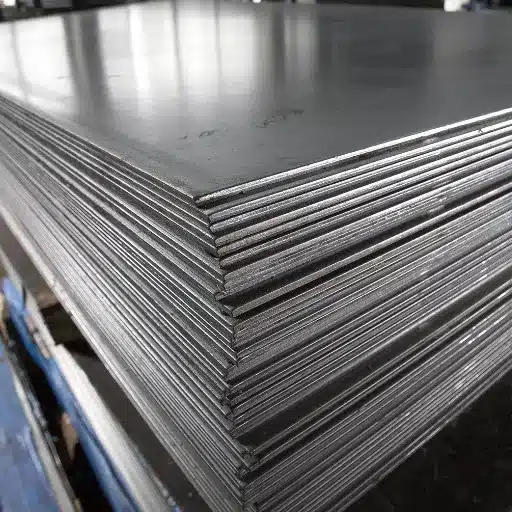
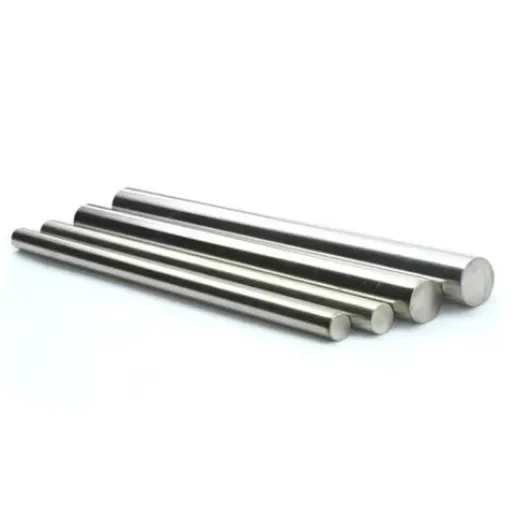
When it comes to the materials that have a huge impact on modern industries, stainless steel is one of the materials in the world that befits the term “powerhouse”. Countless applications from kitchen appliances to aerospace engineering depend on it because of its “triple” combination of strength, durability, and corrosion resistance. But the most important aspect that determines the effectiveness of this item is hardness most of the time. What are the means for measuring the hardness of stainless steel? Which factors affect it, and why does its significance in various applications matter so much? This blog post will take you through the indispensable details of stainless steel hardness, revealing its importance and examining how it impacts the performance in different environments.
What is Stainless Steel Hardness?
Definition and Importance of Hardness
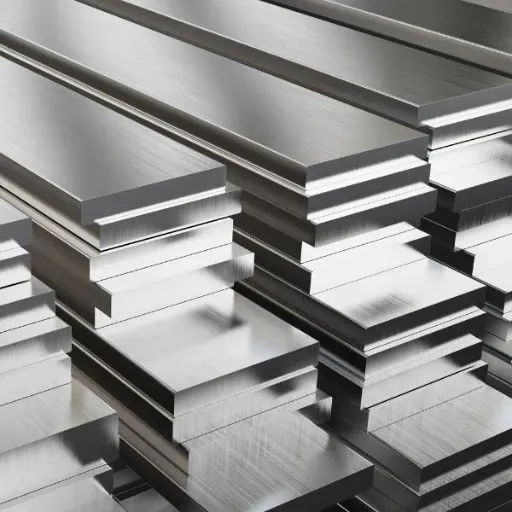
The stainless steel hardness, in fact, reflects the property of the to be scratched, dented, or deformed by a certain force. It is significantly one of the most mechanical properties that determine the whole life and performance of stainless steel in various applications. Hardness is often assessed based on standardized tests like Rockwell, Brinell, or Vickers scale, and each of these methods provides the numerical values, which explicitly state the resistance of the material to wear and tear.
The principal cause of hardness in stainless steel being a significant factor is its potential to be the main feature of the material’s performance and the overall life of the material. In other words, a high level of hardness is a prerequisite for cutting tools, industrial machines, and kitchenware which can endure factors like abrasion or impact. Meanwhile, applications that require ductility and toughness, such as structural components, often need lower hardness to avoid brittleness.
Hardness Types in Stainless Steel
Brinell Hardness (HB):
Brinell hardness testing is the leading technique to analyze the ability of stainless steel surface to withstand deformation. The method entails the pressing of a hardened steel or carbide ball into the surface to a predetermined depth and then measuring the diameter of the resulting indentation. For example, Type 304 stainless steels which are composed of austenitic crystals usually have a Brinell hardness of about 150-200 HB, meaning they are very resistant to corrosion but not the hardest available types.
Rockwell Hardness (HR):
Rockwell hardness scale is popular among metallurgists for its simplicity and accuracy. The type of stainless steel influences the selection of the scale, either B (HRB) or C (HRC). For instance, martensitic stainless steels used mainly for making knife blades have their hardness value between 40 and 60 HRC. This means that they are resistant to wear and strong because of the tempering and quenching processes they undergo.
Vickers Hardness (HV):
The Vickers technique is the one with the highest precision and the one that best meets the needs of thin stainless steel parts and components that require measurement. A diamond-shaped indenter is used, and the method constantly produces higher hardness values compared to the other scales. For duplex stainless steels, the Vickers hardness is usually around 230-300 HV, which is a good indicator of their combination of strength and ductility.
Factors Affecting Hardness
Alloy Composition and Its Impact
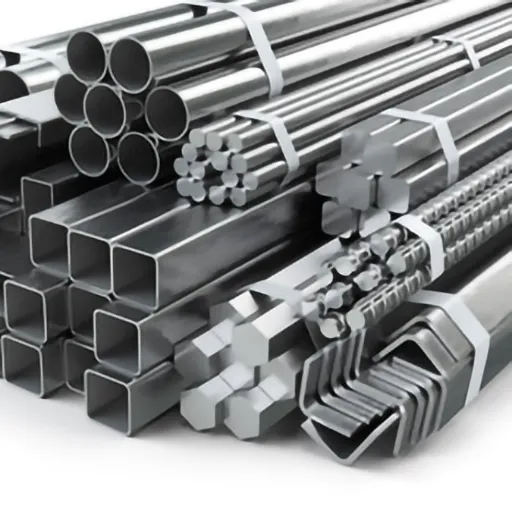
The amount of different metals in the alloy is the main factor that dictates the hardness, strength, and the application of the alloy in various ways. This is the reason why even in the case of metals mixing with non-metals, the alloy is liked because it has better properties such as corrosion resistance, tensile strength, and durability. The major contribution of metals to alloy properties is the case of stainless steel where the combination of metals gives rise to the phenomena of corrosion resistance. Oxidation and the consequent formation of a layer that protects the meshed surface are the results of the presence of chromium which is the major contributor to the corrosion resistance of stainless steel.
One of the other main sources of strength in an alloy is that Carbon, quite apart from being in the group of elements, has a .major influence on the hardness and the strength of the alloy. Among the factors affecting the carbon content in martensitic steel grades, quenching and tempering to get “hardness” values that are usually over 60 HRC are one of the main features. In fact, Nickel is one more key element which is particularly important regarding Human like Text Processes: like in the case of austenitic stainless steels such as 316 where not less than 8% to 10% of Nickel is present which in turn leads to better ductility, toughness, and resistance to crack initiation even under very adverse conditions.
Heat Treatment Processes
Annealing:
The Material is heated to a certain set temperature, kept for a stipulated period, and then allowed to cool down very slowly, generally in a furnace. The main aims are to make the material more ductile, less hard, and also to relieve the internal stresses caused by the mechanical processing. One case would be the heating of carbon steel to anywhere between 1,200°F to 1,600°F for some time which is basically the same as getting a refined grain structure and improved workability.
Quenching:
Quenching, which is the extremely fast cooling of a material mostly with water or oil, or with any such medium after heat treatment up to its critical temperature, is the process that enables an alloy’s hardness and strength to be increased by converting the austenite phase into martensite in steels. For example, steel 1045 quenched from around 1,550°F can acquire a remarkable hardness increase from the usual range of 50 to 55 HRC, whereby being hard is only the case with a range of above 55 and up to 60 HRC in the furnace for about 10 minutes or even more.
Tempering:
This step is done after quenching and is called the cooling range of 300°F to 1,100°F of heating the material up to its critical point. While heating, it is intended to harden the steel but as with martensitic steel at 400°F the resultant breakthrough of toughness and hardness makes it suitable for the manufacturing of tools and dies.
Case Hardening (Surface Hardening):
This technique hardens the outer layer of the substance while retaining the softness and ductility of the core. The most common processes are carburizing, nitriding, and induction hardening. Nitriding, for instance, is one of the methods that can create a surface hardness greater than 70 HRC on steels like 4140 due to nitrogen diffusion at approximately 950°F to 1,050°F.
Common Testing Methods
Rockwell Hardness Test (HRC)
The Rockwell hardness test (HRC) is primarily the method for measuring the hardness of metals, with stainless steel being the most common and other alloys included in the sweep. It determines the hardness value corresponding to the resistance of the material to deformation under a specific load. The HRC scale establishes the hardness of a conical diamond indenter and a principal test load of 150 kgf, hence making it suitable for hard material testing.
Initially, a minor load (10 kgf) is applied to set a zero reference point, then a major load is applied to determine the hardness of the sample. Upon the removal of the load, the depth of the indentation is recorded, and the hardness value is calculated using the Rockwell scale formula. Stainless steels normally have an HRC range of 20 to 70 depending on which alloy is used and the heat treatment performed.
Brinell and Vickers Hardness Tests
In the Brinell Hardness Test the basic principle is to use a hard steel or carbide ball with a 10 mm diameter that can penetrate into the material with a certain load in the range from 500 kgf up to 3000 kgf. The depth of the resulting imprint made by the ball is measured and subsequently, the Brinell Hardness Number (BHN) is calculated. This test finds wide applications in metallurgy and manufacturing industries because it can provide accurate results for the hardness of materials with coarse structures like castings. For example, a low carbon steel may have a BHN in the range of 120-150; on the other hand, tool steels can have a BHN of more than 250.
Contrary to this, the Vickers Hardness Test uses a diamond pyramid-shaped indenter having a square base and an angle of 136 degrees between opposite faces. The load applied is much smaller, typically in the range of 1 gf to 100 kgf, which makes this method suitable for testing thin materials, coatings, and very small parts. The size of the indentation is measured diagonally for the determination of the Vickers Hardness Number (VHN). This method is renowned for its high precision as well as high versatility which can be used across all types of materials from soft metals to the hardest alloys.
Applications of Different Hardness Levels

304 Stainless Steel Applications
316 Stainless Steel Applications
Selecting the Right Hardness for Specific Applications

Industry-Specific Requirements for Stainless Steel
The selection of stainless steel varies significantly depending on the particular industrial application since each industry imposes a different set of performance standards for the material. One prominent instance is where the chemical processing industry mainly chooses between 304 and 316 stainless steels considering the need for the best possible resistance to chlorides and corrosive chemicals. NACE International’s findings reveal that using 316 stainless steel can result in up to a 30% lower failure rate of equipment compared to using 304 in chloride-rich environments.
The same way, the situations of the pharmaceutical and food industries are such that 316 stainless steel is the most preferred material owing to the fact that it not only has the best cleanliness properties but also the least risk of getting contaminated. In addition, the alloy’s molybdenum content gives it a high resistance to pitting corrosion which is the main reason for FDA and EU standards permitting food-grade and medical-grade equipment.
Stainless Steel Hardness Future Trends
The stainless steel hardness and the ongoing progress in material sciences and alloy engineering, the future of hardness will rely on creativity and accuracy. The adoption of state-of-the-art manufacturing techniques like powder metallurgy, 3D printing, and nanotechnology is expected to facilitate the modification of the stainless steel microstructure so that its hardness and wear resistance are greatly improved.
One such trend which is getting popular is the production of high-nitrogen stainless steels. These materials not only possess much higher hardness but also undergo higher toughness and thus find applications in extreme conditions like aerospace and underwater explorations. Studies have indicated that the addition of nitrogen can result in an increase of up to 50% in yield strength while at the same time, the level of corrosion resistance remains the same.
Reference Sources
-
Stainless Steel Grade Chart
This document provides hardness specification limits for various stainless steel grades, including Rockwell B and C scales and Brinell Hardness.
Source: Stanford University -
Correlation of Hot-Hardness with Tensile Strength
This research discusses the correlation between the tensile strength and hot-hardness of 304 stainless steel at elevated temperatures.
Source: Harvard ADS
Frequently Asked Questions (FAQs)
Which grade of stainless steel is the hardest?
Stainless steel that is martensitic or precipitation-hardening has higher hardness usually. Just like, the 440C (the high-carbon martensitic grade) can be heat treated to very high Rockwell C values and is generally used in places where high wear resistance is a requirement. The same is with some precipitation hardening grades which also harden to high strength at elevated temperatures. On the other hand, 300 series austenitic grades (301, 302, 304L, 321, 347) become more difficult to harden and they rely on work hardening (cold working) to increase their strength and hardness.
What is the hardness & properties comparison of SS 420 with other stainless steels?
Grade 420 is a type of martensitic stainless steel that you can heat treat and then, after quenching and tempering, it converts into a hard substance (Rockwell C). This not only gives it a very high wear resistance but also makes it stronger than the common austenitic grades. When comparing 420 with 304 or 316 (the chromium-nickel 300 series), then 420 has lower corrosion resistance but better hardenability and higher hardness.
What is the relationship between cold working and work hardening with the hardness of stainless steel?
Cold working (like cold drawing or heavy forming) raises the hardness of the material and at the same time transforms it into work-hardened form by inserting dislocations and grouping the crystal structure. The austenitic grades (like 301, 302, 303) are the ones that respond the most to the work-hardening process and they become a lot stronger without heat treatment, although their machinability may decrease.
What is the connection between machinability and hardness for grades such as 303 and free machining stainless steels?
The grade 303 along with the other free-machining stainless steels are specifically designed to have better machinability through the introduction of sulfur or selenium that produce free-machining chips, however, that very addition may decrease corrosion resistance slightly and change mechanical properties. Generally, softer, annealed stainless steels are more machinable; thus, higher hardness (achieved through cold working or heat treatment) results in decreased machinability and tool life.