904L vs Alloy 20 is not a rank order, and the two composition tables barely help: the chromium bands overlap, molybdenum and copper sit a few points apart, and both grades arrive in the same solution-annealed, fully austenitic, non-magnetic condition. In service they part company fast, and copper decides the split. 904L (UNS N08904) carries 1 to 2% copper and a pitting resistance equivalent number (PREN) near 35. Alloy 20 (UNS N08020, 20Cb-3) carries 3 to 4% copper, more nickel, and a PREN near 28. In dilute-to-mid sulfuric acid with chlorides, 904L is the right material. On hot or concentrated sulfuric acid with no chlorides, Alloy 20 is the right material, and its extra copper is why. Reverse the phrase, and nothing changes: Alloy 20 vs 904L is the same fork, decided by the same three numbers.
The trap is that both grades are marketed as sulfuric-acid specialists, so buyers treat them as near-interchangeable and pick on price or availability. The failure mode of the wrong pick is not marginal. It is a vessel that lives a fraction of its design life.
This guide derives the copper mechanism on the page, maps sulfuric acid by concentration and temperature, separates the two chloride threats that point in opposite directions, contrasts the two welding strategies, and is honest about the duties where neither grade is correct. We supply both grades from Wuxi.
For the parent family, start with our full 904L stainless steel guide.
Key Takeaways
- 904L vs Alloy 20 is a fork, not a ranking. The two grades are separated by copper: 904L carries 1 to 2%, Alloy 20 carries 3 to 4%, and copper is what decides sulfuric-acid performance.
- Copper plates out as a thin metallic layer that suppresses the cathodic hydrogen-reduction reaction driving dissolution in reducing acid. That is the whole reason Alloy 20 wins hot and concentrated sulfuric acid.
- Chlorides split into two threats with two different winners: pitting is governed by PREN, so 904L (~35 against ~28) wins, while stress-corrosion cracking is governed by nickel, so Alloy 20 (32 to 38% Ni) wins where 904L cracks.
- The grades reach the same intergranular guarantee by opposite routes: 904L runs low-carbon (C ≤0.02%, no stabiliser), Alloy 20 runs niobium-stabilised (NbC), which is why Alloy 20 fabrications are usable as-welded without post-weld heat treatment.
- Alloy 20 costs more than 904L because of its higher nickel. Over-specifying it on a dilute chloride-bearing duty wastes 25 to 35%, and under-specifying 904L on a hot concentrated duty destroys a plant.
Direct Answer: Is Alloy 20 Better Than 904L?
In the 904L vs Alloy 20 question, neither grade is better. They are designed for different acid conditions, decided by copper content. Alloy 20 is the hot-and-concentrated sulfuric-acid grade: roughly double 904L’s copper, more nickel, and one of the two that holds up in boiling mid-strength acid. 904L is the dilute-and-chloride-bearing grade: a PREN near 35 against Alloy 20’s ~28, so it resists the chloride pitting that Alloy 20 does not, at a lower cost. Is Alloy 20 better than 904L? Therefore, there is no single answer. It depends on the concentration, the temperature, and whether chlorides are present.
Tell us your medium, and we will tell you which side of the line you are on. Send the operating conditions, and a grade recommendation and quotation will come back together, usually within 24 hours. Send your operating conditions
| Property | 904L (N08904) | Alloy 20 (N08020) |
|---|---|---|
| Common names | 904L, 1.4539, S31782 | Alloy 20, 20Cb-3, 2.4660, NS1403 |
| EN / GB designation | 1.4539 / S31782 | 2.4660 / NS1403 (0Cr20Ni35Mo3Cu4Nb) |
| Chromium | 19.0–23.0% | 19.0–21.0% |
| Nickel | 23.0–28.0% | 32.0–38.0% |
| Molybdenum | 4.0–5.0% | 2.0–3.0% |
| Copper | 1.0–2.0% | 3.0–4.0% |
| Niobium (+Ta) | None | ≥8×C, to 1.0% |
| Carbon | ≤0.02% (no stabiliser) | ≤0.07% (Nb-stabilised) |
| PREN, worked | ~35 | ~28 |
| Minimum yield, Rp0.2 | ≥220 MPa | ≥241 MPa |
| Chloride pitting (CPT) | Higher | Lower |
| Chloride SCC | Cracks (33% LiCl U-bend) | Resists (33% LiCl U-bend) |
| Best-fit duty | Dilute-to-mid acid with chlorides; organic and phosphoric acid | Hot or concentrated chloride-free sulfuric acid; boiling mid-strength acid |
The table is ordered so copper, nickel, and PREN sit together, because those three rows produce the decision. Notice that the last two pull in opposite directions: the grade with more nickel (Alloy 20) has the lower pitting index, and the grade with the higher pitting index (904L) has less nickel. Neither wins both.
904L vs Alloy 20 Corrosion Resistance: Same Acid, Two Different Mechanisms
The copper mechanism: why the two grades split on sulfuric acid
Sulfuric acid is a reducing acid at low and mid concentration. In a reducing acid, there is no oxygen or other oxidiser to rebuild the passive chromium-oxide film once acid attacks it, so dissolution runs until something slows the electrochemistry down. Copper is what slows it.
Copper in the alloy is not fully dissolved in the austenite. In reducing acid, it plates out onto the surface as a thin, metallic copper-rich layer. That layer suppresses the cathodic hydrogen-reduction reaction, the electron-accepting half of the corrosion cell, and when the cathode is starved, the whole cell slows. The metal stops dissolving at a rate the passive film could not defend on its own.
This is why the copper delta is the story. Alloy 20 at 3 to 4% copper roughly doubles 904L’s 1 to 2%, and that difference is what carries it through hot, concentrated, chloride-free sulfuric acid. It is also why the answer is never “add more molybdenum.” Molybdenum contributes to the PREN, which governs pitting in chlorides, not behaviour in a reducing acid. Copper and molybdenum are solving two different problems, and on the acid axis copper is the one that matters. Carpenter’s 20Cb-3 datasheet sets out the copper-niobium composition the grade was designed around.
Where 904L wins
- Dilute-to-mid sulfuric acid carrying chlorides, where pitting, not acid dissolution, is the controlling threat
- Wet-process phosphoric acid and organic acids, where 904L’s copper still does the work and its higher PREN adds protection
- Any stream where the chloride level is meaningful, because 904L’s PREN near 35 gives it a pitting margin that Alloy 20’s ~28 does not
- Cost-sensitive chloride-free acid duty where the 25 to 35% Alloy 20 premium buys nothing
Where Alloy 20 wins
- Hot sulfuric acid, roughly above 60 °C, at any concentration where the acid is still reducing
- Concentrated sulfuric acid above roughly 85%, and boiling mid-strength acid, where Alloy 20’s copper holds the surface
- Chloride stress-corrosion cracking, where its 32 to 38% nickel beats 904L’s 23 to 28%, even though it loses on pitting
- Mixed sulfuric-phosphoric acid at temperature, common in wet-process phosphoric and fertilizer duty
Two chloride threats, two winners
This is the section the ranking pages get wrong. Chlorides are not one threat, and the two grades split on them.
Pitting and crevice attack are governed by PREN, and 904L wins. At PREN ~35 against Alloy 20’s ~28, 904L sits meaningfully higher on the pitting axis. In ferric chloride testing under ASTM G48 Method A, 904L’s critical pitting temperature runs far above Alloy 20’s, which sits near ambient. A stream that carries chlorides belongs to 904L, not to the higher-copper grade.
Chloride stress-corrosion cracking is governed by nickel content, and Alloy 20 wins. Nickel is the element that resists SCC in chloride service, and Alloy 20 carries 32 to 38% against 904L’s 23 to 28%. The classic demonstration is the U-bend test: in 33% lithium chloride, Alloy 20 does not crack while 904L does. Both grades crack in the far more aggressive 42% magnesium chloride, and neither cracks in dilute 26% sodium chloride, so the ranking is real but bounded. SSINA’s chloride SCC guidance sets out the nickel-content relationship behind that result.
The rule follows: if the chloride threat is pitting or crevice attack, reach for 904L. If it is SCC at temperature, Alloy 20 is the stronger pick, and where the temperature is high enough that SCC dominates completely, a nickel alloy is the real answer. Our 904L corrosion resistance guide carries the rate tables and critical-temperature data behind this section. This article gives the decision, not the rates.
The Acid Map: Concentration × Temperature and the Fork at ~40%
Sulfuric acid changes character with concentration, and that change is what flips the grade.
- Below about 20% (dilute): a reducing acid. Copper helps, and 904L is usable to roughly 35 to 40 °C. If chlorides are present, 904L is the pick.
- 40 to 60% (the worst band): where the acid is most aggressive to stainless steel. Above roughly 40 °C, Alloy 20’s higher copper pulls ahead, and this is the band where the fork between the two grades is sharpest.
- Above about 85% (concentrated): the acid turns strongly oxidising, and the rules invert.
That last point is counter-intuitive, and it is the one to remember. As sulfuric acid concentrates past roughly 85%, it becomes oxidising, and in an oxidising acid molybdenum stops helping and can even be mildly detrimental. The consequence is that Alloy 20 wins the hot concentrated end not despite its low molybdenum but partly because of it, and a molybdenum-free grade such as 304L or 310L can outperform 904L in hot concentrated sulfuric acid. Paying for 904L on an 85%-plus, 100 °C stream is not merely ineffective; it can be the wrong direction.
Read the envelope as a fork, not a number. 904L where chlorides are present, and the acid is dilute-to-mid; Alloy 20 where the acid is hot or concentrated and chloride-free. Where both conditions hold at once, neither grade is enough.
Diego, a reliability engineer at a South American copper plant, inherited a 904L acid-handling vessel on a stream running above 85% sulfuric acid at about 100 °C. The grade had been chosen for its reputation as the acid-resistant stainless. It corroded visibly faster than a molybdenum-free grade in a neighbouring line, and the anomaly became the diagnosis: at full concentration the acid was oxidising, molybdenum had stopped helping, and the correct move was Alloy 20 or a higher-alloy material, not more of the grade that looked better on paper.
904L vs Alloy 20 Composition and Mechanical Properties
The two composition bands below follow the ASTM product standards, with the Alloy 20 side drawn from the ATI 20 technical data sheet.
| Element | 904L (N08904) | Alloy 20 (N08020) | What the delta buys |
|---|---|---|---|
| Chromium | 19.0–23.0% | 19.0–21.0% | Passive film stability; PREN |
| Nickel | 23.0–28.0% | 32.0–38.0% | Chloride SCC resistance; austenite stability; the largest cost swing |
| Molybdenum | 4.0–5.0% | 2.0–3.0% | Pitting and crevice resistance; PREN |
| Copper | 1.0–2.0% | 3.0–4.0% | Reducing-acid resistance; the decisive element on the acid axis |
| Niobium (+Ta) | None | ≥8×C, to 1.0% | Stabilisation against intergranular corrosion |
| Carbon | ≤0.02% | ≤0.07% | Low-carbon route versus stabilised route to the same guarantee |
Neither grade carries nitrogen, and the PREN gap follows
Unlike the 6Mo super-austenitics, neither 904L nor Alloy 20 relies on nitrogen. 904L carries at most a residual, and Alloy 20 essentially none. The consequence is the PREN gap. Working the arithmetic:
PREN = Cr + 3.3(Mo) + 16(N)
On 904L (Cr 20, Mo 4.5, N ~0.05): 20 + 3.3 × 4.5 + 16 × 0.05 = 35.6.
On Alloy 20 (Cr 20, Mo 2.5, N 0): 20 + 3.3 × 2.5 = 28.3.
So Alloy 20 PREN lands near 28 against 904L’s 35.6, a gap of about seven points, and it comes almost entirely from molybdenum. Nitrogen is weighted 16 points per percent, so its absence costs Alloy 20 little, only because 904L barely carries it either. Where the gap matters is chlorides, and the pitting winner follows directly from this arithmetic: 904L.
| Property | 904L (ASTM B625) | Alloy 20 (ASTM B463) |
|---|---|---|
| Tensile strength, Rm | ≥490 MPa | ≥551 MPa |
| Yield strength, Rp0.2 | ≥220 MPa | ≥241 MPa (typ. 300–370) |
| Elongation, min | ≥35% | ≥30% |
| Hardness | Not specified | ≤217 HB |
| Density | 7.95–8.00 g/cm³ | 8.08 g/cm³ |
| Magnetic | No | No |
Alloy 20 yield strength at a minimum of 241 MPa runs slightly above 904L’s 220 MPa, and at typical commercial levels about 300 to 370 MPa, which is a mild bonus for pressure and weight-sensitive designs. Both grades remain fully austenitic and effectively non-magnetic.
Welding 904L vs Alloy 20: Two Routes to the Same Intergranular Guarantee
Both grades resist intergranular corrosion (IGC) after welding, but by opposite routes, and the contrast is the useful part.
904L does it with carbon control. At C ≤0.02% it is low enough that chromium-carbide precipitation at the grain boundaries cannot carve out a sensitised zone, and no stabilising addition is needed. Alloy 20 does it with niobium. Its carbon can run to 0.07% because the niobium, held at a minimum of eight times the carbon content, ties that carbon up as niobium carbide (NbC) before it can drain chromium from the boundaries.
The practical consequence is a real advantage for Alloy 20. Because the niobium holds the boundaries regardless of cooling rate, an Alloy 20 fabrication is usable as-welded, without post-weld heat treatment. A 904L fabrication leans on its low carbon and clean practice instead; where service is severe, a solution anneal may be specified. That difference shows up in fabrication cost and schedule.
| Parameter | 904L | Alloy 20 |
|---|---|---|
| IGC strategy | Low carbon (≤0.02%), no stabiliser | Niobium-stabilised (NbC) |
| Matching filler | ER385 (AWS A5.9) | ER320LR (Nb-controlled, low-residual); E320LR-16 electrode |
| Post-weld heat treatment | Generally none; solution anneal where specified | Generally none; usable as-welded |
| Verification | PMI on copper and molybdenum | PMI on copper and niobium |
ER320LR is specified with a low-residual chemistry for exactly this reason, and the Alloy 20 filler data sheet sets out the niobium control behind it.
One catch applies to both grades: a matching-composition weld deposit is slightly less corrosion-resistant than the plate it joins. Segregation during solidification leaves the dendrite cores a little leaner in molybdenum and copper than the bulk, so the weld metal carries a thinner margin than the plate. That is why the fillers above are matched rather than overmatched here; on the acid axis, a matching deposit is the intent, and the corrosion allowance covers the difference. The full 904L hot-cracking behaviour and heat-input limits belong to our 904L welding and fabrication guide. Here the point is only the contrast.
Marcela, a fabrication lead at a fertilizer plant, welded an Alloy 20 storage tank with ER320LR and put it into 70% sulfuric service as-welded, with no post-weld heat treatment, because the niobium held the grain boundaries throughout. A comparable 904L vessel in the same project needed its low carbon and clean practice watched more closely, and a warning about a possible solution anneal that Alloy 20 simply did not carry. Same service, same acid, two different fabrication risk profiles.
904L vs Alloy 20 Price: Why the Higher-Copper Grade Costs More
Every form of Alloy 20 costs more than the equivalent 904L, and the reason is nickel, not copper. Alloy 20 carries 32 to 38% nickel against 904L’s 23 to 28%, and nickel is the largest single cost driver in an austenitic grade. Copper is cheap by comparison.
The multiple is not one number; it moves with form.
| Form | Indicative Alloy 20 premium over 904L |
|---|---|
| Bar and billet | ~10–20% |
| Hot-rolled plate | ~20–35% |
| Tube and pipe | ~25–45% |
At bar and billet the two grades trade closest, because the alloy delta is a smaller share of the finished cost. At plate and especially at tube, the nickel gap compounds with the form premium, and the widest figure appears when a branded Alloy 20 is set against a Chinese-mill 904L. Our separate 904L price per kilogram guide carries the full form-by-form 904L table and the nickel and molybdenum cost-driver arithmetic.
The honest framing: the premium is worth paying only where the duty is hot, concentrated, and chloride-free acid. On a dilute chloride-bearing stream, Alloy 20 costs 25 to 35% more and pits where 904L would not.
Priya, a procurement engineer at an Indian specialty-chemicals plant, held a quotation that offered Alloy 20 in place of 904L for a 15% sulfuric-acid scrubbing duty carrying chlorides. The reasoning was simple, and wrong: Alloy 20 is the acid specialist, so it must be the upgrade. On a dilute chloride-bearing stream, the controlling threat is pitting, and Alloy 20’s PREN near 28 sits well below 904L’s ~35, so the higher-priced grade would have pitted first. We quoted the 904L, said plainly why the “upgrade” was a downgrade, and the plant kept the 25 to 35% difference. That is the trade we would rather you hear from us than discover in a failed vessel.
When to Choose 904L, Alloy 20 or Neither: Decision Framework
Choose 904L when
- The acid is dilute-to-mid sulfuric, and chlorides are present
- The controlling threat is pitting, crevice attack or a mixed acid-chloride stream, not SCC
- The duty is wet-process phosphoric or an organic acid
- Cost matters and no hot or concentrated condition applies
Choose Alloy 20 when
- The acid is hot (above ~60 °C) or concentrated (above ~85%), and chloride-free
- Chloride stress-corrosion cracking, not pitting, is the controlling threat
- The service is boiling mid-strength sulfuric acid
- The fabrication is best left as-welded without post-weld heat treatment
Choose neither when
- The medium is hydrochloric acid above about 2%: use Hastelloy C276 or C22, not either stainless grade
- The chloride duty is warm seawater or chlorinated acid, and the threat is pitting: 254 SMO or AL-6XN, covered in our 904L vs 254 SMO comparison
- The acid is nitric: a molybdenum-free grade such as 304L or 310L is correct
- Service runs above roughly 500 °C: neither grade is designed for it
| Operating condition | Recommended grade |
|---|---|
| Dilute-mid H₂SO₄ with chlorides (pitting threat) | 904L |
| Wet-process phosphoric or organic acid | 904L |
| Hot H₂SO₄ above ~60 °C, chloride-free | Alloy 20 |
| Concentrated H₂SO₄ above ~85%, or boiling mid-strength | Alloy 20 |
| Chloride stress-corrosion cracking at temperature | Alloy 20 (or a nickel alloy) |
| Warm seawater or chlorinated acid (pitting) | 254 SMO or AL-6XN |
| Hydrochloric acid above 2% | Hastelloy C276 |
| Nitric acid | 304L or 310L |
For the equipment view of the same decision, our 904L applications by industry maps these grades onto real plant items.
Sourcing Both Grades from China: Documentation That Proves the Grade
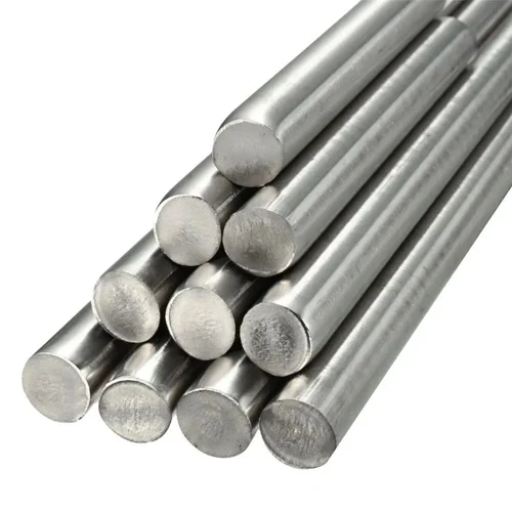
A 904L vs Alloy 20 decision is only as good as the material that arrives, and both grades are routinely substituted. The documentation closes the gap.
The two most-substituted elements are exactly the two that carry each grade. For Alloy 20, specify positive material identification (PMI) on the copper (3.0–4.0%) and niobium (≥8×C) lines, because a heat low on copper is no longer the acid specialist and a heat without niobium loses its intergranular guarantee. For 904L, specify PMI on copper (1.0–2.0%) and molybdenum (4.0–5.0%). Both must be supplied solution-annealed and water-quenched.
By form, the applicable standards are ASTM B463 for Alloy 20 plate and sheet, ASTM B473 for bar, ASTM B464 for welded pipe, ASTM B366 for fittings, and ASTM B462 for forgings, against 904L’s ASTM A240 for plate, B625 for plate and sheet, and A312/A182 for pipe and forgings. On the Chinese side, Alloy 20 carries the GB/T 15007 designation NS1403 (0Cr20Ni35Mo3Cu4Nb) and 904L the S31782 designation, mapping to the European numbers 2.4660 and 1.4539, respectively. Every order ships with a mill test report (MTR); ask for EN 10204 3.1 for routine supply and 3.2 where the project needs independent witness. The two grades can be sourced on one purchase order and one heat-lot schedule.
904L vs Alloy 20 FAQ
What is the difference between 904L and Alloy 20?
Copper content and what it buys. 904L carries 1 to 2% copper and a PREN near 35, making it the dilute-to-mid acid and chloride-pitting grade. Alloy 20 carries 3 to 4% copper and more nickel (32 to 38%) but a lower PREN near 28, making it the hot and concentrated sulfuric-acid grade and the better pick against chloride stress-corrosion cracking.
Is Alloy 20 the same as 904L?
No. They are different families. 904L is a super-austenitic stainless steel (UNS N08904); Alloy 20 is a nickel-iron-chromium alloy (UNS N08020, 20Cb-3) carrying more than 30% nickel, which places it nearer the nickel alloys. They are not equivalent and cannot be interchanged in either direction without checking the duty.
Which is better for sulfuric acid, Alloy 20 or 904L?
Both, depending on the acid. Alloy 20 is better for hot or concentrated chloride-free sulfuric acid and for boiling mid-strength acid, carried by its higher copper. 904L is better for dilute-to-mid sulfuric acid carrying chlorides, carried by its higher PREN, and it costs less.
Is Alloy 20 better than 904L for seawater?
No. Seawater is a chloride-pitting problem, and 904L’s PREN near 35 gives it a margin that Alloy 20’s ~28 lacks. For warm or creviced seawater, though, neither grade is sufficient and a 6Mo grade such as 254 SMO or AL-6XN is the answer.
Can Alloy 20 be welded without post-weld heat treatment?
Yes. Alloy 20 is niobium-stabilised, so NbC formation protects the grain boundaries regardless of cooling rate and fabrications are routinely used as-welded. 904L takes the low-carbon route instead and generally needs no PWHT either, but where service is severe a solution anneal may be specified.
What welding filler is used for Alloy 20?
ER320LR for GTAW and GMAW and E320LR-16 for SMAW. ER320LR is a low-residual, niobium-controlled filler designed to suppress the hot cracking that a higher-residual 320 filler would suffer, and it matches the plate on the acid axis. 904L uses the matching ER385 filler instead.
What is Alloy 20 equivalent to?
In Europe, 2.4660; in China, NS1403 under GB/T 15007, written 0Cr20Ni35Mo3Cu4Nb. The common trade names are 20Cb-3, Alloy 20CB-3 and INCOLOY 020. None of these is a 904L equivalent, and 904L’s own equivalents are 1.4539 and S31782.
What is the PREN of Alloy 20 compared with 904L?
Alloy 20 works out at roughly 28 (range about 26 to 31) from Cr + 3.3 Mo, since it carries no nitrogen. 904L works out near 35.6. That roughly seven-point gap favours 904L on pitting resistance in chlorides, even though Alloy 20 is the more nickel-rich grade.
Are 904L and Alloy 20 magnetic?
No. Both are fully austenitic and essentially non-magnetic, with relative permeability close to 1. That is a difference from duplex grades such as 2205, which are magnetic because of their ferrite content and cannot be specified where non-magnetic behaviour is a hard requirement.
Which is more expensive, 904L or Alloy 20?
Alloy 20, in every form, because of its higher nickel. The margin runs roughly 10 to 20% at bar and billet, 20 to 35% at plate, and 25 to 45% at tube and pipe. The premium is only worth paying where the duty is hot, concentrated, and chloride-free acid.
Conclusion
In the 904L vs Alloy 20 decision, the composition tables mislead, and the mechanism decides. The two grades are separated by copper, 904L at 1 to 2% and Alloy 20 at 3 to 4%, and copper is what carries performance in reducing sulfuric acid by suppressing the cathodic half of the corrosion cell. That is why Alloy 20 owns the hot and concentrated chloride-free end, and why 904L owns the dilute-to-mid end where chlorides are present.
Three things carry the decision. The mechanism: copper against the acid. The fork, at roughly 40% concentration and above 60 °C, where Alloy 20 pulls ahead, and molybdenum stops helping. And the two chloride threats: pitting to 904L on PREN and stress-corrosion cracking to Alloy 20 on nickel. Add the welding contrast, low-carbon against niobium-stabilised, and the price rule that Alloy 20 always costs more. Where neither fits, say so and move to a nickel alloy.
Tell us your medium, concentration, temperature, and chloride level. We will confirm whether the duty is a hot-concentrated problem, a chloride problem, or neither, and quote 904L or Alloy 20 from the same heat lot with MTR, PMI, and EN 10204 3.1 documentation. Quotation within 24 hours.