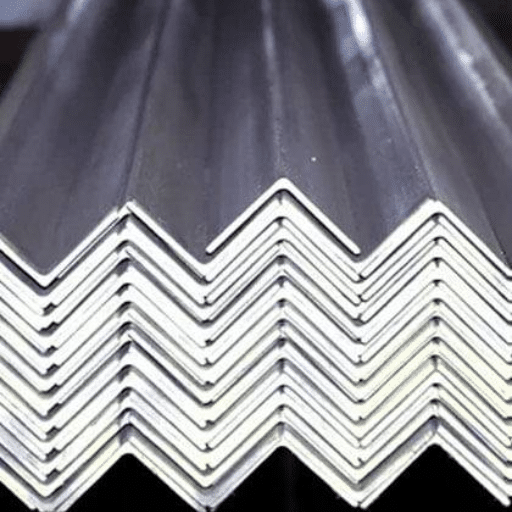
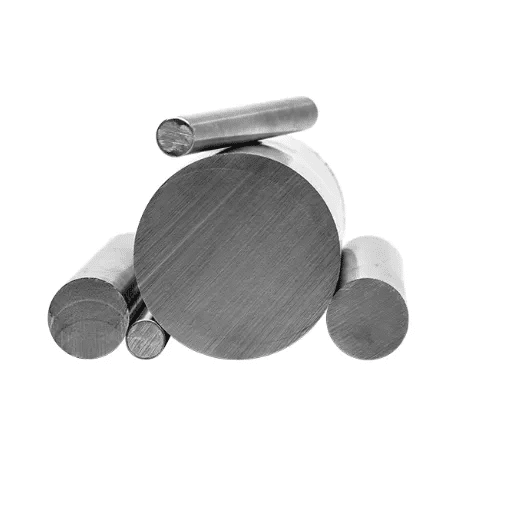
A stainless steel coil is a continuously rolled strip of stainless steel wound into cylindrical form, available in hot-rolled or cold-rolled conditions across grades from 201 to 904L. Choosing the correct coil, grade, finish, thickness, and tolerance determines whether your component survives its operating environment or fails prematurely.
The procurement team for the food processing plant in Southeast Asia selected “standard” grade stainless steel coil according to their standard equipment requirements when they ordered 304 stainless steel coil for their new chloride-laden cooling water heat exchanger. After 18 months, the tubing that used coil material suffered pitting corrosion that created holes in the metal. The required replacement material should have 316L composition, which contains 2.5% molybdenum to achieve long-term resistance against identical chloride levels. The organization incurred expenses three times higher than initial material costs because a single incorrect material choice required equipment downtime and replacement, and re-certification processes.
The guide contains technical information and decision-making tools that procurement teams and design engineers need to select stainless steel coil products with confidence. The content will teach you about the mechanical differences between hot-rolled and cold-rolled coils and which ASTM A240 grade applies to your use case, how surface finish impacts performance, and which documents industrial purchasers need to obtain.
Key Takeaways
- 304 stainless steel coil handles general industrial and food-grade applications; 316L coil is mandatory for chloride-rich or marine environments due to its 2.0–3.0% molybdenum content.
- Cold-rolled stainless steel coil delivers tighter tolerances (±0.03 mm), smoother surfaces, and higher strength than hot-rolled coil, but at a higher cost per ton.
- Coil is the optimal form for high-volume continuous production; sheet suits custom fabrication; precision strip serves tight-tolerance stamping operations.
- Every coil order for critical applications must ship with an ASTM A240-compliant Material Test Report (MTR), spectral analysis, and EN 10204 3.1 or 3.2 certification.
- Duplex grades 2205 and 2507 provide yield strengths 40–60% higher than 316L for pressure vessel and offshore applications where standard austenitic grades are insufficient.
What Is Stainless Steel Coil?

The process of creating stainless steel coil begins with heating and rolling austenitic stainless steel, ferritic stainless steel, duplex stainless steel, and martensitic stainless steel into a flat sheet, which manufacturers then roll into cylindrical coils for easy movement, storage, and processing. The production of coils requires both hot-rolled and cold-rolled methods to create products that range from 0.1 mm precision cold-rolled strip to 25 mm heavy-gauge hot-rolled band.
Industrial buyers need to understand the importance of coil form factor because it allows machines to continuously extract material, which they use in stamping presses and roll-forming lines, tube mills, and slitting equipment. A master coil can produce multiple pieces of material that exceed 1,000 meters in length, thus reducing both scrap material and setup time when compared to processing individual sheets. High-volume manufacturers will experience both reduced material costs for each part and increased production speed.
The standards that control the manufacture of stainless steel coils require compliance with ASTM A240/A240M standards, which cover chromium and chromium-nickel grades, and ASTM A480 standards, which define general requirements, and EN 10028-7 standards, which apply to pressure vessel applications, and JIS G4305 standards, which control cold-rolled strip production. The standards require all chemical compounds, mechanical characteristics, and size specifications to match the quality standards established by your quality team.
Hot Rolled vs Cold Rolled Stainless Steel Coil
The manufacturing process defines the mechanical properties, surface finish, and dimensional precision of stainless steel coil. Understanding the difference prevents specification errors that lead to forming cracks, poor weld quality, or surface rejections on arrival.
Manufacturing Process Differences
Hot-rolled stainless steel coil starts with slab material, which requires heating beyond 1,000°C because this temperature exceeds the steel’s recrystallization threshold. The material undergoes two milling processes, which decrease its thickness before it gets coiled while still in a heated state. The resultant surface maintains mill scale until the material undergoes annealing and pickling processes, which produce a No. 1 finish. The hot rolling process produces thicker gauges, which range from 1.8 mm to 25 mm, while allowing broader dimensional tolerances because of thermal expansion and contraction that occurs during the cooling process.
Cold-rolled stainless steel coil starts with a hot-rolled, pickled black band that has cooled to room temperature. The band passes through tandem cold mills which use 4-Hi or 20-Hi Sendzimir mills at temperatures below the recrystallization threshold. The process makes the steel harder, which results in a yield strength increase of up to 20%. The subsequent annealing process restores ductility, while the skin-passing process improves both surface flatness and finish. Cold rolling reaches a minimum gauge of 0.1 mm which comes with a thickness tolerance of ±0.03 mm for precision rerolled material.
Side-by-Side Comparison
| Feature | Hot-Rolled Coil | Cold-Rolled Coil |
|---|---|---|
| Rolling temperature | Above 900°C | Room temperature |
| Typical thickness | 1.8–25 mm | 0.1–6.0 mm |
| Thickness tolerance | ±0.10–±0.50 mm | ±0.03–±0.10 mm |
| Surface finish | Rough, matte, scaled (No. 1) | Smooth, bright (2B, BA) |
| Yield strength | Base annealed values | Up to 20% higher from work hardening |
| Dimensional precision | Wider tolerances | Tight, consistent |
| Cost per ton | Lower | Higher (additional processing) |
| Best applications | Structural, pressure vessels, heavy fabrications | Appliances, automotive trim, precision components, food equipment |
When to Specify Hot-Rolled Coil
Hot-rolled stainless steel coil functions best in situations that require structural performance to take precedence over surface appearance and cost-effective performance. The industry standard for chemical processing vessels, architectural structural sections, and heavy industrial fabrications requires hot-rolled 304 or 316L metal to be used with No. 1 finish. The thicker gauges and lower cost per ton make hot-rolled coil the economical choice when subsequent machining, welding, or surface treatment will remove the as-rolled finish anyway.
When to Specify Cold-Rolled Coil
Cold-rolled stainless steel coil is the right choice when dimensional precision, surface quality, or formability is critical. Automotive trim, kitchen appliances, electronic enclosures, and pharmaceutical equipment use cold-rolled 2B, or BA finishes to achieve their bright and uniform appearance. The manufacturing process of sinks, cookware, and stamped components requires cold-rolled material because it provides enhanced metallurgical control, which prevents tearing and wrinkling during forming.
Stainless Steel Coil Grades: Technical Specifications

Grade selection is the single most important decision in specifying stainless steel coil. The following tables present ASTM A240 chemical composition and mechanical property data for the grades most commonly specified in coil form.
Grade 304 / 304L (UNS S30400 / S30403)
304 is the most widely specified austenitic stainless steel coil grade globally, accounting for approximately 50% of all stainless steel production. Its 18–20% chromium and 8–10.5% nickel content provides excellent general corrosion resistance, formability, and weldability.
Chemical Composition (ASTM A240, wt%)
| Element | 304 | 304L |
|---|---|---|
| Carbon (C) | 0.08 max | 0.030 max |
| Chromium (Cr) | 18.0–20.0 | 18.0–20.0 |
| Nickel (Ni) | 8.0–10.5 | 8.0–12.0 |
| Manganese (Mn) | 2.00 max | 2.00 max |
| Silicon (Si) | 0.75 max | 0.75 max |
| Phosphorus (P) | 0.045 max | 0.045 max |
| Sulfur (S) | 0.030 max | 0.030 max |
Mechanical Properties (Annealed Condition, ASTM A240)
| Property | 304 | 304L |
|---|---|---|
| Tensile strength, min. | 515 MPa (75 ksi) | 485 MPa (70 ksi) |
| Yield strength, min. | 205 MPa (30 ksi) | 170 MPa (25 ksi) |
| Elongation in 50 mm, min. | 40% | 40% |
| Hardness, max. (HRB) | 92 | 92 |
304L’s lower carbon content (0.03% max versus 0.08% max) minimizes carbide precipitation during welding, reducing susceptibility to intergranular corrosion in the heat-affected zone. For welded assemblies, heat exchangers, tanks, and piping, specify 304L unless the component will receive a full solution anneal after welding.
Grade 316 / 316L (UNS S31600 / S31603)
316L stainless steel coil adds 2.0–3.0% molybdenum to the 304 base, dramatically improving resistance to pitting and crevice corrosion in chloride environments. This makes 316L the standard grade for marine, chemical processing, and pharmaceutical applications.
Chemical Composition (ASTM A240, wt%)
| Element | 316 | 316L |
|---|---|---|
| Carbon (C) | 0.08 max | 0.030 max |
| Chromium (Cr) | 16.0–18.0 | 16.0–18.0 |
| Nickel (Ni) | 10.0–14.0 | 10.0–14.0 |
| Molybdenum (Mo) | 2.00–3.00 | 2.00–3.00 |
| Manganese (Mn) | 2.00 max | 2.00 max |
| Silicon (Si) | 0.75 max | 0.75 max |
Mechanical Properties (Annealed Condition, ASTM A240)
| Property | 316 | 316L |
|---|---|---|
| Tensile strength, min. | 515 MPa (75 ksi) | 485 MPa (70 ksi) |
| Yield strength, min. | 205 MPa (30 ksi) | 170 MPa (25 ksi) |
| Elongation in 50 mm, min. | 40% | 40% |
| Hardness, max. (HRB) | 95 | 95 |
The pitting resistance equivalent number (PREN) of 304 steel increases from 18–20 to 23–26 when molybdenum is added to the material. The corrosion rate in seawater environments decreases by 30 to 50 percent when comparing these two materials. The use of 316L material becomes essential for coastal infrastructure, desalination equipment, and chemical processing systems that work with chlorides.
Grade 430 (UNS S43000)
430 is a ferritic grade with 16–18% chromium and negligible nickel content. It is magnetic, offers moderate corrosion resistance, and costs significantly less than austenitic grades.
Chemical Composition (ASTM A240, wt%)
| Element | 430 |
|---|---|
| Carbon (C) | 0.12 max |
| Chromium (Cr) | 16.0–18.0 |
| Nickel (Ni) | 0.75 max |
| Manganese (Mn) | 1.00 max |
430 stainless steel coil serves indoor architectural trim, appliance panels, and automotive exhaust components where magnetic properties are acceptable and the environment is not aggressively corrosive. It is not suitable for chloride exposure or prolonged outdoor service without a protective coating.
Grade 201 (UNS S20100)
201 is an austenitic grade which contains nickel at 3.5% to 5.5% and has manganese content between 5.5% to 7.5%. The material provides an economical substitute to 304, which performs better indoors for decorative purposes and in household appliances and light-duty consumer products.
The trade-off results in decreased protection against corrosion and increased speed of oxidation during humid or outdoor conditions. The use of 201 stainless steel coil for food processing, chemical exposure, and structural load-bearing applications requires organizations to conduct thorough assessments of their operational conditions.
Duplex and Specialty Grades
Duplex stainless steel coil serves as an alternative solution for applications that require higher performance than standard austenitic grades can provide. Grade 2205 (22% Cr, 5% Ni, 3% Mo) delivers a minimum yield strength of 450 MPa, which approximately doubles the strength of 316L and provides better protection against stress corrosion cracking. Super duplex 2507 extends this performance for the most demanding offshore and chemical service conditions.
904L and 254SMO super-austenitic grades provide higher molybdenum content, which reaches 4.5% in 904L and 6.0% in 254SMO for extreme acid and chloride environments. The specialized mills produce these grades in coil form, and customers must request their supply with complete MTR documentation, which proves their compliance.
Surface Finishes and Tolerances
The surface finish designation on stainless steel coil determines both aesthetic appearance and functional performance in corrosive or hygienic applications. ASTM A480 defines finish requirements; EN 10258 and EN 10259 govern dimensional tolerances for European-specified material.
Common Surface Finishes
| Finish Designation | Process | Appearance | Typical Applications |
|---|---|---|---|
| No. 1 | Hot rolled, annealed, pickled | Dull, matte, rough | Industrial tanks, pressure vessels, structural sections |
| 1D | Hot rolled, heat treated, pickled | Slightly smoother than No. 1 | General industrial fabrications |
| 2D | Cold rolled, annealed, pickled | Dull, smooth | Deep-drawn components, formed parts |
| 2B | Cold rolled, annealed, pickled, skin passed | Smooth, moderately reflective | General-purpose coil, appliances, food equipment |
| BA (Bright Annealed) | Cold rolled, bright annealed | Mirror-like, highly reflective | Decorative trim, reflectors, high-aesthetic appliances |
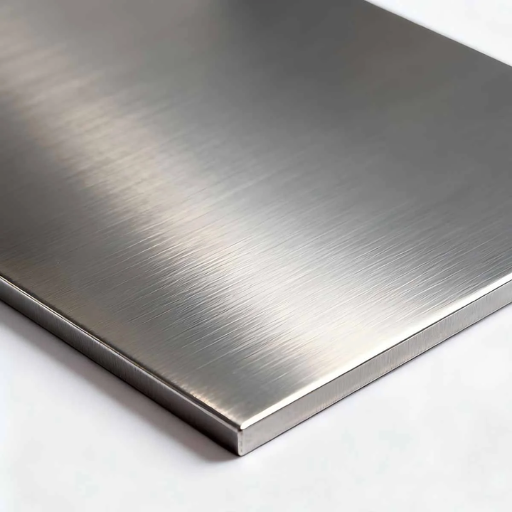
| No. 4 | Cold rolled, polished with 120–150 grit | Brushed satin | Kitchen equipment, elevators, architectural panels |
| No. 8 | Cold rolled, mirror polished | Highly reflective, clear image | Decorative signage, ornamental panels |
For food processing and pharmaceutical equipment, 2B or BA finishes are typically specified because their smooth surfaces resist bacterial adhesion and clean easily. No. 4 brushed finishes hide scratches and fingerprints in high-traffic architectural applications.
Thickness and Width Tolerances
ASTM A480 establishes thickness tolerances according to the specified nominal gauge and width of the material. The standard thickness tolerance for cold-rolled 304 coil, which has a 2B finish and measures 1,219 mm in width and 2.0 mm in thickness, stands at ±0.12 mm. A precision-rerolled strip can achieve half of this tolerance or better.
The measurement of width tolerances depends on the state of the material edges. Mill edge coil maintains its original as-rolled edge with only slight trimming, while slit edge coil has undergone precise width trimming, which achieves a standard tolerance of ±0.3 mm for narrow strip. The use of slit-edge specification is necessary when the coil will be processed through automated stamping or roll-forming equipment because it reduces jamming and dimensional variability.
Coil vs Sheet vs Strip: Procurement Decision Framework

Industrial buyers frequently face a choice between coil, sheet, and strip, three forms that originate from the same material but serve different production methods. Specifying the wrong form increases scrap, labor costs, and lead time.
Definitions and Dimensions
Coil is the widest continuous form, which typically has a width range between 600 mm and 2,000 mm and extends for hundreds of meters. A sheet is a flat, rectangular panel that manufacturers cut from coil to standard dimensions that include 1,219 mm × 2,438 mm and 1,500 mm × 3,000 mm. Strip is a narrow coil that manufacturers produce in widths that stay below 600 mm and provide in precision-slit form, which customers need for their stamping or tube-making processes.
The processing relationship is straightforward because the master coil serves as the primary starting material. Slitting produces a strip. Cut-to-length produces a sheet. The material becomes impossible to return to master coil form after slit or cut processing.
Decision Matrix for Buyers
| Production Requirement | Recommended Form | Reasoning |
|---|---|---|
| High-volume continuous stamping or roll forming | Coil | Lowest cost per ton, minimal scrap, automated feeding |
| Medium-volume custom fabrication with no decoiling equipment | Sheet | Ready-to-use flat panels, no capital investment |
| Precision stamping, progressive dies, small parts | Strip | Tightest tolerances, minimal setup waste, exact width match |
| Prototyping or one-off projects | Sheet | No material commitment, immediate usability |
| Heat exchanger tube production | Strip | Narrow width feeds tube mills directly |
| Large structural fabrications | Coil or sheet | Wide coverage areas, efficient nesting |
Coil delivers the lowest cost per kilogram but requires decoiling, leveling, and possibly slitting equipment. The sheet carries a premium for shearing and handling but eliminates capital expenditure. Strip generates the highest cost per kilogram because of its precise slitting and edge conditioning process, which produces minimal waste when manufacturing small precision parts.
Cost Structure
Coil delivers the lowest cost per kilogram but requires decoiling, leveling, and possibly slitting equipment. The sheet carries a premium for shearing and handling but eliminates capital expenditure. Strip commands the highest per-kilogram price due to precision slitting and edge conditioning, yet generates the least waste for small precision parts.
Industry Applications and Grade Selection
The right stainless steel coil grade depends on the operating environment, not just the component shape. The following application guidance maps specific industrial conditions to the minimum recommended grade.
Food Processing and Pharmaceutical Equipment
The standard material for equipment used in food contact areas and storage tanks and conveyor systems is 304 stainless steel coil which comes in both 2B and BA finishes. The material protects against corrosion because it withstands attacks from mild acids and cleaning chemicals and moisture exposure. The 316L coil should be used to protect equipment from pitting damage which occurs when chloride-based sanitizers and salt-laden washdown environments used in dairy and seafood processing operations.
Chemical Processing and Desulfurization
Coil-formed components of chemical reactors and heat exchangers and FGD absorbers react with sulfuric acid and hydrochloric acid and chloride-laden process streams. The 316L material handles moderate sulfuric acid and hydrochloric acid concentrations while Hastelloy C-276 and duplex 2205 coil are required for hot concentrated sulfuric acid and hydrochloric acid applications. The selection between both grades needs the metallurgical engineers to examine acid concentration and temperature and chloride content throughout each assessment.
Marine and Offshore
The marine industry requires equipment protection through molybdenum-based corrosion resistance. The minimum grade for seawater-exposed components is 316L stainless steel coil while super duplex 2507 coil serves subsea manifolds and risers and high-pressure piping systems, which need both strength and corrosion resistance. The structural sections of offshore platforms receive their strength advantages from duplex 2205 coil, which provides better strength-to-cost ratios than 316L and carbon steel with protective coating.
Automotive and Transportation
Exhaust system manufacturers choose 409 and 439 ferritic coils for catalytic converters and mufflers because these materials resist high-temperature oxidation while exhibiting lower thermal expansion. The application needs 304 or 430 cold-rolled coil with 2B or BA finish to achieve the required cosmetic surface quality and formability for EV battery enclosures and decorative trim.
Certifications and Quality Documentation
In critical applications, the documentation accompanying stainless steel coil is as important as the material itself. Procurement teams should never accept shipment without verifying that the certificate package meets their project’s quality plan.
ASTM A240 and A480 Compliance
ASTM A240 defines the chemical composition, mechanical properties, and testing requirements for chromium and chromium-nickel stainless steel plate, sheet, and strip. ASTM A480 establishes the general requirements for delivery, including tolerances, finish, marking, and inspection. A compliant MTR must list the heat number, actual chemical analysis, mechanical test results, and conformance statement.
EN 10204 3.1 and 3.2 Certificates
The manufacturer’s authorized inspection representative issues EN 10204 3.1 certificates, which confirm that tested materials meet all requirements specified in the order. The nuclear industry and offshore operations and most aerospace projects, define EN 10204 3.2 certificates, which require independent third-party verification from classification societies or accredited inspection bodies.
The quality engineer Elena at a German pressure vessel fabricator received 316L coil from an unverified broker, which contained MTR documents that lacked actual mechanical test values while referencing a heat number that did not match the coil markings. She experienced a six-week delay in her ASME-code vessel inspection because the entire lot got rejected. She now requires EN 10204 3.2 certification for all pressure-boundary materials and verifies heat-number traceability before unloading any shipment.
In-House Verification
Even with mill certificates, incoming inspection should include dimensional verification against ASTM A480 tolerances and, for critical applications, independent spectral analysis to confirm elemental composition. Reputable suppliers provide this data proactively; commodity brokers often cannot.
Stainless Steel Coil from Jiangsu Zhonggongte
The company Jiangsu Zhonggongte Metallurgical Technology Co., Ltd. delivers stainless steel coil products which include all material grades from 201 and 430 to 304 304L 316L 321 310S 2205 2507 and 904L in both hot-rolled and cold-rolled forms. The Wuxi production and warehousing facilities of our company hold master coil stock, which includes standard-width and thickness items while offering custom slitting and cut-to-length, and precision rerolling services.
Our laboratory tests every coil shipment by using direct-reading spectrometers and tensile testing equipment, and ultrasonic NDT systems to create a Material Test Report. We certify compliance with ASTM A240/A480 EN 10028-7 JIS G4305 and GB/T standards, and we support EN 10204 3.1 and 3.2 documentation upon request.
The technical team examines your application needs together with operating temperature, media exposure, fabrication method and dimensional tolerances to determine the best grade and finish for your project. We provide standard stock for immediate shipping and custom specifications according to drawing requirements while maintaining delivery times and complete traceability.
Submit your coil specification today, grade, thickness, width, finish, and quantity. Our metallurgical engineers will respond within 24 hours with availability, pricing, and delivery schedule.
Frequently Asked Questions
Q: What is the difference between 304 and 316L stainless steel coil?
A: The two stainless steel materials 304 and 316L differ because 316L contains 2.0 to 3.0 percent molybdenum which protects against pitting and crevice corrosion in seawater and chemical processing and salt-exposed food equipment. The general-purpose grade 304 stainless steel functions in environments that have less severe conditions. The company Zhonggongte provides both materials in coil form which meets the complete requirements of ASTM A240 certification.
Q: What is the process for selecting the appropriate type of stainless steel coil between hot-rolled and cold-rolled steel?
A: The hot-rolled coil should be used in applications which involve constructing structures and building pressure vessels and creating large systems that do not require attractive surfaces but need to keep costs down. The cold-rolled coil should be used when appliances and automotive trim and stamped components and food equipment require exact dimensions and smooth surfaces and ability to change shape.
Q: What thickness tolerance can I expect for cold-rolled 304 coil?
A: The standard cold-rolled 304 coil in 2B finish during ASTM A480 testing shows thickness tolerances that range from ±0.08 mm for gauges under 1.0 mm to ±0.12 mm for gauges around 2.0 mm. A precision-rerolled strip can achieve half-standard tolerance or better. Specify your requirement when ordering.
Q: What certifications should I demand with every stainless steel coil order?
A: The minimum requirement for certification is a Material Test Report (MTR), which verifies the actual chemical composition and mechanical properties through testing against ASTM A240 standards. The certification requires EN 10204 3.1 or 3.2 because pressure vessels and offshore and nuclear applications need complete heat-number tracking and external inspection verification.
Q: Can I order custom-width slit coil, or am I limited to standard master coil widths?
A: The industry considers custom slitting to be an established procedure. The master coils have standard widths of 1,000 mm, 1,219 mm and 1,500 mm, while precision slitting can create strips that range from approximately 8 mm to 600 mm with high-quality edge results. When requesting a quote, please state your desired width and maximum burr tolerance and acceptable camber deviation.
Q: What is the typical lead time for 316L stainless steel coil from China?
A: The standard dimensions of stocked grades enable shipping within 3 to 7 days. The mill schedule determines the delivery time for custom-rolled or non-standard gauges, which takes 15 to 30 days. Our 24-hour logistics center enables urgent shipments, while we offer international delivery through FOB, CIF, and EXW shipping options.
Q: Is duplex 2205 coil available, and when should I specify it over 316L?
A: The application needs higher strength through dual-excell 2205 material, which provides 450 MPa minimum yield strength and better resistance against stress corrosion cracking and optimal performance in high-chloride environments, which standard austenitic grades cannot handle. Offshore piping, pressure vessels and desalination equipment make up the common applications for this material.
Internal Links:
https://alloy-materials.com/stainless-steel/
https://alloy-materials.com/stainless-steel-sheet/
https://alloy-materials.com/stainless-steel-pipe/
https://alloy-materials.com/stainless-steel-bar/
https://alloy-materials.com/about-us/
External Links: