The 304 stainless steel sheet thickness starts at 0.3 millimeters, which corresponds to 30 gauge and extends to 6.0 millimeters in cold-rolled form, while hot-rolled plate thickness reaches much greater dimensions. The standard stock sheet sizes available from Chinese and international mills include 1219 × 2438 mm, 1219 × 3048 mm, 1500 × 3000 mm, and 1500 × 6000 mm which different mills produce through various processing methods.
A buyer who specifies the wrong thickness tolerance on a 304 sheet RFQ can waste 15% or more on material cost — or receive parts that fail inspection.
Chen who worked as a procurement manager in Bangkok, ordered two hundred sheets of 18-gauge 304 for a food processing project because he believed the supplier would understand his requirements. The shipment arrived at 1.0 mm instead of the 1.27 mm he needed. His fabricator’s press brake settings used 1.27 mm as their base measurement, which resulted in all bends producing incorrect results.
The entire lot had to be returned. The problem existed due to inappropriate specification requirements because the supplier delivered what they should have. Chen discovered that different countries use different gauge number systems, while ASTM prohibits their usage.
You will discover the complete thickness range of 304 stainless steel sheet through this guide, together with gauge measurements which convert to millimeters and ASTM A480 tolerances which apply to specific thickness bands. The information on this page will assist you in selecting dimensions for both standard stock orders and custom-cut blank requests on your first attempt.
Key Takeaways
- 304 cold-rolled sheet spans 0.3 mm to 6.0 mm; hot-rolled plate extends to 50 mm or more
- Gauge numbers are non-linear and discouraged by ASTM — specify thickness in millimeters
- Standard mill stock sizes include 1219 × 2438 mm, 1219 × 3048 mm, 1500 × 3000 mm, and 1500 × 6000 mm
- ASTM A480 thickness tolerance varies by nominal thickness and sheet width
- Weight per square meter = thickness (mm) × 7.93 kg/m² for 304 stainless steel
304 Stainless Steel Gauge Thickness Chart: Gauge to Millimeter
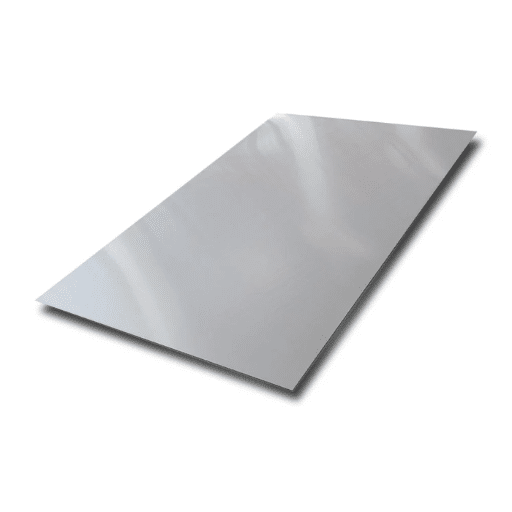
Why Gauge Numbers Create Confusion
The sheet metal gauge system originated in the wire-drawing industry and was later adapted for sheet. The larger the gauge number, the thinner the metal. This non-linear relationship confuses buyers because the scale is based on historical weight per square foot, not on a constant dimensional increment. For background on how gauge numbering works across different metals, see the Wikipedia sheet metal gauge reference.
ASTM International officially discourages the use of gauge numbers in specifications. ASTM A480/A480M requires the thickness measurement to be stated in decimal inches or millimeter units. Many North American buyers and some fabricators continue to use gauge measurements despite this fact. If your drawing uses gauge, cross-reference it to the millimeter equivalent before submitting an RFQ.
Buyers often search for a generic stainless steel sheet gauge chart before narrowing to 304. The table below serves as a 304 stainless steel gauge thickness chart, converting common stainless steel sheet gauges to millimeters and inches for standard austenitic grades, including 304.
| Gauge | Inch | mm | kg/m² | Common Uses |
|---|---|---|---|---|
| 7 | 0.1875 | 4.76 | 37.7 | Heavy structural panels, tanks |
| 8 | 0.1719 | 4.37 | 34.7 | Equipment housings, brackets |
| 10 | 0.1406 | 3.57 | 28.3 | Structural supports, frames |
| 12 | 0.1094 | 2.78 | 22.0 | Wall panels, cabinets |
| 14 | 0.0781 | 1.98 | 15.7 | Kitchen equipment, ducting |
| 16 | 0.0625 | 1.59 | 12.6 | Food-grade surfaces, appliances |
| 18 | 0.0500 | 1.27 | 10.1 | Decorative panels, enclosures |
| 20 | 0.0375 | 0.95 | 7.5 | Light enclosures, splashbacks |
| 22 | 0.0313 | 0.80 | 6.3 | Light-gauge fabrication |
| 24 | 0.0250 | 0.64 | 5.1 | Trim, light-duty covers |
| 26 | 0.0188 | 0.48 | 3.8 | Decorative trim, labels |
| 28 | 0.0156 | 0.40 | 3.2 | Very light applications |
| 30 | 0.0125 | 0.32 | 2.5 | Foil-like applications |
How to read this table: The table displays information through its kg/m² column, which shows the nominal weight of 304 stainless steel sheet at different thicknesses. The weight was determined through calculations that used the alloy density, which equals 7.93 g/cm³.
Pro tip for specification: Always state thickness in millimeters on technical drawings. If you must reference gauge, include the millimeter equivalent in parentheses. This method provides international suppliers and fabricators with a clear understanding of the specifications.
304 Stainless Steel Sheet Standard Sizes and Stock Dimensions
Cold-Rolled 304 Sheet Standard Sizes
Cold-rolled 304 stainless steel sheet is produced in coil form and then cut to standard sheet sizes. The following 304 stainless steel sheet standard sizes are the most common stock dimensions available from Chinese mills and international producers:
- 1219 × 2438 mm (4 × 8 ft) — the most common global stock size
- 1219 × 3048 mm (4 × 10 ft) — popular for larger fabrications
- 1500 × 3000 mm — widely stocked by TISCO, BAOSTEEL, and ZPSS
- 1500 × 6000 mm — common for industrial and structural applications
Standard coil widths before shearing are 1000 mm, 1219 mm, and 1500 mm. The mill needs to create a special rolling schedule when your design requires a width that exceeds these standard measurements. This process requires two to four additional weeks for production and results in higher minimum order requirements.
Mills have different thicknesses of materials that they provide to customers. Most Chinese producers stock cold-rolled 304 sheet from 0.3 mm to 3.0 mm in all standard sizes. The standard thickness range between 3.0 mm and 6.0 mm exists as a common product, yet its availability depends on the current operational schedule of the mill. For a full breakdown of how thickness affects pricing, see our 304 stainless steel sheet pricing guide.
Hot-Rolled 304 Plate Standard Sizes and Thickness Ranges
Hot-rolled 304 stainless steel plate — material thicker than 6.0 mm — is produced from slab and typically supplied in larger formats:
- 1500 × 6000 mm
- 2000 × 6000 mm
- 2000 × 8000 mm
Common 304 stainless steel plate thickness ranges span 6.0 mm to 50 mm, with thicker plate available on special order. Hot-rolled plate carries a No. 1 finish (annealed and pickled) and wider dimensional tolerances than cold-rolled sheet.
Custom Sizes and Cut-to-Length
If your project requires dimensions outside standard stock, most processors offer cut-to-length and cut-to-size services. You can order 304 sheet slit to custom widths, sheared to custom lengths, or laser-cut to finished part dimensions.
For guidance on specifying custom dimensions and tolerances for cutting, see our article on 304 stainless steel cut to size.
Cold-Rolled vs Hot-Rolled: Thickness Ranges Explained

Cold-Rolled 304 Sheet (0.3–6.0 mm)
Cold-rolled 304 sheet is produced by rolling annealed hot-band coil at room temperature to the desired thickness. The process delivers tight dimensional tolerances, smooth surface finish, and excellent flatness. Cold-rolled 304 sheet is available in thicknesses from 0.3 mm to 6.0 mm.
Surface finishes on cold-rolled sheet include:
- 2B — smooth, reflective, mill finish; most common for general fabrication
- BA — bright annealed, highly reflective; used for decorative and appliance applications
- No. 4 — brushed finish; popular for architectural and food equipment
- No. 8 / Mirror — polished to a mirror surface; premium architectural and decorative use
For applications requiring tight tolerances and cosmetic surfaces, cold-rolled sheet is the default choice. For a detailed comparison of manufacturing processes and surface outcomes, refer to our guide on cold rolled vs hot rolled 304 stainless steel.
Hot-Rolled 304 Plate (>6.0 mm)
Hot-rolled 304 plate is produced by rolling heated slabs through a roughing mill and finishing mill. The process is more economical for thick material but produces a rougher surface (No. 1 finish) and wider thickness tolerances.
Hot-rolled plate is specified when:
- Structural load-bearing capacity is required
- Thickness exceeds 6.0 mm
- Surface finish is not critical
- Cost is a primary consideration
The 6.0 mm Boundary
The 304 grade cold-rolled sheet and hot-rolled plate production process uses 6.0 mm thickness as its operational boundary. The cold-rolling method produces superior surface quality and maintains more precise dimensions for materials thinner than 6.0 mm. Hot rolling becomes the more cost-effective option for materials exceeding 6.0 mm thickness because cold-rolling operations become both unworkable and excessively expensive.
Elena the project engineer working in Rotterdam, specified 8.0 mm thick 304 material for a chemical tank project, which her supplier quoted as hot-rolled No. 1 plate. She requested a cold-rolled 2B finish at the same thickness. The supplier explained that 8.0 mm cold-rolled 304 is not standard stock and would require a special mill order at nearly double the price. Elena decided to accept the No. 1 finish while she set aside funds for surface grinding, which represented the best engineering choice for a tank that would be concealed after its installation.
Want to understand which process fits your application? Our technical team can review your drawings and recommend the optimal form and finish based on your tolerance, surface, and budget requirements. Contact our metallurgists →
ASTM A480 Thickness Tolerance Guide for 304 Sheet
Why Tolerance Matters
Understanding ASTM A480 thickness tolerance bands is essential because they define how much actual sheet thickness can deviate from the nominal value you specify. ASTM A480/A480M sets the internationally recognized tolerance bands for flat-rolled stainless steel. For the official standard text, see ASTM A480/A480M. If you don’t understand these bands, you may specify a tolerance that the mill cannot meet — or accept a tolerance that causes problems during fabrication.
The standard ASTM A480 tolerances provide sufficient accuracy for general fabrication work. The design of laser-cut parts and press-brake-formed enclosures and tight-clearance assemblies requires you to select either specific tolerance limits or material with particular thickness restrictions.
Cold-Rolled Sheet Tolerances (ASTM A480 Table A1)
The table below summarizes representative ASTM A480 cold-rolled thickness tolerances for 304 sheet. Actual values depend on the specific standard revision; always reference the current ASTM A480/A480M edition for contract purposes.
| Nominal Thickness | Width ≤1219 mm | Width >1219–1500 mm | Width >1500 mm |
|---|---|---|---|
| 0.30–0.40 mm | ±0.04 mm | ±0.05 mm | ±0.06 mm |
| 0.40–0.60 mm | ±0.05 mm | ±0.06 mm | ±0.07 mm |
| 0.60–0.80 mm | ±0.06 mm | ±0.07 mm | ±0.08 mm |
| 0.80–1.00 mm | ±0.07 mm | ±0.08 mm | ±0.09 mm |
| 1.00–1.25 mm | ±0.08 mm | ±0.09 mm | ±0.10 mm |
| 1.25–1.60 mm | ±0.09 mm | ±0.10 mm | ±0.11 mm |
| 1.60–2.00 mm | ±0.10 mm | ±0.11 mm | ±0.12 mm |
| 2.00–2.50 mm | ±0.11 mm | ±0.12 mm | ±0.14 mm |
| 2.50–3.15 mm | ±0.13 mm | ±0.14 mm | ±0.16 mm |
| 3.15–4.00 mm | ±0.15 mm | ±0.16 mm | ±0.18 mm |
| 4.00–5.00 mm | ±0.17 mm | ±0.18 mm | ±0.20 mm |
| 5.00–6.00 mm | ±0.19 mm | ±0.20 mm | ±0.22 mm |
Critical insight: Tolerance bands widen as sheet width increases. The 2.0 mm thick sheet maintains ±0.10 mm tolerance at 1219 mm width, while the same thickness holds ±0.12 mm at 1500 mm width. Press-fit assemblies for your laser-cut parts need ±0.1 mm thickness tolerance, which requires you to choose 1219 mm width stock or request a specific tolerance restriction.
Hot-Rolled Plate Tolerances (ASTM A480 Table A2)
Hot-rolled plate tolerances are wider than cold-rolled sheet tolerances, reflecting the nature of the hot-rolling process.
| Nominal Thickness | Tolerance (Width ≤1500 mm) | Tolerance (Width >1500 mm) |
|---|---|---|
| 6.0–8.0 mm | +0.4 / −0.3 mm | +0.5 / −0.3 mm |
| 8.0–15.0 mm | +0.5 / −0.3 mm | +0.6 / −0.3 mm |
| 15.0–25.0 mm | +0.6 / −0.3 mm | +0.8 / −0.3 mm |
| 25.0–40.0 mm | +0.8 / −0.3 mm | +1.0 / −0.3 mm |
Note that hot-rolled tolerances are asymmetric — the plus tolerance is larger than the minus tolerance. This matters when you’re calculating minimum wall thickness for pressure-containing structures.
How to Specify Tolerance on Your RFQ
When you submit a drawing for quotation, include one of the following tolerance references:
- “Standard ASTM A480 tolerance” — accepts mill-standard bands
- “Restricted thickness tolerance: ±0.05 mm” — requires custom rolling; adds cost
- “Minimum thickness: [value] mm” — ensures material meets structural requirements
- “Nominal thickness with no minus tolerance” — sometimes specified for thin-walled vessels
For a deeper understanding of how ASTM A240 defines the material specification and how ASTM A480 governs its dimensions, see our ASTM A240 304 stainless steel specification guide.
Weight Calculation for 304 Sheet

The Formula
Calculating the weight of 304 stainless steel sheet is straightforward when you know the density:
Weight (kg) = Length (m) × Width (m) × Thickness (mm) × 7.93
The constant 7.93 is the density of 304 stainless steel in kg per square meter per millimeter of thickness. For quick reference, here is the weight per square meter at common thicknesses:
| Thickness (mm) | kg/m² | Thickness (mm) | kg/m² |
|---|---|---|---|
| 0.5 | 4.0 | 2.0 | 15.9 |
| 0.6 | 4.8 | 2.5 | 19.8 |
| 0.8 | 6.3 | 3.0 | 23.8 |
| 1.0 | 7.9 | 4.0 | 31.7 |
| 1.2 | 9.5 | 5.0 | 39.7 |
| 1.5 | 11.9 | 6.0 | 47.6 |
Why Density Matters for Estimating
304 stainless steel has a density of 7.93 g/cm³. This is slightly higher than carbon steel (7.85 g/cm³) and lower than 316L (8.00 g/cm³). The difference matters at volume:
- A 10 m² sheet of 3.0 mm 304 weighs 238 kg
- The same sheet in carbon steel weighs 236 kg — only 2 kg lighter
- The same sheet in 316L weighs 240 kg, 2 kg heavier
For shipping and handling estimates, the 7.93 factor is accurate enough for all practical purposes. For precise invoicing, verify the exact alloy grade because 304L and 304H have negligibly different densities.
Specifying 304 Stainless Steel Sheet Thickness for Fabrication
Laser Cutting
Laser cutting capability varies with sheet thickness. On standard 3 kW to 6 kW fiber laser equipment:
- 0.5–3.0 mm: Excellent edge quality, ±0.1 mm part tolerance, high cutting speed
- 3.0–6.0 mm: Good edge quality, ±0.15 mm part tolerance, moderate speed
- 6.0–12.0 mm: Acceptable edge quality, ±0.2 mm part tolerance, slower speed
Kerf width increases with thickness. At 1.0 mm, kerf is approximately 0.15 mm. At 6.0 mm, kerf approaches 0.25 mm.
The shop’s nesting software compensates for kerf automatically, but the compensation value depends on the actual material thickness.
Press Brake Forming
Minimum bend radius scales directly with thickness. A general rule for 304 sheet:
- Inside bend radius = 1× to 2× material thickness for air bending
- Thinner material (<1.0 mm) requires careful handling to avoid distortion
- Thicker material (>3.0 mm) requires higher tonnage and may show springback
When specifying formed parts, state the finished dimensions after bending. Do not expect the fabricator to reverse-calculate flat pattern dimensions from your 3D model unless you explicitly provide the bend allowance data.
Welding
Thickness affects heat input, distortion, and filler metal selection:
- <2.0 mm: Low amperage, fast travel speed, risk of burn-through; use pulsed TIG or back-purging
- 2.0–6.0 mm: Standard TIG or MIG parameters; 308L filler wire; controlled interpass temperature
- >6.0 mm: Preheat may be required for thick-section welding; multi-pass procedures
A thinner sheet demands more welding skill than a thick plate. If your design includes welded joints in material under 1.5 mm, specify the welding method and inspection requirements on your drawing.
Frequently Asked Questions
What is the standard 304 stainless steel sheet thickness?
The standard sheet thickness for 304 stainless steel ranges between 0.305 millimeters to 6.096 millimeters. The most commonly requested thicknesses for stainless steel sheets are 1.0 mm, 1.5 mm, 2.0 mm, and 3.0 mm. The thickness range of hot-rolled 304 plate starts at 6.0 mm and extends beyond 50 mm.
What procedure should I use to transform gauge measurements into millimeter measurements for the 304 sheet?
The gauge conversion table should be used for conversions. The conversion values state that 16 gauge equals 1.59 mm, 18 gauge equals 1.27 mm, and 20 gauge equals 0.95 mm. ASTM discourages gauge terminology — specify thickness in millimeters or decimal inches to avoid ambiguity.
What is the permissible variation limit for 304 sheet thickness measurement?
The standard tolerances for ASTM A480 are defined by the standard. The typical tolerance range for cold-rolled 304 sheet extends from ±0.04 mm to ±0.22 mm based on material thickness, which ranges from 0.3 mm to 6.0 mm. The tolerance bands of wider sheets extend more than those of narrower sheets. The tolerance measurements of hot-rolled plates show an uneven distribution, which results in wider tolerance limits.
How much does a 304 stainless steel sheet weigh per square meter?
To find the weight standard, multiply the sheet thickness in millimeters by 7.93. For example, 1.0 mm sheet weighs 7.93 kg/m²; 2.0 mm sheet weighs 15.86 kg/m²; 3.0 mm sheet weighs 23.79 kg/m².
What are the distinct properties that separate 304 sheet from 304 plate materials?
The industry defines sheet as cold-rolled material that has a maximum thickness of 6.0 mm and exhibits a smooth finish, which includes 2B and BA and No. 4 finishes. The term “plate” describes hot-rolled material that has a thickness exceeding 6.0 millimeters and uses a No. 1 pickled finish. Plate has wider tolerances and a rougher surface.
Can I order 304 sheet in custom thicknesses?
The company provides this service, which allows customers to create custom material thicknesses; however, for special rolling operations, customers must follow specific procedures. The process requires additional time because it takes up to six weeks, while customers must order larger quantities. The most economical solution requires customers to choose their standard thicknesses that are closest.
Conclusion
The correct specification of 304 stainless steel sheet thickness depends on four factors, which include nominal dimensions in millimeters and manufacturing method of either cold-rolled or hot-rolled, and ASTM tolerance band, together with subsequent fabrication techniques.
Lead with millimeters, not gauge numbers. Reference ASTM A480 tolerances appropriate for your width and application. Choose a cold-rolled sheet for fabrication under 6.0 mm and a hot-rolled plate for structural work above 6.0 mm. After cutting, forming, or welding work, the specified tolerance must match what the fabricator can maintain.
Before you submit your next RFQ, review your drawing for thickness specification, confirm whether you need cold-rolled or hot-rolled material, and state your tolerance requirements explicitly. These details take seconds to include but days to fix if omitted.
If you need 304 stainless steel sheet in standard or custom thicknesses, submit your material list to our technical team. We stock cold-rolled sheet from 0.3 mm to 6.0 mm and hot-rolled plate to 50 mm, with full ASTM certification, spectral testing, and cut-to-size processing available. You will get a competitive quotation, which you will receive within 24 hours.
For a broader view of 304 sheet specifications, grades, and sourcing guidance, see our complete 304 stainless steel sheet guide.