The 904L price per kg spans a wide band. In 2026, flat product traded from about 4.80/kg for mill-direct bulk 2B at order volume to 4.80/kg for mill-direct bulk 2B at order volume to 11.80/kg on thin coil, with 7.50–13.00/kg for pipe and tube and 7.50–13.00/kg for pipe and tube and 5.80–14.00/kg for bar. Fittings and fasteners carry 3–5× the 316L equivalent. Five variables (origin, form, specification, volume, and documentation) each move the number on their own.
Search for a 904L price per kg, and you will find the same grade quoted at 2.70/kgand2.70/kgand19.00/kg in the same year. Sometimes by the same company, on two of its own pages. Neither figure is invented.
One is a mill-direct bulk coil price at order volume. The other is a small-lot, VAT-inclusive or premium-finish figure, or a page nobody has touched since 2023. No ranking page says which, because those pages were written to capture the query, not answer it.
This guide is written for the person building the number, not the person posting the range. We supply 904L coil, plate, bar, and tubular product from Wuxi with mill-direct pricing, full mill test reports, and a 24-hour quotation, inside our complete 904L stainless steel guide and the wider stainless steel grade range we hold.
Key Takeaways
- Flat product ran from 4.80/kg for mill−direct bulk 2B at volume to 4.80/kg for mill−direct bulk 2B at volume to 11.80/kg on thin coil in 2026. Plate is cheapest at 25–30 mm and dearest at 3–6 mm.
- Pipe and tube ran 7.50–13.00/kg and bar 7.50–13.00/kg and bar 5.80–14.00/kg. Fittings, flanges and fasteners carry 3–5× the 316L equivalent.
- 904L is roughly 2–2.5× 316L on comparable form. Claims of “3–4×” are measured against 304.
- Nickel and molybdenum are 60–70% of the alloy cost. A 1,000/tmovein nickel adds about 1,000/tmovein nickel adds about 0.25/kg to the metal cost.
- Quotations carry 7–14 day validity because of that exposure. Plan for a re-quote at award.
- Every band here is indicative. A firm number needs a specification. Send one and we reply within 24 hours with MTR.
How Much Does 904L Cost Per Kg in 2026?

Direct answer: The 904L stainless steel price in 2026 ran from about 4.80/kg for mill−direct bulk flat product at order volume to 4.80/kg for mill−direct bulk flat product at order volume to 11.80/kg on thin coil, with 7.50–13.00/kg for pipe and tube, 7.50–13.00/kg for pipe and tube, 5.80–14.00/kg for bar and 3–5× the 316L equivalent for fittings and fasteners. Five variables (origin, form, specification, volume and documentation) each move the number independently.
| Form | 2026 FOB China (USD/kg) | Basis |
|---|---|---|
| Coil, cold-rolled 2B, 0.2–3.0 mm | 8.50–10.50 | FOB Shanghai, incl. 13% VAT (RMB 62–76/kg) |
| Coil/sheet, thin gauge 0.2–0.5 mm | 9.20–11.80 | 8–12% thin-gauge premium |
| Coil/sheet, thick 2.0–3.0 mm | 8.20–10.00 | 3–5% thick-gauge discount |
| Flat product, broader China FOB band | 4.80–8.20 | Mill-direct bulk 2B at order volume |
| Hot-rolled plate, 3–6 mm | 8.20–9.20 | Thinnest plate, highest conversion cost |
| Hot-rolled plate, 25–30 mm | 6.80–7.70 | Cheapest point on the curve |
| Plate, full thickness tiers | 904L plate guide | Tier columns and the 40–50 mm reversal |
| Bar/round bar, general | 5.80–14.00 | Size- and condition-dependent |
| Bar, Chinese domestic, mid-2026 | 8.30–9.10 | CNY 65,000–69,000/t |
| Seamless pipe | 8.50–13.00 | Broad A312 N08904 quote |
| Welded pipe | 7.50–11.00 | RMB 72.8–77.6/kg Jan 2026 |
| Pipe, full OD bands | 904L pipe guide | OD bands and the 8–10% seamless premium |
| Buttweld fittings | 11.00–20.00 | 3–5× 316L equivalent |
| Fittings and flanges, general | 10.00–25.00+ | Often piece-priced (examples below) |
Sources are published supplier price tables and trade reporting for 2026, FOB Tianjin/Shanghai. These are bands with a date, not a price sheet.
Two conversions buyers ask for most: the 904L price per ton runs roughly US4,800–11,800 on the flat−product band, at 1,000 kg to the tonne, and the 904L price per pound is about US4,800–11,800 on the flat−product band, at 1,000 kg to the tonne, and the 904L price per pound is about US2.18–5.35 at 2.2046 lb/kg. The per-tonne figure serves the purchase order; the per-pound figure lets you compare a US distributor quote against a Chinese mill quote on one basis.
Budgeting a project against this table? Send us the form, thickness or size, quantity, and delivery terms, and our engineers will confirm a mill-direct band for your specification with MTR within 24 hours. Request a 904L price.
904L Price by Product Form
Coil and Cold-Rolled Sheet
Coil is the highest-frequency transactional 904L query and the form with the widest internal contradiction on the SERP. Here is the reconciled picture.
| Coil/sheet | 2026 FOB China (USD/kg) |
|---|---|
| Cold-rolled 2B, 0.2–3.0 mm | 8.50–10.50 |
| Thin gauge 0.2–0.5 mm | 9.20–11.80 |
| Thick 2.0–3.0 mm | 8.20–10.00 |
| Broader China FOB flat band | 4.80–8.20 |
The spread reconciles cleanly. The low end of a flat band is mill-direct bulk 2B at order volume. The high end is small-lot, VAT-inclusive or premium-finish material. Both are true, and neither is useful alone.
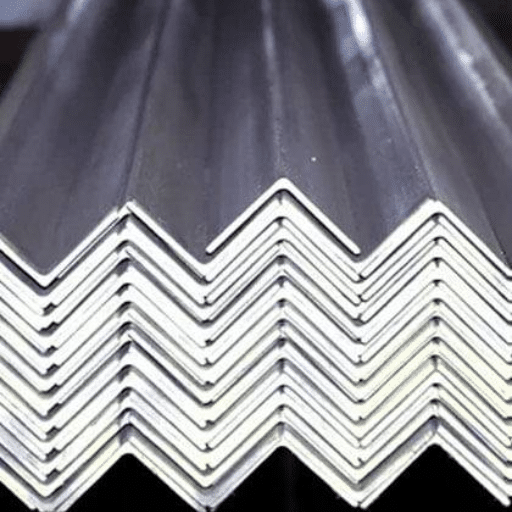
Finish moves the number on top of the gauge. 2B is the baseline; pickled and descaled adds 5–10%, No.4 or hairline 10–15%, BA 15–25%, and No.8 mirror roughly $0.50–0.90/kg. Our stainless steel sheet and coil range covers the finishes and cut-to-size options in the same grade.
Plate
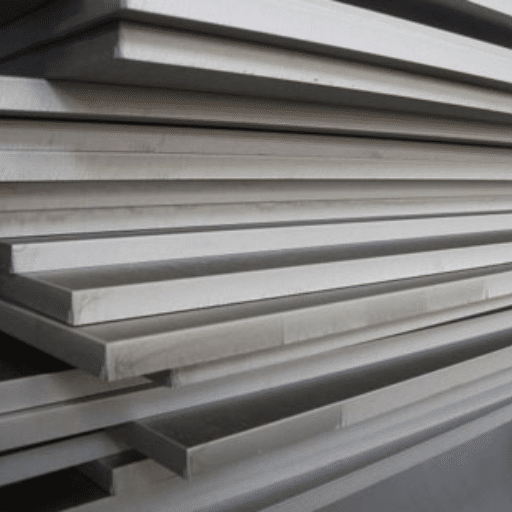
Plate is the form where thickness does the most work on price. A single summary: 3–6 mm runs 8.20–9.20/kg,fallingto8.20–9.20/kg,fallingto6.80–7.70/kg at 25–30 mm, before heavy-plate rolling premiums return above 40 mm. The five-tier thickness table, including the 40–50 mm reversal, the 6–8% step between 1–5 t and 10 t+ orders, and the domestic-versus-imported split, is in our 904L stainless steel plate guide.
Bar and Rod
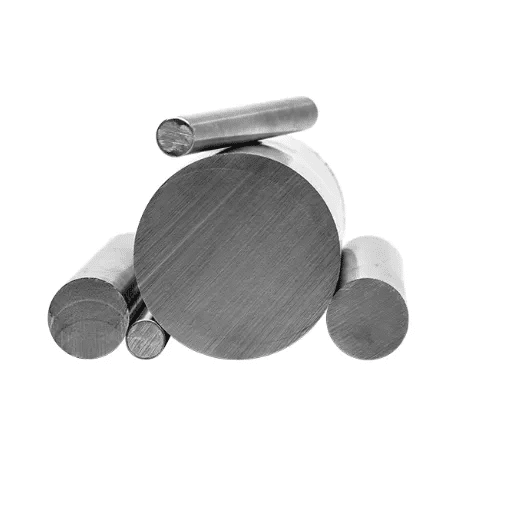
Bar trades at 5.80–14.00/kg depending on size and condition. Chinese domestic bars sit at CNY 65,000–69,000/t, about 5.80–14.00/kg depending on size and condition. Chinese domestic bar sits at CNY 65,000–69,000/t, about 8.30–9.10/kg, in mid-2026. Peeled and ground bar in Ø20–200 mm runs 7.00–14.00/kg, and forged bar in Ø100–300 mm runs 7.00–14.00/kg, and forged bar in Ø100–300mm runs 8.50–15.50/kg.
The bar-specific logic explains the range. Small diameters carry a drawing and turning premium, and peeled-and-ground bar costs more than black bar.
Bar is the form where the 316L multiple is lowest, around 2.3–2.5×, because 316L bar is itself a low-volume product rather than a commodity coil. See our stainless steel bar range for the sizes we hold.
Pipe and Tube
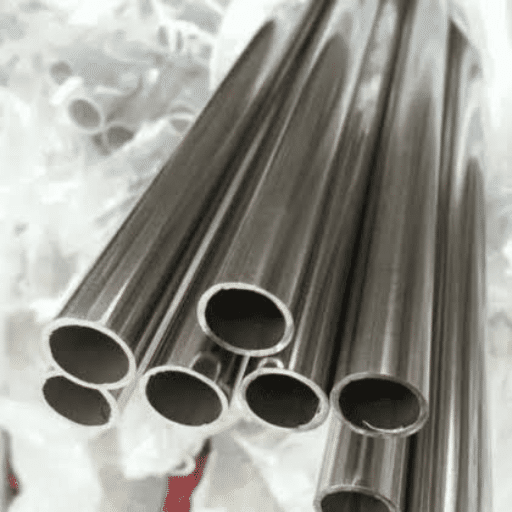
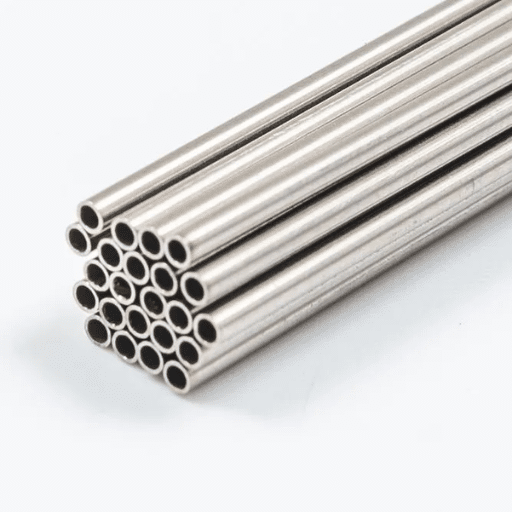
Two rows cover it: seamless 904L runs 8.50–13.00/kg and welded8.50–13.00/kg and welded7.50–11.00/kg, with a seamless premium over welded of about 8–10%. The OD-banded table, the domestic RMB 62–71/kg figure, and the third-party inspection surcharges are in our 904L stainless steel pipe guide.
Fittings, Flanges and Fasteners
This is the thinnest-covered and highest-multiple section of the market. Butt-weld fittings run 11–20/kg, and general fittings and flanges 11–20/kg and general fittings and flanges 10–25+/kg. Fittings are often bought by the piece, not the kilo, so per-kg figures alone are not enough: a 2″ Class 150 WN flange lands around 70–140 per piece, and a 6″Class 150 WN flange around 70–140 per piece, and a 6″Class 150 WN flange around 260–480 per piece.
Why the multiple climbs: fittings and fasteners need machining, forging, and small-batch production, so they carry 3–5× the equivalent 316L part, the highest finished-part multiple in the grade. Our stainless steel fasteners range covers fittings, flanges, and bolting.
What Drives the Price of 904L
904L is priced from its chemistry. The nominal composition is chromium 19.0–23.0%, nickel 23.0–28.0%, molybdenum 4.0–5.0%, copper 1.0–2.0%, balance iron, with carbon capped at 0.020% (ASTM A240/A240M; the Atlas Steels 904L grade data sheet gives the same basis, and our 904L properties reference carries the full set). For the cost model below, the working midpoints are Ni ~25.5%, Mo ~4.5%, Cu ~1.5%, Cr ~21%.
Why is 904L so expensive?
Nickel and molybdenum together account for 60–70% of 904L’s alloy cost. The grade carries roughly 23–28% nickel and 4–5% molybdenum against 316L’s 10–14% and 2–3%, so it tracks LME movements at roughly double the sensitivity. A 1,000/tnickelmoveaddsabout∗∗1,000/tnickelmoveaddsabout∗∗0.23–0.28/kg** to the metal cost.
The sensitivity arithmetic
Every competitor says nickel and molybdenum drive the price. None shows the arithmetic. Here it is, worked from the midpoints above and labelled as our indicative derivation, not a mill cost model:
- 904L is ~25% nickel by weight. A 1,000/t move in [LME Nickel](https://www.lme.com/en/Metals/Non−ferrous/Nickel) moves the nickel in one tonne of 904L by 1,000/t move in [LME nickel](https://www.lme.com/en/Metals/Non−ferrous/Nickel)moves the nickel in one tonne of 904L by∗∗ 250/t ≈ $0.25/kg.
- 904L is ~4.5% molybdenum. A 5,000/t move in molybdenum content by 5,000/t move in molybdenum content by 225/t ≈ $0.23/kg.
- Combined, a simultaneous 1,000/tnickelriseand1,000/tnickelriseand5,000/t molybdenum rise moves 904L metal cost by roughly 0.45–0.50/kg, a 6–70.45–0.50/kg, a 6–77.00/kg base from one month of raw-material movement, before any change in demand.
That is why quotations carry 7–14 day validity and why the same product is re-priced monthly. Raw material is 55–70% of the finished price; the rest is conversion: melting and vacuum induction or electroslag remelting where the specification demands it, then rolling, drawing, annealing and pickling. That conversion stack is also why the same alloy costs different amounts in different forms: a seamless tube is rolled and drawn, while a fitting is forged and machined.
Why 904L Costs 2–2.5× More Than 316L
| Comparable form | 904L multiple vs 316L | Note |
|---|---|---|
| Flat product (coil/plate) | 2–2.5× | The baseline comparison |
| Bar | 2.3–2.5× | Lowest multiple, since 316L bar is itself low-volume |
| Welded pipe | ~3× | China domestic mill comparison |
| Fittings and fasteners | 3–5× | Machining, forging and small-batch production |
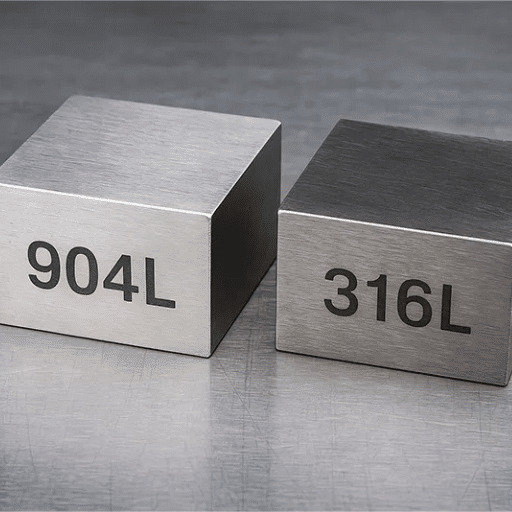
904L runs roughly 2–2.5× 316L on comparable form and thickness. Higher figures are almost always measured against 304 (904L is roughly 3–4× 304) or reflect fittings, flanges and fasteners, where the multiple genuinely reaches 3–5× because of machining and small-batch production. The full 904L vs 316L price and selection comparison sets out the composition delta and the grade-selection framework behind the multiple.
There is independent corroboration, and it is published monthly. Dockweiler’s September 2026 alloy surcharge schedule lists 904L at €11.89/kg seamless and €9.66/kg welded against 316L at €6.45/kg and €5.34/kg. That is a 1.8–1.9× ratio on the surcharge alone, consistent with the 2–2.5× all-in position once base price is added. On the domestic side, MySteel’s August 2026 welded-pipe mill pricing puts 316L at ¥31,300–31,800/t and 304 at ¥15,200–15,400/t, bracketing both multiples from one dated source.
Total cost, not price
The multiple is only half the decision. In 20% sulfuric acid at 60 °C, 904L corrodes below 0.1 mm/yr against more than 1.2 mm/yr for 316L. At a 2–2.5× upfront multiple, one avoided 316L replacement typically exceeds the entire 904L premium.
A chemical plant that replaced a 316L acid-service bellows three times in four years found the third replacement, plus the downtime around it, exceeded the whole 904L premium, a cost the original specification never modelled. Our 904L vs 316L comparison carries the full total-cost analysis and selection framework, and the 904L corrosion resistance guide carries the media-specific rates.
904L Price in China vs India, Europe and the United States
| Region | 904L flat product (USD/kg) | Basis |
|---|---|---|
| China FOB | 4.80–8.20 | Mill-direct |
| India | 6.25–8.50 | Distributor / small lot |
| Europe | 8.50–11.00 | Plus published alloy surcharge |
| United States, domestic | 9.00–13.00 | Limited domestic supply, often imported |
| China domestic spot | RMB 75–85/kg | Against RMB 90–100/kg imported |
Behind the spread sit freight, import duty, energy and labour cost, the cost of stockholding, and the mill-versus-distributor tier. An imported brand carries a 15–35% premium over an equivalent Chinese MTR.
Regional pipe anchors are worth stating separately so they are not mistaken for a Chinese FOB number. Indian seamless pipe has listed at ₹1,350–1,500/kg (about 12–16/kg), some sourcing guides quote abroad A 312 UNSN 08904 seam less band of US12–16/kg), some sourcing guides quote abroad A312 UNSN 08904 seam less band of US12–20/kg with 5–8% discounts above 5 t, and a US market pipe figure of US$15–19/kg appears in trade reporting. None of these is a China FOB price.
The alloy surcharge mechanism
Most European mills and distributors quote base price plus alloy surcharge, recalculated monthly from averages of nickel, molybdenum, chromium and sometimes scrap. Dockweiler publishes its 904L and 316L surcharges monthly: September 2026 at €11.89/€9.66/kg for 904L and €6.45/€5.34/kg for 316L, against April 2026 at €10.91/€9.11 and €6.00/€5.05. It is one distributor’s schedule, not an industry index, but it is dated, public and auditable.
That matters to you. A European quote that “went up 8%” between two months may not have moved at all in base terms. The surcharge is doing the work, and you can check it. MySteel serves the same purpose for the Chinese domestic market. Both are sources you can track yourself between quotes.
Why Two Quotes for the Same 904L Differ by 2×

Two credible suppliers can quote the same grade 2× apart, and both can be right. Five variables produce that spread, and each one moves the number on its own:
- Origin tier, Chinese mill-direct FOB, Chinese distributor, Indian distributor, European stockist or US domestic.
- Form and conversion, flat product versus bar versus seamless tubular versus machined fittings.
- Specification and finish, standard 2B or No.1 versus BA, No.4 or mirror; commercial versus tight tolerance; standard length versus cut-to-size.
- Volume basis, ex-stock below MOQ versus 1–5 t versus 10 t+ versus annual contract.
- Documentation, MTR 3.1 included versus 3.2 witnessed, PED, third-party inspection, PMI and NDT add-ons.
Dana, a project engineer in Rotterdam, found a 904L coil page quoting a fraction of every other figure on the same supplier’s site. The lesson was not that the supplier was dishonest. The number was a listing artifact conditioned on a volume and basis nobody had stated, and the same supplier’s other page quoted $8.50–10.50/kg, right in the credible band.
Some listings, though, are not price data at all. Chinese listings at RMB 15/kg and RMB 35/kg, an Indian retail listing at ₹300–350/kg, and a coil page at $2.70–3.60/kg are MOQ artifacts, placeholder listings, stale 2025 pages, or per-piece figures converted to per-kg. We do not publish them as market information, consistent with the position our 904L guide takes.
The practical test: a comparable quote names the standard, the form, the dimensions, the condition, the finish, the quantity, the certification, and the Incoterms. If one of your two quotes omits half of those, they were never comparable.
Certification, Finish and Processing: What Adds to the Price
Included, not charged: MTR to EN 10204 3.1, spectral and PMI verification, and ultrasonic inspection on plate. Our material certificate procedure explains what each document contains.
Genuinely additive: EN 10204 3.2 with third-party witness; PED; third-party inspection (SGS, BV, TÜV) at 5–10% or $0.40–0.70/kg; additional corrosion testing at +10–20%; and U-bend forming, beveling or mirror polish as processing add-ons.
Volume works on four distinct levers, and it pays to keep them apart rather than treating them as one:
| Lever | Effect on price |
|---|---|
| Small lots below MOQ | +15–30% penalty |
| 500 kg and above | 10–20% discount |
| Plate, 1–5 t to 10 t+ step | 6–8% step |
| Contract tonnage above ~20 t/quarter | 5–10% against spot |
These tiers are indicative and form-dependent. Confirm the actual step for your form and quantity at quotation.
2026 Price Trend, Q4 Outlook and How to Buy
The 2026 monthly series for the two reference forms, stated as published market observations rather than an index:
- Cold-rolled sheet: Jan 11.80→Feb11.80→Feb8.90 → Mar 9.50→Apr9.50→Apr10.20 → May $9.80.
- Seamless pipe: Jan 10.50→Feb10.50→Feb11.50 → Mar 12.00→Apr12.00→Apr13.00. Welded pipe: 8.50→8.50→9.00 → 9.50→9.50→10.00.
The February dip is the Spring Festival shutdown, not a demand signal. Across the longer context, 904L flat product has moved from 5.5–8.0/kgin2021to5.5–8.0/kgin2021to6.5–10.5/kg in mid-2025, and the consensus expectation for 2026 is +3–5%, capped by Chinese overcapacity on the downside.
The Q4 2026 picture
This is the freshest signal on the market and, in English, almost nobody has it. MySteel’s September 2026 trade reporting describes a structurally split market: conventional grades weak and range-bound, while high-end speciality grades (904L, 2507 super duplex, ultra-high-purity tube) sit in tight supply.
The support comes from new energy, nuclear power, seawater desalination and export demand, with ferro-molybdenum cost support and expanding premiums. High-end product is described as more downturn-resistant than commodity grades. The practical read: the bottom of the 904L band is not falling with 304, and the premium is widening rather than compressing.
How to buy across a volatile market
- 7–14 day validity is normal and is a feature, not a stall. It reflects real raw-material exposure.
- Surcharge-linked contracts transfer raw-material risk transparently, in exchange for seeing the mechanism.
- Staged procurement smooths your entry price across a moving market.
- Contract volume beats spot. Above roughly 20 t/quarter, expect 5–10% against spot.
Plan for the quote that expires during approval. A quotation issued with 7-day validity and still sitting in an approval chain five weeks later has been re-priced twice, and 904L’s volatility runs at roughly double 316L’s. For this grade, an unrealistic fixed price held for a quarter is a risk you are carrying, not a win.
How to Request an Accurate 904L Price

A procurement engineer once sent the same single line (“4 tonnes of 904L plate, as soon as possible”) to three suppliers and received 6.90,6.90,8.40 and $11.20/kg. None was wrong, and none was comparable. One was mill-direct black plate at 10 t+ volume, one was pickled with MTR and PMI, one was ex-stock small-lot with third-party inspection. The entire difference lived in what was not specified.
Paste this list into your RFQ and leave nothing to interpretation:
- Grade and designation: 904L / UNS N08904 / EN 1.4539 / S31782 (the Chinese certificate carries the GB designation; see our 904L equivalent grades table)
- Product standard: ASTM A240 or B625 for flat, ASTM A312 grade TP904L for tubular (with the legacy B677 caveat)
- Form: coil, sheet, plate, bar, seamless pipe, welded pipe, fitting, flange or fastener
- Dimensions: thickness, or OD × wall, or piece size
- Condition: solution annealed and pickled
- Finish: 2B, BA, No.4, No.8 or pickled
- Quantity: in kg, tonnes or pieces
- Certification: MTR, EN 10204 3.1 or 3.2
- Inspection: PMI on copper and molybdenum, ultrasonic, or third-party
- Incoterms and port
- Required delivery date
Send those eleven lines and we will confirm availability, certification and a mill-direct quotation with full MTR within 24 hours.
When 904L Is the Wrong Buy
904L is not a default upgrade. Against a 316L that survives the duty, it is simply 2–2.5× the price.
- 2205 duplex carries a comparable PREN at roughly 2× the yield strength and a lower price in some forms
- 2507 super duplex sits above 904L on price but far higher on chloride tolerance
- 254 SMO or AL-6XN answers warm or stagnant seawater, where 904L’s PREN of 34–36 falls short
- Alloy 20 answers hot concentrated sulfuric acid
- Hastelloy C276 answers hydrochloric acid, at 28–60/kg against 904L’s 28–60/kg against 904L’s 4.80–11.80/kg
Where the duty demands 904L, the grade pays back. Where it does not, nickel-based alloys are a different budget entirely. Getting the grade right is cheaper than any discount on the wrong one.
904L Price FAQ
How much does 904L cost per kg in 2026?
FOB China in 2026, from about 4.80/kg for mill−direct bulk flat product at order volume to 4.80/kg for mill−direct bulk flat product at order volume to 11.80/kg on thin coil, with 7.50–13.00/kg for pipe and tube, 7.50–13.00/kg for pipe and tube, 5.80–14.00/kg for bar, and 3–5× the 316L equivalent for fittings and fasteners. The band is wide because origin, form, specification, volume, and documentation each move the number.
Why is 904L so expensive?
Nickel and molybdenum together are 60–70% of the alloy cost. The grade carries roughly 23–28% nickel and 4–5% molybdenum against 316L’s 10–14% and 2–3%, so it tracks LME movements at roughly double the sensitivity, about 0.25/kgper0.25/kgper1,000/t of nickel.
Is 904L more expensive than 316L, by how much?
Yes. 904L runs roughly 2–2.5× 316L on comparable form and thickness, and 2.3–2.5× for bar. Claims of “3–4×” are usually measured against 304, not 316L. Fittings and fasteners are the exception, at 3–5×, because of machining and small-batch production.
How much does 904L cost per ton or per pound?
On the flat-product band, the 904L price per ton runs roughly US4,800–11,800, with a tonne equal to 1,000 kg, and the 904L price per pound is about US4,800–11,800, with a tonne equal to 1,000 kg, and the 904L price per pound is about US2.18–5.35/lb at 2.2046 lb/kg. Confirm the basis, since a per-tonne figure is usually a mill or order-volume number.
Why do 904L quotes vary so much?
Five variables: origin tier, form and conversion, specification and finish, volume basis, and documentation scope. Two credible suppliers can be 2× apart and both be right. A comparable quote names the standard, form, dimensions, condition, finish, quantity, certification, and Incoterms.
Does the 904L price include a mill test certificate?
Yes. An MTR to EN 10204 3.1, spectral and PMI verification, and ultrasonic inspection on plate are included, not surcharged. EN 10204 3.2 with third-party witness, PED, third-party inspection (SGS, BV, TÜV) and extra corrosion testing are genuinely additive.
Which form of 904L is cheapest per kg?
Plate at 25–30 mm is the cheapest point on the curve, at $6.80–7.70/kg, because it carries the lowest conversion cost per kilo. Thin coil and machined fittings are the dearest, and bar sits between them.
Can I get a fixed 904L price for a long project?
You can, but understand what you are buying. A fixed price held for a quarter is a raw-material bet, and 904L’s volatility runs at roughly double 316L’s. Most professional buyers prefer 7–14 day validity on spot, a surcharge-linked contract that transfers the raw-material risk transparently, or staged procurement that smooths the entry price.
Conclusion
The 904L price per kg is not one number; it is five variables interacting. Form sets the conversion cost, origin sets the market tier, volume sets the discount, specification sets the finish and tolerance premium, and documentation sets what is included. Underneath all of it, the alloy cost is nickel and molybdenum, which together are 60–70% of the metal and move the quote monthly. And 904L pays back in acid service, not in every service; a 316L that survives the duty makes 904L simply 2–2.5× the price.
Every band on this page is indicative and dated. A firm number requires a specification, and that is the right way to buy this grade.
Send your designation, standard, form, dimensions, condition, finish, quantity, certification and delivery terms, and our team will confirm availability, certification and a mill-direct quotation with full MTR within 24 hours.
Request a certified 904L quotation and put the eleven lines on the RFQ where they belong. For the rest of the grade, start with our 904L stainless steel overview or browse the full stainless steel range we supply.