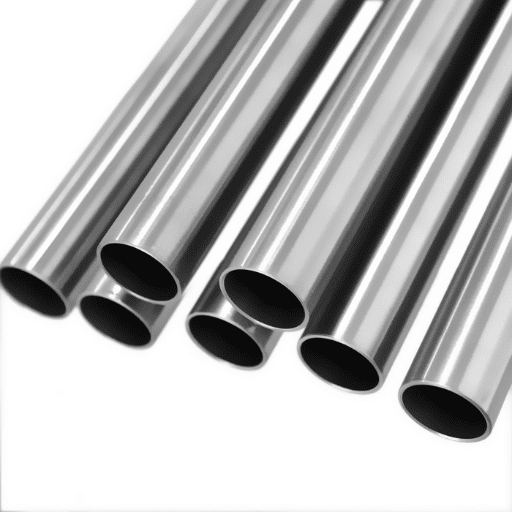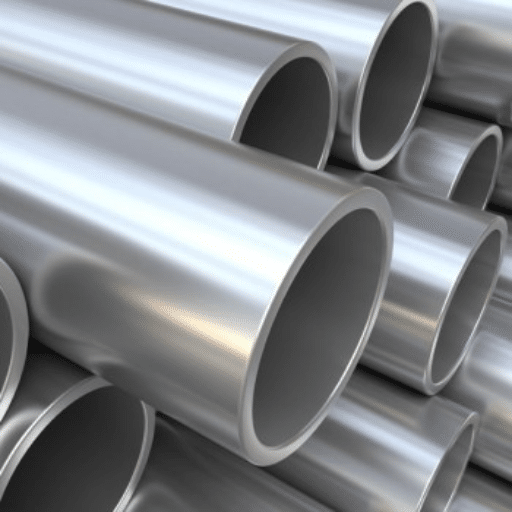
Nickel-based alloys are high-performance metallic materials with nickel as the primary constituent, typically 50% or more, engineered to withstand temperatures and corrosive environments where stainless steels fail. The major families include Inconel for high-temperature strength, Hastelloy for chemical corrosion resistance, Monel for seawater applications, and Incoloy for cost-effective heat resistance.
A chemical plant in Texas learned this distinction the hard way. In 2019, the facility specified 316L stainless steel for a heat exchanger handling process streams at 620°C. Eighteen months later, the tubes had creep-deformed beyond tolerance, forcing a $1.8 million unplanned shutdown.
The replacement? Inconel 625. That single grade change extended the service interval to over eight years.
If you are a procurement manager or design engineer, you already know that material selection can make or break a project timeline. By the end of this guide, you will understand every major nickel alloy family, their real performance limits, and how to source certified material from China with full ASTM traceability. We cover alloy families, properties, applications, grade designations, China sourcing, fabrication, and certification.
Submit your material requirements today. Our metallurgical team responds within 24 hours with grade recommendations, availability, and pricing.
Key Takeaways
- Nickel-based alloys contain 50%+ nickel and outperform stainless steel above 500°C in both strength and corrosion resistance.
- Inconel dominates aerospace and high-temperature structural; Hastelloy dominates chemical processing; Monel dominates marine; Incoloy offers cost-effective heat resistance.
- Chinese equivalents such as GH4169 (Inconel 718) and GH3625 (Inconel 625) match UNS standards when sourced from certified mills.
- VIM/ESR remelting separates aerospace-grade from commodity-grade nickel alloys. Verify melt quality before ordering.
- Full MTR and EN 10204 3.2 certification are non-negotiable for critical applications; always verify supplier in-house testing capability.
What Are Nickel-Based Alloys?

Nickel-based alloys are a class of metallic materials in which nickel serves as the primary matrix element. While definitions vary, the industry generally recognizes alloys with greater than 50% nickel content as true nickel-based alloys. Grades with 30-50% nickel, such as Incoloy 800, occupy a middle ground between stainless steel and full nickel alloys.
The choice of nickel as a base element is deliberate. Nickel possesses a face-centered cubic (FCC) crystal structure that remains stable from cryogenic temperatures up to its melting point. This structural stability delivers exceptional toughness across the entire temperature range. Add chromium for oxidation resistance, molybdenum for pitting resistance, and elements like aluminum or titanium for precipitation hardening, and the result is a material class that operates where ordinary steels surrender.
Nickel Content Thresholds and Classification
| Classification | Nickel Content | Examples |
|---|---|---|
| True nickel-based alloys | >50% Ni | Inconel 625, Hastelloy C276, Monel 400 |
| Nickel-iron-chromium alloys | 30-50% Ni | Incoloy 800, Incoloy 825 |
| Stainless steels | 8-30% Ni | 304, 316L, 904L |
The distinction matters in practice. A 316L stainless steel heat exchanger performs admirably at 300°C. Push it to 600°C, and its strength drops precipitously. A nickel-based alloy like Inconel 625 retains useful tensile strength beyond 800°C. For procurement teams, this threshold determines whether a project stays on budget or faces catastrophic material failure.
When your application exceeds 500°C or involves concentrated acids, standard stainless steel is no longer enough. Contact our technical team for grade selection support.
Nickel-Based Alloy Families: Inconel, Hastelloy, Monel & Incoloy
The nickel alloy landscape organizes into four dominant families. Each family optimizes for a specific failure mode: high-temperature creep, chemical corrosion, seawater attack, or cost-conscious heat resistance.
| Family | Base Chemistry | Dominant Property | Key Grades | Primary Industries |
|---|---|---|---|---|
| Inconel | Ni-Cr-Fe | High-temperature strength & oxidation | 600, 601, 625, 718 | Aerospace, power, nuclear |
| Hastelloy | Ni-Mo-Cr | Extreme corrosion resistance | C276, C22, B-3, X | Chemical, FGD, pharmaceutical |
| Monel | Ni-Cu | Seawater & HF acid resistance | 400, K-500 | Marine, offshore, chemical |
| Incoloy | Ni-Fe-Cr | Cost-effective heat & corrosion resistance | 800, 800H, 800HT, 825 | Petrochemical, furnaces |
Inconel Family (Ni-Cr-Fe Base)
Inconel grades are the workhorses of high-temperature engineering. Inconel 718, precipitation-hardened with niobium and titanium, delivers ultimate tensile strength of 1,200-1,500 MPa at room temperature and retains approximately 925 MPa yield strength at 650°C. It is the most widely used superalloy in aerospace turbine components.
Inconel 625 trades some peak strength for broader corrosion resistance. Its niobium content provides exceptional resistance to pitting and crevice corrosion in chloride environments, making it the alloy of choice for subsea equipment and nuclear steam generators.
Hastelloy Family (Ni-Mo-Cr Base)
When the environment is the enemy, Hastelloy answers. Hastelloy C276 (UNS N10276) contains 15-17% molybdenum and 14.5-16.5% chromium, giving it unmatched resistance to oxidizing and reducing acids alike. Its corrosion rate in boiling hydrochloric acid measures just 0.25 mm per year. Chemical processing plants using C276 report component lifespans up to 50% longer than with standard stainless steel.
Monel Family (Ni-Cu Base)
Monel 400 (UNS N04400) contains approximately 67% nickel and 30% copper. This composition delivers extraordinary resistance to seawater, making it indispensable for marine propeller shafts, pump housings, and offshore valve components. Monel K-500 adds aluminum and titanium for age-hardening, pushing tensile strength above 1,000 MPa while maintaining seawater immunity.
Incoloy Family (Ni-Fe-Cr Base)
Incoloy grades contain more iron than Inconel, reducing raw material cost while preserving substantial heat and corrosion resistance. Incoloy 825 bar stock resists sulfuric and phosphoric acids in chemical processing. Incoloy 800HT, with controlled carbon and grain size, provides long-term creep resistance up to 850°C in furnace and petrochemical heater tubes.
For a deeper comparison of specific grades, see our Inconel 625 round bar specifications and our Hastelloy C276 technical deep-dive.
Nickel Superalloy Properties & Performance

The term “superalloy” is not marketing language. It describes alloys that maintain useful mechanical properties at temperatures exceeding 600°C, conditions where most metals soften or oxidize rapidly.
Mechanical Properties at Temperature
Nickel-based superalloys achieve their remarkable performance through two mechanisms. Solid-solution strengthening from chromium, molybdenum, and tungsten resists deformation at temperature. Precipitation hardening, most notably the gamma prime (γ’) phase, an intermetallic compound of Ni₃(Al,Ti), creates nanoscale barriers to dislocation movement that persist even at 700°C.
| Grade | Room Temp UTS (MPa) | 650°C Yield (MPa) | 1,000h Creep Rupture at 650°C (MPa) | Max Service Temp |
|---|---|---|---|---|
| Inconel 718 | 1,200-1,500 | ~925 | ~580 | ~700°C |
| Inconel 625 | 930-1,240 | ~760 | ~380 | ~980°C |
| Hastelloy C276 | ~793 | ~350 | N/A (corrosion-focused) | ~1,037°C |
| Incoloy 800HT | ~600 | ~280 | ~180 | ~850°C |
Inconel 718 dominates aerospace because no other alloy matches its combination of room-temperature strength and creep resistance up to 700°C. Above that threshold, single-crystal nickel superalloys and cobalt alloys take over for the hottest turbine blade sections.
Corrosion Resistance Mechanisms
Nickel alloys resist corrosion through protective oxide scale formation. Chromium forms Cr₂O₃, a dense, adherent oxide that blocks further oxygen penetration. Aluminum additions form Al₂O₃ scales for extreme oxidation resistance above 1,000°C. Molybdenum and tungsten enhance resistance to reducing acids such as hydrochloric acid.
This dual capability, high-temperature structural integrity plus chemical immunity, is what makes nickel based alloys irreplaceable in combined-cycle power plants, where components face both thermal cycling and corrosive combustion products.
High Temperature Alloy Applications: Aerospace, Power & Industrial
Aerospace consumes approximately 35-42% of global high temperature alloy production. With commercial aircraft backlog exceeding 13,000 units across Boeing and Airbus, demand for certified nickel based superalloys shows no sign of weakening.
Aerospace — The Dominant Demand Driver
When Chen Wei, a procurement manager at an aerospace MRO facility in Singapore, needed replacement turbine disks for a regional fleet, he faced a critical decision. The OEM quoted a 26-week lead time for AMS 5662-certified Inconel 718. By engaging a certified Chinese manufacturer producing GH4169, the Chinese equivalent of Inconel 718, with full VIM/ESR triple-melt documentation, Chen reduced lead time to 12 weeks while maintaining identical mechanical properties and full traceability.
Every modern jet engine relies on nickel superalloys. Inconel 718 forms turbine disks, compressor blades, and structural fasteners. Nimonic 80A and Waspaloy serve higher-temperature blade applications. These materials operate in gas streams exceeding 1,500°C, protected by internal cooling channels and thermal barrier coatings.
Power Generation and Industrial Heat
Beyond aerospace, nickel alloys enable ultra-supercritical power plants operating with steam temperatures above 565°C. Incoloy 800HT furnace tubes withstand decades of creep exposure in petrochemical heaters. Inconel 600 and 690 serve as steam generator tubing in nuclear reactors, where stress corrosion cracking resistance is paramount.
Need certified high-temperature alloys for your power or aerospace project? Request a quotation with full AMS or ASME certification.
Corrosion Resistant Alloy Applications: Chemical, Marine & Oil & Gas
Where temperature is moderate but the chemical environment is hostile, corrosion-resistant alloy grades justify their cost premium many times over.
Chemical Processing — Acid Resistance by Environment
| Acid Environment | Recommended Alloy | UNS | Key Mechanism |
|---|---|---|---|
| Hydrochloric acid (boiling) | Hastelloy B-3 | N10675 | High Mo content |
| Sulfuric acid (concentrated) | Hastelloy C276 | N10276 | Cr + Mo synergy |
| Hydrofluoric acid | Monel 400 | N04400 | Ni-Cu matrix |
| Wet chlorine gas | Hastelloy C276 | N10276 | Oxidizing + reducing resistance |
| Sour gas (H₂S + CO₂ + Cl⁻) | Incoloy 825 | N08825 | Ti-stabilized, NACE MR0175 |
A European FGD system operator reported a 20-30% reduction in component replacements over five years after switching absorber internals from 316L to Hastelloy C276. The upfront material cost was 4x higher. The total lifecycle cost was 40% lower.
Oil & Gas and Marine
Offshore platforms expose materials to simultaneous seawater, hydrogen sulfide, and mechanical stress. Monel 400 pump shafts operate for decades in seawater without significant corrosion. Inconel 625 serves subsea manifolds and umbilical tubing, where chloride stress corrosion cracking would destroy lesser alloys.
For sour gas service, NACE MR0175/ISO 15156 compliance is mandatory. Incoloy 825 and Inconel 625 both satisfy these requirements, though 825 often wins on cost for downhole applications where peak temperature stays below 450°C.
Explore our Monel plate options for marine applications or our nickel alloy pipe inventory for chemical processing projects.
Nickel Alloy Grades & UNS Designations
Navigating nickel alloy grades requires fluency in two numbering systems: the American UNS (Unified Numbering System) and Chinese GB/T designations. International buyers sourcing from China must verify that the Chinese grade maps correctly to their specified UNS number.
Grade Reference Table
| Common Name | UNS | Chinese Equivalent | Key Elements | Primary Application |
|---|---|---|---|---|
| Inconel 600 | N06600 | GH600 | 72% Ni, 15% Cr, 8% Fe | Nuclear, heat treating |
| Inconel 625 | N06625 | GH3625 | 61% Ni, 22% Cr, 9% Mo | Aerospace, marine, chemical |
| Inconel 718 | N07718 | GH4169 | 53% Ni, 19% Cr, 5% Nb | Aerospace turbines |
| Hastelloy C276 | N10276 | NS334 | 57% Ni, 16% Mo, 15% Cr | Chemical processing |
| Hastelloy C22 | N06022 | NS3308 | 56% Ni, 22% Cr, 13% Mo | Broader corrosion resistance |
| Monel 400 | N04400 | NCu30 | 67% Ni, 30% Cu | Marine, HF acid |
| Monel K-500 | N05500 | — | 65% Ni, 30% Cu, 3% Al | High-strength marine |
| Incoloy 800 | N08800 | GH1180 | 33% Ni, 21% Cr, 45% Fe | Heat exchangers |
| Incoloy 800HT | N08811 | GH1180 | 33% Ni, 21% Cr, 45% Fe + Al/Ti | Furnace tubes |
| Incoloy 825 | N08825 | GH8825 | 42% Ni, 22% Cr, 3% Mo | Sour gas, chemical |
The Chinese “GH” prefix denotes high-temperature alloys, while “NS” denotes corrosion-resistant alloys. Not every UNS grade has a direct Chinese equivalent, and mechanical properties can vary slightly between national standards. Always specify the governing standard: ASTM B446 for Inconel 625 bar, ASTM B575 for Hastelloy C276 plate, ASTM B127 for Monel 400 sheet.
Our Inconel 718 round bar and Inconel 625 round bar are produced to ASTM specifications with full UNS traceability.
Sourcing Nickel-Based Alloys from China
China is simultaneously a major exporter of nickel-based alloy semi-finished products and an importer of premium-grade bars and rods. In 2023, China exported approximately 179millioninnickelalloytubesandpipeswhileimportingover179millioninnickelalloytubesandpipeswhileimportingover320 million in high-value bars, rods, and wire from the United States, European Union, and Japan. This trade pattern reveals a critical insight: China produces excellent commodity and mid-grade nickel-based alloys, but aerospace and nuclear grades often require careful supplier qualification.
VIM/ESR Remelting — Why Melt Quality Matters
Not all nickel alloys are created equal. The melt process determines cleanliness, homogeneity, and consistency:
| Melt Quality Tier | Process | Application | Relative Cost |
|---|---|---|---|
| Air melt | Basic induction or AOD | General industrial | Baseline |
| VIM | Vacuum induction melting | Aerospace, critical chemical | +30-50% |
| VIM + ESR | VIM + electroslag remelting | Aerospace rotating components | +50-80% |
| Triple melt | VIM + ESR + VAR | Nuclear, premium aerospace | +100%+ |
Vacuum induction melting removes dissolved gases and low-density inclusions. Electroslag remelting (ESR) further refines the ingot by removing sulfur and non-metallic inclusions under a protective slag layer. For aerospace rotating components such as turbine disks, triple-melt material (VIM + ESR + VAR) is often mandatory.
At Jiangsu Zhonggongte, our vacuum induction furnaces and electroslag remelting equipment produce nickel alloys to ASTM, ASME, and AMS specifications. Every heat is verified on our direct-reading spectrometers before further processing.
Supplier Qualification Checklist
Before placing a nickel alloy order with any Chinese supplier, verify the following:
- ISO 9001 certification — Baseline quality system requirement.
- In-house testing capability — Direct-reading spectrometer, tensile testing, hardness testing, and ultrasonic NDT. Suppliers who rely entirely on third-party labs lack real-time quality control.
- ASTM/ASME material compliance — Confirm the supplier can provide MTRs referencing the correct ASTM specification for your grade and form.
- PMI verification — Positive Material Identification using XRF or OES should be available on request.
- Certificate type — EN 10204 3.1 is standard; 3.2 requires inspection by the buyer’s representative or independent inspector.
- Melt source documentation — For critical applications, request the actual melt record showing VIM/ESR/VAR sequences.
Unsure how to evaluate a Chinese nickel alloy supplier? Request our nickel-based alloy supplier qualification checklist.
Nickel-Based Alloy Forms: Bar, Plate, Pipe, Sheet & Wire

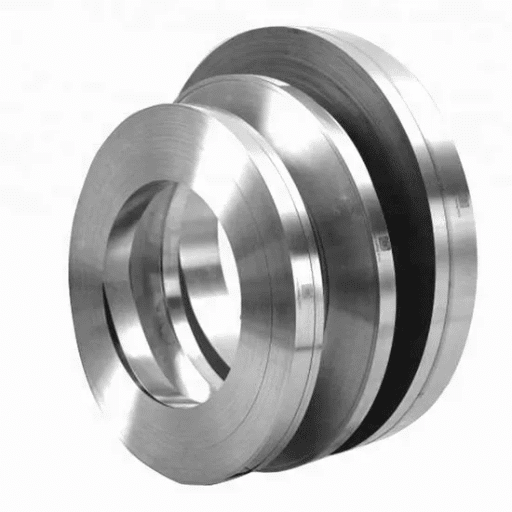
Nickel-based alloys are available in virtually every product form, but standard specifications vary by grade and application.
| Form | Common ASTM Standards | Typical Size Ranges | Key Applications |
|---|---|---|---|
| Bar / Rod | B446 (625), B637 (718), B574 (C276) | 6 mm to 300 mm diameter | Fasteners, shafts, turbine disks |
| Plate / Sheet | B443 (625), B575 (C276), B127 (Monel 400) | 0.5 mm to 50 mm thickness | Pressure vessels, cladding, chemical tanks |
| Pipe / Tube | B444 (625 seamless), B622 (C276 seamless), B407 (800H) | 3.18 mm to 101.6 mm OD | Heat exchangers, process piping, subsea |
| Wire | B446 (cold-drawn) | 0.1 mm to 12 mm diameter | Welding filler, springs, heating elements |
| Forgings | B564 (625), B564 (718) | Custom, up to several tons | Turbine disks, valve bodies, flanges |
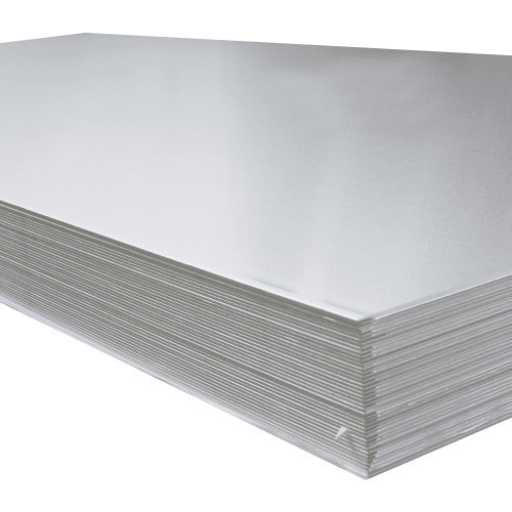
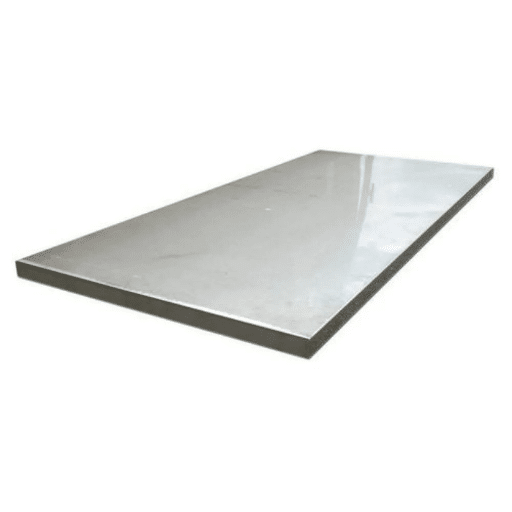
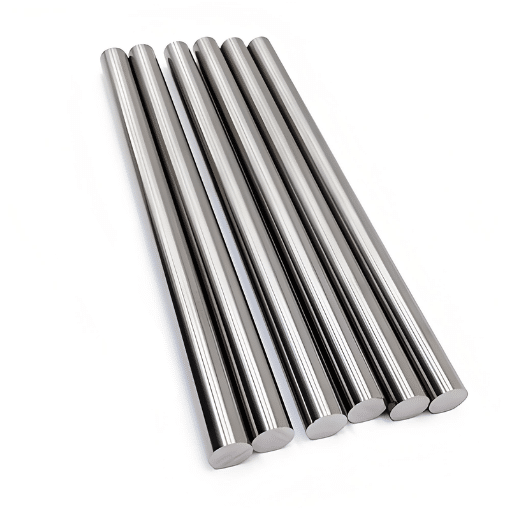
Product form selection depends on both the application and the fabrication method. Bar stock suits machined components such as fasteners and shafts. Plate provides the starting material for welded pressure vessels and clad structures. Seamless pipe is mandatory for high-pressure hydrogen or sour gas service where weld defects are unacceptable.
Our nickel alloy pipe inventory includes seamless and welded options across Inconel, Hastelloy, and Monel grades, with NDT reports available on request.
Nickel-Based Alloy Fabrication & Welding Overview
Nickel-based alloys are weldable, but they demand respect. Their high nickel content makes them susceptible to hot cracking and porosity if procedures are incorrect.
Filler Wire Selection by Grade
| Base Metal | Matching Filler Wire | AWS Classification | Notes |
|---|---|---|---|
| Inconel 625 | ERNiCrMo-3 | AWS A5.14 | Most common nickel alloy filler |
| Hastelloy C276 | ERNiCrMo-4 | AWS A5.14 | Higher Mo for matching corrosion |
| Incoloy 800/825 | ERNiCrFe-7 | AWS A5.14 | Iron-nickel blend for dilution control |
| Monel 400 | ERNiCu-7 | AWS A5.14 | Matches Ni-Cu base composition |
Welding Best Practices
Preheat is generally unnecessary for austenitic nickel alloys, but interpass temperature must stay below 150°C to prevent sensitization. Post-weld heat treatment varies by grade: Inconel 718 typically requires solution annealing plus aging to restore full strength. Hastelloy C276 usually requires no post-weld heat treatment. That is one reason for its popularity in field-fabricated chemical equipment.
Common defects to watch for include hot cracking in the weld metal, strain-age cracking in precipitation-hardened grades during post-weld heat treatment, and lack of fusion in thick sections. A qualified Welding Procedure Specification (WPS) and Procedure Qualification Record (PQR) are essential for code work.
Nickel-Based Alloy Quality Assurance & Certification
For critical nickel-based alloy applications, material certification is not paperwork; it is insurance against catastrophic failure.
MTR Requirements and Verification
Every batch of nickel-based alloy should ship with a Material Test Report (MTR) documenting:
- Chemical composition by heat analysis (verify against ASTM specification limits)
- Mechanical test results (tensile strength, yield strength, elongation, hardness)
- Heat treatment condition (solution annealed, aged, etc.)
- NDT results (ultrasonic, eddy current, or radiographic as applicable)
- Melt practice (air melt, VIM, ESR, or triple melt)
Maria Gonzalez, a quality manager at a Gulf Coast petrochemical contractor, discovered forged MTRs on a nickel alloy pipe shipment in 2022. The documents looked perfect, until she cross-checked the heat number with the mill’s database. The heat did not exist.
Her team’s insistence on independent PMI verification and direct mill confirmation saved a $40 million project from potential weld failures. Red flags include mismatched fonts, missing inspector signatures, heat numbers that do not follow the mill’s numbering convention, and MTRs that reference standards the supplier is not certified to produce.
EN 10204 3.1 vs 3.2
- 3.1 Certificate: Issued by the manufacturer, declaring compliance based on internal testing. Suitable for most commercial and industrial applications.
- 3.2 Certificate: Issued after inspection and testing by the manufacturer’s inspector and an independent inspector appointed by the buyer. Required for nuclear, aerospace, and many oil & gas projects.
For ASTM compliance, verify that mechanical testing follows ASTM A370 procedures and that chemical analysis uses optical emission spectroscopy (OES) or equivalent methods with published detection limits.
Every Zhonggongte shipment includes full MTR documentation and spectral verification. Request a sample certificate here.
Nickel-Based Alloy FAQs: Common Questions Answered
What is the difference between Inconel and Hastelloy?
Inconel grades optimize for high-temperature strength and oxidation resistance, making them ideal for gas turbines and heat exchangers above 600°C. Hastelloy grades optimize for chemical corrosion resistance, particularly in strong acids and chloride environments. Both are nickel-based alloys, but their alloying balance shifts the performance envelope in different directions.
When should I choose Inconel 625 vs 718?
Choose Inconel 718 when peak strength at 600-700°C is the priority, such as for turbine disks, high-pressure fasteners, and structural aerospace components. Choose Inconel 625 when corrosion resistance in seawater or chemicals matters as much as strength, such as subsea equipment, nuclear steam generators, and chemical process piping.
What is the Chinese equivalent of Inconel 718?
GH4169 is the Chinese GB/T designation for Inconel 718 (UNS N07718). When sourced from a certified Chinese mill with ASTM B637 compliance and full VIM/ESR documentation, GH4169 delivers mechanical properties equivalent to Western-produced Inconel 718.
Are nickel alloys expensive compared to stainless steel?
Yes. Nickel alloys typically cost 2-5 times more than stainless steel and 5-20 times more than carbon steel. However, they deliver lifecycle cost advantages through extended service life (often 5-10x longer in corrosive environments), reduced maintenance, and elimination of unplanned shutdowns.
What is the maximum service temperature for nickel superalloys?
Inconel 718 retains useful load-bearing capacity to approximately 700°C. Incoloy 800HT and Inconel 601 operate effectively to 850-980°C in non-structural applications. Single-crystal nickel superalloys used in the hottest turbine blade sections approach 1,100°C with thermal barrier coatings.
Can nickel alloys be welded to stainless steel?
Yes, with proper filler metal selection. ERNiCrMo-3 or ERNiCrFe-7 fillers typically bridge nickel alloys to austenitic stainless steels. The joint design must accommodate differential thermal expansion, and post-weld heat treatment requirements depend on the specific grades involved.
What certification do I need for nickel alloy in aerospace?
Aerospace applications typically require AMS specifications (e.g., AMS 5662 for Inconel 718 bar), full material traceability, and NADCAP-accredited special process verification. EN 10204 3.2 certificates are often mandatory, and triple-melt (VIM + ESR + VAR) material may be required for rotating components.
How do I verify a China supplier’s nickel alloy material certificate?
Cross-check the heat number directly with the mill if possible. Verify that the supplier operates in-house spectrometers and NDT equipment. Request EN 10204 3.2 for critical applications. Conduct independent PMI verification on receipt. Confirm that the MTR references the correct ASTM specification and includes all required mechanical test data.
Conclusion: Choosing the Right Nickel-Based Alloy
Nickel-based alloys occupy a unique position in the materials hierarchy. They are not cheap. They are not always necessary. But when your application exceeds 500°C, faces concentrated acids, or operates in seawater for decades, no substitute delivers the same reliability.
The key points to remember:
- Match the family to the failure mode: Inconel for heat, Hastelloy for acid, Monel for seawater, Incoloy for cost-conscious heat resistance.
- Specify the standard: ASTM, ASME, AMS, or GB/T. Your MTR must reference the correct specification for your grade and form.
- Verify melt quality: VIM/ESR documentation separates aerospace-grade from commodity-grade material.
- Validate certification: Independent PMI and direct mill verification protect against counterfeit MTRs.
Whether you need AMS 5662-certified Inconel 718 for an aerospace MRO program, Hastelloy C276 plate for a chemical reactor, or GH4169 bar stock for a domestic Chinese project, Jiangsu Zhonggongte Metallurgical Technology Co., Ltd. delivers certified nickel-based alloys with full traceability, spectral verification, and 24-hour logistics support. Browse our complete nickel-based alloy product range or explore titanium alloys as an alternative for weight-critical applications.