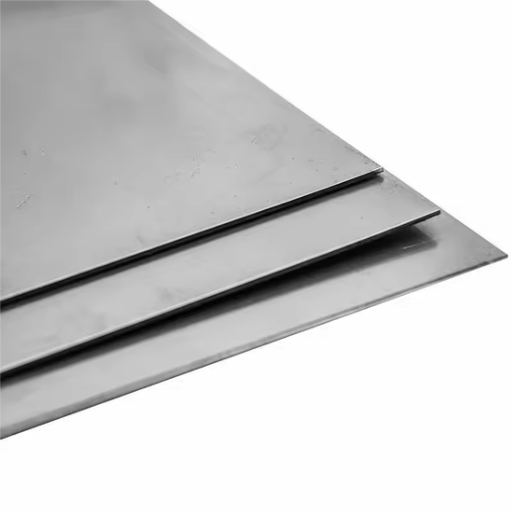
Inconel 600 plate is flat-rolled nickel-chromium-iron supplied to UNS N06600 (W. Nr. 2.4816) against ASTM B168, in thicknesses of 3/16 in (4.76 mm) and over, with ASTM B906 carrying the tolerances, flatness limits and edge requirements. In 2026 standard mill forms trade at roughly 25to25to45 per kilogram, which puts 10 mm plate at about 2,100to2,100to3,800 per square metre before freight and duty.
The alloy is rarely the difficult part of the purchase. The difficult part is that “Inconel 600 plate” names a composition, not a product. It says nothing about which specification applies, whether the thickness you asked for is plate or sheet, what the plate weighs, how flat it has to sit, or what the certificate will prove.
Priya, a fabrication estimator in Singapore, ran into that in early 2026. She priced a vessel course at 6 mm from two suppliers: one quote described the material as plate, the other as sheet, and the second came in 11% lower. Both were Inconel 600.
One supplier was selling to the ASTM plate definition and the other to the sheet definition, and the two carry different dimensional requirements and inspection conventions. Her estimate wasn’t wrong about the metal. It was wrong about the product.
This guide closes that gap. It covers the plate, sheet and strip boundary, the standards map with current editions, weight per square metre at alloy density, the tolerance and flatness decisions that belong on the purchase order, the mechanical data specific to plate, the corrosion conditions that decide acceptance, the heat-treatment sequence, and the 2026 price arithmetic including US duty.
Need plate priced against a real specification? Send the thickness, width, length, condition, specification and test requirements, and our team will confirm availability against the current mill position. Request an Inconel 600 plate quote.
Key Takeaways
- ASTM B906 defines plate as 3/16 in (4.76 mm) and over in thickness with width over 10 in (250 mm). Anything thinner is sheet or strip, whichever width it is cut to, and a supplier’s “plate from 2.5 mm” aisle is a commercial range, not the standard’s definition.
- Inconel 600 weighs 8.47 g/cm³, so weight in kg/m² equals 8.47 times the thickness in millimetres. 10 mm plate is 84.70 kg/m², and 1 in plate is 44.06 lb/ft².
- ASTM B168-26 is the current product specification, updated 4 August 2026 and superseding B168-19E01; ASTM B906-22 carries the general requirements. AMS 5540 is the 600 flat-rolled aerospace specification. AMS 5599 is not 600: it is 62Ni-21.5Cr-9Mo-3.7Nb, which is Inconel 625 chemistry.
- High-temperature, high-strength caustic service requires the plate to be fully stress relieved at 900°C for 1 hour or 790°C for 4 hours before use, with operating stresses kept to a minimum.
- Nickel alloy plate entering the US from China under HTS 7506.20.00.00 carries 2.5% MFN plus 12.5%, a 15% total effective rate. That is not the 39.5% pipe line, and buyers routinely assume it is.
What Is Inconel 600 Plate?
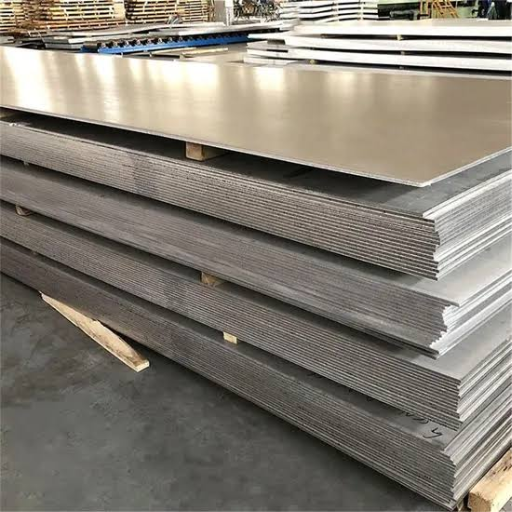
Inconel 600 is a solid-solution nickel-chromium-iron alloy that is hardened only by cold work. Heat treatment does not strengthen it, and no aging response is available to rescue an alloy 600 plate that was under-designed. That single fact governs how the plate behaves in fabrication.
The Special Metals SMC-027 bulletin gives the limiting composition in Table 1 of page 1.
| Element | Limit (wt%) | What it does in service |
|---|---|---|
| Nickel plus cobalt | 72.0 min | Corrosion base; the chloride stress-corrosion claim depends on this minimum |
| Chromium | 14.0 to 17.0 | Forms the protective oxide for high-temperature service |
| Iron | 6.00 to 10.00 | Balance and cost |
| Carbon | 0.15 max | Kept deliberately; precipitates as carbide between 540°C and 760°C |
| Manganese | 1.00 max | Residual |
| Sulfur | 0.015 max | Residual; tight because of hot ductility |
| Silicon | 0.50 max | Residual |
| Copper | 0.50 max | Residual |
Composition that decides the purchase
Three elements carry the commercial weight.
Nickel is both the corrosion base and the largest single cost item. It is also the element behind the chloride stress-corrosion claim, and that claim depends on staying above the 72% minimum rather than on the alloy name.
Chromium is the oxidation element. It forms the oxide that lets plate survive furnace, retort and heat-treating atmospheres, and it is why 600 is specified for radiant and muffle service.
Carbon is the fabrication trap. At 0.15% maximum it is deliberately present, and it precipitates as chromium carbide across a 220°C window. Everything in the heat-treatment section of this guide traces back to that one number.
There is no deliberate molybdenum and no niobium. That is what separates 600 from 625 and 718, why it is the least expensive grade in the family, and why it gives up pitting and crevice resistance in chloride-rich water. If your service is seawater or high-chloride process water, the Inconel 600 vs 625 comparison explains where the upgrade line sits.
Which service range the bulletin supports
SMC-027 states that the alloy has been used in applications “involving temperatures from cryogenic to above 2000°F (1095°C).” That is an application range, not a rating for any specific plate.
Two numbers inside it are routinely confused. The first is 1,095°C (2,000°F), the top of the range, above which the alloy still resists oxidation but carries almost no useful load.
The second is 980°C (1,800°F), where the bulletin reports cyclic oxidation testing with 15 minutes of heating and 5 minutes of cooling in air. Neither is a pressure rating. Allowable stress lives in ASME Section II Part D, and no plate certificate carries it.
Plate, Sheet or Strip? The Thickness That Defines the Product
Flat-rolled nickel alloy is classified by thickness and width, not by what a supplier’s catalogue calls it. ASTM B906, the general-requirements specification, sets the three definitions.
The 3/16 in (4.76 mm) boundary in ASTM B906
B906 defines the three flat-rolled classes by thickness and width.
| Class | Thickness | Width | Process |
|---|---|---|---|
| Plate | 3/16 in (4.76 mm) and over | Over 10 in (250 mm) | Hot-rolled or cold-rolled |
| Sheet | Under 3/16 in (4.76 mm) | 24 in (600 mm) and over | Hot-rolled or cold-rolled |
| Strip | Under 3/16 in (4.76 mm) | Under 24 in (600 mm) | Cold-rolled |
The metric figures are the standard’s rounded approximations of the imperial ones, so quote them as printed rather than converting back. 3/16 in is 4.7625 mm, which is why 4.76 mm is the number you’ll see.
Why it matters: plate and sheet are inspected, toleranced and often ordered differently. Thickness tolerance, flatness and edge condition are all functions of the product class. A purchase order that says “600, 6 mm” without naming the class invites the supplier to choose.
Why a supplier’s “plate from 2.5 mm” is sheet
Several stockists publish a plate aisle that begins at 2.5 mm or 3 mm and note that thinner material is “sheet below this”. That is a commercial stocking range, not a metallurgical definition.
At 2.5 mm the product is sheet under B906, whatever the website calls it. The practical consequence is not cosmetic. Sheet tolerances, coil-fed processing and cut-length conventions differ from plate practice, and a fabricator who plans a vessel course around “plate” dimensions can find the delivered item is an Inconel 600 sheet product with a different edge and flatness basis.
If you need a specific class, write the class into the description. “ASTM B168 plate, 6 mm” and “ASTM B168 sheet, 6 mm” are two different orders, and the second one is the one you will get if you write “6 mm” alone.
What to write when you need a specific thickness
Order thickness in decimal or fractional form, not as a gauge number. B906 discourages gauge designations because the same gauge means different thicknesses in different product families, and nickel alloys are not steel.
Then add the three dimensions that the specification will test: thickness, width and length, with the tolerance basis if you have one. A vessel course, a tube sheet and a baffle plate all have different flatness and edge needs even at identical thickness.
Inconel 600 Plate Standards: B168, B906 and AMS 5540
Three documents govern most flat-rolled 600 purchases, and they do different jobs. Confusing them is the second most common specification error after the plate and sheet boundary.
| Standard | Title | Covers | Current edition |
|---|---|---|---|
| ASTM B168 | Standard Specification for Nickel-Chromium-Aluminum Alloys, Nickel-Chromium-Iron Alloys, Nickel-Chromium-Cobalt-Molybdenum Alloy, Nickel-Iron-Chromium-Tungsten Alloy, and Nickel-Chromium-Molybdenum-Copper Alloy Plate, Sheet, and Strip | The product: composition, mechanical properties, dimensions, test methods | B168-26, updated 4 August 2026 |
| ASTM B906 | Standard Specification for General Requirements for Flat-Rolled Nickel and Nickel Alloys Plate, Sheet, and Strip | Tolerances, definitions, retest procedure, marking, packaging | B906-22 |
| AMS 5540 | Nickel Alloy, Corrosion- and Heat-Resistant, Sheet, Strip, and Plate 74Ni – 15.5Cr – 8.0Fe Annealed | Aerospace flat product to a stated thickness ceiling | AMS 5540R, dated 2023-05-10 |
| AMS 5599 | Nickel Alloy, Corrosion- and Heat-Resistant, Sheet, Strip, and Plate, 62Ni – 21.5Cr – 9.0Mo – 3.7 Cb (Nb), Annealed | Inconel 625 chemistry, not 600 | AMS 5599J, dated 2022-07-06 |
ASTM B168-26, the product specification
B168 is the product specification, and the 2026 edition is the active one. Its scope names the nickel-chromium-iron group and lists UNS N06600 alongside N06601, N06603, N06690, N06693, N06025, N06045 and N06696, with nickel-chromium-aluminum, nickel-chromium-cobalt-molybdenum, nickel-iron-chromium-tungsten and nickel-chromium-molybdenum-copper grades in the same document.
Conformance to B168-26 is examined against four families of requirements: dimensional (thickness, weight, width, diameter, length, straightness, edge, squareness and flatness), mechanical (tensile and yield strength, elongation and Rockwell hardness), chemical composition, and grain size.
That list is the reason the tolerance and grain-size sections below exist. Most of those properties are reportable on the certificate, and all of them are orderable.
B168-26 supersedes B168-19E01. What changed between them is not something this article will claim: the previous edition text was not read for this guide, and a buyer holding a B168-11 or B168-18 certificate should treat it as superseded documentation rather than as a defect in the metal. The Inconel 600 properties guide carries the composition and physical data in more depth.
ASTM B906-22, the general requirements
B906 is the general-requirements specification. Its scope says it covers “a group of general requirements that, unless otherwise specified in the purchase order or in an individual specification, shall apply to rolled nickel and nickel alloy plate, sheet, and strip” under the individual ASTM specifications.
In practice, B906 is where the tolerance tables live. The product specification B168 sets what the alloy must be. B906 sets how close to nominal the delivered plate must be, how flat it sits, how square the corners are, how much camber is permitted and how the material is marked and packed.
You rarely order B906 directly. You cite it when a dimensional dispute arises, and you should expect a competent mill to report against it.
AMS 5540, and why AMS 5599 is not 600
This is the correction that matters most on the whole subject, and it is a live error across the supply chain.
AMS 5540 is titled “Nickel Alloy, Corrosion- and Heat-Resistant, Sheet, Strip, and Plate 74Ni – 15.5Cr – 8.0Fe Annealed.” The 74/15.5/8.0 chemistry is Inconel 600. The current revision is AMS 5540R, dated 10 May 2023, superseding AMS 5540P of 2017. As listed for revision R, the scope runs to 2.000 in (50.80 mm) inclusive nominal thickness. Confirm the revision on your drawing before you cite the ceiling, because a drawing that calls up an earlier revision may carry a different limit.
AMS 5599 is a different alloy. Its title is “Nickel Alloy, Corrosion- and Heat-Resistant, Sheet, Strip, and Plate, 62Ni – 21.5Cr – 9.0Mo – 3.7 Cb (Nb), Annealed,” and 62Ni-21.5Cr-9Mo-3.7Nb is Inconel 625. The current revision, AMS 5599J dated 6 July 2022, runs to 1.000 in (25.4 mm) nominal thickness.
The commercial trap is that AMS 5599 is a heavily searched term and AMS 5540 is not. A buyer who searches “AMS 5599 Inconel 600” will find suppliers willing to sell them either alloy under that description. Insist on the alloy, not the specification number, and check the chemistry on the certificate against the 72% nickel, 14 to 17% chromium and 6 to 10% iron limits above. If the certificate shows 9% molybdenum, you have been sold 625.
The European and Chinese designations
European purchase orders name Werkstoff 2.4816, and the flat-product standards are DIN 17750, BS 3072NA14 and 3073NA14, ISO 6208 and EN 10095. SMC-027 lists all of them, together with MIL-DTL-23228 and ASME Code Cases 1827 and N-253, as the plate, sheet and strip standards for the alloy.
Chinese flat product names two designations for the same metal. NS3102 is the GB/T 15007 designation and GH3600 is the GB/T 14992 four-digit designation; GH600 and NS312 are the superseded forms.
The product standards split by process: GB/T 14995-2025 covers hot-rolled plate and GB/T 14996-2025 covers cold-rolled sheet and strip, both effective 1 March 2026 alongside GB/T 14992-2025 for designations and chemistry. The edition dates are recorded in the national standards database. A Chinese enquiry will name one of the two, so confirm which process route you are being quoted. The GH3600 equivalent Inconel 600 guide explains the two-standard system in full.
What the certificate must show
A mill certificate for an Inconel 600 plate should carry the alloy and UNS number, the specification and edition, the heat number, the chemical analysis, the tensile and yield results with elongation, the hardness, the condition, the dimensions, and the test methods used. If grain size was ordered, it should show the result and the method.
What it will not carry is allowable stress. That lives in ASME Section II Part D, which is a design document, not a mill document, and no amount of certificate will substitute for it. The material certificate guide covers the EN 10204 3.1 and 3.2 formats in detail.
Weight Per Square Metre and Plate Arithmetic
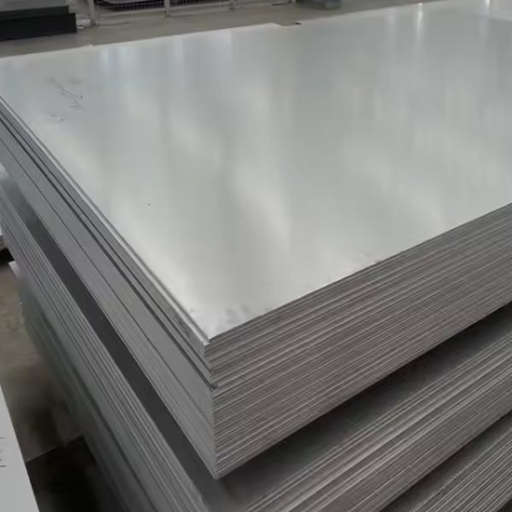
Weight per unit area is the most useful number on an Inconel 600 plate order and the least published. Density is quoted everywhere; the arithmetic that follows from it is not.
The density factor, 8.47 g/cm³
Inconel 600 has a density of 0.306 lb/in³, which is 8.47 g/cm³. SMC-027 Table 2 gives 8.47 Mg/m³ for the metric figure, and the two are consistent: 0.306 lb/in³ multiplied by 27.6799 cubic inches per cubic centimetre gives 8.470 g/cm³.
The useful consequence is that a one-square-metre sheet of one-millimetre thickness contains 1,000 cm³, which weighs 8,470 g. So weight in kilograms per square metre equals 8.47 times the thickness in millimetres, exactly, to three figures.
Other thermal data from Table 2 and Table 3 is worth having on the same order sheet: melting range 2,470 to 2,575°F (1,354 to 1,413°C), specific heat 0.106 Btu/lb·°F (444 J/kg·°C), and mean coefficient of linear expansion from 70°F (21°C) of 13.3 µm/m·°C to 100°C, 15.3 to 600°C and 16.1 to 800°C.
Weight per square metre by thickness
This is the Inconel 600 plate weight table you can check by hand: take the thickness in millimetres and multiply by 8.47.
| Thickness (mm) | Thickness (in) | Weight (kg/m²) | Weight (lb/ft²) |
|---|---|---|---|
| 3 | 0.118 | 25.41 | 5.20 |
| 4.76 | 0.1875 | 40.32 | 8.26 |
| 6 | 0.236 | 50.82 | 10.41 |
| 10 | 0.394 | 84.70 | 17.35 |
| 12 | 0.472 | 101.64 | 20.82 |
| 20 | 0.787 | 169.40 | 34.70 |
| 25 | 0.984 | 211.75 | 43.37 |
| 50 | 1.969 | 423.50 | 86.74 |
Sheet weight and the imperial equivalent
For imperial calculation the factor is 0.306 lb/in³ times 144 in² per square foot, which gives 44.06 lb/ft² at 1 in thickness. That is the cross-check that makes the table trustworthy: 211.75 kg/m² divided by 4.88243 kg/m² per lb/ft² is 43.37 lb/ft², matching the 25 mm row.
Two practical uses follow. The first is freight and handling: a 2,000 by 4,000 mm plate at 20 mm weighs 1,355 kg, which decides whether you need a crane or a forklift. The second is estimating: a fabricator who quotes from a carbon-steel weight factor will come in about 7.3% light, because steel’s 7.85 g/cm³ sits below the alloy’s 8.47.
Thickness, Flatness, Edge and Grain Size
This is where an Inconel 600 plate order is won or lost, and it is the part of the subject that supplier catalogues leave out. The reason is simple: the numbers live in B906, which is a paywalled standard, and most stockists have never read it.
Tolerance is a function of width and thickness
Permitted thickness variation in flat-rolled nickel alloy is not a single number. It scales with both the ordered thickness and the width of the product, and it differs between hot-rolled and cold-rolled material.
The correct way to handle it is procedural rather than numerical. State the specification and edition in the purchase order. State whether the tolerance basis is the general-requirements document or a tighter agreement. If your design needs a tighter band than B906 permits, say so explicitly and expect a price consequence, because it means extra passes, extra gauging or extra rejection.
A purchase order that says “6 mm, tolerance as standard” is enforceable. A purchase order that says “6 mm, precision” is not.
Flatness, camber and squareness
Flatness is the property that decides whether a plate will lie against a vessel course, clamp into a fixture and weld without a gap. Camber is the lateral bow that decides whether a cut strip will run straight through a shear. Squareness decides whether the corners close.
B168-26 examines flatness, straightness, edge and squareness among its dimensional requirements, which means they are testable and reportable properties rather than goodwill. Ask for them on the certificate if the application is a vessel course, a tube sheet or a structural component. A plate that is on thickness but cambered will still fail a fit-up.
Edge condition and how the plate is cut
Edge condition covers whether the plate is supplied as rolled, sheared, sawed, machined or thermally cut, and what the permitted edge quality is. It is the least specified line on most purchase orders and one of the most common causes of a rejected lot.
Write the edge you need. A shear edge and a machined edge are not interchangeable where a weld prep will follow, and a thermally cut edge on nickel alloy needs the oxide removed before welding. Cutting process also sets the achievable squareness and the heat-affected zone.
Grain size, and why to order it
Grain size appears in B168-26’s conformance list and on almost no purchase orders. It decides two things that matter: formability and low-temperature toughness.
SMC-027 is explicit that fine grain is preferred for better corrosion resistance and higher tensile, fatigue and impact strength. It also notes that hot-rolled product usually has a small grain size, and that annealing has little effect on the grain size of hot-rolled material. That is a useful commercial fact: hot-rolled plate is often fine-grained without any special processing.
Order grain size when you need a specific toughness or forming result, and name the test method. If you do not order it, you will not get a result, and the plate will still conform.
Mechanical Properties of Inconel 600 Plate
Inconel 600 plate data should come from plate testing, not from a composite range table. SMC-027 Table 6 is a composite across product sizes and states in its own text that its values “are not suitable for specification purposes.” Table 9 is the plate-specific table and is the one to use.
Room-temperature data for hot-rolled plate
Table 9 of the bulletin gives room-temperature properties of hot-rolled plate in the as-rolled condition and after four annealing treatments.
| Condition | Tensile (ksi) | Tensile (MPa) | Yield, 0.2% (ksi) | Yield (MPa) | Elongation (%) | Reduction of area (%) | Hardness (Rb) |
|---|---|---|---|---|---|---|---|
| As-rolled | 99.0 | 682.6 | 50.2 | 346.1 | 42.0 | 55.5 | 87 |
| 870°C (1,600°F), 1 h | 98.0 | 675.7 | 48.0 | 331.0 | 40.0 | 55.0 | 87 |
| 980°C (1,800°F), 1 h | 92.7 | 639.2 | 28.9 | 199.3 | 49.0 | 63.0 | 75 |
| 1,090°C (2,000°F), 1 h | 89.8 | 619.2 | 26.7 | 184.1 | 52.5 | 66.5 | 72 |
| 1,150°C (2,100°F), 1 h | 84.5 | 582.6 | 23.5 | 162.0 | 58.0 | 65.0 | 68 |
What annealing temperature does to the numbers
The table tells a clean story. Tensile strength barely moves across the range, from 682 to 583 MPa, a 15% loss. Yield strength collapses, from 346 MPa as-rolled to 184 MPa after an hour at 1,090°C, which is a 47% loss. Elongation and reduction of area both improve as the material softens, and hardness falls from 87 to 68 Rb.
The engineering consequence is that an over-annealed plate is not a weak plate. It is a ductile one. If your design depends on yield strength, an unnecessarily high-temperature anneal will cost you half of it, and the plate will still pass a tensile test on the strength of its ultimate value.
The ASTM B168 minimums
For annealed plate, sheet and strip, B168 requires minimums of 550 MPa tensile, 240 MPa yield and 30% elongation. Table 9’s as-rolled and 870°C figures sit comfortably above those minimums, which is the normal relationship: the specification sets a floor, and the mill’s typical values are higher.
The Inconel 600 heat treatment guide covers the annealing cycles and their effect on properties in more depth.
Creep and rupture, and the tables to ask for
Above roughly 540°C (1,000°F) the design question stops being tensile strength and becomes creep and rupture. SMC-027 reports creep rate in Figure 9 and rupture life in Figure 10, both for plate in the as-hot-rolled condition and in the hot-rolled and solution-annealed condition, across 1,000 to 1,300°F (538 to 704°C). Table 12 gives Charpy keyhole impact strength of plate against temperature.
Ask the mill for the condition-specific data behind those figures rather than for a single stress number. Creep and rupture results are condition-dependent by definition, and a value quoted without its annealing condition and test duration is not usable in a design calculation.
Corrosion and Service Limits That Decide Acceptance
Inconel 600’s corrosion performance is unusual in one respect and ordinary in another. It is unusual in chloride stress-corrosion cracking. It is ordinary, and in places poor, in strongly oxidizing acids. Both facts decide whether an Inconel 600 plate is accepted for a service.
Chloride stress-corrosion cracking
SMC-027 describes the alloy as “virtually immune to chloride-ion stress-corrosion cracking” at its 72% minimum nickel content. In austenitic stainless steel this is the failure mode that ends equipment life in chloride service, and it is the single strongest technical reason to specify 600 plate.
The claim is alloy-specific and condition-specific. It does not extend to pitting and crevice attack in chloride-rich water, which is a different mechanism and where the absence of molybdenum tells against 600.
Caustic service and the mandatory stress relief
Caustic service is the most commonly omitted condition in supplier literature on this alloy, and it is a condition where the wrong heat treatment is a real failure path.
SMC-027 states that the alloy is subject to stress-corrosion cracking in high-temperature, high-strength caustic alkalies, and that material for such service must be fully stress-relieved at 1,650°F for 1 hour or 1,450°F for 4 hours (900°C for 1 hour or 790°C for 4 hours) before use, with operating stresses kept to a minimum.
Read it as a process requirement, not a recommendation. A plate that is annealed but not stress-relieved to that cycle is not compliant for hot caustic, and the certificate should show the cycle if the service requires it. Mercury carries a related caution: SMC-027 notes that stress-corrosion cracking may occur with mercury at elevated temperature and directs the user to the caustic recommendations.
Oxidizing acids: what “fair” means
SMC-027 gives the alloy “fair resistance to strongly oxidizing acid solutions,” and warns that dissolved air alone does not passivate the alloy against air-saturated mineral acids and some concentrated organic acids.
“Fair” is a lower grade than most distributor pages imply. The bulletin doesn’t say the alloy resists sulfuric, hydrochloric and nitric acids without qualification. An air-saturated mineral acid is an oxidizing environment where the passive film doesn’t form, and 600 will corrode.
If your service is oxidizing acid, look at the higher-molybdenum grades. The Inconel 600 applications overview covers where the alloy is genuinely the right answer.
Sulfidation and the MoS2 rule
The alloy resists sulfur compounds at moderate temperatures and is subject to sulfidation in high-temperature sulfur-bearing environments. That is the boundary condition for furnace and retort service, and it is why high-sulfur fuel service is a separate design case.
One practical rule follows from the same section of the bulletin. Molybdenum disulfide assembly lubricant must not be used on parts that will later exceed 800°F (427°C), because the molybdenum attacks the alloy at temperature. A plate that was handled with MoS2 paste and then put into 900°C service will fail for a reason that has nothing to do with the metal.
Oxidation, carburization and the 1,095°C number
Oxidation resistance is demonstrated in SMC-027 by cyclic exposure at 1,800°F (980°C) with 15 minutes of heating and 5 minutes of cooling in air, which is the standard test for spalling resistance under thermal cycling.
Carburization resistance is described as good and was demonstrated in 100-hour hydrogen and 2% methane tests at 925°C and 1,095°C against 601, 800HT and Type 330. If your service involves carbonaceous atmospheres, that comparison is the one to request.
The 1,095°C figure that appears in every datasheet is the top of the application range. It is not a working temperature; it carries no load, and it should never appear in a design calculation as a rating. For oxidation-limited service, ask for the cycle count and the weight change, not the range top.
Heat Treatment, Pickling and the Carbide Window
Flat product is normally supplied annealed and pickled. The heat-treatment sequence and the cooling rate through the carbide window decide whether the delivered Inconel 600 plate will fabricate and weld cleanly.
Annealing flat product
SMC-027 gives an anneal of about 1,850°F (1,010°C) for 15 minutes as producing soft material. A brief hold at 1,900°F (1,040°C) also gives soft material without coarse grain, because grain growth does not begin until about 1,800°F (980°C) and carbide solution begins at about 1,900°F (1,040°C).
For maximum creep and rupture strength, the bulletin recommends 1 to 2 hours at 2,000 to 2,100°F (1,090 to 1,150°C), which dissolves carbides completely and coarsens the grain. That is a deliberate trade: you give up some room-temperature yield for high-temperature performance.
The 540 to 760°C carbide range
Chromium carbide precipitates between 1,000 and 1,400°F (540 and 760°C). If the material is to be pickled, or used where freedom from sensitization matters, it must be cooled rapidly through that range.
This is the mechanism behind intergranular attack in weld heat-affected zones and behind the corrosion failures that follow a slow cool. It is also why an isothermal hold in that window, which is sometimes convenient for stress relief, needs to be reviewed against the service environment before it is adopted.
Heating atmosphere and pickling
Heating must be clean and in a sulfur-free atmosphere. For open annealing the furnace atmosphere should be slightly reducing. Bright heating is possible only in very dry hydrogen or in vacuum.
In practice plate is usually pickled if a bright surface is required, and the pickling specification should be on the order. Sulfur-bearing furnace atmospheres, fuel-rich combustion products and contaminated handling all show up as surface attack after pickling, and the cause is usually upstream of the pickling line.
A fabrication note: hot working runs 1,600 to 2,250°F (870 to 1,230°C), with heavy work at 1,900 to 2,250°F (1,040 to 1,230°C). The alloy has low ductility between 1,200 and 1,600°F (650 and 870°C), so do not work it in that range. For welding, SMC-027 specifies INCONEL 182 electrode for shielded metal arc and Filler Metal 82 for gas tungsten and gas metal arc, and warns that 182 welds may lose ductility after extended exposure at 1,000 to 1,400°F (540 to 760°C). The Inconel 600 welding guide covers procedure and consumables.
Inconel 600 Plate Price in 2026
Price is the question the search term is really asking, and it is the one the market answers worst. Published figures are supplier asking prices for mill forms at a point in time, not a quotation.
The band, and what moves it
2026 published asking prices for standard mill forms cluster at 25to25to45 per kilogram. Within that band, plate and sheet are quoted at 25to25to32/kg by one 2026 supplier table, while a second table runs 35.50to35.50to55/kg depending on thickness and finish. China domestic spot ran 180 to 220 RMB/kg in June 2026, about 26.90to26.90to32.88/kg at 6.692 CNY/USD.
Four things move the number. Thickness and width come first, because the rolling route and yield loss change with size.
Condition comes second: annealed and pickled is standard, and a tight tolerance or a special edge adds passes. Certification comes third, with EN 10204 3.2 estimated at 10% to 30% above the material price and AMS aerospace traceability at 30% to 100% or more.
The fourth is the mill surcharge, which for November 2026 is 5.46/lb(about5.46/lb(about12.04/kg) on a falling nickel and chromium base. October raw-material averages were nickel 7.02/lb,chromium7.02/lb,chromium5.90/lb and iron $1.30/lb.
Treat every figure here as a band. The Inconel 600 price per kg guide tracks the monthly movement.
If you’re pricing sheet rather than plate, the Inconel 600 sheet price follows the same band but is quoted on a lighter gauge, so the per-square-metre figure is lower even where the per-kilogram rate is identical. Compare on rate, then convert with the weight table above.
Price per square metre from weight and rate
Multiplying weight per square metre by rate per kilogram gives the material cost of an Inconel 600 plate, and it is the calculation most estimators skip.
At 30/kg,10mmplateat84.70kg/m2costs30/kg,10mmplateat84.70kg/m2costs2,541 per square metre. Across the 25to25to45/kg band the same plate runs 2,117to2,117to3,812. At 20 mm the range doubles to 4,235to4,235to7,623 per square metre.
That arithmetic explains why thickness changes a project budget far more than most buyers expect, and why “price per kg” is a poor comparison basis unless thickness is held constant.
Working to a project budget? Send the thickness and the quantity you need priced, and our team will return a landed-cost estimate against the current mill position rather than a bare rate per kilogram.
US duty on nickel alloy plate from China
Nickel alloy plate, sheet, strip and foil falls under HTS 7506.20.00.00, “nickel plates, sheets, strip and foil: of nickel alloys: other: not cold-formed.” The MFN base rate is 2.5%, and an additional 12.5% applies under 9903.05.31 to articles that are the product of China, giving a 15% total effective rate.
The plate line is not the pipe line. Pipe and tube fall under 7507.12 and carry 39.5% in the same reference file, and buyers routinely carry that number across. At 30/kg,1530/kg,154.50/kg; the pipe rate would add $11.85/kg for a product that is not a pipe.
Duty is calculated on customs value, which includes freight and insurance, so the landed cost is higher than the material rate plus 15%. Budget for landing costs separately.
How to Order Inconel 600 Plate
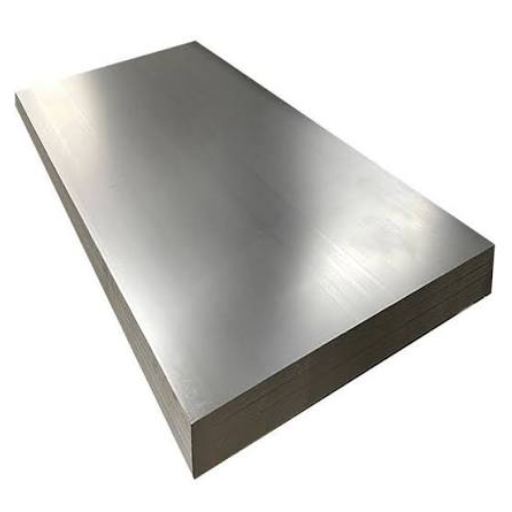
An order description for Inconel 600 plate is a short document that removes every reason for a supplier to substitute.
A ten-line order description
- Alloy and designation: Inconel 600, UNS N06600, W. Nr. 2.4816.
- Product class: plate under ASTM B906, 3/16 in (4.76 mm) and over.
- Product specification and edition: ASTM B168-26.
- General requirements: ASTM B906-22.
- Dimensions: thickness, width and length, with the tolerance basis.
- Condition: hot-rolled and annealed, or cold-rolled and annealed, as applicable.
- Surface: pickled, descaled or bright, with the finish requirement.
- Edge: as-rolled, sheared, sawed or machined.
- Tests: chemical analysis, tension, hardness, grain size if required, and any NDT.
- Documentation: mill test report to EN 10204 3.1, or 3.2 with third-party witnessing.
Add the quantity and the delivery basis, and the order is unambiguous.
Certification: EN 10204 3.1 and 3.2
A 3.1 certificate is issued by the manufacturer’s own inspection authority, which for an alloy mill means the mill’s laboratory. A 3.2 certificate is validated by an independent inspection body, either the purchaser’s representative or an appointed third party.
The difference is who signs. For pressure equipment, nuclear work and any application where the certificate is audited, 3.2 is often required by the code or the client, and the price consequence is real.
Inspection and test plan
An inspection and test plan sets out what is checked, by whom, and against what acceptance criteria. For plate it normally covers the mill certificate review, dimensional inspection on receipt, visual inspection, and any additional NDT such as ultrasonic examination for internal soundness.
Agree the plan before the mill rolls. Adding an ultrasonic examination after the plate is cut to size is possible, but it can reject material that is already committed.
Frequently Asked Questions
What is the difference between Inconel 600 plate and Inconel 600 sheet?
Thickness and width. ASTM B906 defines plate as 3/16 in (4.76 mm) and over in thickness with width over 10 in (250 mm). Sheet is under 3/16 in thick and 24 in (600 mm) or more wide; strip is under 3/16 in thick and under 24 in wide.
The alloy is identical. The dimensional requirements and inspection conventions aren’t.
How much does Inconel 600 plate weigh per square metre?
Multiply 8.47 by the thickness in millimetres. A 3 mm plate weighs 25.41 kg/m², 6 mm weighs 50.82 kg/m², 10 mm weighs 84.70 kg/m² and 20 mm weighs 169.40 kg/m². In imperial units, 1 in plate weighs 44.06 lb/ft².
Does AMS 5599 cover Inconel 600 plate?
No. AMS 5599 is 62Ni-21.5Cr-9.0Mo-3.7Nb, which is Inconel 625 chemistry. The AMS flat-rolled specification for Inconel 600 is AMS 5540 (74Ni-15.5Cr-8.0Fe, annealed), currently revision R, dated 2023, to 2.000 in (50.80 mm) nominal thickness as listed. If a certificate quotes AMS 5599, check the chemistry: 9% molybdenum means you have 625.
What is the current ASTM specification for Inconel 600 plate?
ASTM B168-26 is the current product specification, updated 4 August 2026 and superseding B168-19E01. ASTM B906-22 provides the general requirements for flat-rolled nickel alloy plate, sheet and strip, including tolerances, flatness, edge and packing.
Does Inconel 600 plate need stress relief for caustic service?
Yes. High-temperature, high-strength caustic service requires the plate to be fully stress-relieved at 1,650°F for 1 hour or 1,450°F for 4 hours (900°C for 1 hour or 790°C for 4 hours) before use, with operating stresses kept to a minimum. Specify the cycle on the order and require it on the certificate.
What duty applies to Inconel 600 plate imported into the US from China?
HTS 7506.20.00.00 carries a 2.5% MFN rate plus 12.5% under 9903.05.31 for Chinese-origin articles, for a 15% total effective rate. That is the plate line. Pipe and tube fall under 7507.12 and carry 39.5%, which does not apply to flat product.
The Order Is the Specification
Inconel 600 plate fails at the purchase order far more often than at the mill. The metal is well characterized, the standards are public and the arithmetic is simple. What fails is the description.
Four decisions carry most of the risk:
- Product class. 6 mm plate and 6 mm sheet are different products under B906, with different dimensional requirements.
- Specification and edition. B168-26 superseded B168-19E01, and AMS 5540 is not AMS 5599.
- Condition and tests. Grain size, flatness and edge condition don’t arrive unless they’re ordered.
- Duty line. The plate rate is 15%. The pipe rate is not.
Everything else, the weight tables, the mechanical data, the caustic stress relief and the carbide window- is there to help you write those four lines.
Send us the thickness, width, length, condition, specification and test requirements, and our team will confirm availability and quote against the current mill position. Request an Inconel 600 plate quote, or see the Inconel 600 tube range if your application is tubular. Our Wuxi works runs vacuum induction and electroslag remelting furnaces, free forging hammers, hot and cold rolling lines and heat-treatment furnaces, with spectral testing and material certificates on every order. About our manufacturing capability.