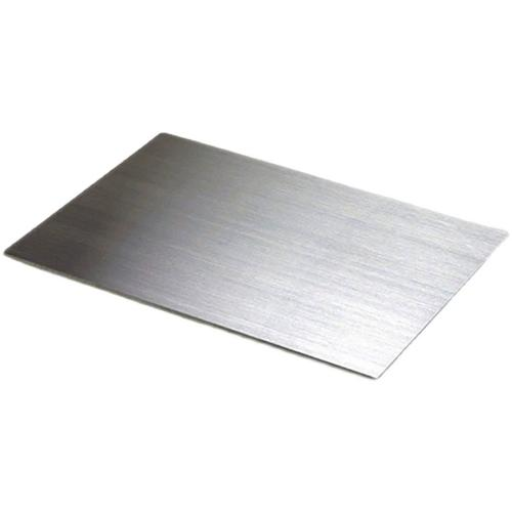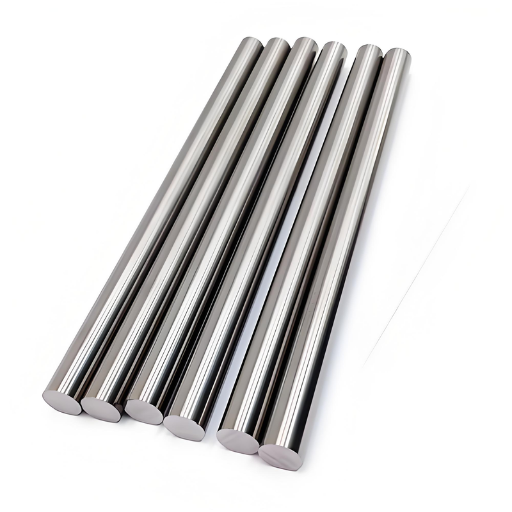
Inconel 600 is the better choice for hot caustic service, high-temperature oxidation and carburizing atmospheres, and any duty where cost decides. Inconel 625 is the better choice when you need roughly 50% more tensile strength on specification minimums, genuine chloride pitting resistance (PREN around 45 to 50 against roughly 15 to 19 for 600), or seawater and oxidizing-acid service. The trade is 40 to 60% more cost per kilogram for 625.
That is the short answer. The rest of this guide explains where the dividing lines sit, because this pair causes the costliest specification mistakes in solid-solution nickel alloys.
Consider a chlor-alkali plant that specified 625 for a caustic evaporator train. The logic looked sound on paper: 625 resists corrosion better, so it must be the safer metal.
It isn’t safer in that duty. The molybdenum that makes 625 excellent in chlorides does nothing for caustic stress corrosion cracking, and published alkali data put nickel-chromium-molybdenum grades behind the molybdenum-free high-nickel grades. The plant paid roughly 50% more for metal the duty didn’t require. That example is illustrative, not a customer reference.
The opposite error fails faster. A seawater-cooled heat exchanger built in 600 can pit through a tube wall inside a year.
This guide covers the decision table, chemistry, strength, the two temperature ceilings, PREN, caustic, nuclear history, welding, standards, cost, and sourcing.
Send your medium, operating temperature, governing code, and product form, and our metallurgical team will confirm which grade is correct.
Key Takeaways
- Inconel 600 (UNS N06600) is 72% minimum nickel with no molybdenum. Inconel 625 (UNS N06625) is 58% minimum nickel with 8 to 10% molybdenum and 3.15 to 4.15% niobium, which is where its strength and pitting resistance come from.
- PREN splits the pair almost completely: roughly 15 to 19 for 600 against 45 to 50 for 625. In a 30-day seawater crevice test, 600 showed 0.86 mm of attack and 625 showed none.
- Both are solid-solution alloys. 600 gains strength only by cold work, while 625 carries about 50% more tensile strength on specification minimums and far more in creep.
- The published ceilings of 1,093°C for 600 and 982°C for 625 are oxidation limits for lightly loaded parts, not pressure-design temperatures.
- The 40 to 60% premium for 625 is well spent in chlorides, seawater and loaded hot structures, and wasted in furnace fixtures and hot caustic service.
Inconel 600 vs 625 at a Glance
The table below carries the decision. Read the corrosion and temperature rows first, because those are where the two grades separate. Strength and cost come after.
| Property | Inconel 600 (UNS N06600) | Inconel 625 (UNS N06625) |
|---|---|---|
| Nickel, minimum | 72.0% | 58.0% |
| Chromium | 14.0 to 17.0% | 20.0 to 23.0% |
| Molybdenum | none specified | 8.0 to 10.0% |
| Niobium plus tantalum | none specified | 3.15 to 4.15% |
| Iron | 6.0 to 10.0% | 5.0% maximum |
| Strengthening | Solid solution plus cold work | Solid solution, molybdenum and niobium |
| Tensile, annealed minimum | 550 MPa (80 ksi) | 827 MPa (120 ksi) |
| Yield 0.2%, annealed minimum | 240 MPa (35 ksi) | 414 MPa (60 ksi) |
| Hardness, annealed (typical) | 65 to 85 HRB | about 95 HRB |
| PREN, approximate | 15 to 19 | 45 to 50 |
| Oxidation ceiling | 1,093°C (2,000°F) | 982°C (1,800°F) |
| Chloride pitting and crevice | Poor, no molybdenum | Very good |
| Seawater | Not suitable | Suitable for most marine duty |
| Hot caustic | Traditional choice | No advantage, higher cost |
| Carburizing atmospheres | Good | Good, higher chromium |
| Welding filler | ERNiCr-3 (FM 82) | ERNiCrMo-3 |
| Chinese designation | GH3600, NS312, NS3102 | GH3625, NS336 |
| European designation | 2.4816 | 2.4856 |
| Relative cost | Baseline | 40 to 60% higher |
Two rows do most of the work. No molybdenum means no pitting armor, and that single fact settles seawater, chlorides and most oxidizing-acid questions. Water with chloride in it is 625 territory. Hot caustic, furnace fixtures and cost-driven work belong to 600, with the caveats below.
The nickel-based alloy family spans far more grades than these two, but this pair causes the most confusion because both read similarly on a datasheet.
What the Chemistry Difference Actually Does
72% nickel versus 58% plus molybdenum
Inconel 600 is a nickel-chromium-iron alloy weighted heavily toward nickel. That high nickel content supplies two useful properties: resistance to chloride stress corrosion cracking in many aqueous environments, and resistance to caustic attack.
The cost of that formula is everything molybdenum would have bought. The 600 specification contains no molybdenum and no niobium, so there is no mechanism to resist pitting in chloride solutions and no mechanism to add strength beyond working the metal.
Inconel 625 takes a different route. Nickel drops to 58% minimum, and 8 to 10% molybdenum plus 3.15 to 4.15% niobium and tantalum come in. Chromium rises from about 15% typical to about 21% typical.
Molybdenum and niobium both dissolve into the matrix and strain the lattice, which is why 625 is stronger than 600 with no heat treatment at all. Molybdenum also stabilizes the passive film against chloride breakdown, which is where the pitting resistance comes from. The extra chromium supplies oxidizing-acid and high-temperature oxidation resistance.
Both are solid-solution alloys, and that matters
Neither grade is precipitation-hardened. Engineers sometimes assume 625 will harden with an aging cycle the way Inconel 718 does. It won’t.
If the requirement is strength above roughly 700 MPa at temperature with a hardening response, the answer is a gamma-double-prime alloy such as 718. Those trade-offs are set out in our Inconel 625 vs 718 comparison.
Solid-solution alloys gain strength from atoms of different sizes distorting the crystal lattice, not from fine precipitates blocking dislocations. That makes both grades ductile, notch-tolerant and easy to form. Neither loses toughness in the heat-affected zone the way precipitation-hardened alloys can.
The limitation is that you can’t heat-treat your way to higher strength. If a 600 part needs to be stronger, it has to be cold worked, and cold work brings residual stress, reduced ductility and a rise in permeability.
Inconel 600 vs 625 Strength: Room Temperature and Above
The strength gap: 50% on minimums, 25 to 40% on typicals
The specification minimums for annealed plate and sheet are 550 MPa (80 ksi) tensile and 240 MPa (35 ksi) yield for 600. For 625 the same minimums are 827 MPa (120 ksi) tensile and 414 MPa (60 ksi) yield.
Run that division and the contract figure is a 50% tensile uplift and a 72% yield uplift. Typical annealed values sit closer, which is where the 25 to 40% figure comes from. Quote the basis, because a procurement engineer will check the arithmetic against whichever pair of numbers you print.
The alloy 600 bulletin gives a nominal annealed yield range of 172 to 345 MPa (25 to 50 ksi) with elongation of 35 to 55%. The Alloy 625 bulletin puts annealed 625 well above that.
The gap is real, and it comes from the chemistry. Niobium and molybdenum in solution strengthen 625, and the effect is there right after solution annealing. To approach it in 600 you would have to cold work the part, then carry that residual stress into service.
At elevated temperature, the gap widens, and the decision stops being about tensile strength at all.
Creep, and where annealed 625 disappoints
For load-bearing service between roughly 600°C and 750°C, 625 holds a clear advantage. Reported 1,000-hour rupture stresses put 625 near 110 MPa at 700°C against roughly 40 MPa for 600, and the ratio stays close to three to one at 815°C.
One caveat that datasheet comparisons routinely miss: the condition of the 625 matters as much as the grade. The alloy 625 bulletin is explicit about it. For service at 1,200°F (649°C) and below, the bulletin recommends hot-finished, cold-finished, and annealed conditions. For service above that, the solution-treated condition is the one recommended for components that need optimum resistance to creep or rupture.
The standards encode this split. ASTM B443 and B446 each carry Grade 1, annealed, and Grade 2, solution-annealed, and the two conditions do not carry the same allowable stress at temperature. If your purchase order says “Inconel 625 annealed” and the part is a hot structural fixture, you have quietly selected the weaker condition.
Creep in 600 responds strongly to heat treatment as well. A solution anneal in the region of 1,095 to 1,150°C produces the coarse grain structure that carries load at temperature. Mill-annealed 600 at a lower temperature is the corrosion grade, not the creep grade.
Inconel 600 vs 625 Temperature Limits: Two Different Ceilings
Oxidation limit versus structural limit
Almost every comparison page quotes one maximum service temperature per grade, and almost every one of them quotes the wrong number for the reader’s application. The 1,093°C (2,000°F) figure for 600 and the 982°C (1,800°F) figure for 625 are oxidation or service ceilings from mill datasheets. They describe what the alloy survives in a lightly loaded furnace atmosphere without scaling away.
They say nothing about what the alloy carries under pressure or mechanical load. Those numbers are much lower, and they live in ASME Section II Part D as allowable stresses that fall away with temperature.
The practical split looks like this:
| Question | Inconel 600 | Inconel 625 |
|---|---|---|
| Maximum oxidation temperature | 1,093°C (2,000°F) | 982°C (1,800°F) |
| Furnace fixtures and retorts | Commonly run to about 1,090°C in clean oxidizing gas | Seldom used above about 982°C |
| Creep-limited structural parts | About 700 to 800°C depending on condition | About 650 to 700°C annealed, higher solution annealed |
| Pressure-design temperature | Check ASME Section II Part D for the edition in force | Grade 1 lower, Grade 2 materially higher |
The asymmetry surprises people. The 982°C figure for 625 is set by chromia scale stability and by falling rupture strength, not by its molybdenum. Published oxidation work on 625 puts the chromia scale in good shape at 900 and 1,000°C, with molybdenum tied up as a subscale at the oxide interface. The failure mode only shifts to molybdenum oxide evaporation and spallation nearer 1,050 to 1,100°C.
So “which handles higher temperature” has two answers. Inconel 600 for a furnace muffle, because above 982°C in clean air its oxidation life is longer and it costs less. Inconel 625 for a loaded structural part in the 600 to 700°C band. Pages that quote a single number per grade answer neither question.
When neither grade is the answer
Severe carburizing service with sulfur present is the case where neither alloy is right. 600 resists carburization reasonably at moderate carbon activity, but its chromium content is too low to guarantee a protective scale in aggressive carbon activity. A published failure analysis of an Alloy 600 shielding tube in a carburizing furnace documents internal carbide formation, graphitization and metal dusting. 625 carries more chromium and is often preferred where the atmosphere is both carburizing and sulfidizing, but it is not a universal answer either.
For heavy carburizing duty, the higher-chromium grades such as 601, 602 CA or 690 are the usual recommendations. The honest position for a supplier is that 600 against 625 is the wrong frame for that duty. Where the load is high and the atmosphere is mild, an iron-nickel grade such as Incoloy 800H is the better starting point.
In sulfur-bearing reducing atmospheres both grades lose most of their ceiling, and 600 in particular falls back to roughly 535°C (1,000°F). A sulfur problem in a furnace atmosphere is a specification problem before it is an alloy problem.
Corrosion: PREN, Chloride, Caustic and Acid
The PREN arithmetic, shown
Pitting resistance equivalent number (PREN) is a composition calculation, usually written as chromium plus 3.3 times molybdenum plus 16 times nitrogen. Run it on Inconel 600 and you get roughly 15 to 19, since chromium sits at 14 to 17% and molybdenum is zero. Run it on Inconel 625 and you get 45 to 50, depending on the formula and the actual heat chemistry.
A variant from the Inco corrosion handbook: chromium plus 1.5 times the sum of molybdenum, tungsten and niobium gives about 16 for 600 and about 40.8 for 625. Either way the two sit in different categories: 600 lands near 316 stainless steel, and 625 lands above the super duplex range. Because molybdenum is the expensive ingredient, that single number also explains much of the price difference.
One honest caveat belongs here. For 600 the molybdenum term is zero, so the number is a composition fingerprint rather than a reliable pitting predictor. Don’t read it as “600 pits like 316.”
Seawater is not close
The Inco corrosion handbook seawater crevice table is the clearest single piece of evidence in this comparison. In a 30-day exposure, Inconel 600 showed a maximum attack depth of 34 mils, or 0.86 mm. Inconel 625 showed no attack in a 90-day multiple-crevice assembly test and 4 mils in a 180-day test with a polytetrafluoroethylene crevice.
The handbook’s own guidance is blunt: alloys 600 and 800 contain no molybdenum and are subject to severe crevice attack beneath deposits in seawater, so they aren’t generally used in marine environments. Field evidence agrees, with severe pitting of 600 steam generator tubing recorded wherever brackish water reached it.
So 600 is not a seawater alloy, and no cost advantage changes that. 625 is the minimum practical grade for marine fasteners, subsea hardware, seawater piping and splash-zone components.
Hot caustic, where molybdenum does nothing
Here the ranking inverts, and this is where most pages get the Inconel 600 vs 625 question wrong.
Caustic stress corrosion cracking resistance tracks nickel content. High-nickel, molybdenum-free alloys resist it well. Molybdenum, which helps so much in acidic chloride environments, does not improve SCC resistance in hot sodium hydroxide. Published work on 50% deaerated caustic at elevated temperature found high-nickel nickel-chromium-iron alloys performing best, with nickel-chromium-molybdenum grades behind them.
That is why 600 became the traditional material for caustic evaporators, concentrators and handling equipment. It is not simply cheaper than 625 in that duty. It is the appropriate chemistry.
The caveat belongs in the same paragraph: 600 is not immune. Inco’s own data list it as susceptible to intergranular cracking in fused caustic, and hot concentrated caustic can crack 600 under sustained stress. Above roughly 50% concentration at high temperature, or in anhydrous caustic, the discussion moves to nickel 200 and 201, and the design needs a stress-relief plan and a temperature limit rather than a better superalloy.
Acids, and where a third grade wins
In oxidizing acids such as nitric acid, 625’s higher chromium gives it the advantage, though 600 performs acceptably at moderate concentrations. In reducing acids, 625’s molybdenum is decisive and 600 struggles. Where the medium is sulfuric or phosphoric acid rather than chloride, Incoloy 825 vs Inconel 625 compares the lower-cost grade against 625, and in some acid duties the 825 answer is cheaper without losing service life.
The Nuclear Correction: What Happened to Alloy 600
No honest comparison of these two grades can skip the steam generator story, and almost no supplier blog tells it.
Inconel 600 was the standard tubing material for pressurized-water reactor steam generators from the 1960s into the 1980s. It performed well in many respects. But primary-water stress corrosion cracking (PWSCC) appeared in mill-annealed tubing. A thermal treatment at about 704°C for 10 to 16 hours, which precipitates semi-continuous grain-boundary carbides, improved resistance without eliminating the problem.
The industry response was to move to Alloy 690, which carries 27.0 to 31.0% chromium against 600’s 14.0 to 17.0%, per the Alloy 690 bulletin. Over thirty years, PWSCC appeared in numerous Alloy 600 component items and welds, sometimes after long incubation, and repairs generally used wrought Alloy 690 and matching filler metals, as the MRP-111 report records.
What does that mean for a buyer who is not building a reactor? Three things.
First, if your application involves high-purity deaerated water at 300°C or above under sustained tensile stress, 600 is the wrong answer and 690 is the right one. That duty is narrow, but it exists outside nuclear plants in supercritical water research and some boiler circuits.
Second, the PWSCC history shows how environment-specific stress corrosion cracking is. The same alloy that cracked in primary water has served for decades in caustic, in furnace fixtures and in thermocouple sheaths.
Third, be skeptical of any page that presents 600 as unconditionally excellent. The grade is good, not universal, and the industry already paid to learn that.
Welding, Heat Treatment and Supplied Condition
Both grades weld readily with gas tungsten arc and gas metal arc processes, and both are fabricated in the annealed condition. The differences are in filler selection, dilution control and post-weld treatment.
For 600 to itself the standard filler is ERNiCr-3, known commercially as FM 82. For 625 the standard filler is ERNiCrMo-3, which matches the molybdenum content and preserves corrosion resistance in the weld metal. For a 600-to-625 joint, the practical choice is ERNiCrMo-3, because it overmatches the 600 side and avoids the dilution-driven loss of pitting resistance a molybdenum-free filler would cause.
Published work on 600 and 625 joints creep-tested them at 575°C, where life fell by roughly half above about 240 MPa. A weld is not the base metal.
One counter-consideration for very hot 600 service: niobium-bearing ERNiCrMo-3 weld metal has a reported embrittlement window between 650 and 800°C, so some fabricators prefer a niobium-free nickel-chromium-iron filler where the joint runs hot and dry. Settle that with the filler supplier.
Post-weld heat treatment is usually unnecessary for 625 in corrosion service. For 600, stress relief in the region of 550 to 620°C is applied where residual stress is a cracking risk. It does not undo sensitization, so heat input and interpass temperature matter more than the furnace cycle. In caustic service, post-weld stress relief is not optional.
Supplied condition causes more disputes between 600 and 625 buyers than any property value does. For 600, the common supply condition is a mill anneal in the region of 980 to 1,093°C (1,800 to 2,000°F), which is the corrosion-grade condition. A solution anneal near 1,095 to 1,150°C produces the coarser grain that carries creep load. Both are called Inconel 600.
For 625, the split is between solution-annealed and age-hardened, formalized in the standards as Grade 1 and Grade 2. Solution annealing is typically at 1,093°C or above. If a drawing calls for 625 and a hot structural part is involved, Grade 2 is the correct call, and Grade 1 will underperform in creep.
For a purchase order, that means naming four things: the grade and UNS number, the product specification and revision, the condition as mill annealed, solution annealed or thermally treated, and the mechanical property basis you expect to see. “Inconel 600 equivalent” is not a specification, and neither is “Inconel 625” without a condition.
Applications: Where Each Alloy Wins
| If the duty is… | Specify | Because |
|---|---|---|
| Hot caustic below the SCC threshold | Inconel 600 | High nickel resists caustic SCC; molybdenum adds nothing |
| Furnace retort, muffle or basket to about 1,090°C | Inconel 600 | Higher oxidation ceiling at 40 to 60% lower cost |
| Thermocouple sheath or instrument tube | Inconel 600 | Low permeability, good oxidation resistance |
| Seawater, brackish water or chloride stream | Inconel 625 | PREN 45 to 50 against 15 to 19 |
| Subsea, offshore or splash-zone hardware | Inconel 625 | Pitting and crevice resistance under deposits |
| FGD absorber, duct or damper | Inconel 625 | Chlorides plus low pH |
| Loaded structural part at 600 to 700°C | Inconel 625 Grade 2 | Strength plus oxidation in one component |
| Weld overlay on a lower-grade substrate | Inconel 625 | Weldability plus corrosion resistance in the filler |
| Severe carburizing with sulfur | Neither | Use 601, 602 CA or 690 |
| Deaerated high-purity water above 300°C under stress | Neither | Use 690 |
| Fused or highly concentrated caustic | Neither | Use nickel 200 or 201 |
| Above 700°C needing maximum strength | Neither | Use a precipitation-hardened grade such as 718 |
Three patterns matter. The furnace and caustic rows are where 600 wins on both performance and price, so the 625 premium buys nothing. The seawater and FGD rows are where 600 cannot be made to work at any wall thickness. The “neither” rows are where a supplier who quotes only these two grades gives you a worse answer than no answer.
Standards and Product Forms
The two grades run in parallel ASTM families, so a certificate for one never proves the other. Keep this mapping at goods-inward.
| Form | Inconel 600 | Inconel 625 |
|---|---|---|
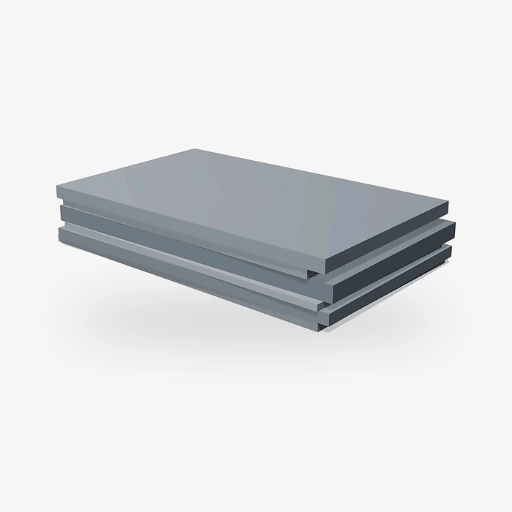
| Plate, sheet, strip | ASTM B168 | ASTM B443 |
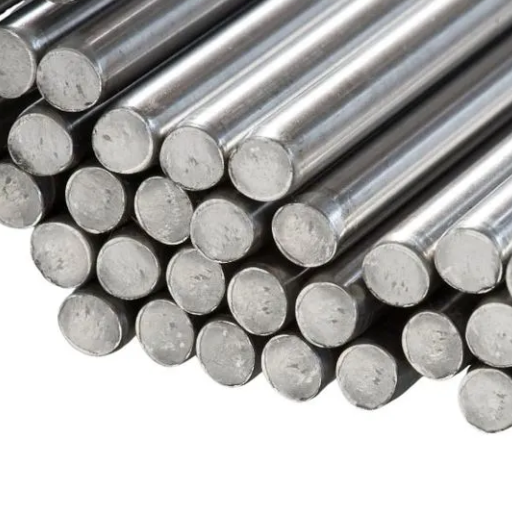
| Bar and rod | ASTM B166 | ASTM B446 |
| Seamless pipe and tube | ASTM B167, B163 | ASTM B444 |
| Welded tube | ASTM B516 | ASTM B704 |
| Welded pipe | ASTM B517 | ASTM B705 |
| Forgings | ASTM B564 | ASTM B564 |
| Fittings | ASTM B366 | ASTM B366 |
| Aerospace sheet and plate | AMS 5540 | AMS 5599 |
| Aerospace bar and forgings | AMS 5665 | AMS 5666 |
| Aerospace tube | AMS 5580 | AMS 5581 |
Two corrections to the folklore. First, 600 bar is ASTM B166, not B446. B446 is the 625 bar specification and covers Grades 1 and 2.
Second, B517 covers welded nickel-chromium-iron pipe, including UNS N06600, cold-worked before final heat treatment. A welded 600 pipe order is legitimate under that specification, and doesn’t have to default to seamless.
The aerospace specifications are where the property basis becomes checkable. AMS 5666 sets minimums of 120 ksi (827 MPa) tensile, 60 ksi (414 MPa) yield and 30% elongation in 4D for 625 bar and forgings up to 4 in (101.6 mm), with lower values above that size. AMS 5599 carries the same minimums plus a hardness cap for 625 sheet, strip and plate.
Reseller summaries disagree on the hardness figure. Read it from the revision named on your purchase order.
Form availability shapes cost as much as metal price does. 625 pipe and sheet are widely held for offshore demand. 600 heavy plate and large forgings are thinner on the ground and carry longer lead times.
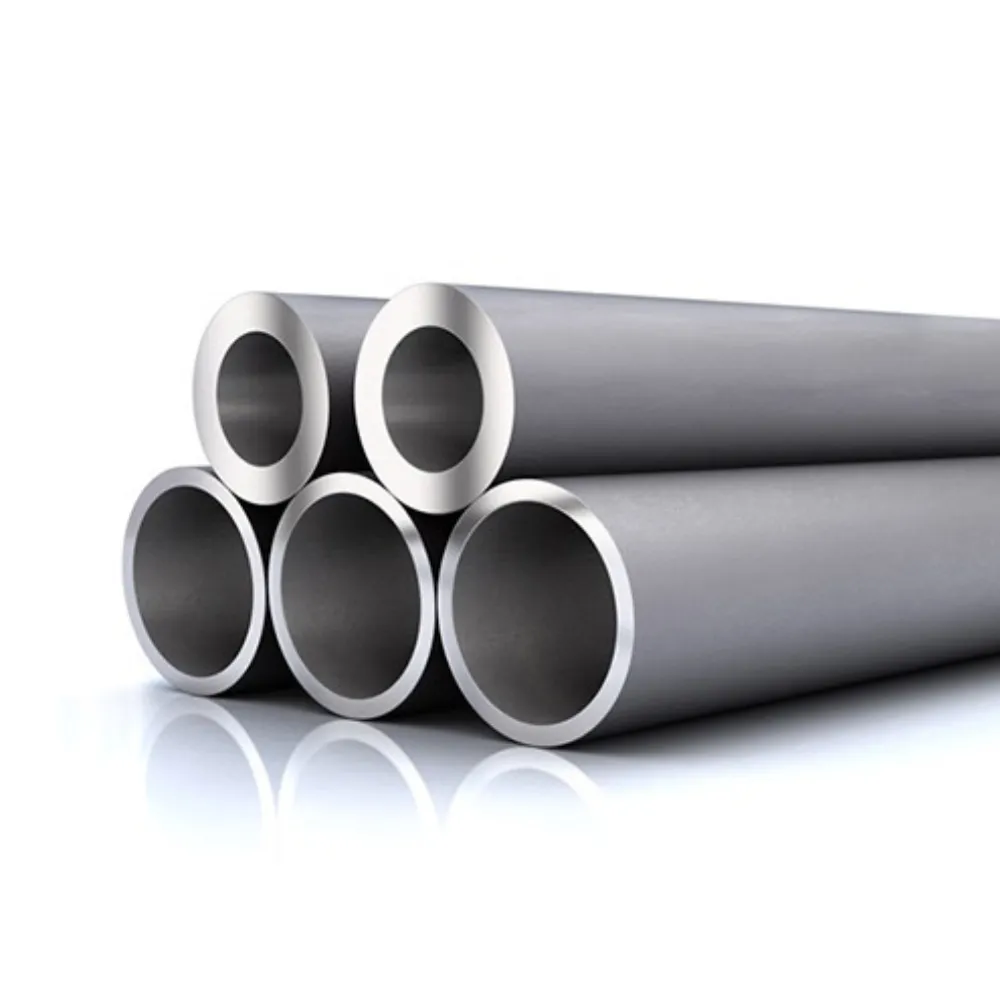
Our Inconel 625 pipe and Inconel 625 sheet pages show what we hold in that grade. Inconel 600 is available to order in the same forms, and stock depth varies by size, so ask us to confirm rather than assuming.
Cost: What the 40 to 60% Premium Buys
As of November 2026, indicative Western distributor pricing for small-lot certified material puts the cost difference between Inconel 600 and Inconel 625 at 40 to 60% per kilogram across most forms. The bands below are per-form planning figures:
| Form | Inconel 600, USD/kg | Inconel 625, USD/kg |
|---|---|---|
| Sheet and plate, 3 to 10 mm | 38 to 55 | 52 to 85 |
| Round bar, 10 to 100 mm | 32 to 48 | 45 to 72 |
| Seamless tube | 55 to 78 | 72 to 120 |
| Forgings | 40 to 65 | 58 to 95 |
Read those as planning numbers, not quotations, and check the basis first. They are Western distributor prices for small lots with full certification.
The premium has three parts. Molybdenum at 8 to 10% is the largest, and molybdenum pricing has been volatile. Tighter chemistry control and the niobium addition add conversion cost.
The certification burden is heavier too, because 625 is the grade specified for offshore and sour service. A NACE MR0175 constraint, an EN 10204 3.2 certificate or an AMS release can add several percent each to either grade, and 625 orders carry them more often.
Where the premium pays, it pays clearly. In seawater, the alternative to 625 is shorter tube life and an unplanned shutdown, and the price difference is small against a lost production day. In hot structural service where 600 needs double the wall thickness, the installed cost gap narrows or reverses, because you buy less metal and weld less.
Where it does not pay, the waste is total. A furnace muffle in clean oxidizing atmosphere at 1,050°C runs longer on 600 and costs 40% less.
Sourcing Inconel 600 and 625 from China
The Chinese designation system catches Western buyers out. It splits into two parallel standards, and one was renumbered.
Inconel 600 appears as GH3600, formerly GH600, under GB/T 14992, the heat-resistant standard. It also appears as NS312 under GB/T 15007, the corrosion-resistant standard, and the 2017 revision renumbered it NS3102, with an ISC code of H06600. European equivalents are 2.4816, NiCr15Fe and NC15Fe.
Inconel 625 appears as GH3625 under GB/T 14992 and NS336 under GB/T 15007. Its European designation is 2.4856, NiCr22Mo9Nb. Three rules follow.
Name the standard and the revision on the purchase order. GH600, NS312 and NS3102 are the same material, but Chinese listings mix the 2008 and 2017 editions of GB/T 15007, and a mill test report naming only a grade without a standard is not evidence of anything. GH3600 under GB/T 14992 is the heat-resistant specification. NS3102 under GB/T 15007 is the corrosion-resistant one, and the property requirements differ.
Put PMI on the certificate for the elements that separate the grades. For 600, verify chromium sits in the 14 to 17% band and confirm that no molybdenum is present. For 625, verify molybdenum at 8 to 10% and niobium plus tantalum at 3.15 to 4.15%. A 625 order with 2% molybdenum is not 625, and chemistry is the only fast way to know.
Ask for the condition and the property basis explicitly. For 625 that means Grade 1 or Grade 2. For 600 that means mill annealed, solution annealed or thermally treated, with the annealing temperature recorded. A test report showing mechanicals without a condition cannot be checked against the spec.
Documentation follows the usual ladder. EN 10204 3.1 is the default, 3.2 applies where an EPC or a nuclear or offshore end user requires independent witnessing, and NACE MR0175 or ISO 15156 evidence is expected when the service is sour. Our in-house spectrometers and ultrasonic testing verify chemistry and soundness before dispatch, the part of the chain a buyer cannot inspect from abroad. Send the grade, form, size, quantity and governing spec, and we will return availability, certification route and a dated quotation.
If that route is unfamiliar, our nickel alloy material certificate guide explains what each EN 10204 grade obliges a mill to provide.
Frequently Asked Questions
What is Inconel 600 made of?
Inconel 600, UNS N06600, is roughly 72% nickel minimum with 14 to 17% chromium and 6 to 10% iron, plus small amounts of carbon, manganese, silicon, sulfur and copper. It contains no molybdenum and no niobium. That simple nickel-chromium-iron formula is why it resists caustic and high-temperature oxidation but not chloride pitting.
Is Inconel stronger than stainless steel?
Yes, substantially. Annealed Inconel 600 carries a 550 MPa (80 ksi) tensile minimum against about 515 MPa for 304 stainless steel, and it keeps most of that strength to 550°C where 304 has already weakened. Inconel 625 goes further at 827 MPa (120 ksi). The real difference is temperature and corrosion resistance.
Is Inconel more expensive than titanium?
Per kilogram, usually yes, though the gap is smaller than most people assume and it depends heavily on grade and form. On the planning bands in this guide, certified Inconel 600 sheet and plate runs 38 to 55 USD/kg and 625 runs 52 to 85 USD/kg, while commercial-purity titanium sheet sits in a comparable band. Titanium’s real advantage is density: about 4.5 g/cm³ against 8.4 for these nickel alloys, so a machined part weighs roughly half as much. On a per-part basis that can reverse the comparison entirely.
Is Inconel 600 stronger than Inconel 625?
No. Inconel 625 is about 50% stronger on specification minimums, 827 MPa tensile against 550 MPa for 600, and roughly 25 to 40% stronger on typical annealed values. That comes from molybdenum and niobium strengthening its matrix in solution. Above about 600°C the gap widens in creep. 600 has no strengthening mechanism except cold work, so its annealed strength is a floor rather than a starting point.
Which handles higher temperature, Inconel 600 or 625?
It depends which ceiling you mean. For oxidation in a lightly loaded part, 600 goes higher, to about 1,093°C against 982°C for 625. For load-bearing creep strength in the 600 to 750°C band, 625 is stronger, and in the solution-annealed Grade 2 condition it holds that strength higher. Single-number temperature claims conflate the two limits.
Is Inconel 600 or 625 magnetic?
Both are essentially non-magnetic when annealed, with relative permeability close to 1.01. Inconel 600’s Curie temperature is about -124°C, so it stays paramagnetic at any normal service temperature. Cold work raises permeability in either grade, and heavily cold-worked 600 can show measurable attraction, which matters for instrument and sensor parts.
Can Inconel 600 and 625 be welded to each other?
Yes, and the joint is routine in mixed-grade equipment. Use ERNiCrMo-3 filler, which matches 625 and overmatches 600, so the weld metal does not become the weak point in chloride service. Watch creep in hot joints: published testing of 600 and 625 welded at 575°C showed roughly half the creep life above about 240 MPa, against the base metals.
Which is better for seawater, Inconel 600 or 625?
Inconel 625, decisively. In a 30-day seawater crevice test, 600 showed 0.86 mm of maximum attack; 625 showed none in a 90-day test. 600 contains no molybdenum, so it has no defense against chloride pitting and crevice corrosion beneath deposits. For very tight crevice geometries even 625 can be marginal, and higher-molybdenum grades take over.
Is Inconel 625 worth the extra cost over Inconel 600?
Only when the duty needs chloride or oxidizing-acid resistance, or strength at temperature, in the same component. In seawater, subsea, FGD and mixed-acid service the premium buys service life you cannot get from 600 at any thickness. In furnace fixtures, thermocouple sheaths and hot caustic service, 600 performs as well or better and costs 40 to 60% less.
Conclusion
The Inconel 600 vs 625 decision comes down to four numbers and one question.
The numbers are 72 against 58% nickel, a PREN of 15 to 19 against 45 to 50, 550 against 827 MPa tensile minimum, and 40 to 60% in price. The question is which failure mechanism your design has to survive, and in which environment.
Put another way, the alloy 600 vs 625 choice is a chemistry decision before it is a price decision. Molybdenum costs money, and it only earns that money in chloride, in oxidizing acid and in loaded hot structures.
If the environment is water with chloride in it, the answer is 625 and there is no cheaper route. If the environment is hot caustic, a furnace atmosphere or a thermocouple sheath, the answer is 600 and the premium for 625 is wasted. If the environment is hot and dry and the part carries load, the answer depends on the condition of the 625, not just the grade.
Two habits prevent most of the failures described here. Write the condition on the purchase order, not only the grade. And check any substitution against the specific failure mechanism.
Send your medium, concentration, operating temperature, governing code and product form to our metallurgical team. We will tell you which side of the line your duty falls on, and what we can supply against your specification.