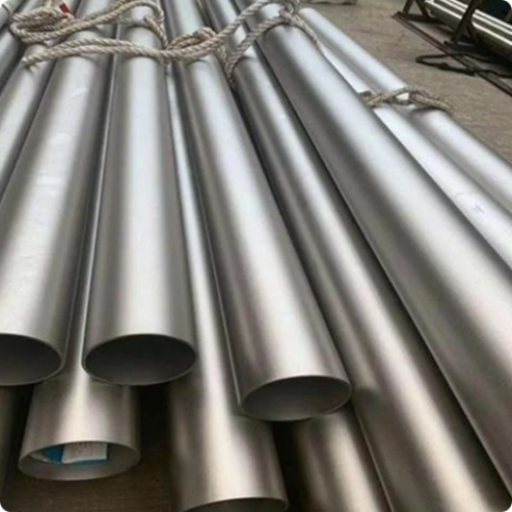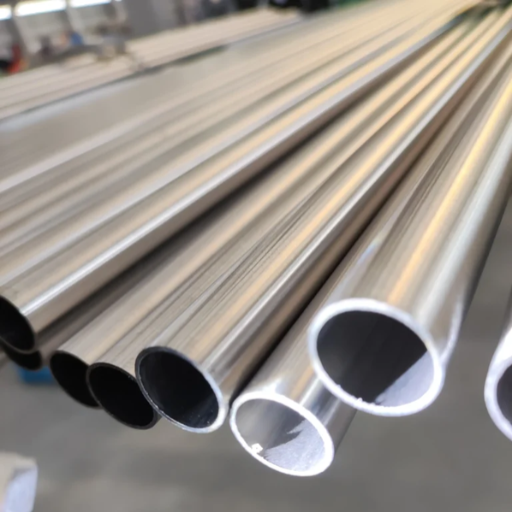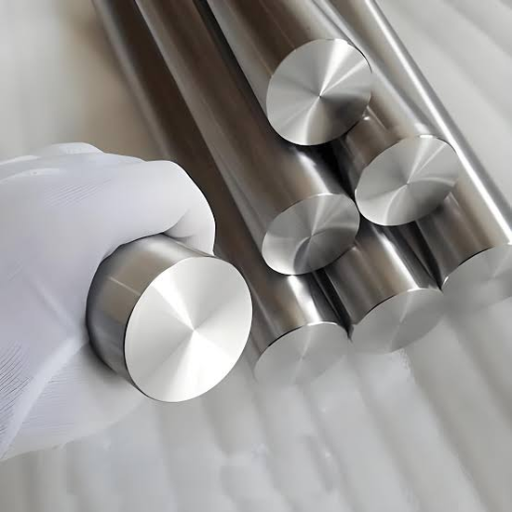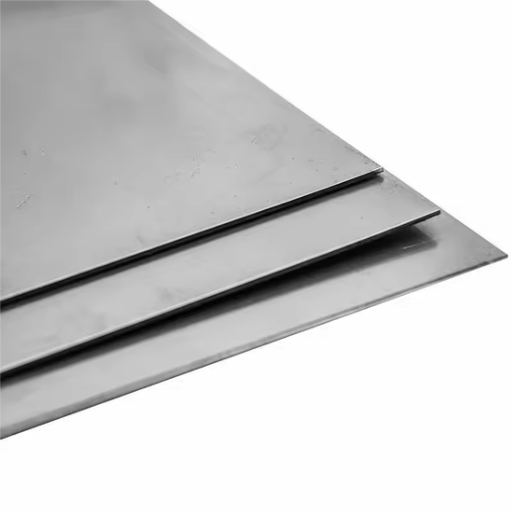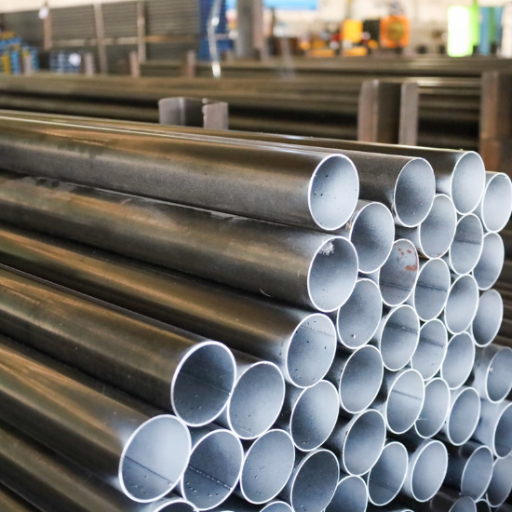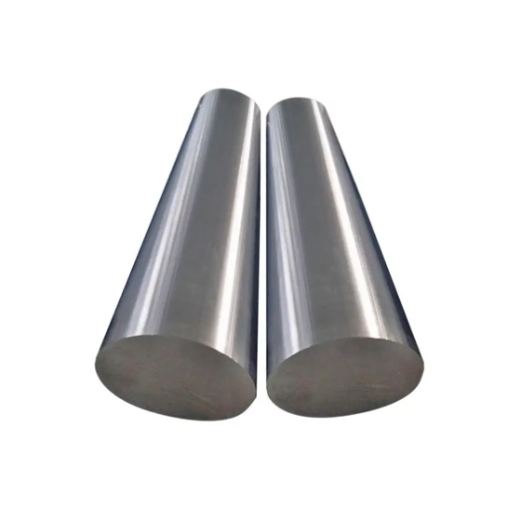
GH3600 is the Chinese designation for the same alloy as Inconel 600 (UNS N06600). Both specify nickel at 72% minimum, chromium at 14 to 17%, and iron at 6 to 10%. The chemistry is equivalent. The certificate is not automatically equivalent, because GH3600 is ordered and certified to Chinese national standards, not to ASTM B166 or AMS 5665.
That is the short answer to the GH3600 equivalent Inconel 600 question. The long answer is administrative rather than metallurgical, and it surfaces at goods-inward inspection.
Picture a receiving bay in Rotterdam. A pump builder has ordered round bar to ASTM B166. The crate arrives with a mill test report that cites GH3600, GB/T 14993-2025, and a heat number. The metal is correct. The paperwork names a different standard, so the bar waits in quarantine while quality assurance decides whether the certificate can be released.
If you have sat in that meeting, you know the decision turns on documentation, not chemistry. This guide decodes the GH3600 name, maps it to the designations you will meet, compares composition and properties, and explains the 2026 Chinese standard revision. It also sets out what a certificate must contain before material is released. Chemistry and mechanical limits for the alloy itself are covered in our Inconel 600 properties reference.
Key Takeaways
- GH3600 and Inconel 600 are the same alloy: 72% minimum nickel, 14 to 17% chromium, 6 to 10% iron, UNS N06600, W.Nr. 2.4816.
- China registers the grade twice: GH3600 under GB/T 14992 for high-temperature service, and NS3102 under GB/T 15007 for corrosion-resistant service.
- GB/T 14992-2025 took effect on 2026-03-01 and replaced the 2005 edition. The standard states that it does not apply on its own as the technical requirements for ordering product.
- Chemical equivalence does not satisfy an ASTM or AMS callout. The certificate has to name the standard the buyer ordered to.
- EN 10204 3.1 certificates come from the mill’s inspection department. A 3.2 certificate adds an independent inspector nominated by the buyer.
Is GH3600 the Same as Inconel 600?
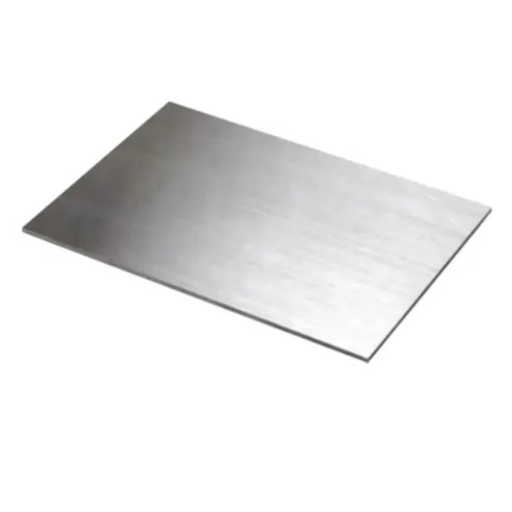
Yes. GH3600 is China’s designation for Inconel 600, and Inconel 600 is the Special Metals trade name for UNS N06600. Both names describe a nickel-chromium-iron alloy with 72% minimum nickel, 14 to 17% chromium and 6 to 10% iron. The German designation is W.Nr. 2.4816, or NiCr15Fe.
“Equivalent” carries three different meanings in sourcing, and they do not arrive together.
Designation equivalence is straightforward. A grade table maps Inconel 600 to GH3600 the way it maps it to NCF600 or NA14. That mapping is correct.
Chemistry equivalence is what most buyers mean. The grade tables overlap closely, as the composition section below shows, and a heat made to either set of limits will behave like 600 in service.
If a specification asks for an Inconel 600 equivalent material, GH3600 is the Chinese designation that answers it, subject to the certification question below.
Certification equivalence is the one that decides whether a shipment can be released. A mill can certify to the standard it was audited against. If your purchase order names ASTM B166 and the mill issues a GB/T certificate, those are two different documents even when the heat is the same.
If you already have a drawing, a purchase order and a supplier quote, send the specification to our team. We will tell you what can be certified before you commit to the order.
How to Read the GH3600 Name
The name is a code, and the code is standardised. GB/T 14992-2025, the Chinese standard for superalloy designations and chemical composition, defines both the prefix and the classification digit.
GH, GH600 and the Four-Digit Rule
In the Chinese system, GH marks a wrought superalloy. The first digit after the prefix gives the strengthening class. The 2025 edition assigns class 3 to solid-solution-strengthened alloys with nickel as the main element, and class 4 to precipitation-hardened nickel alloys.
GH3600 therefore reads as GH, class 3, alloy 600. The number 600 is retained from the former designation GH600, so the change from GH600 to GH3600 was a change of format, not of grade. Standards databases also list the unified numbering code ISC H36000 for the same grade.
The same rule explains the neighbours. A GH3xxx grade is a solid-solution nickel alloy. A GH4xxx grade is precipitation-hardened, which is why GH4169 maps to Inconel 718. We walked through that case in the GH4169 equivalent Inconel 718 guide, and the method is identical.
NS3102 and the Second Chinese Standard
China also registers alloy 600 in its corrosion-resistant family. GB/T 15007-2017, the standard for corrosion-resistant alloy designations, uses the NS prefix. Within that system, NS3XXX marks mainly solid-solution-strengthened nickel alloys and NSX1XX marks the nickel-chromium series.
The current designation for alloy 600 in that family is NS3102, with unified code ISC H06600. The 2017 edition replaced the former NS312, which older drawings and catalogues also write as 1Cr15Ni75Fe8.
This is the part that confuses buyers, and almost no English-language page explains it. GH3600 and NS3102 are the same melt described in two standard systems.
A bar produced to the superalloy product standard is certified as GH3600. The same composition produced to a corrosion-resistant bar standard is certified as NS3102. Which code appears on your certificate depends on which product standard the order was placed against.
There is no public explanation for the 2017 renumbering, and we won’t invent one. What matters at inspection is that the two codes describe one grade, so a drawing that says GH3600 and a certificate that says NS3102 is a documentation query, not a material rejection.
GH600 and NS312 Are Still in Circulation
Old designations don’t disappear when a standard is revised. GH600 still appears on drawings from the 1990s and 2000s, in textbooks, and in supplier catalogues that were never updated. The current equivalent is GH3600.
Consider a valve maker in Brescia whose 2014 drawing specifies NS312. The supplier ships NS3102 bar with a current certificate. Goods-inward flags the “wrong grade”, the line stops for a day, and the resolution is a cross-reference note signed by quality. The material was correct from the start. The drawing was simply written to an edition that has since been replaced.
If your documentation still uses GH600 or NS312, ask the mill to state both designations on the certificate. A dual-designation line costs nothing and prevents the query.
GH3600 Equivalent Inconel 600: Complete Grades Table
| System | Designation | Standard | Comment |
|---|---|---|---|
| United States | UNS N06600 | ASTM B166 (bar), ASTM B168 (plate, sheet, strip) | AMS 5540, 5580, 5665 and 5687 for aerospace |
| China, superalloy | GH3600 (formerly GH600), ISC H36000 | GB/T 14992-2025 | Product standards are separate |
| China, corrosion-resistant | NS3102 (formerly NS312), ISC H06600 | GB/T 15007-2017 | Bar: GB/T 15008-2025. Tube: GB/T 37614-2019 |
| Germany | 2.4816, NiCr15Fe | DIN 17750 to 17754, EN 10095 | Product standard depends on form |
| France | NC15Fe | AFNOR | Listed by Special Metals |
| United Kingdom | NA14 | BS 3072 to 3076 | Plate, sheet, bar, tube |
| Japan | NCF600 | JIS G 4901 to G 4904 | Bar, plate, pipe, tube |
| ISO | Not separately designated | ISO 6208, 6207, 9723 to 9725 | Plate, tube, bar and wire |
Two mappings in circulation are wrong, and both are worth knowing because they appear in supplier tables that otherwise look reliable.
1.4876 is not Inconel 600. EN 1.4876 is X10NiCrAlTi32-20, the Alloy 800 and 800H family, UNS N08800 and N08810. That is an iron-based austenitic alloy with roughly 32% nickel. Inconel 600 is 2.4816, with 72% minimum nickel. A mill can’t certify 600 to 1.4876, and a buyer who accepts the mapping is comparing the wrong properties.
“JIS NW6600” does not exist as a JIS designation. Japanese standards call the grade NCF600. EN 10088-1 is also the wrong reference: it covers stainless steels, not nickel alloys. The European product standard for 600 flat products listed by the producer is EN 10095.
GH3600 vs Inconel 600: Chemical Composition
| Element (wt%) | ASTM B166 (N06600) | GH3600 (GB/T 14992) | NS3102 (GB/T 15007) |
|---|---|---|---|
| Nickel (plus cobalt) | 72.0 min | 72.0 min | 72.0 min |
| Chromium | 14.0–17.0 | 14.0–17.0 | 14.0–17.0 |
| Iron | 6.0–10.0 | 6.0–10.0 | 6.0–10.0 |
| Carbon | 0.15 max | 0.15 max | 0.15 max |
| Manganese | 1.00 max | 1.00 max | 1.00 max |
| Silicon | 0.50 max | 0.50 max | 0.50 max |
| Sulfur | 0.015 max | 0.015 max | 0.015 max |
| Copper | 0.50 max | 0.50 max | 0.50 max |
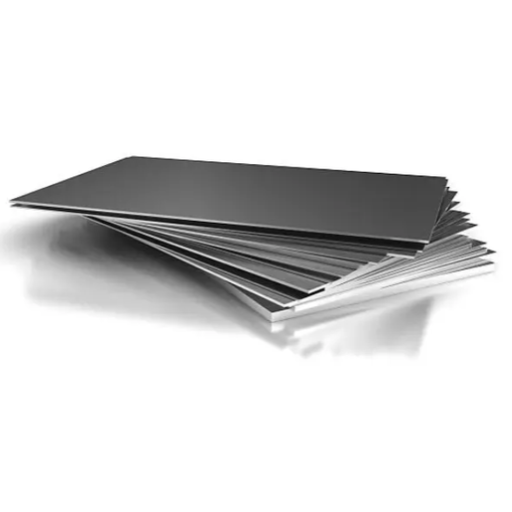
The US column repeats the limiting composition in the producer’s technical bulletin for alloy 600, which is the eight-element table that ASTM B166 and B168 enforce. The two Chinese columns are the limits published by standards databases for the current editions. The full GB text is sold, not free, so we cite the published values rather than claim a quotation. Confirm them against the edition printed on your purchase order.
The Chinese tables go further on residual elements. Reported GH3600 limits add phosphorus at 0.04% maximum, aluminium at 0.35%, titanium at 0.50%, niobium at 1.0% and cobalt at 1.00%. Reported NS3102 tables add phosphorus at 0.03%.
Those extra limits are not decoration. Alloy 600 is a solid-solution alloy with no gamma-prime strengthening, so aluminium and titanium stay at residual level by design.
Alloy 601 carries 1.0 to 1.7% aluminium, and 625 uses niobium plus tantalum for strength. A heat that drifts toward either chemistry will still pass a nickel and chromium check. A spectrometer that reads aluminium and niobium will not be fooled.
Mechanical Properties and Delivered Condition
The US bar and plate specifications set the annealed floor at 550 MPa (80 ksi) tensile, 240 MPa (35 ksi) yield at 0.2% offset, and 30% elongation.
Typical annealed rod and bar, as tabulated by Special Metals, runs 550 to 690 MPa tensile, 170 to 345 MPa yield, 35 to 55% elongation and 65 to 85 HRB. That typical range is wider than the minimum, particularly on yield. A certificate is judged against the minimum in the specification or the purchase order, never against a typical range on a supplier website. Cold-drawn material is stronger by design; the producer notes that heavily cold-worked 600 can reach 1,517 MPa tensile.
GH3600 is a designation, not a condition. A purchase order that says “GH3600 bar” and nothing else leaves the mill free to deliver annealed, cold-drawn or as-rolled material, and the properties will differ accordingly. State the condition explicitly.
For annealed material, the producer’s guidance is about 1,010 °C (1,850 °F) for 15 minutes to produce a soft structure. Brief exposure to 1,040 °C (1,900 °F) gives softness without coarse grain. Alloy 600 also precipitates carbides between 540 and 760 °C (1,000 to 1,400 °F), so material should be cooled rapidly through that band when it is intended for corrosive service. Stress-relief cycles and their effect on sensitization are covered in our Inconel 600 heat treatment guide.
The 2026 Chinese Standard Change
The Chinese standard series was revised in 2025, and the new editions took effect on 2026-03-01.
| Standard | Subject | Status |
|---|---|---|
| GB/T 14992-2025 | Superalloy designations and chemical composition | Replaced the 2005 edition on 2026-03-01 |
| GB/T 14993-2025 | Wrought superalloy hot-rolled and forged bars | In force from 2026-03-01 |
| GB/T 14995-2025 | Wrought superalloy hot-rolled plate | In force from 2026-03-01 |
| GB/T 14996-2025 | Wrought superalloy cold-rolled sheet and strip | In force from 2026-03-01 |
| GB/T 15062-2025 | Wrought superalloy tube | In force from 2026-03-01 |
| GB/T 15008-2025 | Corrosion-resistant alloy bars | In force from 2026-03-01 |
| GB/T 15007-2017 | Corrosion-resistant alloy designations | Current since 2018-06-01 |
| GB/T 37614-2019 | Corrosion-resistant alloy tube | Current since 2020-05-01 |
The most useful sentence in the whole series is in the scope of GB/T 14992-2025. The English text states that the document “does not apply as the technical requirements for ordering products used alone”.
In plain terms, the designation standard tells you what the grade is called and what it contains. It doesn’t tell you what tests the mill must run, what tolerances apply, or what surface condition you receive. Those come from the product standard, or from a technical agreement written into the order.
Three practical consequences follow.
First, a certificate dated before 2026-03-01 that cites GB/T 14992-2005 was correct when it was issued, but it is not the current edition. If your quality system requires the current standard, say so, and expect a new certificate rather than an annotation.
Second, a certificate that names only GB/T 14992 without a product standard doesn’t tell you which acceptance tests were performed. Ask for the product standard, and for the test results that go with it.
Third, the corrosion-resistant side has not finished moving. GB/T 15007-2017 is current, and a revision is in the approval stage. Check the edition on the certificate rather than assuming the 2017 text will be current for the life of the project.
Standards by Product Form
| Form | US specification | China, superalloy | China, corrosion-resistant |
|---|---|---|---|
| Bar and rod | ASTM B166, AMS 5665 | GB/T 14993-2025 (hot-rolled, forged), GB/T 14994-2008 (cold-drawn) | GB/T 15008-2025 |
| Hot-rolled plate | ASTM B168, AMS 5540 | GB/T 14995-2025 | Confirm with the mill |
| Cold-rolled sheet and strip | ASTM B168, AMS 5540 | GB/T 14996-2025 | Confirm with the mill |
| Tube and pipe | ASTM B167 (pipe), B163 (tube), AMS 5580 | GB/T 15062-2025 | GB/T 37614-2019 |
| Welded tube and pipe | ASTM B516, B517 | GB/T 15062-2025 | GB/T 37614-2019 |
| Wire | ASTM B166, AMS 5687 | Not verified in the 2025 series | Not verified |
| Forgings | ASTM B564, AMS 5665 | GB/T 14993-2025 covers forged bar | Written into the technical agreement |
Two cautions about this table. ASTM B166 and ASTM B168 contain no corrosion test, so a certificate issued to either standard says nothing about how the alloy performs in your medium. And the Chinese rows name the product standard that the mill must work to; a GH3600 designation alone does not select one. For tube specifically, our Inconel 600 pipe overview covers dimensions and the Inconel 600 tube product page covers the tube forms we supply.
What a GH3600 Mill Test Report Must Show
A mill test report (MTR) is the document your inspector reads. For a GH3600 heat it plays the same role as an Inconel 600 mill test report issued to ASTM B166. Six items decide whether it is usable.
- Designation and standard, with the edition year. “GH3600” alone is not a specification. Look for GH3600 to GB/T 14992-2025 and a product standard such as GB/T 14993-2025.
- Heat number and item traceability. The heat number on the certificate must match the marking on the delivered pieces, not just the packing list.
- Chemical analysis by heat, with the method. The full element set, not a marketing summary, and the laboratory technique used.
- Mechanical results with the acceptance criteria. Tensile, yield and elongation, plus the minimum each result is judged against and the test temperature.
- Condition and heat treatment. Annealed, cold-drawn or as-supplied, with the annealing temperature and cooling method where applicable.
- Certificate type. EN 10204 3.1 or 3.2, and the inspection body where 3.2 applies.
The difference between 3.1 and 3.2 matters more than most buyers expect. An EN 10204 3.1 certificate is issued by the manufacturer’s inspection department, which must be independent of the production function, and it states conformity to the order.
A 3.2 certificate adds a countersignature from an independent inspector nominated by the purchaser, or from an independent inspection body. If your contract requires 3.2, the inspection has to be arranged before shipment, not after. Our material certificate guide explains how both types are issued and what our certificates contain.
Paperwork is not the last step. A positive material identification (PMI) check on the delivered item catches the errors paperwork misses: a mixed bundle, a mis-marked bar, a substitution made on the floor. Optical emission spectrometry (OES) is the better tool here because it reads aluminium, titanium and carbon, which handheld X-ray fluorescence struggles with. That matters when the risk is a 601 or 625 heat in a 600 bundle.
If corrosion performance is critical, note that no standard in the table above tests it. ASTM G28 Method A, the boiling ferric sulfate plus sulfuric acid test, is the usual screening test for Ni-Cr-Fe alloys against sensitization, and it must be specified separately.
Can GH3600 Replace Inconel 600?
Sometimes. The decision rests on the acceptance criteria in the design, not on the grade name.
When It Can
GH3600 can replace Inconel 600 when the service is within the alloy’s normal envelope, the form and condition are like for like, and the buyer’s quality system accepts a certificate issued to a Chinese national standard. Heat-treatment fixtures, furnace furniture, chemical process hardware, and general high-temperature structural parts are typical cases. The metallurgy doesn’t change because the certificate is written in Chinese.
When It Cannot
A GH3600 certificate won’t satisfy these situations on its own.
| Situation | Why the certificate is not enough |
|---|---|
| The drawing calls out ASTM or AMS | A GB/T certificate doesn’t meet an ASTM B166 or AMS 5665 requirement. The mill can often test and certify to those requirements too, but only if it is requested, quoted, and stated on the certificate as dual certification. |
| An approved source is named | Aerospace and defence programs usually control the mill, not just the grade. A compliant chemistry from an unapproved mill still fails. |
| ASME code applies | Pressure equipment needs material to an ASME-recognised specification such as SB166 or SB168. A GB/T certificate is not a substitute in a code stamped vessel. |
| The service needs more corrosion resistance | Moving to 625 adds molybdenum and niobium. The Inconel 600 vs 625 comparison sets out where that upgrade is justified. |
| Sour service or a customer specification governs | Those approvals are attached to the material and the mill, not to the designation. |
Sourcing GH3600 from China: RFQ Checklist
A purchase order that closes the documentation gap is short and specific.
- Designation plus standard plus edition: GH3600, GB/T 14992-2025, and the product standard.
- Form, size, tolerance and quantity.
- Condition: annealed, cold-drawn, or as-rolled, with the heat-treatment requirement.
- Certificate level: EN 10204 3.1 or 3.2, and whether dual certification to ASTM B166 or B168 is required.
- Testing beyond the product standard: PMI, ultrasonic inspection, grain size, corrosion screening.
- Marking, packaging and export documentation.
- The acceptance criteria in numbers, so the mill can judge conformity before it ships.
A supplier who quotes GH3600 against an ASTM B166 callout without explaining how the certificate will read is inviting a rejection at goods-inward. Ask the question before the order, not after the crate lands.
At our Wuxi works we produce nickel alloy bar, plate and tube using vacuum induction melting and electroslag remelting. In-house heat treatment is supported by a laboratory equipped with direct-reading spectrometers, tensile and hardness testing, metallography and ultrasonic inspection. Material ships with a mill test report and an EN 10204 3.1 certificate, and third-party inspection can be arranged when your contract calls for 3.2. Forms for the 600 family are listed on the nickel alloy bar, nickel alloy plate, and 600 tube product pages.
Frequently Asked Questions
Is GH3600 the same as Inconel 600?
Yes. GH3600 is the Chinese designation for the same alloy as Inconel 600, UNS N06600. The composition limits match at 72% minimum nickel, 14 to 17% chromium and 6 to 10% iron. The certificate is issued to a Chinese standard, so it isn’t automatically accepted where an ASTM or AMS callout applies.
What is the difference between GH3600 and NS3102?
They are the same alloy registered in two Chinese systems. GH3600 belongs to the superalloy family under GB/T 14992, and NS3102 belongs to the corrosion-resistant family under GB/T 15007, where it replaced NS312 in 2018. Which code appears on the certificate depends on the product standard the order was placed against.
Can I use GH3600 instead of Inconel 600?
You can where the design accepts a Chinese national standard certificate and the form and condition match. You can’t treat it as a drop-in replacement when the drawing names ASTM B166, AMS 5665 or an ASME specification, or when an approved mill source is required. In those cases the mill must dual-certify or the material won’t be accepted.
What does GH600 mean on an old drawing?
GH600 is the former designation for GH3600. The grade didn’t change when the naming convention moved to four digits; only the code changed. Ask for both designations on the certificate if the drawing still uses the old one.
Is 1.4876 the same as Inconel 600?
No. EN 1.4876 is the Alloy 800 and 800H family, an iron-based alloy with about 32% nickel. Inconel 600 is W.Nr. 2.4816, with 72% minimum nickel. The confusion appears in some online equivalence tables and should be corrected before it reaches a purchase order.
Conclusion
The GH3600 equivalent Inconel 600 question is settled on metallurgical grounds. GH3600 is Inconel 600 under a Chinese name, and the composition limits match. The procurement case depends on three details: which Chinese standard the certificate cites, which product standard governs the tests, and whether your design accepts a Chinese national standard at all.
Get those three right, and the grade does what 600 does. Get them wrong, and a correct heat can still sit in quarantine for a week while the paperwork is sorted out.
If your drawing names Inconel 600, UNS N06600 or GH3600, send it with the form, size, condition, and certificate requirement. Our engineers will confirm the applicable standard and what the certificate will state before you place the order. Request a quotation.