Monel 400 and Monel K500 share the same nickel-copper corrosion resistance, but K500 adds aluminum and titanium so it can be precipitation hardened to roughly twice the tensile strength and three times the yield strength. Choose Monel 400 when corrosion resistance and cost matter most; choose Monel K500 when you need higher strength, hardness, fatigue resistance, or non-magnetic performance in sour service.
Last year, a marine OEM team in Singapore reviewed a pump shaft specification and assumed K500 was the “safe” choice for seawater service. The corrosion requirement was satisfied, but the shaft operated at low speed and moderate load. After a metallurgical review, they switched to Monel 400 and cut material cost by roughly 30% without sacrificing service life. The wrong default cost real money.
In this guide, you’ll learn the composition difference that creates K500’s strength advantage, how the mechanical properties compare, where corrosion behavior is truly identical, and how to choose between the two alloys for marine, oil & gas, chemical, and aerospace applications.
Key Takeaways
- Monel 400 (UNS N04400) and Monel K500 (UNS N05500) share a ~63% Ni / ~30% Cu matrix, so their seawater and hydrofluoric acid resistance is nearly identical.
- K500 adds 2.30-3.15% Al and 0.35-0.85% Ti, enabling precipitation hardening to ~1,050 MPa tensile and ~790 MPa yield in the aged condition.
- Aged K500 reaches 250-300 HB (HRC 30+), while annealed Monel 400 is typically 110-150 HB.
- K500 is 15-40% more expensive per kilogram and usually requires solution annealing plus re-aging after welding; 400 is more weldable without post-weld heat treatment.
- K500 is non-magnetic above -93°C, making it the standard for MWD/LWD drill collars and non-magnetic instrumentation.
What Monel 400 and K500 Have in Common

Both alloys belong to the nickel-copper family of corrosion-resistant materials. Their base chemistry is intentionally similar: approximately 63% nickel, 30% copper, and small amounts of iron, manganese, silicon, and carbon. That shared matrix gives both alloys a rare combination of properties.
Seawater resistance is the headline benefit. Monel 400 and K500 both resist chloride-induced pitting, crevice corrosion, and stress corrosion cracking in marine environments better than most stainless steels. They also tolerate hydrofluoric acid, fluorine, alkalis, and many salt solutions. This makes them common choices for valves, pumps, fasteners, and heat exchangers in coastal, offshore, and chemical plants.
Both alloys retain toughness and ductility at cryogenic temperatures. They’re also thermally stable enough for moderate elevated-temperature service. In other words, the corrosion and environmental envelope is essentially the same. The divergence is mechanical: K500 can be hardened; 400 can’t.
Soft CTA: If you’re comparing nickel-copper alloys for a new project, start with our Monel material guide for a broader view of grades and forms.
Chemical Composition: Why K500 Can Be Hardened
The composition gap between these alloys is small but decisive. Monel K500 adds aluminum and titanium to the Monel 400 base. During controlled aging, those elements form gamma-prime precipitates, Ni₃(Al,Ti), which dramatically strengthen the alloy without changing its corrosion chemistry very much.
| Element | Monel 400 (UNS N04400) | Monel K500 (UNS N05500) |
|---|---|---|
| Nickel | ≥63% | ≥63% |
| Copper | 28-34% | 27-33% |
| Iron | ≤2.5% | ≤2.0% |
| Manganese | ≤2.0% | ≤1.5% |
| Carbon | ≤0.3% | ≤0.25% |
| Silicon | ≤0.5% | ≤0.5% |
| Sulfur | ≤0.024% | ≤0.01% |
| Aluminum | Not present | 2.30-3.15% |
| Titanium | Not present | 0.35-0.85% |
The aluminum and titanium additions are what make K500 a precipitation-hardenable alloy. A typical heat treatment sequence involves solution annealing around 980-1,040°C, water quenching, then aging at approximately 540-600°C. The resulting γ’ precipitates pin dislocations and raise strength.
Because the nickel-copper matrix itself remains largely unchanged, the corrosion resistance stays close to Monel 400. The main trade-off is that aged K500 can become slightly more susceptible to stress corrosion cracking in the most aggressive chloride or caustic environments, so condition selection matters.
Mechanical Properties and Heat Treatment
This is where the two alloys separate. Monel 400 is normally used in the annealed condition. Monel K500 is often supplied solution annealed, but its value comes from the aged condition.
| Property | Monel 400 Annealed | Monel K500 Annealed | Monel K500 Aged |
|---|---|---|---|
| Tensile Strength | ~550 MPa | ~900 MPa | ~1,050 MPa |
| Yield Strength | ~240 MPa | ~620 MPa | ~790 MPa |
| Elongation | ~35-40% | ~25-30% | ~20-25% |
| Hardness | 110-150 HB | 150-200 HB | 250-300 HB |
| Max Service Temp | ~480°C | ~540°C | ~538°C |
The practical meaning of these numbers is clear. K500 aged offers roughly twice the tensile strength and more than three times the yield strength of Monel 400. That allows smaller cross-sections, lighter rotating parts, and better fatigue life. It also means higher hardness, which improves wear resistance but makes machining more difficult.
Temperature limits differ modestly. Monel 400 is generally recommended up to about 480°C. Monel K500 can operate up to roughly 538°C under load in the aged condition, though long-term exposure near the upper limit can over-age the material and reduce strength.
Magnetic behavior is another differentiator. Monel 400 is weakly ferromagnetic, particularly at low temperatures. Monel K500 is essentially non-magnetic above about -93°C. That non-magnetic behavior is critical for measurement-while-drilling (MWD) and logging-while-drilling (LWD) drill collars, where magnetic interference would corrupt downhole surveying equipment.
Corrosion Resistance: Are They Really the Same?
For most engineers, the key question is whether K500’s extra strength comes at the cost of corrosion performance. In most environments, it does not.
Both Monel 400 and K500 show excellent resistance to:
- Seawater and brine: including splash-zone, immersed, and marine atmospheric exposure
- Hydrofluoric acid: one of the few alloys that tolerate HF at moderate concentrations and temperatures
- Alkalis: caustic soda and similar alkaline media
- Chloride stress corrosion cracking: far more resistant than austenitic stainless steels in many cases
The caveat is that aged K500 may be slightly more prone to stress corrosion cracking in highly aggressive chloride or caustic environments than annealed Monel 400. For the majority of marine and chemical applications, this difference is academic. For critical sour-gas or caustic service, the heat treatment condition should be specified with the service environment in mind.
Mini-story: A shipyard in Rotterdam replaced a batch of bronze seawater valves with Monel K500 because the project engineer believed “the stronger alloy is always safer.” Two years later, the valves were performing well, but the corrosion attack was no different from identical Monel 400 valves installed on a sister vessel. The extra hardness had added cost and machining time without adding corrosion margin. The lesson: match the alloy to the actual failure mode.
Industry Applications Compared

Marine & Seawater
Monel 400 dominates static and moderate-stress marine components: piping, valves, heat exchanger tubes, pump casings, and fasteners in splash zones. Its excellent weldability and lower cost make it the default for large fabrications.
Monel K500 is preferred for rotating or highly loaded marine parts: pump shafts, propeller shafts, drive shafts, high-strength fasteners, and valve trim. The strength advantage allows smaller shaft diameters and better resistance to fretting and fatigue.
Oil & Gas
Monel K500 is the headline alloy for oilfield hardware. It is widely used for drill collars, instrumentation housings, non-magnetic downhole tools, and sour-service components where NACE MR0175/ISO 15156-3 qualification is required. The combination of high strength and near-non-magnetic behavior is hard to duplicate.
Monel 400 appears in oil & gas mainly for corrosion-resistant piping, valves, and process equipment where loads are lower. It is easier to field-weld and does not require the re-aging cycle that K500 welds demand.
Chemical Processing
Monel 400 is the workhorse for hydrofluoric acid handling. Tanks, valves, pumps, and piping in alkylation units and fluoride chemical plants often use 400 because it resists HF and is easier to fabricate.
Monel K500 is chosen when the chemical environment also brings mechanical stress: high-pressure springs, fasteners, pump shafts, and diaphragms. The aged condition gives the needed strength while preserving most of the corrosion resistance.
Aerospace & Defense
K500’s non-magnetic properties and high strength make it useful for instrument housings, sensor components, and non-magnetic structural parts. Monel 400 appears less frequently in aerospace because its lower strength usually disqualifies it from weight-sensitive designs.
Cost Analysis: Monel 400 vs K500 Price per kg
Price should never be the only selection criterion, but it’s always part of the conversation. As of 2026, typical ex-works price ranges are:
| Form / Condition | Monel 400 | Monel K500 | K500 Premium |
|---|---|---|---|
| Plate / sheet | $30-50/kg | $45-70/kg | 15-35% |
| Bar / rod, annealed | $35-55/kg | $50-80/kg | 20-40% |
| Bar / rod, aged | N/A | $60-85/kg | N/A |
The K500 premium reflects the additional alloying elements, the required heat treatment, and the more difficult machining. Hidden costs can be larger than the raw material gap.
- Heat treatment: Solution anneal plus aging adds processing time and certification cost.
- Welding re-aging: Every weld on K500 typically requires solution annealing and re-aging to restore mechanical properties. That can dominate fabrication cost on welded assemblies.
- Machining: Higher hardness means shorter tool life and slower cutting speeds.
- Inspection: More demanding applications require ultrasonic testing, hardness verification, and full MTR traceability.
Mini-story: A chemical contractor in Houston selected Monel K500 bolts for an HF acid vessel because the specification simply said “Monel.” During final assembly, the bolts yielded at the specified torque. The engineering review showed the preload exceeded the yield strength of Monel 400 but was well within the capacity of aged K500. Switching to aged K500 solved the problem; using 400 would have required larger bolts and reworked flanges. Total cost went up, but the design became reliable.
Selection Decision Framework
Choose Monel 400 When:
- Corrosion resistance is the primary driver, especially in seawater or HF acid
- Mechanical loads are moderate and static
- On-site welding is required without complex post-weld heat treatment
- Cost sensitivity is high and K500’s strength is not needed
- The component is large, and material cost dominates the bill of materials
Choose Monel K500 When:
- High strength, hardness, or fatigue resistance is required
- The part rotates, oscillates, or carries cyclic loads
- Non-magnetic properties are essential, as in MWD/LWD tools
- Sour service / NACE MR0175 qualification is specified
- Weight or space constraints favor smaller cross-sections
- Wear resistance and fastener preload retention matter
Weldability, Fabrication, and Certification
Welding behavior is one of the most practical differences between the two alloys.
Monel 400 is generally considered weldable using matching filler metals or nickel-copper fillers. Preheat is usually unnecessary, and post-weld heat treatment is not required for most applications. This makes it attractive for field fabrication and large structures.
Monel K500 is more demanding. Welding dissolves the strengthening precipitates and can produce a soft, low-strength heat-affected zone. To restore full mechanical properties, fabricated K500 components usually require solution annealing followed by re-aging. That cycle adds cost and limits the geometries that can be practically repaired in the field.
Machinability is moderate for both alloys. Monel 400 work-hardens quickly, so slow speeds, positive rake angles, and adequate coolant are important. Aged K500 is harder and more abrasive, requiring carbide or ceramic tooling and reduced feed rates.
Certification should be checked before procurement. Common specifications include:
- ASTM B127 (Monel 400 plate, sheet, strip)
- ASTM B164 (Monel 400 and K500 rod, bar, wire)
- ASTM B865 (Monel K500 bars, forgings)
- AMS 4676 (K500 bar and forging, aerospace)
- NACE MR0175 / ISO 15156-3 (sour service limits for K500)
- EN 10204 3.1 / 3.2 (material certification and inspection)
At Zhonggongte, we supply both alloys with full MTR documentation, PMI verification, and heat treatment certificates. VIM/ESR melting is available for the most critical sour-service and aerospace lots.
Chinese Equivalent Grades and Sourcing

There is no direct Chinese GB equivalent for either Monel 400 or Monel K500. Chinese mills and stockists normally supply these alloys to UNS and ASTM specifications. Trade names in China are 蒙乃尔400 (Monel 400) and 蒙乃尔K500 (Monel K500).
When sourcing from China, buyers should verify:
- Chemical composition by independent PMI or mill test report
- Heat treatment condition, especially for K500 aged bar
- Mechanical test results for the specified condition
- NACE compliance if the material is for sour service
- Traceability through EN 10204 3.1 or 3.2 certificates
- NDT records such as ultrasonic or dye-penetrant inspection
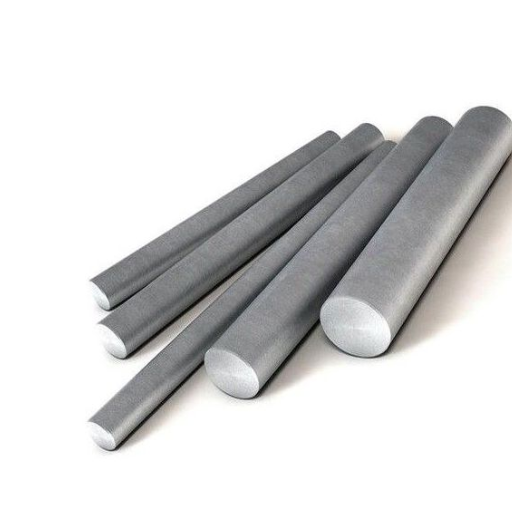
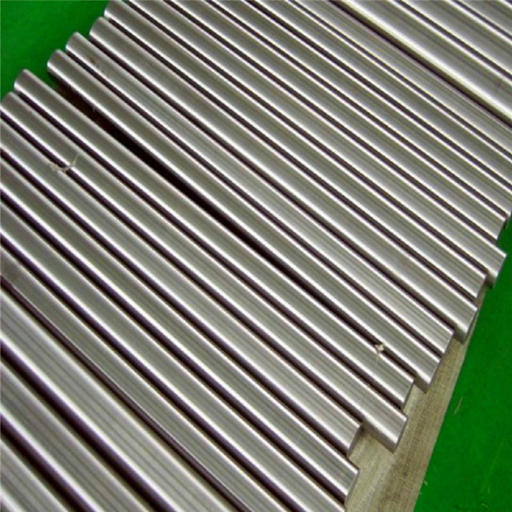
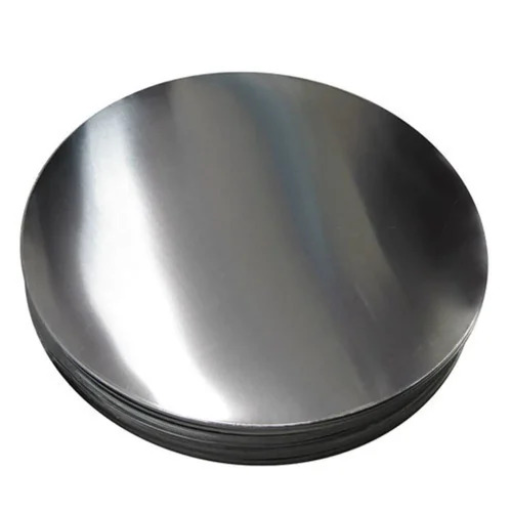
Zhonggongte produces Monel 400 and K500 in plate, bar, rod, and custom forgings. We hold stock in common sizes and can deliver solution-annealed or aged K500 to match your specification. Typical quotation response is within 24 hours.
FAQ: Monel 400 vs K500
Which is stronger, Monel 400 or Monel K500?
Monel K500 is significantly stronger. In the aged condition, K500 reaches approximately 1,050 MPa tensile strength and 790 MPa yield strength, roughly double the tensile and triple the yield of annealed Monel 400.
Is Monel K500 more corrosion resistant than Monel 400?
In most environments, no. Their corrosion resistance in seawater, hydrofluoric acid, and alkalis is nearly identical because they share the same nickel-copper matrix. Aged K500 may be slightly more susceptible to stress corrosion cracking in the most aggressive chloride or caustic media.
What is the price difference between Monel 400 and Monel K500?
As of 2026, Monel 400 typically ranges from 30−60/kg,whileMonelK500rangesfrom30−60/kg,whileMonelK500rangesfrom45-85/kg depending on form and condition. The K500 premium is usually 15-40% before accounting for heat treatment, machining, and welding re-aging costs.
Can Monel 400 and K500 be welded?
Monel 400 welds readily with nickel-copper filler and usually requires no post-weld heat treatment. Monel K500 can be welded, but welds normally require solution annealing and re-aging to restore full strength and hardness.
Is Monel K500 non-magnetic?
Yes. Monel K500 is essentially non-magnetic above about -93°C. That property makes it ideal for MWD/LWD drill collars, non-magnetic instrumentation, and naval applications where magnetic interference must be minimized.
What does UNS N04400 vs N05500 mean?
UNS N04400 is the unified numbering system designation for Monel 400. UNS N05500 is the designation for Monel K500. The numbers are used on mill certificates, specifications, and procurement documents worldwide.
When should I specify aged Monel K500?
Specify aged K500 when you need maximum strength, hardness, fatigue resistance, or wear resistance. Common examples are high-strength fasteners, pump shafts, drill collars, and springs.
What is NACE MR0175 compliance for Monel K500?
NACE MR0175 / ISO 15156-3 defines sour-service limits for K500, including maximum hardness and heat treatment requirements. Compliance is essential for oil & gas components exposed to hydrogen sulfide.
What are the Chinese equivalents of Monel 400 and K500?
There are no direct GB equivalents. In China, these alloys are commonly supplied to UNS/ASTM specifications and referred to as 蒙乃尔400 and 蒙乃尔K500.
Does Monel 400 work for pump shafts?
Monel 400 works for low-speed, moderate-load pump shafts in corrosive environments. For high-speed, high-torque, or fatigue-critical shafts, Monel K500 aged is usually the better choice.
Conclusion
Monel 400 and Monel K500 begin from the same corrosion-resistant nickel-copper base. The deciding factor is almost always mechanical. If the part sees static loads and the design is driven by seawater or chemical resistance, Monel 400 is usually the more economical and fabricable choice. If the part is rotating, highly stressed, non-magnetic, or sour-service qualified, Monel K500 pays for itself through strength and reliability.
The most expensive mistake isn’t choosing K500 when you need it; it’s choosing K500 when 400 would have done the job. Start with the failure mode, temperature, stress state, and welding constraints, then match the alloy to the application.
Ready to specify the right Monel alloy? Contact our metallurgical team with your operating temperature, media composition, chloride and H₂S levels, and mechanical requirements. We will return a material recommendation and quotation within 24 hours.