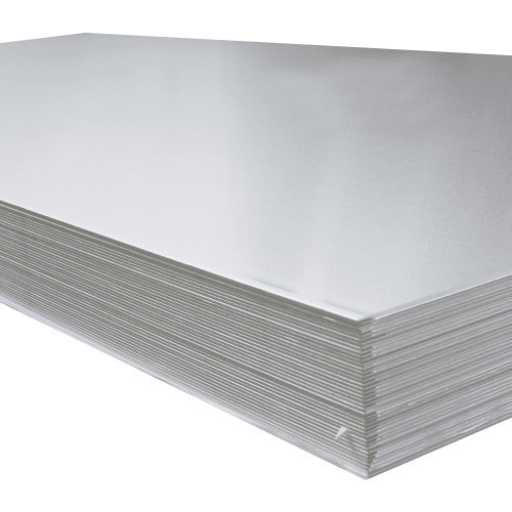
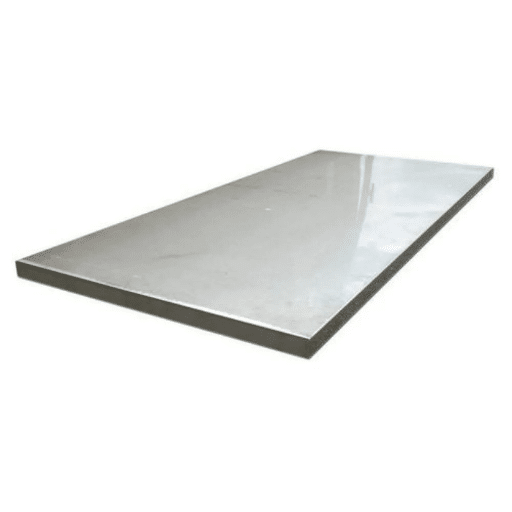
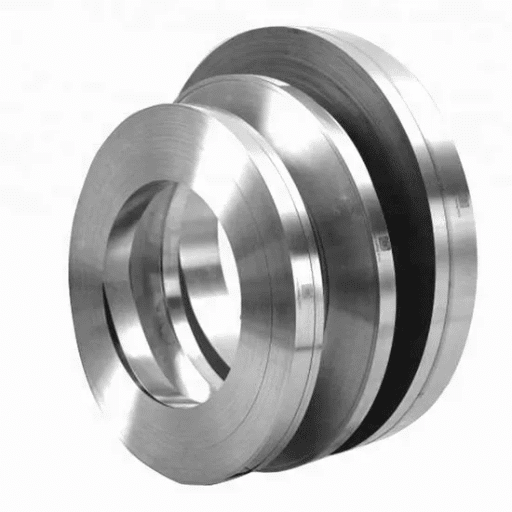
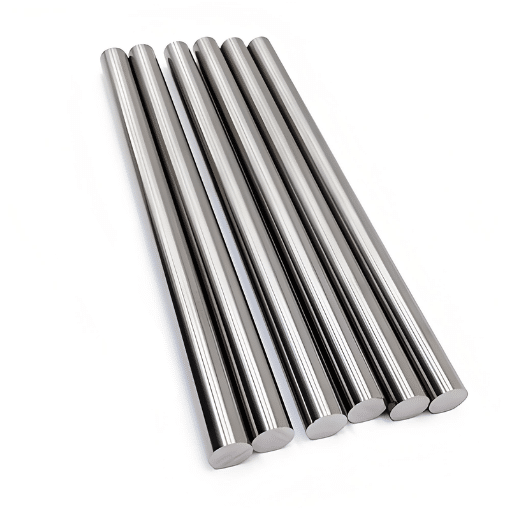
Nickel alloy vs stainless steel is a decision that separates routine procurement from catastrophic failure. Nickel alloys such as Inconel 625, Hastelloy C276, and Monel 400 outperform stainless steel above 600 °C, in chloride-rich environments, and under hydrogen exposure, but they cost 3 to 20 times more per kilogram upfront. The key is knowing when that premium pays for itself through longer service life, fewer shutdowns, and lower total cost of ownership.
In March 2024, a process engineer at a Louisiana refinery specified 316L stainless steel for a sulfuric acid heat exchanger because it cost one-third of Inconel 625. Eight months later, pitting corrosion perforated the tube sheet. The unplanned shutdown cost $340,000, eight times what Hastelloy C276 would have cost to install originally. That mistake repeats daily because procurement teams compare catalog prices, not lifecycle costs.
This article gives you the exact temperature thresholds, corrosion rate data, and TCO framework that engineering teams need to justify nickel alloy upgrades to procurement. You will learn the metallurgical differences, the 600 °C cutoff, real failure economics, and a decision matrix that tells you whether stainless steel, duplex, or a nickel superalloy is right for your application.
Key Takeaways
- The critical temperature threshold is approximately 600C: above this, stainless steel loses structural integrity while nickel alloys maintain creep resistance.
- 316L can fail in as little as 2 months in chloride-rich environments where Monel 400 or Inconel 625 survive decades.
- Nickel alloys cost 3-5 times more per kg upfront but often deliver lower 10-year TCO in severe service.
- 2026 hydrogen economy standards now mandate nickel alloy liners (Inconel 625) for 70 MPa storage systems.
- Chinese equivalents (GH4169, NS3304, GH3625) offer ASTM-matching performance at competitive pricing when sourced from VIM/ESR mills.
What Makes Nickel Alloys Different from Stainless Steel

Composition and Metallurgical Design
Stainless steels are iron-based alloys. Their corrosion resistance depends on a chromium-rich passive oxide layer (Cr2O3) that forms on the surface. Standard grades such as 304 contain 18-20% chromium and 8-10.5% nickel, per ASTM A240. 316L adds 2-3% molybdenum for chloride resistance, but the matrix remains iron-dominant.
Nickel alloys flip that formula. Inconel 625 (UNS N06625) contains 58% nickel minimum, 20-23% chromium, and 8-10% molybdenum. Hastelloy C276 (UNS N10276) runs 57% nickel, 14.5-16.5% chromium, and 15-17% molybdenum with tungsten added. Monel 400 (UNS N04400) is roughly 67% nickel and 30% copper.
The nickel matrix provides the foundation. Not iron.
This difference matters because nickel’s face-centered cubic crystal structure maintains ductility and toughness across a wider temperature range than iron’s body-centered or martensitic structures. When you need performance from cryogenic temperatures to 1,000 °C, the base metal itself must cooperate.
| Grade | Base | Ni % | Cr % | Mo % | Other Key Elements |
|---|---|---|---|---|---|
| SS 304 | Fe | 8-10.5 | 18-20 | 0 | Mn, Si, C |
| SS 316L | Fe | 10-14 | 16-18 | 2-3 | Mn, Si, C (0.03% max) |
| Inconel 625 | Ni | 58+ | 20-23 | 8-10 | Nb, Fe, Ti |
| Hastelloy C276 | Ni | 57+ | 14.5-16.5 | 15-17 | W, Co, Fe |
| Monel 400 | Ni | 63-70 | 0 | 0 | Cu 28-34, Fe, Mn |
Microstructure and Performance Mechanism
Stainless steel relies on a single defense: the passive Cr2O3 layer. Scratch it in a reducing acid, and the underlying iron matrix corrodes rapidly. That is why 316L fails in hydrochloric acid at any concentration. The passive film cannot reform in a reducing environment.
Nickel alloys deploy multiple defenses. The high nickel content resists both oxidizing and reducing conditions. Chromium provides oxidation resistance. Molybdenum and tungsten block pitting and crevice attack.
In precipitation-hardened grades such as Inconel 718 (GH4169), gamma-prime precipitates (Ni3Nb, Ni3Al) lock the crystal structure. The result? Creep resistance that no stainless steel can match.
For a complete overview of nickel alloy families and their metallurgical design, see our complete nickel-based alloy technical guide.
Mechanical and Temperature Performance: The 600 °C Threshold
Room Temperature Properties
At room temperature, the mechanical gap between stainless steel and nickel alloys is noticeable but not decisive. Annealed 316L delivers approximately 515 MPa tensile strength and 205 MPa yield strength. Inconel 625 annealed bar reaches 827-1034 MPa tensile and 414-758 MPa yield. That is roughly 1.6 to 2 times the strength, depending on heat treatment and form.
Hardness tells a similar story. 316L sits at 95 HRB. Inconel 625 annealed is 150-220 HV. The real differentiation, however, is not room-temperature strength. It is what happens when the temperature rises.
Elevated Temperature Performance
Here is the number that should guide every material specification: 600C.
At 600 °C, 316L stainless steel retains approximately 50% of its room-temperature tensile strength. By 800 °C, it is structurally useless for load-bearing applications. Oxidation scales form rapidly above 800 °C, and creep deformation begins at stresses below 100 MPa.
Inconel 625, by contrast, retains over 70% of its room-temperature strength at 800 °C. It resists creep to 900 °C and maintains an oxidation-resistant oxide scale to 1,000 °C. Hastelloy X and Inconel 718 operate routinely at 700-980 °C in gas turbine components.
Creep resistance is the hidden killer in high-temperature design. Stainless steels begin creeping at 500 °C under moderate stress. Nickel alloys resist creep to 900 °C because of solid-solution strengthening and precipitation hardening. A furnace component that sags 2 mm per year in 310 stainless steel will hold dimensional tolerance for a decade in Inconel 625.
Thermal expansion also differs. 316L expands at roughly 18 x 10^-6 /C. Inconel 625 expands at 12.8 x 10^-6 /C. Design mixed-metal assemblies without accounting for that difference, and you will create thermal stress at every heat cycle.
Cryogenic Performance
Both material families perform well at low temperatures, but nickel alloys extend further. 304 and 316L remain ductile to -196C, suitable for LNG service. Inconel 625 and 718 retain toughness to -253C, the realm of liquid hydrogen. For aerospace cryogenic tanks and hydrogen infrastructure, that margin matters.
Want to compare specific high-temperature grades? Our Inconel 625 vs 718 selection guide breaks down the creep, fatigue, and oxidation data for turbine applications.
Corrosion Resistance: Where Stainless Steel Fails
Chloride and Seawater Environments
In January 2024, a desalination plant on the Gulf Coast installed 316L piping for ambient seawater intake. Within 60 days, through-wall pitting appeared at weld heat-affected zones. The plant shut down for 3 weeks. The root cause: chloride-induced pitting at 25 °C, well below the 60 °C threshold where stress corrosion cracking (SCC) usually dominates.
Monel 400, by contrast, shows a corrosion rate of 0.002-0.005 mm/year in flowing seawater. 316L shows 0.01-0.02 mm/year under identical conditions. That 4x to 10x difference translates to decades of service life versus months.
SCC is the more dangerous failure mode. 316L becomes vulnerable to chloride SCC above 60C when tensile stress is present, as documented by NACE MR0175/ISO 15156. Inconel 625 is effectively immune to chloride SCC across its entire operating temperature range. That is why offshore risers, subsea connectors, and marine propulsion shafts increasingly specify Monel 400 plate or Inconel 625 rather than even super-austenitic stainless steels. For a detailed Monel vs stainless steel marine comparison, our Monel guide covers seawater corrosion rates and SCC immunity data.
Strong Acids (HCl, H2SO4, H3PO4)
316L fails rapidly in hydrochloric acid at any concentration and temperature. The passive layer dissolves. The iron matrix attacks at rates measured in millimeters per month.
Hastelloy C276, by contrast, shows a corrosion rate of just 0.25 mm/year in boiling 20% HCl. That is not incremental improvement. It is the difference between a 6-month replacement cycle and a 20-year service life.
For sulfuric acid, 316L is limited to dilute solutions below 50 °C. Hot, concentrated sulfuric acid demands Hastelloy C276 plate or Hastelloy C22. In any Hastelloy vs 316 stainless steel comparison for strong acid service, the corrosion rate data make the choice obvious. Phosphoric acid production, wet-process fertilizer plants, and acid regeneration loops all make the upgrade from stainless steel to Hastelloy because failure is not an option.
Our Hastelloy C276 corrosion resistance data includes detailed corrosion rate tables for HCl, H2SO4, and chlorine dioxide environments. For independent verification, Haynes International publishes comprehensive Hastelloy alloy performance data for process engineers evaluating acid service grades.
Hydrogen Service (2026 Critical Update)
Hydrogen embrittlement is reshaping material selection in 2026. New COPV (composite overwrapped pressure vessel) standards for 70 MPa hydrogen storage now require nickel alloy liners. The reason is data-driven.
After 1,000 hours of exposure at 35 MPa and 200 °C, 304L retains 60-70% of its original ductility. Inconel 625 retains 92%. At 70 MPa, the gap widens.
Hydrogen atoms permeate steel grain boundaries. They cause intergranular fracture. Nickel’s crystal structure resists that permeation. So does the stabilizing effect of niobium in 625.
For hydrogen refueling stations, electrolyzer stacks, and ammonia cracking units, the upgrade from 316L to Inconel 625 round bar is no longer optional. It is codified in design standards.
Oxidizing vs Reducing Environments
Stainless steel excels in oxidizing environments where the Cr2O3 layer can form and remain stable. It fails in reducing acids, high-chloride reducing conditions, and mixed oxidizing-reducing streams. Nickel alloys bridge that gap. Their nickel-chromium-molybdenum chemistry resists both oxidation and reduction, making them the default choice for chemical process streams that vary in redox potential.
| Environment Type | Stainless Steel Performance | Nickel Alloy Performance | Recommended Upgrade |
|---|---|---|---|
| Oxidizing acids (nitric, chromic) | Good (304/316L) | Excellent | Usually not required |
| Reducing acids (HCl, dilute H2SO4) | Poor to unacceptable | Excellent (C276, C22) | Mandatory |
| Chloride + elevated temp + stress | Vulnerable to SCC | Immune (625, C276) | Mandatory above 60C |
| Seawater / marine submersion | Moderate to poor | Excellent (Monel 400, 625) | Recommended for critical |
| Hydrogen gas (35-70 MPa) | Embrittlement risk | High resistance (625) | Mandatory per 2026 codes |
| Oxidation >800C | Rapid scaling | Stable oxide (625, X, 718) | Mandatory |
Ready to see how the right alloy pays for itself? Submit your operating conditions, and our metallurgical engineers will recommend the optimal grade within 24 hours, complete with corrosion rate data and TCO projections.
Nickel Alloy vs Stainless Steel Cost: Upfront vs Lifecycle TCO

Material Cost Comparison (2026 Pricing)
There is no escaping the sticker shock. Nickel alloys cost significantly more per kilogram than stainless steel. Current market pricing reflects LME nickel volatility, specialized melting requirements, and lower production volumes.
| Material | USD/kg (approx.) | USD/ton (approx.) | Relative to 316L |
|---|---|---|---|
| SS 304 | $2.60-2.80 | $2,600-2,800 | 0.7x |
| SS 316L | $3.80-4.20 | $3,800-4,200 | 1.0x (baseline) |
| Duplex 2205 | $5.50-6.50 | $5,500-6,500 | 1.5x |
| 904L / 254 SMO | $8.00-10.00 | $8,000-10,000 | 2.2x |
| Inconel 625 | $33-45 | $33,000-45,000 | 8-10x |
| Hastelloy C276 | $55-85 | $55,000-85,000 | 15-20x |
| Monel 400 | $25-35 | $25,000-35,000 | 7-8x |
Fabrication and Welding Cost Differences
Upfront material cost is only part of the story. Nickel alloys work-harden rapidly during machining, requiring slower speeds and more frequent tool changes. Welding demands specialized filler metals such as ERNiCrMo-3 or ERNiCrMo-4, restricted heat input, and careful interpass temperature control. Labor hours per kilogram run 20-40% higher than for stainless steel.
However, these fabrication premiums are one-time costs. If the component lasts 15 years instead of 2, the fabrication premium amortizes to near zero.
Lifecycle Cost (TCO) Framework
Total cost of ownership is where the stainless steel vs nickel alloy cost debate resolves. When procurement teams compare only the material price, they miss the full picture. Use this formula:
TCO = (Material Cost + Fabrication Cost + Installation Cost + Downtime Cost + Maintenance Cost) / Service Life
Consider the Louisiana refinery case. The 316L heat exchanger tubes cost 12,000.Installationcost12,000.Installationcost18,000. Eight months later, failure triggered a $340,000 shutdown.
Replacement with identical 316L would have been required every 8-12 months in that sulfuric acid service.
The Hastelloy C276 alternative would have cost 85,000inmaterialand85,000inmaterialand28,000 in specialized welding. Total installed: $113,000. Service life: 15+ years. No shutdowns.
Over 10 years, the C276 choice saved over $400,000.
For marine pump shafts, the math is similar. A 316L shaft requiring replacement every 3 years versus a Monel 400 shaft lasting 20 years produces a TCO advantage for Monel even at 7x the material cost. When failure means shutting down a $2 million per day offshore platform, the upgrade decision becomes obvious.
The rule of thumb: When projected failure cost plus downtime exceeds 3 times the material cost differential, nickel alloy is the cheaper choice. Not the more expensive one. The cheaper one.
Nickel Alloy vs Stainless Steel: Application Decision Matrix
Choose Stainless Steel When
- Operating temperature stays below 600C continuously
- Chemical environment is mild (no strong acids, chlorides below 100 ppm)
- Application is non-critical, and replacement is easy
- Budget constraints are absolute, and failure consequences are low
- Application involves food processing, architectural elements, or general industrial service
For most atmospheric, freshwater, and low-temperature applications, stainless steel is the right choice. It is not inferior. It is optimized for a different operating envelope. Our stainless steel grade selection guide covers the full range from 304 to super-austenitic grades.
Upgrade to Nickel Alloy When
- Continuous operating temperature exceeds 600 °C
- Chloride concentration exceeds 100 ppm, combined with tensile stress and temperature above 60 °C
- Process stream contains hydrochloric acid, hot sulfuric acid, or phosphoric acid
- Component operates in seawater or marine submersion with no tolerance for through-wall failure
- Hydrogen service above 35 MPa, especially under the new 2026 COPV standards
- Calculated failure cost (downtime + replacement + safety) exceeds 3x the material premium
Industry-Specific Recommendations
| Industry | Typical Upgrade Path | Driver |
|---|---|---|
| Chemical Processing | 316L to Hastelloy C276 / C22 | Hot concentrated acids, variable redox |
| Oil and Gas (Sour Service) | 316L to Inconel 625 / Incoloy 825 | H2S + chlorides, NACE MR0175 compliance |
| Marine / Offshore | 316L to Monel 400 / Inconel 625 | Seawater SCC, biofouling, cathodic protection |
| Aerospace | SS 347 to Inconel 718 / GH4169 | Creep + oxidation at 700C+, fatigue resistance |
| Hydrogen Energy | 316L to Inconel 625 | 70 MPa embrittlement resistance, 2026 codes |
| Power Generation (FGD) | SS 310 to Inconel 625 / Hastelloy X | Wet flue gas, chloride carryover, 180-220 °C |
For sour gas applications, our Incoloy 825 for sour gas service guide explains when to choose 825 versus 625 for H2S and chloride combinations. For a direct Inconel vs stainless steel performance comparison in high-temperature turbine service, see our creep and oxidation data tables.
Sourcing Nickel Alloys from China
When Upgrading, Source Smart
Once the engineering decision favors nickel alloy, procurement faces a second challenge: sourcing certified material at a viable price. Chinese manufacturers with VIM (vacuum induction melting) and ESR (electroslag remelting) capability produce nickel alloys that match ASTM and AMS specifications at competitive global pricing.
Key Chinese equivalents to know:
- GH4169 matches Inconel 718 (UNS N07718)
- GH3625 matches Inconel 625 (UNS N06625)
- NS3304 matches Hastelloy C276 (UNS N10276)
- GH3128 is a high-temperature nickel alloy for furnace and turbine applications
Verification is non-negotiable. Demand OES (optical emission spectrometry) verification of nickel, chromium, and molybdenum content. Request EN 10204 3.1 or 3.2 certificates for export projects. Verify mechanical properties by tensile testing per ASTM B446 or GB/T 228. For guidance on when to use nickel alloy instead of stainless steel in sour service or hydrogen applications, refer to the industry-specific decision matrix earlier in this guide.
Lead Time and Pricing Volatility
Nickel alloy lead times run 6-14 weeks from mill order, compared to 2-4 weeks for standard stainless steel. The reason is lower production volume and the additional VIM/ESR cycle. Stock programs from manufacturers such as Jiangsu Zhonggongte reduce this to 1-2 weeks for common plate, bar, and pipe sizes.
LME nickel price volatility in 2026 adds complexity. Goldman Sachs raised their average nickel price forecast to $17,200 per tonne, up 16% year-over-year, driven by Indonesian mining restrictions. Quote validity is typically 24-72 hours for nickel alloys. Lock pricing when you can.
VIM/ESR material carries a 15-25% premium over standard AOD-refined nickel alloys. For critical rotating components, pressure vessels, and aerospace applications, that premium is justified by cleaner chemistry, lower inclusion content, and superior fatigue life.
Fabrication and Weldability Considerations
Machinability
Stainless steel machines predictably with standard carbide tooling. 316L is slightly gummier than 304 but poses no special challenges. Nickel alloys work-harden almost instantly under the cutting tool.
Machining Inconel 625 requires sharp inserts, rigid setups, and speeds roughly 30-50% lower than for stainless steel. Tool life drops 40-60%.
The workaround is to rough machine in the annealed condition, solution-treat if precipitation hardening is required, and finish machine to final tolerance. Water-jet and EDM cutting avoid work-hardening entirely and are popular for nickel alloy shapes.
Welding Nickel Alloys
Stainless steel welding is straightforward. 316L uses ER316L filler, standard TIG or MIG parameters, and minimal post-weld heat treatment for most applications. Nickel alloys demand discipline.
Key rules for welding Inconel 625 or Hastelloy C276:
- Use matching filler wire: ERNiCrMo-3 for 625, ERNiCrMo-4 for C276
- Keep heat input low: stringer beads, no weaving
- Control interpass temperature below 150 °C
- Clean thoroughly before welding: nickel alloys are sensitive to sulfur and lead contamination
- No post-weld heat treatment required for most C276 applications, but solution annealing may be specified for critical pressure vessels
Dissimilar Metal Welding
Transition joints between stainless steel and nickel alloy are common in process plants. Use ERNiCr-3 or ERNiCrMo-3 filler, controlled heat input, and proper joint design to minimize dilution. The nickel-rich filler accommodates the metallurgical mismatch and prevents hot cracking.
FAQ: Nickel Alloy vs Stainless Steel
Is nickel alloy stronger than stainless steel?
At room temperature, Inconel 625 delivers roughly 1.6 to 2 times the tensile strength of 316L. The bigger difference is at high temperatures. At 800 °C, 625 retains over 70% of its room-temperature strength while 316L has lost 50% and begun creeping. For creep and fatigue resistance, nickel alloys outperform stainless steel by an even wider margin.
Can nickel alloy rust?
Nickel alloys do not rust. They contain minimal iron, typically under 5%. They can, however, corrode in extreme environments.
Monel 400 shows a slight attack in strongly oxidizing acids. Inconel 625 can suffer from caustic stress corrosion cracking in concentrated NaOH above 300 °C. Match the alloy to the specific environment.
What is the price difference between nickel alloy and stainless steel?
Inconel 625 costs 8-10 times more per kilogram than 316L. Hastelloy C276 costs 15-20 times more. Monel 400 costs 7-8 times more.
In severe service, the 10-year TCO often favors nickel alloys. Stainless steel requires multiple replacements, maintenance events, and associated downtime. When failure costs are included, nickel alloys frequently become the cheaper option.
When should I upgrade from 316L to Inconel 625?
Upgrade when any of these conditions apply: continuous temperature above 600 °C; chloride concentration above 100 ppm combined with tensile stress and temperature above 60 °C; exposure to H2S in sour service; hydrogen gas above 35 MPa; or any hydrochloric acid contact. Also, upgrade when the cost of one unplanned shutdown exceeds 3 times the material premium.
Can I weld nickel alloy to stainless steel?
Yes. Use ERNiCr-3 or ERNiCrMo-3 filler wire, keep heat input low with stringer beads, and control interpass temperature. Proper joint preparation and cleanliness are critical because nickel alloys are sensitive to sulfur contamination from cutting oils or marking pens.
Is duplex 2205 a good intermediate step from 316L?
Duplex 2205 is an excellent intermediate option for chloride SCC resistance at 1.5x the cost of 316L. It offers roughly twice the yield strength and superior resistance to stress corrosion cracking in chloride environments. However, duplex grades are limited to temperatures below 300 °C. Above that, you need a nickel alloy.
What Chinese grade replaces Inconel 625?
GH3625 is the Chinese national standard equivalent to Inconel 625 (UNS N06625). For aerospace applications, GH4169 replaces Inconel 718. Always verify by OES spectrometry and mechanical testing rather than relying on grade names alone. Sourcing from mills with VIM/ESR capability ensures the cleanliness standards that critical applications demand.
How long does nickel alloy last compared to stainless steel?
In mild environments, both can last decades. In severe service, the gap is dramatic.
316L in hot sulfuric acid may last 6-12 months. Hastelloy C276 in the same service lasts 15-25 years. In seawater, 316L can pit through in 2 months. Monel 400 shows zero measurable attack after 12 years.
The lifecycle difference is not incremental. It is an order of magnitude.
Why do nickel alloys cost so much more?
Three factors drive the premium. First, raw materials: nickel content is 50-70% versus 8-14% in stainless steel, and nickel is a volatile commodity. Second, melting technology: VIM/ESR remelting costs significantly more than AOD refining. Third, volume: global nickel alloy production is a fraction of stainless steel output, so economies of scale are lower, and tolerances are tighter.
Conclusion
Nickel alloy vs stainless steel is not a contest with one winner. Stainless steel is the correct choice for roughly 80% of industrial applications. It is cost-effective, widely available, and easy to fabricate. The problem arises when it is specified for the other 20%: environments where temperature, chemistry, or stress push it beyond its design envelope.
The three non-negotiable upgrade triggers are clear. Above 600 °C, stainless steel loses structural integrity while nickel alloys maintain strength and resist creep. In chloride environments above 60 °C with tensile stress, 316L is vulnerable to catastrophic SCC, while Inconel 625 is immune. In hydrogen service above 35 MPa, 2026 standards now mandate nickel alloy liners because the embrittlement risk is too high for stainless steel.
The TCO framework reframes the cost discussion. Yes, Hastelloy C276 costs 15-20 times more per kilogram than 316L. But when one unplanned shutdown costs $340,000, the alloy upgrade becomes the cheapest option on the table. Smart procurement teams compare 10-year lifecycle costs, not catalog prices.
At Jiangsu Zhonggongte, we produce certified nickel alloys including GH3625, GH4169, NS3304, and Monel 400 with full VIM/ESR capability, OES spectral verification, and EN 10204 3.1/3.2 documentation. Special Metals Corporation, the original developer of Inconel alloys, publishes Inconel alloy technical datasheets that confirm the mechanical and corrosion data referenced in this guide. Submit your operating conditions — temperature, media, stress level, and design life — and our metallurgical engineers will recommend the right alloy within 24 hours. Whether that is stainless steel, duplex, or a nickel superalloy, you will get the technical justification and competitive pricing your project needs.