Last updated:
Incoloy 825 vs Inconel 625 selection starts with the fluid, temperature and material condition. Consider 825 for reducing-acid duties. Evaluate 625’s higher-molybdenum chemistry for demanding chloride exposure. Neither is a universal winner, and neither description approves an alloy for your equipment.
Two quotes may look alike because both name nickel alloys. Yet they may cover different heat treatments, tests or fabrication work. Don’t compare prices until you know what each offer includes.
This guide explains how chemistry, corrosion evidence, mechanical data and the finished weld change the decision. It also gives you a purchase checklist for comparing like-for-like proposals without relying on generic temperature ceilings or undated price tables.
Key takeaways
- Compare the full fluid and temperature envelope, including contaminants, cleaning and stagnant zones.
- Treat typical properties, guaranteed test results and design allowable stresses as separate kinds of evidence.
- A 625-type filler on 825 does not make the base material alloy 625.
- Check sour-service acceptance against the governing standard, edition and delivered condition.
- Match product form, specification, inspection and delivery scope before comparing prices.
Incoloy 825 vs Inconel 625: chemistry and material identity

Incoloy 825 is a nickel-iron-chromium alloy with molybdenum, copper and titanium additions. Inconel 625 uses a nickel-chromium-molybdenum-niobium system. Their UNS identities are N08825 and N06625, respectively; similar trade names do not make the materials interchangeable.
The following selected limits come from Table 1 of the Special Metals 825 bulletin and Special Metals 625 bulletin. Values are weight percent, not an analysis of a particular heat.
| Element | Incoloy 825 | Inconel 625 |
|---|---|---|
| Nickel | 38.0–46.0 | 58.0 minimum |
| Chromium | 19.5–23.5 | 20.0–23.0 |
| Molybdenum | 2.5–3.5 | 8.0–10.0 |
| Copper | 1.5–3.0 | Not listed in this source’s limiting table |
| Titanium | 0.6–1.2 | 0.40 maximum |
| Niobium plus tantalum | Not listed in this source’s limiting table | 3.15–4.15 |
| Iron | 22.0 minimum | 5.0 maximum |
“Not listed” does not mean an analytically verified zero. The table also omits other controlled elements for clarity; use the complete product specification when checking a certificate.
What the additions tell you
Special Metals connects 825’s nickel, molybdenum and copper with resistance to reducing environments, including sulfuric and phosphoric acids. Its titanium addition, with appropriate heat treatment, helps stabilize the alloy against sensitization to intergranular corrosion. In 625, molybdenum and niobium contribute to solid-solution strengthening; niobium is not simply a substitute for 825’s titanium.
These differences explain why the alloys deserve separate assessment. They do not establish a corrosion rate, a service life or a fixed price premium. For more single-grade detail, see our guide to 825 composition and properties.
Before requesting a material comparison, put the fluid composition, operating envelope and required product form in the enquiry. That gives an engineering or sales team a defined question to address.
Compare corrosion in the actual acid or chloride environment
A useful comparison describes both the exposure and the failure mode. Uniform metal loss, localized pitting, crevice attack and stress-corrosion cracking are different questions. Evidence for one cannot automatically answer the others.
Sulfuric and phosphoric acid: check the concentration and impurities
825’s copper-bearing chemistry makes it a candidate for reducing-acid duties. That is a screening reason, not proof that it always outperforms 625 in sulfuric or phosphoric acid. The producer literature also describes acid resistance for 625; a simple “825 for acids, 625 for chlorides” rule loses too much information.
Ask for data that match acid concentration, temperature and contaminants. Is the fluid a clean laboratory solution or a mixed process stream? Does a recycle stream change composition during operation?
Record normal operation, start-up, cleaning and upsets separately. One nominal temperature cannot describe all those conditions.
The Special Metals aqueous-corrosion handbook presents tests under stated conditions. Read the medium, exposure period and specimen condition together. Does the test match your process? A result for one solution is not a universal acid rating or an equipment-life guarantee.
Seawater, brine and stagnant crevices
625’s higher molybdenum content and producer-reported resistance to localized corrosion make it worth evaluating for demanding chloride environments. That does not mean immunity. Nor should 825 be dismissed as having no seawater applications: its producer bulletin includes seawater-related uses.
Describe flow and stagnation, deposits, oxygen conditions, gasket crevices and the cleaning regime. The reader reviewing the materials proposal needs to know whether the exposed surface is freely washed or includes shielded joints. A bulk chloride value alone does not describe that geometry.
Illustrative scenario: An exchanger enquiry lists the same bulk fluid temperature for two possible designs. One proposal identifies only the flowing tube-side fluid. The other also identifies stagnant gasket crevices and the cleaning chemicals.
Before ranking either alloy, the buyer asks both bidders to assess the same complete exposure. This example identifies missing inputs; it reports no corrosion test or successful service outcome.
What PREN and CPT can answer
The pitting resistance equivalent number (PREN) summarizes selected chemistry through a formula. It can inform screening, but it does not describe the complete alloy, fabrication history or equipment exposure. A higher calculated value is not a seawater operating approval.
Critical pitting temperature (CPT) also needs its test method and medium attached. The VDM 625 data sheet includes ferric-chloride test results. Those results cannot be relabeled as safe operating temperatures for seawater.
Use the 825 corrosion resistance guide for the next layer of single-alloy discussion. For selection, request applicable producer data or an actual-medium assessment that addresses the component’s exposure and acceptance criteria.
Strength and temperature depend on product condition
A room-temperature strength number is not a pressure-design allowable stress. First ask whether the number is a typical producer value, a specified minimum or a result from the offered material. Then check form, dimensions, heat treatment and test temperature before calculating any percentage difference.
Compare the same property basis
The Special Metals 825 bulletin presents room-temperature tensile properties for different product conditions. VDM’s 625 sheet also distinguishes conditions and product-related property requirements. A universal table assigning one tensile and yield value to each alloy conceals that variation.
Illustrative scenario: A buyer receives two plate proposals with different yield values. One figure comes from a typical data-sheet table; the other is a guaranteed minimum in the purchase specification. The buyer requests the producer, delivery condition and acceptance basis for both. Only then can the engineering team decide whether the values answer the same design question.
Do not convert a higher tensile figure directly into a thinner wall. Wall design also needs the applicable construction code, design temperature, allowable stress and other component requirements. A quotation is not a substitute for that calculation.
Thermal exposure is not one universal ceiling
Special Metals warns that exposure of 825 above about 540°C can cause phase formation that reduces ductility and impact strength. That warning concerns microstructural change; it is not an oxidation cliff or a rule that automatically selects 625 above that temperature.
VDM distinguishes soft-annealed grade 1 625 for wet-corrosion applications from solution-annealed grade 2 for high-temperature applications. Those conditions must remain attached to any property comparison. The applicable construction code determines the relevant design limits. Neither a broad producer service range nor an oxidation statement supplies a universal pressure rating.
If the question instead concerns a different alloy family comparison, our 625 versus 718 guide covers that separate intent.
For mass estimates, the Special Metals physical-property tables give densities of 8.14 g/cm³ for 825 and 8.44 g/cm³ for 625. Use those as source-specific reference values, not a reason to assume identical component dimensions or installed weights.
Sour service requires an edition and condition check
A trade name cannot answer a sour-service acceptance question. ISO 15156-3 addresses cracking resistance in H₂S-containing oil and gas production environments. Its scope includes corrosion-resistant alloys and other alloys. It does not replace an assessment of general or localized corrosion.
Cracking resistance and corrosion loss are separate checks
An alloy may satisfy a defined cracking-resistance requirement without that conclusion establishing an acceptable pitting rate or uniform metal-loss rate. Keep these assessments separate in the technical review. Likewise, a producer’s list of sour-service applications does not approve every delivered condition for every well.
Avoid accepting a proposal that describes 625 as “unlimited” or 825 as “moderate service” without identifying the controlling requirements. These labels hide the environmental and material conditions that the responsible engineer must verify.
What the enquiry must identify
For a sour-service review, ask the project team and bidder to identify:
- The governing MR0175/ISO 15156 edition and project requirements.
- The exact material identity, product form and delivered condition.
- The applicable material group or table, its notes and any required acceptance evidence.
- The relevant service inputs, including temperature, H₂S partial pressure, chlorides and pH.
- How cold work, welding and the finished component are addressed by the acceptance basis.
This checklist organizes the review; it does not reproduce licensed material tables or issue an acceptance envelope. If a supplier states compliance, ask which requirement the offered material meets and what documentation supports that statement. Do not infer acceptance from the alloy name or a generic certificate heading.
Record two separate conclusions in the selection decision:
- Does the specified material condition meet the governing cracking requirements?
- Is its corrosion performance acceptable in the actual process medium?
Resolve both before purchase. A document that answers only one question leaves the other open.
Welding and fabrication: compare the finished joint

Both alloys have producer welding guidance, but “weldable” does not mean that every process, filler or finished joint is suitable. Compare base-metal condition, filler classification, procedure qualification and final surface condition as separate parts of the proposal.
A 625-type filler does not change the base alloy
The VDM 825 data sheet recommends FM 625, classified ERNiCrMo-3, for its listed TIG/MIG and bare-electrode route. VDM also lists this filler classification in its 625 welding guidance. On 825, this is an over-alloyed filler route, rather than a composition-matching 825 deposit.
Using 625-type wire does not turn an 825 tube, plate or complete assembly into alloy 625. The finished joint still contains the original base material. Continue with the Incoloy 825 welding guide for the procedure questions specific to that alloy.
Illustrative scenario: Two fabrication bids name ERNiCrMo-3, but one uses 825 base plate and the other uses 625. The buyer separates the base-metal specification, filler certificate and qualified procedure in the bid review. A shared consumable name does not establish equivalent construction or corrosion performance. No weld test or field result is implied by this example.
Routine welding and repair history are different
VDM’s November 2020 825 guidance states that neither preweld nor postweld heat treatment is required under its standard welding guidance. It separately addresses repair of material with prior service exposure. Do not turn a repair-related treatment statement into a routine requirement for every new 825 weld.
Record prior thermal exposure and subsequent forming or heat treatment when they apply. The welding engineer should determine the procedure for the actual material, joint and service. A comparison article cannot supply a qualified welding procedure specification.
Include the fabrication scope in the quote
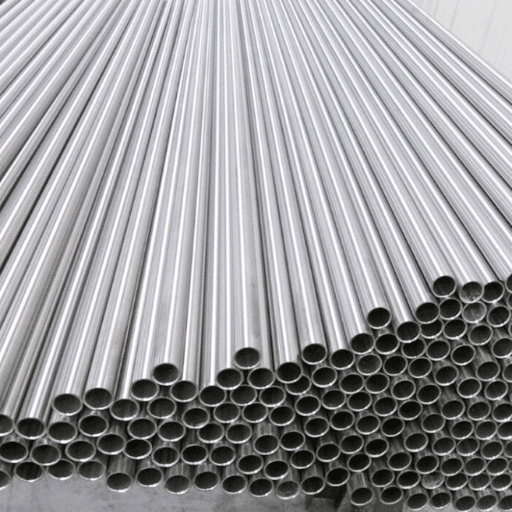
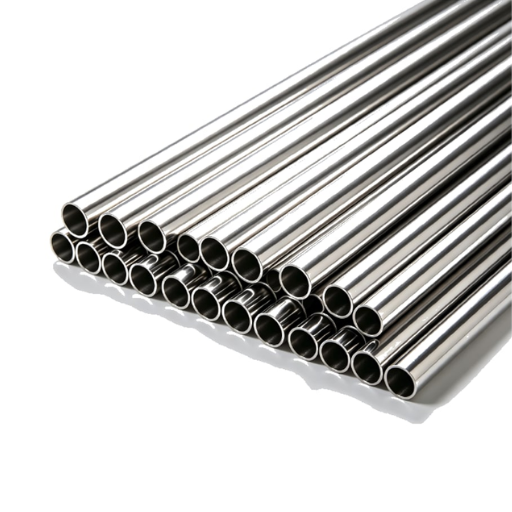
Ask whether a price covers raw stock, cut blanks or finished components. Identify forming, machining, welding, cleaning and agreed examination before comparing bids. Tooling and cutting parameters need the actual operation and material condition; a universal instruction to use one insert type or speed is not enough. For pipe enquiries, the nickel-alloy pipe selection guide offers a separate starting point for product-form questions.
For a fabrication enquiry, provide the drawing, base-metal grade, filler requirement and qualification basis as separate fields. That makes the proposed scope reviewable without promising a particular shop capability or weld outcome.
Cost comparison, purchase requirements and selection checklist

The chemistry table shows that 625 contains more nickel and molybdenum, plus its specified niobium-plus-tantalum addition. Those differences are relevant cost inputs. They do not establish a fixed percentage premium, a current price per kilogram or a guaranteed saving from selecting 825.
Match the quotation basis
A useful price comparison fixes the required form, size, quantity, condition and acceptance scope. It also records currency, delivery terms and validity date. Without those fields, a lower price may simply represent a different product or omitted work.
Use this blank comparison as an RFQ template, rather than treating a generic price table as a live offer:
| Requirement | Information to put on both enquiries |
|---|---|
| Material | UNS identity and any approved alternative |
| Form and dimensions | Plate, bar or tube; dimensions and tolerances |
| Quantity | Mass or pieces, including cut lengths where relevant |
| Delivery condition | Specified heat treatment and required final condition |
| Product standard | Applicable form specification and edition |
| Inspection | Agreed tests, acceptance criteria and certificate type |
| Fabrication | Cutting, forming, machining, welding and finishing scope |
| Commercial basis | Currency, delivery terms, required date and quote validity |
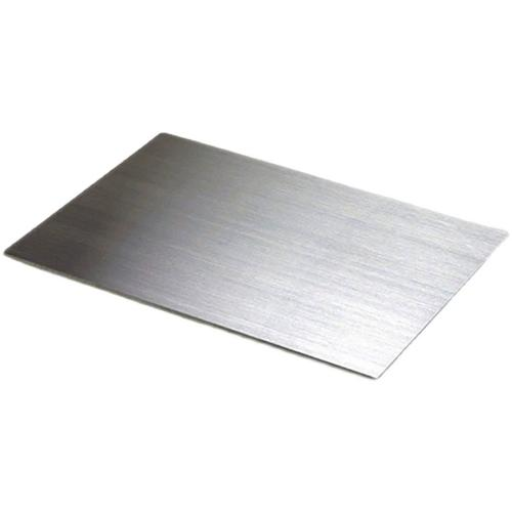
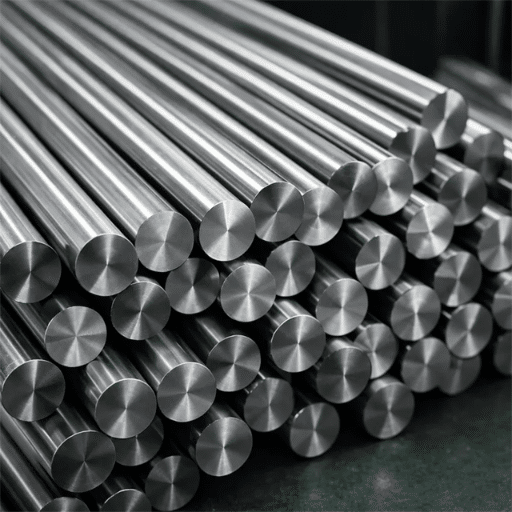
Bar, flat products and seamless or welded tube do not share one universal product specification. The producer bulletins list form-dependent specifications; confirm the edition and requirements for the actual order. See 825 specifications by product form for that distinction.
Specify the required certificate type and inspection plan instead of assuming every order needs the same test package. A chemical analysis does not by itself establish product-form compliance, heat-treatment condition or completed-component acceptance.
To compare offers, work across the RFQ table row by row. If one price covers raw plate and the other finished cut blanks, ask each bidder to quote the same finished dimensions and scope. Keep cutting charges, agreed tests and transport visible. Don’t calculate a saving from prices that still describe different deliverables.
Next, mark each requirement as included, excluded or awaiting clarification. Assign each open technical question to the responsible reviewer. For example, a missing heat-treatment condition goes back for clarification; it is not a reason to assume the most favorable property table. Keep the technical exceptions with the commercial comparison so a low total cannot conceal an unresolved requirement.
Once the offers cover the same scope, compare their validity dates and delivery basis. Ask for an updated offer if those no longer match the planned order. This method uses actual bidder information; it does not require an invented market price or a promised lifecycle saving.
Treat cross-references as a starting point
Designation cross-references help identify candidates; they do not authorize substitution. Use our 825 equivalent-designation guide to frame the discussion, then verify the proposed material against the governing product specification and project requirements. Do not replace a specified alloy solely because a quotation lists a similar local designation.
Conditional selection matrix
| Main decision | Useful next action |
|---|---|
| Reducing-acid equipment | Evaluate 825 and alternatives against the actual concentration, impurities and temperature |
| Demanding chloride exposure | Evaluate 625’s localized-corrosion evidence against the geometry and full exposure |
| Elevated-temperature component | Verify product condition, thermal history and code-based design data |
| Sour-service component | Check the governing edition, material requirements and corrosion assessment separately |
| Apparent purchase saving | Normalize technical and commercial scope before comparing totals |
The practical result is a documented selection basis, not a grade chosen by slogan. Keep material acceptance, fabrication acceptance and commercial comparison visible as separate decisions.
Incoloy 825 vs Inconel 625: common selection questions
Can 825 replace 625 in seawater?
Not from the alloy names alone. Review temperature, stagnation, crevices, deposits and the required corrosion performance. 825 has seawater-related applications in producer literature, but that does not prove suitability as a replacement in a specific 625 design. A proposed substitution needs an application and specification review.
Is 825 always better in sulfuric acid?
No. Its copper-bearing chemistry supports consideration in reducing-acid duties, but concentration, temperature and impurities change the comparison. Ask for evidence matching the actual medium rather than a single excellent/good rating.
Why use 625-type filler on 825?
It is a producer-recommended route for specified welding processes. The consumable and base metal perform different roles. Identify both, and verify the finished joint through the applicable qualified procedure; a filler designation does not reclassify the whole component.
What makes two quotations comparable?
Matching grade, product form, dimensions, condition, standard, inspection and commercial basis. Sour-service claims also need the governing edition and condition-specific acceptance evidence. A higher-priced alloy is not automatically approved, and a cheaper offer is not automatically equivalent.
Preparing an alloy enquiry? Send the application medium, full temperature envelope, drawing or dimensions, quantity and required specification with your material request. Identify unresolved selection questions explicitly so the proposal can address them before a purchase decision.