The 15-5PH vs 17-4PH comparison starts with a surprising fact: both grades are martensitic precipitation-hardening (PH) stainless steels that deliver similar peak hardness and strength. The practical difference is microstructural control: 15-5PH is a refined, ferrite-free derivative of 17-4PH that offers better transverse toughness, ductility, and property uniformity in thick sections. Choose 15-5PH for fatigue-critical aerospace and defense components; choose 17-4PH for cost-sensitive industrial shafts, valves, and fasteners where transverse loading is less severe.
Picture a design team finalizing an aerospace fitting. They specified 17-4PH H900 to save cost, reasoning that both grades reach the same hardness window. During qualification testing, transverse toughness fell below the customer’s minimum, forcing a last-minute switch to 15-5PH H1025 and delaying first article inspection by six weeks. That single specification mistake cost more than the material premium would have.
This 15-5PH vs 17-4PH guide gives you condition-by-condition mechanical data, a clear cost framework, and a sourcing checklist so you specify the right grade the first time. You will learn how chemistry drives microstructure, how each H-condition affects hardness, when the 15-5PH premium is justified, and what to verify on a mill test report (MTR) when buying from Chinese mills.
Key Takeaways
- 15-5PH (UNS S15500) and 17-4PH (UNS S17400) are precipitation-hardening martensitic stainless steels with nearly identical peak strength and hardness in the 15-5PH vs 17-4PH comparison.
- 15-5PH is ferrite-free, giving it superior transverse toughness, ductility, and consistency in thick sections compared to 17-4PH.
- Both grades cover the same H-conditions (A, H900, H1025, H1075, H1100, H1150, H1150D), but 15-5PH generally wins in fatigue-critical and aerospace applications.
- 17-4PH is usually 15% to 50% less expensive and is the safer choice for industrial shafts, valves, fasteners, and pump components.
- Chinese equivalents are 0Cr15Ni5Cu4Nb / 05Cr15Ni5Cu4Nb for 15-5PH and 0Cr17Ni4Cu4Nb for 17-4PH.
- Always state the H-condition and specification (ASTM A564, AMS 5659, or AMS 5643) when requesting a quote; omitting this can shift pricing by 60% or more.
What Is 15-5PH Stainless Steel?

15-5PH is a martensitic precipitation-hardening stainless steel designated UNS S15500, EN 1.4545, and Chinese GB 0Cr15Ni5Cu4Nb or 05Cr15Ni5Cu4Nb. In the 15-5PH vs 17-4PH comparison, it was developed as a refinement of 17-4PH with tighter chemistry control and a ferrite-free microstructure. The absence of delta ferrite gives 15-5PH more uniform mechanical properties through thick sections and across different orientations.
The alloy achieves high strength through a two-step heat treatment: solution annealing followed by aging. During aging, copper-rich precipitates form in the martensitic matrix, raising hardness and strength without the drastic ductility loss seen in fully hardened tool steels. Because the precipitate distribution is more homogeneous, 15-5PH responds well to a wide aging-temperature window and produces repeatable results.
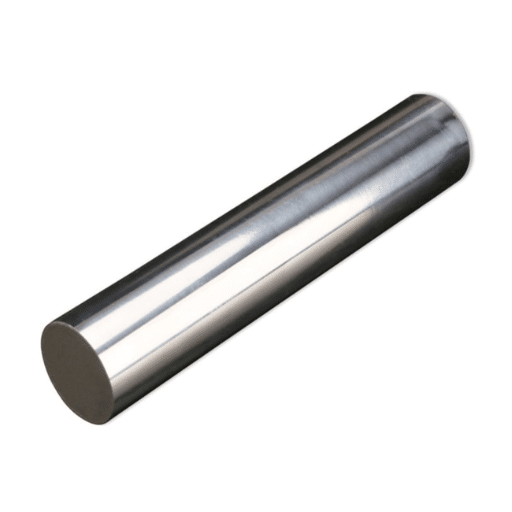
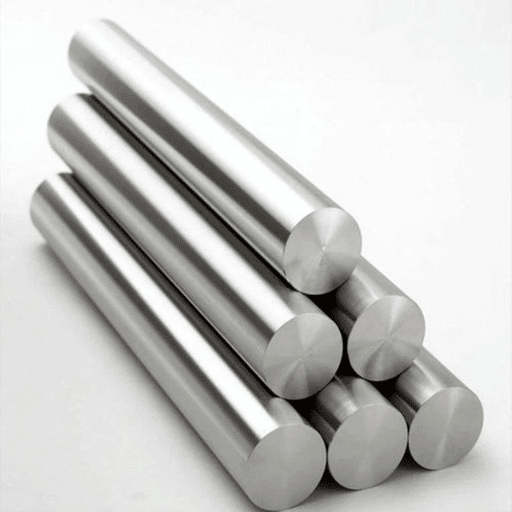
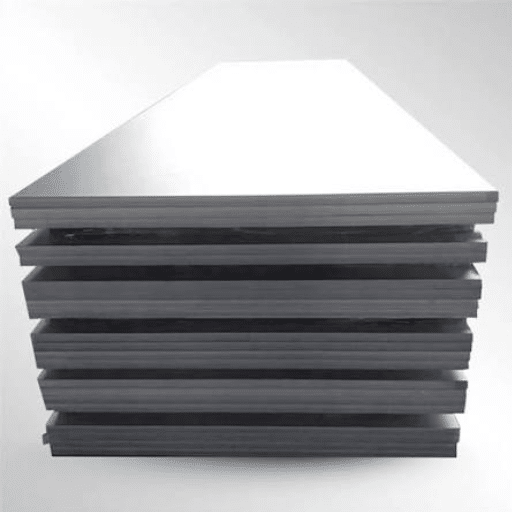
Aerospace specifications generally reference AMS 5659 for 15-5PH bar and forgings. The grade is available as plate, sheet, strip, bar, rod, wire, and forgings, making it suitable for primary structural fittings, landing-gear components, drive shafts, and high-stress fasteners. If your 15-5PH vs 17-4PH decision involves transverse loading, impact, or fatigue, 15-5PH is typically the better starting point.
What Is 17-4PH Stainless Steel?
17-4PH is the original precipitation-hardening stainless steel, designated UNS S17400, AISI 630, EN 1.4542, and Chinese GB 0Cr17Ni4Cu4Nb. It has been the workhorse PH grade for more than half a century because it combines high strength, moderate corrosion resistance, and broad availability at a lower price point than most specialty grades.
Like 15-5PH, 17-4PH is hardened by solution annealing and aging. The same copper precipitation reaction strengthens the martensitic matrix, and the same H-condition codes apply. In a direct 15-5PH vs 17-4PH comparison, the key difference is that 17-4PH can retain small amounts of delta ferrite, particularly in heavy sections. This ferrite is generally harmless for longitudinal loads, but it can create property scatter in the transverse direction.
17-4PH is specified in ASTM A564 and AMS 5643. It is used for industrial shafts, valve stems, gears, fasteners, pump components, and wellhead hardware. When your 15-5PH vs 17-4PH choice involves primarily longitudinal loads and the design does not demand aerospace-level transverse toughness, 17-4PH delivers most of the performance at a significantly lower cost. Our complete 17-4PH stainless steel guide covers the grade in more detail.
15-5PH vs 17-4PH: Chemical Composition
The two grades look similar on a certificate, but the chromium, nickel, and ferrite-forming potential are intentionally different. Lower chromium in 15-5PH reduces the tendency to form delta ferrite during solidification, which is the root cause of its improved transverse ductility and toughness.
| Element | 15-5PH (UNS S15500) | 17-4PH (UNS S17400) |
|---|---|---|
| Chromium (Cr) | 14.0% – 15.5% | 15.0% – 17.5% |
| Nickel (Ni) | 3.5% – 5.5% | 3.0% – 5.0% |
| Copper (Cu) | 2.5% – 4.5% | 3.0% – 5.0% |
| Niobium + Tantalum (Nb+Ta) | 0.15% – 0.45% | 0.15% – 0.45% |
| Manganese (Mn) | max 1.00% | max 1.00% |
| Silicon (Si) | max 1.00% | max 1.00% |
| Carbon (C) | max 0.07% | max 0.07% |
| Phosphorus (P) | max 0.040% | max 0.040% |
| Sulfur (S) | max 0.030% | max 0.030% |
| Iron (Fe) | balance | balance |
The reduced chromium range in 15-5PH is not a weakness in the 15-5PH vs 17-4PH chemistry comparison. It is a deliberate alloy design choice that suppresses ferrite and improves solidification structure. Both grades still contain enough chromium to form a passive film and resist atmospheric, mild chemical, and seawater corrosion in many conditions. Limits for both grades are defined in ASTM A564. For a deeper look at 17-4PH chemistry and property relationships, see our 17-4PH properties guide.
15-5PH vs 17-4PH: Mechanical Properties

Longitudinal tensile properties for the two grades are remarkably close, which is why buyers sometimes assume they are interchangeable in a 15-5PH vs 17-4PH specification. The separation appears in transverse toughness, ductility, and thick-section consistency.
| Property | 15-5PH H900 | 17-4PH H900 | 15-5PH H1150 | 17-4PH H1150 |
|---|---|---|---|---|
| Tensile Strength (MPa) | ≥1,310 | ≥1,310 | ~931 | ≥930 |
| Yield Strength (MPa) | ≥1,172 | ≥1,170 | ~724 | ≥725 |
| Elongation (%) | ≥10 | ≥10 | ≥13 | ≥14 |
| Hardness (HRC) | 40 – 47 | 40 – 47 | 28 – 37 | 28 – 37 |
| Charpy V-Notch, transverse | Higher | Lower | Higher | Lower |
The table above uses H900 and H1150 as bookends in the 15-5PH vs 17-4PH mechanical-property comparison. H900 represents the peak-strength condition, while H1150 represents an overaged condition that trades strength for better toughness and corrosion resistance. In every condition, 15-5PH tends to show better transverse ductility and impact energy because its microstructure lacks the delta-ferrite stringers that can act as crack initiation sites in 17-4PH.
For a pump OEM we supported last year, this distinction in the 15-5PH vs 17-4PH comparison mattered. The team wanted 15-5PH for a high-torque marine shaft, but the application did not impose transverse impact loads. After reviewing the actual stress state, we recommended 17-4PH H900. The move cut material cost by roughly 25% without affecting service life. Globoalloy’s PH steels data is a useful independent reference for mechanical-property ranges.
15-5PH vs 17-4PH: Hardness Comparison
Both grades share the same H-condition aging codes defined in ASTM A564 for precipitation-hardening stainless steels. Peak hardness is almost identical in the 15-5PH vs 17-4PH comparison, so hardness alone should never drive the grade decision.
| Condition | Aging Temperature | 15-5PH Hardness | 17-4PH Hardness |
|---|---|---|---|
| A (solution annealed) | none | ≤38 HRC | ≤38 HRC |
| H900 | 482°C / 900°F | 40 – 47 HRC | 40 – 47 HRC |
| H925 | 496°C / 925°F | 38 – 46 HRC | 38 – 46 HRC |
| H1025 | 552°C / 1025°F | 34 – 43 HRC | 34 – 43 HRC |
| H1075 | 566°C / 1075°F | 32 – 40 HRC | 32 – 40 HRC |
| H1100 | 593°C / 1100°F | 30 – 39 HRC | 30 – 39 HRC |
| H1150 | 621°C / 1150°F | 28 – 37 HRC | 28 – 37 HRC |
| H1150D | 621°C + 760°C dual age | 24 – 33 HRC | 24 – 33 HRC |
The practical message from the 15-5PH vs 17-4PH hardness comparison is simple: if you only need 40 HRC, either grade can deliver it. If you also need repeatable transverse toughness at 40 HRC, 15-5PH is the safer route. Sandmeyer Steel’s 17-4PH datasheet provides independent hardness data for the 17-4PH side. Our dedicated 17-4PH hardness chart provides a deeper look at one side of this comparison.
15-5PH vs 17-4PH: Corrosion Resistance
Both grades offer general corrosion resistance comparable to 304 stainless steel in many environments in the 15-5PH vs 17-4PH corrosion comparison. They resist atmospheric corrosion, mild acids, and freshwater. Neither grade matches 316L in severe chloride service, and neither is intended for prolonged exposure to strong reducing acids or high-chloride seawater without careful evaluation.
Heat treatment significantly affects corrosion performance in any 15-5PH vs 17-4PH evaluation. Higher aging temperatures produce more stable precipitates and a softer microstructure, which generally improves resistance to stress-corrosion cracking (SCC) and hydrogen embrittlement. For sour-service oil and gas applications, 17-4PH H1150M is commonly specified because it meets the hardness limits of NACE MR0175 / ISO 15156-3. 15-5PH can also be qualified for sour service, but 17-4PH has a longer track record in this sector simply because it has been used longer.
Pitting resistance is driven primarily by chromium content and surface condition. 17-4PH has a slightly higher chromium range, but the difference is small in practice. Surface finish, heat-treatment scale removal, and passivation usually matter more than the 1% to 2% chromium gap. If your design faces continuous seawater spray or chloride exposure, consider moving to a duplex stainless steel, super duplex, or nickel-based alloy rather than trying to optimize between these two PH grades.
15-5PH vs 17-4PH: Heat Treatment & Fabrication
Both grades respond to the same solution-anneal and aging cycles, so the 15-5PH vs 17-4PH heat-treatment comparison is largely about shop practice rather than metallurgical differences. The standard solution-anneal temperature is around 1,040°C to 1,065°C, followed by air cool or oil quench to room temperature. After annealing, the material is in Condition A and is machinable. Final hardness is then set by aging at the temperature that corresponds to the desired H-condition.
Weldability is similar and manageable with correct procedures. Both grades can be welded using matching or slightly over-alloyed filler metals, followed by a full solution anneal and age to restore properties. Welding without post-weld heat treatment leaves a soft heat-affected zone, so most critical applications require re-solution treatment and aging. Our 17-4PH welding guide covers consumable selection and PWHT parameters in detail.
Machinability is best in Condition A. Once aged to H900, both grades become abrasive and require rigid setups, sharp carbide or ceramic inserts, and controlled feeds and speeds. 15-5PH machines slightly more uniformly due to its cleaner microstructure, but the difference is not dramatic. For specific speeds, feeds, and tooling recommendations, see our 17-4PH machining guide.
Formability is limited in either aged condition. Forming should be done in Condition A, followed by heat treatment to the final H-condition. Both grades can be hot worked at temperatures around 1,100°C to 1,200°C, provided reheat treatments are used to restore final properties.
15-5PH vs 17-4PH: Cost Comparison
Cost is often the deciding factor in a 15-5PH vs 17-4PH purchase decision. 15-5PH typically carries a 15% to 50% premium over 17-4PH, depending on form, size, certification, and order quantity. Several factors drive the gap, as XCBGroup’s cost and China-supply analysis also notes:
- Tighter chemistry control: 15-5PH requires more precise composition management to remain ferrite-free.
- Lower volume: 17-4PH is produced in larger quantities globally, so economies of scale favor it.
- Aerospace certification: AMS 5659 material with full traceability costs more than commercial ASTM A564 bar.
- Mill minimums: Some Chinese mills only produce 15-5PH on a made-to-order basis, increasing lead time and price.
The question in any 15-5PH vs 17-4PH cost comparison is whether the premium is justified. For a fatigue-critical aerospace fitting, the extra cost is usually small compared with the cost of a qualification failure or field repair. For a standard industrial shaft with longitudinal loads, the premium rarely buys meaningful performance. That is why the decision matrix later in this guide focuses on application risk, not just alloy price.
15-5PH vs 17-4PH: Applications by Industry
The 15-5PH vs 17-4PH application split follows a consistent pattern: 15-5PH wins where fatigue, transverse loads, or qualification risk dominate; 17-4PH wins where cost, availability, and longitudinal loads dominate.
Aerospace & Defense
15-5PH dominates primary structural and flight-critical hardware: wing fittings, landing-gear components, drive shafts, control-surface hinges, and high-strength fasteners. The ferrite-free microstructure gives designers confidence in transverse property consistency. 17-4PH appears in secondary hardware, ground-support equipment, and non-flight-critical brackets where cost matters more than transverse toughness.
Oil & Gas
17-4PH is the more common choice for wellhead components, valve stems, pump shafts, and fasteners in sour-service environments. H1150M is frequently specified to meet NACE hardness limits. 15-5PH is used for critical subsea connectors and high-pressure couplings where toughness and fatigue resistance justify the cost.
Marine & Offshore
Both grades resist atmospheric and splash-zone corrosion, but neither is a direct replacement for 316L or duplex stainless in continuous seawater immersion. 17-4PH is widely used for propeller shafts, rudder components, and deck hardware. 15-5PH appears in high-performance racing and naval hardware where weight and fatigue life matter.
Industrial Machinery
17-4PH is the default for industrial gears, shafts, couplings, and paper-machine equipment. The grade is easier to source, less expensive, and fully adequate for longitudinal loading. 15-5PH is reserved for high-speed spindles, precision instruments, and components subject to reversing or shock loads.
Medical & Precision Instruments
15-5PH is preferred for surgical instruments, orthopedic devices, and precision measurement tools because of its better ductility and polishability. 17-4PH is used for less demanding instrument hardware where cost is a larger concern.
How to Choose: Decision Matrix
Use this 15-5PH vs 17-4PH decision matrix to map your priority to the recommended grade.
| Your Priority | Recommended Grade | Why |
|---|---|---|
| Transverse toughness/impact resistance | 15-5PH | Ferrite-free microstructure gives uniform properties across orientations. |
| Fatigue life / cyclic loading | 15-5PH | Cleaner microstructure delays crack initiation. |
| Aerospace primary structure | 15-5PH | AMS 5659 pedigree and transverse consistency meet qualification demands. |
| Lowest material cost | 17-4PH | Larger global production volume and broader mill availability. |
| Sour-service oil & gas | 17-4PH | Longer NACE MR0175 track record; H1150M readily available. |
| Fastest lead time | 17-4PH | More mills stock standard sizes in Condition A and common H-conditions. |
| Thick-section uniformity | 15-5PH | Reduced ferrite content minimizes property scatter in heavy sections. |
| General industrial shafts/valves | 17-4PH | Sufficient strength and hardness at lower cost for longitudinal loads. |
If you are unsure which column your application belongs in, send us your drawing, load case, and required specification. Our metallurgical engineers will recommend the right grade and H-condition within 24 hours.
Sourcing 15-5PH and 17-4PH from China

Buying precipitation-hardening stainless steel from Chinese mills requires the same discipline as buying from any global supplier. The most common sourcing problem in a 15-5PH vs 17-4PH RFQ is an incomplete specification. A buyer who asks for “15-5PH or 17-4PH bar” without stating condition, standard, or certification will receive quotes that vary by 50% to 60% for what appears to be the same material.
RFQ Specification Checklist
Include these items in every request:
- Alloy grade and UNS number: UNS S15500 or UNS S17400.
- Chinese equivalent if applicable: 0Cr15Ni5Cu4Nb / 05Cr15Ni5Cu4Nb or 0Cr17Ni4Cu4Nb.
- Product form: bar, plate, sheet, forging, or wire.
- Heat-treatment condition: Condition A, H900, H1025, H1150, H1150D, etc.
- Standard: ASTM A564, AMS 5659, AMS 5643, or customer-specific.
- Dimensions and tolerances.
- Certification level: EN 10204 3.1 or 3.2, with third-party inspection if required.
- Quantity and delivery term.
MTR Verification Points
When the material arrives, verify the MTR against your purchase order:
- Chemical composition within specification limits.
- Mechanical test results for the specified H-condition.
- Hardness value in the required range.
- Heat-treatment lot traceability.
- Ultrasonic or other NDT certification if specified.
- AMS compliance and serialization if aerospace.
At Jiangsu Zhonggongte, we supply both grades in plate, sheet, bar, and forging forms with full MTR documentation, spectral analysis, and EN 10204 3.1/3.2 certification. We also support third-party inspection and AMS-compliant lot control for aerospace and defense projects. Submit your RFQ today and our team will confirm availability, pricing, and delivery schedule within 24 hours.
15-5PH vs 17-4PH FAQ
These answers address the most common questions buyers ask when comparing 15-5PH vs 17-4PH for aerospace, oil and gas, and industrial projects.
Which is stronger, 15-5PH or 17-4PH?
In the same H-condition, longitudinal tensile and yield strengths are nearly identical. Both reach about 1,310 MPa tensile and 1,170 MPa yield in H900. 15-5PH is stronger in the transverse direction because it lacks delta ferrite.
Is 15-5PH better than 17-4PH?
It depends on the application. 15-5PH is better for fatigue-critical, aerospace, and transverse-loaded parts. 17-4PH is better for cost-sensitive industrial applications with primarily longitudinal loads.
What is the Chinese equivalent of 15-5PH?
The common Chinese designations are 0Cr15Ni5Cu4Nb and 05Cr15Ni5Cu4Nb, sometimes written as S51550. 17-4PH is 0Cr17Ni4Cu4Nb.
What is 15-5PH H900 hardness?
15-5PH H900 hardness is typically 40 to 47 HRC, matching 17-4PH H900.
Can I weld 15-5PH and 17-4PH?
Yes, both grades are weldable with matching filler metals and proper post-weld heat treatment. Most critical welds require re-solution annealing and aging to restore full strength and toughness.
What does H1150 mean?
H1150 means the material was aged at approximately 621°C (1,150°F). It is an overaged condition that produces lower strength but higher toughness and better corrosion resistance than H900.
Is 17-4PH suitable for sour service?
Yes, 17-4PH H1150M is commonly used for sour-service components and can meet NACE MR0175 / ISO 15156-3 hardness limits. Always confirm the exact condition and certification with your supplier.
What forms are available for 15-5PH and 17-4PH?
Both grades are available as plate, sheet, strip, bar, rod, wire, forgings, and custom-machined components. 17-4PH generally has broader stock availability.
How do I verify the H-condition on an MTR?
Check that the MTR lists the heat-treatment cycle or H-condition code, the corresponding hardness value, and the mechanical test results. Cross-check the hardness against the ASTM A564 or AMS specification limits.
Why do quotes for the “same” grade vary so much?
Quotes vary because suppliers may quote different standards (ASTM A564 vs AMS), different H-conditions, different certification levels, or different surface finishes. Always include condition and standard in your RFQ.
Conclusion
The 15-5PH vs 17-4PH decision is not about peak hardness or tensile strength; those are nearly identical. It is about microstructure, loading direction, and total cost of ownership. 15-5PH is the refined, ferrite-free choice for aerospace primary structure, fatigue-critical parts, and thick sections where transverse properties matter. 17-4PH is the proven, cost-effective workhorse for industrial shafts, valves, fasteners, and sour-service hardware.
Before you issue your next RFQ, confirm three things: the H-condition, the governing specification, and the certification level. Those three lines determine price, performance, and risk more than the grade name alone.
If you need help specifying 15-5PH or 17-4PH for your project, send us your requirements. Our metallurgical team will review your application and return a clear recommendation, material availability, and competitive quotation within 24 hours.