17-4PH properties range from 24 HRC and 860 MPa tensile strength in H1150D to 47 HRC and 1,310 MPa tensile strength in H900, all controlled by aging temperature. The same alloy chemistry behaves like two different materials depending on whether it is solution annealed, peak aged, or overaged, which is why condition selection matters as much as grade selection.
A single 17-4PH component can be as soft as 24 HRC or as hard as 47 HRC. The difference is nothing more than aging temperature. That 23-point hardness swing changes tensile strength from under 900 MPa to over 1,300 MPa. It is the reason 17-4PH is both versatile and easy to mis-specify.
Engineers who treat 17-4PH as a single material often receive bar stock that is too brittle, too soft, or mismatched to the environment. Procurement teams that do not specify condition and hardness on the RFQ invite rejected batches and delayed projects.
This guide provides the complete 17-4PH property profile. You will find chemical composition limits, mechanical properties by heat treatment condition, physical properties, corrosion behavior, comparisons with 316, 304, and 15-5PH, and practical guidance on how to verify every number on a mill test report. For the broader grade overview, see our complete 17-4PH stainless steel guide.
Key Takeaways
- 17-4PH properties are heat-treatment dependent: H900 delivers 1,310 MPa tensile strength and 40–47 HRC, while H1150D delivers 860 MPa and 24–33 HRC.
- Chemical composition per ASTM A564 includes 15.0–17.5% Cr, 3.0–5.0% Ni, 3.0–5.0% Cu, and 0.15–0.45% Nb+Ta.
- The Chinese equivalent is 0Cr17Ni4Cu4Nb / SUS630, with matching composition and heat treatment response.
- 17-4PH is magnetic in all conditions because of its martensitic microstructure.
- General corrosion resistance is comparable to 304, but chloride performance is below 316L because 17-4PH contains no molybdenum.
- Maximum continuous service temperature is approximately 300°C (572°F).
- Specify grade, condition, hardness range, standard, and certification level on every RFQ to avoid rejected material.
What Is 17-4PH Stainless Steel?

17-4PH stainless steel is a precipitation-hardening martensitic stainless steel. Its international designations include UNS S17400, AISI Type 630, EN 1.4542 / X5CrNiCuNb16-4, JIS SUS630, and the Chinese GB/T grade 0Cr17Ni4Cu4Nb. The name itself describes the approximate chemistry: about 17% chromium, 4% nickel, and the “PH” indicates precipitation hardening.
The alloy is strengthened by copper-rich precipitates that form during aging after solution annealing. Niobium and tantalum combine with carbon to form stable carbides and refine grain size. The result is a martensitic matrix that can be aged from a relatively soft, machinable state to a very high-strength condition.
Unlike austenitic grades such as 304 or 316L, 17-4PH cannot be made non-magnetic. The martensitic structure makes it magnetic in every condition.
For buyers sourcing from Chinese mills, the 17-4PH equivalent is 0Cr17Ni4Cu4Nb per GB/T 1220 or SUS630 per JIS. These grades follow the same composition limits and respond to the same aging cycles as 17-4PH produced to ASTM A564 or AMS 5643. The mechanical property ranges are interchangeable when the material is produced and tested to equivalent standards.
17-4PH Chemical Composition
ASTM A564 and ASTM A693 define the composition limits shown below. These ranges ensure that the alloy responds predictably to solution annealing and aging, and they apply to bar, wire, forgings, plate, sheet, and strip.
| Element | ASTM A564 / A693 Limit (wt%) | Role in the Alloy |
|---|---|---|
| Carbon (C) | ≤ 0.07 | Keeps martensite soft enough to age without excessive brittleness |
| Chromium (Cr) | 15.0 – 17.5 | Provides stainless characteristics and moderate corrosion resistance |
| Nickel (Ni) | 3.0 – 5.0 | Stabilizes austenite during solution treatment and improves toughness |
| Copper (Cu) | 3.0 – 5.0 | Primary precipitation-hardening element |
| Niobium + Tantalum (Nb + Ta) | 0.15 – 0.45 | Forms carbides and refines grain structure |
| Manganese (Mn) | ≤ 1.00 | Deoxidizer: improves hot workability |
| Silicon (Si) | ≤ 1.00 | Deoxidizer |
| Phosphorus (P) | ≤ 0.040 | Controlled impurity |
| Sulfur (S) | ≤ 0.030 | Controlled impurity |
| Iron (Fe) | Balance | Martensitic matrix |
The copper content is what separates 17-4PH from standard martensitic grades such as 410 or 431. Without copper in the 3–5% range, the alloy would not form the strengthening precipitates that give 17-4PH its unique strength range. Niobium and tantalum control grain size and help maintain toughness, while chromium provides the passivation layer that gives 17-4PH its general corrosion resistance.
For Chinese-produced material, GB/T 1220 0Cr17Ni4Cu4Nb aligns closely with the ASTM limits above. When reviewing a mill test report, confirm that copper falls within 3.0–5.0% and that niobium plus tantalum falls within 0.15–0.45%. Values outside these ranges indicate either a different grade or a non-conforming heat.
17-4PH Mechanical Properties by Condition
The mechanical properties of 17-4PH are controlled almost entirely by aging temperature. The material is normally supplied in the solution-annealed Condition A, then aged by the supplier or the customer to the desired H-condition. Lower aging temperatures produce finer precipitates, higher strength, and higher hardness. Higher aging temperatures coarsen the precipitates, lowering strength but improving toughness, ductility, and stress-corrosion resistance.
| Condition | Tensile Strength (MPa) | Yield Strength (MPa) | Elongation (%) | Hardness (HRC) |
|---|---|---|---|---|
| A (solution annealed) | ≥ 930 | ≥ 725 | ≥ 16 | ~28–32 |
| H900 | ≥ 1,310 | ≥ 1,170 | ≥ 10 | 40–47 |
| H1025 | ≥ 1,070 | ≥ 1,000 | ≥ 12 | 35–42 |
| H1075 | ≥ 1,000 | ≥ 860 | ≥ 13 | 31–38 |
| H1100 | ≥ 965 | ≥ 795 | ≥ 14 | 28–37 |
| H1150 | ≥ 930 | ≥ 725 | ≥ 16 | 28–37 |
| H1150D | ≥ 860 | ≥ 655 | ≥ 18 | 24–33 |
Values shown are typical specification minima or common ranges from ASTM A564 and AMS 5643. Actual values vary with product form, section size, and exact heat treatment practice. For design-critical applications, always specify the governing standard and confirm the minimum mechanical values for your product form.
When a procurement team at a pump manufacturer in the Middle East ordered 17-4PH H900 shafts, the material arrived at 46 HRC and passed hardness inspection. Six months later, two shafts cracked during start-up torque spikes. The root cause was not faulty material; the application needed H1025 instead of H900.
The slightly lower hardness gave the competitor’s design enough toughness to survive the same duty cycle. Condition selection is an engineering decision, not a procurement afterthought.
Ready to specify 17-4PH with the right condition and hardness? Submit your RFQ and our metallurgical team will confirm the optimal H-condition for your application within 24 hours.
17-4PH Hardness and Strength at a Glance
Hardness is the fastest way to verify that 17-4PH has been aged to the correct condition. The table below links aging temperature to typical Rockwell C and Brinell values.
| Condition | Aging Temperature | Typical HRC | Typical HB |
|---|---|---|---|
| H900 | 482°C / 900°F | 40–47 | 388–444 |
| H1025 | 552°C / 1,025°F | 35–42 | 331–401 |
| H1075 | 580°C / 1,075°F | 31–38 | 302–375 |
| H1100 | 593°C / 1,100°F | 28–37 | 293–363 |
| H1150 | 621°C / 1,150°F | 28–37 | 277–352 |
| H1150D | Double 621°C | 24–33 | 255–311 |
The H900 versus H1150D contrast is the most important hardness decision for buyers. H900 is chosen when static strength, wear resistance, and fatigue strength dominate. H1150D is chosen when toughness, machinability, and stress-corrosion cracking resistance dominate. H1150D is also the condition most commonly specified for NACE MR0175 sour service because it keeps hardness below approximately 33 HRC.
Hardness testing should be reported with the scale and method. Rockwell C is the most common for 17-4PH because the entire useful range falls within the HRC scale. Brinell is sometimes used for larger forgings or castings. Vickers may be used for thin sections or weld zones where a small indentation is required. For a deeper look at how each cycle produces these properties, see our 17-4PH heat treatment guide.
17-4PH Physical Properties

Physical properties of 17-4PH are less sensitive to heat treatment than mechanical properties, but they still matter for thermal expansion calculations, vibration analysis, and weight estimates. The table below summarizes the key physical constants.
| Property | Value | Notes |
|---|---|---|
| Density | 7.75 – 7.81 g/cm³ (0.280 – 0.282 lb/in³) | Used for mass and section weight calculations |
| Melting range | ~1,400 – 1,440°C (2,560 – 2,625°F) | Not a single point; solidification range |
| Modulus of elasticity | ~196 GPa (28.5 × 10⁶ psi) | At room temperature |
| Poisson’s ratio | ~0.272 | Typical for martensitic stainless steels |
| Thermal conductivity | ~18.3 W/m·K at 100°C | Lower than carbon steel; similar to other stainless grades |
| Specific heat | ~460 J/kg·°C | Average value near room temperature |
| Electrical resistivity | ~80 – 100 μΩ·cm | Magnetic; electrically conductive compared to austenitic grades |
The coefficient of thermal expansion increases slightly with temperature. Between 20°C and 100°C, the value is approximately 10.8 × 10⁻⁶ /°C. Between 20°C and 300°C, it rises to approximately 11.2–11.3 × 10⁻⁶ /°C. Designers should use the expansion coefficient for the actual service temperature range, not just room-temperature data, when calculating clearances or stress in restrained assemblies.
Because 17-4PH is magnetic, it is not suitable for instruments or assemblies that require non-magnetic behavior. The magnetic property is consistent across all heat treatment conditions, although saturation magnetization may vary slightly with microstructure.
17-4PH Corrosion Resistance
17-4PH offers good general corrosion resistance in mild atmospheric, fresh water, and many industrial chemical environments. In these conditions, it performs roughly on par with 304 stainless steel. The chromium content forms a passive film that protects the surface in oxidizing environments.
However, 17-4PH is not a replacement for 316L or duplex grades in chloride-rich service. The alloy contains no molybdenum, which means its resistance to pitting and crevice corrosion is significantly lower than 316L. In marine immersion, brackish water, or chloride-laden process streams, 17-4PH can suffer localized attack, especially in the peak-aged H900 condition.
Key corrosion considerations:
- General corrosion: Comparable to 304 in atmospheric, fresh water, and mild chemical service.
- Chloride environments: Pitting and crevice resistance are below 316L due to the absence of molybdenum.
- Heat treatment effect: H1150 and H1150D generally show better corrosion resistance and stress-corrosion cracking resistance than H900.
- Passivation: A nitric acid passivation treatment after machining can improve performance in mild environments.
- Galvanic coupling: As a martensitic stainless steel, 17-4PH can create galvanic couples with more noble alloys; isolation may be needed.
When a chemical processor in Southeast Asia replaced 304 valve stems with 17-4PH H1075, the higher strength allowed a smaller stem diameter and reduced actuator load. The plant later discovered that stagnant chloride process water caused localized pitting in the H900 trim of an adjacent valve. Switching the trim to H1150D and adding a passivation step solved the issue without sacrificing mechanical performance. For a full grade comparison, see our 17-4PH vs 316 stainless steel guide.
17-4PH Properties vs Other Stainless Steels
Engineers often compare 17-4PH with 316, 304, and 15-5PH when selecting a stainless grade. The table below summarizes the key differences.
| Property | 17-4PH (H900) | 316 / 316L | 304 / 304L | 15-5PH (H900) |
|---|---|---|---|---|
| Tensile strength (MPa) | ≥ 1,310 | ~515 | ~515 | ≥ 1,310 |
| Yield strength (MPa) | ≥ 1,170 | ~205 – 240 | ~215 | ≥ 1,170 |
| Hardness (HRC) | 40 – 47 | ~25 HRB max | ~70 – 90 HRB | 38 – 45 |
| Elongation (%) | ≥ 10 | ~40 | ~40 | ≥ 10 |
| Corrosion resistance | Moderate; no Mo | Excellent in chlorides | Good in mild environments | Slightly better than 17-4PH |
| Magnetic | Yes | No | No | Yes |
| Heat treatable | Yes | No | No | Yes |
Choose 316L when corrosion resistance, ductility, and weldability are the top priorities. Its yield strength in the annealed condition is only ~205–240 MPa, roughly one-fifth that of 17-4PH H900. Choose 17-4PH when strength, hardness, and wear resistance are critical and the operating environment is moderate.
Choose 15-5PH when transverse toughness and more uniform properties are needed, typically in aerospace structural components. Choose 304 for general fabrication, food equipment, and architectural applications where strength is not the deciding factor.
How Heat Treatment Changes 17-4PH Properties
The tunable nature of 17-4PH properties comes from a two-stage heat treatment process: solution annealing followed by aging. The solution annealing step dissolves copper and carbides into a homogeneous austenite, which transforms to soft martensite on cooling. This is Condition A. Aging then precipitates fine copper-rich phases that pin dislocations and raise hardness.
The aging temperature controls precipitate size and distribution. At 482°C (900°F), the precipitates are fine and closely spaced, giving H900 its maximum strength. At 621°C (1,150°F), the precipitates coarsen, reducing hardness but improving toughness and corrosion resistance. H1150D uses a double aging cycle at 621°C to produce the softest, toughest condition.
This means that ordering “17-4PH bar” without a condition is incomplete. The same heat of steel can deliver 28 HRC or 47 HRC depending only on the aging cycle. For machined components, the standard sequence is to machine in Condition A and then age to final hardness. For forgings or bar used as-is, the supplier must perform the aging before shipment.
For a detailed explanation of each cycle, including time, temperature, and cooling, see our 17-4PH heat treatment guide. For machining considerations related to condition, see our 17-4PH machining guide.
Service Temperature, Fatigue, and Toughness Considerations
17-4PH is generally limited to a maximum continuous service temperature of approximately 300°C (572°F). Above this temperature, the strengthening precipitates begin to coarsen, and the material loses strength through over-aging. Short-term exposure to higher temperatures is possible, but prolonged service above 300°C will degrade mechanical properties.
Fatigue performance is condition-dependent. A common rule of thumb is that the fatigue limit for wrought 17-4PH is approximately 50% of the ultimate tensile strength in rotating beam or axial fatigue tests. Surface finish, notch geometry, residual stress, and environment all influence the actual fatigue life.
H900 has the highest static strength but is also the most notch-sensitive. H1025 and H1075 often provide better fatigue life in real components because the higher toughness reduces crack initiation risk.
Impact toughness follows the inverse trend of hardness. H1150D absorbs the most energy in Charpy or Izod testing, while H900 absorbs the least. For applications involving impact loading, low-temperature service, or dynamic stress, H1025, H1075, or H1150D are usually better choices than H900.
Sourcing 17-4PH with Verified Properties

Specifying 17-4PH correctly on an RFQ is the best way to avoid rejected material and project delays. A complete RFQ should include:
- Grade and standard: 17-4PH / UNS S17400 / AISI 630, or Chinese 0Cr17Ni4Cu4Nb / SUS630 per GB/T 1220.
- Heat treatment condition: Condition A, H900, H1025, H1075, H1100, H1150, or H1150D.
- Hardness requirement: Minimum, maximum, or target range with test method.
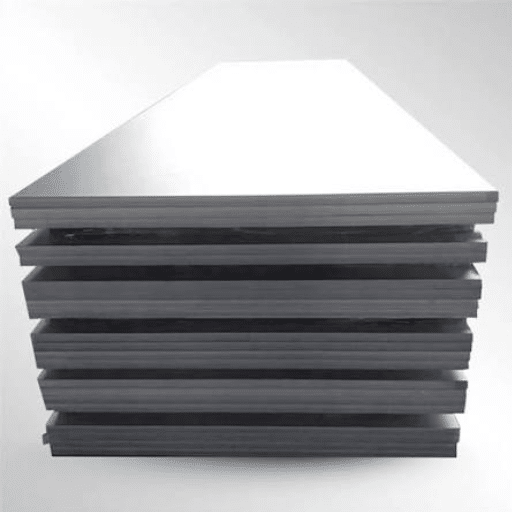
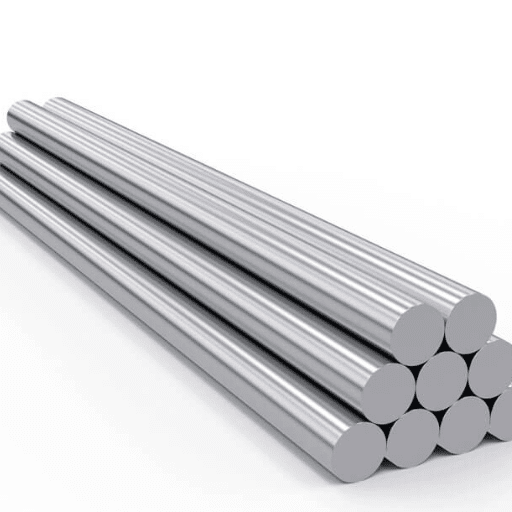
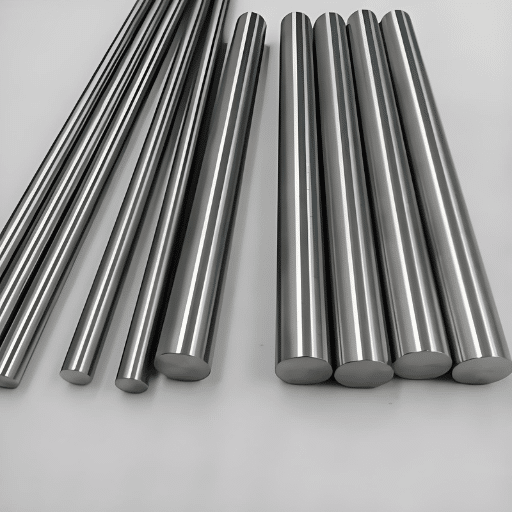
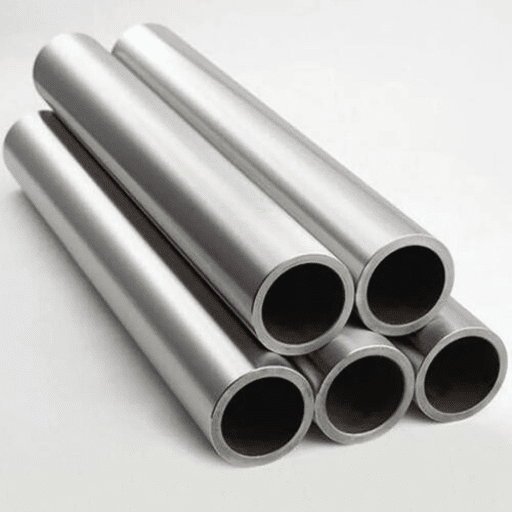
- Product form: stainless steel bar, plate, sheet, pipe, tube, wire, forging, or fastener.
- Dimensions: Diameter, thickness, width, length, and tolerance.
- Quantity: Weight or number of pieces.
- Certification: MTR, EN 10204 3.1/3.2, third-party inspection, NACE compliance if required.
- End use: Helps the supplier confirm condition selection and testing requirements.
- Delivery terms: Incoterm, destination, and required delivery date.
When the material arrives, verify the mill test report contains the following before accepting it:
- Heat number and full chemical analysis
- Mechanical test results for the ordered condition
- Hardness value with test method and scale
- Heat treatment chart showing solution annealing and aging cycles
- Melt practice statement
- EN 10204 3.1 or 3.2 certificate as required
- NDT reports if specified
Jiangsu Zhonggongte Metallurgical Technology Co., Ltd. supplies 17-4PH / UNS S17400 / 0Cr17Ni4Cu4Nb from Wuxi in bar, plate, sheet, pipe, tube, wire, and forged forms. Our in-house testing capability includes direct-reading spectrometry, tensile testing, and hardness testing by Rockwell, Brinell, and Vickers methods. Every order ships with a material test report, and we can provide EN 10204 3.1/3.2 certification and third-party inspection on request.
Our metallurgical engineers review each RFQ to confirm that the proposed condition, hardness range, test method, and certification match the application. Submit your specification and we will respond within 24 hours with availability, pricing, and a clear certification pathway.
17-4PH Properties FAQ
What does 17-4PH stand for?
The name describes the approximate composition and strengthening mechanism: about 17% chromium, 4% nickel, and PH for precipitation hardening. The alloy is strengthened by copper-rich precipitates that form during aging heat treatment.
What is the hardness of 17-4PH?
Typical hardness ranges from 28–32 HRC in Condition A, 40–47 HRC in H900, and 24–33 HRC in H1150D. The exact value depends on aging temperature, time, and product form.
Is 17-4PH magnetic?
Yes. 17-4PH has a martensitic microstructure, so it is magnetic in all heat treatment conditions. This is different from austenitic grades such as 304 and 316L, which are non-magnetic in the annealed condition.
What is the tensile strength of 17-4PH H900?
ASTM A564 requires 17-4PH H900 tensile strength to be at least 1,310 MPa (190 ksi). Yield strength must be at least 1,170 MPa, and elongation must be at least 10%.
What is the Chinese equivalent of 17-4PH?
The Chinese equivalent is 0Cr17Ni4Cu4Nb per GB/T 1220. The JIS equivalent is SUS630. Both have the same nominal composition and heat treatment response as 17-4PH / UNS S17400.
How does 17-4PH compare to 316 stainless steel?
17-4PH is much stronger and harder than 316 but has lower corrosion resistance in chloride environments. 316 is non-magnetic, easier to weld, and better for aggressive chemical or marine service. See our 17-4PH vs 316 comparison for a detailed side-by-side review.
What is the maximum service temperature of 17-4PH?
For prolonged service, 17-4PH is generally limited to approximately 300°C (572°F). Above this temperature, over-aging reduces strength.
Can 17-4PH be used in sour service?
Yes, in the overaged H1150 or H1150D condition, 17-4PH can meet NACE MR0175 / ISO 15156 hardness requirements for sour (H₂S) service. Always confirm the specific NACE clause for your product form and application.
Conclusion
17-4PH properties are not fixed numbers. They are a range that you select by specifying the right heat treatment condition. From the peak strength of H900 to the sour-service toughness of H1150D, the same alloy chemistry can be tuned to very different engineering requirements.
The key is to specify condition, hardness, standard, and certification clearly on every RFQ. Then verify every value on the mill test report.
For design engineers, the main decision is the trade-off between strength and toughness. For procurement teams, the main decision is making sure the supplier understands which condition and test method are required.
For both groups, the material test report is the proof that the delivered bar, plate, or forging matches the specification.
Zhonggongte manufactures and supplies certified 17-4PH / UNS S17400 / 0Cr17Ni4Cu4Nb from Wuxi with in-house heat treatment, hardness testing, full material traceability, and export documentation. Whether your drawing calls for Condition A, H900, H1150D, or hardness-verified material, our team will confirm the certification pathway and deliver a quote within 24 hours.