17-4PH hardness ranges from about 34–38 HRC in the solution-annealed Condition A to 40–47 HRC in the H900 aged condition. Higher aging temperatures reduce hardness but increase toughness and corrosion resistance, giving engineers a precise way to match strength and ductility to the application.
Last quarter, a procurement team at a Midwest pump manufacturer requested quotes for “17-4PH bar stock” and received prices that varied by nearly 40%. The reason was simple: one supplier quoted H900 at 44 HRC, another quoted H1150 at 31 HRC, and a third quoted Condition A that had never been aged. Without the heat-treatment condition on the purchase order, 17-4PH hardness becomes a guessing game, and guessing is expensive.
This guide gives you condition-by-condition hardness data, HRC to HB to HV conversions, testing standards, and an RFQ checklist. Whether you are specifying a wear-resistant shaft, a sour-service valve stem, or verifying an incoming mill certificate, you will know exactly what hardness to ask for and how to prove it.
Key Takeaways
- 17-4PH hardness is tunable: Condition A is ~34–38 HRC; H900 peaks at 40–47 HRC; H1150 drops to 28–37 HRC for toughness.
- Always specify the H-condition on the RFQ: “17-4PH” alone is not enough; ASTM A564 condition codes control hardness, strength, and machinability.
- H900 delivers maximum strength for shafts, gears, and fasteners; H1150/H1150D trades hardness for toughness and NACE MR0175 sour-service compliance.
- Verify hardness on the MTR: Rockwell C (ASTM E18), Brinell HBW (ASTM E10), and Vickers HV (ASTM E384) are the standard test methods.
- Chinese equivalent 0Cr17Ni4Cu4Nb follows the same aging hardness ranges as 17-4PH / UNS S17400.
What Is 17-4PH Stainless Steel?

17-4PH is a precipitation-hardening martensitic stainless steel. Its name describes how it works: “17” refers to the nominal chromium content (~17%), “4” to the nickel content (~4%), and “PH” to precipitation hardening, the heat-treatment process that controls its final hardness and strength.
The grade is known internationally as:
- UNS S17400 (ASTM/SAE)
- AISI 630 (AISI)
- EN 1.4542 / X5CrNiCuNb16-4 (European)
- 0Cr17Ni4Cu4Nb (Chinese GB/T)
- SUS630 (Japanese JIS)
Unlike austenitic grades such as 316L, 17-4PH can be strengthened by a low-temperature aging heat treatment rather than by cold work alone. Copper precipitates form in the martensitic matrix during aging, locking dislocations and raising hardness. Because the aging temperature determines precipitate size and distribution, engineers can select a specific 17-4PH hardness window by choosing the correct H-condition.
For a broader overview of the alloy, see our complete 17-4PH stainless steel guide.
How Heat Treatment Controls 17-4PH Hardness
The starting point for every hardened condition is Condition A, the solution-annealed state. In this condition the alloy is soft enough to machine, form, or straighten before final aging.
The standard solution-anneal cycle is:
- Heat to 1,900–1,950°F (1,038–1,066°C)
- Hold for 30 minutes to 1 hour
- Air cool or oil quench to room temperature
After solution annealing, the material is aged at a controlled temperature. Lower aging temperatures produce finer, more numerous copper precipitates, which give higher hardness and strength. Higher aging temperatures produce coarser precipitates, reducing hardness but improving toughness, ductility, and stress-corrosion cracking resistance.
The commonly specified H-conditions are named by their aging temperature in degrees Fahrenheit. A clear breakdown of how each condition affects hardness and toughness is available from Stainless Shapes.
- H900: aged at 900°F / 482°C
- H925: aged at 925°F / 496°C
- H1025: aged at 1,025°F / 552°C
- H1075: aged at 1,075°F / 580°C
- H1100: aged at 1,100°F / 593°C
- H1150: aged at 1,150°F / 621°C
- H1150D: double-aged at 1,150°F / 621°C
- H1150M: over-aged at 1,400°F then re-aged at 1,150°F
For detailed heat-treatment cycles, refer to our 17-4PH heat treatment guide.
17-4PH Hardness Chart by Condition
The table below summarizes typical 17-4PH hardness and mechanical properties by heat-treatment condition. Values are typical for longitudinal bar stock tested per ASTM A564; actual heat-lot values should always be confirmed on the mill test report.
| Condition | Aging Temp (°F / °C) | HRC | HB (typical) | HV (typical) | Tensile Strength (MPa) | Yield Strength (MPa) | Elongation (%) |
|---|---|---|---|---|---|---|---|
| Condition A | Solution annealed | 34–38 | ≤ 363 | ~340 | ~1,000 | ~760 | ~12 |
| H900 | 900 / 482 | 40–47 | 388–429 | ~410 | ≥ 1,310 | ≥ 1,170 | ≥ 10 |
| H925 | 925 / 496 | 38–46 | ~375–420 | ~395 | ≥ 1,170 | ≥ 1,070 | ≥ 10 |
| H1025 | 1,025 / 552 | 35–42 | 331–363 | ~349 | ≥ 1,070 | ≥ 1,000 | ≥ 12 |
| H1075 | 1,075 / 580 | 32–40 | 302–341 | ~328 | ≥ 1,000 | ≥ 865 | ≥ 13 |
| H1100 | 1,100 / 593 | 31–36 | ~290–330 | ~315 | ≥ 965 | ≥ 795 | ≥ 14 |
| H1150 | 1,150 / 621 | 28–37 | 277–302 | ~292 | ≥ 930 | ≥ 725 | ≥ 16 |
| H1150D | 1,150 / 621 (double) | 27–33 | ~270–300 | ~285 | 860–930 | 720–790 | ≥ 16 |
| H1150M | 1,400 + 1,150 | 24–29 | ~255–285 | ~270 | ~790–860 | ~620–720 | ≥ 18 |
The relationship is clear: as aging temperature rises, 17-4PH hardness falls while elongation and toughness rise. H900 is the go-to condition when the design is driven by strength and wear resistance. H1150 and H1150D are chosen when toughness, impact resistance, and sour-service compliance matter more than peak strength.
17-4PH Hardness Conversion: HRC, HB, and HV
Hardness test reports may quote Rockwell C (HRC), Brinell (HBW), or Vickers (HV). The table below gives approximate conversions for the standard 17-4PH conditions. These conversions are not exact; ASTM E140 provides the accepted correlation tables, and the best practice is to specify and test in the same scale used for design acceptance.
| Condition | HRC | Approx. HBW | Approx. HV |
|---|---|---|---|
| Condition A | 34–38 | 331–363 | 320–360 |
| H900 | 40–47 | 388–429 | 390–440 |
| H925 | 38–46 | 375–420 | 370–420 |
| H1025 | 35–42 | 331–363 | 340–390 |
| H1075 | 32–40 | 302–341 | 310–360 |
| H1100 | 31–36 | 290–330 | 300–340 |
| H1150 | 28–37 | 277–302 | 280–330 |
| H1150D | 27–33 | 270–300 | 270–310 |
| H1150M | 24–29 | 255–285 | 250–290 |
When converting 17-4PH hardness values:
- Use HRC for production QC because it is fast and direct-reading.
- Use HBW for larger sections or when the specification explicitly calls for it.
- Use HV for thin sections, welds, heat-affected zones, or when higher spatial resolution is needed.
17-4PH Hardness Testing Methods

Three test methods dominate industrial practice for 17-4PH hardness verification.
Rockwell C (HRC) per ASTM E18
Rockwell C uses a diamond cone indenter and a major load of 150 kgf. It is the most common method for production inspection because the hardness value is read directly from the tester with no optical measurement. For 17-4PH in the H900 through H1150 range, HRC is the default scale specified in ASTM A564.
Brinell (HBW) per ASTM E10 / ISO 6506
Brinell uses a tungsten carbide ball indenter (typically 2.5 mm, 5 mm, or 10 mm diameter) and a calibrated load. The operator measures the indentation diameter and calculates the hardness. HBW is less common for small, hardened parts because the impression is large, but it is useful for forgings, castings, and rough-machined blanks.
Vickers (HV) per ASTM E384 / ISO 6507
Vickers uses a 136° diamond pyramid indenter. The diagonals of the impression are measured optically, and hardness is calculated from the load and diagonal length. Vickers is preferred for research, thin sections, welds, and heat-affected zones where Rockwell C would be too coarse. Aerospace and additive-manufacturing studies on 17-4PH commonly report HV values.
Common QC Mistakes
- Testing the wrong surface: Scale, decarburization, or heat-treatment oxidation can distort readings. Prepare a flat, polished test surface.
- Testing too close to an edge: Maintain at least 2.5 times the indentation diameter from any edge.
- Mixing scales on acceptance: If the drawing calls for HRC, do not accept HBW without a documented conversion.
- Ignoring test load for Vickers: Low-load microhardness values (e.g., HV0.5) are not interchangeable with macrohardness values (e.g., HV30).
At Jiangsu Zhonggongte, every 17-4PH shipment can be supplied with Rockwell, Brinell, or Vickers hardness data verified on our in-house testers and reported on the MTR.
Condition A vs H900 vs H1150: How to Choose
Selecting the right 17-4PH hardness condition means balancing strength, toughness, machinability, and corrosion resistance.
| Design Priority | Recommended Condition | Typical HRC | Best For |
|---|---|---|---|
| Maximum strength and hardness | H900 | 40–47 | High-load shafts, pins, gears, fasteners |
| High strength with moderate toughness | H1025 / H1075 | 32–42 | Structural fittings, aerospace components |
| Best machinability after hardening | H1100 | 31–36 | Precision-machined parts, complex geometries |
| Maximum toughness and impact resistance | H1150 | 28–37 | Marine hardware, valve components |
| Sour-service / NACE compliance | H1150D | 27–33 | Oil & gas valve stems, wellhead components |
| Lowest hardness, highest ductility | H1150M | 24–29 | Formed or cold-worked components |
H900: Peak Hardness and Strength
H900 gives the highest 17-4PH hardness and tensile strength. It is the right choice for parts that see high bearing loads, wear, or cyclic stress. The trade-off is lower toughness and a higher susceptibility to hydrogen embrittlement and stress-corrosion cracking in aggressive environments.
H1025 / H1075 / H1100: Balanced Properties
These intermediate conditions offer a compromise. H1100 is often selected when the part must still be machinable after aging while retaining respectable strength.
H1150 and H1150D: Toughness and Corrosion Resistance
H1150 is the softest standard single-aged condition. It delivers the best ductility, impact resistance, and general corrosion resistance. H1150D is a double-aged variant specifically developed for sour service; the second aging cycle further stabilizes the microstructure and keeps hardness within the NACE MR0175 limit, typically ≤ 33 HRC.
For more on how 17-4PH compares to 316 in real applications, see our 17-4PH vs 316 comparison.
17-4PH Hardness vs Other Stainless Steels
Understanding where 17-4PH hardness sits relative to common stainless grades helps engineers avoid over-specifying or under-specifying material.
| Grade | Condition | Typical Hardness | Notes |
|---|---|---|---|
| 17-4PH | H900 | 40–47 HRC | Highest strength; heat-treatable |
| 17-4PH | H1150 | 28–37 HRC | Toughest PH condition |
| 316 / 316L | Annealed | 81–95 HRB (~22 HRC max) | Soft, ductile, corrosion resistant |
| 304 | Annealed | 70–90 HRB (~20 HRC max) | General-purpose austenitic |
| 431 | Hardened | 28–38 HRC | Martensitic; lower strength than 17-4PH |
| 15-5PH | H900 | 38–44 HRC | Similar to 17-4PH; better transverse toughness |
17-4PH is significantly harder and stronger than 304 or 316 in the annealed condition. However, 316L is the better choice for chloride-rich environments such as seawater or chemical processing, even though it cannot be hardened by heat treatment. If your application needs both high hardness and moderate corrosion resistance, 17-4PH H1150D is often the practical compromise.
17-4PH Hardness in Standards and Certifications

ASTM A564 / ASTM A693
ASTM A564 covers 17-4PH bar and forging products (UNS S17400, Type 630). It specifies minimum mechanical properties by condition, including hardness. ASTM A693 covers 17-4PH plate and sheet. When you specify 17-4PH hardness on a drawing, referencing ASTM A564 and the H-condition ensures suppliers quote the same material.
AMS 5643
AMS 5643 is the aerospace material specification for 17-4PH bars, forgings, and stock. It imposes tighter controls on chemistry, melting practice, and mechanical properties than ASTM A564. Aerospace buyers often require AMS 5643 H900 or H1025 material with full traceability.
NACE MR0175 / ISO 15156-3
For oil and gas sour service, NACE MR0175 / ISO 15156-3 limits 17-4PH hardness to prevent sulfide stress cracking. The accepted route is 17-4PH in the H1150D condition, with a hardness ceiling typically set at 33 HRC. Always confirm the exact hardness limit against the project specification or customer drawing.
MTR Verification Checklist
When a 17-4PH shipment arrives, the MTR should show:
- Grade and UNS number: 17-4PH / S17400 / Type 630
- Product form and dimensions
- Heat-treatment condition: H900, H1025, H1075, H1100, H1150, H1150D, or H1150M
- Hardness value and test method: HRC, HBW, or HV
- Tensile and yield strength
- Chemical composition
- Standard compliance: ASTM A564, AMS 5643, or customer-specific
- Certification level: EN 10204 3.1 or 3.2 when required
Sourcing 17-4PH by Hardness: RFQ Checklist
A complete RFQ removes ambiguity and protects your project from the wrong 17-4PH hardness condition.
Include the following:
- Grade and designation: 17-4PH / UNS S17400 / 0Cr17Ni4Cu4Nb
- Product form: bar, plate, sheet, forging, or tube
- Dimensions and tolerances
- Heat-treatment condition: H900, H1025, H1075, H1100, H1150, H1150D, or H1150M
- Applicable standard: ASTM A564, ASTM A693, AMS 5643, GB/T, or customer drawing
- Hardness requirement: minimum and/or maximum HRC, HBW, or HV
- Mechanical properties: tensile, yield, elongation if critical
- Certification: MTR, EN 10204 3.1/3.2, PMI report, NACE compliance
- Testing and inspection: ultrasonic NDT, dimensional report, surface condition
- Quantity and delivery schedule
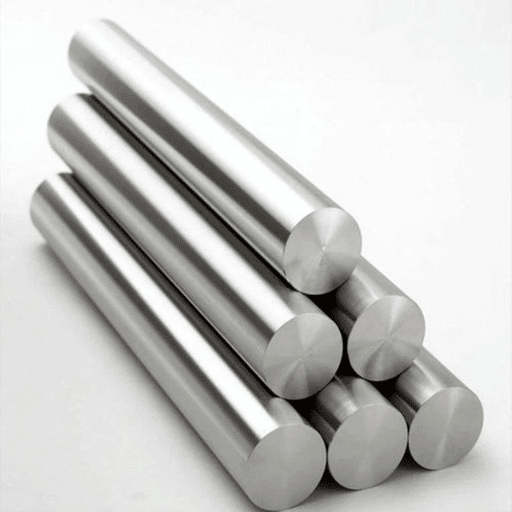
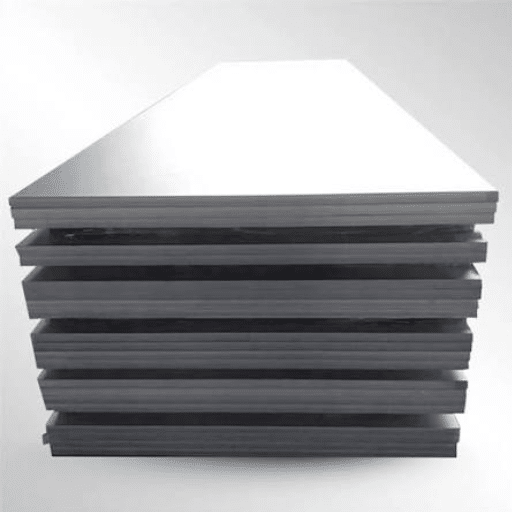
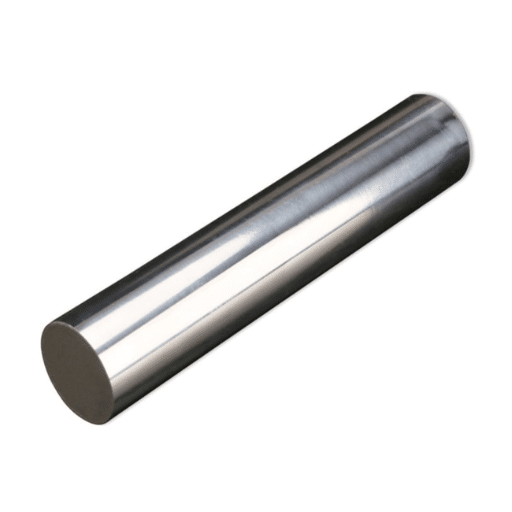
At Jiangsu Zhonggongte, we supply 17-4PH in all standard H-conditions from stainless steel bar and stainless steel sheet forms. Our laboratory verifies hardness with Rockwell, Brinell, and Vickers testers, and every order ships with a material test report. Submit your RFQ today and our technical team will respond within 24 hours with availability, pricing, and delivery schedule.
17-4PH Hardness FAQ
What is the hardness of 17-4PH stainless steel?
17-4PH hardness depends on the heat-treatment condition. Condition A is approximately 34–38 HRC. H900, the highest-strength condition, reaches 40–47 HRC. H1150, the toughest standard condition, is typically 28–37 HRC.
What is the maximum hardness of 17-4PH?
The maximum hardness is achieved in the H900 condition, typically 40–47 HRC, with some heats reaching up to 47 HRC depending on product form and section size.
Is 17-4PH harder than 316 stainless steel?
Yes. Annealed 316 stainless steel is about 81–95 HRB, equivalent to roughly 20–22 HRC. 17-4PH H900 at 40–47 HRC is roughly twice as hard and delivers several times the yield strength.
How does 17-4PH H900 compare to H1150?
H900 is harder and stronger (40–47 HRC, ≥ 1,310 MPa tensile) but less tough and less corrosion resistant. H1150 is softer (28–37 HRC, ~930 MPa tensile) but tougher, more ductile, and better suited to impact or moderately corrosive service.
What is 17-4PH H1150D?
H1150D is a double-aged condition used primarily for sour-service oil and gas components. It is aged twice at 1,150°F / 621°C to keep hardness low, typically 27–33 HRC, and meet NACE MR0175 requirements.
What hardness test method is used for 17-4PH?
Rockwell C (HRC) is the most common production test. Brinell (HBW) and Vickers (HV) are also used, depending on section size, specification, and required accuracy.
What is the Chinese equivalent of 17-4PH?
The Chinese GB/T equivalent is 0Cr17Ni4Cu4Nb. It follows the same heat-treatment conditions and hardness ranges as 17-4PH / UNS S17400.
Can 17-4PH hardness be adjusted after machining?
Yes. Most machining is done in the softer Condition A, and final aging raises hardness to the desired H-condition with minimal distortion.
What 17-4PH hardness is needed for NACE MR0175?
NACE MR0175 / ISO 15156-3 generally limits 17-4PH hardness to ≤ 33 HRC in the H1150D condition for sour service. Confirm the exact limit in the project specification.
How do I verify 17-4PH hardness on an incoming shipment?
Check the MTR for the stated condition, hardness value, test method, and standard compliance. Then perform incoming inspection on a prepared surface using the same hardness scale referenced on the certificate.
Conclusion
17-4PH hardness is not a single number; it is a range you select by heat-treatment condition. Condition A sits near 34–38 HRC and is used for machining before final aging. H900 reaches 40–47 HRC for maximum strength. H1150 and H1150D fall to 27–37 HRC for toughness, ductility, and sour-service compliance.
The key to successful procurement is specificity. State the H-condition, the hardness scale, and the applicable standard on every RFQ and drawing. Then verify the result on the MTR and, when necessary, with your own incoming inspection.
Jiangsu Zhonggongte supplies 17-4PH in all standard conditions, from stainless steel bar to precision sheet, with certified hardness testing and full traceability. Request a quote today and our metallurgical engineers will confirm the right condition for your application and respond within 24 hours.