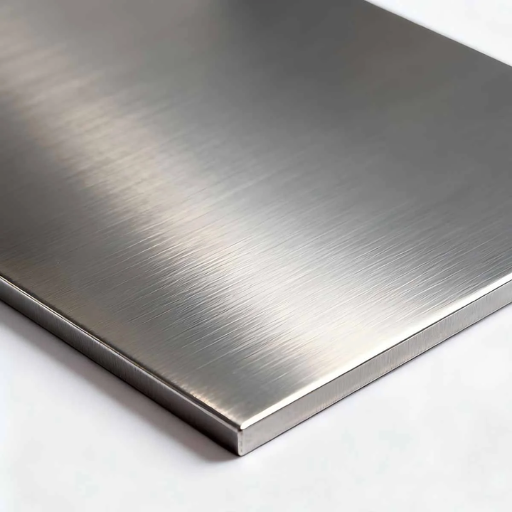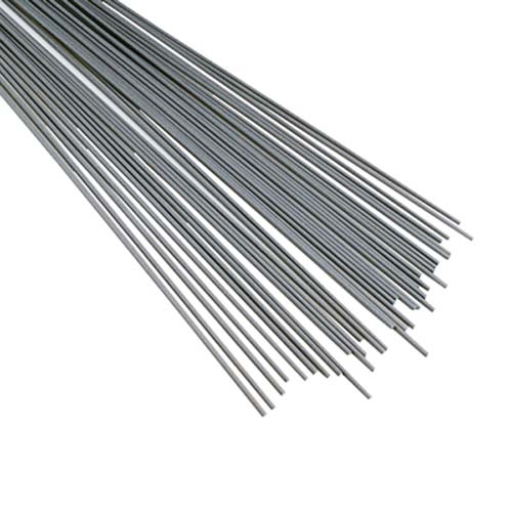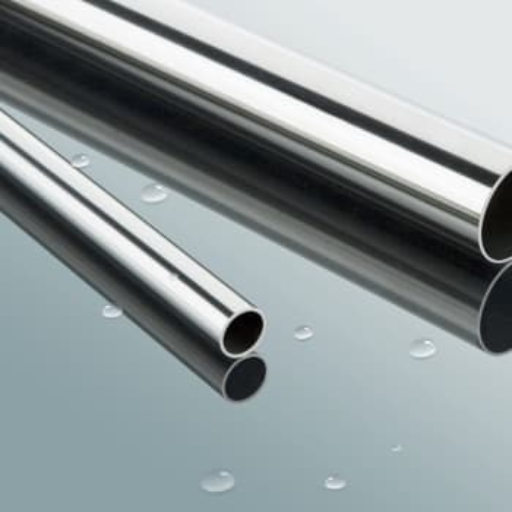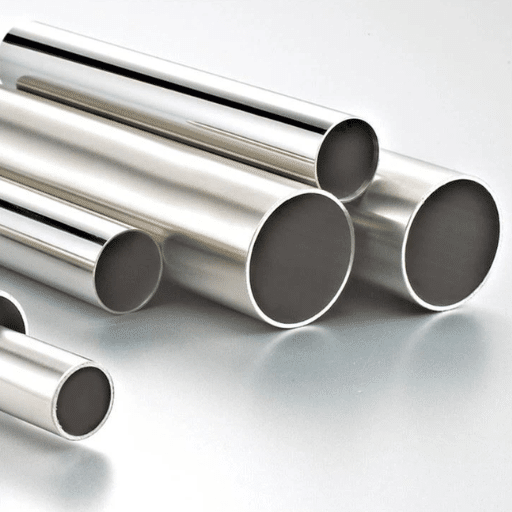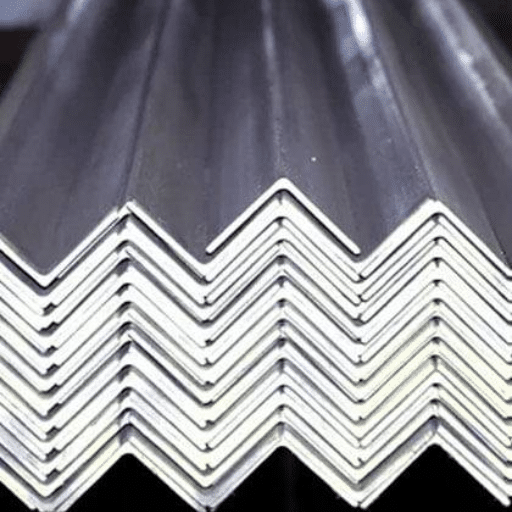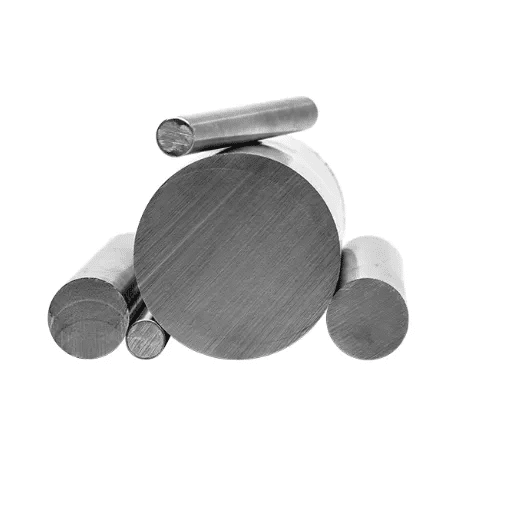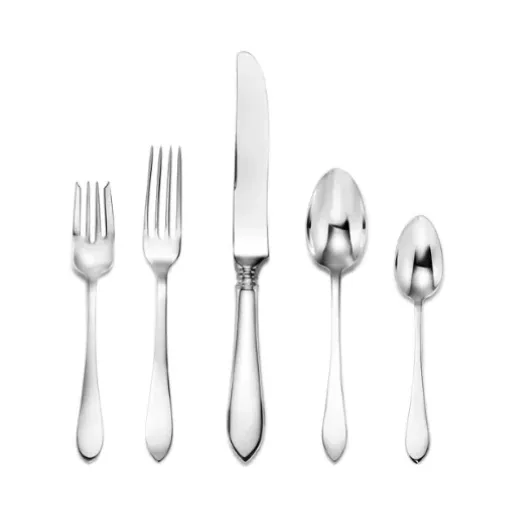
There is a special type of stainless steel where there is no nickel. This small difference could save you from using 20% to 30% more expensive materials, yet it will still work for your project.
After the war, Marcus Chen handed over the possession of home kitchen appliances as fire doors, and food preparation equipment, and Nicholas was found standing an inch, 316, or a nickel stainless sheet would only cost a grade of material. All Marcus wanted out of his project was from corrosiveness, a very clean finish, but definitely not the extreme chemical resistance grades of nickel-bearing. The move caused a fall of his favorite 18/8 stainless steel of $100 in the making budgets, and over three years, the device excelled in the use of foodservice environments.
It is a grade of stainless steel, a ferritic type indeed, but without nickel addition to keep just the advantageous stainless steel corrosion resistance properties. The usefulness of this grade lies in using it when necessary and avoiding it when it will bring huge cost, operation, and manufacturability repercussions.
This guide will attempt to tell you everything about 18/0 stainless steel, the differences with 18/8 or 18/10 grades, uses in real-life manufacturing applications, and how to use it to make an educated decision.
What Is 18/0 Stainless Steel?
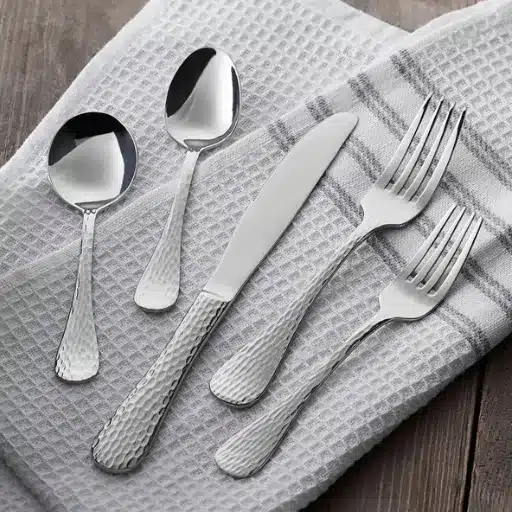
Chemical Composition and Metallurgical Classification
An 18/0 stainless steel is a ferritic stainless grade containing nearly 18 percent chromium and 0 percent nickel apart from iron; slight amounts of carbon, manganese, and other trace elements add up to the overall composition. The name or designation of this material in the ASTM specifications is of Type 430 or UNS S43000. The European Bureau of Standards has designated it as 1.4016, but according to JIS standards, the name is SUS430.
The composition of the alloy is found by the coded number “18/0”:
- 18 = approximately 18% chromium content
- 0 = 0% nickel content (technically less than 0.5%)
This made 18/0 belong in the precious ferritic family, wherein the basic body-centered cubic (BCC) crystal facets are seen. Unlike the austenitic grades (18/8, 18/10), which contain nickel in it and are face-centered cubic (FCC), ferritic grades are magnetic and generally cheaper due to incomplete nickel deposits.
Typical Chemical Composition (wt%)
| Element | 18/0 (Type 430) | Range |
|---|---|---|
| Chromium (Cr) | 16.0 – 18.0% | 16-18% |
| Nickel (Ni) | 0% | <0.50% |
| Carbon (C) | 0.12% max | <0.12% |
| Manganese (Mn) | 1.0% max | <1.0% |
| Silicon (Si) | 1.0% max | <1.0% |
| Iron (Fe) | Balance | Remainder |
The chromium content forms a passive oxide layer (Cr₂O₃) on the surface that provides corrosion resistance. Without nickel, the material cannot form austenite at room temperature, resulting in the ferritic microstructure that defines this grade’s properties.
How the Stainless Steel Grading System Works
Explaining the designation 18/0 requires some context on how stainless grades are classified. The amount of chromium vs. nickel within the alloy decides most of the stainless steel’s features.
Chromium and its minimum content in each alloy form the passive self-healing barrier responsible for the corrosion resistance that all stainless steel demonstrates. As such, it should be at least 10.5%. Greater chromium content provides better corrosion resistance. There is also an increase in oxidation resistance at increasing temperatures.
Nickel and its incorporation into the material typically help in improving the weldability, corrosion resistance, and formability of the material in harshly acidic environments while also rendering the austenitic material nonmagnetic. Yet, the biggest fluctuation is in its costs. As nickel prices surge, the difference in the cost of 18/0 versus 18/8 grades skyrockets.
Is there any reason you shouldn’t use moly-nickel? For purplications that austenitic grades provide better because it means the additional properties aren’t necessary, the moly-nickel does not diminish the basic performance. Moly-nickel would save on costs; molybdenum does not provide significant strength. Ferritic structure would also be an advantage in that area, magnetic properties for induction cooking, as well as improved thermal conductivities from that material for applications in heat exchange and resistance to stress-corrosion cracking.
18/0 vs Other Stainless Steel Grades

Selecting the right stainless steel grade requires comparing 18/0 against the more common alternatives. Here’s how it stacks up against 18/8 and 18/10 grades.
18/0 vs 18/8 Stainless Steel (Type 304)
18/8 stainless steel, commercially known as Type 304 or UNS S30400, contains approximately 18% chromium and 8% nickel. This is the most widely used stainless steel grade globally.
| Property | 18/0 (Type 430) | 18/8 (Type 304) |
|---|---|---|
| Chromium | 16-18% | 18-20% |
| Nickel | <0.5% | 8-10.5% |
| Structure | Ferritic | Austenitic |
| Magnetic | Yes | No |
| Tensile Strength | 450-600 MPa | 515-750 MPa |
| Corrosion Resistance | Good | Better |
| Formability | Moderate | Excellent |
| Relative Cost | Low | Medium |
When to choose 18/0 over 18/8:
- Cost-sensitive applications where atmospheric corrosion resistance is sufficient
- Applications requiring magnetic properties (induction heating, magnetic separation)
- Moderate temperature applications below 800°C
- Decorative and architectural uses where high formability isn’t required
When 18/8 is the better choice:
- Aggressive chemical environments (chlorides, acids)
- Deep drawing or complex forming operations
- Welded structures requiring maximum toughness
- Cryogenic applications
- Applications requiring non-magnetic properties
18/0 vs 18/10 Stainless Steel (Type 316)
The 18/10 stainless steel, otherwise known as Type 316 (UNS S31600), an 18/8 alloy which has 2-3% molybdenum inclusion, which greatly enhances its resistance to chlorides and acids, places this material as the premium grade for marine, chemical, or pharmaceutical requirements.
18/0-18/10 performance gap:
- Corrosion resistance: The 18/10 is far superior in saltwater, chemical processing, and acid environments
- Cost: Approximately 40-60%-higher cost usually attributed to its nickel and molybdenum composition in comparison with18/0
- Applications: Marine hardware, chemical tanks, medical devices, pharmaceutical equipment
Key insight: 18/0 is not equal to 18/10 in terms of serious situations. However, for interior architectural elements, appliance panels, and very low atmospheric exposure,18/0 suffices at nearly half the cost.
18/0 vs Type 430: Are They the Same?
18/0 and Type 430 are more common right now in the market. Type 430 is an ASTM analog, but 18/0 is the marketer’s name regarding chromium and nickel constituting the grade.
There are variations in the Type 430 family:
- Type 430: the basic grade has standard carbon content.
- Type 430F: A higher degree of machinability has been added by the inclusion of sulfur.
- Type 430Ti: made stable through titanium, so welding can be improved.
- Type 439: Low-Carbon, Titanium-stabilized, is yet another variation with the improvement of corrosion resistance.
For the bulk of industrial applications, basic Type 430 (18/0) offers the best relation to property and cost.
Physical and Mechanical Properties

Understanding the precise properties of 18/0 stainless steel enables accurate material selection and engineering design.
Key Mechanical Properties
| Property | Value | Notes |
|---|---|---|
| Density | 7.75 g/cm³ | Similar to carbon steel |
| Tensile Strength | 450-600 MPa | 65-87 ksi |
| Yield Strength (0.2%) | 240-310 MPa | 35-45 ksi |
| Elastic Modulus | 200 GPa | 29,000 ksi |
| Elongation | 20-25% | In 50mm |
| Hardness (Brinell) | 150-190 HB | Annealed condition |
Strength characteristics: Despite falling short in tensile and yield strength to austenitic grades, 18/0 should generally possess sufficient strength features for such applications. But work hardening during forming might be advantageous to some applications, but it poses a problem during manufacturing layout.
Magnetic properties: Strongly magnetic, 18/0 can easily be distinguished from austenitic classes as it is a ferritic material, which makes it suitable in applications that involve magnetic separation, induction heating, and electromagnetic shielding.
Thermal conductivity: Not less than 25 W/m·K of thermal conductivity by 18/0 is good enough, offering about 40% better conductivity than austenitic grades. As for heat transfer efficiency, this is the significant reason why between helping other heat exchangers, make up parts of the furnace, and besides general kitchen applications.
Corrosion Resistance Performance
A typical one contains 18% chromium and causes it to have high resistance to atmospheric corrosion in mild chemicals and high temperatures. It forms a protective oxide, making it free of corrosion even in the smallest indoor and outdoor surroundings.
Where 18/0 performs well:
- Indoor and outdoor atmospheric surroundings
- Fresh water or steam environments
- Mild organic acids (like acetic acid, citric acid)
- Oxidizing environments up to 800°C
- Applications subjected to frequent cleaning and maintenance
But limitations include:
- Chloride environments: Pitting and crevice corrosion in seawater or saltwater immersion is far worse than in 316 stainless since there is no nickel and less molybdenum, so that the resistance to corrosion goes lower.
- Strong acid: Very strong to weak acids-sulfuric, hydrochloric, phosphoric.
- Stress corrosion cracking: corrosion resistance occurs in metastable ferritic grades, while stainless steels demonstrate a more complex damage mechanism at sustained stress.
Industrial Applications
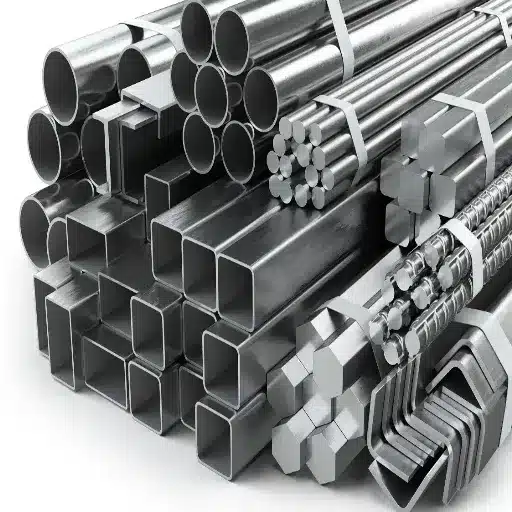
While most articles focus on flatware, 18/0 stainless steel serves critical functions across multiple industrial sectors.
Food Service and Commercial Kitchen Equipment
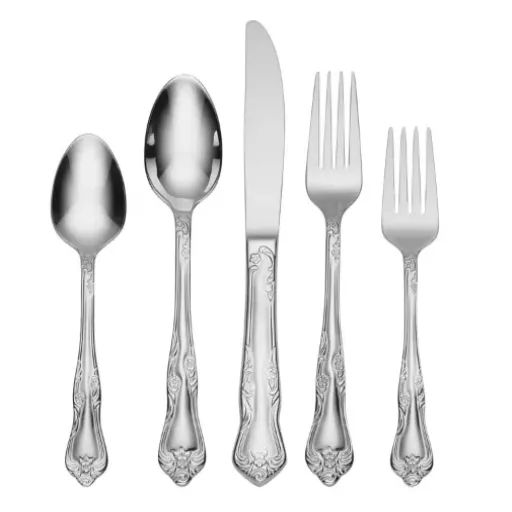
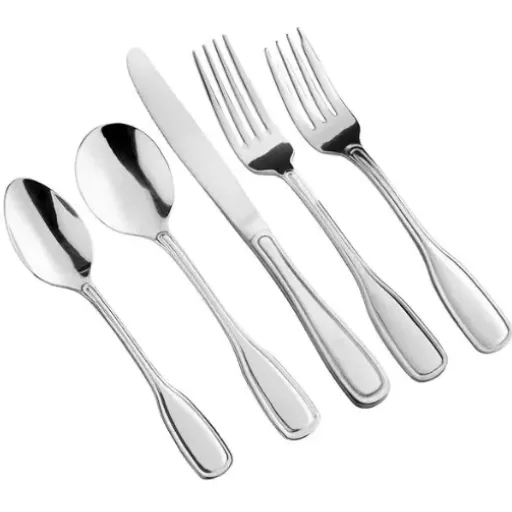
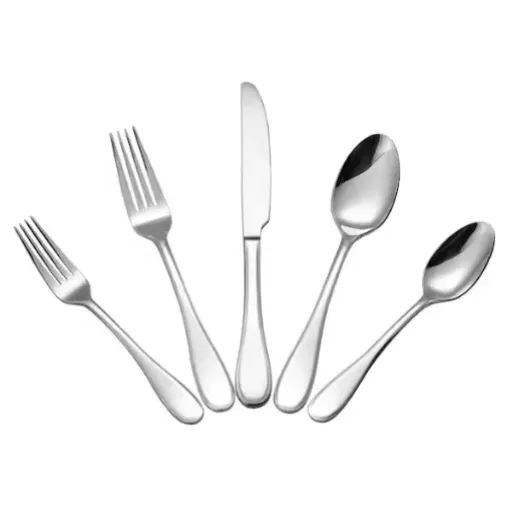
Flatware, utensils, and serving equipment represent the most visible application of 18/0. Approximately 75% of commercial food service flatware uses this grade because it provides:
- Adequate corrosion resistance for repeated washing
- Sufficient hardness for durability
- Cost efficiency for high-volume purchasing
- NSF compliance for food contact
Beyond flatware, 18/0 appears in:
- Commercial kitchen surfaces and splashbacks
- Food preparation tables and shelving
- Dishwasher interiors and racks
- Refrigerator liners and panels
- Display cases and serving counters
When the Acme Restaurant Supply Company switched from 304 to 430-grade stainless for their commercial refrigerator panels, they reduced material costs by 25% without affecting product lifespan. The panels showed equivalent corrosion resistance in typical kitchen environments after five years of service.
Automotive Industry
Exterior trim and decorative components frequently use 18/0 stainless steel. The grade provides:
- Excellent polishing characteristics for bright finishes
- Sufficient corrosion resistance for road salt exposure
- Cost-effectiveness for high-volume production
- Good formability for complex shapes
Typical automotive applications:
- Decorative trim strips and moldings
- Exhaust system heat shields
- Wiper arms and brackets
- Fuel line shields
- License plate frames
Appliance Manufacturing
For its panels, doors, and interior parts, refrigerators, dishwashers, electric ranges, and laundry equipment often employ 18/0. Some of the things that can be expected to make this material excellent are:
- Polished or brushed finishes that result in an attractive appearance
- Good thermal conductivity beneficial for carrying out cooling applications
- The magnetic properties allow induction cooking
- Low cost that makes competitive appliance pricing possible
Some of the specific applications include the following:
- Refrigerator door panels and handles
- Dishwashers for tubs and racks in a set
- Range hoods and backsplashes
- Washing machine drums in some models
- Inner parts of microwave ovens
Architectural and Decorative Applications
18/0 Stainless steel is becoming a market for basic materials besides.:
- Paneling and an elevator trim
- Wall and column/aldepartment-cladding-punctuator panels
- Balustrades and handrails
- Decorative screens and partitions
- Signs and display fitting
The finishes that can be applied to any surface vary, such as brushed, polished, or embossed, colored, while the flexibility to design ranges from costs lower than austenitic grades.
Heat Transfer and High-Temperature Applications
Furnace components, heat exchangers, and combustion equipment benefit from 18/0’s thermal properties:
- Better thermal conductivity than austenitic grades
- Oxidation resistance up to 800-850°C
- Lower thermal expansion than austenitic grades
- Cost efficiency for large-scale heat exchange equipment
Processing and Fabrication Characteristics
Successful use of 18/0 stainless steel requires understanding its fabrication behavior.
Machining Characteristics
18/0 machines more easily than austenitic grades due to its ferritic structure and lower work-hardening rate. However, it produces long, continuous chips that can interfere with machining operations.
Machining recommendations:
- Use sharp, positive-rake cutting tools
- Maintain adequate cutting speeds (slightly lower than carbon steel)
- Apply cutting fluid to manage heat and chip formation
- Consider free-machining 430F grade for complex machined parts
- Expect tool life between carbon steel and austenitic stainless grades
Welding Considerations
Physical grain growth and weld embrittlement in the heat-affected zone are downsides of detrimental welding with 18/0 steel, versus the austenitic grades.
Welding guidelines:
- Preheat: Not generally required for thin sections, but for thick sections of more than 6 mm, a preheat of around 100-200° C is suggested.
- Filler metals: Identify a filler that is 430 or the expansion of the austenitic 308L/309L series, followed by enhanced toughness.
- Heat input: Maintain the lowest practical heat input and thereby minimize grain growth.
- Postheating: So in critical cases that demand maximum ductility, process at 750-850°C.
- Avoid: Try not to perform autogenous welding, which is devoid of filler, which may result in cracking.
Forming and Bending
Compared to austenitic grades, 18/0 is better for formability but poorer relative to martensitic grades.
Forming parameters:
- Minimum bend radii: 2-3x material thickness (vs. 0.5-1x for 304)
- Deep drawing: Not so good compared to 304; contemplate intermediate annealing if severe draws are your experiences
- Springback: Higher than any austenitic grade owing to higher yield strength
- Surface finish: Bright finishes are achievable, but usually need more passes than 304
Best practices:
- Use a minimum bend radius to avoid fracturing.
- An intermediate anneal between forming stages is used to bring about complex shapes.
- Lubricate forming tools to resist galling.
- Expect more springback in the design.
Standards and Specifications
Procurement of 18/0 stainless steel requires understanding relevant standards and certification requirements.
ASTM Standards
ASTM A240/A240M: Standard Specification for Chromium 18 and Chromium-Nickel 8- Stainless Steel Plate, Sheet, and Strip for Pressure Vessels and for General Applications
- Chemical composition shall be reviewed
- Mechanical properties of the materials collectively must be verified
- Surface finish options are taken into account
- It specifies inquiries and tests for butt inspection of the finished Coil or cut material
ASTM A276: Standard Specification for Stainless Steel Bars and Shapes
- Covers bar, rod, and shape products
- Includes mechanical property requirements
- Addresses heat treatment conditions
ASTM A479/A479M: Standard Specification for Stainless Steel Bars and Shapes for Use in Boilers and Other Pressure Vessels
- If intended for pressure-containing applications:
- Includes tests beyond those specified.
International Equivalents
| Standard | Designation | Equivalent Grade |
|---|---|---|
| ASTM | UNS S43000 | Type 430 |
| EN | 1.4016 | X6Cr17 |
| JIS | SUS430 | SUS430 |
| GB/T | 10Cr17 | 1Cr17 |
| ISO | 430-304-00-I | Type 430 |
Cross-referencing these standards ensures material compatibility across global supply chains. When sourcing internationally, verify that the specified grade meets your project’s standard requirements.
Certification Requirements
Mill Test Reports (MTR) should include:
- Analysis of chemical composition
- Results of mechanical tests (tensile, hardness)
- Heat number and further information about traceability
- Statutory confirmation according to the relevant norms
- Third-party inspection certificates (IF REQUIRED)
For critical applications, consider requesting:
- PMI Test (Positive Material Identification)
- Intergranular Corrosion Testing (ASTM A262)
- Surface roughness measurements
- Dimensional inspection reports
Procurement Guide for Industrial Buyers
Selecting and sourcing 18/0 stainless steel requires systematic evaluation of your application’s requirements.
When to Specify 18/0
Ideal applications for 18/0 stainless steel:
- Budget-limited jobs where the ambient corrosion resistance is sufficient in the design
- Applications requiring magnetic properties
- Heat transfer equipment where thermal conductivity matters
- Decorative applications with moderate forming requirements
- Automotive trim and appliance panels
- Food service equipment in non-aggressive environments
Checklist for 18/0 suitability:
- Operating temperature below 800°C
- No exposure to chlorides or salt spray
- No strong acid exposure
- Moderate forming requirements only
- Magnetic properties acceptable or desired
- Cost optimization is a priority
Quality Verification
Chemical composition check:
- Request mill test certificates, complete with the actual chemical analysis
- Verify nickel content within the 0.5 % limit
- Confirm the chromium concentration between 16% and 18%
- Make it a point to have third-party PMI testing for critical applications
Mechanical properties testing:
- Tensile strength: 450-600 MPa
- Yield strength: 240-310 MPa
- Minimum Elongation: 20%
- Hardness test to the specified condition (annealed, half-hard, etc.)
Surface quality inspection:
- Verify surface defects on proper norms (scratch, dent, rolling planispheres).
- Surface finish matches documented technical standard (2B, BA, No. 4, etc.).
- Measure the thickness tolerance agreement.
- Inspecting an edge (whether it is a slit, sheared, or mill edge).
Supplier Selection Criteria
Evaluate potential suppliers on:
Technical capabilities:
- Experience with 18/0/Type 430 production
- Range of available sizes and thicknesses
- Processing services (cutting, slitting, polishing)
- Technical support and material selection guidance
Quality systems:
- ISO 9001 certification
- Documented inspection and testing procedures
- Material traceability systems
- Non-conformance handling procedures
Supply chain factors:
- Inventory availability and lead times
- Packaging and shipping capabilities
- Export documentation experience
- Minimum order quantities and pricing structures
Want a quote for your 18/0 stainless steel requirements? Contact our sales team with your specifications for competitive pricing and fast delivery.
Advantages and Limitations
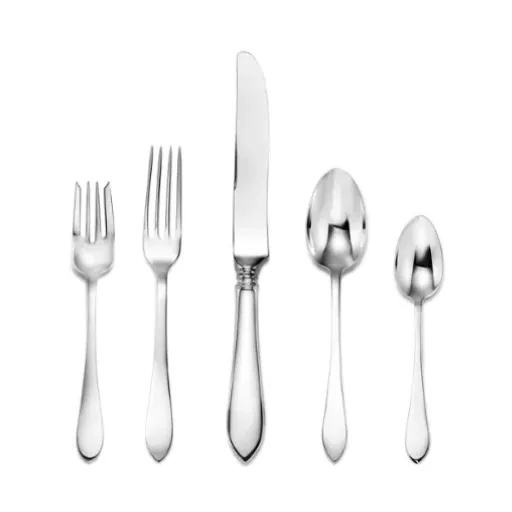
Every material involves trade-offs. Understanding both sides enables informed decisions.
Advantages of 18/0 Stainless Steel
1. Cost effectiveness: Compared to the typical 18/8 grades, the absence of nickel reduced material costs by around 30-20%. The advantage of this increases when nickel prices go up.
2. Magnetic properties: 18/0 is strongly magnetic, unlike austenitic grades; hence, it can also be used for induction cooking, magnetic separation devices, and electromagnetic shielding.
3. Thermal conductivity: About 40% higher thermal dissipation in heat transfer applications can be achieved with this grade when compared to conventional austenitic grades.
4. Heat resistance: Can easily resist oxidation in an air environment up to 800°C. For furnace parts and other equipment, oxidation resistance is appreciable.
5. Stress corrosion cracking resistance: Ferritic stainless steel is resistant to chloride stress corrosion attack, which otherwise affects austenitic stainless steel.
6. Recyclability: A species of 18/0 is 100 % recyclable, which means that when it enters the recycling chain, various nickel pollutants do not infiltrate it.
Limitations to Consider
1. Poor resistance to corrosion: 18/0, despite its suitability for exposure to atmospheric conditions, does not compete well when pitted against nickel-bearing grades in very aggressive environments.
2. Limited flexibility form: It cannot be made in any form of deep drawing severe form; It is as flexible as easily as austenitic grades. For example, very complex shapes might involve intermediate annealing.
3. Problems with welding: It is important to exercise greater control during welding than with austenitic grades. The heat-affected zone might see grain growth and a reduction in toughness.
4. Lower strength: Its tensile and yield strengths are lower than those of austenitic grades. Nevertheless, they are adequate for most applications.
5. Not suited for cryogenic applications: Unlike austenitic grades that remain tough when exposed to low temperatures, ferritic grades become so brittle.
Conclusion
Stainless steel 18/0 is applied to certain strategic areas of choice, depending on whether you need resistance against corrosion, magnetic qualities, and cost-effectiveness without the added properties (and expenses) of nickel-bearing grades.
The key takeaways for procurement decisions:
- 18/0 for use in environments prone to atmospheric attack, in magnetic applications, and in heat-transfer equipment and cost-sensitive contracts
- 18/0 for reuse in aggressive chemical environments, when exposed to chloride, in deformation defenses against closure, or when working on cryogenic structures
- Guaranteeing quality exactitude with these mill test reports, chemical composition verification, and mechanical property review
- Fabrication requirements include whether 18/0 forms and weld differently from austenitic grades.
Before you acquire 18/0 stainless steel, choose a supplier who recognizes the properties of the grade and offers certification, traceability, and technical services. This will cover his assistance in ensuring that his production would have consistent material quality and timely delivery.
Need certified 18/0 stainless steel for your project? Request a quote from Jiangsu Zhonggongte with your exact specifications. We supply Type 430/UNS S43000 materials with full ASTM compliance, mill test reports, and global delivery support.
FAQ
What does 18/0 mean in stainless steel?
18/0 means that the stainless steel has about 18% chromium and 0 nickel; that is the stainless steel has less corrosion resistance than the grades that contain nickel but is far less expensive.
Is stainless steel 18/0 magnetic?
Yes, the ferrous category is magnetic because 18/0 stainless steel is ferritic. 18/0 stainless steel is highly magnetic, whereas 18/8 and 18/10 grades have only a little magnetic attraction for the user.
Would stainless steel 18/0 rust?
18-0 stainless steel is more resistant to corrosion in the atmosphere and less severe environments, in chloride-rich conditions (dew night, acid rain), it corrodes much faster than those with nickel in it.
Is 18/0 better than 18/8?
In fact, they are almost similar in comparison with price. The savings on this part are because it is related like a harmonic one with magnetic features. Best is that when compared with 18/0, the matters of formability and corrosion resistance are all the more resolved with the use of 18/8. Your decision should, therefore, be able to fulfill your needs.
What is the ASTM designation for 18/0?
18/0 corresponds to ASTM Type 430, also designated as UNS S43000.
Is 18/0 safe for food contact?
Yes. NS standards and FDA regulations permit the use of 18/0 in materials that come into contact with food, including commercial food service and flatware.