The strategy squad at a marine engineering company based in Singapore encountered a very peculiar situation during the last quarter: an age-old crisis: Whether to go for silver-plated contacts within the latest seawater pumping system, or to make 316L stainless steel the order of the day. As of now, they are pretty metallic and corrosion-resistant. But one mistake would put the project out of thousands in maintenance and replacement of parts.
If you would like to choose between silver and stainless steel, you should know that the difference is not only the look. It refers to its chemical composition, whether or not it has mechanical properties, corrosion behavior, and the range of its real-life applications.
The editorial breaks down what these materials really are and discusses harsh physical properties that set both metals apart. Users will find pointers on conducting an industrial comparative study on these two alloys as well as their usage and potential performance environments to match the kinds of projects they need.
What Is Stainless Steel?

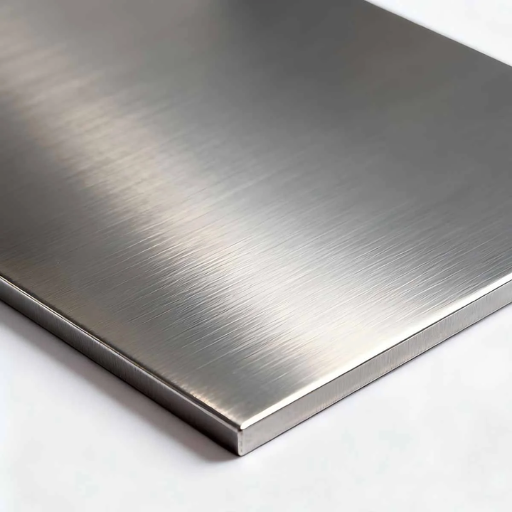
Containing about 16-18% of that compound as 304, chromium is an important iron-based alloy element. Outperforming corrosion protection is a passive layer having self-healing characteristics by combining the chromium content at concentration points. Physical Properties of AISI 316L — MFG Shop
316L has a composition of approximately 10-14% nickel and 2-3% molybdenum. Nickel helps in protecting austenite when toughening agents and formability are a requirement. On the other hand, the molybdenum element is the principal necessity with respect to chloride resistance. That is why 316L remains the standard choice for all marine installations, with only a few exceptions and within the chemical industry.
Key Mechanical and Physical Properties of 316L
| Property | Value |
|---|---|
| Tensile Strength (annealed) | 485-620 MPa |
| Yield Strength | 170-290 MPa |
| Hardness | 150-300 HV |
| Density | ~8.0 g/cm^3^ |
| Melting Point | 1,400-1,500 degreesC |
| Thermal Conductivity | ~15-19 W/(m*K) |
The explanation for these numerical figures is stainless steel’s predominance in structural applications. Indeed, it exhibits high strength, high hardness, and thermal stability far beyond the capacity of other non-ferrous metals.
What Is Sterling Silver? Stainless Steel vs Sterling Silver Explained
As an alloy of 92.5% of silver and 7.5 % copper, sterling silver is marked by 925. Fine silver lives with 99.9% purity, but it is too soft to form most of the structural parts. Little copper in sterling silver reduces but does not preclude any non-galvanically induced local corrosion in selective industrial environments. StaPro Group-Stainless Steel vs Sterling Silver
Other silver grades include:
- Fine silver (99.9% Ag): The highest conductivity, low in strength
- Sterling Silver (92.5% Ag, 7.5% Cu): Standard of jewellery and decoration
- Coin silver (90% Ag, 10% Cu): Alloy used in historical currency,: not used in engineering.
Key Properties of Sterling Silver
| Property | Value |
|---|---|
| Tensile Strength | 170-350 MPa |
| Hardness | 60-100 HV |
| Density | ~10.4 g/cm^3^ |
| Melting Point | ~893 degreesC |
| Electrical Conductivity | ~96-100% IACS |
The conductivity is exceptional. But the hardness and strength are roughly one-third of 316L stainless steel. That limits sterling silver to non-structural, low-wear applications.
Engineering note: Sterling silver is NOT a chemical-process engineering material. In electrolyte environments, the copper-rich phase creates a duplex microstructure prone to galvanic attack. For industrial use, engineers specify high-purity silver coatings or linings–not bulk sterling silver.
Silver vs Stainless Steel: Head-to-Head Property Comparison
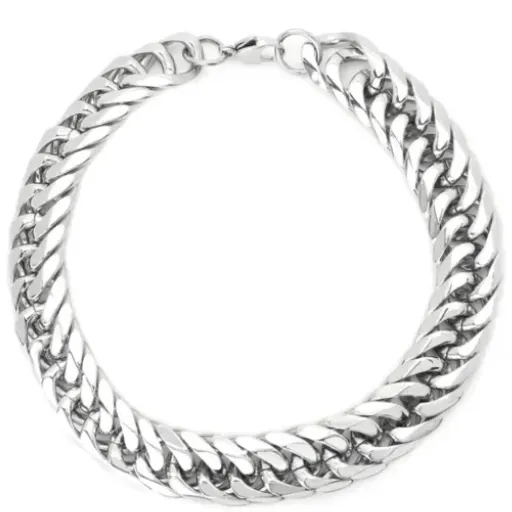
When you place these materials side by side, the trade-offs become obvious. One is built for structural loads and corrosion resistance. The other is built for conductivity and surface function. For engineers running a 316L silver comparison, the real question is whether you need a structural substrate, a functional surface, or both. If you are also weighing jewelry-grade materials, see our dedicated guide on stainless steel vs sterling silver.
Strength and Hardness
316L is the stainless steel typically known to exhibit strength of 485-620 MPa in the annealed condition, while ~795 MPa when work-hardened. Sterling silver has a maximum of about 170-350 MPa. Hence, practically speaking, stainless steel has twice or thrice the ability to carry mechanical load before it hits its proportional limit.
Stiffness also acts according to the same phenomena. The hardness of 316L is 150-300 on the Hiring Wicker scale, and silver is from 60 to 100 HV; Thus, stainless steel can prevent any scratch, abrasion, or wear, which silver will not.
Electrical and Thermal Conductivity
This is one place where the whole situation gets turned around. Sterling silver has a specific electrical conductivity of about 96-100% IACS and thermal conductivity ranging around 420 W/(mK). On the other hand, stainless steel 316L has a modest thermal conductivity of around 15-19 W/(mK) and disastrous electrical conductivity (~1.4% IACS).
Silver is used for electrical contacts, bus bars, and RF connectors, whereas for heat exchangers and structural frames, stainless steel has outpaced them totally in terms of strength and cost.
Density and Melting Point
Silver density is definitely higher — 10.4 g/cm^3 as compared to 8.0 g/cm^3 for 316L. This tells us that components made of silver weigh around 30% more for the same volume. On the other hand, stainless steel melts at temperatures of 1,400-1,500 ℃, while sterling silver melts much lower, at ~893 ℃. Steel is four times better for use at high temperatures.
Magnetic Behavior
Both materials are not generally magnetic, but can get slightly magnetic under certain conditions. Austenitic steel is typically magnetic. In contrast, its unstable counterpart, the 316L, is non-magnetic in its annealed state; however, slight magnetism can be achieved through cold working itself. Therefore, silver is considered a basic non-magnetic substance, a diamagnetic metal. These two substances can be used with tools that are sensitive to magnetic fields.
Corrosion Resistance: Silver vs Stainless Steel in Chemical Environments
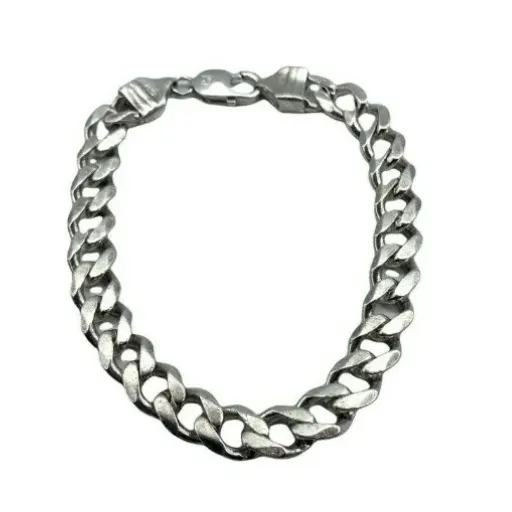
The corrosion mechanisms of these two materials could not be more different. Understanding them is essential for material selection.
The Stainless Steel Defense: Cr2O3 Passive Film
Due to its very thin chromium oxide layer, which is transparent, stainless steel is able to protect itself. These layers can reform themselves virtually instantaneously if, in an oxygen-containing environment, they suffer any chemical or mechanical disruption by way of scratching. This is why 316L is so effective amid mild acids and atmospheric excursions.
The chemistry of 316L has been enriched by the addition of molybdenum, which resists even pitting and crevice corrosion in chloride media already. It makes the grade for high-depth marine insufflations, seawater systems and installations, chemical plants in use for critical service, and equipment for desalting purposes.
The Silver Challenge: Tarnish and Sulfidation
Silver does not rust like iron. But it does tarnish. When exposed to sulfur compounds–even trace amounts in industrial air or hydrogen sulfide (H2S)–silver forms silver sulfide (Ag2S). This dark layer degrades the surface appearance and can increase contact resistance over time.
Silver also suffers in strong oxidizing acids like nitric acid, and it dissolves in concentrated ammonia. In chloride environments, silver actually performs reasonably well, which is why silver plating is sometimes used as a barrier coating on steel for marine fasteners.
Practical lesson: A Mumbai power distribution firm’s design squad demanded a sterling silver bus-bar system in an outdoor substation at the level of 92.5% of silver, with the belief that it was enough for the project. Until a thick layer of silver sulphide was formed on the contacts’ surfaces by the air’s wetness and accompanying sulfur compounds within six months of installation, then the initial conductivity would definitely stand. All maintenance eventually tripled. The engineering team eventually replaced the conductor bars with silver-plated copper, which endured conductivity but did away with the structural weaknesses caused by using bulk sterling silver.
Industrial Applications Beyond Jewelry
While most discussions for stainless steel vs sterling silver lead to jewelry blogs, the real engineering story happens in aerospace, power generation, and chemical processing.
Electrical Contacts and RF Connectors
Silver has the highest electrical conductivity of any metal. In high-frequency connectors, power contacts, and slip rings, silver plating minimizes contact resistance and passive intermodulation. Bare stainless steel, by contrast, forms an insulating chromium oxide layer that makes it unsuitable for current-carrying surfaces.
Anti-Galling Coatings and High-Temperature Fasteners
This is where silver-plated stainless steel components become essential. Stainless steel provides the structural strength. Silver plating provides the lubricity.
When 316L stainless steel threads are mated against each other under high torque and temperature, the passive oxide film can scrape away, causing destructive galling. The standard aerospace solution is silver plating per AMS 2411 on lock nuts, bolts, and bushings. The silver layer embeds debris, reduces friction, and prevents seizing–even after hundreds of thermal cycles. Advanced Plating Technologies — Silver Plating on Stainless Steel
Case in point: When aerospace engineers at a turbine manufacturer in Germany assembled a series of 316L stainless steel lock nuts for jet engine housings, the threads seized during the first hot-cycle test. The oxide layer on bare stainless steel had cold-welded under torque and temperature. Their solution was a 25-micron silver plating deposit per AMS 2411. The silver layer provided high-temperature lubricity, and disassembly became routine–even after 500+ thermal cycles.
Brazing and Soldering
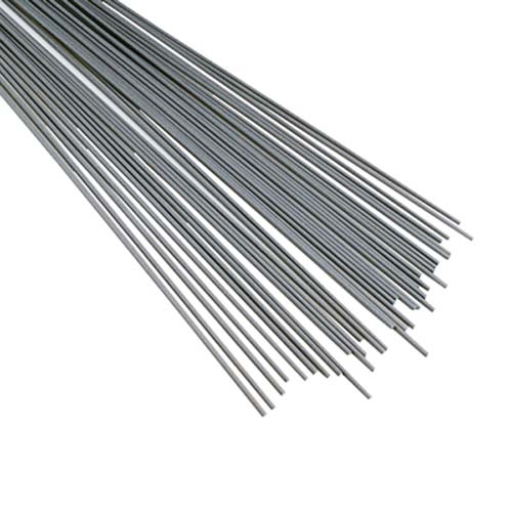
Stainless steel is notoriously difficult to braze directly because its tenacious oxide film prevents wetting by filler metals. A nickel strike followed by silver plating activates the surface, making brazing and soldering far more reliable. Brazed silver-to-steel joints achieve bond strengths of 80-120 MPa with very low contact resistance.
Chemical Processing and Food-Pharma Equipment
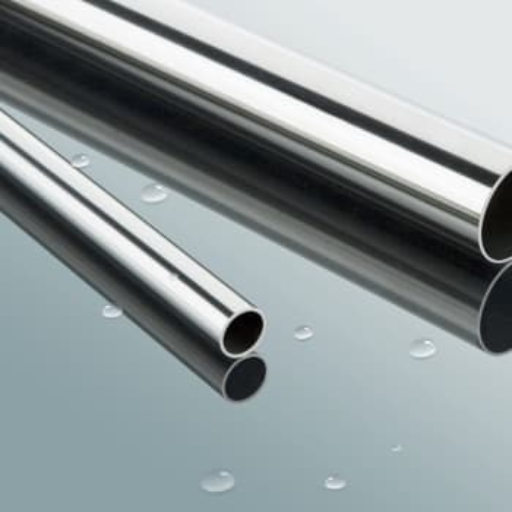
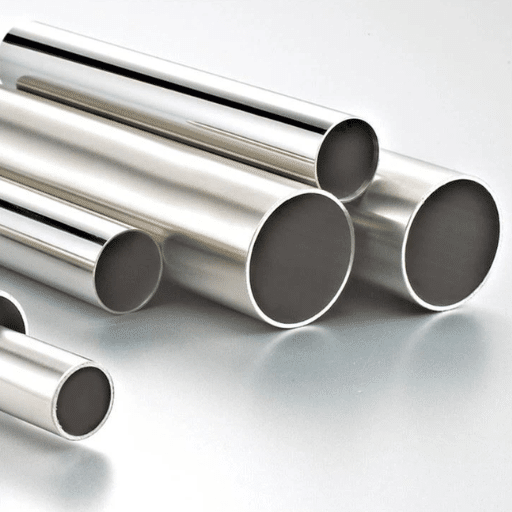
In chemical plants, stainless steel 316L is the dominant structural material for vessels, piping, and pumps. High-purity silver–not sterling silver–is occasionally used as a lining for food and pharmaceutical equipment because it does not impart a metallic taste and maintains product purity.
When to Choose Silver–and When to Choose Stainless Steel
The right choice depends on what the material must do, not what it looks like.
Choose Silver (or Silver Plating) When:
- Maximum electrical or thermal conductivity is required
- Antimicrobial surface properties are medically necessary
- The design demands intricate forming, fine detail, or easy soldering
- You need a high-temperature anti-galling or anti-seize coating
- Precious-metal value is a design requirement
Choose Stainless Steel (Especially 316L) When:
- Structural loads, wear resistance, or impact resistance are critical
- The component faces chloride-rich, marine, or chemical-process environments
- Operating temperatures exceed 400 degreesC
- Low lifecycle cost and minimal maintenance are priorities
- You need a non-magnetic structural material at a stable cost
When They Work Together
Stainless steel with a silver coating brims with the best of both worlds. As with it, the steel substrate is resistant to strains. The silver surface gives a good compromise on the issues of conductivity, lubricity, and potential for brazing. Specifications as given by AMS2411 cover these coatings for aerospace and power generation fasteners.
Cost, Sustainability, and Lifecycle Value
Raw material cost is only part of the equation.
Material Cost Comparison
Stainless steel is inexpensive and stable, typically around 2perounce.Silverspotpricesfluctuatearound2perounce.Silver prices fluctuate around $25 per ounce or more. For large components, that price gap becomes enormous. Silver is rarely used as a bulk structural material for this reason alone.
Maintenance and Lifecycle Costs
Obviously, stainless steel requires almost no maintenance in normal environments. It has an extremely durable passive film. Silver, on the other hand, may prove troublesome and require protective coatings of rhodium plating or regular cleaning from tarnishing in sulfur-bearing atmospheres. These maintenance and life-cycle costs are generally overlooked by procurement teams.
Recyclability
One of the great advantages of the two is that both of them are rurally 100% recyclable. Along with a high intrinsic value being retained in precious-metal scrap, stainless steel scrap tends to be found quite widely and remelted. Sustainability issue, well, both the materials score well, even though stainless steel has the least or lowest content for the environment due to mining and processing operations per kilogram.
Conclusion
There is no clash between silver and stainless steel since both kinds of stainless steel have been engineered for two entirely different performance requirements.
Stainless steel type 316 appears to be controlling the issues regarding the requirement of strength and corrosion resistance, as well as thermal stability. This material is strong enough that it is the material of choice as a support for chemical plants, marine systems, and medical gadgets.
Silver is silver when it comes to conductivity, antimicrobial property, or high-temperature lubricity. Generally, it is only regarded as a plating or coating in most general-purpose, heavy industrial applications–practically not used in the structural area.
These situations seem better managed when a mix of them is proposed. More often than not, it is silver-plated stainless steel fasteners, contacts, and bearings. This is due more to the fact that, combining the structure to the same extent as surface behavior, it is a good solution at some best combination points.
We are capable of providing you with certified alloys with full traceability for those projects. 316L stainless steel, nickel, and custom-processed materials are all available alike, so that every lot comes with MTRs and certification data.