Inconel 718 hardness is one of the first properties engineers check on a mill test report, but the number is meaningless without knowing the material condition. A value of 38 HRC tells you the alloy is in the precipitation-hardened state. A value of 22 HRC tells you it is solution-annealed and ready for machining. A value of 48 HRC tells you the material has been cold-worked and aged for maximum strength.
Each condition is correct for a different application, and each requires a different fabrication strategy.
The problem for buyers is that suppliers sometimes quote “Inconel 718 hardness” as if it were a single value. It is not. Hardness depends on heat treatment, cold work, grain size, and melt practice.
Receiving material in the wrong condition can delay machining, fail incoming inspection, or cause premature wear in service. For critical applications, hardness must be specified, tested, and documented according to a recognized standard.
This guide explains Inconel 718 hardness values, test methods, heat treatment effects, and how to verify hardness when sourcing from China. For a broader technical overview of the alloy, see our complete Inconel 718 technical guide.
Key Takeaways
- Inconel 718 hardness is condition-dependent: solution-annealed ~18–26 HRC, standard aged 36–44 HRC, cold-worked + aged 45–50 HRC.
- The standard aged condition per ASTM B637 commonly requires ≥ 36 HRC or ≥ 331 HB for bar and forgings.
- Hardness increases during aging because γ″ (Ni₃Nb) and γ′ precipitates form in the nickel matrix.
- Rockwell C (ASTM E18) is the most common production test; Vickers (ASTM E384) is used for welds, coatings, and microstructural studies.
- For machining-intensive parts, order solution-annealed material, machine to near-net shape, then age to final hardness.
- The Chinese equivalent GH4169 follows the same hardness ranges and can be certified to ASTM B637 or AMS 5662/5663.
- Zhonggongte supplies Inconel 718 / GH4169 with in-house Rockwell, Brinell, and Vickers hardness testing plus full MTR documentation.
What Is Inconel 718 Hardness?

Grade Designations and Equivalent Standards
Inconel 718 is a precipitation-hardening nickel-chromium superalloy. Its hardness is not an intrinsic constant like density or melting point. It is a mechanical property that changes with heat treatment and processing history. The standard designations are:
| System | Designation |
|---|---|
| UNS | N07718 |
| Werkstoff | 2.4668 |
| Trade name | Inconel 718, Alloy 718 |
| Chinese equivalent | GH4169 |
For buyers sourcing from Chinese mills, GH4169 is the direct metallurgical equivalent of Inconel 718, and GH4169 hardness follows the same ranges as Inconel 718 hardness. It can be certified to GB/T 14992, GJB 2611A, or ASTM B637 / AMS 5662–5664 when produced for export. For a detailed comparison of the grades, see our GH4169 equivalent Inconel 718 guide.
Why Hardness Matters for Engineering Buyers
Hardness is more than a quality-control checkbox. It is a practical indicator of:
- Heat treatment status: Confirms whether the material has been solution-annealed, aged, or cold-worked.
- Strength correlation: Higher hardness generally means higher tensile and yield strength.
- Machinability: Solution-annealed material is much easier to machine than aged material.
- Wear resistance: Higher hardness improves resistance to galling and abrasion in service.
- Standard compliance: ASTM B637, AMS 5662/5663, and NACE MR0175 all reference hardness limits.
Inconel 718 Hardness by Condition
The same alloy chemistry can deliver very different hardness values depending on how it is processed. The Inconel 718 hardness chart below summarizes typical values by heat-treatment condition.
| Condition | Rockwell C (HRC) | Vickers (HV) | Brinell (HB) | Approx. Tensile Strength |
|---|---|---|---|---|
| Solution-annealed | 18 – 26 | 220 – 270 | 200 – 250 | 750 – 950 MPa |
| Standard aged (ASTM B637) | 36 – 44 | 350 – 450 | 331 – 400 | ≥ 1,240 MPa |
| Cold-worked + aged | 45 – 50 | 460 – 520 | 420 – 480 | > 1,500 MPa |
| Overaged | 30 – 35 | 280 – 340 | 260 – 320 | 900 – 1,100 MPa |
These ranges are approximate. Actual values depend on section size, cooling rate, aging time, and melt practice. Bar, plate, forgings, and thin sheet can show slightly different hardness because of different cooling rates and work history. Aerospace and nuclear applications almost always require VIM+ESR or VIM+VAR material to achieve consistent hardness and cleanliness.
Solution-Annealed (Soft) Condition
In the solution-annealed condition, Inconel 718 is relatively soft at approximately 18–26 HRC. The solution anneal dissolves the strengthening γ″ and γ′ precipitates, leaving a ductile austenitic matrix. This condition is preferred for:
- Forming and bending operations
- Rough machining before final aging
- Applications where toughness is more important than peak strength
- Weldments that will be post-weld aged
Standard Aged Condition (AMS 2770 / ASTM B637)
The standard aged condition is the most common state for finished components and the typical Inconel 718 aged hardness reference. After solution annealing, the material is double-aged to precipitate fine γ″ and γ′ phases.
Hardness rises to 36–44 HRC, and tensile strength reaches ≥ 1,240 MPa. For precipitation-hardened bar and forgings in the standard aged condition, ASTM B637 commonly references a minimum hardness of 36 HRC or 331 HB. Exact requirements vary by product form and heat treatment condition, so always confirm the applicable clause. For detailed cycle parameters, see our Inconel 718 heat treatment cycles guide.
Cold-Worked + Aged
Cold working before aging increases dislocation density, which amplifies the precipitation-hardening response. This condition can reach 45–50 HRC and tensile strengths above 1,500 MPa. It is used for springs, fasteners, and other applications where maximum strength is required and some ductility loss is acceptable.
Overaged Condition
Aging above approximately 760°C can cause γ″ to transform into the incoherent δ phase (Ni₃Nb). This overaging reduces hardness and strength but may improve creep resistance or stress-relaxation performance in specific applications. Overaging is not standard practice for most structural applications.
Inconel 718 Hardness Conversion (HRC to HV to HB)

Engineers often need to convert between hardness scales. The table below gives approximate conversions for Inconel 718 in its working hardness range.
| HRC | HV (approx.) | HB (approx.) |
|---|---|---|
| 20 | 220 | 215 |
| 25 | 245 | 240 |
| 30 | 270 | 265 |
| 35 | 310 | 300 |
| 40 | 370 | 340 |
| 45 | 430 | 390 |
| 50 | 500 | 450 |
These conversions are approximate. Nickel superalloys do not follow the same conversion relationships as steels, so the values above should be used for estimation only. For arbitration or specification compliance, always test to the scale called out in the purchase order or standard.
How Heat Treatment Affects Inconel 718 Hardness
Solution Annealing
Solution annealing is performed at 940–1,050°C, followed by air cool or water quench. This step dissolves existing precipitates and carbides, producing a soft, homogeneous microstructure. The resulting hardness is typically 18–26 HRC. For large sections or castings, slower cooling can leave some residual hardness in the 25–30 HRC range.
Double Aging
The standard aging cycle is:
- Hold at 720°C for 8 hours
- Furnace cool to 620°C
- Hold at 620°C for 8 hours
- Air cool
This double-aging cycle nucleates a high density of fine γ″ precipitates with secondary γ′. Hardness increases by approximately 10–16 HRC points compared to the solution-annealed condition. The final hardness is typically 36–44 HRC.
Overaging and Delta Phase Formation
Aging above ~760°C accelerates the transformation of γ″ to δ phase. The δ phase is incoherent with the matrix and does not contribute to strengthening. As a result, overaged material shows lower hardness and reduced room-temperature strength. Controlled overaging is sometimes used to improve thermal stability or stress-relaxation resistance in specialized applications.
Inconel 718 Hardness Testing Methods
Rockwell Hardness (ASTM E18)
Rockwell C is the standard Inconel 718 HRC scale and the most common Inconel 718 Rockwell hardness method for production material. It is fast, non-destructive for most parts, and easy to record on a material test report. ASTM E18 defines the test procedure, indenter, and load requirements. For the current standard, see ASTM E18.
Typical HRC acceptance criteria:
- Solution-annealed: no upper or lower requirement unless specified
- Aged per ASTM B637: ≥ 36 HRC
- Aerospace AMS 5662/5663: typically 36–44 HRC
Brinell Hardness (ASTM E10)
Brinell testing uses a larger indenter and is less sensitive to local surface variations than Rockwell. ASTM B637 references a minimum Brinell hardness of 331 HB or HBw for precipitation-hardened material. Brinell is sometimes preferred for forgings and heavy sections where a single Rockwell impression might not represent bulk hardness.
Vickers Hardness (ASTM E384)
Inconel 718 Vickers hardness testing is used when precise microscale hardness is needed. Common applications include:
- Weld heat-affected zones
- Coating and cladding evaluations
- Additive-manufactured parts
- Microstructural studies of precipitate distribution
Vickers hardness for standard-aged Inconel 718 is typically 350–450 HV. Cold-worked + aged material can reach 460–520 HV.
Test Surface Preparation Requirements
Accurate hardness testing requires a clean, flat, polished surface. Grinding marks, scale, or decarburized layers can produce misleading results. For critical acceptance testing, the surface should be prepared to the roughness and flatness requirements specified in the applicable ASTM standard.
Hardness, Strength, and Machinability
Hardness-Tensile Strength Correlation
There is a direct relationship between hardness and tensile strength in Inconel 718. As a rough rule of thumb for this alloy:
| Hardness (HRC) | Approx. UTS (MPa) | Approx. UTS (ksi) |
|---|---|---|
| 20 | 750 | 109 |
| 30 | 950 | 138 |
| 35 | 1,100 | 160 |
| 40 | 1,250 | 181 |
| 45 | 1,400 | 203 |
| 50 | 1,550 | 225 |
This correlation is useful for quick field estimates, but final acceptance should always be based on tensile test results from the same heat and condition. For a deeper look at mechanical properties, see our Inconel 718 mechanical properties reference.
Machining Strategy by Condition
Inconel 718 work-hardens rapidly and is considered one of the more difficult alloys to machine. Aged material at 36–44 HRC is extremely abrasive and generates high cutting forces. For machining-intensive components, the standard strategy is:
- Order material in the solution-annealed condition (~18–26 HRC).
- Machine to near-net shape using carbide or ceramic tooling.
- Perform final aging to reach 36–44 HRC.
This approach reduces tool wear, improves surface finish, and minimizes distortion during heat treatment.
Hardness After Welding
Welding can soften the heat-affected zone (HAZ) of Inconel 718 by dissolving or coarsening precipitates. A post-weld aging treatment restores hardness to the aged range, provided the weld procedure and filler metal are qualified. Hardness testing of weldments should include the base metal, HAZ, and weld metal to verify uniform recovery after heat treatment.
NACE MR0175 / ISO 15156 Hardness Limits
Inconel 718 is often used in oil and gas applications where sour service exposure is a concern. NACE MR0175 / ISO 15156 places hardness limits on materials used in H₂S-containing environments. Depending on the product form, processing route, and applicable clause, Inconel 718 may qualify at hardness levels up to approximately 40 HRC when properly processed and documented. Always consult the latest NACE standard and verify the specific requirement for your component.
Sourcing Inconel 718 with Verified Hardness

What to Specify in Your RFQ
A complete RFQ for Inconel 718 hardness-critical material should include:
- Alloy and standard: Inconel 718 / UNS N07718 or GH4169, plus ASTM B637, AMS 5662/5663, or GB/T 14992
- Condition: Solution-annealed, aged, or solution-annealed for machining
- Hardness requirement: Minimum, maximum, or target range
- Test method: HRC per ASTM E18, HB per ASTM E10, or HV per ASTM E384
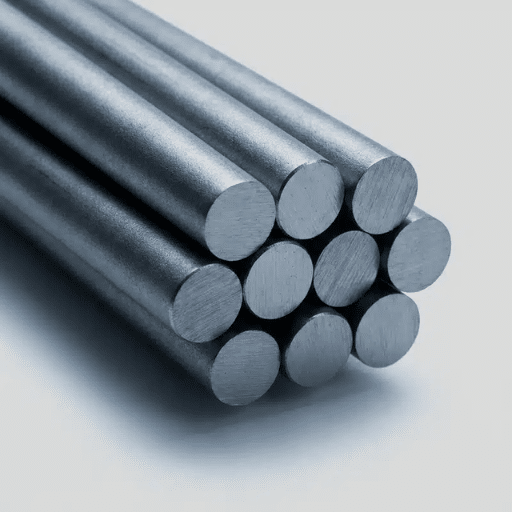
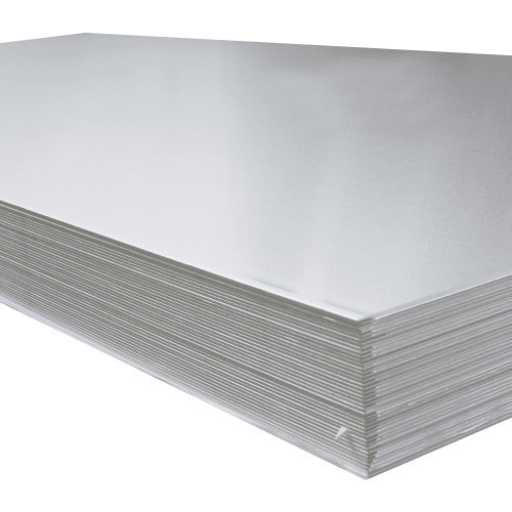
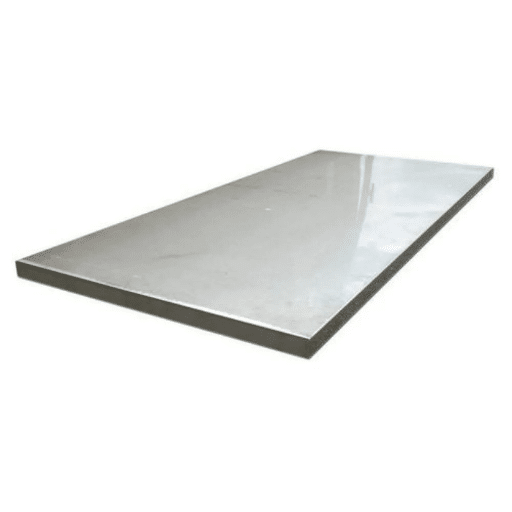
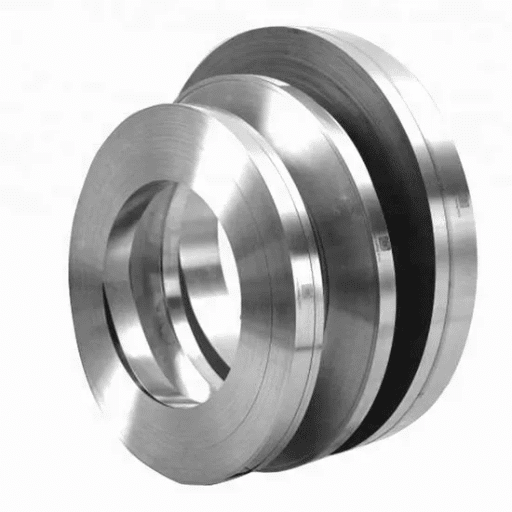
- Product form: Bar, plate, sheet, pipe, tube, wire, or forging
- Dimensions: Diameter, thickness, width, length, and tolerance
- Quantity: Weight or number of pieces
- Certification: MTR, EN 10204 3.1/3.2, third-party inspection
- End use or application: Helps confirm condition selection
- Delivery terms: Incoterm, destination, and required delivery date
What to Check on the MTR
Before accepting material, verify the material test report contains:
- Heat number and full chemical analysis
- Hardness value with test method and scale
- Mechanical test report for the ordered condition
- Heat treatment chart
- Melt practice statement (air melt, VIM+ESR, VIM+VAR)
- EN 10204 3.1 or 3.2 certificate as required
- NDT reports if specified
Zhonggongte Capability
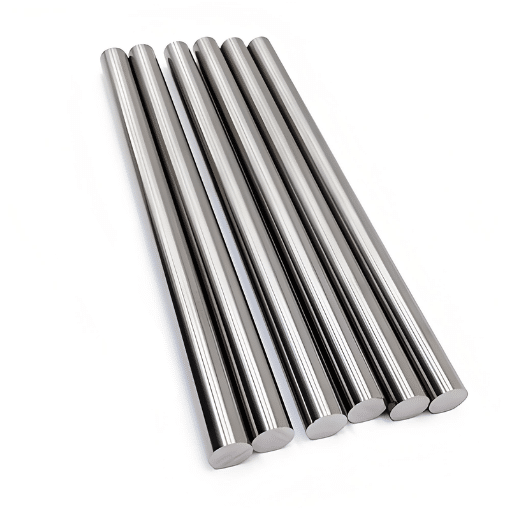
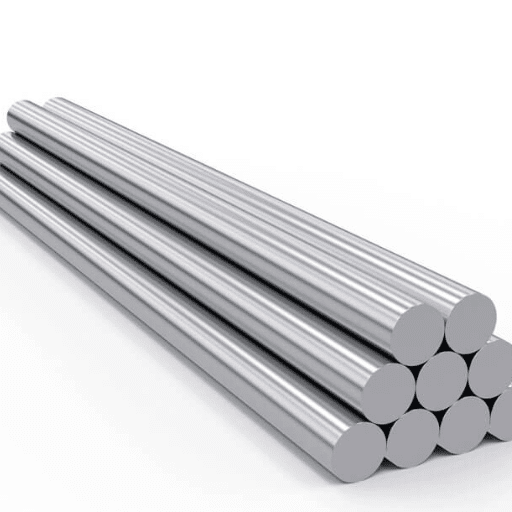
Jiangsu Zhonggongte Metallurgical Technology Co., Ltd. supplies Inconel 718 (GH4169) from Wuxi in bar, plate, pipe, tube, wire, and forged forms. Our in-house testing capability includes direct-reading spectrometry, tensile testing, and hardness testing by Rockwell, Brinell, and Vickers methods. We also supply related product forms, including Inconel 718 pipe and Inconel 718 round bar.
Every order ships with a material test report, and we can provide EN 10204 3.1/3.2 certification and third-party inspection on request. For customers with critical applications, we support witness testing and independent laboratory verification of hardness and mechanical properties. For broader pricing context across product forms, see our Inconel 718 price per kg guide.
Our metallurgical engineers review each RFQ to confirm that the proposed condition, hardness range, test method, and certification match the application. Submit your specification, and we will respond within 24 hours with availability, pricing, and a clear certification pathway.
FAQ: Inconel 718 Hardness
What is the hardness of Inconel 718?
Inconel 718 in the solution-annealed condition is typically 18–26 HRC, standard aged material is 36–44 HRC, and cold-worked + aged material can reach 45–50 HRC.
What is the HRC of aged Inconel 718?
Aged Inconel 718 per ASTM B637 or AMS 5662/5663 typically measures 36–44 HRC. ASTM B637 specifies a minimum of 36 HRC for precipitation-hardened bar and forgings.
How does heat treatment affect Inconel 718 hardness?
Solution annealing softens the alloy to ~18–26 HRC by dissolving precipitates. Double aging raises hardness to 36–44 HRC by forming γ″ and γ′ precipitates. Overaging above ~760°C can reduce hardness by transforming γ″ into δ phase.
What is GH4169 hardness?
GH4169 is the Chinese GB/T 14992 equivalent of Inconel 718 and follows the same hardness ranges: ~18–26 HRC in the solution-annealed condition and 36–44 HRC in the standard aged condition.
How do you test Inconel 718 hardness?
Rockwell C (ASTM E18) is the most common production test. Brinell (ASTM E10) is used for heavy sections and forgings. Vickers (ASTM E384) is used for microhardness, welds, coatings, and microstructural studies.
Can Inconel 718 hardness be converted to tensile strength?
Yes, approximately. As a rough guide, 40 HRC corresponds to about 1,250 MPa UTS, and 45 HRC corresponds to about 1,400 MPa UTS. However, tensile testing remains the definitive acceptance method.
What hardness is needed for NACE sour service?
Inconel 718 can qualify for NACE MR0175 / ISO 15156 sour service at hardness levels up to approximately 40 HRC, depending on product form and application. Always confirm the specific NACE requirement for your component.
Is Inconel 718 hard to machine?
Yes. Aged Inconel 718 at 36–44 HRC is extremely abrasive and work-hardens rapidly. Most fabricators machine in the solution-annealed condition (~18–26 HRC) and age afterward.
Conclusion
Inconel 718 hardness is not a single number. It is a condition-dependent property that tells you whether the material is soft and machinable, fully aged and strong, or cold-worked to maximum strength.
Solution-annealed 718 at ~18–26 HRC is the right choice for forming and machining. Standard aged 718 at 36–44 HRC is the right choice for most aerospace, oil and gas, and power-generation applications. Cold-worked + aged 718 at 45–50 HRC is the right choice when maximum strength is required.
The key is to specify the condition, the hardness range, and the test method in your purchase order. Then verify the material test report against the applicable standard, whether that is ASTM B637, AMS 5662/5663, or GB/T 14992 for the Chinese equivalent GH4169.
Zhonggongte manufactures and supplies certified Inconel 718 / GH4169 from Wuxi with in-house Rockwell, Brinell, and Vickers hardness testing, full material traceability, and export documentation. Whether your drawing calls for solution-annealed, aged, or hardness-verified material, our team will confirm the certification pathway and deliver a quote within 24 hours.