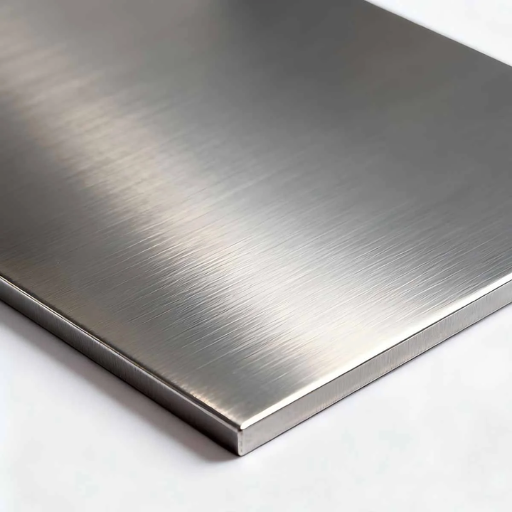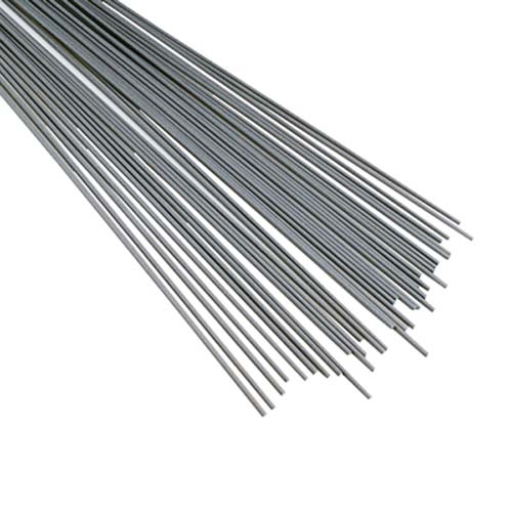
Inconel 718 properties depend on three things: heat treatment condition, test temperature, and the specification you are buying to. In its standard precipitation-hardened condition, Inconel 718 delivers a density of 8.19 g/cm³, room-temperature tensile strength of 1,241-1,345 MPa, yield strength of 1,034-1,120 MPa, and hardness of 36-42 HRC. At 650°C it still retains roughly 925 MPa yield strength, which is why aerospace, oil and gas, and power generation engineers specify it for critical components.
That temperature retention is the real story. Many alloys look strong at room temperature but fall apart when turbines, wells, or reactors heat up. Inconel 718 is different because its strength comes from gamma double prime (γ″) precipitates formed during a controlled double-aging cycle. The result is a nickel-based superalloy that keeps load-bearing capacity from cryogenic temperatures up to about 700°C.
In this guide, you will get the complete Inconel 718 properties dataset: physical constants, room-temperature mechanical properties, temperature-dependent strength, hardness by condition, and specification minimums for AMS 5662, AMS 5663, ASTM B637, and API 6ACRA. We also explain what to request on your Material Test Report (MTR) so the material that arrives matches the design data you used.
Key Takeaways
- Inconel 718 density is 8.19 g/cm³ with a melting range of 1,260-1,336°C and near-zero magnetic response.
- Aged Inconel 718 tensile strength reaches 1,241-1,345 MPa and yield strength reaches 1,034-1,120 MPa at room temperature.
- Hardness ranges from 36-42 HRC in the aged condition and drops significantly in the solution-annealed condition.
- Yield strength at 650°C remains around 925 MPa; useful load-bearing capability extends to approximately 700°C.
- AMS 5662 defines solution-annealed material; AMS 5663 defines precipitation-hardened material with higher strength minimums.
- GH4169 is the Chinese equivalent and can match Inconel 718 properties when processed to the same heat treatment and specification.
- Every MTR should include room-temperature tensile, hardness, and chemical composition; elevated-temperature tensile and NDT are added by application.
Inconel 718 Physical Properties

Density and Melting Range
Inconel 718 density is 8.19 g/cm³ (0.296 lb/in³). That places it between austenitic stainless steels such as 316L and titanium alloys. The number matters for rotating components where every gram affects inertia, and for shipping calculations on large bar or plate orders.
The melting range is 1,260-1,336°C. Unlike a pure metal, superalloys melt over a range, so welding and casting processes must account for the solidus and liquidus limits. For buyers, the practical point is this: Inconel 718 will not experience phase melting during normal heat treatment, but rapid temperature changes near the upper limit can cause liquation cracking in welds.
| Property | Value |
|---|---|
| Density | 8.19 g/cm³ |
| Melting range | 1,260-1,336°C |
| Curie temperature | <-196°C |
| Magnetic permeability | ~1.0011 |
The alloy is effectively non-magnetic at room temperature. Magnetic permeability of ~1.0011 means Inconel 718 can be used near sensitive instruments or in applications where ferromagnetic behavior would create interference.
Thermal and Electrical Properties
Thermal conductivity of Inconel 718 is lower than carbon steel or aluminum, which affects heat removal during machining and welding. Coefficient of thermal expansion is moderate, so the alloy pairs reasonably with steels in assemblies operating across wide temperature swings.
| Property | Room Temp | 400°C | 650°C | 700°C |
|---|---|---|---|---|
| Thermal conductivity (W/m·K) | 13.4 | 17.5 | 20.2 | 21.2 |
| Specific heat (J/kg·K) | 435 | 510 | 565 | 590 |
| CTE, 10^-6/°C | 13.0 | 15.1 | 16.8 | 17.2 |
| Electrical resistivity (µΩ·cm) | 125 | 131 | 135 | 137 |
These values are typical for precipitation-hardened nickel-chromium-iron alloys. The low thermal conductivity means heat builds up at the cutting edge during machining, so carbide tooling, conservative speeds, and adequate coolant are standard practice. For design engineers, the CTE data is essential when matching 718 to dissimilar metals in flanges, seals, or turbine disks.
Inconel 718 Mechanical Properties at Room Temperature
Tensile and Yield Strength
Room-temperature Inconel 718 mechanical properties vary sharply by heat treatment condition. The figures most engineers need are for the precipitation-hardened (aged) condition, which is the default for aerospace and high-performance industrial parts.
| Condition | Tensile Strength (MPa) | Yield Strength 0.2% (MPa) | Elongation (%) |
|---|---|---|---|
| Solution annealed | 965-1,100 | 550-690 | 25-35 |
| Aged (standard double age) | 1,241-1,345 | 1,034-1,120 | 12-20 |
| Direct aged | 1,310-1,380 | 1,100-1,200 | 10-16 |
The jump from solution-annealed to aged condition is dramatic. Yield strength roughly doubles after the standard 720°C + 620°C aging cycle because γ″ and γ′ precipitates pin dislocation movement. Elongation drops as strength rises, which is the classic strength-ductility trade-off.
When you source Inconel 718 round bar for a structural application, always confirm whether the quote is based on solution-annealed or aged properties. The price may look similar, but the usable strength is not.
Hardness
Inconel 718 hardness is one of the first properties checked on receipt because it is fast, non-destructive, and correlates well with heat treatment condition.
| Condition | Rockwell C (HRC) | Brinell (HBW) | Vickers (HV) |
|---|---|---|---|
| Solution annealed | 18-25 | 200-240 | 210-250 |
| Aged (standard) | 36-42 | 331-375 | 360-420 |
| Direct aged | 40-45 | 360-400 | 400-450 |
Aged bar at 40 HRC is difficult to cold form or thread. Fabricators who need to bend, forge, or machine complex features often order solution-annealed material, perform forming, then send parts out for aging. If your drawing calls for final aged properties, communicate that to your supplier before cutting begins.
Elastic and Impact Properties
The modulus of elasticity for Inconel 718 is approximately 200 GPa at room temperature. That value declines with temperature, reaching about 165 GPa at 650°C. Poisson’s ratio is typically 0.29-0.31.
Impact toughness is excellent in both solution-annealed and aged conditions. The alloy retains toughness down to cryogenic temperatures because the nickel-rich matrix resists ductile-to-brittle transition. Charpy V-notch values for aged material typically exceed 30 J at room temperature, and solution-annealed material is higher.
Inconel 718 Properties by Heat Treatment Condition
Solution Annealed vs Aged
The heat treatment condition is the single biggest variable in Inconel 718 properties. Solution annealing dissolves the strengthening precipitates and produces a soft, formable microstructure. Aging re-precipitates γ″ and γ′ to develop full strength.
| Property | Solution Annealed | Standard Aged |
|---|---|---|
| Tensile strength | 965-1,100 MPa | 1,241-1,345 MPa |
| Yield strength | 550-690 MPa | 1,034-1,120 MPa |
| Elongation | 25-35% | 12-20% |
| Hardness | 18-25 HRC | 36-42 HRC |
| Formability | Excellent | Poor |
| Machinability | Good | Moderate |
In 2019, a fabricator in the Midwest ordered AMS 5663-aged bar for a bracket assembly that required several press-brake bends. The 40 HRC hardness stopped the press cold, and the first lot had to be re-solution-annealed before forming. The delay added two weeks and rework cost. The lesson: match the incoming condition to your manufacturing sequence, not just the final specification.
AMS 5662 vs AMS 5663 vs ASTM B637
Each specification defines different property minimums. Aerospace buyers usually work to AMS 5662 (solution annealed) or AMS 5663 (precipitation hardened). Industrial buyers may reference ASTM B637. Oil and gas applications often require API 6ACRA.
| Specification | Condition | Tensile Min (MPa) | Yield Min (MPa) | Elongation Min (%) | Hardness |
|---|---|---|---|---|---|
| AMS 5662 | Solution annealed | 965 | 550 | 25 | 35 HRC max |
| AMS 5663 | Aged | 1,275 | 1,034 | 12 | 36 HRC min |
| ASTM B637 | Aged | 1,240 | 1,035 | 12 | 36-47 HRC |
| API 6ACRA | Aged | 1,240 | 1,035 | 12 | 32-40 HRC |
The tensile strength minimum for AMS 5663 (1,275 MPa) is higher than ASTM B637 (1,240 MPa) because aerospace design margins demand more conservative guarantees. If your application is governed by an oil and gas standard, API 6ACRA also adds stringent cleanliness and inclusion requirements that go beyond mechanical properties.
For a deeper look at grade selection, composition, and sourcing, see our complete Inconel 718 technical guide.
Elevated and Cryogenic Temperature Properties

High-Temperature Strength
Inconel 718 retains an unusual amount of strength as temperature rises. This is the property that makes it the default choice for turbine disks, combustion chambers, and high-pressure seals.
| Test Temperature (°C) | Tensile Strength (MPa) | Yield Strength (MPa) | Elongation (%) |
|---|---|---|---|
| Room temperature | 1,241-1,345 | 1,034-1,120 | 12-20 |
| 200 | 1,180-1,280 | 980-1,060 | 14-20 |
| 400 | 1,120-1,220 | 910-990 | 15-22 |
| 540 | 1,070-1,160 | 910-980 | 16-24 |
| 650 | 1,020-1,100 | 900-950 | 18-26 |
| 700 | 930-1,000 | 820-890 | 20-28 |
The approximate 925 MPa yield strength at 650°C is frequently cited because it matches the peak operating temperature of many gas turbine components. Above 700°C, strength declines more quickly, and other nickel-based superalloys such as Waspaloy or Rene 41 may become more appropriate.
An aerospace component designer learned this the hard way. In 2021, his team used room-temperature yield data to size a 650°C seal ring. After the first hot rig test showed excessive deformation, they re-ran the analysis with elevated-temperature properties and added a 50% design margin. The revised design passed qualification. Room-temperature numbers do not govern hot-section design.
Cryogenic Performance
Inconel 718 performs exceptionally well at cryogenic temperatures. Unlike ferritic steels, it does not exhibit a ductile-to-brittle transition. Tensile and yield strengths increase as temperature drops, while toughness remains high.
| Temperature (°C) | Tensile Strength (MPa) | Yield Strength (MPa) | Elongation (%) |
|---|---|---|---|
| -196 | 1,450-1,550 | 1,180-1,280 | 22-28 |
| -253 | 1,650-1,800 | 1,350-1,480 | 18-24 |
This behavior makes Inconel 718 suitable for liquid hydrogen and liquid oxygen systems in aerospace and for cryogenic valves and pumps in LNG service. However, note that magnetic permeability can increase slightly at very low temperatures, so non-magnetic applications should be verified against project limits.
How Heat Treatment Affects Inconel 718 Properties
Standard Heat Treatment
The standard heat treatment for Inconel 718 consists of a solution anneal followed by a two-step age:
- Solution anneal: 980-1,020°C for 1 hour, then air cool or water quench.
- First aging step: 720°C for 8 hours, furnace cool to 620°C at 55°C/hour.
- Second aging step: 620°C for 8 hours, then air cool.
This cycle produces the fine, uniform γ″ precipitates responsible for peak strength. Deviations in temperature or cooling rate affect hardness directly. Aging at too low a temperature leaves strength on the table. Over-aging or slow cooling coarsens precipitates and reduces tensile properties.
Common Heat Treatment Variants
Not every application uses the standard cycle. Direct aging skips the solution anneal and is sometimes applied to forged or wrought material that already has the correct solution-treated microstructure. It saves time and cost but requires tighter process control.
Over-aging intentionally reduces strength to improve creep resistance or stress relaxation in high-temperature bolts and springs. Oil and gas API 6ACRA conditions may specify modified aging to balance strength with sulfide stress cracking resistance.
If you are unsure which condition your part needs, send us your drawing and operating temperature. Our metallurgists will recommend the right heat treatment and verify it with tensile and hardness testing on the finished lot.
Inconel 718 Properties vs Other Alloys
Inconel 718 vs Inconel 625
Inconel 625 is a solid-solution-strengthened alloy with outstanding corrosion resistance. It is easier to form and weld than 718, but it does not reach the same peak strength after aging.
| Property | Inconel 718 (Aged) | Inconel 625 |
|---|---|---|
| Tensile strength | 1,241-1,345 MPa | 930-1,000 MPa |
| Yield strength | 1,034-1,120 MPa | 550-650 MPa |
| Hardness | 36-42 HRC | 20-25 HRC |
| Max use temperature (strength) | ~700°C | ~650°C |
| Corrosion resistance | Good | Excellent |
Choose 718 when high strength at elevated temperature is the priority. Choose 625 when corrosion resistance, weldability, or formability matters more. For a detailed comparison, see our Inconel 625 vs 718 selection guide.
Inconel 718 vs Inconel X-750
Inconel X-750 is an older precipitation-hardened alloy with good high-temperature properties. It reaches lower peak strength than 718 but offers better relaxation resistance at temperatures above 650°C. Springs, bolts, and seals operating above 700°C sometimes favor X-750, while rotating turbine components favor 718 for its higher strength and better creep performance.
Inconel 718 vs Stainless Steel 316L
The comparison is not close in terms of high-temperature strength. 316L is an austenitic stainless steel with excellent corrosion resistance and formability, but it cannot compete with 718 above 500°C.
| Property | Inconel 718 (Aged) | 316L Stainless Steel |
|---|---|---|
| Tensile strength | 1,241-1,345 MPa | 485-620 MPa |
| Yield strength | 1,034-1,120 MPa | 170-310 MPa |
| Hardness | 36-42 HRC | 70-90 HRB |
| Max use temperature (strength) | ~700°C | ~400°C |
| Density | 8.19 g/cm³ | 8.00 g/cm³ |
For critical hot-section parts, the weight penalty of 718 over 316L is small, but the strength advantage is enormous. The cost difference is significant, so 316L remains the right choice for low-stress, corrosive environments at moderate temperatures.
GH4169 vs Inconel 718 Properties

Chinese Equivalent Alignment
GH4169 is the Chinese superalloy designation that corresponds closely to Inconel 718. Both alloys share the same base composition: nickel, chromium, iron, niobium, molybdenum, titanium, and aluminum. When melted, forged, and heat treated to equivalent practices, GH4169 can match Inconel 718 properties across room and elevated temperatures.
| Property | Inconel 718 (AMS 5663) | GH4169 (GB/T 15062) |
|---|---|---|
| Tensile strength | ≥1,275 MPa | ≥1,270 MPa |
| Yield strength | ≥1,034 MPa | ≥1,030 MPa |
| Elongation | ≥12% | ≥12% |
| Hardness | 36-42 HRC | 35-42 HRC |
The key caveat is certification. A European buyer sourcing GH4169 for a non-flight industrial fastener found that room-temperature properties matched Inconel 718 exactly after the same double-aging cycle. However, the customer’s quality plan still required MTR review and customer approval because the material was not branded Inconel. For aerospace flight-critical applications, most OEMs require Inconel 718 by AMS specification and may not accept GH4169 substitution without formal qualification.
For buyers sourcing from China, GH4169 offers a cost-competitive path when the specification allows it. Zhonggongte supplies both Inconel 718 and GH4169 with full traceability and can provide side-by-side test data on request.
Properties to Specify on Your MTR
Required Tests by Application
The Material Test Report (MTR) is your proof that the material meets the design data. The exact tests depend on the application, but most MTRs for Inconel 718 should include the following.
| Application | Room Temp Tensile | Elevated Temp Tensile | Hardness | Chemical Analysis | NDT |
|---|---|---|---|---|---|
| Aerospace structural | Required | Often required | Required | Required | Often required |
| Oil and gas fasteners | Required | Sometimes required | Required | Required | Sometimes required |
| Power generation | Required | Sometimes required | Required | Required | Sometimes required |
| Cryogenic equipment | Required | Not required | Required | Required | Often required |
| General industrial | Required | Not required | Required | Required | Optional |
For Inconel 718 aerospace applications, elevated-temperature tensile testing at the design temperature is usually mandatory. NDT methods such as ultrasonic inspection are added for critical rotating parts.
Supplier Checklist
Before placing an order, confirm that your supplier can provide:
- MTR with full chemical composition and mechanical test results.
- Heat treatment certificate showing cycle temperatures and times.
- EN 10204 3.1 or 3.2 certification when project standards require it.
- In-house spectrometer verification of key elements including niobium and titanium.
- Ultrasonic NDT report for bar, plate, or forgings used in critical service.
A supplier who only offers a generic mill certificate without mechanical test data is not providing the documentation an engineering project needs. At Zhonggongte, every Inconel 718 shipment includes a complete MTR, and our direct-reading spectrometers verify composition before material leaves the warehouse.
Submit your specification and we will confirm which tests your MTR requires for your target standard.
FAQ: Inconel 718 Properties
What is the tensile strength of Inconel 718?
In the standard aged condition, Inconel 718 tensile strength is 1,241-1,345 MPa. Solution-annealed material is lower, typically 965-1,100 MPa.
What is the yield strength of Inconel 718 at 650°C?
Yield strength at 650°C is approximately 900-950 MPa, with ~925 MPa used as a common design value.
What is the hardness of Inconel 718?
Aged Inconel 718 hardness is 36-42 HRC. Solution-annealed material is much softer at 18-25 HRC.
What is the density of Inconel 718?
Density is 8.19 g/cm³.
What is the melting point of Inconel 718?
The alloy melts over a range of 1,260-1,336°C, not at a single temperature.
Is Inconel 718 magnetic?
No. Magnetic permeability is approximately 1.0011, so the alloy is effectively non-magnetic at room temperature.
How does heat treatment affect Inconel 718 properties?
Solution annealing softens the alloy for forming. Double aging at 720°C and 620°C develops peak strength through γ″ precipitation.
What is the difference between AMS 5662 and AMS 5663 properties?
AMS 5662 covers solution-annealed material with lower strength and higher ductility. AMS 5663 covers aged material with higher strength minimums and reduced elongation.
Can GH4169 match Inconel 718 properties?
Yes. When processed to equivalent standards, GH4169 mechanical properties align closely with Inconel 718. Certification acceptance depends on the end user’s specification.
How do Inconel 718 properties compare to Inconel 625?
Inconel 718 is stronger, especially at elevated temperature. Inconel 625 offers better corrosion resistance and weldability.
Conclusion
Inconel 718 properties are only meaningful when you know the condition, temperature, and specification behind the numbers. Aged material delivers 1,241-1,345 MPa tensile strength and 36-42 HRC hardness at room temperature. At 650°C it still carries roughly 925 MPa yield strength. Solution-annealed material is softer and more formable but gives up most of that high-temperature margin.
For procurement and design teams, the right approach is simple: specify the standard (AMS 5662, AMS 5663, ASTM B637, or API 6ACRA), request the right MTR tests, and confirm the heat treatment condition before manufacturing begins. Whether you need Inconel 718 or its Chinese equivalent GH4169, the properties can be matched when the process is controlled.
If you are ready to source certified Inconel 718 bar, plate, or forgings, submit your specification today. Our metallurgical team will confirm property compliance, recommend the right heat treatment, and return a competitive quotation within 24 hours.